SinBowl 50: Sex Trafficking and the Super Bowl

The Super Bowl 50: a celebration of fifty years of the NFL’s largest and loudest sporting spectacle. Hosted in the San Francisco Bay Area in February 2016, the famous hub of commerce and innovation fell victim to a parasitic wave of crime that plagues the football game every year. Human trafficking, particularly of enslaved sex workers, peaked around the famous kickoff as it does every year, everywhere the Super Bowl goes.

Breaking world records, the Super Bowl 50 this year was the third most watched program in television history. Surpassed only by two previous Super Bowl shows, the internationally broadcasted event dwarfs all others in audience statistics. The colossal viewing figures of the Super Bowl 50 speak to the scale of the issue at hand: the greater the viewing base, the greater the customer base for illegal activity. Traffickers and pimps alike capitalise upon this trend, using the Super Bowl as a prime business opportunity in which the potential for moneymaking is vast, bringing in fast cash over a brief period of time.

San Francisco’s City Hall decorated for the Super Bowl 50

Masquerading as massage parlours, nail salons and other small-business ventures, hundreds of fully operational brothels fly under the radar of both law enforcement and civilians every day. Storefronts in many of the Bay Area’s cities in broad daylight conceal active prostitution rings, often holding captive or coercing their workers. However, the greatest portion of the sex-for-hire and other related crimes that occur around the Super Bowl are facilitated by the Internet, which gives non-locals arriving to watch the game an easy and convenient way to solicit a prostitute. Viewers unfamiliar to a certain area such as San Francisco, for example, need only respond to an online advert for escorts (or other, similar online promotions) and be easily directed to a prostitute that, in many cases, has fallen victim to pimps or traffickers. The virtual origins of these crimes foster an environment in which the dark underbelly of the sex industry is easily concealed from law enforcement, and yet nicely packaged for visiting fans.

The Super Bowl has a direct, immense effect on this issue. The raucous, fanatical nature of the internationally celebrated event beckons a party-fuelled series of days leading up to the big game, flooding host cities with fans looking for a good time. The NFL rakes in immense profit through the marketing, social media presence and sporting acclaim of the Super Bowl, making tickets highly sought after and extremely expensive. As a result, many of the audience members that arrive in host cities for the final game are long on cash and short on inhibition.
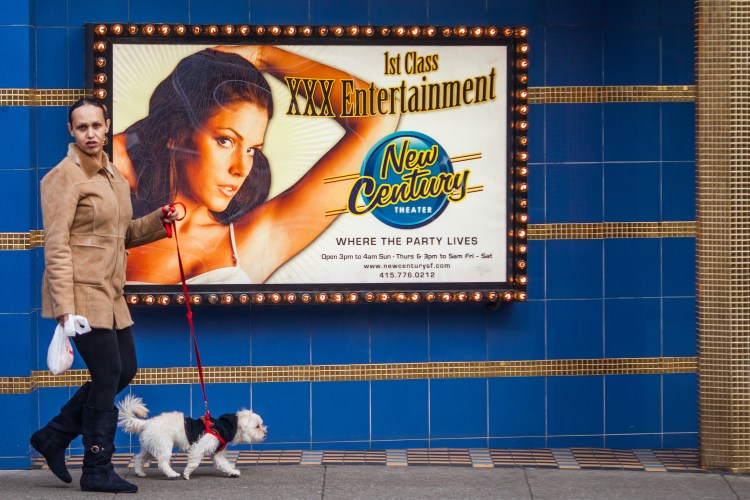
A San Francisco strip club, many of which are used as fronts for the illegal sex industry, by Thomas Hawk

The anti-trafficking organisation In Our Backyard estimates that the increase in online adverts for escorts immediately before the Super Bowl is anywhere between 30 to 300 percent. The National Centre for Missing and Exploited Children records 133 arrests for involvement with underage sex workers in Dallas during their hosting period for the Super Bowl in 2011. The International Labour Organisation approximates the number of global human trafficking victims at 20.9 million, with 55% of those victims as female and 26% as underage. These harrowing statistics show the harm in dismissing human trafficking, as often happens in the public mentality, as a crime that happens in the dark alleys and red light districts of the world. Trafficking isn’t restricted to the underworld of a city; it occurs in broad daylight, in any neighbourhood, to people very similar to us. The primary goal of human traffickers – and like-minded criminals involved in the illegal sex industry – is to remain out of sight and out of mind. The director of In Our Backyard addresses the harm of an apathetic attitude towards the growing problem by urging people to raise awareness and stressing the closeness of the issue to us all, stating: “All the traffickers ask is that we be quiet, and even better, that we pretend it doesn’t happen here or it can’t happen to somebody we love. So we need to combat those things by talking about it, by learning more about it, and by understanding that it can happen in our circle.” So, whilst the Super Bowl prompts a sharp peak each year in the United States’ sex trafficking industry, it is important to remember that this is not a fleeting issue. The enslavement, forced labour and sexual exploitation of adults and minors occurs every day around the globe, and is anything but a new problem.

The first and crucial step in battling human trafficking is raising awareness and educating relevant parties on how to remain attentive. For example, the FBI, alongside other government agencies, works with anti-trafficking organisations to spread information in the hotel industry on signs to recognise potential trafficking victims. Closer to home, the on-campus organisation St Andrews Against Slavery “aims to bring attention to the issue of modern day slavery which is more prevalent now than any other time in history with 36 million slaves worldwide.” The scale of the issue is vast, but law enforcement officers and civilian activists make a powerful combination. Anyone can take a stand against human trafficking, and anyone can be vigilant.

To learn more and find out what you can do to help, click here to see a list of organisations that combat human trafficking and sexual exploitation.

Uganda: Stable State, Unstable Politics

After years of oppression and civil war following independence, Uganda’s relative security means it has a generally positive – if sometimes controversial – image on the world stage. Considered one of the continent’s more prosperous states, it is the seventeenth-largest economy in Africa, and it continues to grow; furthermore, travel and tourism rates consistently rising also have a positive effect on both the nation’s GDP and its international image. On paper, Uganda is well on its way to achieving poverty goals set by the United Nations, and to improving stability and prosperity across the state.

That same stability, however, means the problems Uganda experiences with its electoral and democratic systems are regularly overlooked by the international community and its media, with the tensions in the neighbouring Democratic Republic of Congo and South Sudan taking precedence in international headlines. Yet Ugandan elections have long been mired in controversy, and its citizens’ return to the ballot box on February 18th 2016 shines another light on this perennial issue.

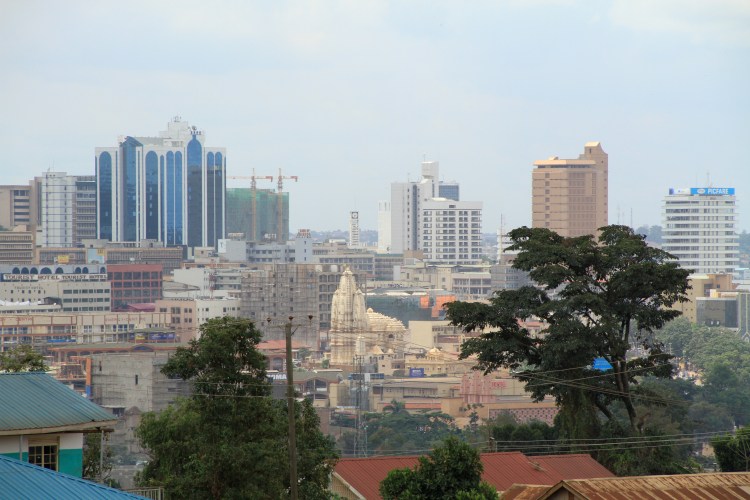
Downtown Kampala, Uganda by Andrew Regan

Prior to the voting, the Ugandan government under President Museveni (the National Resistance Movement – NRM) are accused of deliberately and systematically infringing opponents’ rights to campaign effectively. Amongst the allegations levied against the NRM are intimidation of journalists and control of access by candidates to media coverage of the elections, putting the alternatives to Museveni’s government at a significant disadvantage. The state-owned Uganda Broadcasting Company – expected to be an impartial commentator – gave the incumbent president 44% of its airtime, as opposed to 24% and 4% for his two main rivals. Furthermore, social media in Uganda was blocked by the Uganda Communications Commission (UCC) after suggestions that sites like Facebook and Twitter were being used to campaign, despite official campaigning ending two days before the election took place. Similar controversies have surrounded elections in Uganda previously, and the day of the election saw many citizens disenfranchised by lack of appropriate materials. Moreover, women’s rights were particularly affected, as extremely long waiting times in the hot sun meant those with young children and babies increasingly had to give up their vote in order to fulfil their family responsibilities.

President Museveni is due to be sworn in once again as Uganda’s leader on May 12th, and tensions surrounding the event remain high. The Ugandan security forces are reportedly stepping up measures to ensure that the ceremony can go ahead amid concerns that the president’s biggest opposition rival, and former personal doctor, Kizza Besigye will lead protests on the day. Besigye is capable of rallying significant support amongst the populace; in 2011, he and his party arranged the ‘Walk to Work’ protests that sparked a violent response from the government, which resulted in a number of civilian deaths. Bisigye was arrested whilst campaigning for the February election at a rally and he was accused of holding a public meeting without the government’s permission, thereby violating public order laws. Despite this arrest, and multiple others, Bisigye is insistent on fighting the government, claiming that votes were rigged and he has been deliberately targeted. He was placed under house arrest on 16th February, days before the election, after police used tear gas on the crowds outside of his campaign rally.

Understanding Uganda’s problems with democracy requires an understanding of the history of both the state and its government. Formerly a colony under British rule, the country gained official independence in October 1962. The east-African nation’s president, Yoweri Museveni, is one of the continent’s longest serving leaders; co-founder of the group that removed Idi Amin in 1979, and subsequent leader of a rebel force that took power in 1986, he has ruled Uganda for thirty years, and has continuously come under criticism for the transparency and legitimacy of the elections that have maintained his position of power. Multi-party politics have only been reinstated in Uganda since 2005 – something achieved, to the government’s credit, via popular referendum – and questions remain from both the opposition and non-government organisations about the state’s attempts to quash opposing voices by ballot fraud, arbitrary arrest, or extreme use of force.

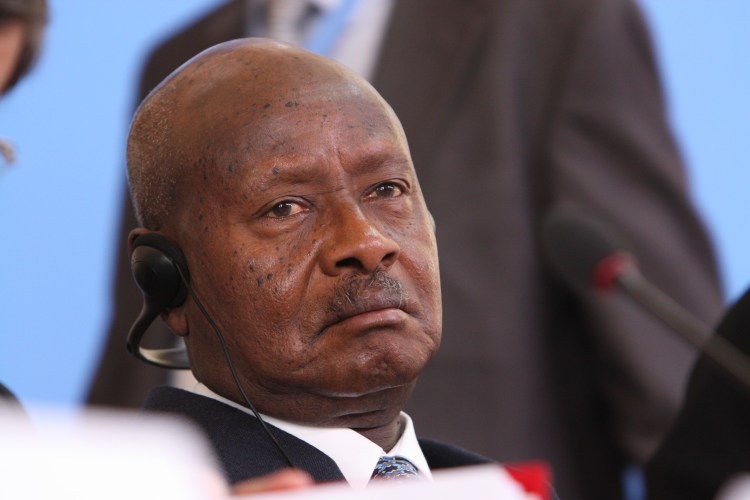
President of Uganda Yoweri Museveni, by the Foreign and Commonwealth Office

Access to free, fair and democratic elections has been something the international community – most often through the United Nations – has held up as a standard that all states should seek to achieve. To place the Ugandan issue into the context of international law, the UN Universal Declaration of Human Rights makes clear that every person, without qualifiers, is entitled to (1) “freedom of opinion and expression,” (2) “freedom of peaceful assembly and association,” and (3) the right to take part in the government of his country, directly or through freely chosen representatives.” The Declaration goes on to state that “the will of the people shall be the basis of the authority of government; this will shall be expressed in periodic and genuine elections which shall be by universal and equal suffrage.”

What is clear about Uganda’s current situation is the fundamental rights of the populace are being denied, as they are barred from their presidential candidates entering into the race with equal opportunity to be successful. Museveni’s re-election means that the question of who will succeed him – some suggest his son or wife – has been further avoided; the accusations that the election was rigged only causes further tension in a nation where its political leadership is so often controversial, despite significant progress over its thirty year tenure. Regardless of how the situation is resolved, doing so is imperative; destabilising the nation puts the entire region at risk, and the current state of affairs contravenes the human rights of all Ugandan citizens.

Healthcare Reforms: Not Safe, Not Fair

For 68 years the National Health Service in the United Kingdom has demonstrated the fundamental human right for everyone of the enjoyment of the highest attainable standard of physical and mental care. This standard is now threatened by the new contract proposed in recent years by Jeremy Hunt. The issues arising from the Conservative goals for the Health service have resulted in the strikes on 26 and 27 April by Junior Doctors and the first ever walkout from the Accident and Emergency Services in NHS history. This issue sparks many human rights concerns in England; the health services in both Wales and Scotland are holding to their current contracts.

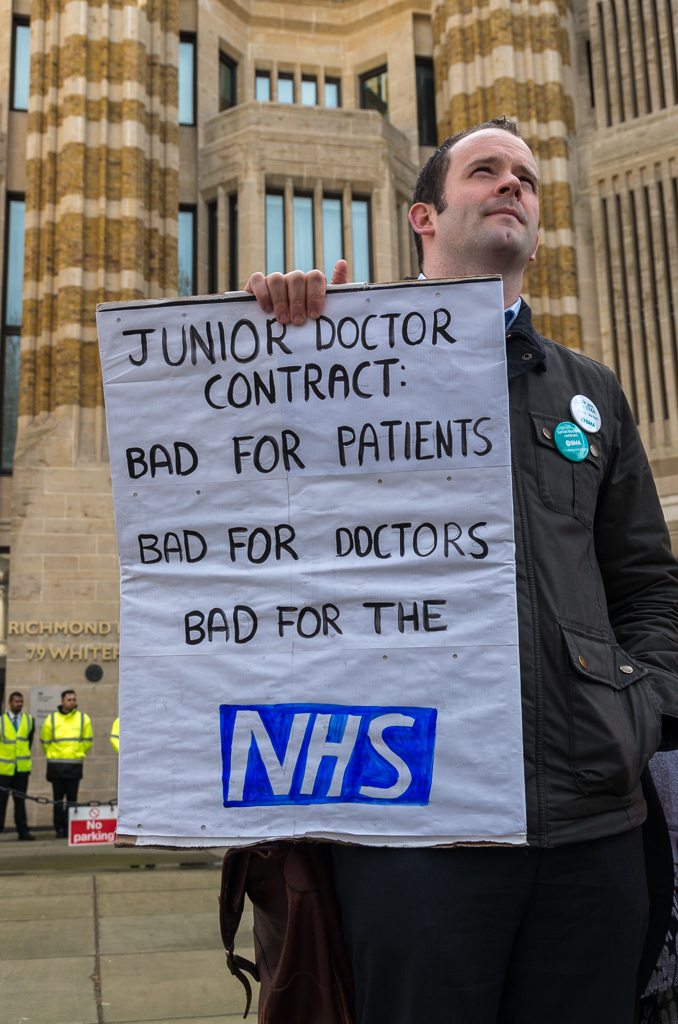
Striking Junior Doctors protest at the Department of Health 6th April 2016, by The Weekly Bull

In their 2015 manifesto, the Conservative Party vowed to continue to increase spending on the NHS, so that by 2020 an additional £8 billion will have been spent, while working towards an NHS that functions fully seven days a week. The seven-day workweek is especially significant in reaction to a report by the British Medical Journal that claims there is a higher death rate if a patient is admitted on a weekend compared to any other weekday. However, since assuming office there have been systematic cuts to NHS funding. Some critics, such as Jeremy Corbyn, are claiming that the current government is attempting to parcel up the NHS for privatisation. Whether true or not, the end goal of the current health policy is the effectiveness of treatment akin to the basic right of everyone to the best possible care.

Nevertheless, this could be seen as being at odds with other opinions on what constitutes the most effective health service. The new contract has offered Junior doctors a 13.5% pay rise in return for their working week extending from 7am to 7pm Monday to Friday to 7am to 9pm Monday to Friday, then 7am to 5pm on Saturday with hours on weekends until 7pm both Saturday and Sunday. They would receive a lower pay for unsociable hours than they did previously, and have later shifts. This means that Junior Doctors, who make up a great proportion of the medic community, will be stretched to longer hours and receive less pay for unsociable hours. The pay they receive for sociable hours of work will be increased, but these also extend well beyond the parameters of what many of us consider a normal working day. Not to mention that many of these doctors are responsible for peoples’ lives. This is not the full extent of the what the new contract will do to the NHS, although is the sum of the ‘human’ cost, in very basic terms.

Moreover, Junior Doctors already work unsociable hours; it is unlikely that you will find a junior doctor who does not work weekends. Essentially, the seven-day workweek already exists for the National Health Service, but it lacks the staff to make this effective without selling out elective shifts to private companies, which is another matter entirely. The new contract limits the number of hours that may be worked and how many shifts consecutively worked, but the option is still open for a junior doctor to work up to 10 hours a day for over seven days, or to work five 13 hour shifts consecutively- and this would be considered ‘normal’. This not only exploits the doctors involved, but also surely threatens the health of patients. The commendable end goal of a seven-day National Health Service is being contorted by the measures the Health Secretary seems prepared to take, which challenge the rights and safety of both the doctors and their patients.

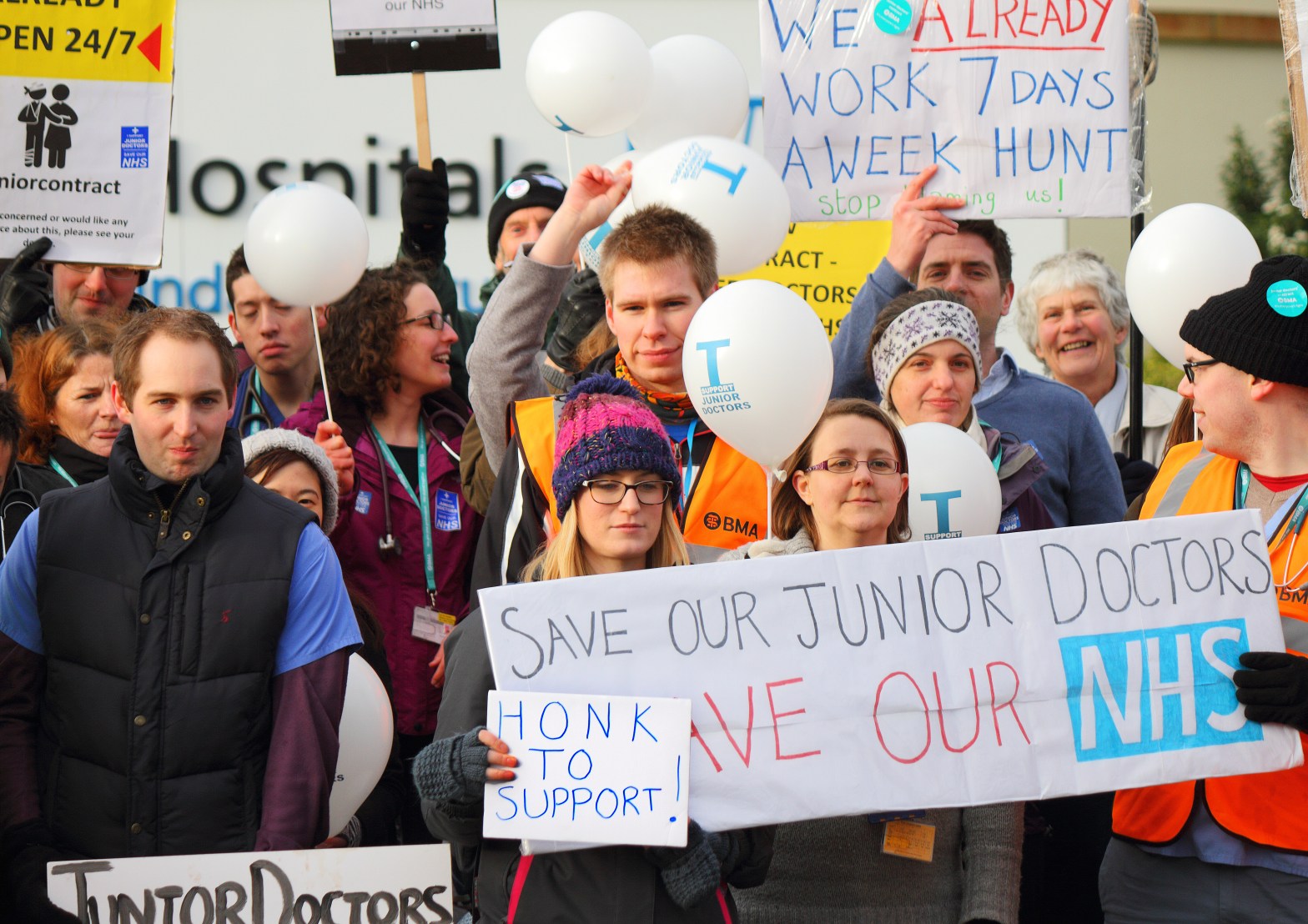
Part of a Junior Doctors Strike Picket outside Norfolk and Norwich University Hospital, by Roger Blackwell

Junior Doctors’ rights are being threatened by the current Government’s ‘new contract’ for the NHS. Does it then follow that the strikes on 26 and 27 April threaten the patients’ rights to the best possible health care? Different sources vary, though clearly thousands of appointments and operations will have been cancelled during the strike. However, the Accident and Emergency Service is being manned by Senior Consultants in the absence of Junior Doctors, demonstrating the unity of the NHS in their general reaction to this new deal. It is also important to remember that one of the issues at the heart of the strike is that doctors believe that the new contract is “not safe” for patients either; they are also on strike for the right of patients to the best possible healthcare. Obviously there is an issue with a depleted healthcare service in England, however this will only last for two days. The implications of the new contract, if they are as damaging as some people claim, could be much more detrimental to our right to the best possible care.

The strikes are also the outcome of failed negotiations between the British Medical Association and Jeremy Hunt; the recent outburst in the House of Commons by Dennis Skinner not so subtly implies that the severity of these strikes in relation to previous strikes is due to Jeremy Hunt’s lack of an attempt to re-negotiate or even re-initiate talks with the BMA. It is extremely unlikely that Junior Doctors want to be on strike; they would most likely rather feel secure in their jobs and safe in their roles rather than stretched to the point of breaking in an already overextended system. Ministers have been attempting to implement a new contract since 2012, which is sorely needed considering the current contract is 15 years old and therefore does not accurately reflect the economic situation nor the increased numbers of those using the NHS.

The fact still remains that most in the medical profession, particularly those in the BMA, feel that their interests are not reflected by the Health Secretary who has no prior experience in the health service before his appointment to his current position in 2012. For the general public, who expect to be protected by both their Government and their National Health Service, there has been overwhelming support on social media for the strikes; the vast numbers who took to the streets is a testament to the severity of the risk many feel this new contract will pose towards public safety. Far from attaining the aims of their manifesto, the Conservatives seem to be acting against the very advice of those qualified to understand what measures should be taken to protect both the doctors and patients within the NHS. Criticising those doctors who have had to resort to strike action and still are not being heard seems contradictory to providing the best possible care that they are campaigning for.

For more information, click here or get involved with the debate on social media.

The Revolution Will Now Be Digitised

The revolution will not be televised

There will be no pictures of pigs shooting down

Brothers in the instant replay.

There will be no pictures of Whitney Young being

Run out of Harlem on a rail with a brand new process.

There will be no slow motion or still life of Roy

Wilkens strolling through Watts in a Red, Black and

Green liberation jumpsuit that he had been saving

For just the proper occasion….because

The revolution will not be televised

Gil Scott-Heron wrote those lyrics in 1971 based on a Black Panther Party slogan. These revolutionaries’ argument was that, due to the establishment’s control of news media, their revolution’s message would be near-impossible to spread until it arrived upon the doorstep. In the end, they never saw the revolution they were expecting. However, Scott-Heron lived until 2011, long enough to see the birth of a new kind of revolutionary activism, one which did not need to be televised.

In the 21st Century, media access has been revolutionised by the explosive growth of the internet. Research shows that young people (aged 18-35) in the West gets their news less and less from television and increasingly from social media – over 60% get political news from Facebook. Another trend that challenges the dominance of traditional news outlets is the growth of ‘citizen reporters’ who have taken advantage of modern technology to film, edit and broadcast their own message, independent of any corporate media group. Thanks to platforms like Twitter and especially YouTube, these reporters can gain a large following and even generate revenue to sustain their work. Controlling the public’s perception of events is now approaching impossible for established elites.

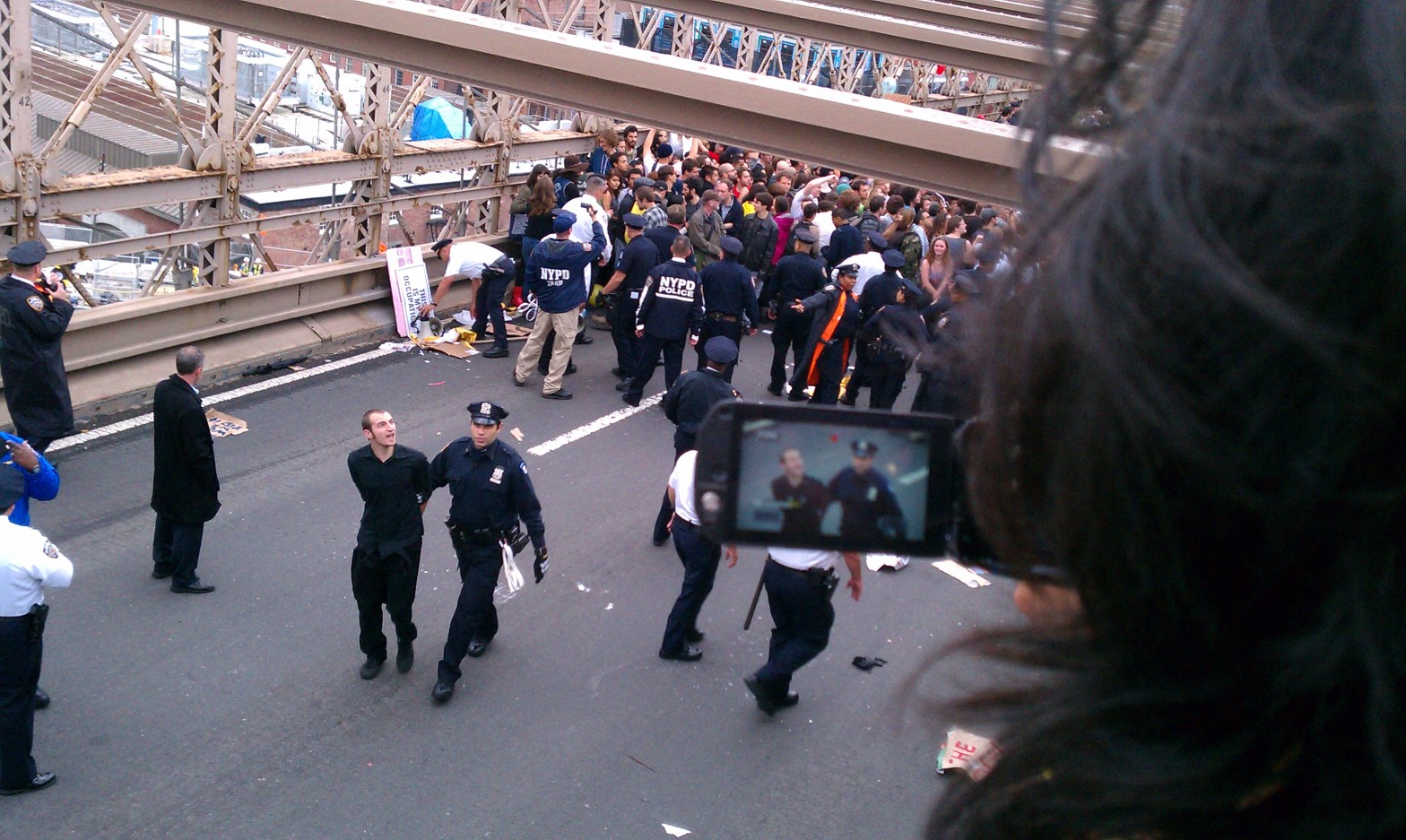
Citizen journalism during the Occupy Wall Street protests on Brooklyn Bridge, by Nick Gulotta

These new media forms have inspired and covered new protest movements. The Occupy Wall Street Movement from 2011 was inspired and coordinated through social media platforms like Facebook and Twitter; Black Lives Matter and the protests against police brutality across the US since 2014 were informed by videos posted to YouTube of incidents of police violence and injustice; the Democracy Spring marches on the US Capitol in recent weeks have been covered almost exclusively by online media, with cable news networks devoting literally less than a minute to the protests.

Perhaps the most revolutionary of these new reporters and activists come from the Middle East. In Israel and the Occupied Palestinian Territories, access to the internet is re-moulding Palestinian models of resistance to Israeli occupation, leading some to dub the recent unrest the ‘Digital Intifada’. The protests and attacks are leaderless, anarchic, and almost impossible for the Israeli government to repress. Videos of the protests are spread rapidly through social media by young reporters, some as young as nine years old, who film protests and confrontations with IDF troops. More disturbingly, online videos instructing Palestinians to ‘stab a Jew’ have motivated hundreds of seemingly random attacks, which have led to dozens of Israeli deaths, and almost two hundred Palestinian deaths.

Perhaps the most widely covered examples of this dark use of online media is that by the Islamic State group. The group’s main propaganda outlet is through the internet, in a constantly shifting battle with intelligence agencies, social media corporations like Twitter and even online groups such as Anonymous. The group attracts recruits by publicising slick propaganda videos of an idealised version of their caliphate through the use of social media and messaging services. They also put out videos of their atrocities, an effective form of psychological warfare against IS’ alleged arch-nemesis, the West.

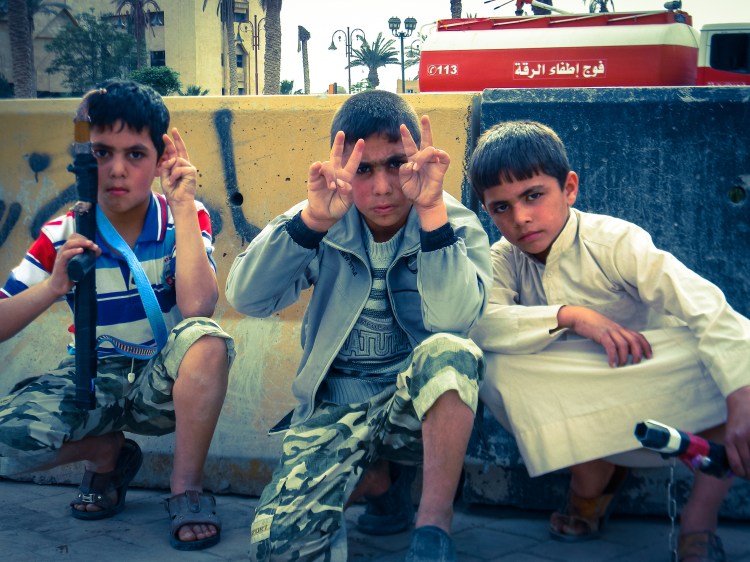
Boys in Raqqa, Syria, by Beshr Abdulhadi

Islamic State have shown the dark side of online activism in a manner that is both horrifying and unprecedented, and many casual observers of the digital revolution could be swayed into believing that the future of online activism is headed to an extremely dark place. However, perhaps the most revolutionary online activists in the digital revolution are a group that are combating IS extremely effectively using online platforms. Soon after IS took control of Rappa in 2014, an underground movement of young activists and reporters (many of whom had been filming since the start of the civil war) sprang up. Adopting the name ‘Raqqa is Being Slaughtered Silently’ (RBSS), these activists spread videos showing IS’ brutality in the city and, perhaps even more effective, the group’s everyday incompetence in governing a city in near-permanent chaos. Given the fact that prior to RBSS’ efforts no other information comes out of the caliphate’s capital besides IS propaganda, the activists’ message is a powerful counter to the extemists’ material. Amateur videos of enormous food queues, squalid hospitals and overcrowded and under-resourced schools undermine IS’ slick propaganda campaign. RBSS’ effectiveness as an online activist group stands not only because of their powerful challenge to IS, but also because of their resistance to IS’ crackdown on their activities. When militants began confiscating the phones of those observing their events, activists used software to hide their material from casual searches. When the Islamists banned the use of wifi in order to stop footage getting out of Raqqa, the activists devised a new (and still secret) method of getting their footage to fellow activists in Turkey.

IS has engaged in a campaign of intimidation and murder in order to stop RBSS. By late 2015 they were even resorting to sending assassins across the Turkish border to hunt down activists. In October two young activists, aged 21 and 18, were beheaded by a team of killers in Sanliurfa, a Turkish border town. In December an experienced filmmaker, Naji Jerf, was shot dead in a drive-by shooting in Gaziantep. These murders drove RBSS underground in Turkey, and many members have fled to Europe; but they continue their work. They have thwarted hundreds of IS attempts to hack their website and are even in the process of expansion. The group’s coordinator for activities in Raqqa, a 24 year old named Sarmad, is recruiting media activists in the IS-held city of Mosul, Iraq.

The activities of Raqqa Is Being Slaughtered Silently and the continuing failure of the world’s most powerful terrorist organisation to put a stop to their activities shows how effective an online revolutionary movement can be. RBSS’ message against IS has proved resilient to every measure of repression; confiscation and prohibition (traditional government measures), online attacks and hacking, and even terrorist intimidation and attacks. Their revolution is not being televised, in the way that IS’ atrocities are constantly splashed over the headlines of CNN or the BBC, but their resilience as a group proves that their revolution no longer needs the help of television to get the message out.

For more information on ‘Raqqa is Being Slaughtered Silently’, visit their English-language site here.

Corruption in Brazil: Petrobras and Politicians

The Brazilian congress has recently voted to proceed with the impeachment of President Dilma Rousseff, on the grounds that she used money from state banks to cover budget gaps (notably, she is not faced with accusations of illicit personal enrichment.) Corruption has had a long history with Brazil. It is ingrained in the culture of companies and the government, and removing its influence going to be a long and painful process. Yet, beyond an economic or political problem, corruption is a humanitarian issue. It undermines democracy and the rule of law, and erodes public trust in the government. As the Petrobras scandal unfolds, it is clear that the Brazilian people are tired of the rampant corruption that afflicts every level of politics.

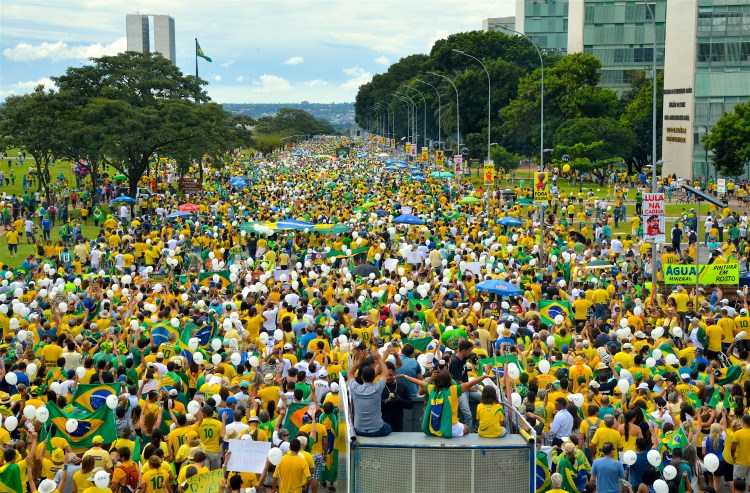
Anti-government protests in Brazil in March 2016, by Agência Brasil Fotografias

Brazil is a big country; the 5th largest in the world, with the 7th largest economy, and it is the world’s 9th largest producer of petroleum. That petroleum is produced solely by Petrobras; Brazil’s largest company, and one of the world’s largest companies. It is entirely controlled by the government, who is also its largest stakeholder, and it accounts for roughly 10% of Brazil’s GDP. For comparison, Apple, America’s largest company, is responsible for 0.5% of the US’s GDP. Clearly, this kind of government control provides ample opportunity for corruption and graft. In an ironic twist, Petrobras was actually voted as the world’s most sustainable oil company of 2008. Among other things, this position is a measure of a company’s social responsibility, ethics, and transparency. Clearly, recent events paint a very different picture.

From 1964 to 1985, Brazil was ruled by a military dictatorship. Though corruption was rampant under the leadership of the military, Brazil experienced years of remarkable economic growth, dubbed the ‘economic miracle.’ In 1985, following a period of economic turmoil, the military peacefully transferred power back to civilian hands. However, it is important to remember that the current Brazilian government is only 30 years old. It is still a young democracy, and one that faces difficult challenges Years of military rule continue to haunt the nation, and the legacy of that rule continues to shape and influence contemporary Brazilian politics. One thing that the civilian government inherited was a culture of bribery and corruption that continues to plague both companies and the government.

Yet, the story is not so black and white. Many of the politicians calling for Ms. Rousseff’s impeachment are, themselves, being investigated. Vice President Michel Temer, who is expected to take over if Ms. Rousseff is forced to step aside, has been accused of being involved with a kickback scheme at Petrobras, receiving payments from a construction company for contract favors, and being party to an illegal ethanol purchasing scheme. Renan Calheiros, the Senate leader, also faces a catalogue of accusations, including receiving bribes from Petrobras, tax evasion, and allowing a lobbyist to pay child support to Calheiros’ daughter from an extramarital affair. The speaker of the lower house, Eduardo Cunha, is on trial at the country’s highest court, the Supreme Federal Tribunal, on charges that he accepted $5 million in bribes from Petrobras. These politicians represent only a fraction of those who stand accused of bribery and corruption. Altogether, about 60% of the 594 members of Brazil’s congress face serious charges, ranging from bribery and electoral fraud to kidnapping and homicide. While no one can claim that Ms. Rousseff is popular in the country – she has single digit approval ratings, and the economy is in the midst of a deep recession – there are accusations that the impeachment is less about justice and stamping out corruption than an effort by shady politicians to shift attention and power. The words ‘conspiracy’ and ‘coup’ have been used by the Rousseff administration to describe the impeachment proceedings.

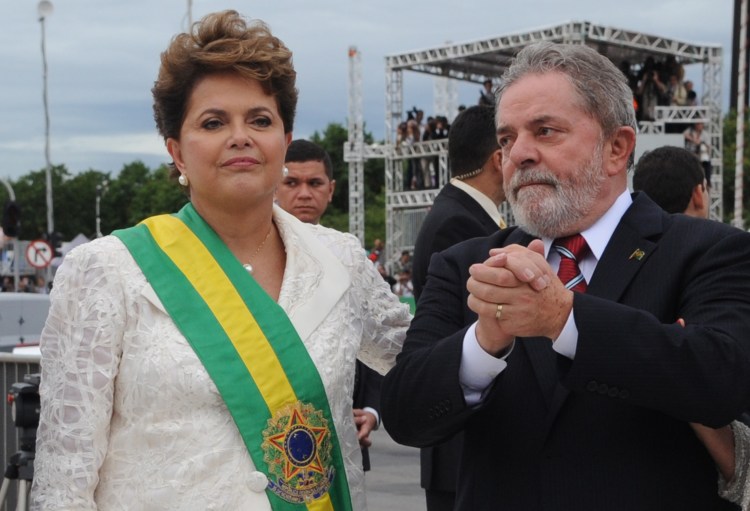
President Dilma Rousseff with former President Lula, by Fabio Rodrigues Pozzebom

Another key player in the drama unfolding is Luiz Inácio Lula da Silva, known simply as Lula. Lula served as the president from 2003 to 2008, during which time Brazil experienced a period of profound economic and social development. One of his most notable achievements is the Bolsa Fámilia program, which essentially paid low-income families to send their children to school and have regular health checks. This program is credited with lifting millions out of poverty. Lula left office with an unprecedented 83% approval rating, making him not only the most popular president Brazil has seen since the end of the military dictatorship, but one of the most popular leaders in the world. Yet, for all his successes, Lula’s presidency was not without incident. In 2005, it was revealed that members of congress were being paid $12,000 a month to vote for legislation favored by the ruling party. However, Lula was never directly implicated, though several high-ranking members of his government resigned, and he went on to win the next year’s presidential election. In Brazil, it is so common for massive scandals to simply fizzle out without any real consequences or changes that they have a phrase for it, acabou em pizza, literally “it ended up in pizza.”

However, the recent scandal and investigations have threatened even Lula. It was reported that charges involving money laundering and bribery were being levelled against him. His home was even raided, and Lula himself was taken to the police station for questioning as part of a larger corruption investigation. Yet, in a stunning turn of events, it was announced that Ms. Rousseff would appoint him to her cabinet, a position that would give him immunity to all but the highest federal court. This prompted both public and judicial outrage. Now, the judiciary is in turmoil, as judges from both sides try to protect or condemn Rousseff and Lula.

It is impossible to say how this story will end. It is clear that some of the most prominent politicians will not survive the scandal, making it that much more difficult for Brazil to lead its way out of this problem. In the short term, this will create yet more turmoil and instability, but in the long term, it can help to limit the prevalence of corruption, and help to regulate Brazil’s culture of corporate and government corruption. Whether Rousseff retains power and who will be elected to the house once the government has stabilized will say a lot about the future of the country, and its dedication to fixing its corruption-riddled government.

Yemen: Children of a Forgotten War

The head of the International Committee of the Red Cross, Peter Mauer was quoted as saying “Yemen after five months looks like Syria after 5 years.” The Republic of Yemen is at risk of becoming a failed state as a result of the fighting currently ravaging the country. It is a crisis that, sadly, barely registers on the word’s radar. More than 6,400 people have been killed and over 30,500 injured in the past year. Children are not safe anywhere and are paying the highest price. At least 6 children were killed or maimed every day over the past year, and that is only the cases that have been verified.

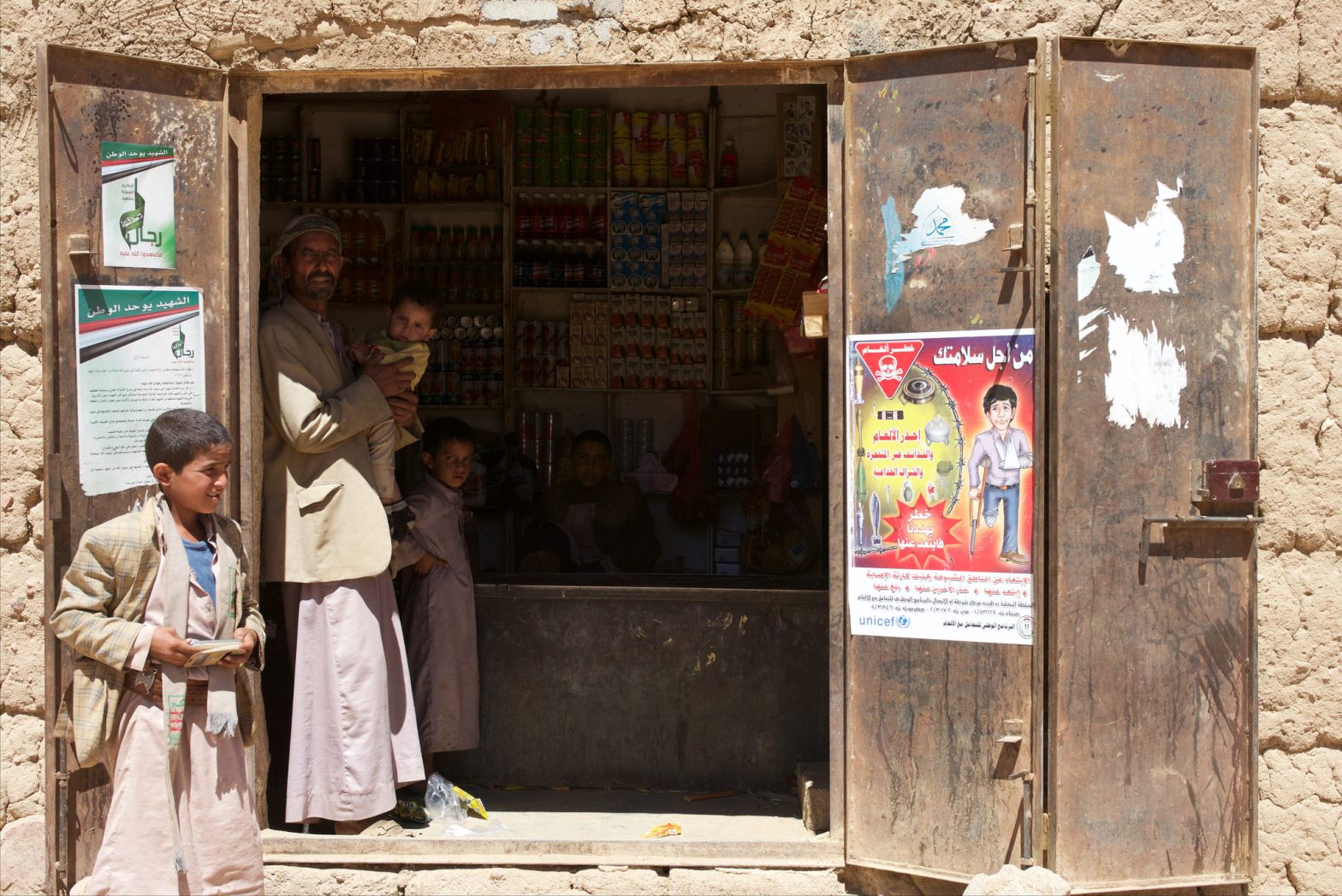
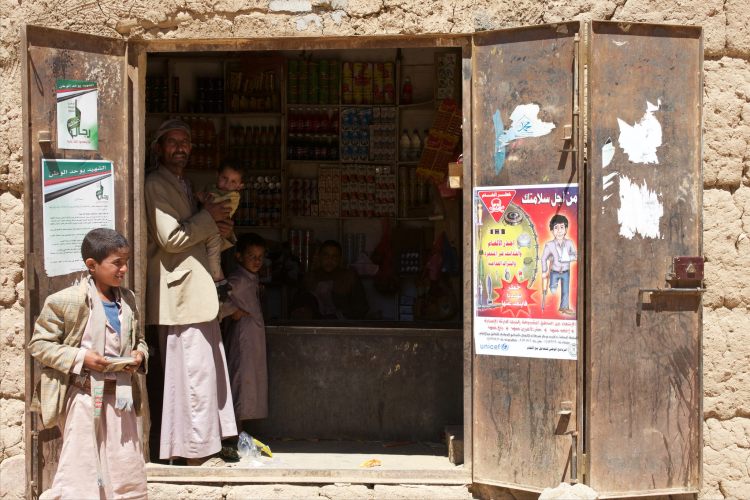
Messages on shop warning parents and their children about unexploded bombs,

cluster munitions, and mines, by Julian Harneis

Since March 2015, Yemen has descended into conflict. Fighting between several different groups has put the country on the edge of a civil war. The main fight is between forces loyal to the President Abdrabbuh Mansour Hadi and the Zaidi Shia rebels, called the Houthis. A coalition led by Saudi Arabia answered President Hadi’s request to intervene and has since launched numerous airstrikes on Houthi targets. Almost half of those killed during the airstrikes were civilians. The High Commissioner of the UN Human Rights Council condemned the repeated unlawful killing of civilians by the Saudi-led coalition. “In January, a leaked UN report accused the coalition of ‘widespread and systematic’ attacks against civilians. The coalition says it greatly regrets civilian deaths, which it insists are unintentional.” The UN Panel of Experts on Yemen documented 119 coalition attacks that violated the laws of war in a report made public on 26 January. UNICEF reported that in the past year at least 934 children were killed in the fighting, 61% of them in airstrikes, and an additional 1,356 were wounded.

Secondary effects of war and neglect also kill. Before the conflict, about 40,000 children under the age of five died from preventable diseases each year, but an estimated 10,000 more this past year have been lost to disease due to lack of clean water and health care. The UN says that at least 2.2 million children are suffering from or at risk of malnutrition. Even before March 2015, almost half of the 21.2 million Yemeni population lived below the poverty line with almost 16 million people in need of some form of humanitarian assistance. The World Food Programme estimated that 14.4 million people are considered food insecure and 7.6 million severely food insecure. Most of those in dire need are women and children, and “Yemen has one of the highest rates of child malnutrition in the world.”

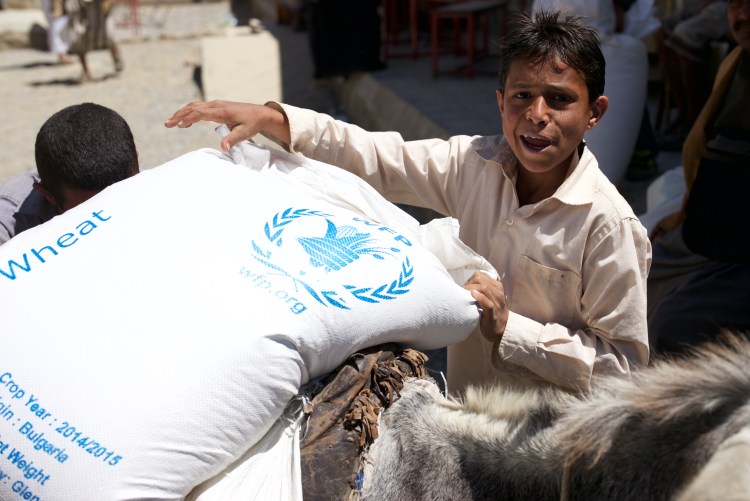
WFP food distribution in Raymah, by Julian Harneis

Food prices spiked last September when the fighting between the Houthis and President Hadi’s supporters escalated. The national average price of wheat flour is now 55% higher than it was in the pre-crisis period. Yemen usually imports more than 90% of their food. The fighting around the port of Aden and the naval embargo has stopped most of the imports from reaching the country. Commercial imports have also decreased over the past two months. In February, only 15% of monthly fuel requirements were delivered while food imports fell by a quarter. “A lack of fuel, coupled with insecurity and damage to markets and roads, has also prevented supplies from being distributed.” Imports of fuel are essential for maintaining a good water supply. Damage to pumps and sewage treatment facilities from airstrikes have left 19.3 million people without access to safe drinking water.

The lack of supplies has caused health services across the country to decline. Safa Al-Ahmad, a BBC journalist, made it to the besieged city of Taiz, Yemen’s second largest city, at the heart of the civil war. She saw doctors struggling to decide which patients to treat with their limited supplies of medicine and oxygen and whom they would have to leave to die. The Houthis mounted a siege on Taiz and managed to cut off almost all routes into the city, thus preventing basic supplies from getting in by road. Now, the only ways around the blocks are mule tracks through the Sabr Mountains. “Everything – flour, rice, cooking gas, diesel, medicine – has to come over these trails to reach the starving and embattled people of Taiz.” Yemenis on both sides of the conflict are struggling. The city of Sa’dah lies in the heartland of the rebel Houthi north. Thousands of airstrikes have been launched on the area by the Saudi-led coalition. The damages have only left one emergency facility in the province. Last year, an ambulance and three centers run by the international medical charity Medicins Sans Frontieres (MSF) were hit “killing at least 8 people and depriving hundreds of thousands of access to emergency care – despite the charity providing their co-ordinates to all sides.” In January, a missile hit the Shiara emergency room, also a MSF facility, in the nearby Razah district. Getting to an equipped medical facility can be extremely difficult and dangerous for Yemenis. Yemenis do not feel safe in hospitals, and for good reason.

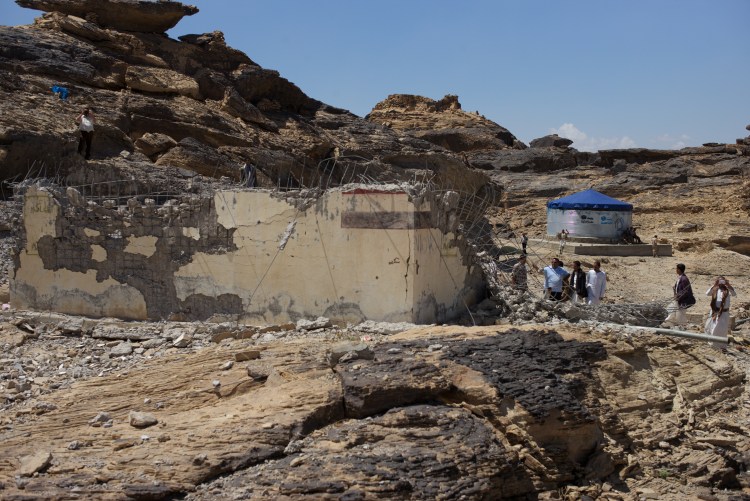
Reservoir for 10,000 people in Sa’dah destroyed by airstrike,

emergency water tank in background, by Julian Harneis

On 10 April, the Saudi-backed government and the Houthi rebels entered a Cessation of Hostilities. Humanitarian aid forces were able to take advantage of the cessation. A statement to the Security Council on the humanitarian situation in Yemen from 15 April outlined some of these efforts: UNICEF has restarted a water rehabilitation facility in the Kitaf district that provides for around 10,000 people, efforts are being taken to reopen some 100 schools in Sa’dah, vaccination teams are now able to go door to door, and three mobile health and nutrition teams were deployed in Taiz. All of this still is not enough. Assistant Secretary-General for Humanitarian Affairs, Kyung-Wha Kang, stated “I underscore that the terms of the Cessation of Hostilities not only include a halt in hostilities but also an obligate that parties allow unhindered humanitarian assistance. I remind all parties that this facilitation is an obligation under International Humanitarian Law.”

Most response efforts for Yemen remain critically underfunded. The Yemen Humanitarian Plan has only received $296 million, a mere 16% against the $1.8 billion requested, and UNICEF has appealed for $180 million to finance its programs in Yemen for 2016 but has only received 18% of that amount.

If you would like to help, you can donate through UNICEF here or through the World Food Programme here.

Saudi Arabia: Behind the Veil

Women and girls: do you play or compete in a sport? Do you wear the clothes that you have decided you want to wear? Do you sit in the same classes, offices, and restaurants as men and boys? Do you drive a car? Do you go to the doctor whenever you would like or need to? Could you imagine not being able to do those things, or possibly only be allowed to do them with the “protection” of a man, a man who is related to you? In Saudi Arabia, women are not considered of equal value to men and experience what can be viewed as punitive restrictions to their freedom.

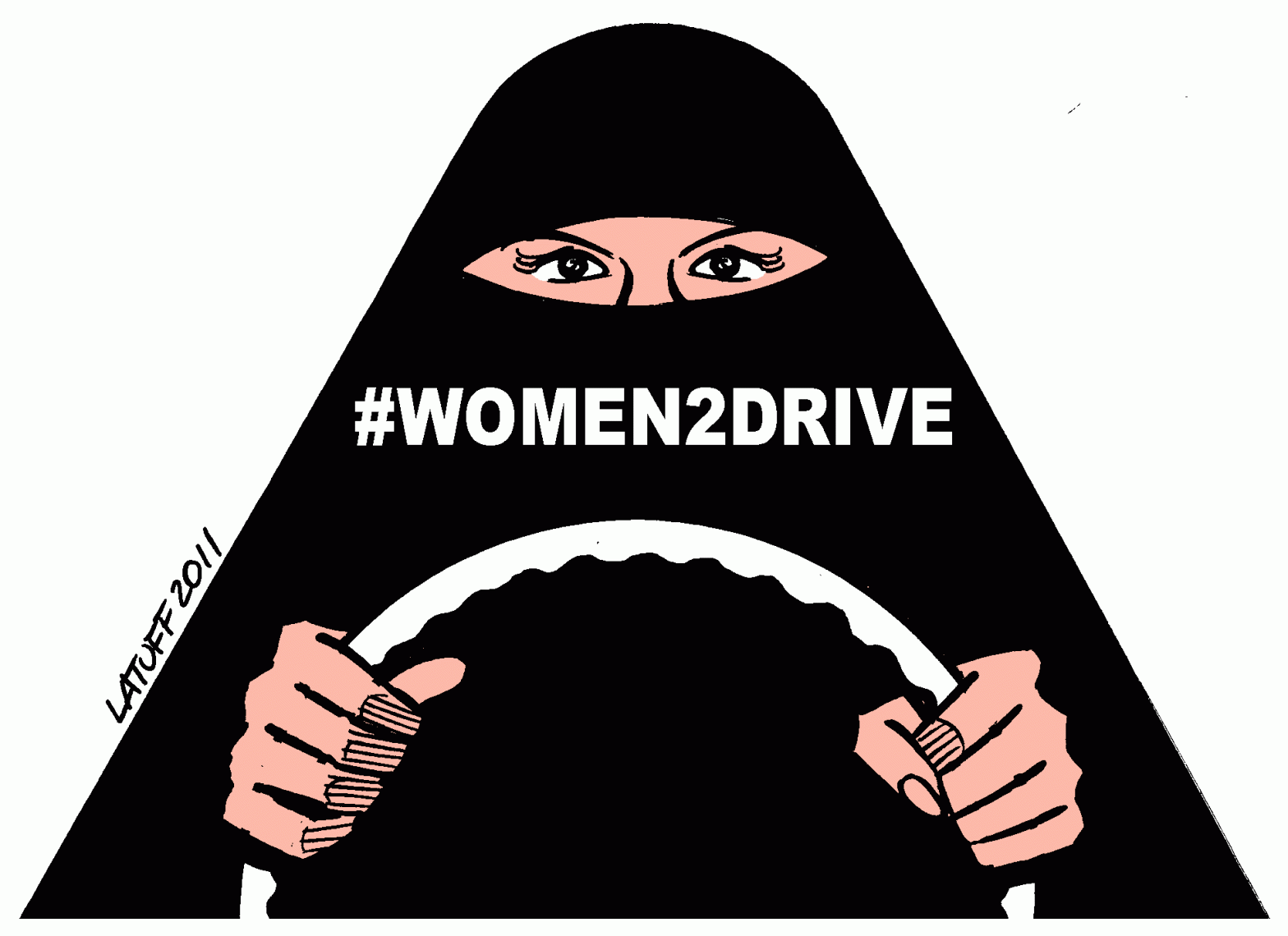
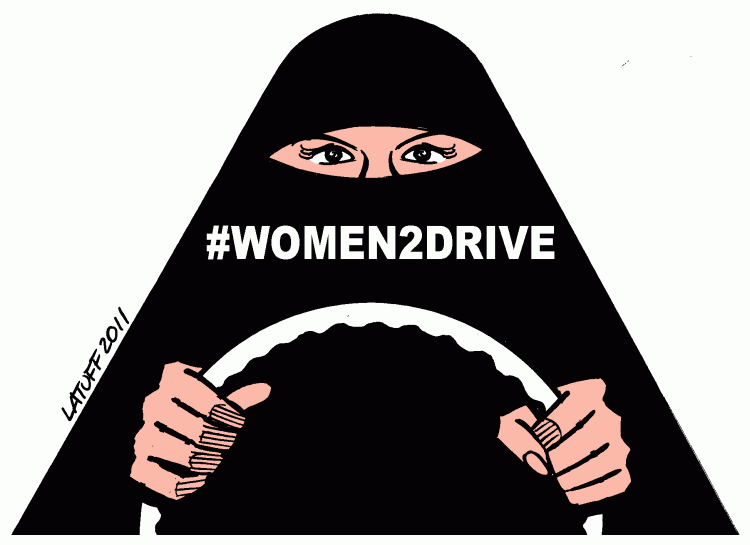
A cartoon for the #women2drive movement drawn by Carlos Latuff

Violations against women and women’s rights are common throughout the Arab World. However, Saudi Arabia is one of the most prominent offenders. There are numerous abuses that compromise women’s freedom in Saudi Arabia, including restriction of movement, decision-making, and personal expression; limited participation in athletics; violence; segregation; and rape. According to Reuter’s reporter Karrie Kehoe, “Saudi Arabia is polled third-worst overall for political representation and inheritance rights” out of countries in the Arab World.

The primary oppressive policy in Saudi Arabia is the requirement that Saudi women be escorted by a male guardian “whenever they leave the house.” These male guardians are referred to as mahram, which in Arabic means forbidden. This terminology shows the intensity that Saudi laws place on the limitations of women. Without their mahram, or their mahram’s permission, women are not allowed drive, travel or obtain passports, go to school, open a bank account, or get married or divorced, according to The Telegraph. One of the most publicized violations of women’s rights is the ban on women driving. In Saudi Arabia women are not permitted to drive themselves, and foreign women visiting Saudi Arabia are not allowed to rent cars on their own or drive them. Loujain Hathloue, a Saudi women’s rights activist, once attempted to drive herself across the border into Saudi Arabia. She was arrested and imprisoned for 73 days without trial.

There are several enforcers of these laws and bans oppressing women, one being the mutawa, or the ‘Religious Police.’ The mutawa is in charge of enforcing Shari’a Law, or Islamic Law, in Saudi Arabia, and they take their job extremely seriously. Saudi women are strongly encouraged to follow a strict dress code requirement which consists of an abaya, which is a long dress (typically black) covering all skin but the head and which women are required to wear in public, and a hijab, or headscarf. The Week quoted the Arab News saying “women should wear ‘modest’ clothes that do not ‘show off their beauty,’” and in 2002 fifteen Saudi schoolgirls were killed in a fire because “the mutawa wouldn’t let them escape without their headscarves and abayas.” The mutawa, as well as many mahrams, use violence to ensure that women follow the strict rules imposed on them. According to Hala al-Dosari, another Saudi women’s rights activist, “violence is used [in] a disciplinary or controlling way.” ITV’s documentary Saudi Arabia: Uncovered reveals acts violence directed toward women; scenes show women being shoved to the ground by men, one woman falling into a grocery store aisle, and even a gruesome public beheading.

Woman on the floor after being pushed to the ground by her mahram, screenshot from Saudi Arabia: Uncovered

An additional form of oppression in Saudi Arabia is segregation. Almost every public space, including work spaces, banks, universities, and restaurants, have separate spaces for women and men. According to journalist Maureen Dowd, “restrictions on mingling between unrelated members of the opposite sex remain severe [in Saudi Arabia]. Recently, a Saudi cleric advised men who come in regular contact with unrelated women to consider drinking their breast milk, thereby making them in a sense ‘relative,’ and allowing everyone to breath a sense of relief. An example of the intensity to which Saudi society follows these laws is a sign placed recently in the front window of a Starbucks coffee shop in Riyadh reading: “Please no entry for ladies only send your driver to order thank you.” When journalist Dowd ordered a coffee in the “deserted men’s section” in the café of her hotel in Jidda, the waiter refused to serve her until she “moved five feet back to the women’s section.”

This segregation has profound consequences on the making of the laws in Saudi Arabia. Women were only allowed to vote in the municipal elections for the first time in 2015, as mentioned by The Week. This is the first of several steps currently being taken in Saudi Arabia to help women gain more rights. There was a campaign called Women2Drive in Saudi Arabia and, although unsuccessful, it helped to spread the message of female oppression in the Saudi Kingdom. Additionally, according to Human Rights Watch there is discussion “of introducing physical education for girls in Saudi public schools,” which would bring and end to the current prohibition of sports for women.

However, there are still many steps that need to be taken before Saudi women have basic human rights. In Saudi Arabia, marital rape is not considered rape, and sufferers of rape are in danger of being accused and charged with adultery. Additionally, rape and violence are not confined by age or social status. Journalist Donna Abu-Nasr from the Washington Post explained the severity of the Saudi position on rape when she wrote about the story of a young girl who went to the police in 2006 “to report she was gang-raped by seven men,” and was then punished and “sentenced to more lashes than one of her alleged rapists received.” This is a common tragedy for women and girls who claim to be raped without proper witnesses, referring to their mahrams.

As a result of the difficulty of getting into Saudi Arabia as a tourist, journalist, or activist, it is hard to support the women from within Saudi Arabia. One of the main reasons that many believe that Saudi Arabia has not been influenced by other states is because its power as one of the largest oil producers in the world has countries reliant upon said resource, which makes them reluctant to jeopardize their supply of the oil. One strategy to spread awareness and support is to distribute the message of ongoing abuses to countries where women have the right to speak their minds. This may compel governments to pressure Saudi Arabia into changing or at least modifying its ways. Other ways of effecting change are contributions of funds or time to supporting campaigns such as Women2Drive and “The Drive For Freedom,” spearheaded by women’s rights activist Manal al-Sharif.

Saudi Arabia has taken a few small steps forward in improving women’s rights. However, it remains one of the most inhospitable places for women to live, and there are weekly beheadings in Deera Square, now referred to as Chop Chop Square. Women and men around the world should be aware of the infringement of rights that women in Saudi Arabia endure to this day. As a finishing note, it is important to remember that each culture has its own set of values, and that each culture is entitled to pursue those values, however, others still must recognize when there are abuses against basic human rights.

Spot the Difference: Transnational Corporations and Transnational Organised Crime

In their Strategy to Combat Transnational Organized Crime, The US National Security Council defines said criminal organisations as:

[T]hose self-perpetuating associations of individuals who operate transnationally for the purpose of obtaining power, influence, monetary and/or commercial gains, wholly or in part by illegal means, while protecting their activities through a pattern of corruption and/ or violence, or while protecting their illegal activities through a transnational organizational structure and the exploitation of transnational commerce or communication mechanisms.

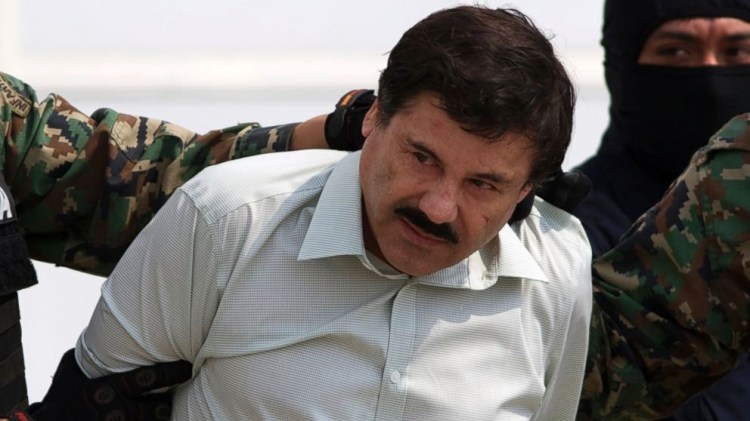
Most wanted drug lord Joaquin Loera Chapo Guzman captured in Mexico, Feb 2014

It’s a somewhat complex definition. But to deconstruct it a little, transnational organised crime groups are usually characterised by:

  • Economic gain as a primary goal

  • Violence and/or intimidation

  • Attempts to gain political and/or commercial influence through both corruption and legitimate means

  • The exploitation of differences between countries’ legal codes in order to further their objectives and/or avoid detection

  • An organisational structure that attempts to protect leaders and members from detection and/or prosecution

Basically, organised crime is bad. We know this. We are conditioned to believe it from a young age. We hate Captain Hook and his pirate cronies with a passion as soon as we are old enough to boo; we jeer as Scooby’s enemies are foiled, relishing their bitter cries (I would’ve gotten away with it too, if it weren’t for you meddlesome kids – and your dumb dog!). Of course we do. Organised crime facilitates poaching, slavery, the trafficking of sex, arms and drugs, and money laundering. Drug-related violence in Columbia has at times reached levels characteristic of small civil wars; the illicit trade in toxic waste poses a serious environmental threat; and there even exist known instances of collaborations between transnational criminal organisations and terrorists.

But bear with me while I argue that it isn’t as black and white as your favourite old gangster movies.

Because ultimately, a mass of human rights abuses are being perpetrated by ‘legal’ transnational and multinational corporations as well. If organised crime is characterised by violence, then allegations against UK company Gamma that it sold invasive surveillance technology to be used by the Bahrain government to target, arrest, and torture human rights activists, would see it fall into this category. If by intimidation and forced labour, then FIFA’s treatment of migrant workers on the Khalifa international stadium in Qatar, including the confiscation of passports, false promises of pay, and the use of threats to respond to complaints, would qualify it. If by the exploitation of foreign laws more amenable to high profits, then brands such as GAP, H&M, and Primark associated with the Rana Plaza sweatshop which collapsed in April of 2013 and took with it 1138 lives, are certainly guilty. And if it is defined by the organisational insulation from of leaders from persecution, then so are an entire horde of businesses around the world, as well as governmental institutions, and probably your next door neighbour. Of course, these cited examples are merely the tip of the iceberg.

TNCs place profit above all else. In response to criticisms pointing this out, the idea of ‘corporate social responsibility’ has come about – but this in most cases appears as a shallow posturing and certainly does not (or cannot) atone for the aforementioned atrocities. For example, several firms with large African workforces offer to cover the costs of workers’ HIV/AIDS treatments, which looks and of course is honourable – but one notes that it also benefits the company by increasing productivity and recruitment. In this sense, it is just good business. And it is a strategy recognised, too, by organised crime groups. For, as recognised by the US National Security Council, these groups are self-perpetuating; they have an interest in survival. And sometimes, those interests necessary for survival will converge with those of the state, government or population. For example during WWII, the US mafia guarded the waterfront against German sabotage. Furthermore, in seeking long-term stability criminal organisations may invest large amounts of wealth (procured illegally) into the local economy, such as through tourism or commercial real estate. They may even provide services that the state has failed to, such as schools and hospitals, to further embed themselves in their local communities. In essence, it is their desire to perpetuate themselves, rather than legal institutions that nevertheless prevents them from undertaking highly destructive actions or certain violations of human rights. Further still, their inherently lucrative activities can actually very much improve the lives of those living in communities in which goods and services and other means with which to support themselves are severely lacking – in which the ‘shadow economy’ is really the only functioning economy. These are the ‘virtues’ of the criminal world, unsung by governments and the mainstream media.

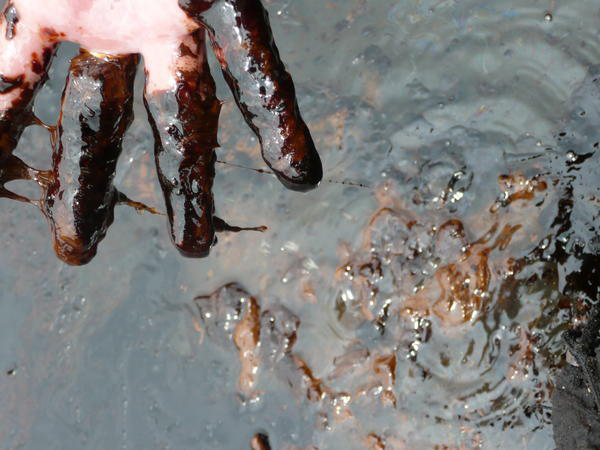
An Amnesty International mission delegate’s fingers covered in oil from an oil spill in the Niger Delta, by Jenn Farr

My goal in writing this article is not to convince you that we should be supporting transnational criminal organisations. I am merely postulating that the terms ‘legal’ and ‘illegal’ may not be helpful, or to go further may actually be unhelpful, binaries in their categorisation. This is demonstrated in the case of Shell and its oil spills in the Delta. An investigation carried out by Amnesty International revealed an array of bad practice, denial, obfuscation and misinformation by the oil company. They failed to address equipment failure and pipe corrosion for years, attacking illegal activities in the region as the source of the majority of oil pollution – claims that have been comprehensively discredited. After a lengthy legal battle Shell has now paid reparations of £55 million to the people of Bodo, Nigeria, and acknowledged its negligence. But the thing about the health of both people and the environment is that it can’t be bought back – and the company has yet to clean up the over fifty-five million litres of oil it has spilled in the Niger Delta since 2007. In cases such as this, both the demonisation of crime groups and the idolisation of TNCs serve together to aid a TNC in its misconduct: evil criminals provide a ‘scapegoat’ with which to hide behind; and principled companies are entrusted with reporting on their own processes and outcomes. Shell was able to mask its inadequacies for years by dominating the investigation and reporting of its own oil spills. Of course, you may insist, there do exist independent bodies for the regulation of company behaviour, but these too are clearly inadequate. To this day in the UK the ‘impartial’ evaluation of alleged breaches of the international standard of conduct is entrusted to the Department of Business, Innovation and Skills – an institution which exists primarily to promote the interests of UK businesses. Thus not only must we question the reliability of businesses said to adhere formal rules and regulations but the very laws and law-makers themselves, and their potential motivations. If we want to put an end to the current system of mass human and environmental exploitation then we must stop associating ‘legality’ with ‘trust’.

Sign the petition to ensure UK companies are held accountable for human rights and environmental abuses at home and abroad here.

You can also join the conversation about human rights abuses within the fashion industry on Twitter this week using #whomademyclothes

Kashmir Who?

The Kashmir Conflict is one of the most heated disputes in today’s international world. Bill Clinton, former President of the United States, has even been quoted with saying that Kashmir is “the most dangerous place in the world.” This is largely due to the animosity and omnipresent fear of war that has loomed over these two nuclear powers since the the British Partition of India in 1947.

In short, the Kashmir Conflict began when Great Britain partitioned India into the Hindu dominated dominion of India and the Muslim dominated West and East Pakistan. This created a massive and violent migration, as Hindus moved out of West and East Pakistan and into India and Muslims moved in the opposite direction. After this migration occurred, the princely states of India were given a choice; join with Pakistan or join with India. Most states chose a side. However, the princely state of Jammu and Kashmir, with a Muslim majority and Hindu leader, decided to remain separate. This abruptly ended when 60,000 Muslim militants supported by Pakistan invaded Kashmir. Seeking help, the Kashmiri Maharajah, Hari Singh, was forced to accede to India in exchange for Indian protection. Since this time, India and Pakistan have been embroiled in a conflict; Pakistan claims that since Kashmir has a Muslim majority it should be a part of Pakistan, while India claims it has legal rights to Kashmir due to the accession. While the fighting has stopped since the 1999 Kargil War, no peace has been made, and the two countries are continually on the edge of war.

A historic art gallery of the Hindu Kashmiri Pandits destroyed and plundered by Veerji Wangoo

Despite the pressing manner of this dispute, the conflict and its ramifications on human rights has been largely left out of international news coverage. Instead, trigger-word articles containing words such as “Donald Trump” and “ISIS” inhabit the front page slots. This may be due to the regionality of the Kashmir dispute. While the Syrian Revolution and the spread of ISIS has rapidly grown due to intense international fear, the conflict in Kashmir has remained largely contained to Southeast Asia. Therefore, the international community feels it unnecessary to publicize. This combination of international ignorance and dismissal is incredibly precarious, as India and Pakistan represent two countries constantly on the brink of war, both with nuclear weapons capabilities.

In some ways, this nuclear capacity combined with international denial has created a vortex for human rights abuses to take place from both sides. While the international community ignores the Kashmir Conflict, both Pakistan and India are free to conduct operations as they see fit, without fear of international intervention. Their nuclear capabilities have given them the power of deterrence, as both sides, unable to combat the human rights abuses that are taking place from the opposing state for fear of nuclear attack, are forced to accept the abuses point blank. The rest of the world, in meanwhile, is too preoccupied to see this.

India prides itself on being the world’s largest democracy, with the word democracy inherently coming from the idea of freedom. India, in an attempt to perpetuate the idea of a free and just nation, largely deny the allegations that they face in regards to human rights abuses in the Kashmir Valley. These abuses are predominantly directed at the Indian Armed forces, who, since the implementation of the Armed Forces Special Powers Act in 1990, have been granted virtual immunity for said abuses under Section 7 of this act.

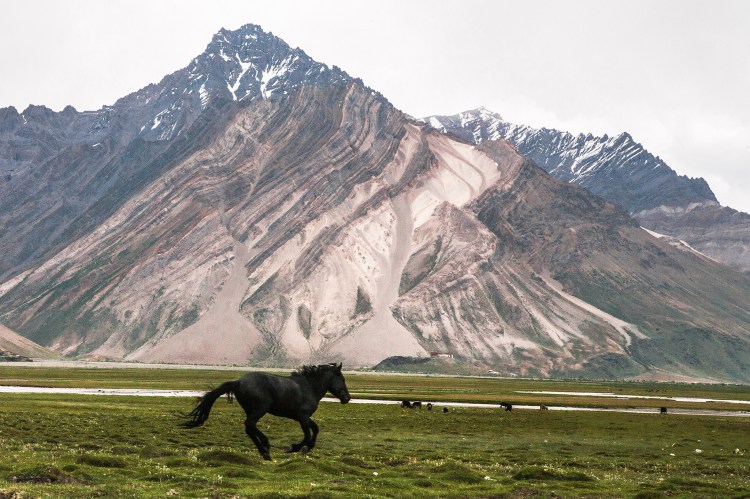
Galloping horse on Rangdum pasture, Kargil district, Jammu and Kashmir by Sandeepa and Chetan

A civil rights group called the Jammu Kashmir Coalition of Civil Society published a report in 2015 titled Structures of Violence in which they named 464 army personnel, 189 government gunmen, 158 Jammu and Kashmir police personnel, and 161 paramilitary personnel guilty of human rights abuses. The group has also exposed more than 7,000 mass graves in the area. Despite this, no action has been taken against them. The Human Rights Watch has claimed that the human rights violations in Jammu and Kashmir by Indian Forces include “extrajudicial executions, rape, torture and deliberate assaults on health care workers. Armed insurgent groups have also murdered Hindu and Muslim civilians, summarily executed persons in their custody and have committed rape, assault, kidnapping and indiscriminate attacks which have injured and killed civilians.” These attacks have largely been aimed at Muslim extremists in Kashmir, however it can be argued that they are simply aimed at those in Kashmir who do not believe in Indian integration, similar to what occurred with the IRA in Northern Ireland.

Pakistan’s human rights violations are slightly different. While India’ have been committed almost exclusively by the Indian Army in Kashmir, Pakistan’s human rights violations exist due to the mass support of terror and extremist militant groups in the country. While it is argued by Pakistan that these groups are not connected to the state, the international community as a whole deems this justification to be fabricated. Throughout the Kashmir conflict it has been continuously proven that militants were in fact aided by the Pakistani government, especially in the case of the Kargil War. The terrorist organization Lashkar-e-Taiba, for example, is being trained in ‘terrorist camps’ in this area of Kashmir. These groups have been largely free to propagate their own extremist Pakistan supporting views, while the government in Azad Kashmir has largely restricted freedom of expression by everyday citizens. Human Rights Watch has also stated that “Kashmiri refugees and former militants from India, most of whom are secular nationalists and culturally and linguistically distinct from the peoples of Azad Kashmir, are particularly harassed through constant surveillance, curbs on political expression, arbitrary arrest and beatings.” This is said to have been done by both the Pakistani government in Azad Kashmir and the militant groups who reside there.

Both Pakistan and India in this case have been subjecting the Kashmiri people to astronomical human rights abuses throughout the Kashmir Conflict. However, when was the last time that it was covered by an international news station? While the Kashmir Conflict and the abuses that follow may be publicized a few times a year by Western news outlets, the violations remain largely unknown. These abuses have been occurring since the conflict began in 1947, however, compared to those in Syria or Libya, the conflict is predominantly ignored. In this absence, Pakistan and India have been able to continue their paths of terror without any international repercussions. This has allowed for the creation of a continuous culture of violence and hysteria in Kashmir that will continue until it is adequately recognized by the international community.

Qatar World Cup 2022: An Ugly Side of Opulence

The FIFA World Cup is the world’s most important sports event with millions of viewers worldwide, generating more than $5 billion from broadcast and advertising. However, this prominent international organisation has been criticised for its failure to consider human rights issues in certain host countries, including Brazil and Russia, and its hesitancy to exercise its influence to ameliorate the situation. In 2010 FIFA awarded the 2022 World Cup to the Gulf state of Qatar and the country began to undertake on immense construction developments, spending more than $200 billion to build stadiums and various other infrastructures necessary to host the event. In 2016, a report by Amnesty International asserted that FIFA has been ignoring the exploitation of migrant workers in Qatar, too. The 80-page-long report was based on interviews with 234 male migrants working either in construction at the Khalifa Stadium, one of Qatar’s main sporting venues, or in landscaping at the Aspire Zone Complex. They identified more than 100 migrant workers employed both on the Khalifa Stadium and at the Aspire Zone who were being subjected to human rights abuses by the companies for which they worked. The overall picture is that one of the richest nations is taking advantage of some of the poorest, thus accommodating modern-day slavery while preparing for the world’s most popular sport tournament. In the conclusion of Amnesty’s report, it was stated that this is largely due to multiple failures from the side of the businesses and organisations responsible for the venue, and “unless there is respect for international human rights standards by all actors, the 2022 World Cup risks being built by an exploited workforce.” However, the Qatari government rejected Amnesty’s claims, asserting that they only examined four companies out of the more than 40 currently engaged on the Khalifa Stadium. In addition, in a letter sent to Amnesty dated 17th March, FIFA stated that they did not agree with the conclusion of the organisation, and it had taken no action to tackle human rights abuses of workers at World Cup sites.

Construction in Doha by Omar Chatriwala

Qatar has a population of two million, but only 10% are actually Qatari nationals; migrant workers comprise more than 90% of Qatar’s workforce. These low-paid migrants, mostly from countries in South Asia such as Nepal, continuously experience abuse and exploitation. Everyone who comes to Qatar seeking employment does so under kafala, a sponsorship system (where the employer is the sponsor), enabling their employers to exercise significant control over their lives. The workers need their sponsor’s permission to change jobs and leave the country. In practice, this enables employers to arbitrarily prevent their employees from leaving Qatar. Additionally, workers can become undocumented when employers report them to the authorities as having fled, or when they fail to renew annual ID cards of their workers. A lack of proper documentation leaves workers at risk of arrest and detention or deportation and further labour exploitation. The Amnesty report also stated that there is an urgent need to reform the kafala system, if Qatar seeks to execute the exploitation of the workforce. The sponsorship system results in many problems, and amongst the most frequently-reported facing migrant workers are dishonest recruitment practices indicating better conditions of work in Qatar than in their home country; compulsion to live in squalid conditions; employers denying them the exit visa they need to leave Qatar; late or non-payment of wages; employers not giving workers proper identity documents, leaving them exposed to arrest; and even sometimes forced labour. Furthermore, according to another report carried out by the Guardian (and based on documents obtained at the Nepalese embassy in Qatar), more than 40 Nepalese workers died at the aforementioned construction sites in just a few weeks around July 2013 as a result of heart failure or workplace accidents due to the poorly-regulated working conditions. According to their analysis, current construction practices will have resulted in over 4,000 deaths by the time of the 2022 event.
FIFA flag and slogan by Thomas Couto

Sadly, the plight is similar in most of the countries in the Gulf region disposing of the same sponsorship system. There are over 15 million migrant workers today, including at least 3.5 million non-Gulf Arabs, 3.6 million Indians, 1.7 million Pakistanis, almost 1 million Bangladeshis, more than 700,000 Filipinos, and over 700,000 Sri Lankans. Migrant workers are engaged in every sector of development activity in the Gulf, and therefore contribute significantly to the economic growth of labour-receiving countries, especially because many Gulf Cooperation Council (GCC) countries experience labour shortage. Ironically, however, migrant workers are treated as a threat to national security by deporting ‘surplus’ emigrant workers, making the renewal of residence permits harder, and by propositioning a quota system to maximise the number of overseas workers. Meanwhile, migrants are often exploited by their corrupt employers. A change in the attitudes and policies of GCC countries is immediately required and long overdue — a change that not only acknowledges the economic benefits of hosting migrant workers, but that also identifies, reveres, and seeks to guarantee their rights.

If you would like to help the work of Amnesty International, please visit this website. You can also get involved with the organisation in St Andrews.