Human Trafficking and the Internet

In February 2017, Ashton Kutcher and his tech company Thorn went viral. Thorn: Digital Defenders of Children is an anti-trafficking organisation that focuses primarily on the use of the internet in facilitating the sexual trafficking of children. Kutcher addressed the United States Senate Foreign Relations Committee to speak about ending modern day slavery, recounting the work that Thorn has done in co-operation with larger tech companies and law enforcement. The Global Slavery Index estimates that there are 45.8 million people living in slavery and a large percentage of victims are being sexually exploited. Thorn and other organisations are recognising the role that the internet plays in human trafficking and are working to fight it.

As commerce moves online so does the seedy underbelly; the so called ‘dark web’ is used to sell everything from drugs to human beings. Research undertaken by Thorn revealed that 63% of underage sex trafficking victims had been advertised or sold online. Kutcher spoke of Spotlight, the online software created by Thorn that turns data on sex traffickers and victims into an asset for US law enforcement to use. As more people use Spotlight, it becomes more efficient and saves unnecessary workload for those working on trafficking cases. The details of how Spotlight works are not available online so that it is more difficult for traffickers to try and work around the software. Statistics from Thorn state that in the past year over 6,000 victims have been identified using Spotlight, making clear the role that online advertising sites play in trafficking.

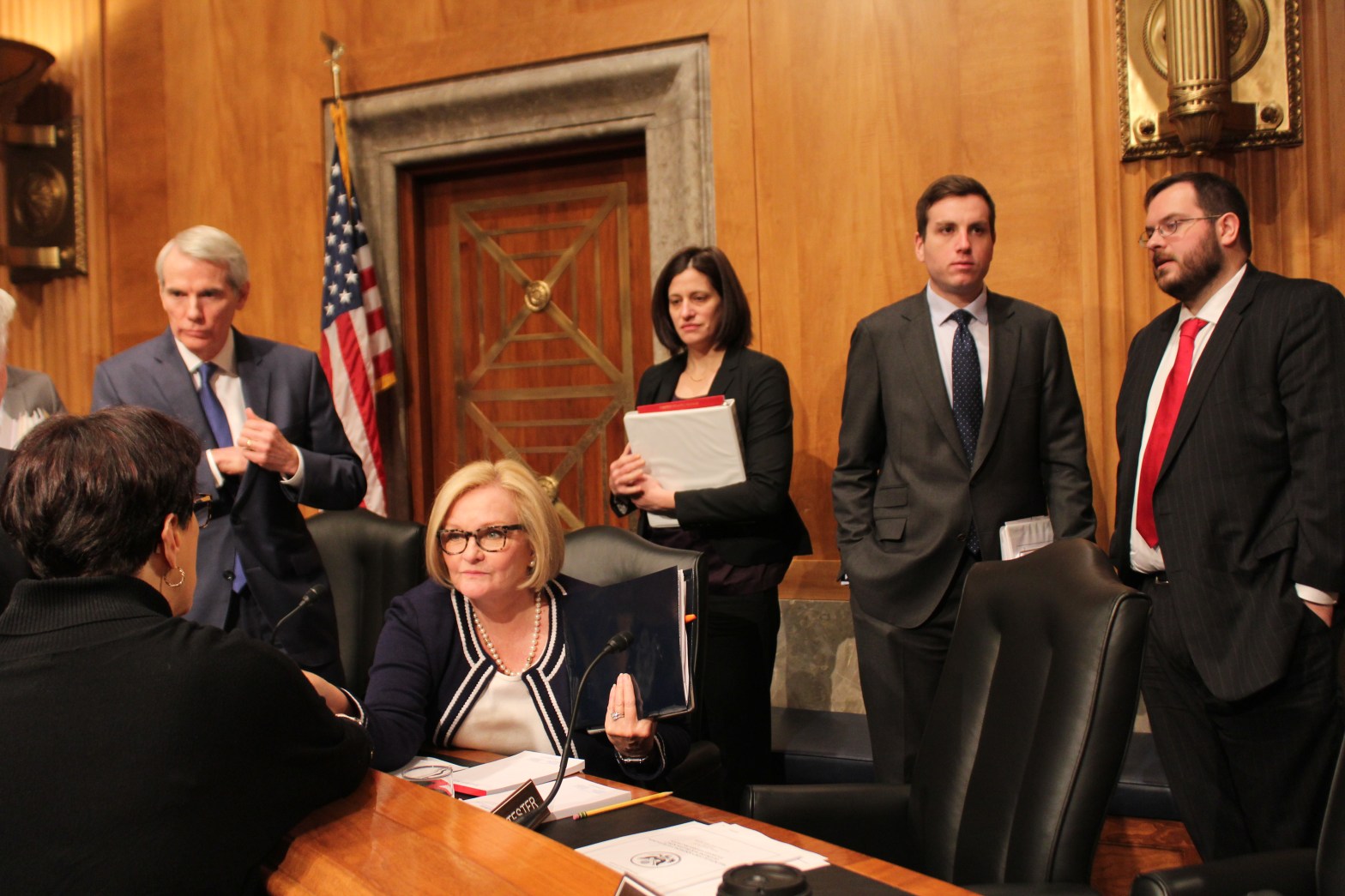
Senator McCaskill addressing backpage.com for their involvement in online trafficking

Online exploitation means that victims are abused from perpetrators both in person and through the internet. The dark web is not a secret, and it is easily accessible by anyone. This means that people across the world and from all different backgrounds have access to a huge catalogue of sexual trafficking victims. One of the easiest way for traffickers to advertise underage victims is on sites such as backpage.com, sites which functions like Craigslist or Gumtree, offering goods and services. A huge amount of revenue was generated from their ‘adult’ advertising section, but in January 2017 this section was taken down. Despite evidence suggesting that they edited adverts which contained words alluding to underage victims, backpage.com has repeatedly denied that their website facilitates the sex trafficking of underage victims. Instead they have framed the accusations as an attack on free speech, claiming that the only way to stop the harassment from the government was to shut down the adult section. The investigation into backpage.com was not one of government censorship, instead it was an attempt to quell the growing number of children being advertised online for sexual exploitation.

Whilst Thorn and other organisations are making huge progress in identifying traffickers and victims, the journey does not stop there. There are many organisations, charities and individuals who are dedicating time and resources to the rehabilitation and recovery process of trafficking victims. Some of the largest and most well-known organisations fighting human trafficking include International Justice Mission (IJM), Stop the Traffik, and A21. All of these organisations have utilised the internet and more specifically social media to raise awareness and support for their missions. On February 23rd, social media was overrun with the hashtag #enditmovement accompanied by photos of red crosses. This was to raise awareness for the ‘Shine a light on slavery’ campaign run by the END IT Movement, a coalition of international anti-trafficking organisations. The 2016 campaign made more than 144 social media impressions, reaching an immeasurable amount of people worldwide. Events such as the Walk For Freedom which was organised by A21 happened in many cities across the world, and even here in St Andrews. High profile celebrity supporters help raise awareness for these organisations indeed during his address Kutcher was wearing the red cross of the END IT Movement.
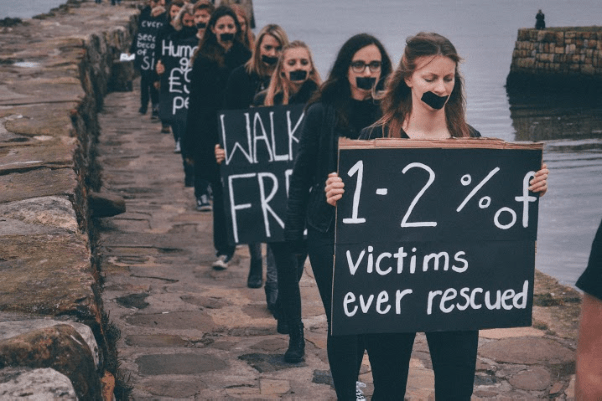
A21 Walk for Freedom held in St Andrews, photo by Alex Shaw

Alongside the important work done by anti-trafficking organisations, there has been a conscious effort by governments worldwide to tackle the issue of modern day slavery. The hearing that Kutcher spoke at was held in relation to the Shine a Light on Slavery Day with the aim to assess US efforts to end modern slavery and human trafficking worldwide. In October 2016, the International Sex Trafficking Summit was held in Waikiki, Hawaii. Representatives from countries including the US, the Philippines and Thailand attended with the intention to discuss strategies and create working relationships based on the common goal of prosecuting sex traffickers. As made evident by the work of Thorn, online traffickers are difficult to pinpoint and even harder to prosecute. UK Home Secretary, Amber Rudd, has recently announced that £40 million will be given to government agencies and organisations that deal with the sexual abuse and exploitation of children. The National Crime Agency will receive £20 million to ‘tackle online child sexual exploitation’. It is evident that across the world governments and those with power are recognising the dangerous role that the internet plays in the exploitation of children, and they are working together to address this.

Collaboration between authorities and charities has started the difficult process of working to eradicate sexual slavery and exploitation. Kutcher closed his emotional address with the profound statement, “technology can be used to enable slavery but it can also be used to disable slavery, and that’s what we’re doing”. The impact of smart technologies will undoubtedly allow progress to happen more quickly and efficiently across the world. However as technology becomes more advanced and adaptable in identifying sexual trafficking, traffickers will find other means to advertise and exploit their victims. Despite efforts from governments and NGOs, the number of people in slavery is rising each year. Due to crises such as the refugee crisis in Europe, there is a new stream of vulnerable people for traffickers to groom and exploit. Traffickers will always find a way to exploit and financially gain from their victims, and no amount of prosecutions will stop this. Human trafficking is a complex issue that has to be combated through education, awareness and the continued prosecution of traffickers.

France the Police State: The Decline of Enlightenment Ideals in the Wake of Terror

On the afternoon of July 14th, 1789 a mob of Parisians stormed the Bastille in the name of “liberté, égalité, and fraternité” as well as a democratic future for France. The French Revolution was characterised by a desire to designate and protect the rights of man. Although almost 230 years have passed since the mob charged the military fortress, notions of democracy, liberty, equality, and fraternity live on engrained in France’s fundamental political and social identity. Ironically, in present times, this date has come to signify the beginnings of France’s devolution into a militarised police state seeking to undermine human rights in the name of national security.

As French citizens, tourists, and expats alike gathered in Nice on July 14th, 2016 to commemorate the sacrifices of the French freedom fighters that came before them, a Tunisian jihadist rammed a truck into the crowd. This act of violence marked the third major terrorist attack to occur on French soil in the span of a year following the infamous Charlie Hebdo massacre and coordinated mass assault in Paris. The November 2015 attack in Paris, that claimed the lives of 130 and wounded many others, led French authorities to enact a state of emergency, granting security forces exceptional powers. Just days before the attack in Nice, French President François Hollande, had announced his intention to end the expansive security measures. However, just two months ago, lawmakers approved the fifth extension of the state of emergency and special security powers that accompany it.

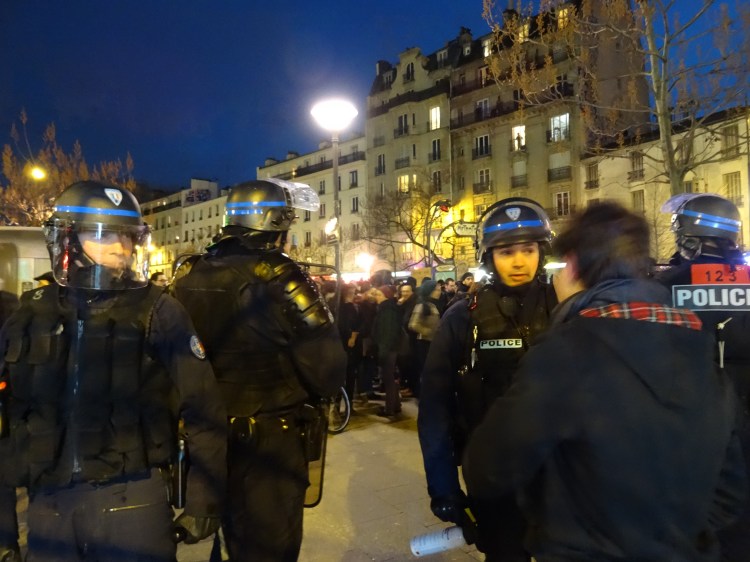
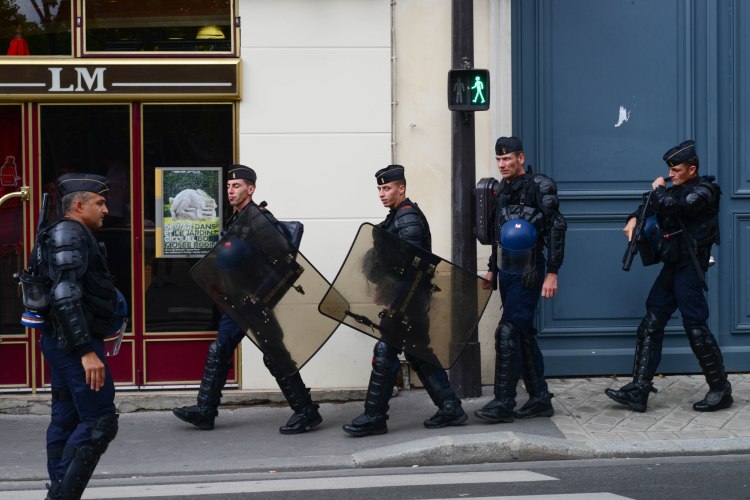
French riot police, by Eric Chan

This latest extension marks France’s longest uninterrupted state of emergency since the Algerian War of Independence during the 1950s and 1960s. French authorities cite the upcoming spring presidential election as justification for the extension arguing increased political activity and gatherings elicit a high risk of terrorist activity. Bruno Le Roux, former president of the Socialist Party and newly elected Minister for the Interior, stated that “despite very harsh blows to terrorist groups in Africa and the Middle East the threat has not diminished in intensity and we would make a serious mistake if we lowered our guard.” Although the socialist government has taken the brunt of criticisms, the extension of the state of emergency passed in the National Assembly on December 15th with 288 votes to 32, signifying that the call for the expansion of police powers does not stem from one party but rather, it is a priority for many.

The État d’urgence, or State of Emergency law, created in 1955 during France’s war with Algeria, grants vast powers to the Minister for the Interior and local government officials including the search of homes and other premises as well as restricting people’s movements without a judicial warrant. According to the Parliamentary Commission tasked with overseeing the implementation of the state of emergency, French law enforcement officials have relied on these expanded powers to conduct 4,292 warrantless raids, 612 house arrests (95 of which still remain under house arrest), and 1,657 identity and vehicle control stops. However, these measures have only led to 61 terrorism-related criminal investigations with individuals questioned largely on the grounds of glorifying terrorism rather than any terrorist undertaking.

Human Rights Watch and Amnesty International have made it clear they are aware of the situation and are working to ensure the expansion of militarised security powers does not become the new norm. Human Rights Watch has expressed disappointment in France’s failure to pursue necessary reforms to counter instances of abuse of power namely after new legislation from July 2015 granted the government sweeping powers for digital surveillance without adequate safeguards against misuse. French authorities have also failed to address and pursue reforms regarding harsh identity checks rooted in ethnic profiling amidst increased reports of islamophobia and anti-Semitic attacks.

Amnesty International has gone on to condemn France’s human rights record reiterating that French human rights are at a “tipping point.” The organisation’s most recent annual report on human rights was strategically unveiled in Paris after Amnesty had accused France of using vague evidence as justification for operations violating and restrictions on human rights. Amnesty chief Salil Shetty calls France the “cradle of human rights” and maintains “there are few countries in the world where human rights are more tightly woven in the national psyche,” highlighting the paradoxical nature of France’s current state. The continued erosion of French human rights has even attracted the attention of the United Nation’s Committee Against Torture, which raised concerns regarding allegations of excessive use of force by police carrying out searches.

Demonstration to protest against the rape of a young man, by Jeanne Menjoulet

The scope of the state of emergency extends well beyond counter-terrorism activity but gives authorities grounds to restrict rights to demonstration and freedom of expression. Reports unveiled French police have used excessive force against protesters in the form of using tear gas grenades, de-enclosing grenades and rubber bullets, and violently charging demonstrators. Shockingly, these tactics have resulted in the injuries of many increasing animosity and tense relations between the police and the public. Clashes between security and citizen have most recently exposed themselves following allegations of the rape of a young black boy by a police officer.

Although with time France’s information gathering and sharing apparatuses have improved, the question remains, why has French security experienced repeated failures? Some point fingers at France’s six intelligence services that often compete with each other rather than work in conjunction. One can also come to conclusions that the continual spread of xenophobic and racist sentiment, especially directed towards French Muslims and immigrants, does not help minimize trends of homegrown lone-wolf terrorist actors.

It seems as if America’s post-9/11 “War on Terror” rhetoric has been exported across the Atlantic. Many argue September 11th marked America’s decline into a security state consumed with expunging jihadist threats both domestically and abroad through the expansion of clandestine organizations’ and the executive branch’s powers. Similarly to the July 15th legislation regarding digital surveillance, the passing of the US Patriot Act gave American authorities the means to tap into the emails and phone conversations of private citizens. Despite a history of “spreading freedom” and humanitarian intervention abroad, the United States has struggled domestically to uphold these same ideals. Although the American and French fervor for enlightenment ideals of democracy and equality remained intact despite both foreign and domestic intervention during the 18th century, it appears the imminent threat of terror has managed to undermine these previously unwavering beliefs.

Lion: How an Oscar-Nominated Film is Helping to Change the Lives of India’s Street Children

The incredible story of Saroo Brierley has been brought to cinema screens with the release of the 2016 film Lion, starring Dev Patel and Nicole Kidman. The film, adapted for the big screen from Brierley’s memoir A Long Way Home, tells the true story of how he reconnected with his birth family in rural India, after having been adopted into an Australian family, by using Google Earth to find the village where he grew up.

Separated from his brother on a train platform at the age of five, Saroo Brierley travelled 1,000 miles from his home by train to Kolkata. Unable to speak Bengali and not knowing the name of his village, he was forced to live both in and around Howrah railway station, the country’s largest train station and the only form of shelter for hundreds of India’s street children, before being taken to a Kolkata orphanage. Fortunate enough to have been adopted by an Australian family, he was raised in Tasmania, far from the poverty of his early life. As an adult, he used Google Earth and his recollection of local landmarks to find the village where he had grown up and was finally able to reconnect with his mother in India.

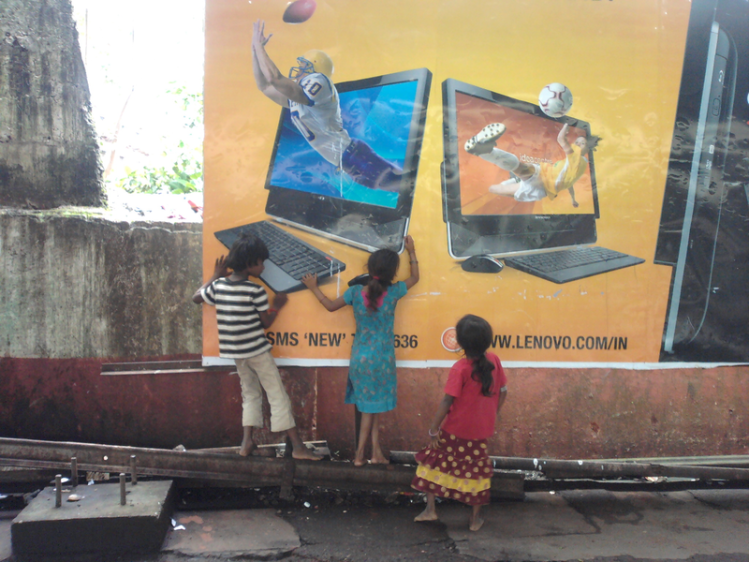
Children at Ulhasnagar Station, 60km from Mumbai, by Lapjat Dhingra

Saroo Brierley’s story has been translated into an emotive and optimistic Hollywood film. In addition to the book that he has written about his experiences, he now speaks publicly about his experiences. However, the story of Brierley’s early life echoes the harsh realities faced by 250,000 children living and working on the streets of Kolkata and of those elsewhere in India. Every year, an estimated 112,000 children arrive at 35 major train stations in India. While some of these children are orphans, other leave behind their homes in the hope of a better life in one of India’s bustling cities. However, they are quickly swept up in the chaos, forced to live on the streets, in slum conditions and in India’s railway stations, where they are particularly vulnerable. These children face daily struggles including hunger and sexual and physical abuse. Furthermore, with many forced to work from the age of five, education is unattainable. Some even resort to drug abuse to cope with their terrifying situation and remain trapped in a cycle of poverty through the combination of addiction and wages that are barely enough to survive on.

It is hoped that the film will help to shed light on this issue and on the organisations working to help children on the streets of India, such as the Hope Foundation, established in 1999 to restore basic human rights to children living on the streets of Kolkata. Similarly, the charity Railway Children helps homeless young people in India, East Africa, and the United Kingdom, helping over 270,000 children living on the streets of India over the last twenty years.

The Hope Foundation and Railway Children provide services such as drug rehabilitation programmes, protection homes which take vulnerable children away from the sources of abuse and exploitation, and drop in centres which offer clean clothes, food, counselling and vocational training. Railway Children’s outreach teams even train older children with experience of living on the streets to reach out to young street children who may be wary of adults as a resort of previous abuse (which may have led them to flee their home). The producers of Lion have launched the #LionHeart campaign to bring awareness to the problem and to raise funds for partner organisations, including Railway Children, to further their work on the ground in India. Dev Patel, who plays the adult Saroo Brierley in Lion, said “there are organisations on the ground doing amazing work to help kids like Saroo, and the best way we can help them is by giving them the financial support they so desperately need.”

As well as highlighting the conditions faced by India’s street children, the Hope Foundation expects that the publicity from the release of Lion will prompt more adopted people from across the world to search for their birth families, whether in India or elsewhere. Tens of thousands of abandoned and orphaned children have been adopted from Indian orphanages, especially in the 1970s and 1980s and thousands of these people now live in the United Kingdom. Theresa Godly, who lives in Walton-upon-Thames, England, has been inspired by Saroo Brierley’s story to travel to India this year with a documentary team in search of her own birth mother and family. She was adopted by British parents after being given up to Shishu Bhavan, a Missionaries of Charity orphanage, days after her birth on the streets of Kolkata.

Children at the Debmalya Seva Mission orphanage in Howrah, by Biswarup Ganguly

However, India faces an ongoing adoption crisis – of the estimated 30 million orphans in the country today, only a few hundred are officially adopted every year due to tight restrictions. The Missionaries of Charity, founded by Mother Teresa, have in recent years opposed legislative attempts to solve the crisis due to concerns that single or divorced people who wish to adopt might be homosexuals (homosexuals are not permitted to adopt children in India). Sister Amala, who ran one of the organisation’s children’s homes in New Delhi in 2015 said of proposed new regulations to liberalise the Indian adoption system: “They are certainly not for religious people like us. What if the single parent who we give our baby turns out to be gay or lesbian? What security or moral upbringing will these children get?” The organisation has since ceased to be involved in adoptions in India. Despite efforts to make adoption more widely possible, even the issue of a child not having a birth certificate can make legal adoptions a complicated process. Because of the low rate of official adoptions (around 800-1000 per year, according to India’s Women and Child Development Minister speaking in 2015) and the high numbers of children living on the streets, the trafficking of orphaned and abandoned children and babies remains a major problem in India.

The Hope Foundation does not facilitate adoptions, but instead aims to prevent the breakup of families living in India’s slums. It does so by supporting children through education and helping mothers to find work and improve their skills (to keep their young children in school where they would otherwise have no choice but to work) and by reconnecting children with their families – even periodically – in cases where there might not always be a relative to care for them.

Though Lion failed to pick up any of the six Academy Awards it was nominated for, it has succeeded in highlighting the struggles faced by orphaned, lost and abandoned children in India. By helping to raise funds for partner charities and by underlining the considerable work done by non-government organisation on the ground in India, this blockbuster can have a great impact on the lives of street children much like Saroo Brierley.

A Return to “Traditional Values”: Russia’s New Domestic Violence Policy

Domestic violence is a taboo subject, one which, as of late, has been at the forefront of the Russian parliament’s political agenda. Though amendments that criminalized the beating of one’s family member were put in place as recently as July of 2016, this progress has been undone by a bill introduced in January 2017. Coinciding with a state-sponsored initiative aiming to renew “traditionalist” values during President Putin’s third term in office, the State Duma, Russia’s lower house of parliament, voted to eliminate criminal prosecution in cases of domestic violence against family members, barring situations that are deemed repeat offenses in the span of one year, or ones that result in “serious medical harm.” Just a mere two days after the bill’s second reading, the Duma voted in its favor, with a concerning final count of 380-3. The decriminalization of domestic violence, even if just in some forms, is not only dangerous, but also aids in the perpetuation of Russia’s cultural history of such abuse.

In the days following the reductions of domestic violence consequences, police in Yekaterinburg, Russia’s fourth-largest city, reported a near doubling in the rates of domestic violence incidents. Mayor Yevgeny Roizman pointed to the bill as a root cause of the soaring rates, explaining, “Before, people were afraid of criminal charges–this acted as some kind of safety barrier. People got the impression that before it wasn’t allowed, but now it is.” As Anna Kirey, the Deputy Director for Campaigns for Russia and Eurasia at Amnesty International, asserted, “While the Russian government claims this reform will ‘protect family values’, in reality it rides roughshod over women’s rights.” Kirey furthers her argument by pointing to what little progress, if any given the new legislation, has been made since Amnesty International’s previous report on the epidemic proportions of domestic violence in Russia, which is dated over a decade ago. Under the new law, there are be much lighter penalties for offenders, and cases of battery within the family are labelled as administrative rather than criminal; they therefore warrant retributions such as fines, imprisonment periods as few as 15 days maximum in a detention center, or community service as little as 120 hours maximum. Not only does this belittle the horrific reality of the nearly 10,000 women who died as a result of domestic assault in 2015, according to statistics from the Russian Ministry of Interior, but it also trivializes the 40% of those who suffered from violent crimes committed by their own family members.

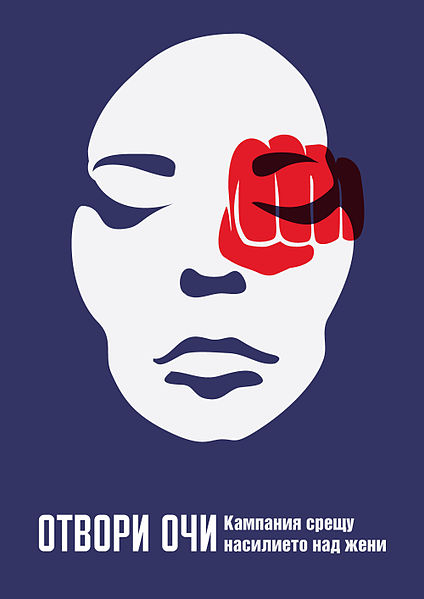
A Russian poster from Anna urging people to open their eyes to violence against women

Yet another pitfall of the bill lies in the fact that only repeat offenders are charged with criminal activity. The irony in this, according to Alyona Sadikova, the director of one of the few women’s shelters in the Moscow metropolitan area, is that “women tend only to report violence after multiple beatings anyway.” She is one of many women’s activists who believes that “what Russia really needs is a network of crisis centers and legal mechanisms that would enable courts to issue restraining orders”, something that is currently not in place in the Russian judicial system, and that seriously hinders any sort of progress in lowering domestic violence rates. Furthermore, those who opposed the bill in Moscow were required to do so quietly, as the mayor denied requests for public protest permits.

Proponents of the bill, like ruling party lawmaker Andrei Isayev, have attempted to frame the bill as positive for families, arguing that, under current legislation, children “inform on their parents” when disciplined with violence, which ultimately results in loss of parental custody and, in Isayev’s view, causes the breakdown of the family as a whole. Other supporters of the bill claim that it serves as a mechanism to remove state involvement in home life, allowing parents to raise their children in a manner they see fit. In addition to conservative members of Russian parliament, one of the bill’s strongest advocates is the Russian Orthodox Church, whose sphere of influence in social and political life has seen a steady expansion in the past few years. The Church issued a statement last year defending physical punishment by way of equating it to cultural Russian tradition, going as far as to say that it should be viewed as “an essential right given to parents by God.” Irina Matvienko, the woman in charge of the hotline for Russia’s Anna crisis center, which received about 5,000 calls from women seeking aid in the past year, refutes the Church’s statement. Matvienko admonishes the normalization and legalization of these forms of abuse, saying “Domestic violence is not about a normal family fight. We are talking about systematic behavior. So allowing impunity is especially dangerous, because the woman is one-on-one with her abuser.”

Though domestic violence is not a new phenomenon by any means, in Russia or anywhere else in the world, it is safe to say that the recent actions of government officials have caused a significant setback in advocacy for and the protection of victims, both past and future. Existing systems of justice for victims, as inefficient as they were, have only further deteriorated since the new bill’s introduction. The measures taken by the Duma to ensure this law will be put into effect will allow physical violence to be viewed, even more than it already may be, as a societal norm in Russian family life. It legitimizes the actions of those who previously committed physically abusive acts against family members, and disparages the plights of those who suffered at their hands. Many alternative laws have been proposed that would support domestic violence prevention, but none have made it past the State Duma thus far. In the meantime, several human rights organizations have started campaigns urging legislation against acts of domestic violence and holding the Russian government accountable for their actions. Though the website for the Moscow-based non-governmental organization the National Center for Prevention of Violence, or “Anna,” is currently under construction, donating to Amnesty International is a great way to address the injustices of the domestic violence bill and to ensure the continued placement of pressure on international lawmakers to aid in the fight against domestic abuse.

Stuck in the Dark Ages: Abortion Rights in Northern Ireland

In April of 2016, a Northern Irish court handed down a three-month suspended sentence to a 21-year-old girl for ingesting mifepristone and misoprostol, two drugs she used to induce a miscarriage. It was heard in court that the woman – a teenager at the time of the offence – could not afford to travel to England to have the procedure performed. Readers from other parts of the United Kingdom, or indeed from many other Western countries, may be surprised that having an abortion in Northern Ireland is a criminal offence. For Northern Irish women, this is the norm.

Legal abortion was established for England, Wales, and Scotland in 1967. This right was not extended to Northern Ireland because, at the time, it was not under the direct rule of Westminster and there was little appetite in the Northern Irish Assembly to introduce its own abortion legislation. Instead, abortion is still criminalised by the 1861 Offences Against the Person Act, except when the pregnancy threatens the life of the woman or is likely to have long term effects on her mental or physical health. Having or assisting a woman in an abortion carries a maximum penalty of life imprisonment.

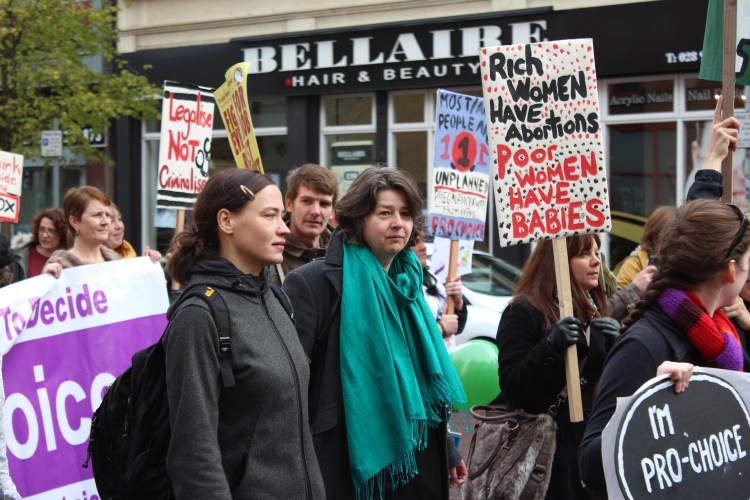
Trade Unions Anti-Austerity and pro-choice march, Belfast, Northern Ireland, October 2012

The practical implications of this law are three-fold. First, even in cases of rape, incest, or a fatal foetal abnormality, a woman is required to carry her pregnancy to full term. Sarah Ewart, a Belfast woman, found out during a 20 week scan that her baby had anencephaly (a condition where the baby’s skull and brain has not developed properly), and would not survive for long after birth. After this devastating diagnosis, she was then told by medical practitioners that she must continue with the pregnancy. Likewise, even when going to get advice on the issue of abortion, or issues surrounding their sexual health in general, women can face a barrage of pro-life protesters outside family planning clinics.

Secondly, should a woman choose to have an abortion, she must travel outside of Northern Ireland to have the procedure. The cost of travel, and the fact that Northern Irish women are not entitled to free NHS abortions when they go to other parts of the UK, means that the process can cost around £350 to £2,000 (£2,100 in the case of Sarah Ewart). This creates a clear class divide between those who can afford the journey and those who cannot. It has led one woman to bring a case to the UK Supreme Court to challenge the exorbitant costs Northern Irish women face, claiming that they have been “made second class citizens in abortion.” Despite the financial barriers, almost 5,000 women from Northern Ireland undertook the journey between 2010 and 2014, with around 833 making the journey in 2015.

In the neighbouring Republic of Ireland, similarly Draconian laws exist due to a constitutional ban on abortion under the 8th Amendment. Approximately 19,000 women from the Republic made the journey across the Irish sea to the UK for an abortion between 2010 and 2014. The fact that so many women are willing to subject themselves to this ordeal, despite the financial and emotional costs, speaks volumes to the desperate situation they are in, simply because they reside in Northern Ireland or the Republic.

Finally, the 1861 law, and the subsequent bewildering guidelines issued by the Northern Irish Department of Health, have left medical practitioners in disarray over how they should treat and advise women in these circumstances. Hospital staff are still legally required to report when they believe a woman has had an abortion, in case they themselves are held criminally liable. In fact, another woman, prosecuted for procuring the abortion pills for her daughter in 2015, was reported to the police by her own GP. These factors combine to create an environment of fear and desperation for women in Northern Ireland, and has led to women taking matters into their own hands.

Like most issues in Northern Ireland, the abortion debate is fraught with religious overtones. The sectarian divide in the government has meant that progress on this traditionally taboo subject has been glacial, and often actively discouraged. Despite a High Court ruling stating that the law preventing abortion in the cases of rape, incest, or fatal foetal abnormality violates women’s human rights under Article 8 of the European Convention of Human Rights (ECHR), no legislative progress has been made on the issue.

The Democratic Unionist Party (DUP), the majority party in Northern Ireland, remains vehemently opposed to changing the law, even in extraordinary circumstances, and it was only in 2015 that Sinn Fein (the second biggest party, who operate the Northern Ireland Executive in tandem with the DUP), officially changed its stance on abortion rights to a limited option of abortion in cases of fatal foetal abnormality. During a debate in the Northern Irish Assembly on abortion, the leader of the Traditional Unionist Voice party said that any amendment to the 1861 Act was a “charter for abortion,” and that all women would just claim that they had been raped in order to get the procedure.

There is some hope on the horizon for Northern Irish women. The governance gap created by the Assembly’s ineptitude has provided an opportunity for grassroots movements, NGOs, and a few small progressive political parties to actively campaign for women’s rights. Organisations such as Alliance for Choice and the Abortion Support Network provide a platform for women’s voices, campaign for an extension of the 1967 Act to Northern Ireland, and offer advice and support for those in need. Amnesty International used their global “My Body My Rights” campaign to challenge Northern Ireland’s restrictive laws, and medical organisations like British Pregnancy Advisory Services have focused their efforts on asking the government to provide clearer guidelines for medical professionals, in order to fully support women’s access to a safe abortion.

Smaller political parties like the Alliance Party and the Green Party, who do not conform to the sectarian divide in Northern Irish politics, have also shown their support for abortion law reform. Both have advocated for an extension of the 1967 Act to Northern Ireland, and the Green Party has advocated for a complete decriminalisation of abortion. Unlike the more religious political parties in Northern Ireland, these parties seem to be listening to the majority of the electorate, wherein 72% of voters support abortion law reform, at least in the cases of rape and incest. On 2nd March 2017, the progressive parties were rewarded with an increased share of votes at the Assembly elections. The significantly weakened DUP will now have trouble blocking any discussion of changes to the law on abortion, or persuading other parties to vote against any subsequent reform.

The growing support for decriminalisation has already had some impact. A cross-party Assembly working group was set up in 2016 to consider the case of fatal foetal abnormality. There has also been a debate and a vote on the same issue in the Assembly, and although it was defeated, this is, at least, a sign of the subject becoming less taboo. For women living in Northern Ireland, however, the year is still 1861.

Rediscovering the Art of Proxy War

The Cold War is often described as a ‘competition’ between the USA and the Soviet Union that existed in many different fields, from technology to diplomacy to sports. However, the opponents were limited from direct military confrontation by both sides’ terror of Mutually Assured Destruction through nuclear war. Yet, very quickly the Cold War turned from an uneasy peace in Europe to something else. Each superpower began to support third parties in countries as far-flung as El Salvador and Mozambique in their conflicts, in efforts to undermine their rival’s geostrategic position; this form of competition by third party became known as ‘proxy war’.

This method of warfare was particularly useful for the Western democratic countries because proxy wars drew little public scrutiny or criticism. For example, Reagan’s administration survived the infamous Iran-Contra affair, when the CIA covertly gave arms to Revolutionary Iran and funded the Nicaraguan Contras, thereby breaking an international arms embargo and a Congressional prohibition (justifying Reagan’s nickname, ‘The Teflon President’).

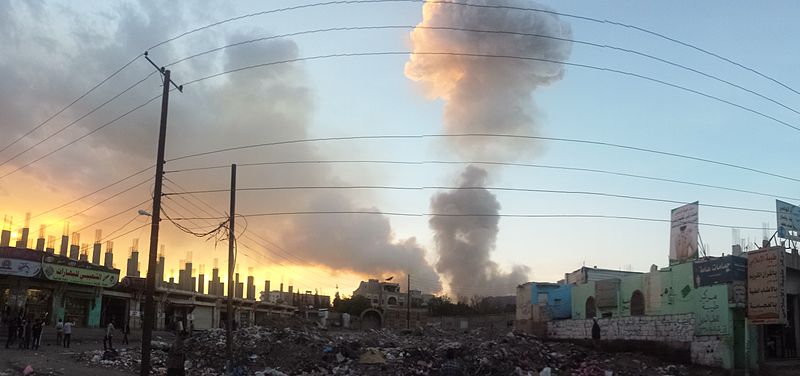
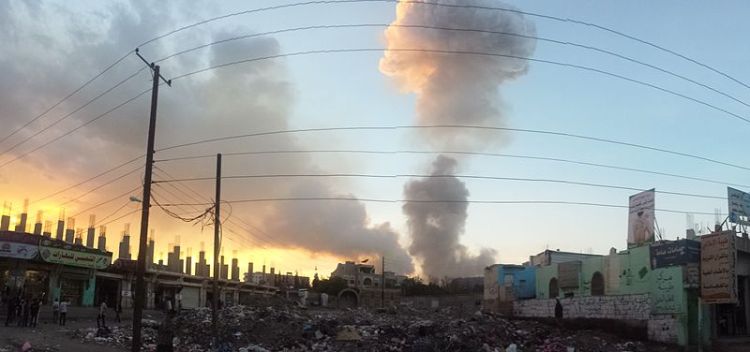
The US and UK provide assistance to some of the warring parties in the conflict in Yemen, by Ibrahem Qasim

Upon the end of the Cold War, the US seized the opportunity to flex the military muscles it had been building for decades. Less than two months after the fall of the Berlin Wall, George H.W. Bush invaded Panama to overthrow the dictator Manuel Noriega. This heralded the start of a series of direct, high-profile military interventions by the US and its allies, including the 1991 Gulf War, Somalia in 1993, and, after the September 11th attacks, the invasions of Afghanistan and Iraq.

However, after decades of proxy wars, Western politicians and generals were unprepared for the level of public scrutiny their campaigns would be subject to, and the criticism they would come under for abuses. During the Gulf War, reporters documented the Highway of Death left behind after an airstrike on retreating Iraqis, and during the Battle of Mogadishu the Somali death toll may have reached as high as 2,000. More recently, the ‘War on Terror’ led to a number of human rights abuses being unearthed and criticised. Perhaps the most disturbing of these were the multiple accounts of horrifying torture in the detention centres for suspected terrorists, first in Guantanamo Bay, Cuba, then in Abu Ghraib Prison, Iraq, and later at Bagram Air Base, Afghanistan.

Unlike the Cold War days, when Western countries could operate through proxies with a degree of deniability, the new interventionism had consequences for politicians. The consequences of the Iraq War effectively destroyed Tony Blair’s premiership, as it became increasingly clear that he had lied about the reasons behind the Iraq invasion. Although the other architect of the Iraq War, George W. Bush, managed to make it to the end of his second term in 2008, his presidency finished with a dismal 25% approval rating (eight years later, Bush’s party would be hijacked by a fraud, who climbed to power partly through falsely claiming to have been opposed to the Iraq War at the time of the invasion).

Clearly, policy-makers in the West have learned from the trials and tribulations of Bush and Blair. There has been a subtle but significant shift in the way that Western foreign policy is handled, as more and more we see the US and European states taking the back seat in wars and instead supporting groups ‘on the ground’. Throughout the Middle East, the USA is no longer sending its soldiers to take part in the fighting, preferring to support a panoply of armies, rebels and militias. In the ongoing Iraq conflict, NATO and its allies have thrown their support behind the Iraqi army, the Kurdish Peshmerga, and an array of Shia militia groups, providing arms, supplies, training, and extensive air support. In Syria, the USA has supported a wide array of rebels and Kurdish parties to fight both the Syrian regime and Islamist groups. In Yemen, the US and the UK are supporting the Saudi-led coalition of Arab states that are trying to break the grip of the Houthi rebels on the western half of the country.

The distance Western politicians have put between Middle Eastern conflicts and their own decisions has served to minimise the kind of outrage amongst their constituents that greeted human rights abuses during earlier, interventionist periods of conflict. This lack of attention has allowed significant abuses to go under-reported.

In Iraq, the offensive against the Islamic State (IS) has spawned a variety of popular militia groups based in the Shia community. These groups have been accused of a variety of abuses against the Sunni communities they are fighting, including beatings, mutilations, and enforced disappearances. One militiaman – calling himself Abu Azrael, the ‘Father of Death’ – gained internet fame by fighting with an axe and mutilating the bodies of enemy fighters. These militias work in close cooperation with the Iraqi army, meaning that they indirectly receive training and arms from the US.

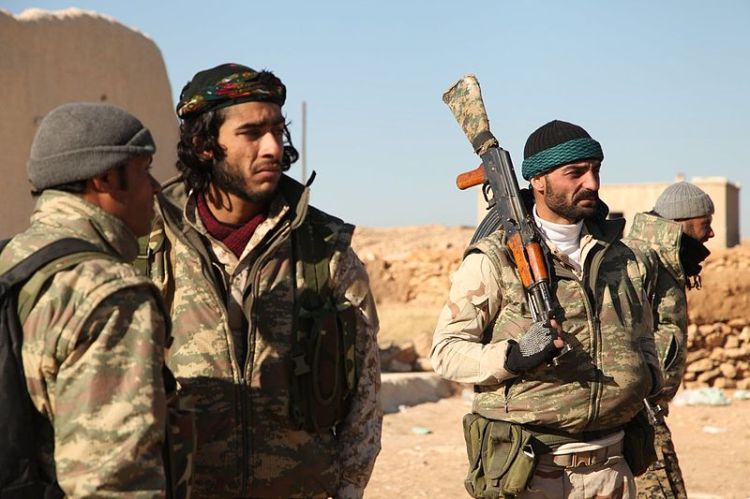
The US-supported YPG militia is active in Syria

The US support for groups in the Syrian Civil War is even murkier, as many different groups with wildly divergent aims are being supported by different branches of the US government. The Kurdish People’s Protection Units (YPG) in northern Syria were one of the USA’s key allies in the battle against IS at the forefront of the Battle of Kobane, which stalled the IS offensive in northern Syria in 2015. However, following that battle, the YPG were accused of ethnic cleansing and of driving out Arab civilians from villages in their area of control, part of their quest for an ethnic Kurdish state.

In Yemen, a coalition of Arab states led by Saudi Arabia has been pounding the territory held by the Houthi rebel group with airstrikes, a naval blockade, and ground troops. There are also reports of the Saudis using internationally banned munitions. The war has led to a humanitarian calamity; two thirds of Yemenis need humanitarian assistance, and there have been over ten thousand deaths. The Saudi alliance has been negligent at best, deliberate at worst, as their campaign has exacted significant civilian casualties.

The UK has come under pressure from human rights groups regarding the sale of weaponry to Saudi Arabia, but their response has shown the difficulties of pressuring a government engaged in proxy war. The UK government has skilfully avoided any responsibility for enabling Saudi war crimes by pointing out that “it would not be possible” to assess violations in conflicts in which the UK is not a part.

The resurgence in proxy warfare by the West presents a challenge to human rights organisations worldwide. Western governments are more able to ‘pass the buck’ and play a double game to avoid public pressure; in this case, even as the UK government approves billions of pounds worth of arms deals to Saudi Arabia, it also announces an official investigation into the crimes of the Saudis in Yemen. Humanitarian groups will have to adapt and develop more effective methods of bridging the gap between Western governments and the conflicts they are covertly involved in, if they are to effectively pressure policy makers to make positive change.

Facing Demolition: The Khan al Ahmar Bedouin Community

In the early morning of Sunday the 19 February, 2017, Israeli forces raided Khan al Ahmar, a Bedouin community located northeast of Jerusalem. Civil defense personnel cordoned off the area surrounding the primary school and a nearby mosque before declaring it a closed military zone. Thirty-nine stop-work orders were served to homes and community buildings in the village, including the classrooms of the primary school.

According to B’tselem Israeli Information Center for Human Rights, stop-work orders are a formality preceding demolition. Local news agencies skipped the formality in favor of the inevitable; they reported the handouts as orders for demolition. After all, the effect is the same, as residents of Khan al Ahmar well know. This community is no stranger to raids, demolitions, or threats of the same. On the contrary, the village, and the school in particular, has been the target of relocation efforts for years.

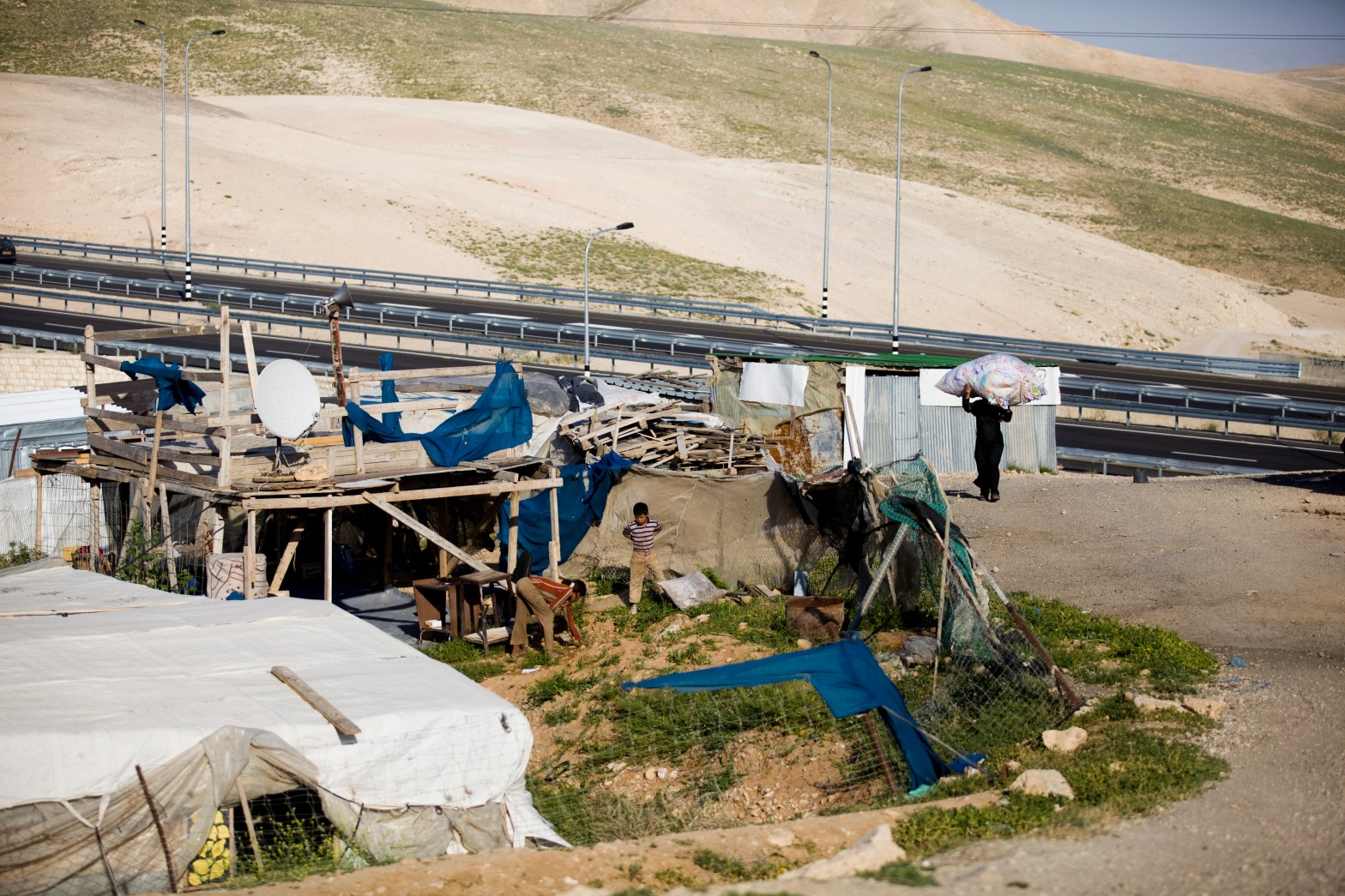
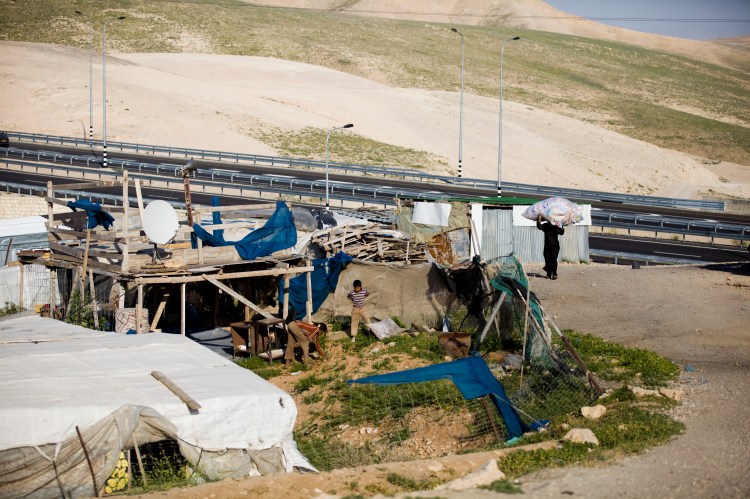
Khan al Ahmar Village, Jordan Valley, by Simon Rawles/Oxfam

Yet, locals told Ma’an News Agency that issuing warrants to this many homes was an unheard of move. Likewise, Haaretz News reported that Israeli forces confirmed that such a widespread issuance of orders was unprecedented and that the raid was a declaration of an attempt to evacuate the entire village.

Khan al Ahmar is a community of under 200 people. It is one of about twenty Bedouin villages in the vicinity of Ma’ale Adumim that altogether comprise roughly 3,000 people, half of whom are children. Most of the Bedouin communities are of the Jahalin tribe, who were relocated from the Tal Arad area of the Negev in southern Israel in the 1950s. This land to which the Jahalin relocated has been gradually constricted, forcing them into the area of the Jerusalem-Jericho road.

The Bedouin of this region live in tent encampments and sheet metal shacks, which are visible from the highway. This is because Khan al Ahmar and its neighboring communities fall within Area C of the West Bank. A consequence of this location little-known to outsiders is that all construction must be approved by permit. Although the Jahalin Bedouin have lived on the same strip of land for decades, the Israeli Civil Administration that governs the West Bank has yet to draw up a master building plan for these villages. This means that any kind of brick-and-mortar construction is subject to demolition. Thus, sheet metal and tents are the most permanent legal structures available to the Bedouin.

Furthermore, try as they might to maintain their shepherding lifestyle, access to grazing ground and markets is limited. Sewage, electricity, and travel infrastructure is nonexistent, and only half of these communities are connected to water pipelines. Access to health, welfare, and educational services is minimal at best.

Consequently, in 2009, the Khan al Ahmar community rallied to build the Khan al Ahmar Rubber Tyre primary school with the help of Italian aid organization Vento Di Terra. This school, constructed entirely out of clay, wood, and rubber tires, remains structurally temporary and is therefore in compliance with Israeli military regulations. This feature is legally significant; although recognized by the Palestinian Ministry of Education in 2009, the building was constructed without a permit. The local school was created because village children were undertaking dangerous and costly trips to attend distant schools. This problem was ably remedied, and the Rubber Tyre school now educates 170 children from five different Bedouin communities.

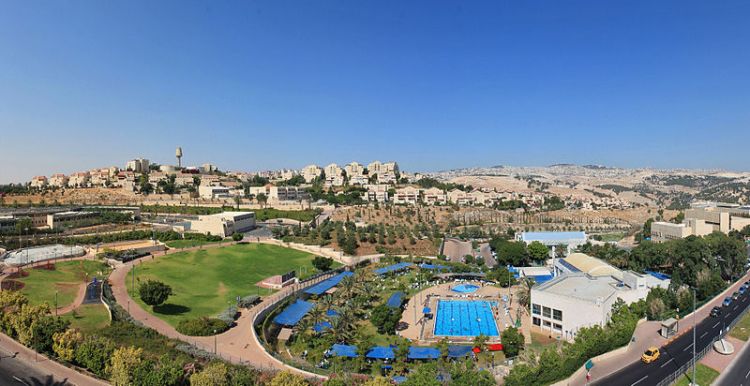
Ma’ale Adumim, by David Mosberg

One month after construction of the school was complete, however, the school was served a demolition order by the Civil Administration. The justification for the order was the school’s proximity to the Jerusalem-Jericho road. This order was petitioned and delayed, but more warrants followed. Another demolition order from August 2016 was met with international scrutiny, and a solidarity protest was organized by the Palestinian Minister of Education, after village residents and the Italian ambassador were informed in writing of the Civil Administration’s decision.

This 2016 move to demolish the Rubber Tyre school was interpreted not merely as an attack on the Khan al Ahmar community, but also as an assault on Palestinian education. The Prime Minister of Palestine, Rami Hamdallah, issued a statement saying “Everyone is entitled to education; it is a fundamental human right.” Jamal Dajani, the Prime Minister’s director of strategic communications, asked in another statement “Is Palestinian education a threat to Israel?”

Part of the challenge that the Khan al Ahmar community poses to the Israeli Civil Administration is its location in the E1 district, which connects the settlement of Ma’ale Adumim to Jerusalem. With a population of 41,000, Ma’ale Adumim is one of the largest and most established Israeli outposts in the West Bank. For this reason, it has become a flashpoint in the conflict between Israelis and Palestinians.

After the United Nations issued Resolution 2334 last December, the world appeared to cast a more critical eye on Israel’s settlements, but once Donald Trump took office one month later, the Israeli government cast off international criticism and approved thousands of new homes in the West Bank and East Jerusalem. It may be a critical moment for Ma’ale Adumim, which is often thought by both Palestinians and Israelis to be an inevitable part of Israel because of its size and impermeability. If it is, it will be a critical moment for its neighbor, Khan al Ahmar, too.

A Palestinian flag recently appeared in a park in Ma’ale Adumim, worrying residents who fear that its presence could signal change for them. This flag and these demolition orders may indeed be signs of change in a situation that has long been protracted and stalled. The appearance of one may also be more connected to the other than either party wishes to acknowledge.

The Expulsion of Afghan Refugees From Pakistan

“No matter who you are, your heart will turn black with so much abuse.” – Afghan refugee, 25, returning to Afghanistan, November 2016.

For the past 40 years, over 1.5 million registered Afghan refugees, and an estimated one million unregistered persons, have made Pakistan their home. In the last two years, however, tensions between Pakistan and Afghanistan have led Pakistan to begin expelling these individuals from the country. In 2016, a mixture of deportation threats and abuse by police has led 365,000 registered refugees and an estimated 200,000 undocumented Afghan refugees to flee in search of safety elsewhere. Even more troubling, authorities within Pakistan have stated that they would like to see the same involuntary repatriation of refugees in 2017.

These expelled people are returning to a country being torn by armed conflict and become internally displaced persons without social services or employment. The United Nations High Commissioner for Refugees (UNHCR) claimed the expulsion of refugees as a “humanitarian emergency,” which NGOs that provide aid are not easily able to address due to the nearby conflict and few resources. These returning refugees join the estimated 1.5 million internally displaced Afghans, including 625,000 displaced in 2016.

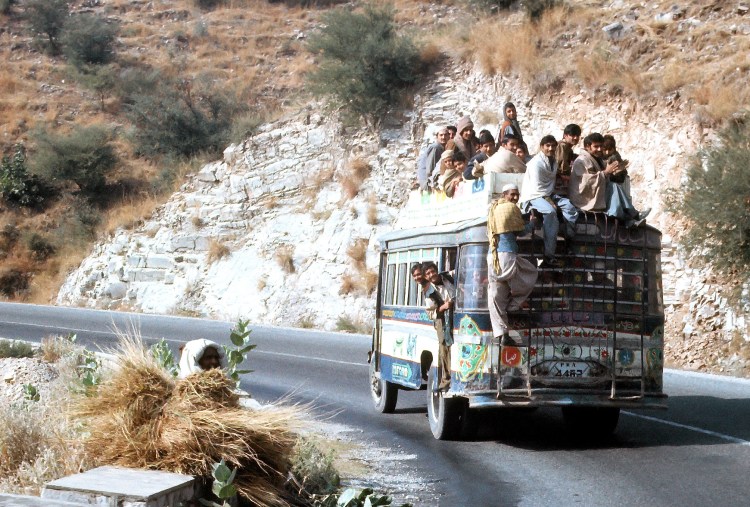
A bus traveling from Pakistan to Afghanistan, by Martin Prochnik

The United Nations High Commissioner for Refugees warned in 2016 that the large number of refugees being forced to return to Afghanistan could develop into a major humanitarian crisis. The report by Human Rights Watch – which included interviews with refugees returned to Afghanistan, as well as Afghan refugees still in Pakistan – was in agreement with UN reports, which showed that refugees are returning to Afghanistan due to Pakistan’s pressure upon them to leave. The ‘coercive factors’ described by Afghan refugees as incentives to leave Pakistan came into force in June 2016, following a deterioration of relations between Afghanistan and Pakistan. These factors include the increasingly ambiguous legal status of refugees, statements from the government in favor of refugees returning to their home country, abuse by police, and denial of refugee children’s right to attend school.

A refugee’s legal status is key amongst these coercive factors, as it is linked with deportation. Afghan refugee status in Pakistan was meant to expire in December, but the date was then moved until late March 2017. However, in late November 2016, the federal cabinet of Pakistan only extended the legal status of Afghan refugees until later this year, but did not make the decision public until January 2017. This meant many Afghan refugees feared deportation in April for longer than necessary. This ambiguity destabilizes the lives of refugees and prevents them from creating lives for themselves and homes for their children in Pakistan. The fear of deportation encourages many to leave voluntarily, despite their fears of the violence and instability in Afghanistan.

By not renewing refugee status cards after December 2015, the Pakistani authorities pressured the refugees to return to Pakistan and created legal ambiguity for those still in the country. The encouragement of refugees to return to their homeland is against the international legal prohibition against refoulement. This stipulates that Pakistan cannot return Afghan refugees to a country where they would encounter “persecution, torture or other ill-treatment, or a threat to life.” No Afghan refugees have been registered in Pakistan since 2007, meaning that undocumented Afghan refugees are not legally protected by the UNHCR and lack legal status.

Additionally, the UNHCR increased the cash grant from $200 to $400 in June 2016. This became yet another driver for refugees to return to Afghanistan and effectively promotes repatriation. The UNHCR is allowed to do this under its mandate where it does not believe the refugees to be in a stable situation and it may also aid in the voluntary repatriation of refugees. Pakistan also abused its power of Afghan refugees. For example, refugees would be charged arbitrarily higher rents, and face hostility from local communities. Pakistan must end its human right abuses, and return to its former policy of providing Proof of Registration Cards to refugees for at least two years, and protect undocumented refugees within its borders.

The UNHCR has remained quiet on the coerced and unlawful expulsion of Afghan refugees from Pakistan. However, in communications with its international donors, the agency has stated that the country was merely helping refugees to voluntarily return to their home country. It claimed to have discussed individual cases with Pakistani authorities, but did not stop the widespread abuse of refugees for nearly three months 2016.

A refugee’s voluntary or involuntary return to Afghanistan is not a long-term answer that will provide the stability and safety they seek. Such an answer requires that the UNHCR should verify that the refugees are returning willingly. If the refugees have not been told of the state of their homeland, then they should be informed before their decision to leave has been processed and leads to their instability, and likely poverty and homelessness. The sheer number of returnees in the latter half of 2016, should have been a sign to the UNHCR that their return was not solely voluntary, suggesting that these violations were ignored.

The UNHCR responded to a letter from Human Rights Watch by refuting the assertion that the cash grant was intended to encourage refugee repatriation and insisted that it aided refugees who wished to repatriate of their own volition. However, as a result of the concerns expressed by Human Rights Watch, The UNHCR is reevaluating the effects of the cash grant, and whether it really did offer an incentive for repatriation to Afghanistan.

International donors and organizations should endeavor to aid these Afghan refugees in Pakistan until they are safe legally and have stable living conditions that are not under threat by Pakistani authorities, or are able to return to their homes in Afghanistan. The UNHCR should help in this effort by challenging the actions of the Pakistani authorities regarding the protection and legal status of these refugees, and do everything in its power to protect them from further harm.

Who is America’s Voice?

Alternative facts have become the new norm in Trump’s America. In other words, the Trump administration has taken it upon themselves to rewrite and rebrand America’s rhetoric. According to press secretary Sean Spicer, this is in order to hold the press to account for “deliberately false reporting” that Trump’s war on the media will seek to combat. What, then, does this mean for the future of the press in American discourse? Are we more likely to see a trend towards disdain for media outlets, or are we looking towards an America that rallies against the president in support of this freedom? To answer this question it is first important to delve deeper into the actual right of freedom of the press in American history.

The First Amendment of the United States Constitution protects the right to freedom of expression from government interference. The right to freedom of expression consists of “the rights to freedom of speech, press, assembly and to petition the government for a redress of grievances, and the implied rights of association and belief.” Freedom of speech is the most commonly referenced aspect of this. Freedom of speech gives the media the right to express their ‘version of facts’.

Kellyanne Conway, the Counselor to the President, was the first to coin the phrase

“Alternative Facts” while explaining Spicer’s remarks, by Gage Skidmore

I say ‘version of facts’ because in American media, the partisan divide in news outlets is clearly visible. Of the prominent news outlets, most tend to be on the liberal side of the political spectrum. According to a 2014 survey conducted by the Pew Research Center, 47% of conservatives get their news from one source, Fox News, while liberals tend to view a variety (15% CNN, 12% MSNBC, 13% NPR, 10% New York Times. In each respective news source, the opinions and bias of the commentators will vary depending on the audience who subscribes to them. This represents a problem in the American media; the news the public is receiving is largely partisan. This is especially true if the public only subscribes to one news source for all of their information. However, while this bipartisan divide in news media is an issue, there is a bigger issue ahead. We must consider the repercussions of the abolishment of “public” news. What remains is then only one source of information; the White House. This is a goal that the new president seems to be set on.

Donald Trump is a new kind of politician- igniting fires through twitter, exclaiming that some of the media organizations listed above (CNN, NYTimes, MSNBC) distribute fake news. This further strengthens the already deep, partisan divide in the United States. By defining these news channels as ‘fake,’ the President is rejecting the half of the population who watches these news channels. Senator John McCain, a republican, has even publicly decried this as a move towards dictatorship: “If you want to preserve democracy as we know it, you have to have a free and many times adversarial press.” Trump reprimands the news outlets for publishing “fake news,” especially when criticizing his concerning relationship with Russia. The war on the media has thus created a divide, not only along partisan lines, but also between those who accept the Trump administration’s claims, and those who believe otherwise. Trump’s continued rhetoric regarding this hatred of the news media and tweets stating that the “news media is the enemy of the american people” seems to be working, as a recent poll conducted by Emerson University has found that the Trump administration is believed to be truthful by 49% of registered voters, and untruthful by 48%. The media, on the contrary, is less trusted, with 53% believing it to be dishonest, and 39% finding it honest. While this poll also shows that many more republicans (9/10) than democrats (1/4) believe in the truth of the administration, this data remains shocking.

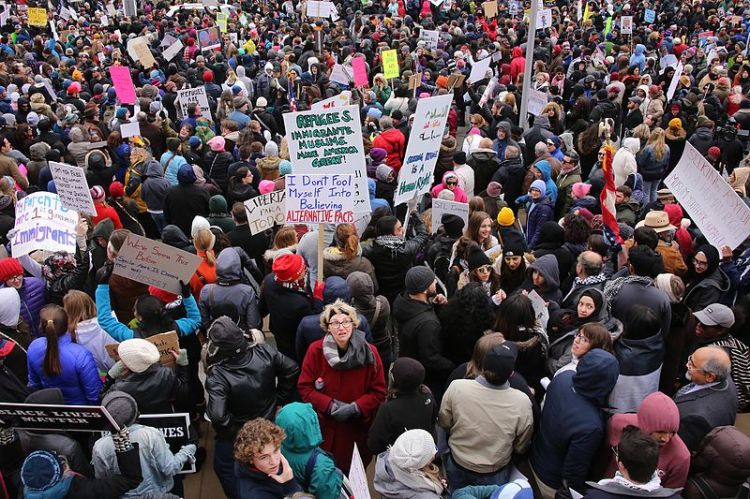
At a February protest in St. Louis, it is clear that some Americans remain against the newly instituted President

What does this mean for the future of freedom of speech in this unprecedented era of American politics? The media can only effectively operate if people watch and believe in the process. The political process relies upon an electorate that is motivated and informed about the issues at stake. Trump’s claims of ‘fake news’ endanger that process, and threaten the role of veracity in American political discourse and reporting. However, if more Americans latch on to the Trump administration’s us versus them mentality when thinking about the media, it will be impossible for the media to continue as a news source that has any credibility or trust. Instead, the the Trump administration could become the only source for information. One way Trump seeks to do this is by changing libel laws protected under the first amendment. The most effective way of achieving this is to get the Supreme Court to overturn the original ruling of New York Times vs. Sullivan. In introducing a new Supreme Court Judge, this seemingly far-fetched goal could become a reality. With libel laws altered, we could be entering an even more treacherous era of government propaganda. However, despite the number of people who trust the administration, there are almost the same number of people do not. Even if the Trump administration finds a loophole to the constitution and diminishes freedom of speech in the form of the media, there will be an outcry from a large amount of the population. Therefore, John McCain’s pessimistic view that we could be heading towards a dictatorship is far more farfetched than some believe, but does remain possible.

Polling, Porn, and Privileges: What Does the ECHR Entitle Prisoners to?

Have you ever tried to go a whole night aware of the fact that you do not have access to a toilet until a certain time? It is not a comfortable situation to be in. Even the mere thought that you might need and not be able to access the toilet puts you on edge. However, this is the situation which prisoners in Corton Vale, Stirling, found themselves in.

There is often talk, and rightly so, in the press and media about people who have been illegally imprisoned. However, there is very little awareness about the human rights surrounding prisoners that are lawfully detained. It can never be said that it is not important to highlight the injustices and breaches of human rights that the illegally incarcerated face. However, the question of what guides us when we are thinking about what is fair, and the treatment of offenders is also an imperative.

Furthermore, the rulings that are made in the West towards how prisoners ought to be treated has ramifications for inmates across the world. These ramifications are particularly poignant in situations where rights are often taken away at the expense of the inmates’ dignity, mental and physical health, and sometimes their life.

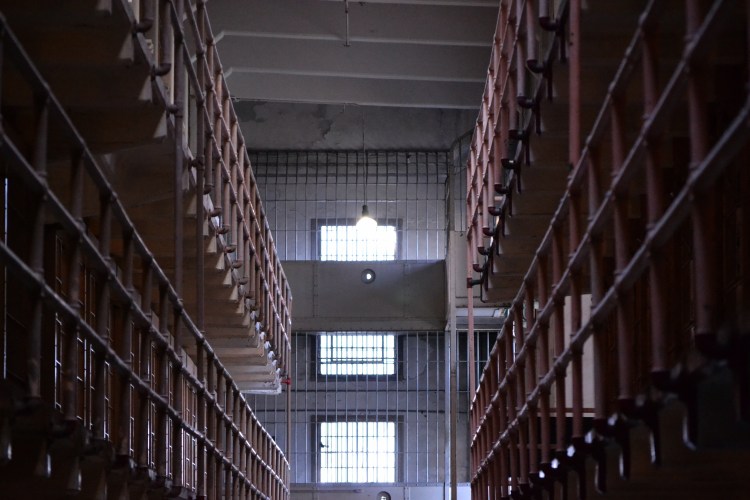
Alcatraz Federal Penitentiary, a former prison in the United States, by Alexander C Kafka

It is generally acknowledged that when someone is incarcerated, they forfeit a number of human rights. Most obviously, Article 5 of the European Convention on Human Rights states that those who are convicted by a competent court forfeit their right to liberty. However, there are also a number of ‘luxuries’ (for want of a better word) that are prohibited – for example, alcohol and mobile phones. This raises the issue of what rights and allowances should be afforded to convicted prisoners, and what can fairly be removed.

There are a few examples to which the answer is obvious. Any reasonable person would agree that toilets are an amenity which prisoners are absolutely entitled to. They are a necessity for hygiene reasons, as well as preserving human dignity. But what about the access to pornography? And what about the right to vote? These are two issues which have been debated for over 15 years, and which continue to be debated to this day.

The debate surrounding prisoner’s access to pornographic material has been ongoing since 2002. The crux of the matter is that some offenders have claimed that being able to access both hardcore and soft porn is a human right. Two articles from the European Convention of Human Rights have been used to support this argument. It is declared that Article 8 – the right to family and private life – and Article 10 – the right to freedom of expression – support the claims of these convicts.

It has been stated that “Article 8 is one of the most open-ended of the Convention rights.” The fact that it is used to support porn in prisons is evidence of this. However, surely there should be more of an emphasis on partner visits. If Article 8 stipulates that there is a right to family and private life, surely this extends to prisoners and their ability to have conjugal visits. A real, human connection is surely far more beneficial than any ‘benefit’ that porn may have. This indicates a double standard in the interpretation of the European Convention of Human Rights. In a scenario where inmates are appealing to article 8, it is bizarre that they are not permitted to see their family more and to have private visits.

Vital to the argument for pornographic material in prisons is the right to freedom of expression. Article 10 states that not only does everyone has the right to the freedom of expression, but also to “receive and impart information.” The question here is whether porn allows prisoners to express their sexuality. It has been claimed that this expression of sexuality is enabled by porn, thus making access to porn a human right.

This may seem like a sound argument, but what about in the case of sex offenders? The Scottish Prison Service (SPS) give prisoners access to porn on request with each prison Governor’s consent. I’m sure you have heard the argument that porn distorts the image of sex and has been linked with violent sex crimes. Does it seem sensible to you to give offenders – particularly sex offenders – access to material which is renowned for creating unrealistic images of intimacy? Surely, in order to rehabilitate sex offenders and help them build healthy relationships, we should be promoting real human relationships rather than an unrealistic and often misogynistic, version. Perhaps the fact that porn is permitted in prisons is most shocking when you contrast it with the fact that prisoners are denied the right to vote. The right to vote is enshrined in Article 3. Moreover, the right to vote and democracy itself is often held up as one of the major achievements of Western society. However, this right is denied to some inmates.

Throughout Western history there have been a plethora of wars and conflicts which have aimed to bring free elections to those living under oppressive regimes. Furthermore, there have been centuries of political movements whose sole ambition was to enfranchise the population. The importance of being able to vote is cherished throughout our society. This indicates the importance and the sacred nature of article 3 of the European Convention on Human Rights.

Considering that offenders are given access to pornographic material, it is strange indeed that they are not permitted to vote in free elections. The grounds on which prisoners are allowed porn is tenuous. The grounds on which they are denied the right to vote are equally tenuous. The European Court of Human Rights has ruled that this denial is a direct violation of human rights.

A crucial question which must be asked is how can we expect to rehabilitate prisoners into the general community when we deny them the right to vote. By stripping them of their right to vote, are we not sending them the message that they are not worthy of having a say in their country’s governance? If prison’s intention is to rehabilitate offenders, then this simply is counter-intuitive.

Upon permitting pornographic material in Glenochil Prison, the SPS stated that “these publications are not illegal to purchase, therefore local management felt if inmates wished to order them through the prisoners’ canteen service, they should be able to.” However, this is illogical. Voting is also legal, as is the consumption of alcohol or the use of mobile phones. What dictates which rights it is fair to remove from prisoners? And what is the reasoning which decides what is a fundamental right which cannot be removed, as opposed to one that can?