The Human Right to Housing

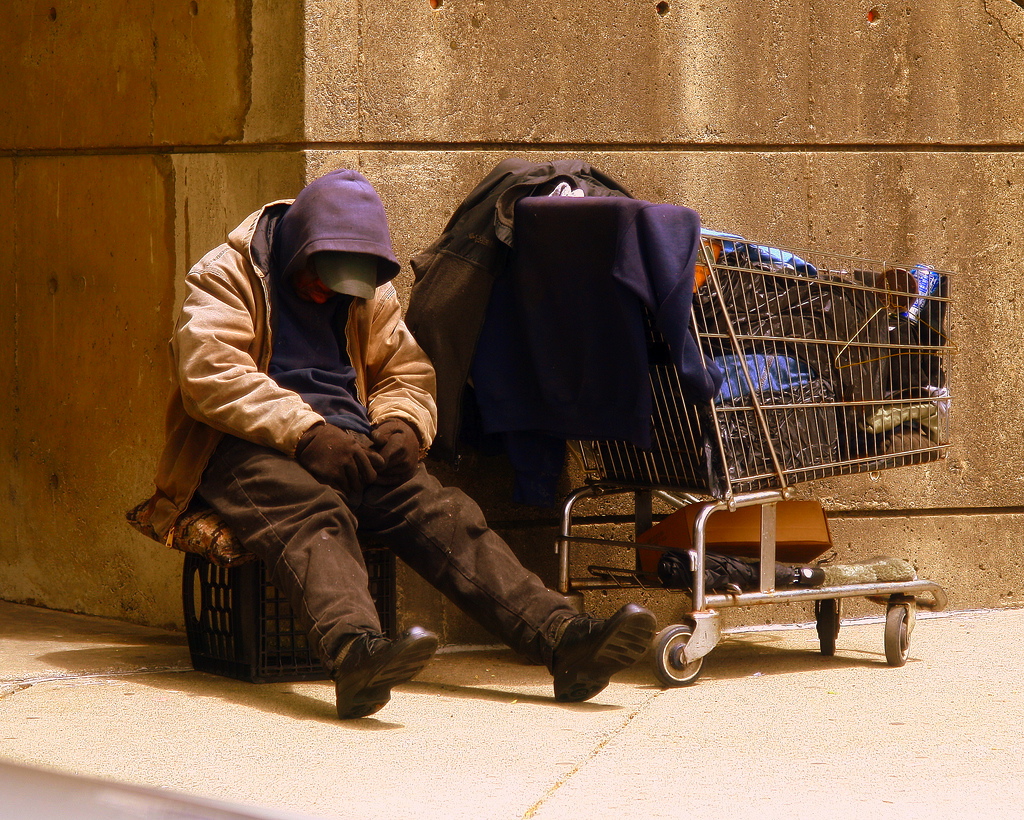
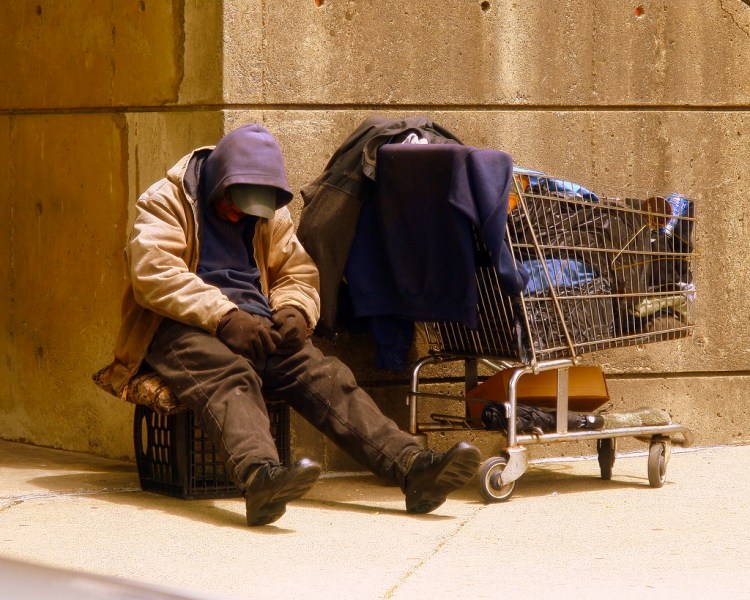
Homeless Man in the United States

“This fact–the great fact that poverty and all its concomitants show themselves in communities just as they develop into the conditions toward which material progress tends–proves that the social difficulties existing wherever a certain stage of progress has been reached, do not arise from local circumstances, but are, in some way or another, engendered by progress itself.” – Henry George, Progress and Poverty

Although written in 1879, Henry George’s words resonate with many social difficulties of today. In his time, laborers in the workplace experienced the downright squalor brought on by developing capitalism. Although working and living conditions have improved in the modern era, the same structure of exploitation remains intact. Today, the increasing acceptance of neoliberal ideology as the model for good governance and economic growth is shaping the dominant “stage of progress” or mode of production. With free market enterprise raised to the stature of being incontestable, profits are trumping human rights.

The fact that homelessness and poverty exist today is a result not of the failure of housing policy in select city governments or the lack of work ethic on behalf of the individual, but of the institutional disadvantages brought upon low-income community residents by the increasingly liberalized speculative housing market. Exacerbated by a history of racist and discriminatory federal housing policy, the housing problem is a social ill that requires solutions outside the usual paradigm of free market enterprise. In the large Rust Belt cities of Baltimore and Detroit, similar socio-political forces contribute to the creation and sustainment of urban blight. Vacant and blighted properties are not unique to these two cities; they stand as a systemic, institutional and historical problem throughout the country. Baltimore and Detroit are only two examples of a much greater phenomenon, namely that vacant housing and homelessness are engendered by free market enterprise reinforced by discriminatory federal housing policy.

In comparing the rise of vacant housing in Baltimore and Detroit, we must first look at race and ethnicity, given the shameful discriminatory policies that existed during the creation of the suburbs and the decline of manufacturing. Over 80% of Detroit’s 700,000 residents are African American whereas the figure for Baltimore’s 600,000 residents is over 60%. Moreover, 72.4% of whites compared with 46.3% of blacks owned their own homes in the United States by the turn of the 21st century. According to a 2000 Dissimilarity Index of Segregation survey, which measures the degree of blacks’ segregation from non-Hispanic whites in metropolitan areas on a scale of 1 to 100, blacks in Detroit measured in at 84.6, Baltimore at 67.5. Clearly, African Americans compose a majority of the population in the urban centers while whites have fled outward to the fringes of the cities in the comfort of the suburbs. The role that neighborhood locations and segregated housing has on forming a group’s economic and social status severely limits and deprives residents of access to employment and economic development opportunities as well as public facilities. To discuss housing policy and the housing market, we must first consider how past and present discriminatory practices have structured them.

The speculative housing market did not exist in a vacuum: it was immersed in and conditioned by discriminatory federal public policy. Although the FDR administration encouraged economic development through state-created jobs in the New Deal, other programs like the Home Owners Loan Corporation (1933) and the Federal Housing Administration (1934) wholly restructured the American mortgage market by mixing racism with public policy (Singer 15). Both the HOLC and the FHA created maps that detailed areas creditworthy based on the race of their residents; these “neighborhood security maps” established the practice of redlining, preventing residents in predominantly black neighborhoods from obtaining long-term loans for their homes . The FHA established its legacy as the protector of the all-white neighborhood, and it actively sought to bar blacks from buying or renting in white neighborhoods.

“As a result, though the official and legal policies are long gone, the large black ghettoes [the FHA and HOLC] helped to create remain… We could think of these as vestigial effects of these official policies that continue to exert their influence in the way housing is allocated today” (Denton 67).

The Wagner-Steagall Housing Act of 1937 created the U.S. Housing Authority, which subsidized public housing across the country to improve living conditions for low-income citizens. But affordable housing to blacks meant segregating public housing projects and building them adjoined to segregated neighborhoods or on top of marginal land like “near waterfronts, industrial sites, railroad tracks, or highways” (Sugrue 3). Furthermore, the 1944 G.I. Bill and the accompanied social climate of the time effectively excluded blacks from low-cost mortgages, educational benefits and other economic aids otherwise supplied to millions of returning WWII veterans.

The growth of suburbanization and homeownership post-WWII via segregated communities also occurred in more subtle manners. Although the 1968 Fair Housing Act forbade legal discrimination against minorities by property owners, racist selling and buying practices on the part of private banks and realtors directed or “steered” white home-buyers to all-white communities. This combination of discrimination by private real estate brokers and federal housing programs left many black households to fend for themselves in the inner cities, deprived of the wealth-creating aspects of housing investment open to white. Unsurprisingly, we now have racial concentration of poverty in inner cities, and, on average, white families have six times the wealth of black and Hispanic families (Turner).

The speculative housing market in the post-WWII period followed the lead of policy makers. The 1950’s witnessed rapid suburbanization and increased homeownership, and “white flight” served to siphon off middle class renters from the city centers. Aggressive speculation on land values contributed to the overproduction of housing units in the suburbs, which left properties in urban areas vacant. When manufacturing jobs began to disappear in each city, it produced, what George Galster dubbed, an “urban disassembly line.” In 70 years from 1947 to 2007, the number of manufacturing jobs in Detroit dropped 93% (from 333,000 to 23,000). Speculative housing construction in the suburbs oversupplied the market with roughly 10,000 new structures per year for the last 60 years (Galster). This caused a chain reaction to unfold. As populations moved out of the city and increased the demand for suburban commercial activity, buildings in the city center became under-maintained, vacant and abandoned. Following substantial population loss and disinvestment in the city center, the income and property tax bases plummeted; the value of all of Detroit’s property in the 1950s was $45.2 billion in 2013 dollars (Galster). By 2012, the value dropped to $9.6 billion.

Vacant properties contribute to the economic decay of city governments in three ways: they are often tax delinquent, they generate little to no tax revenue, and they depress nearby property values across a community. The failure to address abandoned and blighted houses “translates into $3 billion to $6 billion in lost revenues to local governments” (Vacant 7). Moreover, in a 2001 study, researchers from Philadelphia found “that all else being equal, houses on blocks with abandonment sold for $6,715 less than houses on blocks with no abandonment” (Temple 22). The study showed that vacant properties “rob surrounding homes and businesses of their value”: houses within 150 feet of a vacant experienced a loss of $7627 in value, those between 150 and 300 feet experienced a loss of $6819, and those between 300 and 450 feet experienced a loss of $3542 (Vacant 9). In Baltimore, the Federal Reserve Bank of Cleveland found that vacancies and urban blight reduced the value of nearby properties from 1.7% to 4.6% (Singer 31). According to the US Department of Housing and Urban Development (HUD), in 2006 Baltimore had 58,306 vacant houses, which constituted 19.7% of the city housing stock (Singer 30). In Detroit, the figures are even worse with vacant and abandoned properties comprising 27.3% of the city housing stock (Singer 30). Clearly, vacant and blighted properties stand as economic threats to city governments, homeowners and businesses, but also as impediments to housing the homeless in urban areas.

By 1990, a mere 39% of the African American population in the country lived in suburban neighborhoods compared to 71% of whites (Denton 68). A major cause of this stark difference in socio-economic status can be attributed to federal housing subsidies. At first glance, “housing subsidy” brings into mind “poor people” and those who live in public housing units because of the fact that programs like rent subsidies are much more visible in the public sphere; much more attention and emphasis is placed on federal housing assistance to low-income Americans, especially due to the role of media outlets. In contrast, the largest housing subsidy is invisible: Three out of four (3/4) wealthy Americans receive housing subsidies from Washington through the tax code in the form of tax breaks or tax expenditures (Dreier 105-106). One chief federal subsidy for homeowners is the mortgage interest deduction, which effectively acts as a subsidy for the real estate industry. It artificially inflates home prices, and, though incentivizes homeownership, encourages exclusively high-income homebuyers to purchase larger homes in outlying areas, thus promoting suburbanization (Dreier 110). According to the Western Regional Advocacy Project, in 2012 homeowner tax breaks cost the US Treasury Department approximately $131 billion while total federal spending on low-income housing was approximately $50 billion––a difference of $81 billion (WRAP). These tax breaks have social consequences. Besides linking income disparity to racial, ethnic and classist segregation, the tax breaks both divert funds away from working class and indigent housing affordability and ignore the 13.7 million vacant housing units that are deteriorating city tax revenues throughout the country (Singer 29). Dwindling federal subsidies for low-income housing programs only serve to perpetuate the cycle of homelessness and vacancies in post-industrial city centers. It’s hard to put our heads around the contradictory notion that there is an increase in homelessness accompanied by a simultaneous growth in the number of vacant housing units across the country. This problem is not unique to Baltimore: it is the produce of structural racism, public policy and market dynamics that must be addressed from outside the framework of the profit-motive.
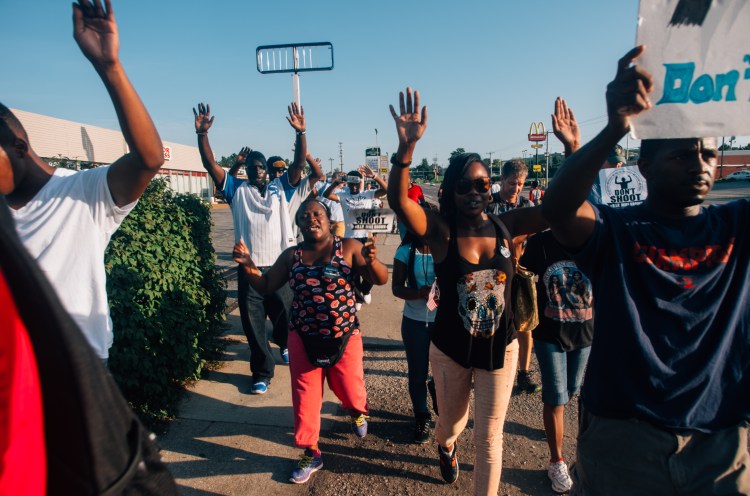
The United States’ ‘Hypocrisy’: International Reaction to Ferguson

The United States prides itself on being a champion of human rights around the globe. But what happens when human rights become an issue within its own borders?

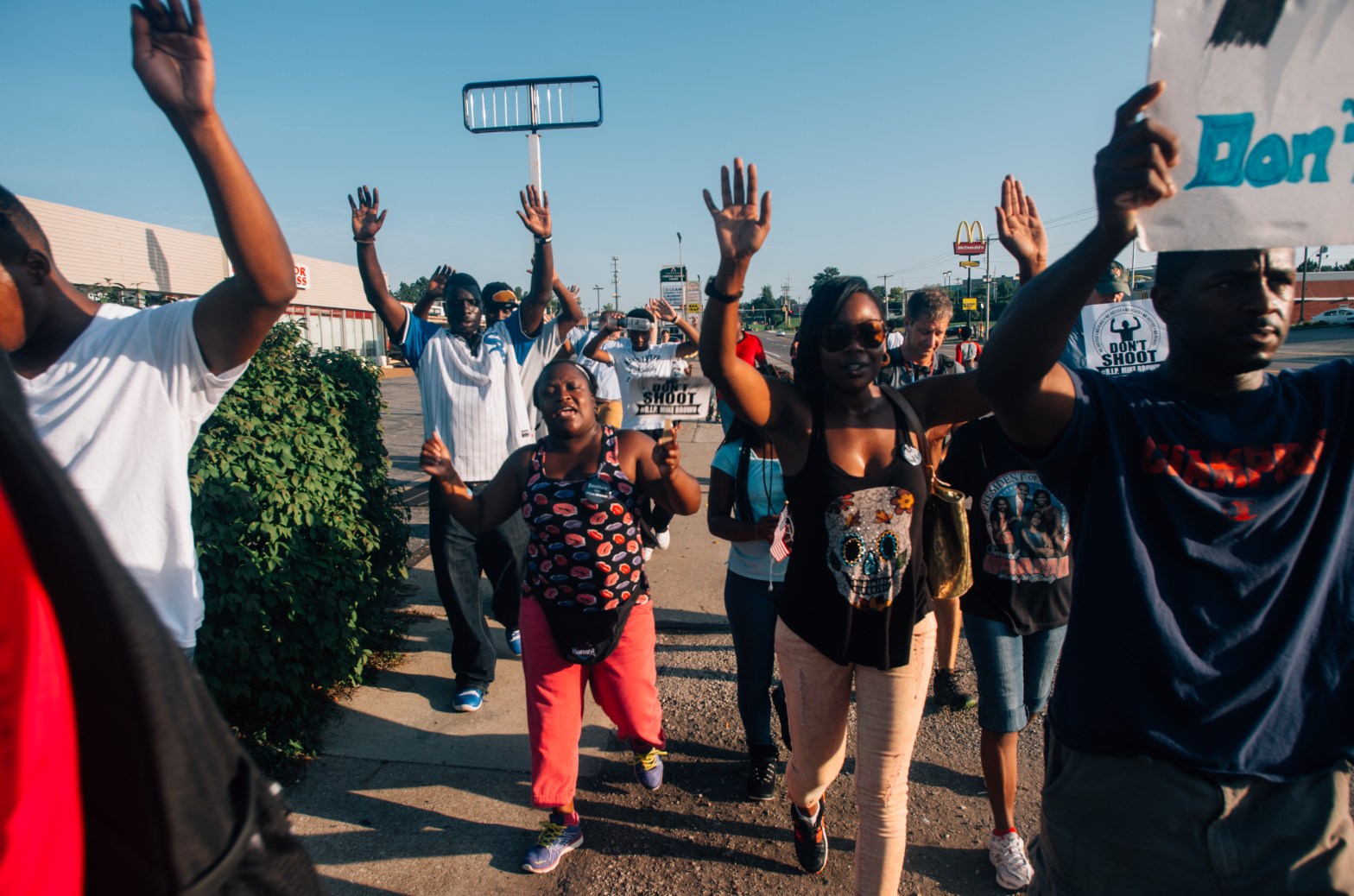
On August 9th, 2014, white police officer Darren Wilson shot dead unarmed black teenager Michael Brown in Ferguson, Missouri, USA. We do not yet know exactly what happened in the minutes leading up to the shooting of Michael Brown, but the racial tensions within the case and the way the case has been handled by the Ferguson police department is concerning to say the least. First, they refused to release the name of the officer involved until August 15th, 6 days after the tragedy, and only apologized to his family for leaving his body in the street for four hours on September 25th, over a month after he was shot.

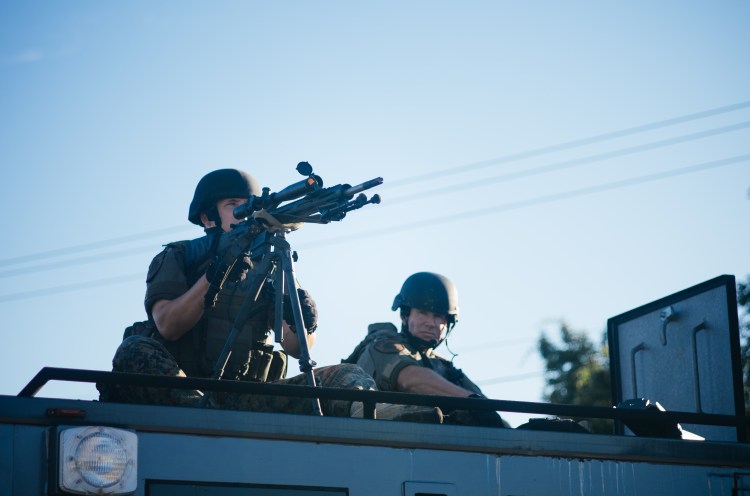
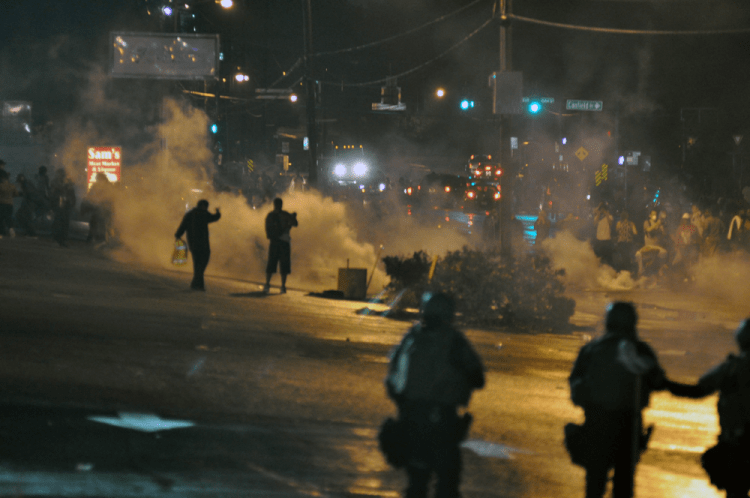
However, the most appalling aspect of the actions taken by the Ferguson police department is their response to protestors. Members of Michael Brown’s community held mainly peaceful protests, demanding the arrest of the officer responsible and condemning the actions of the police and investigators. Police showed up to the protests with tanks and assault rifles, looking more like soldiers in combat than police officers responding to mostly non-violent protests. They then threatened protesters and fired rubber and wooden bullets as well as tear gas into the crowds.

Police Sharpshooter at Ferguson Protests

Whilst America prides itself on freedom of speech and press, journalists and anyone with cameras have said they were forced to stop recording, even though it is legal to film police in the United States. Reporters who have been arrested while filming include Ryan J. Reilly of the Huffington Post and Wesley Lowrey of the Washington Post, who state that they were detained and assaulted after filming police officers inside of a McDonald’s in Ferguson. They were later released without charge. The press and police intervention situation became so dire that Amnesty International sent a delegation to monitor the situation, the first time such a delegation has been deployed on American soil.

These issues of human rights, freedom of press, and racism in the United States are hard for some Americans to understand. Despite leaps forward in the past 50 years the United States still struggles with racism and poverty. However, many white Americans either don’t know of or refuse to acknowledge the issue. Some social activists in America have taken Ferguson as a sign that now is the time to address these prevailing issues head on, believing that opening up a conversation about race relations can help to remove racism from the fabric of American society. However, some countries that America has been pressuring over their human rights abuses have responded to Ferguson in a very different way.

“The Ferguson incident once again demonstrates that even if in a country that has for years tried to play the role of an international human rights judge and defender, there is still much room for improvement at home,” reports China’s state news agency Xinhua. “Obviously, what the United States needs to do is to concentrate on solving its own problems rather than always pointing fingers at others.”

Interestingly, however, reports on Ferguson feature only on the English-language version of Xinhua, save for one article on the Chinese-language site that touches only briefly on the unrest. This suggests less of an interest in human rights abuses in the United States and more of an interest in shaming the United States for its hypocrisy in reporting on Chinese human rights abuses while ignoring inequality at home.

Another Chinese paper that is controlled by the ruling communist party, The Global Times, has stated that “it’s ironic that the U.S., with its brutal manner of assimilating minorities, never ceases to accuse China and countries like it of violating the rights of minorities,” as reported in USA Today. Though China does not allow either domestic or international coverage of unrest in its own country, state broadcaster CCTV and Xinhua both sent reporters to Ferguson.

Ferguson has also been reported upon by Russian officials, who have been urging “our American partners to pay more attention to restoring order in their own country before imposing their dubious experience on other nations” according to the LA Times. After recent tensions over Ukraine, Russia’s jab at the United States comes as no surprise.

Ayatollah Khamenei, the Supreme Leader of Iran, tweeted about the protests in Ferguson in an obvious rebuttal toward the United States’ rhetoric toward Iran. “Today the world is a world of tyranny and lies. The flag of #HumanRights is borne by enemies of human rights w/US leading them! #Ferguson.”

Whilst these responses are to be expected from those countries the United States has called out for their human rights abuses, it is still interesting to see how these criticisms will be responded to by the American government. They also raise important questions about whether or not the United States can claim the place of worldwide human rights defender without first looking to inequalities within its own borders.

Though tensions were seemingly running less high as the protests petered out, the destruction of Michael Brown’s memorial on the 23rd of September has sparked fresh unrest in Ferguson. The United States and the Ferguson police department will need to handle these protests with care to avoid more calls of hypocrisy from around the world.

Tear Gas in Ferguson

There is, however, a positive response to Ferguson often overlooked by the mainstream media. As soon as Twitter began to blow up from Ferguson protesters claiming to have been tear gassed, Palestinians were tweeting back advice in solidarity.

“Always make sure to run against the wind /to keep calm when you’re teargassed, the pain will pass, don’t rub your eyes! #Ferguson Solidarity” tweeted Mariam Barghouti a few days after the protests began.

Why is it that people from a state that is not recognized by the United States are the most vocal supporters of protesters in Ferguson? Is it because empathy can only be expressed towards those you feel connected to, whether by ethnicity, nationality, or experience?

As Rajai abuKhalil tweeted, “[i]t is always, the oppressed caring for the oppressed. No matter where in the world. #Palestine stands with #Ferguson.”

#HeForShe

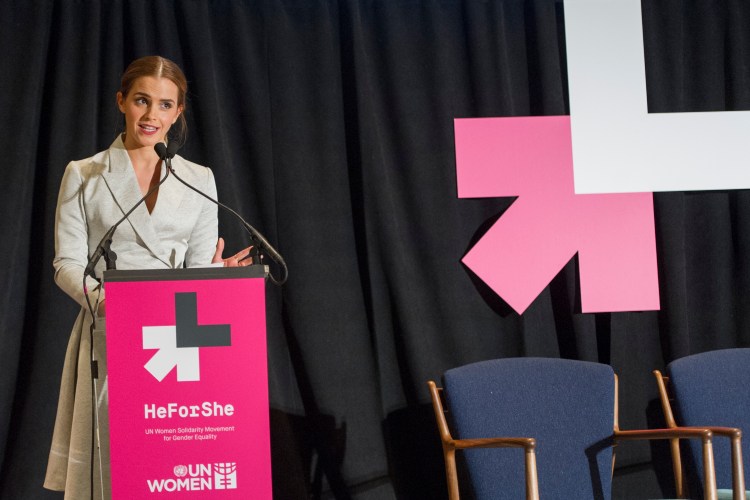
Emma Watson launches #heforshe campaign at UN

Speaking in her now famous address at the United Nations Headquarters on September 20, actress Emma Watson defined feminism as, “the belief that men and women should have equal rights and opportunities. It is the theory of the political, economic and social equality of the sexes.” Watson felt the need to provide this definition after noticing a trend in research she had conducted in her new role as Goodwill Ambassador for UN Women. Her findings demonstrated, as many other recent investigations have, that fewer and fewer women are choosing to define themselves as ‘feminist.’ Fewer and fewer women, it seems, are therefore taking an active role in promoting equal rights for both genders.

Why has ‘feminism’ become something of a dirty word? The answer is not clear. Over the summer a social media trend entitled #womenagainstfeminism gained notoriety and media attention after ballooning across Twitter, Facebook and Tumblr. As of early October, the Facebook page alone has amassed more than 24500 likes. Women who do not identify as feminists can use these platforms to post pictures of themselves holding written explanations of why they reject the label. The reasons shared have been diverse, yet there have been some notable patterns.

Firstly, a number of women have posted about how they no longer perceive feminism to be necessary and consider the society they live in as one in which there is equality between the sexes. Despite this, statistics tell a very different story and suggest we still have a long way to go. As Emma Watson made clear in her speech, “there is no one country in the world where all women can expect to receive these [equal] rights. No country in the world can yet say that they have achieved gender equality.”

Women are still not equal to men – politically, economically or socially. According to findings from the World Bank, women’s participation in the global labour force actually fell two percentage points from 57% in 1990 to 55% in 2012. Once in the workplace, women can expect between 70-90% of men’s pay on average. According to the World Bank, only 18.3% of top-level managers are female. These statistics are far lower in developing countries, but the problem is not exclusive to them. As recently as August, a Chartered Management Institute survey conducted here in the UK found that on average female managers earn 23% less than their counterparts.

Politically, the number of women in Parliamentary positions may have increased in recent years but still stands at only 21.8%. Globally, there are 38 states in which women account for less than 10% of parliamentarians. Women are also underrepresented in comparison to men in primary, secondary and tertiary education. In Sub-Sahara Africa there are on average 92 girls for every 100 boys in primary school, 84 for every 100 in secondary school and 61 for every 100 in tertiary education.

Moreover, a 2013 World Health Organisation global survey found that a minimum of 35% of women have experienced physical or sexual abuse, with national surveys placing the figure as high as 70%. The ILO also estimated that women and girls make up 55% of those trafficked for forced labour and 98% of those trafficked for sexual exploitation.

These statistics demonstrate that, while many in developed countries may not notice gender inequality in their daily lives, it is still a very real issue on a global scale. As Watson stated in her speech, “if we do nothing, it will take 75 years or for me, to be nearly 100, before women can expect to be paid the same as men for the same work—15.5 million girls will be married in the next 16 years as children and at current rates, it won’t be until 2086 before all rural African girls can have a secondary education.”

All of this demonstrates that the fight against gender inequality is still to be won. Many, #womenagainstfeminism supporters, however, argue that feminism is not the way to achieve victory. They, and others, have rejected the concept because they feel it does not stand for ‘real equality’. They see feminism as an aggressive anti-men stance. In other words, their notion of feminism is not in line with Watson’s definition of, “The theory of the political, economic and social equality of the sexes.” For all intents and purposes these women hold dear the same values as Watson and the majority of feminists today. They promote equality and freedom of expression for both men and women; they simply do not associate this belief with feminism.

This is what needs to change, it seems. Feminism needs a rebrand; stripping away negative connotations that might isolate ‘feminists’ from men, and indeed from other women. The purpose of Watson’s UN address was to promote a new online petition known as HeForShe. The initiative could be a step in the right direction towards just such a rebrand. The premise of the scheme is to encourage men from across the world to sign the petition, confirming when they do so that they will work side by side with women to fight for gender equality.

As Watson pointed out in her speech, it is in men’s interest to promote feminism too. Not only will giving men and women equal opportunities result in a stronger workforce, which the World Bank predicts could be up to 40% more productive, but it will mean greater social opportunities for men. Acknowledging the equal role of mothers and fathers within the family setting, giving men the opportunity to express emotions and vulnerability and seeing gender as a spectrum are all part and parcel of feminism too. As Watson said, “It’s about freedom. I want men to take up this mantle so their daughters, sisters and mothers can be free from prejudice but also so their sons have permission to be vulnerable and human, too and in doing so, be a more true and complete version of themselves.”

Some have seen the HeForShe campaign as naive. It can be argued that much more is needed to tackle feminism then a few thousand signatures on an online petition and the media attention afforded to a child actor at the UN. Furthermore, some have perceived the movement as placing the power back in men’s control when feminism is a woman’s problem for women to tackle. It is perhaps this thinking, though, which alienated some men from the feminist cause in the first place.

What the feminist movement needs in the 21st Century is some solidarity. Unbeknownst to them, many #womenagainstfeminism supporters are inadvertent feminists, striving for the same goals despite a hatred for the word. Unbeknownst to them, many modern men are also feminists, simply because they believe the same rights and opportunities should be afforded to their mothers, sisters and partners as to themselves. Over 170 000 men have now signed the HeForShe petition. With any luck these numbers will grow, as we work together to achieve basic and equal human rights for all people, regardless of gender. If you are a man reading this, I urge you to act now by signing at www.heforshe.org. I will leave you with Watson’s closing words, “If not me, who? If not now, when?”

Catalan Independence: When Self-Determination and Human Rights Go Hand in Hand

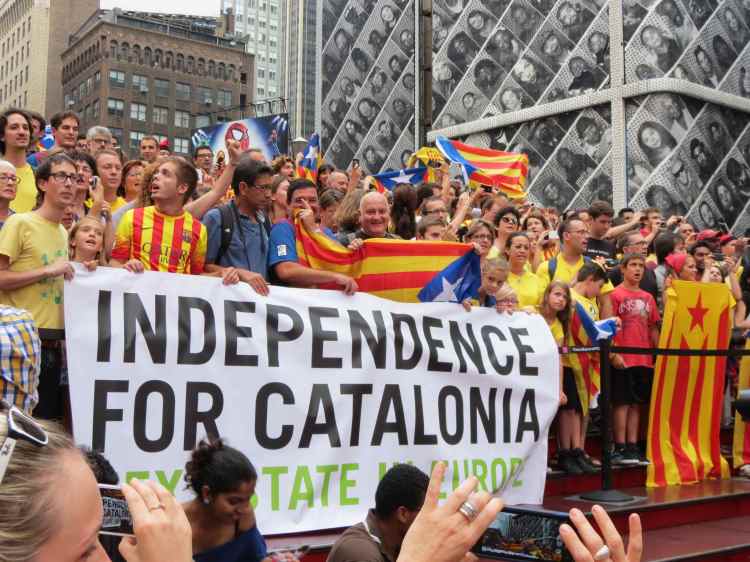
Protestors march for Catalan Independence

Despite a court injunction barring a referendum, Catalan pro-independence leaders are forging ahead with a November 9th vote that could fracture the Spanish state. At this same time in 2010, support for Catalan independence was at 19%. Currently, support has climbed to a staggering 51% within Catalonia. How could so much have changed in 4 years? On September 30th, 2014 the Spanish Constitutional Court inspired anger in Catalonia with the decision that the results of any upcoming referendum would be unconstitutional. In a similar situation, the Spanish Constitutional Court struck down a 2006 charter in which Catalonia purported to be a “nation.” Support for independence has since grown alongside increasingly vocal discontent with Prime Minister Mariano Rajoy Brey. According to the World Affairs Journal, “If the vote were held today, a referendum to secede from Spain would narrowly pass—fifty-one percent for independence.” In Scotland, a well-orchestrated and highly visible “Better Together” campaign, as well the “Let’s Stay Together- Scotland, you’re my best friend!” YouTube campaign showed that a vocal part of the Scottish population was intent on remaining in the union. In Catalonia, if there is a portion of the population that wishes to remain with Spain, their presence is an almost silent one. There is no current political campaign for union with Spain from the Spanish government. Intense campaigning on the part of independence seekers, including a 2 million person protest that took place on September 11th, 2014, drowns any pro-union Catalonian voices out.

Prime Minister Rajoy is playing a dangerous game. By unequivocally refusing to give the Catalan people a legal recourse to independence, Rajoy is only pushing them further towards the very result he is dreading. Catalonia accounts for 19% of Spain’s economy and 16% of the country’s population. Yet, instead of giving Catalonia reasons why it should remain in the Spanish state, Rajoy has simply stated that “the law and dialogue, these are the ways out of the situation in Catalonia… I want us to stay together.” It’s too little, too late. In a recent interview with The Guardian, Catalan politician Carles Castillo expressed his dissatisfaction with Rajoy. Previously a supporter of more autonomy for Catalonia, Castillo is being swayed by the little action taken by Rajoy to convince the Catalan people to stay: “Every time [prime minister] Mariano Rajoy opens his mouth, 200 Catalans convert to the separatist cause. If things carry on this way, even I can imagine becoming pro-independence myself.” On October 3rd, Catalan’s leader Arthur Mas presented a united front with the rest of his government, declaring that they would continue forwards with the vote despite its’ apparent illegality. Mas was quoted as saying that “We are facing a state that is acting with hostility and all types of impediments so that the people can’t vote.” Leaders of the nationally governing political party, the Popular Party, have said that Mas’ comments are to hide the fact that the independence alliance between Catalonia’s main political parties is falling apart. Despite these claims, there are no signs that the November 9th vote will be cancelled.

Article 15 of the United Nations Universal Declaration of Human Rights states that “Everyone has the right to a nationality” and “No one shall be arbitrarily deprived of his nationality nor denied the right to change his nationality.” Adopted by the UN General Assembly in 1948, Article 15 was used as a support for the creation of many previously colonized nations, including Pakistan, the Philippines, Vietnam, and numerous countries in Africa. The bill officially became law in 1976. Spain, as a member of the United Nations, must uphold the Universal Declaration of Human Rights. By blocking the Catalan peoples’ vote for independence, Spain has deprived the Catalan people the right of nationality and the right to change their nationality. In the recent Scottish referendum, Westminster acknowledged that if the Scottish vote for independence succeeded, Scotland would be allowed to leave the UK. The British government was willing to uphold the right of the Scottish people to self-determination; the Spanish government’s actions are wholly at odds with their stated commitment to human rights.

Catalonia has long been distinguishable from Spain with its unique culture and language. Famous for its literature and distinctive music, Catalonia remained a somewhat independent state up until the Spanish War of Succession which ended in 1714. Catalonia has suffered at the hands of Hispanicization before. During Franco’s regime, the Catalan language was banned and Catalan institutions were destroyed in an effort to create a uniform Spanish culture. Viewing today’s independence struggle through the lens of history makes Spain’s human rights violation all the more obvious. If Scotland had a claim to independence, Catalonia, with its’ entirely separate language, certainly has the right to at least vote. Should Spain deny the results of a Catalonian vote for independence, international diplomatic intervention could become necessary. Surely Prime Minister Rajoy has more sense than to push the situation to a point where other states will have to intervene. Speaking about the results of the Scottish referendum, Rajoy said ominously “Yesterday they chose between segregation and integration. Between isolation and being open. Between stability and uncertainty. And they chose the best option for everyone – for themselves and for Europe.” Here’s hoping Prime Minister Rajoy will accept the results with the same grace that Westminster would have had Scotland voted for independence.

#BringBackOurGirls

Michelle Obama supports #BringBackOurGirls social media campaign

Anyone who was paying close attention to either world news or social media back in April will remember a campaign called #BringBackOurGirls. It has been nearly six months since almost 300 schoolgirls were abducted from the Chibok boarding school in northern Nigeria by the Islamist militant group Boko Haram. The media covered this story extensively, and the public reacted. Marches took place in several cities, and there were endorsements from celebrities and other high-profile individuals including Michelle Obama. A Facebook page was created, and #BringBackOurGirls could be found throughout social media. Despite all this attention, however, there are still more than 200 girls who remain missing and have yet to return to their families.

Although many girls escaped shortly after the initial kidnapping, nothing more was heard from any of them until September 24th, when one of the missing girls was found wandering through a field in Hong. It is still unknown whether she escaped or was set free, as she is still unable to talk about her experiences due to being in an extreme state of trauma. According to The Guardian, “previous escapees…spoke of multiple rapes, mutilations and forcible conversions. Several entered a catatonic trance at the mention of the sect’s name.” Since the located girl hasn’t been able to talk, authorities are still in the dark as to where the missing girls are being held. The Nigerian government has been in negotiations with Boko Haram in attempts to secure the girls’ release, but so far they have been unsuccessful as Boko Haram is asking for the release of senior commanders being held in prison.

Nigeria itself is clearly not equipped to deal with Boko Haram. The military complains that they don’t have enough weapons, and soldiers have been fleeing and refusing to fight the violent militant group. In addition, Nigeria’s own security forces have been accused of kidnappings themselves, along with other human rights abuses directed at anyone who might be connected with Boko Haram.

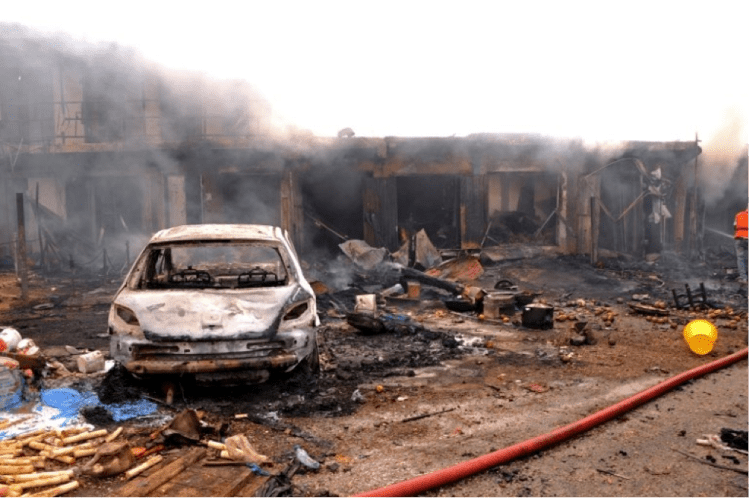
Destruction caused by one of Boko Haram’s many attacks

Although #BringBackOurGirls had good intentions in its attempt to draw public attention to the girls’ kidnapping and spur action in securing their release, it is also clear that this social media movement was not entirely successful. The most obvious reason for this is the fact that the girls are still missing. Public attention lasted for a short amount of time, and while celebrities and public figures supported the campaign, no political figures or authorities went to any huge lengths to actually help Nigeria find the girls. As The Huffington Post points out, another downfall of this campaign was that it didn’t tell the whole story, and actually gave the public the wrong idea about Boko Haram. This group does not specifically target women or girls, but posits itself against Western education. Boys have suffered just as much, if not more, at the hands of Boko Haram. In less publicized incidents, nearly 50 students were killed when Boko Haram gunmen attacked the College of Agriculture in September 2013. The gunmen attacked the male dorms, but actually left female dorms untouched. In February 2014, between 30 and 60 male students were brutally murdered in an attack on the college of Buni Yadi. Boko Haram has targeted boys in abductions as well, forcing them to join their ranks and commit acts of violence.

Both the kidnapping and the #BringBackOurGirls campaign that ensued raise important questions about the effectiveness of social media in both reporting and making a real difference in human rights situations. It is clear that social media will play a role in promoting human rights in the future. An example of this is shown by the U.S. Department of State’s creation of the Internet Freedom Fighters program, which consists of a group of experts promoting human rights through blogs and other forms of social media.

Ambassador Eileen Chamberlain Donahoe, the U.S. Representative to the UN Human Rights Council, said that “around the world people are using new media in the call for freedom, transparency and greater self- determination. We must always remember that it is not the tools, but the courageous people who use them – journalists and reporters and individual citizens – who are the human voice of freedom.”

There are two problems with this idea, however. One arises when the people communicating through social media leave out important facts and details. Anyone can make a blog, a twitter account, or a Facebook page, and say anything they want. The second problem is when people paying attention to social media blindly accept everything they read and hear. Social media users need to be proactive in following the news closely and checking facts and details themselves. It is easy to follow the trend of caring about the latest human rights violations, but the #BringBackOurGirls campaign showed that without a significant portion of social media users putting in real time, effort, and dedication to the cause, the trend will end. In the case of the kidnapped Nigerian girls, this means that media attention is gone before a resolution is found, and the public forgets that the missing girls they claimed to care so much about have yet to come home.

The Forced Sterilisation of Disabled Women in Australia

In 2013, a slew of articles was published regarding the sterilisation of disabled women in Australia, but recently this issue has dropped from the headlines despite having not been resolved. Disabled women, often under the age of 18, are recommended for permanent sterilisation by means of hysterectomy. There are various reasons proposed by those supporting this method to justify its use, however it is highly contested because these hysterectomies are carried out without the permission, and often knowledge, of the disabled woman, thus removing critical rights.

The forced sterilisation of disabled people has historical precedent. Countries such as Nazi Germany and the United States carried out policies during the 20th Century which led to more than 60,000 people being sterilised by 1960. The actual number of sterilisations in Australia is unclear; the approximate number was high enough to gain the attention and concern of the United Nations which wrote a report, the Conventions on the Rights of the Child, in 2012 showing unease at the continuation of the practice and proposing a ban for all non-essential surgeries. The lack of accuracy over the figures is a cause for concern because this is such a critical subject, the removal of rights from vulnerable women.

Authorities in Australia have managed and policed this area by making it legally necessary to hold a court or tribunal before sterilisation may be carried out, unless it is carried out as a by-product or part of medically necessary surgery. Permission is then only given for forced sterilisations if it is believed to be in the girl’s best interest and if all other options have been exhausted. This came about as a result of Marion’s case; when courts and families argued over who had the authority to authorise an operation. In the end, it held that only the courts could authorise such an operation. This is an attempt to mitigate unnecessary surgery without proper justification.

There are, however, documented ways to circumvent this, which has to be combated when there is so much at stake. As the Disability Commissioner Graeme Innes said, circumventing control over sterilisation is achieved “Either by a different Medicare number being used, by a person not being recorded by the health system as a person with a disability, or by people going overseas,”. The Australian government has been accused of not doing enough to protect disabled women, as the number of those attempting to circumvent the controls is on the rise.

One reason proponents of sterilisation have put forward their support for the act is that it will prevent sexual abuse. However this argument is inherently flawed because a uterus is not needed for sexual abuse to occur, it simply removes the evidence for certain types of sexual abuse. Therefore, rather than helping to prevent abuse, sterilisation enables abuse to continue by removing the safeguard of physical evidence.

Another reason supposedly supporting sterilisation is that it is convenient for those involved; it avoids the stress and inconvenience of menstruation. However, it must be considered that menstruation could cause mental stress to the disabled woman in question, which is a serious problem. But those who object to sterilisation tackle this issue by addressing the age of those who undergo the procedure. It often happens to girls who have not yet reached puberty and thus menstruated. How do their carers know that they will become distressed, and more importantly, how do they know that the disabled woman will not cope with menstruation. There are other methods which can be used to manage menstruation and fertility which do not involve surgery; it has been proven that the same methods of management can be used on both disabled and non-disabled women. There are also suggestions that hysterectomies to avoid menstruation would not occur as often if there was an appropriate support system in place, a suggestion which should be considered by the Australian government.

Another justification is that disabled people will not be able to cope with the demands of parenthood, and thus it would be better for the potential children and the disabled woman to sterilise the woman and thus avoid the issue. However, the central issue here is that the right to family life is removed without the woman’s consent, therefore removing any possibility of children regardless of the woman’s opinion or parental ability. There is evidence to show that disabled women parent just as ably as non-disabled women, and this justification is based on societal opinions of what is needed to parent well.

The unknowns make forced sterilisation morally questionable because the surgery removes rights from the disabled person against their will. It removes the right to a family life, it removes the right to sanctity of body and the right to choose. It is the lack of choice which is so critical because it suggests that a person has no claim over their body as a result of being disabled. Serious questions must be raised as rights should not be removed from a human being, regardless of their mental or physical status.

There are those who are actively campaigning against forced sterilisation, such as the Human Rights Campaign (HRC) and the Women With Disabilities Australia (WWDA). WWDA do not oppose sterilisations, just sterilisations of women under the age of 18, and sterilisations of adults without their knowledge or consent unless it is medically critical. The HRC, like the WWDA is pushing for the criminalisation of forced sterilisation, except in medically critical circumstances. The WWDA conducted a report, 2004, which addressed disabled women who had gone through this process, documented the mental and physical effects, and gave recommendations for further action. There are also many other reports on this subject which support the recommendations, as well as an inquiry by the Australian Senate. One of the suggestions is that the recording of all child sterilizations should happen in the same way in each Australian district. There are serious concerns over why it has taken until now for this to be implemented. The UN Special Rapporteur on torture has also stated that forced sterilization of disabled women may constitute torture, or ill treatment. This suggests that Australia and other countries which do the same will face pressure to curb or reform the practice in line with guidelines.

Overall there is a serious issue when considering the forced sterilisation of women in Australia. Women are being deprived of their rights, often before the age of 18. There are documented cases when women have been forced by their parents or legal guardians to have the operation even when they have expressed opposition to sterilization. It is clear that more stringent controls must be put in place to protect the rights of the disabled people and tighten up the regulations determining when sterilisation should be authorised. It is likely that changes will be implemented in the near future as a result of the investigations and reports, as well as the concern from the United Nations; however it must be implemented rapidly in order to protect the women at risk.

The Unlikeliest Members of the Islamic State

Female ISIS Recruits

The Islamic State of Iraq and Syria (ISIS), is reported to be using social media to recruit new members from Europe, North America and Australia according to the International Business Times. The United States Department of State said it is aware of dozens of U.S. citizens fighting for ISIS, and the British government estimates that 500 British citizens are fighting with the Islamist group.

We are acutely aware that Western states are susceptible to terrorist attacks that originate from external sources. However, as people who seem to be invested in Western interests leave their homes and communities to join terrorist groups, the threat turns internal. This is not an easily predicted or immediately perceived threat. Among this unique group of ISIS members are the young women living in Western states who are recruited through social media. These women are often recruited through contact they have had with other women already living in the Isis communities.

According to the Guardian, women now make up about 10 percent of Western recruits. This percentage is as high as 25 in France, where 63 young women have joined ISIS and 60 are thought to be considering joining. Counter-terrorism experts estimate as many as 50 British girls have joined ISIS; ten of whom are intending to actively fight. These women, the majority of whom are between the ages of 16 and 24, leave their families and communities to move to areas under Islamic State control either as wives of the male fighters or as combatants themselves. The primary destination for these women is the city of Raqqa in Syria.

The phenomena of female ISIS recruits warrants an analysis of the conditions for young women, mostly Muslim, in Western countries as well as the tactics ISIS uses to convince these women to join the jihad community which, according to the Director of Germany’s Institute for Terrorism Research and Security Policy, Rolf Tophoven, is still very much male dominated, as again reported by the Guardian. There are numerous reports of sexual abuse and other violent acts perpetrated against women. It is also suspected that the womens’ social media accounts are confiscated by the men, depriving these women of any voice they may believe terrorism will give them. What would motivate women to leave Western states where women arguably have more rights than they would experience in a terrorist organization?

The recruiting of women into ISIS, or any terrorist group, is a form of violence towards women, though arguably less explicit since they appear to go willingly and in the name of their religious convictions. However, these women are manipulated into believing that if they move to Syria they will be joining a likeminded community. They are often contacted by other women over social media who have already moved to Syria. They may also be persuaded with financial incentives such as paid travel expenses and compensation for having children, again according to the Guardian. Perhaps these women believe they will gain respect as the wives and mothers of jihadists. Maybe they go looking for a religious camaraderie that is not achievable as a Muslim living in a predominantly Christian or secular society.

A smaller percentage of women are moving to Syria to become fighters themselves. According to Russia Today, 60 women have joined Al-Khansaa, an all women’s branch of ISIS also based on Raqqa. Some women have even joined the primary ranks of the ISIS military. Girls as young as 16 have posted photos to social media with their faces obscured, holding weapons and the flag of the Islamic State.

The American Psychological Association (APA) gives some possible reasons why people might join terrorist organizations. Among these are feeling alienated in one’s own community and believing “that [your] current political involvement does not give [you] the power to effect real change.” Psychologist Dr. Clark McCauley has referred to terrorism as “the warfare of the weak.”

If these young, Muslim women feel dissociated in their communities before they are contacted by ISIS recruiters, they will be more vulnerable to the life that ISIS seems to offer. It could be argued that western societies are also indirectly guilty of perpetuating feelings of alienation among these young women. These women have a unique experience in that they are both female and Muslim, two groups that at best, are underrepresented and at worst, experience intentional discrimination. For example, in 2011 there were 2.7 million people who identified as Muslim in England and Wales out of a population of 56.1 million, according to the Office for National Statistics. Western states are also increasingly diverse, which could lead some to turn to organizations that have a uniform ideology, such as ISIS or other terrorist organizations.

Even in Western states that have relatively progressive women’s rights, women have evidently less involvement in national and local politics. Perhaps the feelings of alienation and powerlessness recognized by the APA as contributing to a person participating in terrorism are accentuated in these women. They may expect to achieve status as a member of ISIS that they cannot as minorities in their Western communities. In Western societies, Muslim women are members of the ‘out-group’ which does not traditionally experience the same opportunities and visibility as the ‘in-group’.

Thus, violence towards these women is coming from the ISIS community as well as from Western states. What is problematic is that Western states are cast as the victims of terrorist organizations, when in fact the structure of Western societies may indirectly perpetuate and allow the terrorists to achieve their directives.

Do we assume that women have achieved equality within Western states when in fact have they have not? If so, assuming that the issue is resolved is dangerous because shortcomings in women’s rights will be largely invisible because society thinks they do not exist. Perhaps the intentional or unintentional discrimination still experienced by women in the West is even more pronounced for women of religious minority status. Moving to Syria to join ISIS might seem obviously unattractive to consumers of mainstream news, but what perspective is informing this judgement?

News often focuses on blatant violence against women, often in the form of brutal murders, but this is not the only violent implication of terrorism on women. Women, left vulnerable by their western societies, are exploited by established members of ISIS who, aware of what messages these women will be receptive to, recruit them into ISIS on false pretenses. Because these women apparently go willingly and often have their social media accounts controlled by men upon arriving in Syria, this particular abuse of women goes largely unreported.

Having investigated into the reasons why some women may join terrorist organizations, it would be worthwhile in the future to examine how a woman experiences jihadism differently from her male counterparts.

A Deliberate Crime

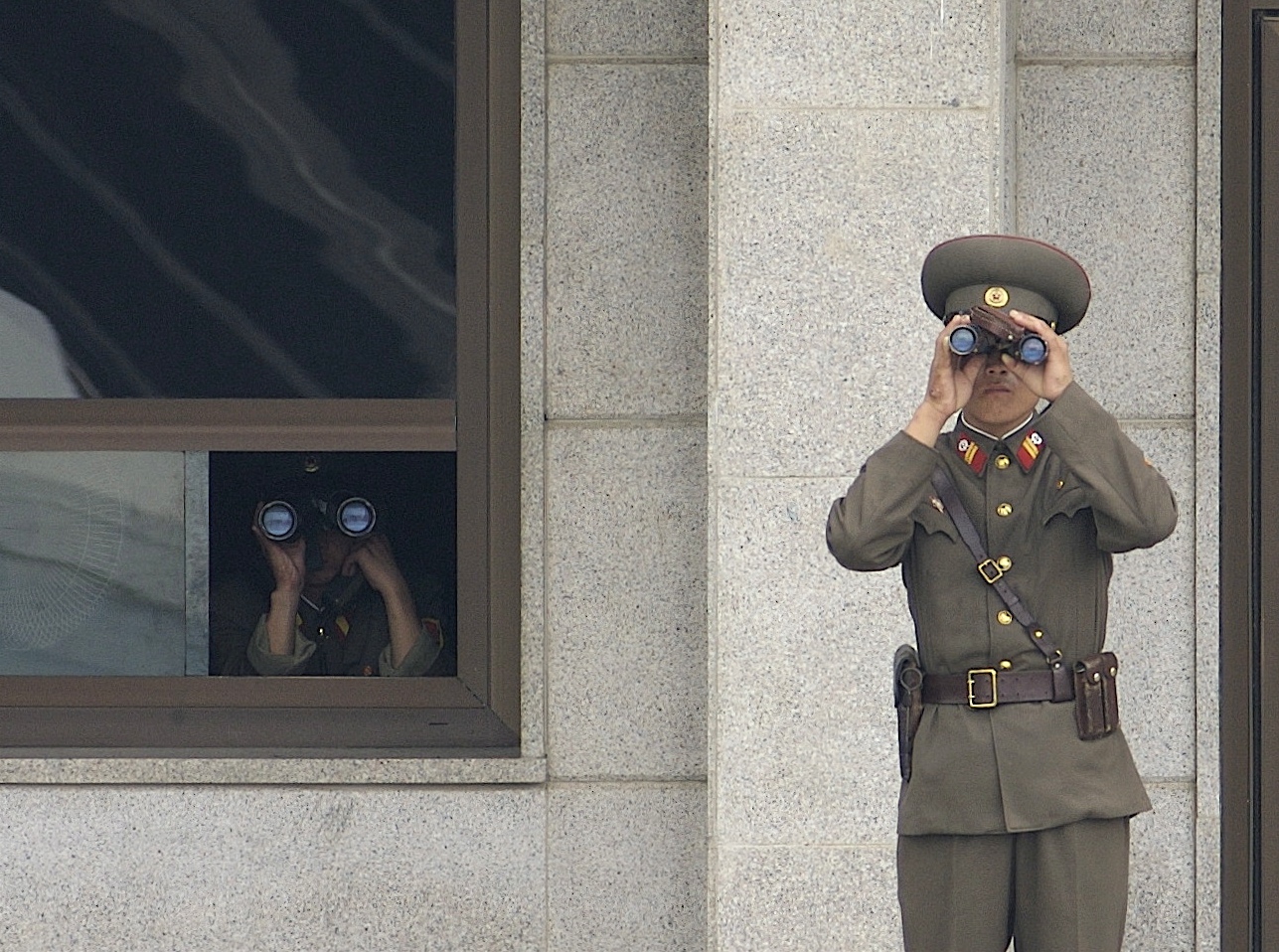
It has been less than a month since Matthew Todd Miller was sentenced to 6 years of hard labor in a North Korean prison. The 24-year-old joins two other Americans detained there; Jeffry Fowle and Kenneth Bae both of whom were arrested for proselytizing Christianity. Miller’s crimes, however, seem less conclusive. He was convicted in Pyongyang on September 14th as a spy attempting to undermine the DPRK on behalf of the United States. Whilst this may appear straightforward, this conviction contradicts several reports made by the nation’s media. These claims are as follows: he was arrested in April of this year after tearing up his tourist visa and supposedly seeking asylum. In September, Miller and the three other detained Americans gave an interview accepting their guilt in unspecified crimes and pleading for diplomatic assistance in their release. This was followed by his subsequent conviction later in the month. It was also after this that North Korean media outlets claimed that Miller acted in order to serve as a “witness” to the human rights violations prevalent in North Korean prisons. This stands as the most thought provoking of all the updates given. If indeed Mr. Miller went with this intention, it is important to question why.

Two months before Miller’s arrest, the United Nations released their investigative report on the state of human rights in Pyongyang. This report was compiled from first hand experiences, and the tale they told was haunting. Specifically, “the gravity, scale and nature of these violations reveal a state that does not have any parallel in the contemporary world.” These violations were extensive as investigators revealed accounts of execution, rape, forced abortions, torture, and enslavement. Prevalent crimes include mass starvation, torture, arbitrary arrest, discrimination, denial of fundamental freedoms, free speech, and enforced disappearances. However, it is important to note that their greatest concern was North Korea’s “crime against humanity”- their treatment of prisoners. This process begins with the arbitrary detention of a convict, imprisoned without a fair trial, or indeed any trial at all. This was the case for Matthew Todd Miller, who was given no defense, persecuted with poor evidence, and seemingly forced into admitting he was guilty of his ‘crime’. Other unfair trials and persecutions are the results of dissenting political views, religion, race, gender and the seemingly obscure “crimes by association” or “subversive influences”.

The report on the actual treatment of the estimated 120,000 prisoners placed in camps was dire. Evidence of torture, rape, forced labor, deliberate starvation, and frequent public executions was rife. Along with that list of abuses there were first hand accounts of famished children beaten to death by guards and mothers forced into infanticide. The report concluded that the North Korean regime was guilty of “systematic, widespread and gross human rights violations’ against its own people.” The case was then referred to the International Criminal Court, where it is expected to lay untouched for as long as possible. Due to their similar ideological background, China uses its role as a major world power and permanent member of the UN Security council to defend North Korea, which makes the ICC hesitant to take on the case. This leaves the verdict without its punishment for as long as the DPRK has continued Chinese support.

After quickly dismissing the UN’s report as “wild rumors”, the DPRK followed up with it’s own report claiming that as a society in transition, there “may be an occasional hiccup in [a] country’s human rights record.” This may be true to some degree, however, does this necessarily justify crimes against humanity? Unfortunately, the ICC is not likely to hold a court case, which leaves North Korea in desperate need of further human rights investigation and intervention. It would seem that by ensuring his arrest and conviction (according to DPRK media claims), Matthew Todd Miller is the perfect man for that job.

Miller would not be the first man to boldly, perhaps foolishly, sacrifice his own well being to expose a violation in human rights. These persons frequently include investigative undercover journalists like Gunter Wallraff, Barbara Ehrenreich, and Carmelo Abbate. The most famous and perhaps most similar case was that of Nellie Bly whose infamous book, published in 1887, Ten Days in a Mad-House, detailed her days undercover in a women’s lunatic asylum. Her recollection of those ten days presented society with a reflection into its treatment of those it deemed insane. Her tale revealed poor diagnoses for patients, harsh living conditions, abusive nurses, and the general faults of the system all together. Her book was met with resounding reception and outrage. Bly’s actions may have subjected her immense physical and mental abuse but they were instrumental in the reform of mental institutions and how we perceive those who are afflicted with such ailments. Her incredible risk proved to be successful despite. Will Mr. Miller’s be the same

Matthew Todd Miller’s most recent interview gave the Associated Press a chance to talk with the young American after only ten days of imprisonment. Already observations were made depicting concern for his physical appearance and weary disposition. As opposed to Nellie Bly’s ten-day undercover work, Miller’s sentence is 6 years. He is nearly 30 days into a sentence 2190 days long. Do Miller’s benefits outweigh his costs? In his own words, “I deliberately committed my crime” and we must wait and see what happens next. My final question is: How far do we go to expose human rights violations?

The Rohingya: A People Without Rights

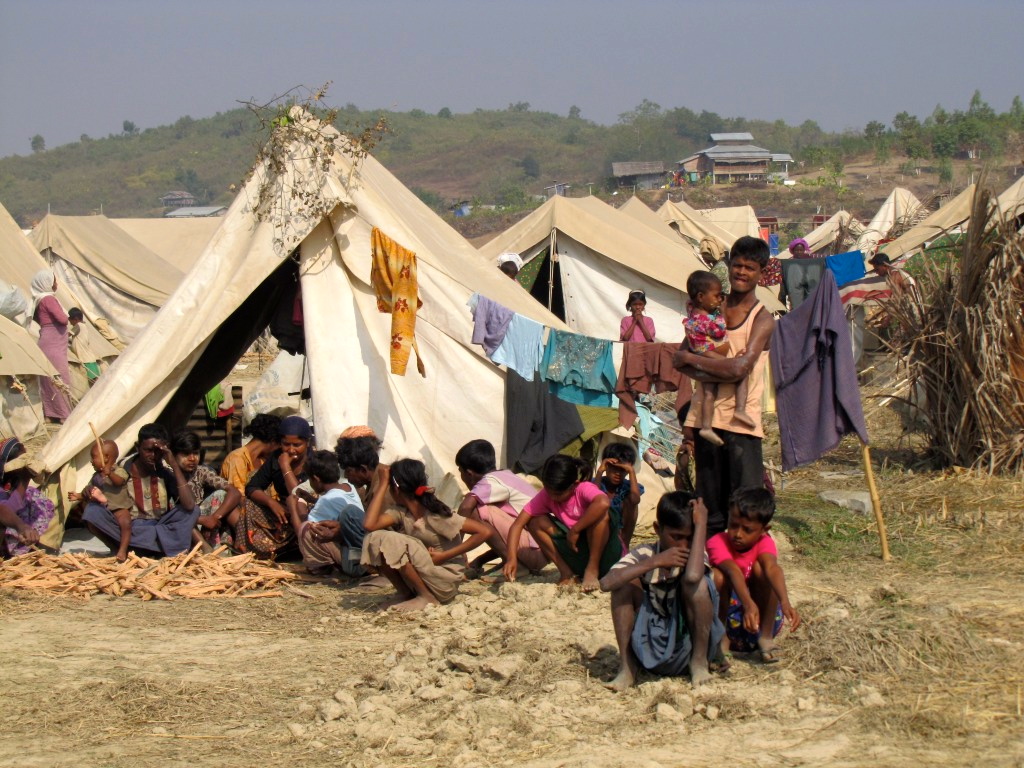
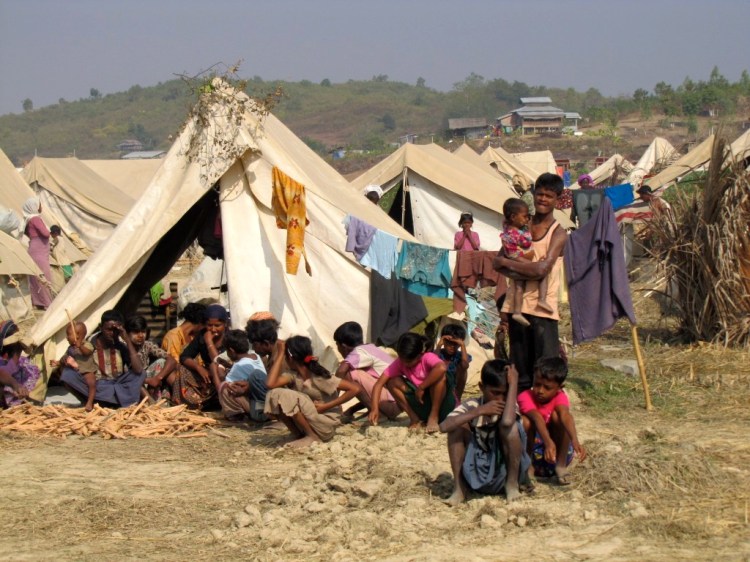
A few weeks ago the BBC published an article criticising the Thai government’s decision to deport over 1,000 Rohingya refugees to Myanmar, where they face almost-certain prosecution. The news comes more than a year after the fact, leading to further criticism of the lack of opacity in the Thai government’s decision. The Rohingya are an ethnic group thought to be indigenous to Myanmar and have been subject to considerable racial, ethnic, and religious discrimination both historically and in recent years. This begs the question –who are the Rohingya? What has led to the systemic discrimination they face? And, most importantly, why are they one of the most persecuted people’s of the modern world? With an estimated 200,000 Rohingya refugees, an answer as to why no state will accept responsibility for the Rohingya people ought to be found.

Having suffered extensive discrimination and abuse, the Rohingya are undoubtedly a historically persecuted people. In 1982 the Rohingya were denied Burmese citizenship; as a result they became one of the largest stateless populations in the world. The denial of citizenship leads to further consequences, including the denial of access to education. These constraints coupled with the physical brutality at the hands of the junta, have led a large proportion of the Rohingya to flee Myanmar thus creating sizeable refugee populations in neighbouring states –in particular, in Bangladesh and Thailand. This mass exodus has been further extended following the 2012 riots in Rakhine State. However, mistreatment and further discrimination within the refugee internment camps have led to further strain upon the Rohingya. A recent article by Time Magazine reminds us that the Rohingya are in fact not recognised as one of the 135 ethnic minorities within the South-Asian region. This arguably has implications for their access to indigenous rights.

To an extent there seems to be a general sense of apathy on behalf of neighbouring states and the international community alike when considering the plight of the Rohingya people. A fundamental question to ask is – why don’t governments want to help? Simply put, the financial strain of a refugee population as large as the Rohingya may be too sizeable for small states like Bangladesh to bear.

In 2012, the World Bank declared Bangladesh’s GDP to be $115,610. When compared to the United States’ $16,244,600 that same year, the financial constraints posed by a large refugee population are thus evident. In Thailand, the current internal domestic turmoil takes precedence regardless of whether it is morally just or not. The political instability Thailand faces in the wake of mass anti-government protests must be dealt with first and foremost. Concurrently, the Thai government must deal with treatment of indigenous peoples within the state, including the Aka and the Karen, as it is estimated that almost 300,000 indigenous peoples within Thailand lack citizenship.

The Bangladeshi government have denied the Rohingya refugee population the right to employment outside of the refugee camps. The vast majority live outwith the official camps and, as Refugees International remarks, life for these individuals is considerably harder. Such is the extent of their hardship that “in one unofficial camp, malnutrition rates are twice the emergency threshold”. Whilst there are indeed two registered UN Rohingya refugee camps these simply are not equipped to deal with neither the severity nor the scale of the situation.

It would be a mistake to make broad generalisations and homogenise the attitude of governments toward the Rohingya populations. Therefore, a comparison between the Bangladeshi and Thai governments would facilitate a more accurate analysis. By doing so it is possible to note some similarities. As mentioned previously, the Thai government deported over 1,000 Rohingya to Myanmar. According to Human Rights Watch, “the government considers all Rohingya arriving by sea to be illegal immigrants, and regularly intercepts them”. As a result of this, “more than 2,000 Rohingya were detained in poor conditions by Thai immigration”. There is also thought to be an extensive trafficking network involving Rohingya peoples arriving from Myanmar. The Rohingya have fled Myanmar in the hundreds of thousands in the search of a better and more secure future. Evidently, they are unlikely to find it in Thailand.

If we can say with certainty that two of Mynamar’s neighbouring states are either unwilling or unable to accept the Rohingya refugee populations, who is obligated to provide the necessary aid? Non-governmental organisations, including Human Rights Watch, have been raising awareness and are calling on the Burmese government to accept responsibility for the Rohingya peoples, granting them citizenship and vowing to put an end to the ethnic and racial discrimination that has led to their persecution. Furthermore, the United Nations High Commission for Refugees has established refugee camps in Bangladesh to provide assistance and aid to those who have fled. However, such efforts simply are not solving the issue at hand.

According to Nena Shastri, the Rohingya “have been subject to large scale ethnic cleansing” that has resulted in “grave bloodshed”. Likewise, this article has arrived at a dire conclusion. The Burmese state continues to be a place the Rohingya are unable to call home. They lack citizenship and the basic human rights associated with it, and to this day remain a persecuted population. Foreign governments, namely those in Thailand and Bangladesh, either cannot or will not help. Non-governmental organisations lack the capacity and resources to adequately change the state of affairs. With this taken into consideration, it seems unlikely the Rohingya will be able to find their place in the world any time soon.

Protocol on the Scene: Hong Kong Fights for Democracy

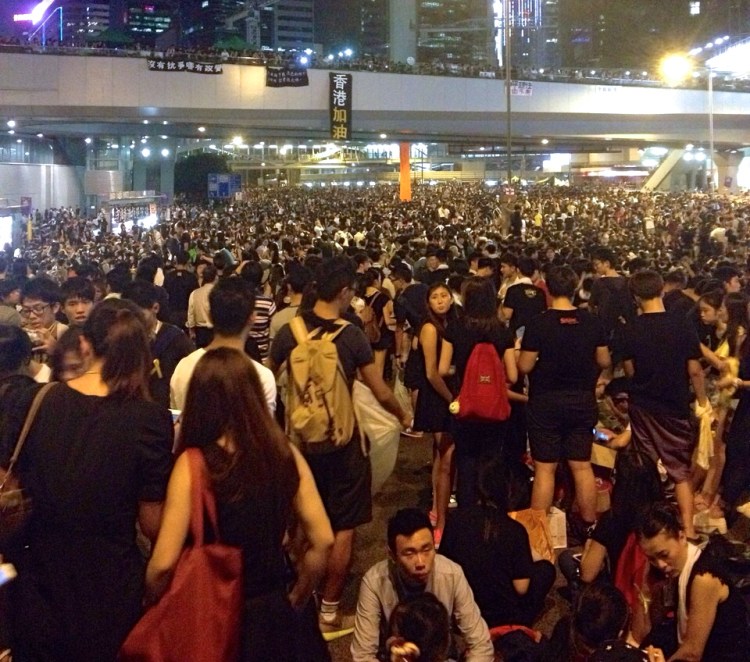
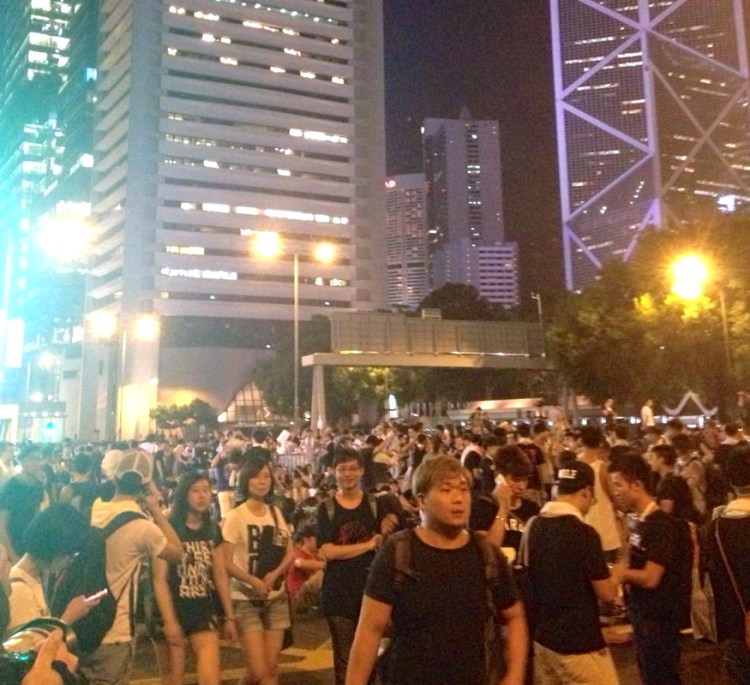
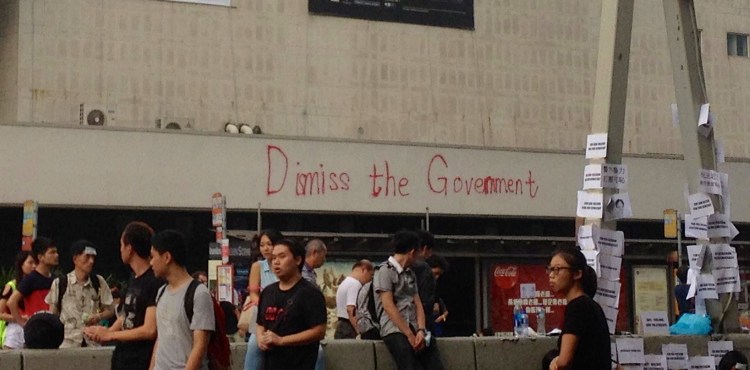
Tens of thousands of pro-democracy demonstrators have taken to the streets in Hong Kong after the Chinese government ruled that it would continue to limit, vet and pre-approve candidates eligible to stand in the region’s 2017 elections.

Protests, organized by activist group “Occupy Central”, were due to commence on October 1st, but were pushed forward in support of students who forced entry into the main government compound on Friday, receiving a heavy handed response from security forces.

The protests, which began on Saturday evening, have primarily involved students and other young people, although a much wider demographic have attended in recent days.

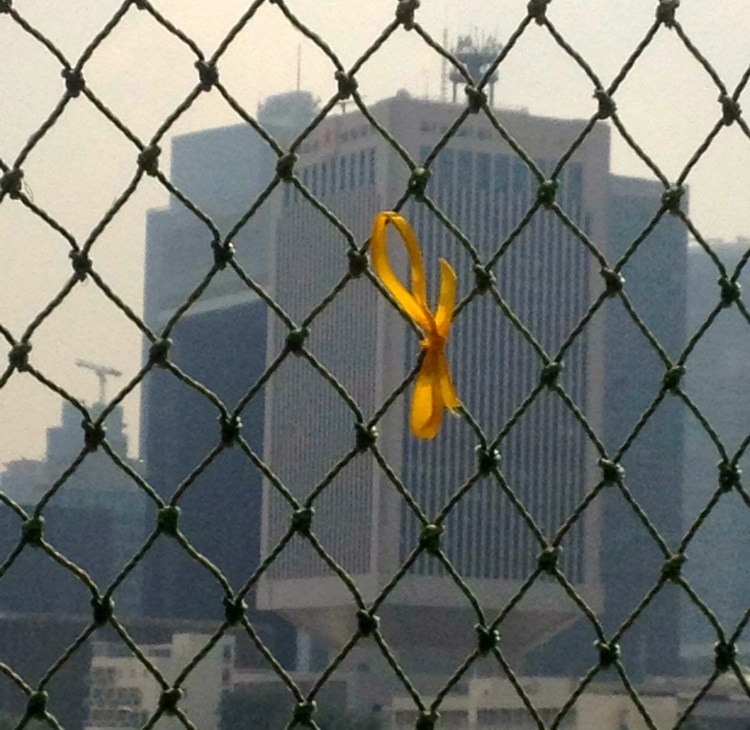
The yellow ribbon has become a symbol of the movement, commonly referred to as the ‘Umbrella Revolution’. This ribbon is photographed in front of the People’s Liberation Army Forces Building.

Whilst the protests have been largely peaceful, the Hong Kong police has used tear gas and pepper spray in order to dispel crowds. Reporters have also noted a high degree of tension amongst police, with scenes of demonstrators being verbally abused being reported on the scene. Student groups have announced that they will occupy government buildings tomorrow if the current administration does not resign, creating fears for a rapid escalation of the situation.

The origins of the protest lie in Hong Kong’s electoral system. Beijing has promised Hong Kong universal suffrage by 2017 but has mitigated democratization by forcing Hong Kong voters to choose only among candidates pre-approved by a Beijing-friendly commission. One of the main demands being made by the protesters, according to Mr. Clarence Leong, a St. Andrews student and Hong Kong national, is for the Chinese Communist Party to ‘reconsider the framework’ of Hong Kong elections, allowing for more choices among candidates and parties. There has also been major discontent with how the Legco, the Hong Kong legislature, operates. Hong Kong policy has long been heavily influenced by business interests represented in the Legco, often at the cost of democratic interests.

In this video, protestors chant “Ha Toi”, Cantonese for “Step Down”, directed at Hong Kong Chief executive CY Leung.

Photography by Amanda Sheppard.