Summer Series: A Conference to Change the World

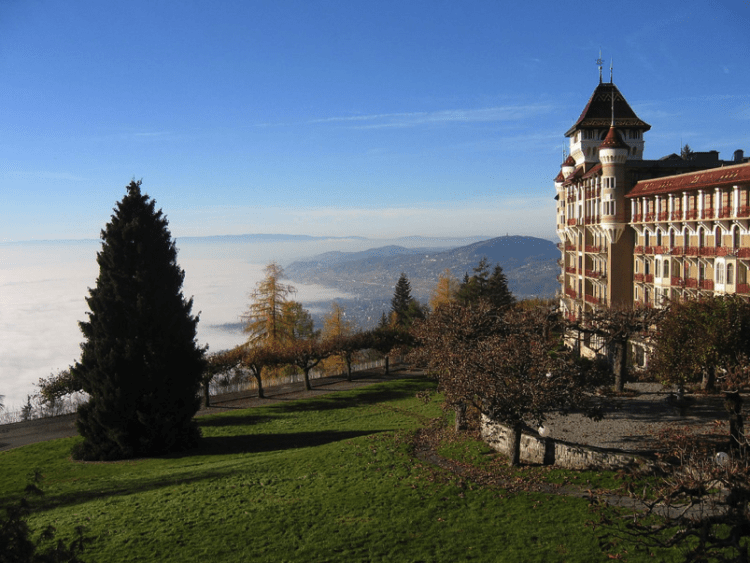
How many places exist where you can find people from all over the world, of all religions, and from opposite sides of violent conflict in one room discussing how to make the world a better place? This is exactly what happens in Caux, Switzerland every summer where Initiatives of Change holds its conferences. In a beautiful hotel in a small village surrounded by forests and mountains, journalists, creators of NGOs, religious chiefs, princes, diplomats, and students all gather to share their ideas for change.

Initiatives of Change was formerly known as Moral Re-Armament, which was founded in 1938. The organisation holds Special Consultative Status with the United Nations Economic and Social Council and Participatory Status at the Council of Europe and has branches all over the world: the movement is especially popular in India. It is based around what it calls the ‘Four Absolutes’: absolute honesty, absolute purity, absolute unselfishness, and absolute love.

This summer I was an not an intern for Initiatives of Change, but for the Next Century Foundation (NCF), which is a small think tank that works to create policy and dialogue primarily in the Middle East. The NCF works closely with Initiatives of Change, and as part of my internship I was given the opportunity to attend one of the week-long conferences in Caux: Just Governance for Human Security.

During my time in Caux, I found that Initiatives of Change has become a platform for discussion between people from all over the world. For me, the most intriguing aspect of the conference was not the official panel discussions, but the casual discussions between the people who attended. Every speaker and participant was placed in a community group on the first day, and these groups met every day for about two hours for a small group discussion about any topic. These groups also volunteered to help manage and run the hotel and conference; everyone spent some time working in the kitchen, helping with housekeeping, or volunteering with administration. I spent several days peeling and chopping carrots next to people who were about to be speakers on a panel.

This spirit is what allows for such deep discussion of sensitive topics: everyone, no matter who they are, is put on the same level. During the conference I attended there was a Turkish-Armenian dialogue attended by both Turks and Armenians, as well as a screening of a film about the Israeli-Palestinian conflict, attended by both Israelis and Palestinians. There was even an African-American perspective on healing history centred on the rarely mentioned Tulsa race riot of 1921.

A discussion at the 2016 Just Governance for Human Security Conference

Clearly, no topic was off limits in Caux. Besides the difficult discussions between groups with troubled histories, topics were focused around corruption, sustainable development, terrorism, extremism, and the role of the media. Extremism was one of the most significant topics, which was fitting since Initiatives of Change began as an ideological movement.

However, Initiatives of Change has moved away from the promotion of its ideology to almost become exclusively focused on these conferences and small-group meetings and discussions at its various branches. Its ideology was hardly mentioned at the conference, and many of the speakers were not part of the organisation at all. It has become an example of how an NGO can change over time, and even move away from its original purpose.

Although it is no longer the focus, its ideology might be the best tool Initiatives of Change possesses in its quest to change the world. The conference was informative and incredibly unique, and the discussions held there were special. However, the people who attended them were already open to forgiveness and hearing the other sides of their stories; this is the reason they travelled to Caux. If Initiatives of Change could expand to bring in regular people without an exceptional interest in politics and who would not normally attend a conference like those in Caux, it could be an incredible tool to bridge the gaps and stereotypes that occur after conflicts between people who have struggled with forgiveness.

By promoting its ideology and being clear about its goals and beliefs, Initiatives of Change could gain a wider following and bring in people who would normally not want to speak to someone with different views. Its international reach gives this organisation the capacity to promote its ideology of dialogue, forgiveness, and the idea of changing yourself to change the world. According to the talks about extremism during the conference, this is the way to combat violent extremism: offering marginalised people a different ideology which can make them feel like they have a voice. In this way, Initiatives of Change could actually be a tool to combat violent extremism itself instead of just a platform for discussing the various ways to do so.

Please click here if you would like to know more about Initiatives of Change, and here to find out more about the Conferences in Caux.

The Sultan and his Censors

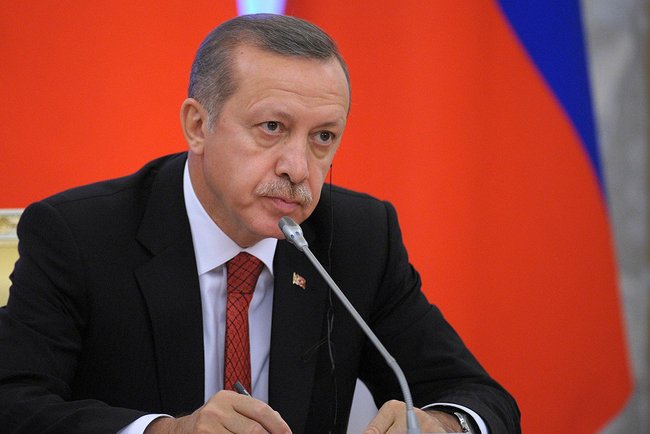
In June 2016, Rifat Cetin was convicted and sentenced for insulting the President of Turkey, Recep Tayyip Erdoğan. His crime? Posting pictures comparing Erdoğan to Gollum. He is not the only one to have noticed the similarity. Bilgin Ciftci, a doctor for Turkey’s public health service, also faced similar charges for posting memes which likened Erdoğan to Gollum. With a guile reminiscent of Gollum himself, Ciftci attempted to defend himself by arguing the Gollum was not evil but had instead simply been corrupted by power. In fact, he had a split personality, the corrupted Gollum and the innocent Sméagol. All the pictures Ciftci had used were of when Gollum was actually Sméagol, and therefore were not offensive. Peter Jackson, the director of the Lord of the Rings trilogy even waded in, arguing “Sméagol is a joyful, sweet, character. Smeagol does not lie, deceive, or attempt to manipulate others. He is not evil, conniving, or malicious – these personality traits belong to Gollum, who should never be confused with Sméagol. Sméagol would never dream of wielding power over those weaker than himself. He is not a bully. In fact he’s very loveable.”

Censorship on this level is absurd, but it can have a far more insidious and devastating reach. In August 2013, reporter Can Dündar was laid off by Milliyet, a Turkish daily newspaper after writing “too sharply” about the Gezi Park protests and Egypt. Dündar’s writing had displeased the then Prime Minister Recep Tayyip Erdoğan. Not wishing to draw the ire of Erdoğan, the owners of the newspaper thought it was easier to fire Dündar instead.

Dündar quickly found new work as the editor-in-chief of Cumhuriyet, a left-leaning, up-market daily. Under his leadership Cumhuriyet won the Reporters Without Borders Media Prize for its “independent and courageous” reporting. Within weeks of winning the prize, Dündar and the Ankara bureau chief, Erdem Gül, were arrested on charges of membership of a terror organization, espionage, and revealing confidential documents. The charges were brought in relation to an article published in May 2015, which alleged that Turkish intelligence services had been sending weapons and ammunition to Islamist rebels fighting in Syria. Alongside the newspaper report there was a video showing police, who had stopped the trucks at the border, discovering crates of weapons hidden beneath boxes of medicine. The article and accompanying video angered Erdoğan, who was by this point President of Turkey, so much, that he proclaimed live on TV that “whoever wrote this story will pay a heavy price for this. I will not let him go unpunished.” They were subsequently convicted of publishing state secrets, with a sentence of 5 years and 10 months.

The World Press Freedom Index is an annual ranking of countries by their levels of press freedom. It evaluates media pluralism, media independence, media environment and self-censorship, legislative framework, transparency, the quality of the infrastructure that supports the production of news and information, and abuses and acts of violence against journalists. It is worth looking at a few examples, to see how this works in practice. Italy ranks 77th because a large proportion of the media is owned by former Prime Minister Silvio Berlusconi, thus limiting pluralism, and the need for some journalists who report on organised crime to have police protection. The United States is ranked 41st, because whilst the first amendment protects media freedom, the government’s campaign against whistleblowers, and the lack of shield law on the federal level, which would allow reporters to refuse to testify about their sources, are held against them in the rankings. Uruguay is 20th, in part due to a 2014 law on broadcasting, that has been praised as being “exemplary” by the UN, for its encouragement of a pluralistic media, independent of the government. Finland was 1st, a position it has held since 2009.
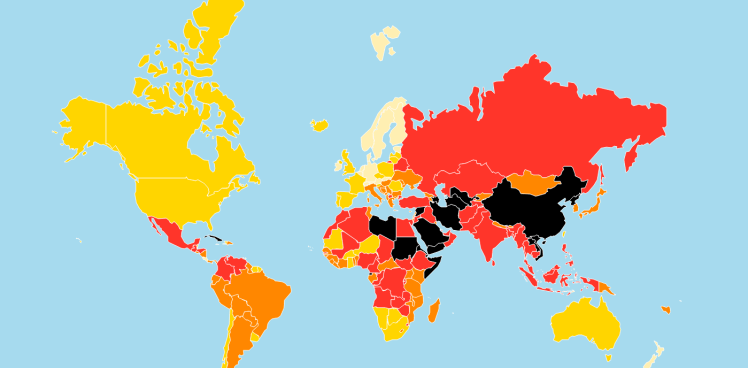
A map of the world according to freedom of the press

In 2016, Turkey was ranked 151 out of 180 countries, flanked by Tajikistan at 150, and the Democratic Republic of Congo at 152. Turkey managed to score lower than Russia, which was 148th, and was described as having “draconian laws,” TV channels which “continue to inundate viewers with propaganda,” an “oppressive climate” for anyone who tries to question the new patriotic and neo-conservative discourse, or “just try to maintain quality journalism,” and who has declared many NGO’s to be foreign agents. To have such a low score requires a concerted campaign against a free and independent media. One does not get a lower score than Russia by simply being lackadaisical. It is a real achievement to be that oppressive.

In the first year and a half of Erdoğan’s presidency, 1,845 legal cases were opened against individuals who insulted the president. One case included a 13 year old boy who reportedly commented under a Facebook video that the president was “a son of a bitch”. In 2013, two Vice journalists were accused of “aiding a terrorist organisation”, for reporting on the fighting between Kurdish rebels and the Turkish military. In 2014 Twitter was banned, with Erdoğan declaring “we shall root out Twitter, I don’t care what the international community says, everyone will witness the power of the Turkish Republic”. This was part of the government’s response to the Gezi Park protests. Started in response to development plans for one of Istanbul’s few remaining green spaces, the protests morphed into a more general outcry on issues of environmentalism, police violence, freedom of speech, and new curbs on the sale of alcohol. The government passed a sweeping new internet regulation law, which gave the government the power to ban websites without judicial order and forced ISP’s to hold data on their users’ internet usage for two years and make it available to the authorities. In 2012 and 2013, more journalists ended up in prison in Turkey than in China or Iran, making Turkey the largest jailer of journalists on the planet. Arzu Yıldız was sentenced to 20 months in jail and deprived of legal guardianship of her children for publishing footage of a court hearing, at which four prosecutors were on trial for ordering a search of trucks belonging to Turkey’s National Intelligence Organization as they travelled to Syria in 2014. Erdoğan has claimed that the search of the trucks and some of the media coverage of it a plot by his political enemies designed to undermine him and embarrass Turkey. In March 2016, a Turkish court ruled that Zaman, Turkey’s largest daily newspaper was to be run by appointed trustees, due to its ‘terrorist activities.’ Within 48hrs, a paper which had been critical of Erdoğan and his government was publishing under a pro Erdoğan regime.

Erdoğan’s generosity, has however only stretched so far. Within three days of the recent attempted coup, 20 news portals were made inaccessible and the licences of 24 news and radio stations were cancelled. On June 27th, 12 days after the attempted coup, 102 media outlets were closed, including 45 newspapers, 23 radio stations, 16 TV channels, 15 magazines, and 3 news agencies. All were accused of being connected with US-based Turkish cleric Fethullah Gülen, who the authorities blame for the attempted coup, a claim for which they have yet to produce any evidence. Furthermore, 23 journalists were accused of being members of terrorist organisations, a charge which is used so often by the authorities against journalists, that it is becoming depressingly clichéd. They even arrested Erol Önderoglu, the representative for Reporters Without Borders in Turkey, on charges of terrorist propaganda after he wrote three articles about the conflict between the Kurds and the Turkish state. They subsequently released him after drawing global criticism, notably from the UN secretary-general Ban Ki-moon.

Yet why would the Turkish authorities follow such a course of action? Simply put, Erdoğan and the Justice and Development Party he founded are not democrats. They are Neo-Ottomans. Erdoğan perceives himself to be the heir of the House of Osman. He strives to be a strong, Islamic ruler. This is why he built himself a new presidential palace at the cost of $350 million, which included 1,150 rooms, 250 of which are for his own private residence. It is also why he is trying to build the world’s largest airport with six runways, when Heathrow, Europe’s busiest airport, manages with just two. Furthermore he has attempted to change the constitution to change the country from a parliamentary democracy, to a presidential democracy, concentrating power in the centre, although this may no longer be necessary given the power he wields during Turkey’s current state of emergency. This is not a question of if Islam and democracy are compatible, it is a question of Erdoğan’s authoritarianism and megalomania. This is clear in the case of Ahmet Davutoğlu, a man who served Erdoğan loyally for 15 years, first as a foreign policy advisor, then as foreign minister, and finally as prime minister when Erdoğan ascended to the presidency. Davutoğlu was backed by Erdoğan to be his puppet prime minister. However, when Davutoğlu started to err from Erdoğan’s path by dropping unpopular policies such as constitutional reform, and an aggressive approach towards the Kurds, Erdoğan ditched him without a second thought. Erdoğan did not care about the difficulties that Davutoğlu was facing, or that Davutoğlu might have opinions about the best way to proceed, he simply wanted him to obey orders without question. Erdoğan cannot seem to handle anybody, even his close allies and friends, hewing their own path and having their own opinions. He expects them to follow him at all times, in all things.

He is Erdoğan the Magnificent, and he cannot brook insult to the enormity of his magnificence. This is why he insists on prosecuting 13 year old boys who write mean things about him on Facebook, and doctors who post memes comparing him to Gollum. This is why he builds palaces to rival Versailles, in which he can live and work. He is a man who makes such statements as “It is alleged that the American continent was discovered by Columbus in 1492. In fact, Muslim sailors reached the American continent 314 years before Columbus, in 1178” and in response to the death of 301 miners, he blasély responded, “I went back in British history. Some 204 people died there after a mine collapsed in 1838. In 1866, 361 miners died in Britain. In an explosion in 1894, 290 people died there…These are usual things”.

Unfortunately Turkey is not alone in this. Reporters Without Borders notes in their World Press Freedom Index, that there has been a decline of 13.6% since 2013. In Egypt, Poland, and Hungary the same trend is occurring. Strong, central governments are curbing the power the free press in the name of security and public morality.

The erosion of press freedom, and the creation of an environment whereby a newspaper will fire a reporter for displeasing political leaders is a dangerous and worrying development for Turkey, and for the rest of the democratic world. President Obama once remarked that “a free press is a foundation for any democracy. We rely on journalists to explain and describe the actions of our government. If the government controls the journalists, then it’s very difficult for citizens to hold that government accountable.” Put simply, without a free media, there is no real democracy. Turkey seems to be erring towards being more sultanate than democracy, at the cost of it’s basic rights, and the dignity of its’ citizens.

Summer Series: Writing Wrongs – The language of aid, development and neo-colonialism

She was a “white Muzungu with long angel hair” who fell in love with a German pilot, singlehandedly started a school for HIV-positive children, and managed to survive a vicious attack on her host village from genocidaires connected to the Hutu-Tutsi conflicts of the 1990s.

At least, that’s the story Louise Linton tells in her now-retracted memoir, In Congo’s Shadow, which supposedly documents her 1999 gap year at a Zambian fishing lodge. The factually-dubious account provoked furore earlier this month for its historical inaccuracies, geographical errors, and less-than-subtle embellishments on the truth. Zambians were joined by the wider international development community in condemning the account; the Zambian High Commission in London went as far as to refer to the memoir as “falsified… tarnishing the image of a very friendly and peaceful country.” As expected in such circumstances, the book and Linton’s accompanying interview with the Daily Telegraph have been pulled from print.

Louise Linton’s story, and her downfall, are useful examples when discussing the problems that surround the language of international development, especially when it comes to the rapidly blossoming genre of memoirs from the field. It is undoubtedly true that it is an incredibly difficult task to write about the work done by interventionists, state-sponsored aid workers, or the employees/associates of NGOs, and especially so when it is among the world’s most vulnerable populations. From the infamous Emergency Sex (and Other Desperate Measures) to Lieutenant-General Roméo Dallaire’s heartbreaking account of the Rwandan genocide, Shake Hands With the Devil, literature that discusses and documents the most extreme circumstances and most horrific human rights abuses is designed to evoke a response. The problem doesn’t lie in talking, or writing, about human rights abuses, humanitarian crises, disease, or poverty, but in the moment when evocative language strays into untruth. It seems cynical, or even alarmist, but Linton’s deliberate misrepresentations and those found in similar books are not just embellishment or artistic license – they’re fundamentally dangerous and dishonest.

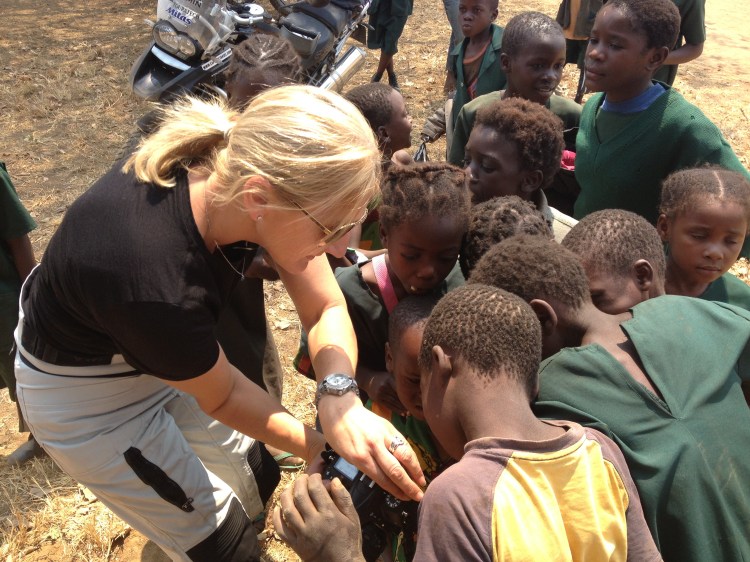
A white woman in Malawi showing local children the photo she took of them, by John Y Can

What this ultimately boils down to is a kind of colonialism, in which Westerners are white saviours and the “dark heart of Africa,” as Linton puts it, needs saving. This is presented by articles and interviews and books by people who see themselves as part of a narrative that always tells a story of Africa as a backward continent. A picture is painted of mud huts, HIV, and child soldiers that bears very little resemblance to the reality and wide variety of life in Africa. It ignores the current successes and brimming potential of African nations like Zambia; it insists instead on an outdated, black-and-white – quite literally – outlook on the world that fails to acknowledge that difference does not mean inferiority. So often, the problems faced by nations on the African continent can be traced back to European colonialism, and a continued insistence that it must be Europe that tells Africa’s story only perpetuates these problems.

Zambia, for example, is reliant on tourism as one means to income and investment, and ‘bad PR’ (for want of a better phrase) has an impact on people choosing to visit the nation and invest in its economy. That is what is damaged with ill-thought comments on Africa; people choose to listen to those that look like them, speak like them, and have lived similar lives to them. When individuals in Europe and the West portray Africa as ‘savage,’ those around them take note, even if it is a false premise to begin with. This is not to suggest that nations like Zambia are entirely reliant on Western travel and tourism in order to survive and thrive – that would equally be a form of colonialist language – but an argument that opening up the world more to the vibrancy and variety of Africa is not about understanding the continent only on our terms.

Linton is not alone in being a Westerner who travelled to the African continent to volunteer, and who has profited – or, at least, attempted to profit – from the memoir they’ve produced as a result of their travels. To what extent this has been at the expense of African people is rapidly becoming clearer. To use another example from the disaster that was In Congo’s Shadow, Linton published photographs of HIV-positive children, ignoring the potential damage that the stigma surrounding the disease might have on those children who could be so easily identified in the pictures. To call it lack of forethought seems like letting Linton off the hook.

In short, we have an obligation to document, by written word or by mouth, the injustice of human rights abuses, and the need for sustainable and sensitive international aid and development. That is what it means to be a global citizen, and where we failed as a community in instances such as Cambodia, Rwanda and Bosnia, to name just a few of the best known examples. What we do not have the right to, however, is to dictate what someone else’s story should be. We owe it to ourselves and to others to remove the veil of colonialism that so often clouds our language, in order that the truth of situations might actually be heard.

Summer Series: Imagine a World Like This…

You wake up every morning in a refugee camp, converted into a city, commonly referred to as “the ghetto” by your Israeli counterparts; life is anything but easy. In fact, water might not even be accessible by 2020. It has been two years since your family fled from your previous home, seeking refuge in a school during the war in 2014. The schools and hospitals in the area were not safe; however, there was no other hope for safety or survival. Your fellow neighbors and brothers had also been displaced from their homes, destroyed by the conflict, only some of them lucky to escape with their lives. Your loss of business and livelihood to the blockade have made you completely dependent on the United Nations Relief and Works Agency (UNRWA) for food and cash assistance. Since that time, you know that the only hope you and your children have is a political agreement between your people and the Israeli government, but that kind of agreement does not seem to be a reality in the near future… This is what it is like to be a Palestine refugee living in Gaza.

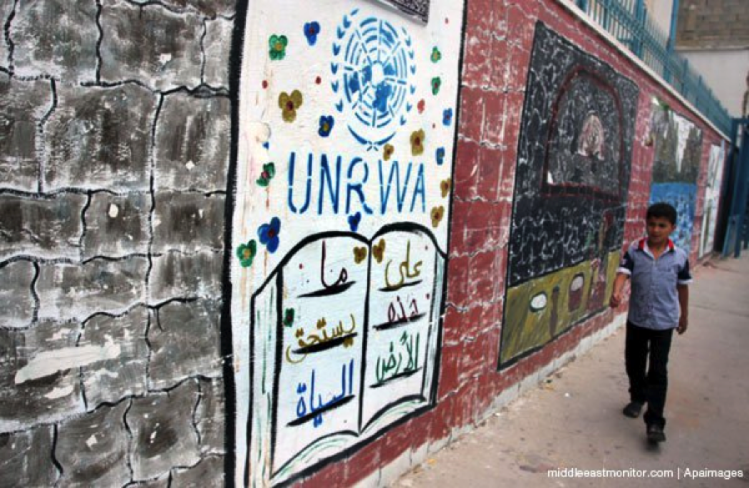
UNRWA is one of the oldest UN agencies, founded in 1949 following the 1948 Arab-Israeli conflict. The agency was mandated to provide assistance and aid to the Palestinian people who have been displaced by one of the oldest protracted conflicts in history. As a strictly humanitarian organization, the Agency’s services encompass education, health care, relief and social services, camp infrastructure and improvement, microfinance, and emergency assistance, including in times of armed conflict. These services are provided to the five areas of operations in which UNRWA operates (as depicted in the map below). With the ongoing conflict in Syria, many Palestine refugees have been further displaced to surrounding countries, mostly Jordan and Lebanon. The Agency strives to work with the people and for the people while they are awaiting a political solution to the dispute. UNRWA is unique in that it has always worked with this singular group of refugees, while other agencies such as United Nations High Commissioner for Refugees works for the displaced people around the globe. Unlike UNHCR, UNRWA does not have the capacity to provide durable solutions for their beneficiaries because of the lack of political compromise and solution to the causes of the Palestinians displacement. The number of refugees continues to rise; when the Agency began operations in 1950, it was responding to the needs of about 750,000 Palestine refugees. Today, more than 5 million Palestine refugees are eligible for UNRWA services.

During the summer of 2016, I have been privileged to work as an intern for UNRWA. While I have only completed half of my allotted time here in New York, my world has been enriched with knowledge and an experience that I know will never leave me. It seems quite easy in today’s world to disengage with the issues involving persons who are so far away from our daily life. As a community, many of us have become desensitized to the violence and conflict coming at us from all forms of social media and news outputs. It is almost easy to put the ideas of children fleeing conflict in Syria or refugees stuck in camps indefinitely in the back of our minds. However, it is this plight and suffering that needs substantive attention and action in today’s world, particularly the conflicts that are protracted or have the potential to become protracted. Seventeen years is the average length of stay in a refugee camp for those seeking safety having fled from persecution, war, or conflict. The civil war in Syria has reached its fifth year of fighting as of March 2016, officially making it a protracted situation. Indeed, this time period is minute in comparison to the upwards of seventy years that Palestinians have lived in refugee camps and displacement from their homes. Without a change in the political climate, a dedication to more durable solutions, and a commitment to fighting the root causes of conflict, these situations will only continue to worsen.

Despite the war, conflict, violence, oppression, and seemingly hopeless situation, this summer I have seen such great resilience and determination in the Palestine refugee population, who endure nearly impossible living conditions in poverty and absolute poverty. UNRWA does its utmost to foster human development by helping Palestinians to acquire knowledge and skills, lead long and healthy lives, achieve decent standards of living, and enjoy human rights to the fullest possible extent. I think that it is through these provisions of aid that Palestine refugees can survive and strive for a future beyond their current situation.

The Agency is 97% funded through voluntary contributions; they make their work extremely dependent on the generosity of the member-states who view the Agency’s work as vital to the welfare of the people. With the recent global economic hardships, UNRWA has seen a significant drop in funding and a devastatingly underfunded budget. While emergency appeals for extra funding have been made, the only real solution for the Palestinian people is a political compromise to end the conflict that has endured for far too long.

The world that we live in today has bountiful need and a limited amount of resources. It is the responsibility of this generation to achieve peace and security for the entire globe, but especially for those affected by the interminable conflict between Palestine and Israel. Blame can be placed on both sides of the tragedy from the military occupation of the Israeli military to the incitement of terrorism of a select number of Palestinians; however, this conflict has to end in order to free the Palestinian people from their longtime suffering and displacement. Securitization of either side will not lead to a resolution. It is dialogue, social compromise, and reform that will ignite the necessary change. Working at UNRWA these past few months has taught me innumerable lessons and I wish I had more time to talk about all of them.

Summer Series: Living in a Globalized World

Global Language Project is a non-profit organization that specializes in giving students the opportunities to learn languages from a young age. Angela Jackson, the founder and CEO of Global Language Project, described during her TED talk how important it is to open a child up to other cultures, while simultaneously allowing a child to further understand their own culture. This describes the very essence of Global Language Project, as it is the only non-profit that focuses on elementary world language education, making its mission statement very unique. In the recent months, the organization has changed tactics from working directly in schools to instead working with teachers. This allows Global Language Project to reach more students by giving the teachers the resources and understanding they need to be effective educators.

Teaching a foreign language to a young child can seem like a daunting task. Some researchers believe that young children do not yet have the mental capacity to absorb and effectively engage with a world language. Other research suggests that teaching another language is a distracting influence that can slow children’s progress to becoming fluent in their own tongue. However, a study using the data set Growing Up in Scotland “suggests that acquiring two languages does not affect the cognitive and non-cognitive skills of young children.” Additionally, according to a study conducted by Harvard University, “learning additional languages increases critical thinking skills, creativity and flexibility of the mind in young children. Pupils who learn a foreign language outscore their non-foreign language learning peers in verbal and maths standardized tests, indicating that learning additional language is a cognitive activity not just a linguistic one.” What cannot be disputed is the value of learning another language can have on a child’s employment prospects, especially one growing up in a low-income urban environment. Being bilingual increases one’s ability to communicate with people from all over the world in a professional setting, thus boosting the desirability of the candidate. Global Language Project attempts to teach students a foreign language starting at elementary level to maximize these benefits and therefore maximize their potential.

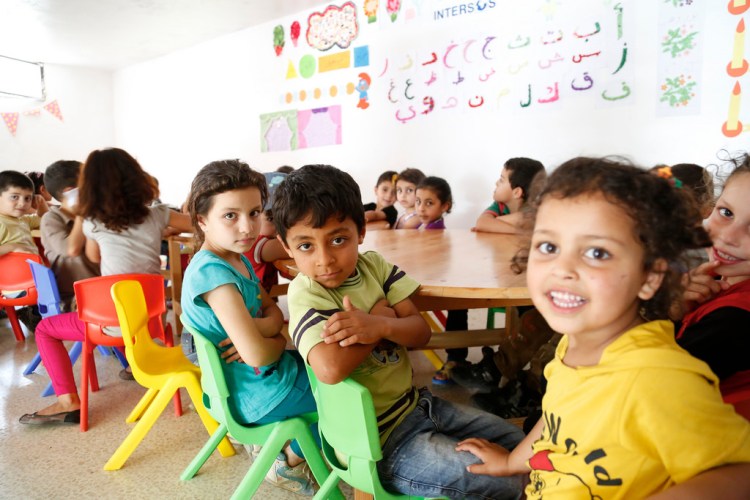
Syrian primary school children in class in Lebanon, by the UK Department for International Development

I have only been interning at Global Language Project for two months, and have already been completely immersed in the world of running a new non-profit. My first few weeks were directly hands on, as I travelled to the different schools where Global Language Project works and spoke with the students involved in the language classes that we helped develop. Currently, we are running an intensive three week teacher training conference in which I have been directly involved with operating and maintaining logistics. Throughout this conference I have been exposed to a multitude of language teachers ranging from Korean to Arabic who have been working together to create a successful teaching environment for their students; something I find truly inspirational. This has allowed me to see first-hand the potential that these students have and their willingness to learn a new language. When conducting a survey at a school, one child told me that they love taking Mandarin class because they know it will give them the opportunity to have a career, and create a life for themselves they did not deem possible before.

As someone who hopes to one day work in the non-profit sector, this internship has allowed me intimately interact with non-profit work in a way that I would otherwise be unable to do. It has taught me how to stay organized and on my toes at all times, a skill that will become essential in my future career. Most importantly, this internship has showed me how valuable not only a quality, but also a diverse education is. For this, I greatly appreciate my time spent at Global Language Project, and cannot wait to see what is still in store for me.

Summer Series: Refugees and Legal Aid

The room feels almost like the waiting area at a doctor’s office. Rows of seats with armrests dividing them, 5-foot-tall translucent dividers between waiting areas, a check-in desk with two women being only as nice as they have to be. There is even a vending machine and a children’s play area, complete with games and a television playing cartoons. A row of offices faces the seating area. Every once in a while a number is called over the speaker and a person gets up from the seats and goes into one of those offices, looking grim.

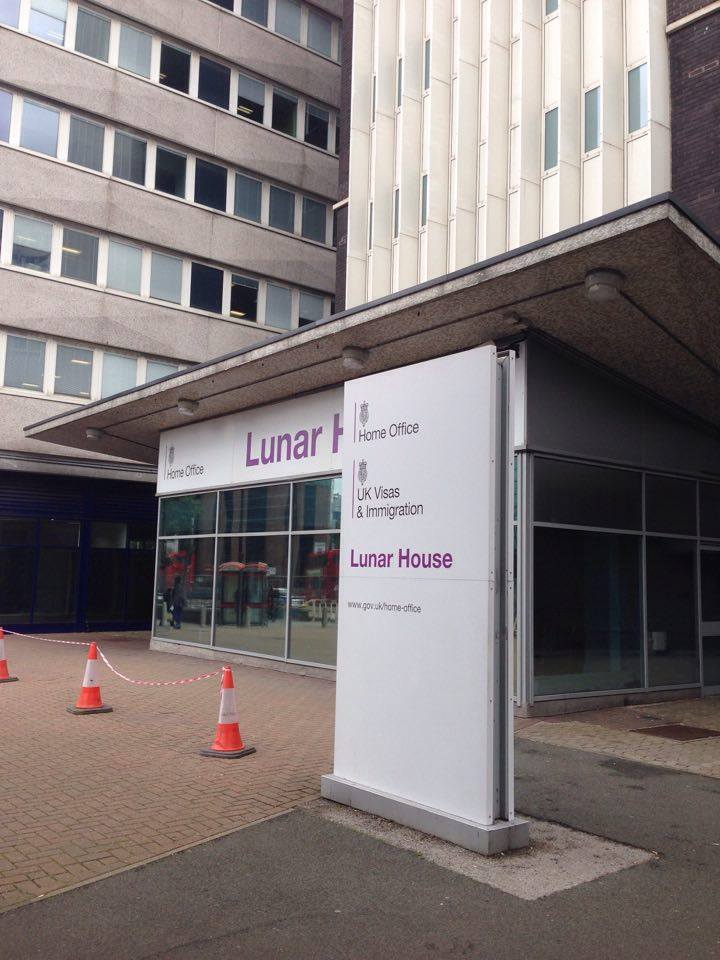
Only this is no doctor’s office. This is Lunar House, the headquarters of UK Visas and Immigration.

The outside of Lunar House by Emma Middleton

This imposing tower of offices with airport-level security checks in Croydon houses the United Kingdom’s asylum screening unit. Asylum seekers who apply from inside the UK are given appointments for interviews, fingerprinted, questioned, and possibly detained at this center.

In the UK, asylum seekers first go to an interview where they provide the Home Office with documents and have a preliminary interview to explain their case. Some are then detained. Next, the asylum seeker is given an in-depth interview, alone, possibly with an interpreter. They must have ‘evidence’ of what has happened to them. The only person allowed in the interview with them is a legal representative. Then, usually within 6 months, the decision is made. Some will receive permission to stay as a refugee, some under humanitarian grounds, and others will be asked to leave the UK. You can appeal against the decision within 14 days, in which case you can request a hearing, in public, for 140 pounds.

While I was waiting with an asylum seeker at Lunar House, sitting in the waiting room while he had his interview (I was expressly not permitted into the interview room), I attempted to talk to the other asylum seekers waiting there to find out if they had legal aid or if we could help them in any way. There were around 50 people in that room. Only one of them, a young man from the Caribbean whose father had had a stroke that same morning, even responded to me. The rest either did not speak English or were wary of talking to me, avoiding my eyes, unsure of what I was doing breaking the silence that surrounded the waiting room. I did not blame them. These people were waiting to recount the worst times in their lives in front of jaded officers who have heard it all before. The anxiety in the room was palpable.

Most people will never set foot in Lunar House, or indeed any of the other asylum offices around the world. I was only allowed to go as part of my summer internship at Rights in Exile.

For the past six weeks, I have been working to help asylum seekers receive legal aid in the UK. Legal aid is paramount when registering an asylum claim. Legal aid providers strengthen cases through documentation and years of experience, giving asylum seekers a better chance of having their cases be accepted by the home office. However, many asylum seekers either do not know about the possibilities available to them or do not think they will be able to afford it. Our goal is to make sure that information about pro bono legal aid and contact details for country of origin information experts is easily available to them on our website.

Many different components come together to form a good case. First, and most importantly, is the witness statement from the asylum seeker. This outlines their entire life, beginning briefly with their family and early life before turning to the exact details of the suffering they have endured and how they have come to be in the UK. They need to provide documentation to then back up their statement, from letters regarding past employment to YouTube videos of certain incidents. They also need an expert to write a country of origin information report detailing the situation in the asylum seeker’s native land. Sometimes, a medical-legal assessment, which documents the asylum seeker’s physical (such as scars from torture) and/or mental (such as PTSD symptoms) health as objective evidence to support their claims, is needed. Other times, a special report about certain issues affecting the asylum seeker such as witchcraft, female genital mutilation, or LGBTI issues will be used to back up their claims. Without having someone who knows the system on their side, many asylum seekers will have their claims rejected for not being able to prove that what caused them to flee their country even took place.

I am, of course, not qualified to provide legal aid myself as a mere undergraduate. However, I have done what I can to make it easier for asylum seekers to get in touch with legal aid providers and to help specific cases as best I can. I have contacted people from around the world to be country of origin information experts and pro bono legal aid providers for our website; taken an asylum seeker’s testimony, listening to them recount the journey that has taken them from their country, across the Mediterranean in one of those inflatable boats that seem to be on our screens constantly these days, and eventually to the UK; translated original documents from French and Arabic to be used in asylum seekers’ cases; and helped organize legal assistance to be waiting for a refugee when they landed in another country.

The most lasting impact for me has been the ability to meet asylum seekers and refugees from around the world and to hear their stories first hand. Seeing photos of a gay Ugandan’s bloodied face after he was beaten up for his sexuality. Hearing an Egyptian speak of the inflatable boat he spent nearly two weeks in, slowly running out of water, before being rescued. These might sound like familiar narratives, but to hear someone tell you firsthand what they’ve been through is a heart wrenching experience. It makes you realize how important it is for these asylum seekers to get the help they need to be able to stay in the UK and not be deported back to a place that has caused them so much pain.

Although recent rhetoric from the likes of Donald Trump and Nigel Farage might make people think otherwise, there is no such thing as an illegal asylum seeker. Article 14 of the Universal Declaration of Human Rights states that “everyone has the right to seek and to enjoy in other countries asylum from persecution,” while Article 31 of the 1951 UNHCR Convention Relating to the Status of Refugees adds that states “shall not impose penalties, on account of their illegal entry or presence, on refugees who, coming directly from a territory where their life or freedom was threatened… enter or are present in their territory without authorization.” These politicians exploiting the so-called ‘migrant crisis’ to promote nationalistic, xenophobic, and oftentimes racist views amounts to more than scaremongering. It contributes to the general population’s growing dislike of asylum seekers and migrants and does absolutely nothing to help the people who need it the most.

In spite of all of the hate circulating around nowadays, I have been consistently amazed throughout my time with Rights in Exile by the number of people who are willing to lend a hand to those in need. From academics agreeing to work pro bono as country of origin information experts to people who selflessly open their homes to asylum seekers who have nowhere else to go, people around the world are showing that the divisive rhetoric will not win. The asylum seekers I met throughout my internship are not a part of a homogenous group of people determined to steal the jobs of British citizens. They are individuals. They each have a unique story of determination and resilience that has led them to the UK in need of asylum. We must change the way we think about them and realize that they are people, just like you and me, going through the worst times in their lives. We would expect them, as fellow human beings, to open their doors if we were the ones knocking. So why do we think it’s acceptable to leave them out in the cold?

Does Religious Freedom Limit the Freedom and Rights of Others?

In many historically Christian countries in the West, religious freedom or religious liberty can be very different depending on what religion one follows. In recent years there have been many high profile cases involving religious freedom and restriction of this freedom in Western countries such as the United States and the United Kingdom. In some cases, the line between freedom and discrimination is very thin and often crossed.

In the United States religious freedom was guaranteed in the First Amendment, but centuries later this religious freedom is being contested. This protected freedom can often interfere on the rights of others. On the 26th June 2015 same-sex marriage became legal in all US states, prompting religious groups to retaliate. In the past month Mississippi governor Phil Bryant passed a bill which allows both individuals and companies to refuse service to those whose lifestyles they don’t agree with. The HB1523, or Protecting Freedom of Conscience from Government Discrimination Act, explicitly lists what the beliefs and moral convictions which are protected by the bill are. This includes the belief that marriage is only between a man and a woman, and that ‘male’ or ‘female’ refers to an individual’s immutable biological sex as objectively determined by anatomy or genetics at time of birth, meaning that discrimination against those who identify as LGBT+ is legal in the state of Mississippi.

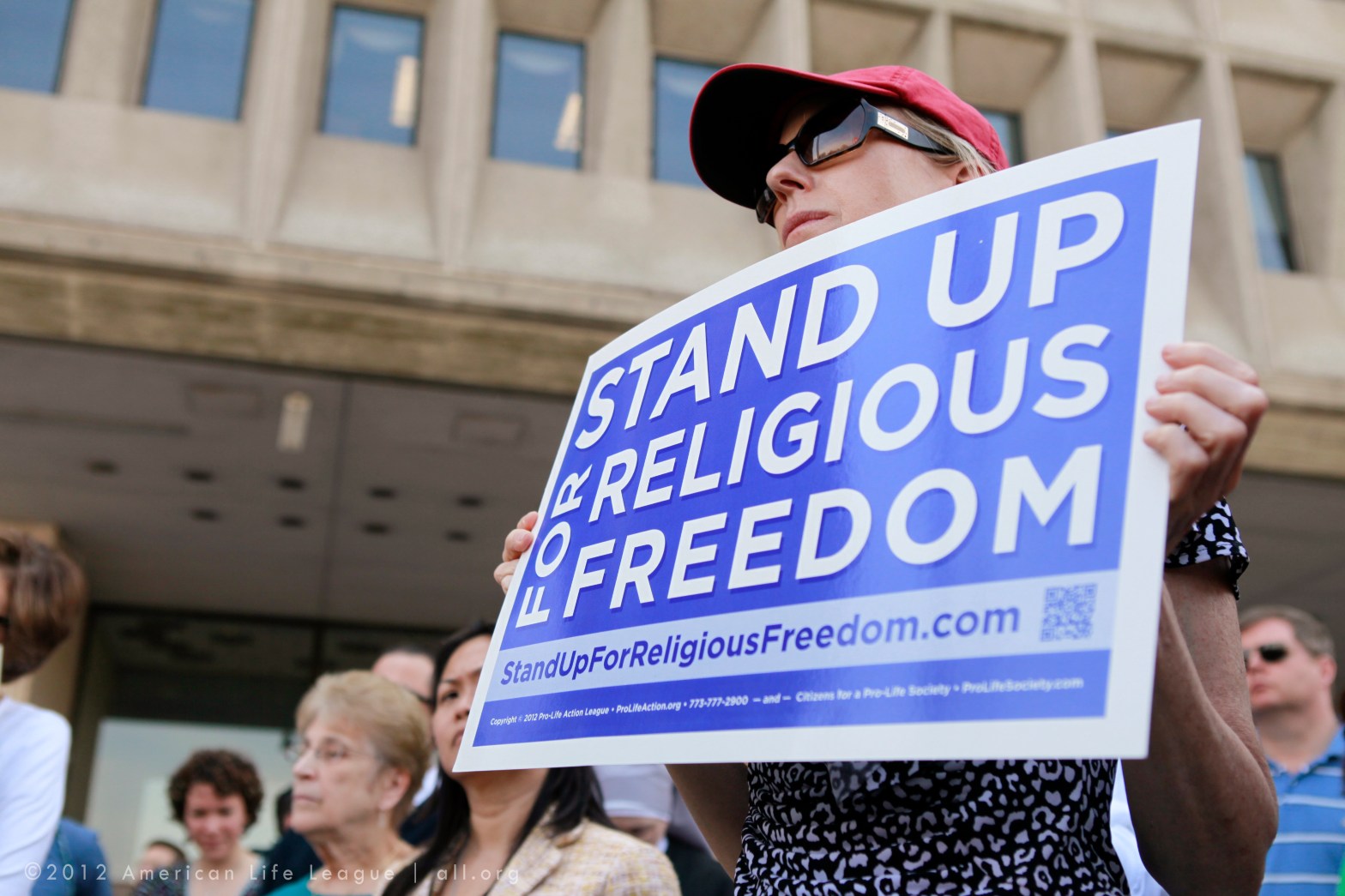
Stand Up For Religious Freedom Rally, by the American Life League

However, Mississippi is not the only state to introduce similar laws. North Carolina recently passed the HB2 law, which states that transgender people must use the public bathroom of the gender they were born. There has been huge backlash against this law with many prominent companies and celebrities cancelling events in North Carolina. Governor Pat McCrory has said that the law is to protect men, women, and children when they use public restrooms, insinuating that transgender people are a threat. When considering the rise of attacks on transgender and LGBT+ people, it appears that they are at threat and not the other way round. This is where religious freedom is a sensitive topic: can freedom be guaranteed if it restricts upon the freedom and rights of others?

In the United Kingdom article 9 of the European Convention of Human Rights (ECHR) guarantees freedom of thought, conscience, and religion. However, article 9 also states that this freedom is subject to limitations involving public safety, protection of public order, and the protection of the rights and freedoms of others. There have been discrimination cases involving the NHS and Christian healthcare workers. Christian nurses have been asked to remove their crucifix necklaces as a safety precaution, as they can harbour bacteria and can also be pulled by patients. Some have interpreted this as religious discrimination rather than a safety issue. After being given the option to wear the necklace pinned to a collar or in a pocket, this was seen as an attempt to hide the religion of the healthcare worker.

Another issue with the NHS and religious dress has been with full face coverings worn by some Muslim women, and other Muslim restrictions regarding modesty. After the MRSA fear in 2008 NHS guidelines stipulated that arms must be bare from the elbow, allowing for hygienic hand washing practices. However, many Muslim employees stated that this went against their religious beliefs about modesty. Hospitals worked with their Muslim staff to come up with a solution that incorporated both the safety procedures and the religious beliefs. In more recent years there have been debates regarding full face coverings and if they should be worn in a health care setting. As was the case with the showing of bare arms, hospitals have consulted with staff and faith groups to decide the most appropriate actions. In all cases, the safety and comfort of the patients has been somewhat equal to that of the woman wearing the veil. Some hospitals have decided that veils may not be worn whilst interacting with patients as it can be a hygiene issue and can also limit communication between staff and patients.

An Iranian surgical technologist wearing the hijab

Controversies similar to those in the United States have also happened in the UK. In 2008 the Christian owners of a B&B refused to let a gay couple sleep in a double room, citing their religious belief in the union of a man and a woman as their reason why. The couple then sued the owners for discrimination and won. Similarly, a Northern Irish bakery refused to bake a cake with pro-gay marriage image as it went against their Christian beliefs. It was argued in courts that their refusal of the cake was discrimination against the sexuality of the man who ordered it. However, there were debates about whether the cake promoted a political message rather than a message about sexuality, and whether this changed the accusations of discrimination. This case shows how complicated and personal the issue of religious freedom and discrimination can be.

In a world where beliefs and religion can be the reason for harassment and even death, freedom of religion is an important right for everyone. Yet in the rapidly progressive Western world there is conflict between traditional religious beliefs and more secular beliefs. Current religious freedom laws should not allow discrimination against others, and a freedom law should not infringe on the freedom of another group.

North Korea: The Untouchable State?

In today’s current international climate, North Korea represents a giant question mark on the international agenda. No state knows how to deal with the ‘North Korean issue,’ as North Korea commonly positions itself as an individual actor on the defensive from the rest of the world. This began when Kim Il-Sung introduced the philosophy of Juche, or self-reliance, which then influenced North Korea’s development. This can even be exemplified by looking at satellite photographs of North Korea at night. Where the surrounding countries of China and South Korea are gleaming with electricity, North Korea is distinguishable by its stark contrast; a sea of blackness. This can be attributed to the rapidly failing economy of the state since the collapse of the Soviet Union in the early 1990s and, with it, the ally’s cheap and available trade, especially oil. Since this downturn in North Korean imports, the country has economically, politically, and emotionally struggled. As North Korea declined, so did its ability and willpower to promote successful human rights initiatives.

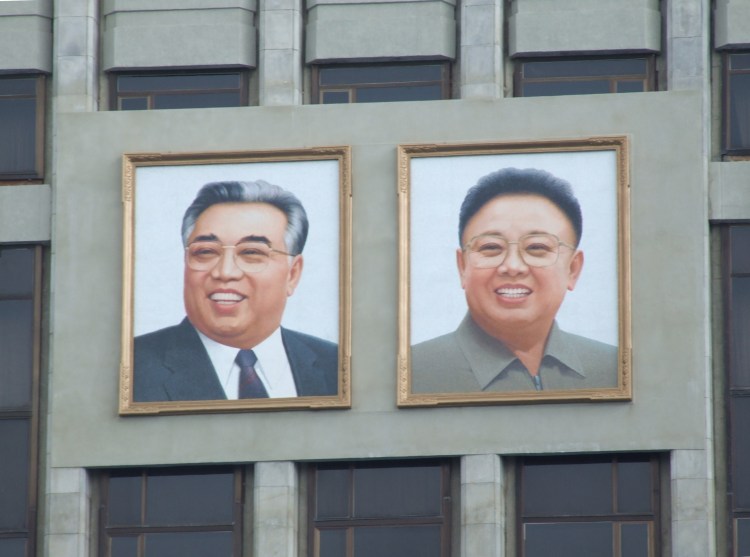
Portraits of Kim Il-sung and Kim Jong-un by Nicor

The human rights abuses have significantly increased because of the so-called self-reliance of the North Korean state. For example, the country relies on foreign aid to feed millions of its people, and it is estimated that up to two million people have died since the mid-1990s because of a lack of food due to natural disasters and economic mismanagement. This foreign aid, however, is minimal to none, because North Korea has successfully alienated itself from the rest of the international community, and identified itself as an ‘enemy’ to the Western world. The United Nation’s Commission on Human Rights in North Korea has gathered evidence into some of these human rights abuses. The worst of them take the form of prison camps, known as kwanliso, where it is believed that North Koreans who are seen as opponents of the government are being starved and executed, numbering up to a few hundred thousand. It has also been reported that there are still up to 120,000 prisoners being held in these camps. This has caused the Western world to draw distinct parallels between North Korea and Nazi Germany. Amnesty International also states that North Korea is currently participating in the practice of torture as well as a prevention of freedom of expression on its citizens, which is further heightened by the tightening of controls to prohibit the communication of North Koreans to the outside world. While North Korea largely commits these atrocities against their citizens on a daily basis, their public platform insists the silent state is doing what they can to promote human rights, supported by their ratifying of four key international human rights treaties. However, despite this, it has been proven that political and civil rights are nonexistent; organized political opposition, independent media, and free trade unions are prohibited; and religious freedom is largely repressed.

The Arirang Mass Games in Pyongyang, by Stephan

Undeterred by this vast array of human rights abuses, North Korea has remained untouchable. One of the reasons for this is due to their media silence. North Koreans only receive official media from the North Korean state, and no Western media is allowed. In addition to this, due to North Korea’s policy of self-reliance, the West has no idea what is actually happening in the declining state, as they are largely prevented from traveling there. This media and knowledge gap contributes to the main source of North Korea’s power; their supposed nuclear weapons capabilities. North Korea has said that they have conducted successful nuclear tests in 2006, 2009, 2013, and 2016, with the final test being a hydrogen bomb. North Korea has also stated they are on a path to making long range missiles. While the Western world has doubts regarding these capabilities, as proof is minimal and is mainly constituted by North Korean dialogue, the fear still exists. North Korea was and continues to remain a consistently volatile enemy of the Western world. Talks have been in place so as to stop North Korean nuclear production in exchange for lifting of United Nations sanctions on the state, however North Korea has often backtracked on these negotiations.

This begs the question, what now? While is it doubtful that North Korea has the extensive capabilities they claim to have, it is possible they have something. Due to the unpredictable leaders of North Korea, it would be unwise for the West to intervene. North Korea continues to threaten that, if there is a humanitarian intervention of any kind to combat the human rights abuses, they will launch an attack on South Korea, a United States ally. Due to the inability to know for certain how long the missiles’ range is, it is a problematic situation. The west cannot interfere without direct threat to their allies, or themselves. While the United Nations Human Rights Council decided on Wednesday to appoint a panel of experts to discuss legally prosecuting North Korean leaders for crimes against humanity and is therefore attempting to solve find a solution to this problem, no such solution has yet been made. Until then, North Korea will remain untouchable in regards to stopping the human rights abuses that plague the country.

Peace Parks: Nonviolence and Conservation

Recently there have been multiple studies on the correlation between climate change and conflict, notably with the Syrian civil war. A study published in PNAS quantitatively connected climate change in the Fertile Crescent, most specifically the jarring drought, with human conflict. Articles have begun to warn about the dangers of shifting blame for human violence to climate change, as the possibility of reducing the complexities of warfare and absolving moral responsibility become possible. François Hollande was quoted at the November Conference of Parties (COP21) as saying “What is at stake with this climate conference is peace.” There are many nuances in this talk between conflict and climate change, with the underlying understanding being that climate change is a ‘threat multiplier.’

In light of talks of exacerbating conflict, a different view of ecological diplomacy focuses on peace via environmental initiatives. A productive route to global sustainability could address both conservation and nonviolence: peace parks, also know as Transboundary Protected Areas (TBPA).

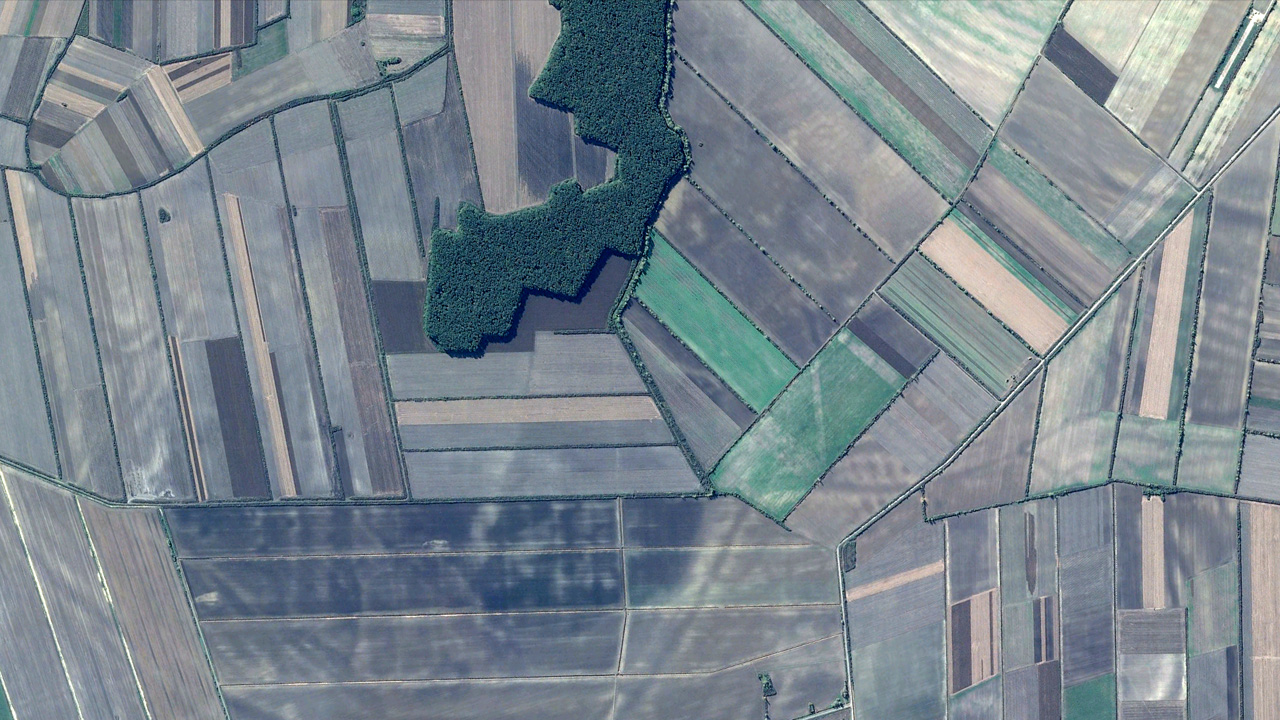
A view of the Croatia-Serbia border: while humans have created borders, the earth has not. From Google Earth

The Transboundary Protected Areas Network of the World Conservation Union defines peace parks as “transboundary protected areas that are formally dedicated to the protection and maintenance of biological diversity and of natural and associated cultural resources, and to the promotion of peace and cooperation.”

Instead of using climate change as a proliferator of fighting, the universality of deteriorating landscapes and loss of resources should be a reason for co-operation. Professor Saleem Ali notes “Once conflicting parties realize that a deteriorating ecology is a detriment to all sides they are more likely to co-operate.”

Peace parks are about shared sovereignty of the environment and bring nations at war or with historical tension under an umbrella of common cause. Often with roots as buffer zones, areas can be de-politicized and turned into an ecological necessity, especially as climate change escalates. With resources failing and extreme weather intensifying, transnational areas of protection can increase natural productivity and better guarantee basic human rights, land productivity, and biodiversity.

TPBA’s can be found all over the world and in 2007 there were 227. Their history is extensive: national parks in Great Britain can even be traced to the no-man’s land during conflict dating as far back as the Roman times. The 520 square miles of Brecon Beacons National Park along the Welsh-English border marks such a border zone. Other examples include the UNESCO World Heritage Site Parque Internacional La Amistad (International Friendship Park) on the border of Panama and Costa Rica and the Cordillera de Cóndor mountain range between Peru and Ecuador. Smaller examples exist on borders such as Kuwait-Iraq and Israel-Jordan. Southern Africa has a number of transfrontier conservation areas including the worlds largest, Kavango Zambezi, spanning an area the size of France.

There have been talks of a peace park spanning the Israeli and Jordanian sides of the Jordan River, once the site of a shuttered hydroelectric power plant, now turned into a closed military zone. The demilitarized zone between North and South Korea is the sight of planning for a peace park. Ali says, “In Korea previously damaged ecosystems have bounced back as a result of the space created by the conflict.” The North and South Korea DMZ project is a great example of environmental diplomacy and a case study for promoting peace between countries technically still at war.

From a discussion with the filmmakers of Transcending Boundaries: Perspectives from Parque Internacional la Amistad, discussing the main environmental threats to the communities surrounding the largest protected area in Central America: Parque Internacional la Amistad, by the Environmental Change and Security Program

Building peace parks requires bottom-up planning and engagement, another lesson to be learned in global policy regarding climate change security. Engagement with indigenous/native populations is often the key to success, helping to restore human rights to historically marginalized groups.

Ultimately we should not let climate change lead to more conflict. Peace building via transboundary protected areas should be increasingly integrated into mitigation.

For more information, Ali’s book “Peace Parks: Conservation and Conflict Resolution” (2007) is a extensive analysis. The previously mentioned film, Transcending Boundaries: Perspectives from Parque Internacional la Amistad, can be found here.

Migration and the Possibility of a Borderless World

In our 21st century world, true political defiance can occur through simple acts. The Financial Times recently published an article which presented migration as the most resourceful way to achieve radical change. Revolution in a globalised world needs neither ideology nor grand radical gestures. If you want transformation, there is no need to overthrow the government. You can move away.

With migration levels rapidly growing, calls to facilitate the international movement of people are coming from more than one direction. Migration is alternately framed as an issue of human rights and as a question of economics. The two approaches have their origins in different ends of the political spectrum – with human rights activists calling for global cosmopolitanism on the one hand, and libertarian arguments for world capitalism on the other. Somewhat ironically, both approaches share an end goal: the decriminalisation of border crossings, and for individuals to have the autonomy to make decisions about where they want to live in the world.

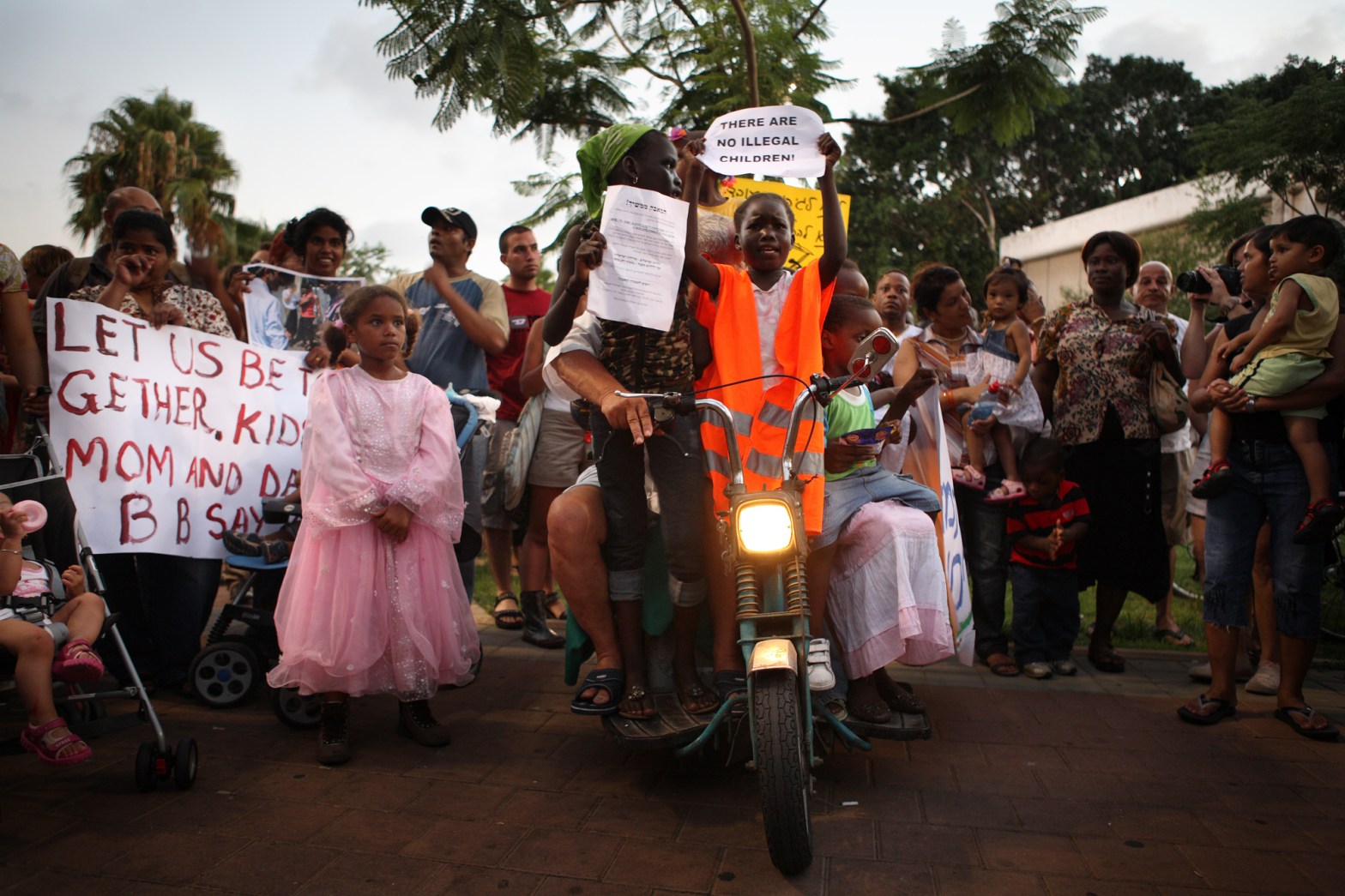
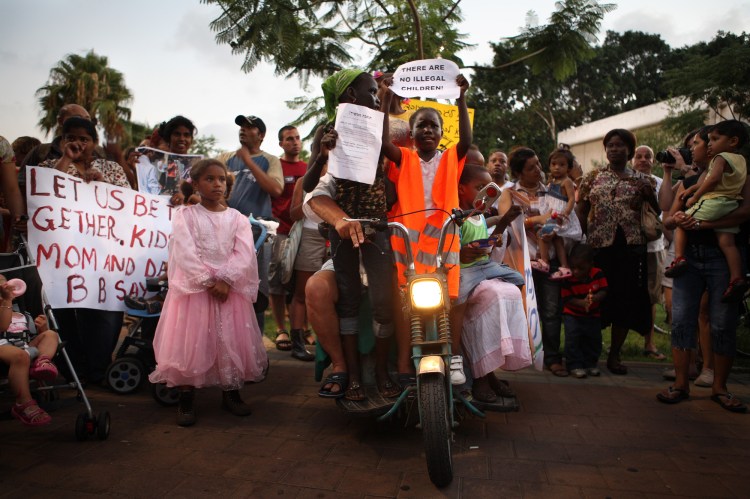
A demonstration against the expulsion of illegal immigrants in Tel Aviv, Israel, by Roi Boshi

The human rights argument for a world without borders is built on the idea that no person should ever be considered ‘illegal’. It argues that universal free movement is the only way to enable people to exercise their right to make individual choices to leave their home country, whatever reason they may have. The United Nations Universal Declaration of Human Rights (UDHR) is a vital document for making this argument, but it fails to offer a clear decree on the matter. While stating that “everyone has the right to leave any country … and to return to his country,” there is little indication of where one is supposed to turn once having left. Asylum, UDHR states, should be granted only to those fleeing persecution. Furthermore, the declaration claims that “no one shall be arbitrarily deprived of his nationality nor denied the right to change his nationality.”

A close reading of the UDHR seems to indicate that the UN is propagating free universal movement as a norm, and to some extent as a right, but that it stops short of allowing it any legislative support. However, the UN makes an important distinction between migrants, whose movement is voluntary, and refugees who move involuntarily. Refugees get special consideration and are granted asylum rights. As such, the migrant/refugee distinction carries with it enormous implications, and could greatly affect the individuals they describe. In reality, however, the distinction might not be so easy to make. Such language is also important in how it might necessitate government action – as is the case with the current crisis at the European border. Alternately called a migration crisis and a refugee crisis, the terminology used hugely impacts the measures required to be taken by EU bodies as well as individual states.

The economic argument for free movement sees current borders and anti-migration measures as a barrier to economic prosperity. Some research on the economic effects of migration has suggested that the relaxation of barriers to human mobility would mean a boost to the global economy. The report estimates that the boost triggered by free movement could have a greater effect than the abolishment of all current policy barriers to trade. The importance of migration for the economy is easily explained: the economic productivity of a worker is much more dependent on location than on skill. For example, two workers can carry out the exact same work in two different cities, but one will contribute more to the world economy than the other, simply because of their location. For this reason, free movement of people would allow for a more flexible global workforce, which in turn would enrich the world economy. Barriers to human mobility have an adverse economic effect.

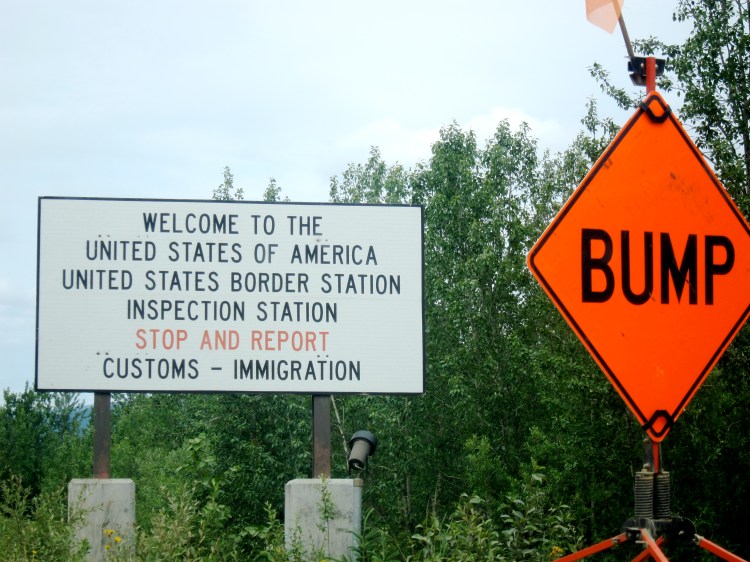
United States border crossing, by Rick Webb

The Schengen Agreement currently in place between 26 European countries may act as a possible small-scale model for how a world without borders could function. The region is a passport-free zone where citizens and visa-holders are able to move from one country to the other without border controls. Simultaneously, a founding principle of the European Union was the free movement of people to work and reside within any member country. Free movement of human resources has been an important part of the European economy, and predictions have stated that as much as 110 billion Euros in trade would be lost over the next decade should the Schengen agreement be abolished. This suggests that free trade and movement within Europe contributes greatly to its economy. However, the European case of free movement might serve as a repellent for some. The recent migrant (and/or refugee) crisis has challenged the borderless Europe, with several countries imposing temporary border controls.

The rights-based and the economic arguments for universal free movement are brought together in a journal article by academic Satvinder Juss. He points to the paradox at the heart of the free movement debate that, despite ever louder arguments in favour of free movement rights, the general global trend has been to strengthen national borders and discourage migration. He claims this to be a result of the emotive context in which immigration policies are currently being discussed. Migration has, he claims, become politicised to the point where there is a lack of constructive challenges to the legitimacy of current immigration policies, both at the international and at the state level.

An image of a future with universal free movement remains highly hypothetical. For the time being, we are stuck in a system of ‘gated globalism;’ a world where borders might not be closed to immigrants, but the criteria for admission has generally been tightened. Economic and rights-based arguments alike are questioning the viability of the current state of affairs. It remains to be seen if we should accept the current state of affairs as the new norm, or whether the current situation is merely a temporary hiatus on a larger trajectory towards further interdependency, exchange, and migration.