Present-Day Venezuelan Migration

Surviving in Venezuela has gotten no easier with the turn of the new year. Venezuela’s political mismanagement of late has produced a human rights crisis in which citizens continue to lack reliable access to basic staples, such as food and medicine. Inflation continues to rise – predictions for the coming year suggest it may hit 13,000%. Venezuelans, facing a dire situation with no signs of speedy improvement, have begun to venture elsewhere in the hopes of finding an environment that allows the opportunity for a better life.

There has been out-migration from Venezuela, the Bolivarian diaspora, for over a decade, from the time of President Hugo Chávez, begun by the effects of the socialist revolution. This exodus has shot up in recent years as the political situation and quality of life have declined. It has been identified as a ‘different’ kind of migration crisis – one not due to violence, but rather socio-economic issues on a nation-wide scale, brought on by the actions of current president Nicolás Maduro’s government. Notably, it is the largest migration in the Americas to occur within the last generation, with at least an estimated 500,000 Venezuelans exiting the country so far in 2018. However, exact numbers are contested and estimates range widely in size and timeframe.

The Brookings Institute estimates that Colombia alone, dealing with the brunt of migrants, may have accepted roughly 2 million migrants from Venezuela since 2014. Colombia, struggling with its own issues of unemployment and social service provision, is forced to walk a tightrope between aiding individuals who desperately need it, and satisfying and providing for its own citizens. Humanitarianism yet again is in conflict with national obligation and protection, though Colombia has attempted to do both.

On February 8th of this year, Colombian president Juan Manuel Santos added new security forces to the Colombia-Venezuela border and discontinued single-day entry cards for Venezuelans. The increased border control is a response to the anger of Colombians, who resent the influx of Venezuelans as further competition for a very limited supply of jobs and social services. However, Santos also announced the provision of a migration unit, to help serve and guide Venezuelan entrants, a limited but beneficial humanitarian response. In the hopes of softening local sentiment toward migrants, Santos reminded his citizens of the similar role Venezuela previously played in taking in roughly half a million Colombians escaping the turmoil of the Colombian civil war.

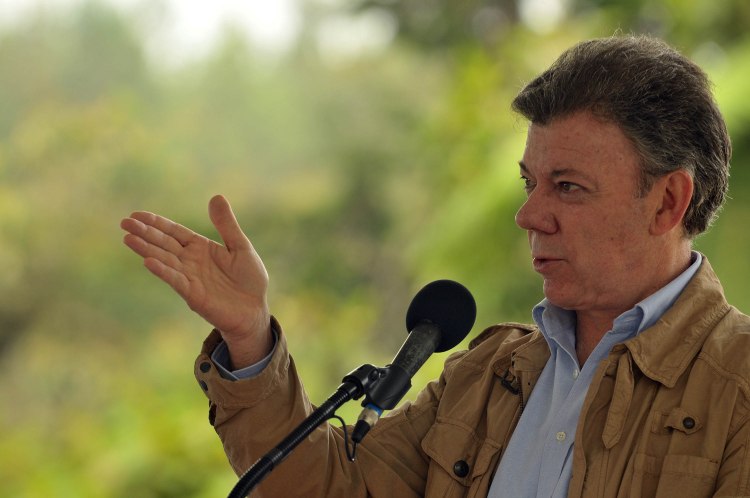
Columbia President Juan Manuel Santos. Source: Flickr.

President Santos has called for more to be done by the international community to aid migrating Venezuelans. The UN has offered resources to mitigate the sizeable burden on Colombia, and joint work has begun on reception centers for migrants. Santos outright criticized President Maduro as the root cause of the problem, citing Maduro’s previous refusals of humanitarian aid from Colombia and states worldwide. The Colombian president offers humanitarian rhetoric but limited action, as is common when a state attempts to bridge the gap between consciousness of a duty to aid and the reaction of its own struggling, and thus more protectionist, citizens.

Brazil, which has received lesser numbers of Venezuelan migrants, has paralleled the efforts of Colombia in the tightening of border security coupled with migration units, to help relocate Venezuelans from the border to the interior of Brazil to lessen local strain. Additionally, field hospitals have been created in the high-entry area of Roraima, as many entering Venezuelans are malnourished and unhealthy as a result of the poor access to basic goods in their country of origin. In Brazil, citizens similarly resent the addition of competitors for jobs and social services. Smatterings of conflict have broken out as Brazilians target migrants with acts of violence.

For Venezuelans, there seems to be little respite from turmoil and insecurity, at home or abroad. The humanitarian crisis in the region will only escalate should the Venezuelan government continue to refuse aid and change. Arguably, the best response for the international community is to do as President Santos has requested; increased international aid, namely as financial support, for migrants and the states receiving them. The automatic external response to the situation is to disparage countries in the region for a half-hearted humanitarian effort, and to ignore the economic and political realities of tensions induced by new, large flows of people into countries already under strain. If countries outside the region can help minimize the burden on local states, the situation will improve for not just migrating Venezuelans, but the regions of reception as well. Lessening local tension and promoting a positive, sympathetic perception of the incoming migrants allows migrants to be seen as they are; humans in need of help, escaping a national situation they do not have hope of improving.

Protocol Perspectives: Waging Water Wars

Politics, corporate interests, and climate change are intersecting within the changing demographics of an increasingly globalised world. Drought is beginning to pervade our world in unimaginable ways. How do these issues affect access to potable water worldwide? This discussion will delve into the implications for human rights, with focus on a Bolivian case study and the current Cape Town water crisis.

Original air date: March 16, 2018 at 10am on St Andrews Radio

Hosts: Elizabeth Barnes, Stella Milinich, and Peder Sverdrup

Researchers: Keith Minami, Elizabeth Barnes, Stella Milinich, and Peder Sverdrup

Resources

The Human Right to Water and Sanitation, media brief from the United Nations

A/RES/64/92: The Human Right to Water and Sanitation, United Nations General Assembly Resolution

Water war in Bolivia, Report from the Economist

Timeline: Cochabamba Water Revolt, from PBS

Leasing the Rain, Report by William Finnegan for the New Yorker

South Africa’s Cape Town faces severe economic troubles over drought: Moody’s, Report by Reuters

Why Cape Town is Running Out of Water, and Who’s Next, report by Craig Welsh for National Geographic

Cape Town is Bracing for “Day Zero”, report by Zeeshan Aleem for Vox

Ahed Tamimi: A 17-year-old Symbol of Resistance?

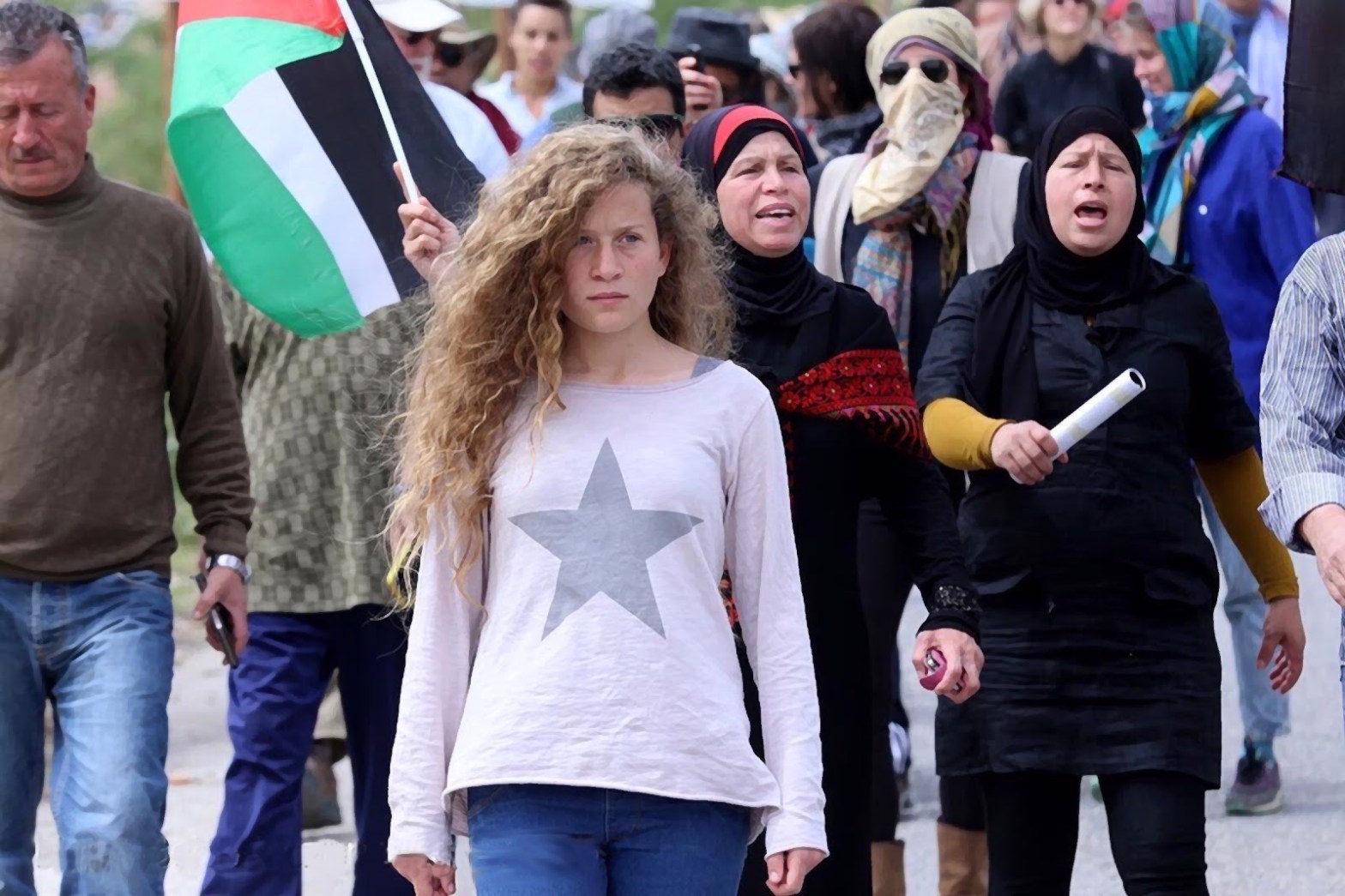
In December 2017 a video was circulated online of Palestinian women hitting and kicking Israeli Defence Force (IDF) soldiers who were posted outside the women’s houses. The protagonist of this video is 17-year-old Ahed Tamimi, who is currently detained in custody until her trial on March 11th. If found guilty, Tamimi could face up to 14 years in prison. The media attention on Tamimi has raised serious questions about the persecution of Palestinian minors by Israel.

Ahed Tamimi. Source: Haim Schwarczenberg.

On December 15th a protest began in Tamimi’s village of Nabi Salih in the West Bank. Her 15-year-old cousin, Mohammed, was shot at close range by a rubber bullet, receiving serious facial injuries. His face has been permanently disfigured and will take six months to heal fully. It is reported that Tamimi’s attack on the IDF soldiers happened just an hour after her cousin was shot; angry and upset, she confronted the soldiers who stood outside her home. Haaretz reported that on February 26th Mohammed was arrested and interrogated. This arrest was authorised by a military physician, despite his recent serious injuries.

Amnesty International’s Deputy Director for the Middle East and Africa, Magdelena Mughrabi, has argued that Tamimi posed no real threat to the IDF soldiers who held weapons and wore protective clothing. She states that the response from the Israeli authorities is “disproportionate” and that they are seeking to make an example Tamimi and her reputation as a symbol of resistance against Israel. On February 13th Tamimi’s trial began behind closed doors, with the judge ordering all journalists and observing diplomats to leave the courtroom. She is being tried as a minor and trials for a minor are usually closed to the public; however her previous trials have been open.

Tamimi has become a symbol of resistance due to her actions against Israeli occupation in the West Bank, where she has lived her whole life. The video from December 2017 is not the first instance in which Tamimi has reached a wider audience with her resistance to Israeli occupation. The Tamimi family and their village of Nabi Salih have often been at the forefront of resisting and protesting Israeli occupation. She was featured in the documentary Radiance of Resistance when she was 14-years-old, with critics deeming her the ‘poster-child for Palestinian plight’.

Unfortunately Ahed Tamimi is just one name in a long list of Palestinian teenagers being mistreated by the Israeli state. The detainment of a minor is not unusual in the Palestine-Israel conflict; according to Defence for Children International (DCI) an average of over 300 Palestinian minors, aged between 12-17, are detained each year.

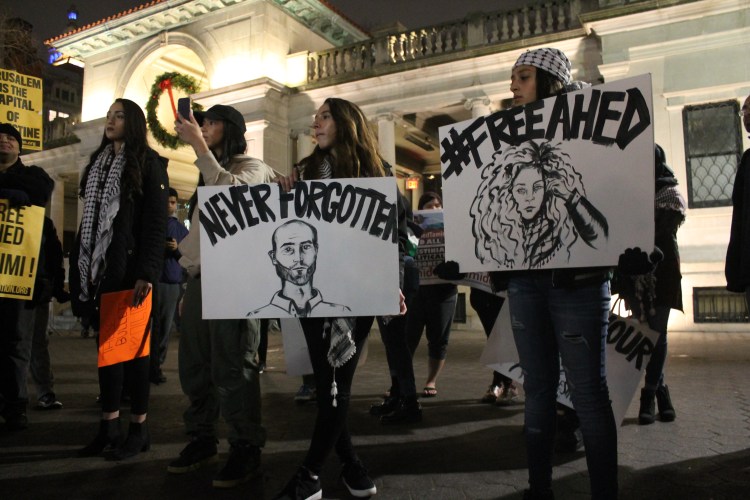
A #FreeAhedTamimi Rally in New York City. Source: Joe Catron – Flickr.

HaMoked, an Israeli human rights organisation who help protect Palestinians of the occupied territories whose rights are violated due to the policies of Israel, has called for the immediate release of 14-year-old Ghada, who was arrested on January 13th. She had been visiting her aunt in Jerusalem and as she was leaving the city, she was arrested by the Border Police for not having the correct permit. After interrogation she was taken to a hearing on January 15th, and in both of these events her parents were not present nor were legal representatives. On the day of her release she was taken to the Erez crossing into Gaza, an area where she does not live and did not know anyone. After finding her way in the dark Ghada was able to reach the Palestinian side of the crossing and speak to Palestinian Authority officials who were able to contact her family – whom were not informed by the Israeli authorities of Ghada’s release nor her placement at the Erez crossing.

Tamimi’s case is known worldwide, just as the video of her attacking the IDF soldiers made headline news. It is likely that without the viral nature of the video, that Tamimi would not be detained and facing charges. She is seen by many as a symbol of the resistance – but is it fair to put the burden of that title on the shoulders of a child? Both supporters and opponents of her actions are giving her titles and responsibilities beyond her years. At just 17 years old Tamimi is still a child – a child who has only known a life of checkpoints, armed guards, and occupation.

Unfortunately, Tamimi is not a lone child resisting occupation, but one of many. Many stories do not get told, and are often not shown the same attention by foreign press. It is clear that Palestinian children are being treated, and punished, as adults by Israeli forces. These incidents are part of a much wider issue of a generation growing up and becoming adults under occupation. When soldiers, fences, and resistance are normal, those living in occupied areas are denied their chance to be a child. Hopefully, the media attention surrounding Tamimi will bring focus on to the hundreds of unknown Palestinian minors who face persecution and imprisonment each day.

Tamimi’s blue eyes and blonde hair have often been the focus in stories about her actions. Her ‘western’ appearance has been used against her as a means of defaming her character, intentions, and even her identity as a Palestinian. Deputy Minister Michael Oren revealed that a committee was created to look into the credibility of the Tamimi family, going as far as to claim that they were actors hired to make Israel look bad. Stating that their blond hair, light eyes, and fair skin were not Palestinian features and thus they must be hired actors. This is another way of ‘othering’ the Tamimi family and discrediting their fight for their home. The media attention on this case has been vital in raising awareness in the West, however it might negatively affect the case and Tamimi’s future.

Amnesty International have started an email campaign to Israeli Prime Minister Benjamin Netanyahu to call for Tamimi’s immediate release; it can be found here. Lastly, this Avaaz petition calls on all world leaders to pressure Israel into releasing Tamimi.

Bottling It Up: The Voiceless Right to Water

It can seem as though there’s no escaping from water. After all, it covers over 2/3 of the surface of the planet, and comprises 60% of the human body. It boils freely in pan and kettle, and runs instantaneously at the twist of a tap. It fills lochs and lakes, and rushes in streams or rivers. And on a bleak February night in Scotland, it pours. Why, then, is water so scarce?

Water scarcity is most commonly associated with developing regions of the world receiving lower than average rainfall, such as Sub-Saharan Africa. And such a geographical focus is extremely justified, for the problem is an incredibly serious one; indeed, one in five people in the developing world lacks access to safe drinking water. Framing water scarcity as an unfortunate matter of geography and climate, however, blatantly ignores the deeply political thread running through the heart of the matter of access to and quality of water, in both the developed and the developing world. As such, shortfalls in provision, distribution inequality, and downright injustice all too often pass under the radar.

It is disturbing to discover that according to the US Constitution, ‘water’ as a necessity for human life simply does not exist. Moreover, it is less than a decade since, in 2010, the UN General Assembly finally voted in favour of the recognition of safe, clean drinking water as a fundamental human right. And while the Safe Drinking Water Act of 1974 concerns itself with standards, it does not account for accessibility, and nor does it address water as a human right. The loopholes created by this legal obscurity have allowed the right to water to be subtly eroded over decades by companies and governments without the best interests of their consumers and citizens at heart; not least, through privatisation and the bottled water industry.

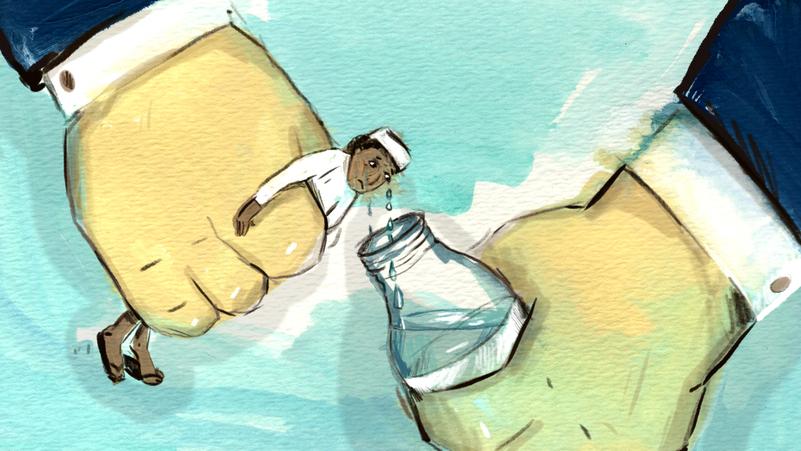
Source: The National.

Privatisation is a central, hugely controversial element of the contest for water. Since the proliferation of neoliberal policies in 1970s America, for instance, the right to water has been placed (along with many other elements of basic living) at the jurisdiction of local government bodies and private companies. Concerns about these developments have been twofold: in the first instance, there is a financial dimension which has resulted in some communities being forced to pay extortionate amounts for the water to which they, as human beings, are in fact entitled. Flint, Michigan, has some of the highest water bills in America, with residents paying over $300 per month for government utilities – almost three times the national average – in 2015. Refusal, or more accurately, an inability to pay up, has resulted in whole communities facing the temporary termination of their water supplies, depriving them of their basic access to water. As a result of access to water increasingly becoming dependent upon on economic capital, inequalities are exacerbated as a human right is transformed into a commodity available only to those who can afford to purchase it. Inevitably, the most vulnerable groups are consequently the most severely affected, although rocketing water prices may leave as many as 1/3 of Americans struggling to pay for water within a decade.

A second pressing concern of water falling into private hands has been the neglect of the infrastructure in place to supply it. Many systems have not been updated since at least the post-war reconstruction era of the 1940s and ‘50s, if not before. In the American Water Works Association’s most recent report on the state of the water industry, respondents rated the ‘soundness’ of their water supply at just 4.3 out of 10, highlighting a lack of public trust in the safety and competency of local water provision, resulting in large part from the lack of a standardised national system across which quality can be carefully controlled and monitored. Drinking water is at risk of contamination from pesticides, fertilisers, and even drugs such as steroids, leached into streams and rivers through lax regulation enforcement at a local level. An historically neoliberal approach to water resource management has therefore undermined the status of water as a human right by allowing wealth and geographical location to determine who is granted access to a resource to which all should be entitled.

There is no small irony in the fact that Flint, forced to pay the highest rates, has been at the heart of a crisis involving lead contamination of its water resources. Local residents are paying extortionate amounts for a resource which they feel is entirely unsafe for anything, with one local resident commenting that she dared not even use it to water her plants. A 58% increase in the number of foetal deaths in the city has been strongly linked to elevated lead exposure, which can also cause seizures, hearing loss, and long-term neurological effects.

It is unsurprising that extensive fears surrounding the quality and contents of the water running from taps across America has resulted in consumers turning to bottled water instead. However, this is not a pattern which has been nationally confined, but has been reflected globally, with believed health benefits and a turn away from sugary drinks also featuring among the reasons why bottled water has in recent years become the world’s most widely purchased bottled drink. But while the water crisis in Flint has forced local residents into a reliance upon bottled water for everything, from washing their hands to keeping the dog hydrated, at an international level, drinking bottled rather than tap water is often a consumer choice, based on perceived health benefits, manipulatively identity-based marketing, and simply convenience. That bottled water is actually no healthier than that from the tap, and can also be subjected to lax monitoring of potentially harmful pollutants seems immaterial when encased in a psychological safety net of plastic.

Unfortunately, whilst posited as a solution to water crises, bottled water is in fact an enormous part of the problem. The huge TNCs which monopolise the bottled water industry have become adept at slipping in amidst the chaos to take advantage of contested water resources with thoughts of profit alone in mind. The virtually undisputed monopoly of the industry belongs to Nestlé, with over 90 bottling factories in 34 countries across the world, and overseeing nearly 80 brands of bottled water, including Vittel and San Pellegrino. But such corporations are inherently profit-driven and have been quick to take advantage of the disjointed, privatised water network system, using their immense legal and financial weight to force their way into some of the most vulnerable communities, most recently in the Osceola Township, Michigan. They make flimsy yet unfulfilled promises of new jobs and infrastructure, in order to take charge of their water resources which do not belong to them.

In the context of Nestlé’s bottled water Empire, it is possible to re-contextualise Flint to take into account the fact that, just a few miles down the road in the town of Evart, Nestlé has purchased the ‘right’ to bottle water resources at a rate of just $200 per year, to sell all over the world at prices equivalent to just $1; this is less than the rate which local residents pay for the water which they can neither drink nor make use of in any way. Moreover, Nestlé is not only selling the water resources so desperately needed by local people to countries where perfectly clean, safe water is reality available to consumers for free via their taps, including selling back to local residents what should be rightfully their own, but they are directly preventing a sustainable, long-term solution to the problems. It is estimated that using the correct additives to make Flint’s water safe would cost just $100 per day. And yet, as long as bottled water is presented as a ‘solution’ to the water crises in Flint and elsewhere, it is perceived that there is ‘no need’ to take the action which must take place in order to improve infrastructural facilities.

This is not to mention the environmental costs associated with bottled water. Whilst this might initially seem like a separate issue, water is in fact integral to the plastic-making process. It takes twice as much water to construct a bottle than can be seen to be contained within it. The recent outcry against single-use plastics in the media, particularly since the broadcast of the BBC’s Blue Planet II, has been a welcome development, but the problem is already well-advanced, with evidence that microplastics are beginning to enter the food chain and, crucially, our water. To this end, Nestlé may have made some seemingly bold recycling commitments over the past year. But how long will it be before their bottled water is advertised, seemingly without any sense of irony, as the ‘solution’ to the microplastics which may be beginning to enter our tap water, but will, of course, be entirely absent from their own? The solution ultimately can be found not from what is done with the end waste product, but by considering how to reduce the number plastic bottles being produced in the first instance.

So, the next time you’re on the brink of swiping through your daily bottle of water and placing it with some trepidation into the ‘bagging area’, think twice about how much it will cost. And that is, not exclusively in terms of its financial value, in pennies or Tesco Clubcard vouchers. The necessity to by a bottle of water every now and then need neither evolve into a habit, nor leave the consumer without any choices about where their water should be sourced from, and where their money will go. Nestlé Water’s chief sustainability officer, Nelson Switzer, admirably commented in a recent interview that ‘water belongs to no one’; the only misfortune, then, was his failure to realise that neither his company, nor any other, has the right to be treated as an exception. Ultimately, an infinite number of words can lament TNC exploitation of vulnerable human rights, but only the diligence of consumers can hope to deflate the self-confidence behind the powers seeking to silence our most understated human right to clean, safe, and readily available water.

Protocol Abroad: UNICEF Queens Conference on Human Trafficking

Jessica Craig is currently participating in a St Andrews Abroad exchange at Queens University in Kingston, Ontario in Canada.

Human trafficking is a complex and devastating phenomenon in both the global north and south, affecting as many as 21 million people worldwide and generating around £18 billion in profits for its perpetrators.

On 10th February 2018, UNICEF Queens held their annual UNICEF in Action conference, which this year explored the many facets of human trafficking as a complex domestic and international issue. UNICEF Queens promotes the aims of UNICEF Canada at Queen’s University, and aims to further students’ education on issues affecting children across the world and to empower them to take action.

Attending as a visiting exchange student, this was a unique and highly informative opportunity to learn about the impacts of human trafficking in Canada, and internationally.

The event featured a keynote speech from Deputy Director for International Programs at UNICEF Canada Simon Chorley, a series of workshops led by members of the Kingston community, and a panel discussion featuring professionals whose work relates to human trafficking prevention and assistance of victims. The event culminated in a case study exercise, which allowed delegates to apply what they had learned throughout the day, to identify the circumstances which constitute human trafficking and to assess the support needed by victims of different forms of trafficking.

A child sex worker takes a break in Cebu City, Philippines.

Source: International Labour Organisation in Asia and the Pacific.

Defining Human Trafficking

One of the priorities of the event was to unpack the complex definition of the phenomenon of human trafficking. Simon Chorley spoke about the varied forms of human trafficking, and how it is best defined by its acts, means, and purpose.

Human trafficking is the act of recruiting, transporting, or harbouring victims for exploitation. It is non-consensual, making it different from smuggling, and is achieved by means of deception or coercion. This can take the form of forced sex work, domestic service, labour exploitation, involuntary marriage, organ harvesting, and forcible participation in militia groups. It is often described as modern-day slavery.

Human Trafficking in Canada

I was shocked to learn that human trafficking is occurring in the community where I am living. Victims of trafficking can originate from both within and outside Canada. Around 2/3 of human trafficking cases in Canada begin in Ontario and incidences are concentrated in southern Ontario, proximal to the border with the USA. Here, cities are connected by the 401 Highway which permits the rapid transportation of victims to elsewhere within the province, across Canada, or beyond its borders. Most of the cases in Ontario involve sex trafficking – which accounts for around 70% of cases here in Kingston – but labour trafficking is also occurring.

Trafficking is not confined to crime-hotspots but may be taking place under the noses of the public, making identifying the signs crucial. Kingston Police Sergeant Brad Brooker and Detective Constable Kyle Brown told us that hotels are increasingly being used as venues for forced sex work, leading Kingston Police to provide hotel staff with training on identifying the signs of someone that is a victim of trafficking.

They also attested to the difficulties police in the local community face in supporting victims of trafficking. Victims of sex trafficking must want to exit the sex trade for police to be able to help them, but often perceive a romantic relationship with their “pimp” which makes them vulnerable to ongoing manipulation and exploitation.

Human Trafficking Internationally

This event helped to dispel myths and issues surrounding the imagery of human trafficking. Human trafficking is not just an issue of sexual exploitation, nor does it affect just women and girls. Men and boys can be victims too. We heard numerous cases of labour exploitation, and how the stereotypical association of trafficking with sexual exploitation can obscure labour exploitation and limit resources for victims.

Human trafficking can affect people from all walks of life – not just in the world’s poorest. Simon Chorley also spoke to the difficulty of helping victims who come from the developed world, as the majority of resources are geared towards victims from the global south. He highlighted the case of a British girl named Sophie Hayes, who was trafficked to Italy by a man she believed to be a close friend, and the difficulties faced in supporting her after she escaped her situation. She co-founded the Sophie Hayes Foundation, which provides support to victims in the UK to help them regain their confidence and build bright futures after human trafficking.

What can be done?

During the panel discussion Reena Kukreja, an independent documentary filmmaker whose work has dealt with women’s issues, child labour, and migration in India and Canada, highlighted the importance of creating a narrative about social factors which can permit different forms of trafficking. She suggested that as consumers we should be aware of where our goods come from and opt for brands of food and clothing which are produced without forced labour. These include UTZ and Rainforest Alliance certified products, which support sustainable farming, forestry, and tourism. You can visit the Stop the Traffik Campaign for more information on sourcing goods which have been responsibly produced to prevent the funding of human trafficking through our consumer goods.

Furthermore, Doug van der Horden, a local activist and High School Counsellor in the Kingston area highlighted the need for preventative measures and early intervention. The circumstances which make an individual vulnerable to trafficking are complex and varied, so a variety of strategies are required. In Doug’s work, this involves educating young people on the dangers of grooming (often a precursor to sex trafficking) and teaching both pupils and teachers in schools to identify the signs of human trafficking.

However, it is important for the general public to be aware of the signs and to be empowered to contact the police in an emergency, or to otherwise report suspicious behaviour. The Modern Day Slavery Helpline provides advice for those who wish to educate themselves on the signs of trafficking, and on how to report it.

Additionally, collecting data is vital to intercepting and preventing human trafficking. The STOP APP smartphone application can be downloaded by anyone in the world and can be used to report any behaviour suspected of being linked to human trafficking. It is not a replacement for alerting authorities if a crime is witnessed, but it collates data on trafficking to help disrupt human trafficking and prevent future cases.

The Human Rights of Bling

In the wake of Valentine’s Day, some of our dear Protocol readers may currently be wearing a new necklace, bracelet, or ring from a loved one (or secret admirer). Gifting jewellery is extremely popular, with Americans spending more on jewellery than on any other gift for Valentine’s and Mother’s Day in 2017, purchasing nearly $10 billion worth of jewellery over the two holidays combined. If your gift-giver felt especially flash with their cash, some of these gifts may have even contained gold or diamonds. But while these might look like great accessories, the human cost of jewellery is less than sparkling. In the run up to Valentine’s Day 2018, Human Rights Watch released a report on “The Hidden Cost of Jewellery”, describing the conditions under which precious minerals and metals are mined. The report focused on the practices of 13 major jewellery brands and their extensive supply chains, including Boodles, Bulgari, Cartier, Pandora and Rolex. While these 13 companies recognise their human rights responsibilities, many of them fall short of complying with international standards.

According to the report, approximately one million children globally are made to work in small-scale mining, in direct violation of international law. Artisanal or small-scale mining refers to “mining practised by individuals, groups or communities often informally (illegally) and in developing nations”. Evidence of child-labour practices seem wide-spread in the supply chains of some of the most popular jewellery brands. In Ghana, Human Rights Watch researchers talked to a 15 year-old boy who worked in a gold mine, using toxic mercury without being aware of its risks. In Tanzania, a 13 year-old boy sustained internal injuries from a collapsed shaft in in the mine where he worked. In gold and diamond mines, researchers found evidence of forced labour and people-trafficking practices, violating countless international and national protocols. In Eritrea, national service conscripts were forced to work indefinitely for a subcontractor of the Canadian gold mining company, Nevsun. Some Eritrean workers affected by this forced labour filed a lawsuit against the corporation in the Canadian judicial system, with the Supreme Court set to rule on the matter later in 2018.

Child diamond miners in Sierra Leone. Source: Wikimedia Commons.

Communities have also faced environmental degradation as a direct result of gold and diamond mines, with pollution leaks, toxic waste dumps and spills affecting those who live and work close by. Large industrial mines, like the Ok Tedi gold and copper mine in Papua New Guinea, inflicted severe environmental damage, discharging around 58 million tonnes of untreated mining waste into rivers in Papua New Guinea, each year. Smaller-scale mines can also cause extensive damage. According to the UN, small-scale gold mines emit around 1,400 tonnes of toxic mercury annually, resulting in air, water, and soil pollution that affects both the workers and the local communities. In Nigeria, artisanal gold mining has caused unintentional releases of lead that killed over 400 children. The human and environmental costs of mining often disproportionately affects indigenous communities. There have been numerous examples of forced displacement of indigenous communities to make way for mining ventures. In Uganda, multinational gold companies consistently failed to gain free, prior and informed consent from the Karamojong communities to work on ancestral land.

Perhaps the most notorious side of artisanal mining is the relationship between gold and diamond mining and conflict and civil war. ‘Blood diamonds’ refers to diamonds mined in war zones and sold to finance war efforts, often at the expense of human life. In the past two decades, seven African countries have endured civil conflicts partly fueled by diamonds: Sierra Leone, Liberia, Angola, the Republic of Congo, Côte d’Ivoire, the Central African Republic, and the Democratic Republic of Congo. For example, research by Amnesty International found that in the Central African Republic, armed groups, who were responsible for killing civilians and committing other war crimes, directly benefited from the diamond trade. In Latin America, gold mining has helped fuel the drug trade, finance armed groups and has become an inventive way to launder money.

In order to mitigate some of the negative impacts of gold and diamond mining, there has been a drive in recent years to implement safeguards across jewellery companies’ supply chains. Many of these are involuntary and arise from a myriad of different actors, from states to the companies themselves. The Kimberley Process Certification Scheme is the most well known international standard regarding diamond mining, representing 81 countries, with members accounting for 99.8% of the global production of rough diamonds. The Certification Scheme imposes “extensive requirements on its members to enable them to certify shipments of rough diamonds as ‘conflict-free’ and prevent conflict diamonds from entering the legitimate trade”. There have also been promising signs of recognising and enforcing human rights responsibilities amongst the top jewellery companies. In one report, Human Rights Watch found that Tiffany and Co., is able to “trace all of its newly mined gold back to the mine of origin”. Cartier have a “full chain of custody for a portion of the gold supply”, and Bulgari conducts regular visits to mines to check human rights conditions.

Despite these glimpses of hope, much remains to be done. The Kimberley Process contains many loopholes, often failing to adequately address the human rights abuses present in gold and diamond supply chains. According to Human Rights Watch, it relies on an extremely narrow definition of ‘conflict diamonds’, and applies only to rough diamonds. It relies on word of mouth assurances rather than transparent monitoring, and sanctions for noncompliance are almost unheard of. No company that Human Rights Watch contacted could trace all of their gold and diamonds back to the mines of origin, and only a small number of companies evaluated their supplies from artisanal mines. Rolex, the single biggest global luxury watch brand, provides no public information about its human rights due diligence or supply chain management.

And so there remains a long battle to ensure jewellery companies understand and meet their human rights responsibilities. The recent report by Human Rights Watch advocates that every jewellery company adopt and implement a detailed sourcing policy, requiring suppliers to provide detailed evidence of human rights due diligence. This should be implemented at every level of the supply chain, and the human rights due diligence should be based on international human rights standards. But what can we, as consumers, do? There are plenty of options for Valentine’s Day 2019. Ensure jewellery is ethically sourced by researching a particular brand or invest in vintage, recycled gold and second-hand sparkle. Synthetic diamonds and gemstones are also becoming an increasingly popular alternative to their organic cousin and do not rely on slave labour, environmental degradation or armed conflict.

Educational Gerrymandering: A Look at Modern Segregation in American Schools

Gerrymandering, as explained by the Washington Post, refers to ‘the drawing of political boundaries in a way that gives your party a numeric advantage over an opposing party’. This long-sustained tactic employed by both the Democratic and Republican parties has transformed, moving beyond the legislative, beyond the confines of Partisan advantage. Gerrymandering has entered a space which does more than disempower minority party members’ voting rights: it also gerrymanders public school attendance zones, allowing districts to segregate their schools along the same lines used by politicians.

Despite America’s increasingly diversified population over the past several decades, public schools have increasingly become more segregated by the boundaries of racial and class-based difference.This is due to the systematic drawing and redrawing of school district lines, which contributes directly to a racially and socioeconomically determined achievement gap, barring the opportunity for educational growth merely due to the contexts and backgrounds of the students in question. Racially segregated school districts lines work in conjunction with preexisting racially segregated political boundaries. Though attendance zones in the desegregation era created schools that were less segregated than the neighborhoods they served, attendance zones as of late have reversed these results. Meredith Richards, a professor of Education Policy at Southern Methodist University, used geospatial techniques to analyze the gerrymandering of public schools attendance zones and its subsequent effects on students, saying, ‘Unfortunately, most contemporary attendance zones serve to exacerbate rather than ameliorate racial inequalities in educational opportunity, contributing to schools that are less racially diverse than their neighborhoods.’ Furthermore, out of the 15,000 attendance zones Richards studied, it was revealed that on average ‘gerrymandered boundaries increase segregation beyond what would be expected if all students attended their closest school.’

Source: Flickr.

Continuing to foster and promote segregated schools by way of district lines can have long-lasting developmental effects on students, as shown by a 2014 study from the University of North Carolina, Chapel Hill. Kirsten Kainz, the director of statistics for the institute that carried out the study, discovered through already compiled research by the US Department of Education that African American first graders in segregated schools made significantly smaller growth in reading ability than African American students in other schools. Using research that took into account the numerous differences in students’ backgrounds, ‘Kainz realized the primary reason was the segregated schools themselves—not the students.’ This study serves as a testament to the negative effects of segregated schools on a wider scale.

In 1954, the United States Supreme Court declared the “separate but equal” doctrine unconstitutional, legally doing away with the state laws that allowed public schools to segregate students by the boundary of race. A cornerstone of the American civil rights movement, Brown v The Board of Education did not do away with segregation on its own, but paved the way for efforts to come. Despite these movements, de facto segregation is still very much alive in the United States. Educational opportunity for minority students should not be contingent on decisions made by district leadership, but rather it should be an inherently afforded opportunity to all Americans. While these leaders do not have the power to change where students live, they do have the power to redraw the lines of school attendance zones, gerrymandering in an affirmative way. This would create educational communities which would serve to emphasize the diversity of districts rather than perpetuate racial and socioeconomic inequalities. Though a few districts have responded to segregation by affirmative gerrymandering, there are still so many districts that have yet to employ this method.

De facto segregation in public schools is a lived reality for many, with polarizing consequences that foster the continuities of race-based inequalities that are commonly held in the American psyche as no longer existing due to the Civil Rights movement. There is still much to be done, as a matter of urgency, to rectify the injustice perpetuated by legislatures that has hindered educational opportunity and fostered the continuity of the achievement gap. I was fortunate enough to grow up in a district that allowed me to attend a top tier public school with plenty of resources and opportunities for growth, many of which I probably took for granted. My own place in this rhetoric is speaking from a stance of privilege. All across America, millions of children are not so lucky to be afforded that privilege. I know this article may not have the power to undo the already irreparable damage our current school attendance boundaries may have caused for many, but I hope it can be a starting point by which we as a society (or at least those who may read this) can bring this issue to the forefront and challenge preconceived notions of America as a land of equality. Encouraging the implementation of affirmative gerrymandering is a vital step in this process. If you are interested in learning about this issue in more detail, read this article by Richards, an assistant professor of education policy and leadership at SMU.

Climate Change-Related Displacement: The “refugee” label, human rights, and state responsibility

The Office of the United Nations High Commissioner for Refugees (UNHCR) is the primary international organisation advocating for refugee rights. The UNHCR 1951 Convention and 1967 Protocol Relating to the Status of Refugees constitute the fundamental international legal instrument for the protection of refugee rights. According to Article 1A(2), a refugee is defined as a person who:

Owing to a well-founded fear of being persecuted for reasons of race, religion, nationality, membership of a particular social group or political opinion, is outside the country of his nationality and is unable or, owing to such fear, is unwilling to avail himself of the protection of that country; or who, not having a nationality and being outside the country of his former habitual residence, is unable or, owing to such fear, is unwilling to return to it (UNHCR, 1951 & 1967).

The term “climate change refugee,” however, is not defined within this text. While states (i.e. countries) have obligations to protect refugees, the definition of “refugee” is a highly specific one that contains many components, posing a problem for the incorporation of climate change-related displacement.

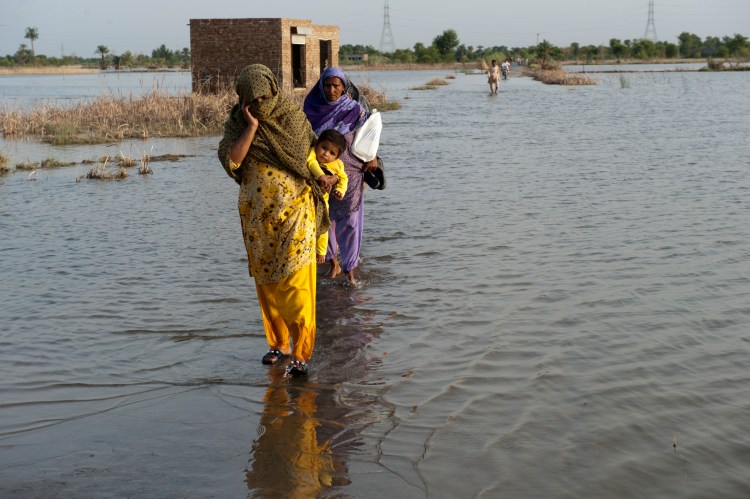
A family crosses the flooded streets of Pakistan. Source: Flickr.

Migration can take many forms – it can be international or internal; forced or voluntary; involving a direct persecuting agent or a nebulous global problem; resulting from discriminatory or non-discriminatory forces. Most individuals and communities displaced by climate change will internally relocate, appear to relocate voluntarily, or not be persecuted by a discriminatory state on one of the five convention grounds (i.e. race, religion, nationality, or membership of a particular social group or political opinion). Due to these distinctions and definitional requirements, environmental refugees cannot be considered “refugees” under current international law.

It is also highly unlikely that states will agree to further widening of international refugee law in the future. State parties to the 1951 Convention and 1967 Protocol have immense political incentives to denying responsibility for climate change, or even denying the existence of climate change (e.g. the Trump administration). Since states have an integral relationship to the existence of international refugee law, it would be incredibly hard (if not impossible) to create a new binding document on climate change refugee rights. As James C. Hathaway argues, “the type of collective consensus needed to drive a meaningful body of law is largely absent,” creating a barrier to further development of international human rights law.

Even if the legal definition was modified so that climate change-related displaced persons could be considered refugees (and thus states would be obligated to protect them) this does not necessarily mean that states would protect them in actuality. In fact, many states do not act in accordance with duties prescribed to them under international law – many individuals who fulfill all definitional “refugee” requirements are not protected and are denied of human dignity. Many refugees are instead referred to as noncitizen “asylum seekers,” and not given the human rights protection that host states are obligated to give them. The host state, in many instances, not only withholds protection, but also actively violates and abuses refugees. While international refugee law aims to impact domestic law, the past 25 years have been filled with examples of extensive backlash against sections of the 1951 Convention and 1967 Protocol Relating to the Status of Refugees. To illustrate, Australia, Europe, and the United States have now, as a matter of policy, begun systemically violating international refugee law through adopting extensive deterrence measures. These include imposing time limits on asylum applications, categorizing asylum seekers by the safety of their country of origin, and even using military ships to seize and return boats filled with migrants to their departure point. Measures like these serve to prevent asylum seekers (many of which actually satisfy all requirements for the “refugee” label) from accessing state protection, harming the human security of those seeking asylum. These new restrictive policies are not comforting for any potential refugees hailing from countries affected by climate change, since, as refugee scholar Jane McAdams states, the “existing legal regimes do not provide adequate protection or migration pathways for cross-border movement.”

Without even referring to refugee law, it is undeniable that humanitarian crises – like the potential disastrous and deadly effects of climate change – are threats to international peace and security. Despite not possessing the obligation to protect those displaced by climate change, states are under the obligation do everything they can to ensure the protection of human rights within their state. Jane McAdam argues that it is unavoidable that “climate change will impact upon people’s enjoyment of their human rights.” However, the reality is also that many poor countries will be unable to fund, create, and sustain sufficient climate-induced adaptation measures. Thus, migration may be the only practical option for these communities, whether internal or international – regardless of whether the 1951 Convention and 1967 Protocol provides legal protection for this movement. While states may not have any practical duties towards climate refugees per se, climate change will impact the potential for individuals’ enjoyment of human rights and the potential for human development. An explicit concern for human rights is important when considering the potential effects of climate change.

Instead of pushing for the inclusion of climate change displaced persons into the “refugee” definition (which oftentimes does not ensure that refugees will actually be protected and given the rights they deserve), states should acknowledge the inability to ascribe the refugee label and the consequent threat to global human security. States will not be able to prevent the coming humanitarian crises – both disaster (e.g. floods) and slow-onset (e.g. desertification) – unless they acknowledge this reality. Through universal legal instruments such as the Paris Agreement (the United States cannot legally withdraw until 2020) and the United Nations Framework Convention on Climate Change and its Kyoto Protocol, the international community is obligated to minimize the effects of the imminent humanitarian disaster. There is no quick fix, and the longer climate change continues to progress, not just vulnerable places will be rendered uninhabitable. These affected areas will grow, until they eventually encompass the whole globe. Simply relocating will not fix the problem of climate change-related displacement. Since climate change is a global problem, we need to mobilize the whole globe to fix it.

The Plight of Human Rights: Intimidation and Detention of Lawyers in China

The Chinese government has a longstanding history of suppressing dissident activity, as seen through surveillance, censorship, and other means. Subsequently, these efforts extend to those aiming to eradicate repression and injustice, attacking not only the network of civil and social activism that arose in post-Mao China, but also human rights lawyers. Merely being employed in a law office which had once represented a dissident or claimed a governmental human rights violation was enough to be brought in for questioning by government officials and officers.

According to Beijing-based New York Times writer Alex Palmer, ‘Until 1979, the People’s Republic operated with virtually no criminal-justice system whatsoever: The Communist Party organized Soviet-style police and people’s courts to address petty crimes and local disputes, but their primary responsibility was to enforce absolute loyalty to the party.’ Eventually, economic reforms brought along reconfigurations of the legal system, shown particularly in the relative softening of strict ideological conformity in the 2000’s. These new domestic policies paved the way for a generation of outspoken human rights lawyers who were willing to challenge the government in ways that were never attempted by their predecessors. Unfortunately, this progress became a source of anxiety for the Party, and worries about lack of control and dissident uprising gave way to a governmental shift of leniency.

Though it has never been particularly easy to work and live as a human rights activist in China, pressure against these individuals increased ten-fold on July 9th, 2015, when the Chinese government launched more extreme efforts to suppress human rights lawyers. The “709 crackdown” on dissent was a widespread phenomenon, ultimately resulting in the temporary and forcible detainment, surveillance, travel banning, and arrests of more than 300 lawyers, law firm staff, activists, and family members. Many of the lawyers and activists faced threats of lifetime imprisonment, effectively disappearing for several months or even years, thanks to a provision of the Chinese criminal code, which allows law enforcement to carry out incommunicado detentions. In the aftermath of 709, many felt they had no choice but to abandon their legal careers, with remaining members of the community going underground and choosing to write about human rights cases only under a pseudonym.

Once they are detained, the human rights violations carried out by the Chinese government become even more of an urgent matter, with instances of torture and overall ill-treatment remaining routine in the case of detained dissidents. Lawyers released on bail have described the horrific extent of suffering, including beatings, lengthy interrogations, sleep and water deprivation, and in one case being ‘force-fed with medicines and chained for up to 24 hours a day.’ For certain activists and lawyers, even those who no longer practice law, the ordeal follows them long after serving their sentences, with similar infringements on personal rights being carried against them in the outside world.

Protest in San Francisco against the human rights violations brought about by the Beijing Olympics in 2008. Source: WikiMedia Commons.

One case in particular is that of Ni Yulan, a former housing rights lawyer best known for her defence of residents who were evicted to accommodate the 2008 Beijing Olympic Games. Yulan spent her career fighting for the rights of others, only to become a victim of torture and ill-treatment herself. So extreme is Yulan’s case that in the wake of filming the forced teardown of one of her clients’ homes in 2002, she was so brutally beaten by the police that she now lives confined to a wheelchair. Furthermore, she has been repeatedly and violently evicted, reporting instances in which both she and her husband were dragged from their home. She has also been barred from leaving the country by Chinese authorities and has had her passport continuously withheld.

The continuous and ruthless persecution of human rights lawyers is one that cannot go ignored. While many have been freed after months of wrongful detainment and torture, counter-efforts from NGOs and foreign governments alike to remedy this injustice act alone as the government largely remains unscathed in the wake of their actions. If you want to hold them accountable and demand an end to the ongoing intimidation and harassment of Ni Yulan and others, partake in Amnesty International’s Write for Rights campaign, launched annually each December for the last 15 years. The campaign calls on people around the world to show support for those who suffer from human rights violations on a daily basis. This is done through writing letters directly to government officials in an attempt to not only hone in on the accountability of those in power, but show solidarity with victims that have suffered from inhumane treatment and attempt to facilitate real change. Click here to support Ni Yulan, and here to see the other people and groups you can help this year.

Review: Professor Wendy Savage’s Discussion of Abortion Rights

Human Rights Watch takes a stance on that the denial of the right to make a decision regarding an abortion as a fundamental violation of various human rights. Moreover, they underscore the importance of health and safety and how it is correlated with access to safe abortions. On Tuesday, 28 November, Professor Wendy Savage came to St Andrews to discuss her work with women’s reproductive rights, and the history of abortion laws in the United Kingdom. In her talk, titled “What is wrong with the 1967 Abortion Act?”, she discussed the history and progress of abortion laws in the U.K. Prof. Savage is currently at the University of Middlesex, but was brought to St Andrews by Her Choice, a university society that aims to “raise funds for thousands of women who are unable to access abortion facilities and to raise awareness of their plight”. Her Choice was founded in February 2017, and this was their first major event since their foundation.

Dr. Savage is known around the world as a vanguard of women’s reproductive rights through her impressive career as a gynaecologist and activist. Dr. Savage studied medicine at Girton College, Cambridge, graduating in 1960. She was the first women consultant for obstetrics and gynaecology at London Hospital. She has worked around the world ever since, notably opening an abortion service in New Zealand before the “law was liberalised”. Following a high-profile inquiry in 1985, when Dr. Savage was accused of incompetence in management of the obstetrics post at London Hospital Medical College, she was reinstated in 1986 with all charges cleared. Particularly of interest to the evening’s audience is her work with Doctors for a Woman’s Choice, sometimes known as Doctors for Choice.

While the investigation was not long, it garnered plenty of attention to this day, but Dr. Savage is no novice to discord. She made headlines earlier this year when she said it was “outrageous” that some doctors withheld the gender of unborn babies due to fear of sex-selective abortions. This was met with outrage from some, arguing that she was ignoring the risks of telling parents who would abort the foetus based on gender. Dr. Savage held her ground, arguing that withholding information from mothers is an ethical mistake and that they have every right to that information, especially as they are the ones “taking the risks”. The British Pregnancy Advisory Service immediately supported Dr. Savage, noting that there is no evidence of sex-selective abortion in the UK.

Dr. Savage gave a lecture-style talk followed by an informal question and answer session. The event was attended by both pro-life and pro-choice students, adding a range of opinions and voices to an evening that could have become an echo-chamber. Dr. Savage was obviously very well versed in the history of reproductive rights in the U.K. and showed this with passion and clarity. Touching on the range of laws from Northern Ireland, England and Scotland, and the challenges posed to a woman requesting an abortion. Problems such as required confirmation by two doctors or mandatory locations for taking abortion pills, showed the complicated history still present in the world of reproductive rights and the debate over the right to a safe, accessible abortion. She concluded with steps that she recommended for all those in support of a woman’s right to an abortion.

One of the merits of the event was the attendance of members of the Students for Life group in St Andrews. James Castro, the secretary of the group, commented that “the speaker raised a number of interesting issues from her talk. However, the speaker seemed closed off from reflecting on whether the unborn child is a new human life. It is painful to see how far apart the two sides are in recognising that abortion also entails ending an innocent human life but, listening to the pro-choice side of the debate is important.” Seeing both groups interact and take part in discussion made the event that much more enriching.

Photography by Alanna Gow.

#review #wendysavage #abortion #abortionrights #HerChoice