Migrant Protection Protocol: Less Protected than Ever

Migrants and refugees held in an overcrowding centre at a border control checkpoint in Texas in June 2019. Source: flickr.com.

It has been approximately one year since the Trump administration issued the Migrant Protection Protocol (MPP), otherwise known as the ‘remain in Mexico’ policy. According to the Department of Human Services, the MPP is on track to ‘restore a safe and orderly immigration process’, with the hope that migrants will no longer be exploited by human traffickers. The MPP also sought to reduce the influx of drugs and illicit activity, as well as reduce the number of asylum seekers able to take advantage of US law. Essentially, the MPP is designed to both dispel migrants from seeking out illegal and dangerous means of crossing the border, and a way to more directly determine who is allowed to stay in the United States permanently.

The MPP however, functions less as a deterrent and more as a means of rejection. Upon crossing the border, it is determined whether the migrant will be placed within the MPP. Those placed in the program are given a court date, and are then sent back across the border to a designated town to wait for their hearing. When the time comes they have been instructed to return to a certain point of entry. Individuals can request an interview to determine a valid reason on the basis of fear to not be forced back into Mexico while awaiting their trial in immigration court. However, these interviews are often carried out hastily, over the phone, and with individuals usually held in custody throughout the process. There is also no objective criteria for who passes the interview, with a study determining that only about 40% of those expressing a fear of returning were granted an interview, and of those only one to 13% of asylum seekers are allowed to stay.

Otherwise, there are very few exceptions to the MPP, with the most common being unaccompanied children, those with pressing health issues, and those determined to be a severe risk of torture or persecution should they be returned. When the alien returns to the US they attend their hearing and it is then determined by a judge whether they will be allowed to remain in the United States.

This makeup of the Migrant Protection Protocol presents a whole host of issues. Who is actually placed in the Migrant Protection Protocol is determined on a case-by-case basis. Yet, the Protocol decrees that unaccompanied minors should not be sent back, which has led to a trend of parents abandoning their children to secure their chance of staying in the United States. Additionally, there is no way to monitor those who are returned, as the Mexican government does not keep track of the incoming migrants. There are no designated shelters or means of legal counsel awaiting the rejected asylum seekers, who often have a time span of months to sit out before they are set to re-enter the United States.

The border towns the migrants are returned to like, Tijuana, are some of the most dangerous in North America, if not the world. In 2018, Tijuana was home to 2,502 (126 per 100 000) murder cases, with serious gang violence and turf wars splitting the cities. The asylum seekers that are forcibly sent back often find themselves particular targets for gang violence, with over 400 reported cases of ‘rape, torture, kidnapping, and other violence’. The dangerous conditions the migrants are living are also making it difficult for them to attain the legal assistance they need.

Migrants sleep outside of a church in Juarez, Mexico. Source: The Washington Post

The dangers of illegal immigration are only amplified by political instability and the US is clearly not equipped, at least for the time being, to manage the large numbers of humans flowing across the border. Yet, to force over 50 000 people back into objectively high-risk conditions, should not be confused with a humane and sustainable border control policy. An overhaul of the policy, so that migrants have more fair and accessible access to legal help, and reform of grounds for deportation would go a long way in minimizing the human impact and degree of tragedy that asylum seekers face on the US southern border today.

Edited by Peder Heiberg Sverdrup

Refugees or Migrants? A critical Distinction

Climate change = more climate refugees. #Melbourne Climate Strike IMG_5187 Source: John Englart, via flickr

On January 7th a milestone decision was delivered by the UN Human Rights Committee asserting that world governments cannot deport individuals whose human rights are at risk of being violated due to the climate crisis, effectively granting them the right to seek asylum.

The ruling was made in relation to a case brought forward by Ioane Teitiota, a national of the Republic of Kiribati, an island nation in the Pacific Ocean. His request for refuge on the grounds of the difficulties he faced accessing drinking water and mitigating land disputes as a result of rising sea levels was denied, as Kiribati was determined to become uninhabitable only within the next 10 to 15 years, effectively providing ample opportunity for measures to be taken by the nation to stall the threats presented by rapid climate change.


Although some
news outlets were quick to brand Teitiota as a ‘climate refugee’, to make that claim in the context of the United Nations would be to grossly overlook the legal framework set out by the 1951 Refugee Convention. The document defines a ‘refugee’ as ‘someone who is unable to return to their country of origin owing to a well-founded fear of being persecuted for reasons of race, religion, nationality, membership of a particular social group, or political opinion’.

The desire to use the term ‘refugee’ in relation to climate migrants often comes from the immediate imagery and connotations that arise when faced with the idea of a large number of persons needing safe haven when fleeing from danger. However, a close look at the official definition used by the UN reveals a number of crucial differences between refugees and climate migrants.

Much of the climate migration movement is expected to take place within the migrants’ country of origin.

Current discussion about the effects of climate change hinges on the anticipation of large-scale internal migration, however, this does not conform with the definition adopted by the UN. While cross-border migration induced by climate change is not entirely unlikely, it is expected to represent a smaller proportion of the climate migration movement. Consequently, the tools necessary to approach it are going to be inevitably different from those currently used to address the refugee movement.

Climate migrants are often not in immediate danger.

In contrast with political refugees whose lives and human rights are threatened by persecution, the projected threats and disturbances to climate migrants’ lives are in some cases decades away. The migration often is not ‘forced’ and there is still time for the affected nations to introduce measures that would stall the effects of climate change. This should not be taken as a pretext to neglect the problem, instead, it highlights a key difference between political refugees and climate migrants.

Climate migrants often do not want to be called ‘refugees’.

Some Pacific Islanders, whose way of life on low-lying islands is threatened by rising sea levels have already expressed their dissatisfaction with the term ‘refugee’. They have specifically expressed their dislike of the connotations of ‘victimhood’ that comes with the status, reiterating their wish to ‘migrate with decency’. We should be listening to the voices of those whose lives are affected by climate change and be attentive to the challenges that they face instead of trying to apply old solutions to new problems.

With the UN forecasts estimating the number of climate migrants between 25 million and 1 billion by 2050, it is indisputable that there needs to be a clear legal framework for those affected by climate induced migration. However, to unite climate migrants with refugees under the same name and incorporate them into the definition of a ‘refugee’ used by the United Nations would be to not only dilute discussions about the individual difficulties and challenges faced by both groups, but also to grossly ignore the wishes of the migrants themselves. It would confuse the established regulation and force solutions that may not be applicable to either of the groups, stressing the necessity for a separate legal framework within which the difficulties faced by climate migrants can be tackled.

The issue of climate change is one that is relatively new for the international community and it requires a new solution. Just as the UN had to come up with a new system for the refugees following the end of World War II, we will have to introduce new structures and processes to tackle this new type of migration.

Horrors of Humankind: ‘1917’ Reviewed

Written by Leonie Marlin

George MacKay as Lance Corporal Schofield observing the chaos unfold. Photograph: François Duhamel/Universal Pictures

Few films among the hundreds released around the world every year manage to leave a lasting impression on their viewers, let alone make them think more deeply about history and humankind. With its immersive imagery, technical prowess, and stirring storyline, ‘1917’ is one of the few. The film follows two young British soldiers towards the end of World War I in a race against time to fulfil an arduous order, involving their crossing into (probably abandoned) enemy territory in order to save 1,600 of their comrades from a potentially catastrophic trap. With a “one-shot” format and entirely captivating cinematography, director Sam Mendes and cinematographer Roger Deakins force the audience right into the middle of the mayhem.

Throughout the soldiers’ journey, viewers are confronted with horrific scenes, body-strewn landscapes, and no shortage of surprises and suspense. The interplay between loud, musical scenes and moments of silence and calm not only grips the audience in a rollercoaster of alarm and fascination but mirrors the war’s chaos and unpredictability. At every point, reminders of the human capacity to commit or allow atrocities are incorporated into the film. Still, it only manages to scrape the surface of the horror and terror definitive of WWI. The screenwriter’s grandfather described the war as “the stupidest thing humanity ever did to each other,” pointing at the futility and madness driving the violence. Krysty Wilson-Cairns, the screenwriter herself, says sacrifice to uphold social values has given way to selfishness and self-obsession in our day and age. Indeed, a move away from collective responsibility has become more and more visible all over the planet, though WWI described as a simple quest to uphold social values is debatable. Nonetheless, Wilson-Cairns wants ‘1917’ to counteract the way the war has been repackaged in cultural memory to serve isolationist ideas.

However, the newly crowned Golden Globe winner for Best Drama and Oscar nominee does not truly rock the boat or offer a new angle on the atrocities men committed over one hundred years ago. It’s a neat, well-designed war epic attempting to memorialize the collective experiences of men in 1917 and use the “one-shot” style to bring viewers closer to the action. However, its ability to deepen the social commentary and connect it to modern values and political trends is limited by its structure. What must also be addressed is how the creative choices regarding the storyline and cinematography, while logical, also neglect the greater political complexities and social relations present before and during WWI. Reviewers have questioned the decision to keep cuts to a minimum, critiquing whether it actually distracts from the film’s purpose and ability to inspire admiration for the soldiers or prompt the audience to rethink their perceptions of the war.

Interestingly, the film is set during the day of April 6, on which the United States first joined the war, which goes unmentioned on screen. As accounts of war often do, ‘1917’ also fails to mention or allude to the role of women at war. To fully appreciate the cruelty, severity, and politics of WWI, the audience should instead turn to educational documentaries such as “Elles étaient en guerre (1914-1918)” to enhance their historical perspective. Such documentaries contradict the dramatized, sensational portrayal of a soldiers’ life as seen in ‘1917’ and better explain the social realities of the time. In 1917, the concept of “human rights” was still elementary. Gender relations were a far cry from what we know today and women in the UK did not yet have the right to vote. WWI is one of the first international conflicts to lead to a relative improvement in human rights, giving women in Great Britain voting rights and highlighting the complex dynamics between conflict and human rights policies. While ‘1917’ succeeds on many fronts to capture the audience’s attention, impress with technique and create tangible suspense, it suffers from its subscription to sensationalism and a ‘style over substance’ approach. Even so, the film is commendable for the cinematic experience it creates and well worth the watch.

Missing and Murdered Native American Women: An Epidemic

A protestor in the ‘Greater Than Fear’ March 2018.  Photo by Lorie Shaull on Flickr – Creative Commons

Kara Lynn Mauai, member of the Standing Rock Sioux Tribe in North Dakota, has been missing since November 8, 2019. This weekend, two months following her disappearance, her loved ones will conduct another search to find her remains. The cause of her disappearance, and whether it is crime related, have yet to be determined.  

The disappearance of Kara Lynn Mauai is representative of a much broader epidemic of Missing and Murdered Indigenous Women (MMIW) in the U.S. and Canada. Mauai is just one of thousands of Native American women and girls who are missing or murdered each year. In some areas of the U.S., Native American women are 10 times more likely to be murdered than the rest of the population. According to national crime data, over 5,000 Native American women or girls were missing in 2016. The exact number of these missing and murdered is undetermined because the federal government not only fails to allocate adequate resources to investigate the circumstances surrounding the missing and murdered women, it also does not provide a national database to compile the pertinent data.

A large number of murdered indigenous women were victims of sexual assault. The women fell victim to men within tribes as well as to non-native passersby. In fact, more than two-thirds of assailants were non-native men or white men. Particularly, it is the increase of pipeline installations across the U.S. that has proved to be most threatening to native women. The pipelines have brought the construction of  ‘man camps,’ or work-camp modular housing. These provide shelter for the predominantly male workers who construct the pipelines which often run through tribal land.

Local and tribal police are not prepared for the flood of outsiders entering tribal land and the resulting increase in sexual violence towards native women. The primary obstacle to resolving, or at least effectively investigating, these sexual assault cases is the lack of communication and coordination between tribal, local, and state police. This problem was compounded by a 1978 U.S. Supreme Court ruling that tribal police cannot arrest or prosecute non-native assailants. When non-natives are involved, the case is passed on to the federal government and FBI which reject or designate as “low precedence” two-thirds of the cases.

The crisis befalling Native American women is not relegated solely to the reservation. Outside the reservations and in cities, Native American women are at a higher risk of sexual violence and it is more likely that their assaults or murders will not be investigated. Jennifer White Bear, the mother of a victim to this epidemic, states: “To me the way I see it, what they’re doing, is just another native gone. One less Indian.” By not aggressively documenting, investigating and solving the cases of these missing women, some argue that the U.S. is committing  ‘state-induced genocide.’

In 2019 policy measures were implemented which seek to address the epidemic. Savanna’s Act was reinstated and the Non-Invisible Act and the Missing and Murdered Indigenous Persons Initiative were introduced. Demonstrations and protests also took place in order to bring attention to those lost or murdered. However, more legislation, law enforcement, and criminal justice are necessary if there is to be a long-term resolution of an injustice which tragically affects so many Native American women and their families. Further, educating the non-native public about this crisis is of paramount importance. 

In an interview with MPR news, Ruth Buffalo, the first democratic Native American woman in the state legislature, noted that there must be a breakdown of stereotypes and implicit bias. There must be a grand transformation in the way U.S. citizens view and sexualize Native American women. The 2020 presidential election could be a turning point for missing and murdered Native American women if more public servants knowledgeable about the epidemic and willing to confront the problem are elected.

The extent of this crisis cannot be conveyed in the scope of one article. To learn more, the documentary film ‘When they were here,’ and the feature film ‘Wind River’ are both excellent resources.

Colder Weather: Amidst hopes of a “new Arab Spring” should Iraq prepare for a longer winter?

By Isabelle Houghton

“A life in dignity and freedom. Or no life. This is what the protests are all about”. UN Special Representative to Iraq, Jeanine Hennis-Plasscharert quoted what one Iraqi protester told her during her recent UN Security Council briefing.

Protests in Baghdad in October 2019. Photo and all rights belong to Al Jazeera

The Iraqi people have united to fight against rampant corruption and a tired political structure, but hopes for a better future have been caught in a time-old tale of powerful men desperately grabbing onto what little power they have, and powerful countries securing their influence through whatever means necessary at the expense of the well-being of their populations. While the wave of protests that broke out this fall in Iraq, Lebanon, Algeria, and Egypt have led to whispers of a “new Arab Spring”, the protests are not receiving the necessary attention of the international community. The severity of the situation in Iraq – with a rising death toll, excessive violence at the hands of government forces, lack of any promising signs of substantial political change and heavy Iranian support for the current regime – indicates that the international community must look beyond naive hope that a renewed sense of patriotism, national identity, and unity driving popular unrest will alone be enough to topple corrupt and repressive regimes. The international community, which has been largely uninvolved until now, can do more to condemn the oppressive Iraq regime and support the protesters.

Iraq is now in its third month of protests, which began in Baghdad on October 1st. The grass-roots movement, which poses the most serious challenge to Iraq’s political order since the U.S.-led invasion in 2003, was sparked by popular opposition the political order and high levels of corruption. Since 2003, the country has been plagued by rampant corruption, high unemployment, and poor public services. Iraq is reportedly the 12th most corrupt country in the world. Despite being one of the most oil-rich countries, earning $65 billion in oil revenue in 2018, Iraq’s government fails to provide basic services like clean drinking water and electricity, and the government is known for its inability to distribute the influx of aid money and its lack of political will to combat corruption. These longstanding grievances were heightened by former Prime Minister Abdel Abdul Mahdi’s decision to demote Iraq’s popular counter-terrorism chief, Abul-Wahab al-Saadi at the end of September. Many Iraqis believe his demotion was directly related to al-Saadi’s stance against corruption.

The first wave of protests lasted until October 9th, when the former Prime Minister Mahdi promised to reshuffle his cabinet and launch schemes to reduce unemployment, however his refusal to call early elections caused protesters to return to the streets on October 24th and protests continue today. The protesters, who do not have a clear leader and are largely peaceful, have been met with excessive and increasingly lethal use of force by government security forces and Iranian backed paramilitary groups. Recent reports cite that more than 500 protestors have been killed and 19,000 have been wounded.

In addition, there has been increased kidnappings, arrests, disappearances of activists, doctors treating wounded protesters, and journalists. Amnesty International reports of a “relentless campaign of intimidation and assault,” through the use of military grade tear-gas grenades, live ammunition, and deadly sniper attacks aimed at protesters. The government has also cracked down on media and social media outlets. The UN Human Rights Commission and Human Rights Watch have called on the Iraqi government to halt its lawless crackdown, and demanded that the US and Europe do more to censure the government.

Rather than deterring demonstrators, increased violence at the hand of government forces inspires protesters to keep fighting. As one protest leader, Haithem al-Mayahi said: “The protesters lost hundreds of their friends, their brothers, their family members… It’s either you fight to win or you die.”

Iraqi people are not only demanding an end to corruption and more employment opportunities, but are also insisting on a complete overhaul of the post-2003 political system implemented by the United States. Iraq’s government is currently a quota system which allocates positions to political parties based on sectarian and ethnic identity. The system has allowed a narrow elite to maintain a firm hold on power and has encouraged patronage and corruption.

Government response to the protests has been divided. While some prominent leaders, like the head Shia cleric Grand Ayatollah Ali al-Sistani, have called for new leadership and a rejection of foreign influence, others are more concerned with possible power loss rather than effectively addressing the protester’s demands. Parliament has enacted anti-corruption legislation, but it is most likely cosmetic and will not bring any substantial change. Prime Minister Mahdi formally resigned on November 30th, however he remains in a caretaker position and the constitutional deadline to find a new prime minister has past. The challenge of finding someone who both protesters and political parties support reflects the deep divide between political elite and popular opinion.

Aside from the domestic oppression they face from their own government, Iraqis are also caught at the crossroads of a regional power struggle. Iran has benefitted from a post-2003 divided elite political system it was able to capitalize on the Shia majority, economically supporting Shia political leaders and militias, and in turn exerting their political influence on the country. With Washington’s tight economic sanctions on Iran, hoping to curb Iranian power in the region, Iran increasingly relies on Iraq to “breathe economically” – for both markets and military purposes to protect its interests in Syria and Lebanon.

Iranian influence has been prominent during the protests. Senior Iranian political and military operatives have been in and out of Iraq, ensuring that whomever is nominated for prime minister meets Iran’s needs, and many of the militia units blamed for the most violent attacks on protesters by human rights activists are controlled by Shia parties with close ties to (and armed by) Iran.

Protests have undoubtedly united Iraqi people and have sparked a renewed sense of pride and national identity, that when coupled with immense strength and courage in the face of great adversity, has fueled protests for the past three months. However, the lack of cohesive leadership, the government monopoly on coercion, and Iranian influence supporting the incumbent regime, as of now pose seemingly insurmountable obstacles to regime change. The immense tragedy and devastating human rights violations that the government response has caused demands immediate international attention and action that is largely absent as of now. While news sources and advocacy organizations report daily on the excessive use of force from the Iraqi government and continued human rights violations, the international community is largely silent. While the US and other Western governments have issued statements condemning the actions of the Iraqi government and calling for effective legislation, little action has been taken in terms of sanctions or other diplomatic efforts, to effect actual change and help the protesters overthrow a deeply corrupt regime.

The US has a weak position in the country, and Washington’s main focus in the region at the moment – curbing Iranian power by maintaining tight economic sanctions, has only deepened Iran’s need to assert influence in Iraq. The persistence of the protesters is the force behind true change, however the movement may need external powers to exert pressure on the regime in order to effect a complete political overhaul.

How Revolution is Giving Lebanon’s Women a Voice

Article by Saskia Giraud-Reeves

Within Lebanese society and its political system, women are consistently underrepresented. However, the protests that have been sweeping the nation since the government introduced a new tax measure earlier this year on the 17th of October have provided an opportunity for Lebanese women to not only express their political views but to also have a louder voice in a society that often ignores them. The issues surrounding Lebanon’s poor public services and its struggling economy are particularly felt by women living in poverty, those who reside in neglected regions, female refugees and sexual minorities. It has been well-acknowledged by both those inside Lebanon and within the international community that the Lebanese legal system, its economic practices, and social and political norms discriminate against the country’s women.

Women protesters forming a line between riot police and protesters in Riad el Solh, Beirut. 18 November 2019 Nadim Kobeissi, via Wikimedia Commons.

Women have arguably played an integral role so far in Lebanon’s revolution. Since the start of the protests, the country’s female population has been on the frontline blocking roads and resisting police suppression. One of the most enduring images of the protests from the very first night of unrest, during an altercation between a cabinet minster’s bodyguards and protestors, has been the footage of Malak Alaywe gifting one of the security guards – brandishing his gun at the protestors – with a swift kick to the groin. This image not only went viral across the internet but also acted as a catalyst in encouraging more Lebanese citizens out onto the streets.

Journalists throughout the protests have continuously recognised the role that women have played in not only helping to pacify the police and protestors but also in inspiring others to join the cause. The first two nights of the protests saw violent interactions between the Lebanese police force and protestors, however, on the third evening, a group of women chose to form a human shield in order to prevent further violence between the two sides. This ‘shield’ became referred to as the ‘women’s front line’ and following its creation, the violent clashes halted immediately and participation in the demonstrations only continued to grow in the subsequent days as this decrease in violence allowed more people to feel safer in joining the protests.

The demonstrations are not like anything Lebanese politics has witnessed before – rather than specifically targeting the government or particular influential political figures the protestors are calling for change amongst the entirety of the political class. The protests are also occurring amongst a backdrop of severe economic crisis and deep-seated historical and political corruption. Protestors have frequently represented their demands as simply the fulfilment of their most basic rights as Lebanese citizens. However, for the female population of Lebanon these rights are even fewer.

Despite various attempts at reform, the Lebanese legal system continues to discriminate against women today. Lebanese women cannot legally pass on citizenship to their children meaning their offspring could be left stateless. Furthermore, family law including divorce, property rights, and child custody are decided by religious law which often deeply prejudiced against women. In addition, gender-based violence continues to be a serious issue for the female population in Lebanon and one which largely fails to be addressed by the Lebanese legal system.

It is not just legally that Lebanese women are underrepresented but also politically – there are only six female lawmakers within the 128-seat parliament. Not to mention the significant lack of women in certain areas of the workforce – especially in fields such as science, technology, and engineering. Lebanon is ranked 140th out of 149 countries in the World Economic Forum’s Global Gender Gap report “which measures gender parity in the economy, education, health, and politics”. Over the last 20 years, women’s rights in Lebanon have like many of the other pressing issues and problems in the country have been largely ignored with just a small number of half-hearted reforms being implemented in attempts to quell growing tensions.

It is this historical neglect of women’s rights that has led to such significant portions of the country’s female population taking to the street in the current ongoing demonstrations. Wehbe who organised – with her friend Sarah – the vigil in Beirut on Wednesday the 6th of November stated to a journalist at the independent “My daughter will not grow up in the same Lebanon I grew up in. We grew up in fear. There is none of that now. If we have a problem we are going to scream about it. Now we have voices”.

Predictably there has been a political backlash against the heavy participation of women in Lebanon and certain media sources have attempted to trivialise Lebanese women’s efforts by describing female protestors as “pretty faces” amongst the demonstrations.

Furthermore, Hariri supporters have started numerous campaigns to try and prevent female activists, journalists, and protesters, from reporting on the widespread violence being carried out by the Lebanese authorities. However, Lebanese women appeared to be undeterred by this opposition and are continuing not only to fight for the betterment of their country but also their rights as female citizens of Lebanon.

Article edited Eleanor Braithwaite

A New Arab Spring?

Within the last month, the Middle East has been rocked by what can only be described as ‘revolutionary’ riots in Iraq, Iran and Lebanon, with what seems to be a new Arab Spring unfolding towards the beginning of the new decade. The question, however, is what will be the long term effects of these protests on Middle Eastern geopolitics and diplomacy? And what does this ultimately mean for citizen’s rights in these nations notorious for their authoritarian governments?

Sinak in Iraq. Photo and all rights belong to Al Jazeera

In October, a small group of Lebanese protesters defeated the government in a battle against a WhatsApp Tax which would charge users of the app to pay $6 a month. A day later, thousands of individuals protested outside the Lebanese Prime Minister’s office and since then over a million have joined the anti-government protests. The majority of issues derive from economic struggle, with a majority of the population living under the poverty line as well as it having one of the highest GDP ratios in the world currently. Such protests have brought down the Lebanese prime minister, Saad al Harriri. Earlier in October of this year, protests in Iraq broke out against the current regime with complaints being made about the corrupt nature of politics in the country and the negative effect this has had on employment. Finally, in previous weeks, protests again rose in the Middle East, this time in Iran following an increase in oil prices.

A key point to make is that all three protests are triggered by a small legal change, yet as described by Jeremy Bowen, they are driven by the notion of “unfinished business”. Following small protests that turned into victories, masses of the population within each country have joined anti-government protests, attempting to force a structural change to governments and ultimately cause a substantial shift in the state of the Middle East itself.

Throughout all three protests, calls for democratic reform seems to be a theme. An idea that fundamentally challenges the regional norm of established authoritarian strongmen. The fight against the elite, and thus, the revolutionary mindset of the Lebanese, Iraqi and Iranian people has been a fundamental factor that sparked this revolution from a small fire to an eruption.

In Lebanon, protestors were heard chanting “You are the civil war, we are the revolution”. Whilst in Iraq, protestors have made it clear that they want a dynamic shift in the post-2003 political system and to ultimately be rid of the establishment at the top of the Iraqi political order, citing the government’s failure to protect living standards (despite Iraq’s enormous oil resources) as the basis of their protests. Finally, in Iran, following issues with the countries economic state, protests began with the response being an internet shutdown. This brought about large-scale protests throughout this power, with the majority of calls throughout the protests primarily focusing on the economic turmoil in the country.

Yet, as the days of resilience have continued, calls for political change have increased with common chants such as “death to the dictator”. Within the Iranian protest movement today, similar to those in Iraq and Lebanon, there exists calls for the establishment of free and fair elections, secular governance, and legal protections for women and minorities.

Since the protests began, the violence has significantly increased with hundreds of protesters being shot and killed in both Iran and Iraq. Amnesty International states that over 143 people have been killed in the Iranian protests, whilst in Iraq the death toll increase to over 400 on Friday. These deaths, however, have done nothing but add fuel to the fire. Many are arguing that these protests can only be described as a modern Arab spring, and this is certainly a possibility.

However, these protests aren’t the first examples of protest in the region. Instead, it seems to be a rebirth of an inherently deep issue among the younger generations against the corrupt and elitist nature of Middle Eastern politics today. Moreover, it looks as if these risings are not going to end any time soon. The ultimate failure of these corrupt systems in not accommodating the needs of a large and young population almost guarantees that the anger and frustration behind these demonstrations will continue.

Substantial shifts have taken place both in Lebanon and Iraq, with both prime ministers stepping down. Yet, it looks as if the protests are brewing a full-scale revolution in the Middle East. There is now hope throughout the region, that change is possible, with the notion of democracy and equal rights being present. Over the next few months, we may see a substantial change in what looks to be the early stages of another Arab spring.

Article edited by Eleanor Braithwaite

Understanding the Paradox

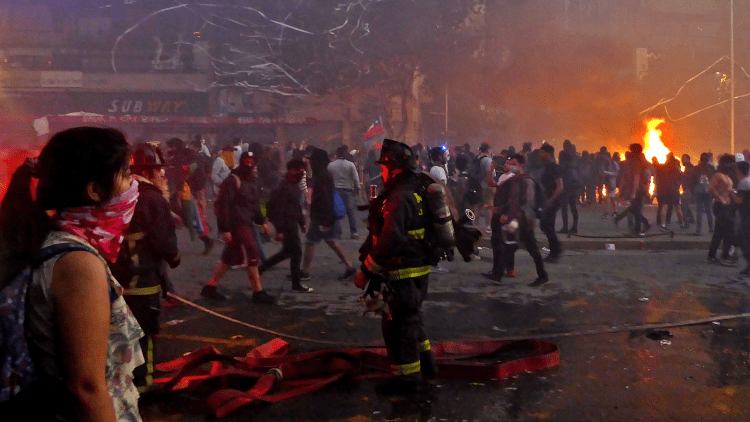
2019 riots in Chile literally leave the streets in flames. Source: flickr.com

Within Latin America, Chile is one of the leading nations for the highest Gross Domestic Product (GDP) rates per-capita and is often lauded as an economic success story. Yet, Chile is also plagued by great economic disparity within the country. This contradictory situation at last culminated in 2019 with a period of ongoing civil unrest, and protests that have left as many as 23 dead. To understand the extreme discontent Chilean civilians are currently expressing, one must look to the underlying economic problems that many citizens face daily despite outward displays of wealth and prosperity on the national level.

A simple google search, and one is met with headlines such as ‘Chile’s Economy: the Way Forward’ and even ‘Why Does Chile Prosper while Neighbouring Argentina Flounders?’ Undeniably, in comparison to other Latin American nations, Chile touts one of the highest GDP per capita. The same can be said for , just behind Uruguay, with 16 145 dollars per capita. This is nearly a 6000 dollars above Argentina, the third ranking country, and more than double that of nations such as Ecuador and Bolivia. This impressive statistic has led many to believe that the economic success of Chile translates to prosperity across the country. During the 1980s, 1990s, and into the early 2000s, Chile’s economy consistently grew between 3.5% and 7.2%. Yet, this growth did not reach everyone. As recent as 2017, reports indicate that the wealthiest 20% earn up to 8.9% more than the poorest 20%. Within the Organisation for Economic Co-operation and Development (OECD), Chile’s gap between the highest and lowest levels of disposable income is one of the most pronouncedThe same can be said for the poverty rate, which in 2018 hovered at 16.1%, an issue that has seen little improvement since 1971, when a survey found 21% of the population to be living in impoverished conditions.

Why then, is Chile plagued by such inequality? Analysts have time and time again put Chile on a pedestal, the prime example of a nation that can undergo a successful economic transformation. Despite claims that past dictator Pinochet performed an economic miracle for Chile, his implementation of free-market economic reforms and privatization of the public sector did little for workers on the mid to lower-end of the socioeconomic scale; they had no ways to unionize for fair wages, and no government managed retirement system. Additionally, a report from Hernan Buchi, Chile’s minister of finance from 1985 to 1989, claims that ‘state assistance programs favored people who were not the poorest or most vulnerable groups in the country’. Although in the years following Pinochet, social reforms have revitalized Chile in the areas of healthcare and education, the free-market system remained a staple of Chile’s economy. Without proper regulation, only those at the top of the socioeconomic ladder were able to benefit from this economic system.

These deep-seated problems have come to a head in 2019. In mid-October, riots broke out in response to a 30 peso increase in subway fares. People took to the streets, burning buildings and vandalizing metro stations. Within a few days, President Pinera issued a State of Emergency and employed the use of the Chilean army, yet the riots continued to spread throughout Chile. These riots pose a humanitarian problem in themselves, with the numbers of dead, wounded, and arrested increasing by the day. The National Human Rights Institute ‘has filed twelve lawsuits against authorities for sexual violence including stripping detainees, groping, and threats of rape’. In response to the possibility of the obstruction of human rights in Chile throughout the riots and ensuing protests, the UN High Commission on Human Rights plans to send a team to investigate allegations of abuse against protestors.

Protestors gather in Santiago, Chile 2019. The phrase ‘Chile Desperto’or ‘Chile Woke Up’ has become a catchphrase for the 2019 events. Source: Wikimedia Commons

To manage the riots, President Pinera, who initially condemned the actions and moved to meet the resistance with armed forces, has backtracked with efforts to meet demands and quell the demonstrators. Pinera announced a series of reforms that include raising the minimum wage and health benefits financed by higher taxes on the wealthy. Pinera also condemned the actions of police against the protestors, agreeing that in some cases boundaries were crossed. Still, there have been calls for Pinera’s resignation as well as a referendum for a new constitution. A report from the OECD finds that for long-term economic improvements to be made, there ought to be ‘key structural reforms’ such as better public services.

The increase in the metro fare was merely the tipping point in a series of economic injustices that the majority of Chilean civilians have been facing for decades. The eruption of the 2019 protests displays some of the worst civil unrest seen in Chile since the end of the Pinochet dictatorship. The riots shocked much of the world, given many view Chile from an outside perspective of economic prosperity but remain unaware of the rampant inequality within the country. The current riots, protests, and general calls for change will only continue to have drastic effects on the population until an agreement can be reached.

The Destruction of the Amazon: Systemic Causes

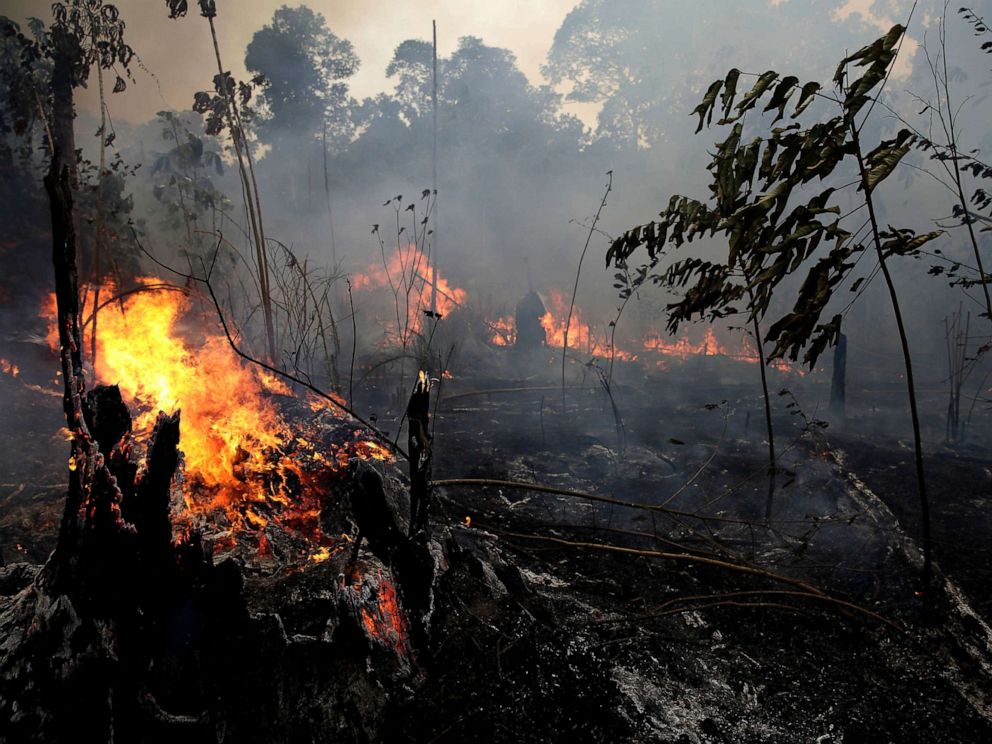
Fires are currently burning in the Amazon rainforest at the highest rate in over 10 years. Via ABCNews.

The Amazon rainforest is disappearing at a record rate. Deforestation in the Amazon has been continually increasing, and is up by 30% from last year. As a result, this year marks the highest rate of deforestation in more than ten years. Rainforests helps soak up carbon dioxide and keep global temperatures from rising. Thus, a threat to the Amazon is a threat to humanity.

According to the Yale School of Forestry and Environment Studies, one of the main causes of destruction, responsible for up to 80% of the recent forest clearings, is the cattle industry.

Greenpeace, the international environmental advocacy group, sought to reach a solution with a private enterprise agreement. In 2009, an agreement intended to help end large-scale fires was put into place. Ten years ago, three of the biggest Brazilian meatpacking companies, JBS, Minerva, and Marfrig, signed an agreement with Greenpeace that prohibited the companies from buying cattle from ranchers who used newly deforested areas to raise their cows.

The agreement provided much needed relief from a public pressure campaign to boycott beef from large commercial sources. However, the question must be asked: was this promise kept? The answer is complicated. Through government audits, there are noticeable indirect purchases of cattle from illegally cleared pastures by all three companies; the largest offender being JBS.

The agricultural industry, and specifically the cattle industry, was the driving force behind Brazil’s economy by 2013. Due to the increasing demand for beef, the conservation plan began to fall apart.

Illegally deforested areas being used for cattle ranching can be found across the Amazon. Via askchange.

The responsibility for the Amazon fires, in part, relies on the failure of the companies to uphold this promise. An inherently ambitious goal, the arrangement was always going to be difficult to achieve.

According to the University of Wisconsin, since 2009, the cattle ranching industry has caused 18,000 square miles of additional deforestation in the rainforest. Lead Greenpeace Amazon activist Adriana Charoux said of the agreement: “We saw that they failed to comply with what they had promised. They could have done much more. The slaughterhouses are making a minimal effort.” And as a result, Greenpeace pulled out of the agreement in 2017.

To compound the issue, ranchers have taken right-wing populist’s Jair Bolsonario’s presidential election in January as permission to continue to clear more of the rainforest. Jeremy M. Martin, vice president of the Institute of the Americas, said if there was one thing Bolsonaro was clear about on the campaign trail: “he was 100% willing to compromise the Amazon for economic upside.” The Amazon rainforest is still currently burning, and continues to burn as Bolsonaro’s government denies the rising figures indicating increased deforestation and alarming pattern of destruction.

Tereza Cristina da Costa Dias, Brazil’s agriculture minister, when asked whether the cattle industry was doing enough to protect the rainforest said: “That’s a very difficult question.”

The protection of the Amazon hinges on the values of the government and the ability of private companies to prioritize the environment over earnings. Brazil’s struggle to protect the Amazon Rainforest is reflective of the fact that a market supply chain can only be as eco-friendly as its least green link.

Opinion: Tear Down the Walls of Beauty

Drawing by Satori RT via Amino

Existing in a space free of judgement is a fundamental right. However, for individuals that fit outside of the traditional mainstream beauty standards, manoeuvring through day to day life can prove to be difficult. In the United States, which idealizes and prioritizes thin, white, able bodies who show little signs of imperfection, it is evident that a space for all bodies and abilities is necessary in a constantly advancing world.

The Body Positive Movement initially began in the 1960s with the idea of correcting fat shaming. A second wave was introduced in the 1990s which encouraged the prioritization of bodies of all sizes to come together and exercise. Today with the help of social media, however, it has transformed into something much more than fat acceptance or spaces for the widely unaccepted bigger body to exercise.

The Body Positive Movement has transformed into a conglomeration of ideas brought in to place by individuals exhausted from the one track mind of beauty that is often instilled in individuals from an increasingly young age. It also challenges the mainstream views of how health is perceived and determined. Not only does the movement liberate fat women, but women with defining unique physical characteristics, women that are differently abled, and generally those that fit outside of the traditional mold which has been put into place throughout the years of heteronormative and hegemonic influences.

Slowly but surely, a space is giving way and allowing for a broader spectrum of body positivity and acceptance. However, it is obvious that with a constantly growing group of supporters of the Body Positive Movement, there also brings a voice of criticism. Protesters of the Body Positive Movement focus largely on the liberation of the fat woman and assert that fat isn’t healthy. They argue that the movement glorifies obesity, health problems, and unhealthy lifestyle choices. They believe that one can not possibly promote such atrocities. Some think that the celebration of loving and liberating the “other” body can lead to a slew of problems and even eating disorders. This type of outlook is one that is unsurprising, yet, consistently damaging. Shutting down spaces for individuals to celebrate their differences and come to terms with their place in the world, the space in which they occupy, and the way in which they carry themselves is anything but atrocious.

Because the argument of health is at the forefront of discussion, those that support the movement often times feel it’s important to provide evidence pointing to discrepancies in the very way health is defined. One such instance is how body mass index (BMI) is calculated. The calculation of BMI was created by Belgian astronomer and mathematician Adolphe Quetelet to define the characteristics of a “normal man” and use it as a way to spot epidemiological records. Quetlet had no intentions of using the BMI to direct a patients medical care. This same system of calculation was also originally intended for a white male. If BMI calculation, which is used widely to determine obesity and predetermined conditions that stem from obesity is flawed, what other medical practices should be under public scrutiny?

The reality of the Body Positivity Movement is that it doesn’t glorify obesity, health problems, and other unhealthy characteristics. It creates a space of acceptance for individuals to live their lives freely, with respect, and with confidence. What is forgotten is that the Body Positive Movement isn’t just the liberation of fat women. It is rapidly changing and evolving into the liberation of all women born with unique physical attributes, disabilities, and other characteristics deemed to fit outside of the traditional mold of beauty in western culture. The conversation needs to be shifted away from scrutiny and shifted towards that of inclusivity. Communities shouldn’t be protesting these developing ideas, rather, opening up a space of opportunities for discourse and asking “What can I do to help and create more inclusive and accepting environments?”. The movement invites women to look in the mirror-stretch marks and “flaws” aside-and say “I love myself”. Is that really such a bad thing?