Famine, War, and Disease: Why South Sudan Cannot Catch a Break

Ever since its independence from Sudan in 2011, the newly formed state of South Sudan has faced social, political and economic instability despite the efforts of countless forms of humanitarian aid and support. Earlier this year, the United Nations declared famine in parts of war-torn South Sudan where around 100,000 people face starvation and millions could die if something was not done. The UN is calling this the “worst hunger catastrophe” since civil war erupted there three years ago.

South Sudan’s President Salva Kirr issued an urgent appeal on April 4th of this year for international and regional aid: “I passionately desire to share with each and every one of you that once more our country is struck yet again by another national challenge, that of famine and poverty,” he stated.

The question we all need to be asking ourselves is how is it that, in 2017, people cannot find food, that people are dying because there is not enough to go around, that we as a global population cannot find a solution to ensure that everyone is given the basic human right: access to food? We now live in a world where we can order food through our phones, where supermarkets deliver to our houses and where unwanted food is simply thrown out. However, by just googling ‘South Sudan’ you can see that this privilege is not the case everywhere.

A South Sudanese man receiving a food distribution from Oxfam in March 2017, by Oxfam

The country has been at war since 2013 and more than 3 million people have been forced to flee their homes. Currently, some 4,000 South Sudanese cross the border to Uganda every day. The conflict in 2013 began when soldiers loyal to President Salva Kiir, a Dinka, and those loyal to former Vice President Riek Machar, a Nuer and now rebel leader, fought in the capital, Juba, following months of growing political tensions. Tens of thousands of people have died since then and the UN warns that South Sudan is at risk of genocide.

Last month, UN Secretary-General Antonio Guterres accused the government of South Sudan of refusing to express any meaningful concern about those affected by the famine, the 7.5 million in need of humanitarian assistance, and the thousands more fleeing due to insecurity. The government has been living in a state of denial hoping that the situation would change, but the food crisis in Sudan has reached a point of no return.

The most affected area in South Sudan is parts of the former Unity state, sometimes known as Western Upper Nile. The former state has been a site of continuous fighting throughout the civil war because of its vast oil resources as well as being a predominantly Nuer state which has faced attack from the Dinka’s during the war. The UN also warned that the famine would spread rapidly if no action is taken.

To add to their troubles, South Sudan’s widespread hunger has been accompanied by an economic crisis. The country is experiencing high inflation and the value of the currency has plummeted 800% in the last year, which has made whatever food that is available unaffordable for many families.

Not only have thousands died over the course of this crisis, but no serious efforts have been made by either side to make peace. The famine in South Sudan shows the failure of a government, the failure of opposition forces, the failure of peace negotiators, and the failure of the international community to take action and change the fate of the South Sudan.

UN officials have debated that hunger in South Sudan is even more alarming because of the country’s fertile land conditions and climate. Despite the fact that Sudan has the resources and climate to feed itself, corruption, lack of transparency, and the constraints placed on the delivery of food aid have left the country in ruin.

This is not the first time we have heard of famine in South Sudan: in 1998 more than 70,000 people died from starvation. However, a UN official blames politicians for the current food crisis. In a speech from the chair of the Commission on Humans Rights in South Sudan to the Human Rights Council it was mentioned that the opposition and the armed groups allied to them also contribute to the famine. They attack government property, steal convoys, and terrorise communities suspected of supporting the government or the Dinka tribe.

The speech affirms that it is essential to look at the famine from a human rights perspective. If the government of South Sudan continues to deny humanitarians access to opposition-controlled areas hit by famine, we shall be faced with an even greater problem.

So, the answer to the question above is simple: the famine in South Sudan is man-made, it is due to the terrible actions of those initiating and encouraging war but also due to the inaction of the international community. Inaction from me, you, and us as the global community.

Can you imagine having a family and not knowing where your next meal was coming from? or knowing that it was not coming at all? The total number of food insecure people is expected to rise to 5.5 million by July if nothing is done to ensure the proper access of humanitarian aid. We cannot sit idly by and watch this happen. We have an obligation to try and implement change.
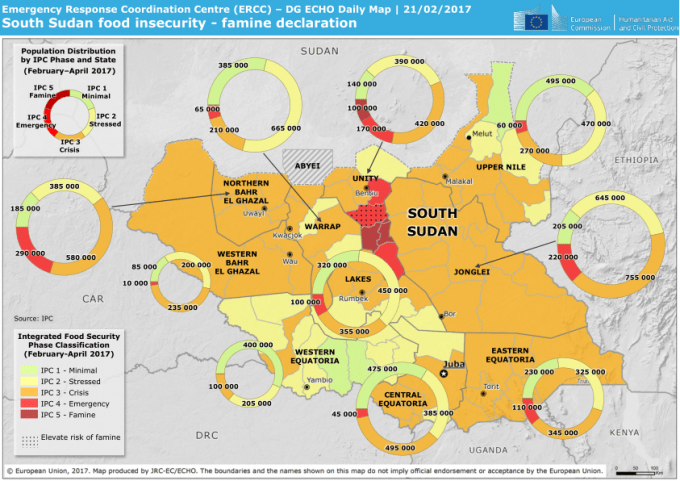
South Sudan Food Insecurity – Famine Declaration, from the ERCC

South Sudan has been in the news for years, the cycle is endless: war, famine, death. Whichever way a story is narrated the problem remains the same. What needs to change is the response.

As Ban Ki-Moon once said, “as the young leaders of tomorrow, you have the passion and energy and commitment to make a difference… have a global vision. Go beyond your country; go beyond your national boundaries.” If you want to learn more about the conflict and famine in South Sudan or wish to donate to save a life, the Human Rights Watch has the latest on the conflict.
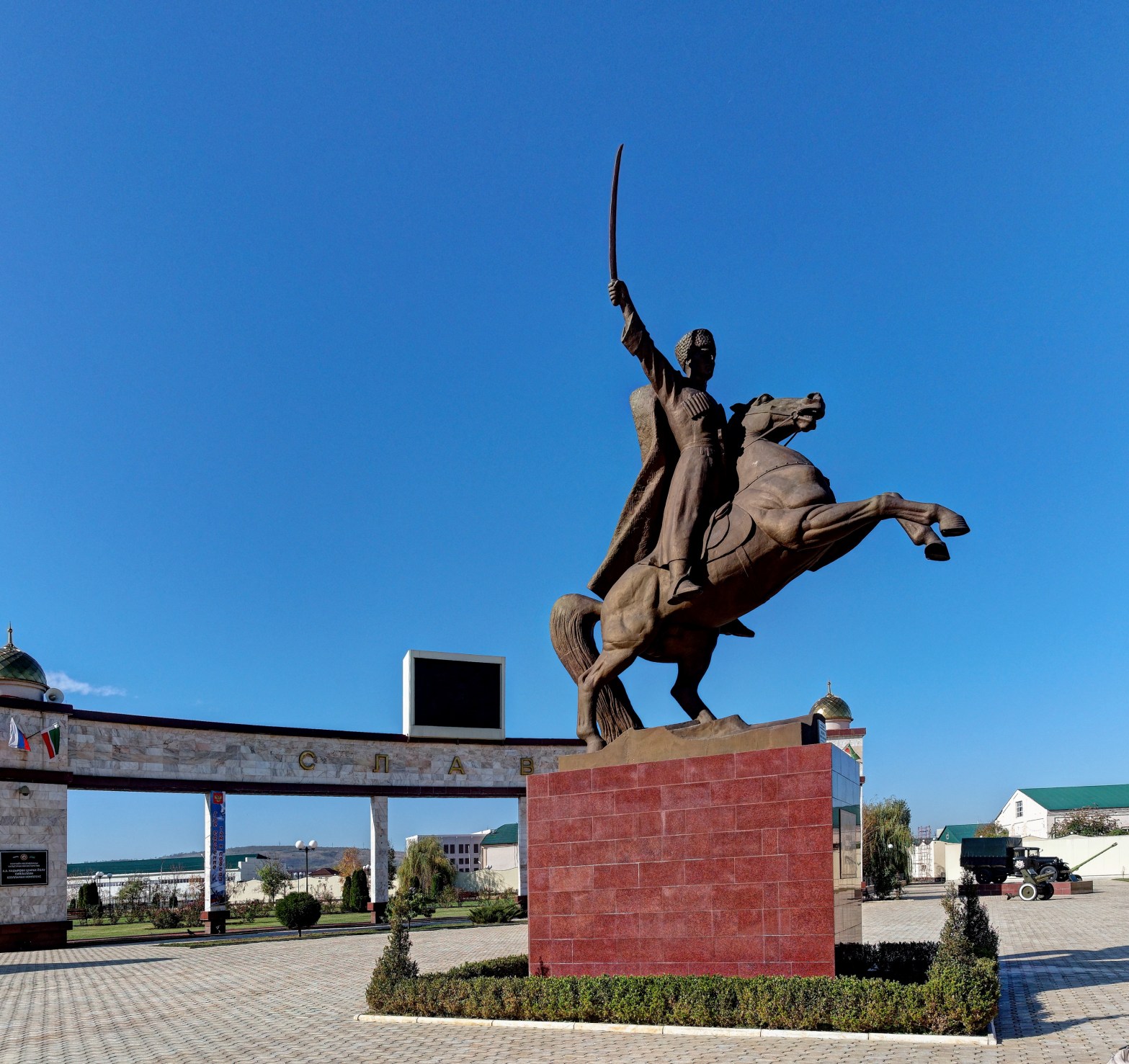
Out of Sight Out of Mind: The Purge of Chechnya’s LGBT Community

Deep in Russia’s mountainous southwest lies Chechnya, a semi-autonomous and predominantly Muslim subdivision of the Russian state. Most of Chechnya’s modern history has been characterised by years of violent conflict both internal and external, failed independence movements, and a reputation for harbouring Muslim jihadists. The Muslim-majority republic has been devastated by two separatists’ wars with Russia since 1994, is regularly the scene of human rights abuses, and is known to use its security services to carry out killings and torture of opponents to president Ramzan Kadyrov. While never well known for its pristine human rights record, new reports of a government-sanctioned ‘gay purge’ in Chechnya underscore the image of a morally corrupt and oppressive regime.

On April 1st the independent Russian newspaper, Novaya Gazeta, broke the news that Chechen officials had sanctioned the rounding up of gay Chechen men. The men would then be sent to black sites to be tortured and mistreated on grounds they had committed homosexual acts. The government-sanctioned roundup does not discriminate, with influential associates of the republic’s religious leaders as well as two well-known Chechen broadcasters amongst the detainees. The campaign has been going on for several weeks now. Law enforcement and security agency officials under the control of Ramzan Kadyrov, President of the Chechen Republic, rounded up dozens of men torturing and humiliating them, causing others to forcibly disappear, and leaving some badly mangled barely alive to return to their families as a warning sign to others.

Reports on the brutal campaign against Chechnya’s LGBT community remain minimal due to problems of access and fear. Chechnya’s remote location and history of violence has made it difficult for journalists to access the republic. The traditional and close-knit Chechen community coupled with the regime’s harsh history with dissenters has left those affected fearful of speaking out. Initially there was little verification of the claims, however they have since been confirmed by human rights groups like Human Rights Watch and International Crisis Group. Human Rights Watch published a statement saying “the information published by Novaya Gazeta is consistent with the reports Human Rights Watch recently received from numerous trusted sources, including sources on the ground.” The organisation went on to emphasise how incredibly vulnerable LGBT people in Chechnya are considering they live in a republic where homophobia is intense and rampant.

Grozny, the capital of the Chechen Republic, by Alex Malev

While in other communities families and activists may put pressure on the government to reform, Chechen society remains strictly conservative making LGBT rights anything but a priority. In a manner consistent with a 17th century Salem witch hunt, families are still likely to out one of their own family members to the government forces. Even the ancient custom of honour killing is still prominent in the republic, making Chechnya a dangerous place to be gay. A representative of the Chechen government went on record to say, “law enforcement wouldn’t have a problem with them [gay people] because their relatives would send them to a place of no return.” The attitudes towards homosexuality reflect the deeply conservative nature of Chechen society.

The roundup is speculated to have been triggered in response to a campaign led by GayRussia.ru, a well-known Moscow-based gay rights group, who has been campaigning and petitioning for demonstrative marches around Russia. The group has been submitting requests to hold marches in cities across Russia, however, they did not apply to march in Chechnya but rather in the neighbouring republic of Kabardino-Balkaria.

Although information remains limited, the international community has begun to demand not only an explanation but also Russian intervention. Chechen officials have taken the threat of international outrage lightly and have approached the subject humorously. The original report, published on April 1st, prompted a senior spokesperson for Chechnya’s ministry to dismiss the claims as an April fool’s joke. The Chechen government will not admit that gay men exist in the Republic let alone that they ordered the roundup. Alvi Karimov, the spokesperson for the Chechen government, went on to describe the report as “absolute lies and disinformation” stating that gay people cannot be a target because “you cannot detain and persecute people who simply do not exist in the republic.”

On April 3rd, Dmitry Peskov, Russian President Vladimir Putin’s spokesman, stated that the Kremlin was previously unaware of the situation but would look into the reports. While it is clear Moscow is now privy to the events in Chechnya, it is not thought that they will do much to intervene given Russia’s history regarding LGBT rights. It is also discouraging that Moscow insists that victims go through official channels at the local level to file complaints given the immense risks this poses to already vulnerable individuals.

The US State Department appealed for Russia to investigate the reports that over 100 Chechen men have been detained, tortured, and murdered in the region with an official saying “we urge the Russian government to conduct an independent and credible investigation into the alleged killings and mass arrests, and hold the perpetrators responsible.” However, the same official declined to comment on record if Rex Tillerson, current US Secretary of State, would address the issue during his upcoming visit to Moscow. Nonetheless, the statement is noteworthy considering President Trump’s own problems addressing LGBT rights within in the United States. The visit marks the first of its kind under the Trump administration and will set the tone of policy decisions between the two nations for the near-future. Given the United States’ recent decision to deploy missiles in Syria, an ally of Russia, following a regime sponsored chemical weapon attack, Russo – American relations are certainly fragile.

While initial reports of a gay-purge in Russia’s semi-autonomous Muslim-majority republic have caused outcry amongst international observers, the lack of coverage and testimonies from victims makes it difficult to get to the truth. Chechnya’s refusal to not only admit to the atrocities but also their denial of the existence of an LGBT community within the republic reflects its overall deeply conservative mentality. With a past of ill treatment regarding dissenters, the environment of fear has kept victims from coming forward. While the international community is outraged by the government-sponsored detention of Chechnya’s LGBT community, it is sadly doubtful that much will be done regarding Russian intervention. However, only time will tell.

An Education, Disrupted: Attacks on Schools in Pakistan

Since the Taliban seized control of Pakistan’s Swat Valley in 2007, they, and other militant groups in the area, have systematically campaigned against the region’s educational institutions, particularly those catering to girls, by way of violent attacks. Many of these attacks have been highly publicized, including the December 16th, 2014 Peshawar massacre that resulted in a death toll of 132 children and the October 2012 shooting of teen activist and Nobel Peace Prize winner Malala Yousafzai. Despite the media coverage of such incidents, the devastation left in the wake of these conflicts remains prevalent among children, parents, and teachers to this day. This was highlighted in last week’s release of a new report by Human Rights Watch, which contains 48 interviews detailing attacks between January 2007 and October 2016. This 71-page report not only illustrates the physical destruction caused to school buildings and the violent attacks targeting teachers and students, but it also scrutinizes the presence of security forces, political groups, and criminal gangs within the schools.

Beginning in 2007, over 900 girls’ schools were violently forced into closure by the Taliban’s campaign, resulting in the disruption of the education of over 120,000 girls and the loss of 8,000 female teachers’ jobs. Even more harrowing, however, is the fact that many girls and female teachers have yet to return to school or work, despite the Pakistani army’s displacement of Taliban forces. According to Al Jazeera reporter Kamal Hyder, those who have returned, or are planning to do so, “still live in fear because of the bitter memories of the conflict.”

The initial response to events like the Peshawar killings only served to perpetuate the idea of societally acceptable violence, with the Pakistani government issuing arms licenses to teachers. Arming teachers in government-run schools as an attempt to enhance security measures is a highly controversial route to take. Though many of the elite private institutions increased security measures by hiring guards, the public establishments simply lack the funds to do so, and therefore took matters into their own hands. Many educators have expressed their criticisms of such practices, including head teacher and president of the Khyber Pakhtunkhwa province teachers’ union, Malik Khalid Khan. Khan noted his disapproval, stating ”Our job is teaching, not carrying a gun…We are not prepared to become security guards.” Meanwhile, Mohammed Iqbal, a physical fitness instructor who now doubles as a security guard at Government Higher Secondary School Number 1, refuted this notion, saying ”We want to deliver knowledge, not weaponise our young people. But circumstances have compelled us to do this for our own safety.”

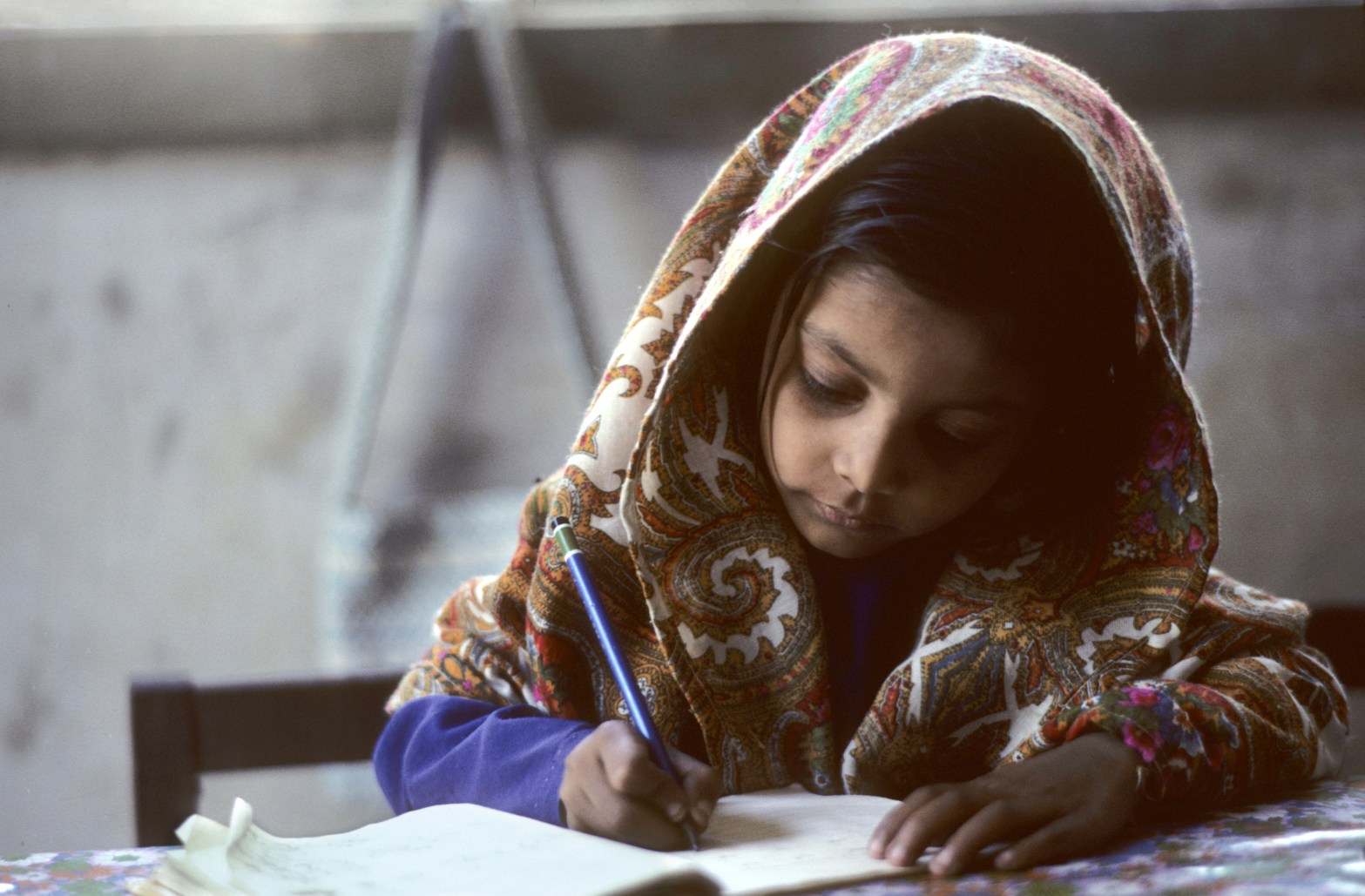
A young student doing her schoolwork in Karachi, Pakistan, by John Isaac for the UN

The report also points to the lack of governmental transparency and consistency in the data resulting from these attacks as a reason for their continued occurrence. Noting how this can lead to concerns regarding the government’s ability to ensure repairs of damaged institutions, identify patterns in attacks which could aid in more effective protective efforts, and investigate responsible parties, Human Rights Watch reveals just how vital this data keeping can be. Though outside sources like Global Terrorism Database, the Global Coalition to Protect Education from Attack, and the Ministry for States and Frontier Regions may maintain records of the attacks, the lack of government-collected data reports leads to doubts of any sort of recovery or preventative effort for the future.

One of the primary intentions of Human Rights Watch’s latest report is to promote government intervention in making schools safer for students and teachers. Among the suggested changes is the implementation of the Safe Schools Declaration. Endorsing this declaration, which is a non-binding political agreement, would mean that the Pakistani government pledges to continue facilitating access to education after an attack occurs. Furthermore, adhering to the declaration ensures that more measures are taken to prevent these attacks before they occur – through methods such as more thorough investigations and prosecutions of crimes involving schools and the minimization of cross over between schools and Pakistan’s military efforts – so that schools are less likely to be targeted by outside militant groups. According to Bede Sheppard, who serves as the child rights deputy director for Human Rights Watch, “The Pakistani government should do all it can to deter future attacks on education, beginning with improving school security and providing the public reliable information on threats. Attacks on education not only harm the students and families directly affected, but also have an incalculable long-term effect on Pakistani society.”

Denying an education, especially by way of violence, is an incorrigible act, one which sets back and damages entire communities socially, economically, and developmentally. As the new Human Rights Watch report details, denying an education is denying or hindering the future of both the current generation of students, as well as the generations to come. When these attacks do occur, it is imperative that victims are provided with an alternative means by which they may continue their education whilst repairs are made. Furthermore, psychosocial support should be provided for cases in which it is warranted. Fulfilling these basic human needs for students, families, and teachers in Pakistan will only be accomplished once the government is held accountable.

Supporting the work of Human Rights Watch through donation is one way to ensure these efforts are made. Click here to donate, or to find out more about the organization and its aims to fight human rights abuses around the world.

The “Quality Vandalism” of Banksy’s Walled Off Hotel

There is something subversive and secretive about graffiti—even when its artist is world-renowned. Banksy, an anti-authoritarian graffiti artist, understands this phenomenon. He skyrocketed to international fame in the early 2000s for his cutting edge masterpieces in spray paint, which led TIME magazine to name him one of the 100 most influential people in the world in 2010. In order to maintain his anonymity, however, the photo that he submitted for the magazine biography featured a recyclable paper bag covering his head. His fans loved it, as many of them do not wish to know his real identity. In fact, the only biographical information that is commonly attributed to Banksy is that he is an artist from Bristol who started painting walls in England in the 1990s. Banksy himself calls these paintings “bombings,” and he has since “bombed” walls from London to Vienna to New York City. He uses a distinctive stencil technique, which he developed while working with a gang of other street artists in the 1980s. He preferred this method both because it was faster than free-hand spray art and because it connected him to a history of revolutionary artists who used the same method. Banksy has continued to use stencils for his graffiti art and over the decades has expanded his media to include interactive sculpture, wall paintings, film, and more.

Banksy’s art almost always has a controversial social or political theme. He styles himself a “quality vandal” because he challenges both the right and the left for their political authority and and institutions. In July 2003, Banksy’s exhibit “Turf War” hit the London art scene and caused a major breakthrough in his popularity. “Turf War” featured live cows emblazoned with the faces of Andy Warhol, Queen Elizabeth II disguised as a chimpanzee, and other prominent figures. The show was staged in a former warehouse in Hackney, and cultivated a carnival-like atmosphere. His most recent film, Exit Through the Gift Shop, commented on the commercialization of art by profiling the work of world-famous graffiti artists. This film was nominated for an Academy Award in 2011 in the documentary feature category, although many considered the prospect of this major award ironic because of Banksy’s “outsider status.” One of his most elaborate works to date, Dismaland, turned Weston-super-Mare, England into a temporary amusement park that was intended to be a “family attraction that acknowledges inequality and impending catastrophe.” As Shepard Fairey, creator of the 2008 Obama Hope poster, wrote of Banksy’s art for TIME in 2010, “it’s accessible, public, not locked away. He makes social and political statements with a sense of humor.”

Separation Barrier in Bethlehem, by Sarah Tomas Morgan (7 June 2016)

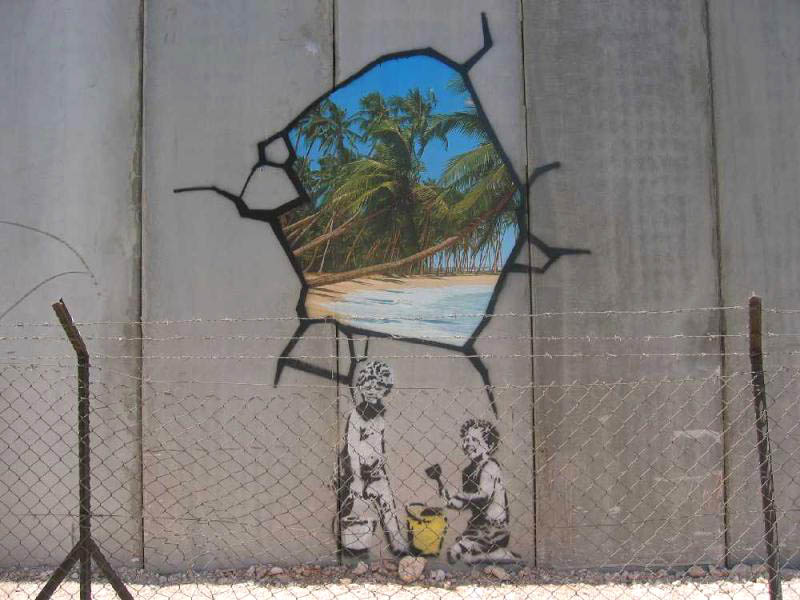
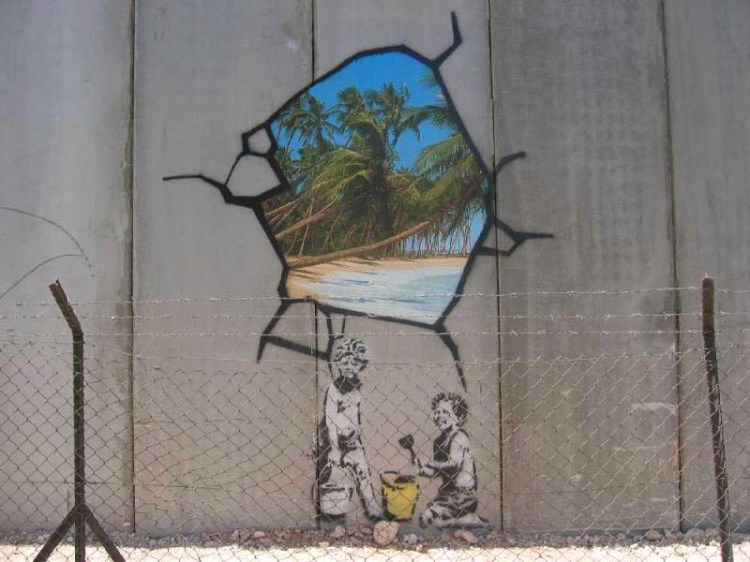
For some time now, Banksy has had a presence on the West Bank side of the barrier wall between Israel and the Occupied Palestinian Territories. In 2005, he stenciled several iconic images on the barrier wall itself. One portrayed a soldier with his hands in the air receiving a pat-down from a small girl. Another showed children playing on a barren patch of land while a tropical paradise is glimpsed through a painted hole in the wall behind them. Intricate and colorful images cover large sections of the wall in many places, including the “wall museum” area of the barrier in Bethlehem where Banksy chose to leave his mark. These images have become a sobering tourist attraction for visitors to the West Bank, and local entrepreneurs now sell the images emblazoned on magnets, shirts, and posters.

Despite the commercialization of these images, however, the painting of the wall remains highly politicized and controversial. Many of the images are created by Palestinians to express the hatred and fear that many feel for the barrier and their hope that it will one day be removed. Other images are added by visitors who may spend no more than a few days in the West Bank and fail to understand the gravity of the canvas on which they are painting. This has led some residents to resent the proliferation of wall art in recent years. Meanwhile, Banksy claims a kind of personal allegiance to the medium of the wall, telling The Guardian “walls are hot right now, but I was into them long before [Donald] Trump made it cool.”

This interest has led to Banksy’s latest and perhaps most elaborate project yet: The Walled Off Hotel. This hotel, which sidles up along the barrier wall between Israel and the West Bank, claims to have “the worst view in the world.” Now, it has the additional attraction of a makeover engineered and executed by its owner, one of the world’s most famous street artists. The hotel has a “dystopian colonial theme,” which its creator sees as a response to the 100-year anniversary of the British takeover of Palestine and a reminder of the chaos that it brought to the region. The tea-room evokes a gentlemen’s club, even as the fire in the grate flickers under a pile of concrete rubble and the marble bust on the mantelpiece is enveloped in wreaths of tear gas from a canister. Each bedroom is decorated with original Banksy installations, such as a mural of a pillow-fight between a Palestinian protester and Israeli soldier and, in another room, a bookshelf featuring carefully curated titles such as A Room with a View and Cage Me a Peacock. Each decorative choice is calculated to leave a lasting impression on visitors. “I would like to invite everyone to come here, invite Israeli civilians to come visit us here,” the hotel’s manager Wisam Salsaa said. “We want them to learn more about us, because when they know us it will break down stereotypes and things will change.”

Banksy installation on separation barrier in Bethlehem, by Markus Ortner

The opening of the hotel on 20 March 2017 did indeed gain significant international attention, and the fame of its artist is likely to keep every room booked for years to come. Legitimate concerns raised by other residents of Bethlehem about the venture have not garnered the same amount of coverage, however. In response to questions posed by the writer of this article (18 March 2017), Bethlehem resident Tarek al-Zoughbi noted that the power imbalance between Palestinians and Israelis is largely ignored in the installations and messaging of the hotel. According to him, the pillow-fight mural is an example of the suggestion that both sides come from equal positions of influence and capability, and reduces the conflict to a land dispute in which Israelis and Palestinians are capable of forgetting an history of entrenched physical, psychological, and economic suffering and coexist on less violent terms. “As a Palestinian who has lost friends to Israeli soldiers and violence,” al-Zoughbi said, “I find the mural offensive and problematic.”

Furthermore, it should not be assumed that the invitation to Israeli visitors is echoed by all Palestinians. Indeed, Israelis cannot legally enter the West Bank, although many still reside in settlements there in a breach of international law. According to al-Zoughbi, “[Banksy’s] statement ignores the power struggle in which Israel has complete control over the borders and gives permits, visas or other forms of legal permission to all who enter.” Because Israeli visitors would need to obtain permission from Israeli authorities to visit the hotel, this invitation could easily be seen as an affront to the Palestinian right to control their own borders.

Certain off-hand comments made by Banksy himself could leave some to question whether the artist understands this dynamic. Indeed, he effectively reduced the sensitive subject to a commercial problem when he told The Guardian, “My accountant was worried some people will be too scared to travel to the West Bank, but then I remind him – for my last show they spent a whole day in Weston-super-Mare.” This comment raises yet another concern, which is that visitors to the hotel will be more interested in the fame of the artist than in the Israeli-Palestinian conflict. As al-Zoughbi points out, “it leaves great room for ill-informed or ignorant visitors.” He notes that this situation either presents a great opportunity to inform visitors or the perpetuation of stereotypes about Palestinians by short-term, disinterested visitors.

Thus, Banksy’s latest project is a subversive undertaking that satisfies few and leaves many unsettled, uncomfortable, or even angry. This confused response, however, is the stated goal of the “quality vandal.” Frustration has long been the outcome of the barrier wall between Israel and the occupied Palestinian territories for locals. At the very least, perhaps the Walled Off Hotel will serve as a catalyst for that feeling within visitors from near and far.

Human Rights and Business: The Corporate Accountability Paradox

Imagine if, one day, your local water supply suddenly started turning an acidic yellow colour. This is currently the case in the rivers near Zambia’s Copperbelt region. Fish are dying and the people are suffering. In 2015, toxic contamination from the London-based mining giant Vedanta Resources’ copper refinery reached such severe levels that the people living close to the mine became severely ill and their crops wilted. Yet, Vedanta claimed that it took the wellbeing of surrounding communities and the environment very seriously. In 2016, 1,800 community members brought their lawsuit to the English High Court, citing personal injury and loss of livelihood, because they feared that they would not get a fair hearing within the Zambian legal system. The court case is still ongoing.

Despite the preconception that states are the main instigators of human rights violations, companies have long been accused of similar abuses, whether they be acting alone or complicit in state action. In fact, from the early days of slavery and the global slave trade, companies have encouraged and profited from abuses of human rights. During the Industrial Trials in the aftermath of World War II, I.G. Farben (a predecessor to Bayer, the multinational pharmaceutical company) was found guilty of providing goods, including the notorious chemical Zyklon B, to Nazi Germany, thereby facilitating war crimes and crimes against humanity. In 2003, the Truth and Reconciliation Commission for South Africa found that corporations working with the Apartheid government directly profited from destabilising the country by bank-rolling the military-industrial complex and exploiting cheap labour.

Globalisation has increased multinational corporations’ global reach to the point that they often have more power and resources than many small countries. In fact, 40 of the top 100 economies (comparing Gross Domestic Product (GDP) and company revenue) are corporations. This gives them the freedom to choose where it would be most advantageous for them to set up business, based on factors such as labour costs or a lenient legal framework. It is therefore unsurprising that the locations corporations choose to operate in are in developing countries, where human rights protections may not always be enforced.

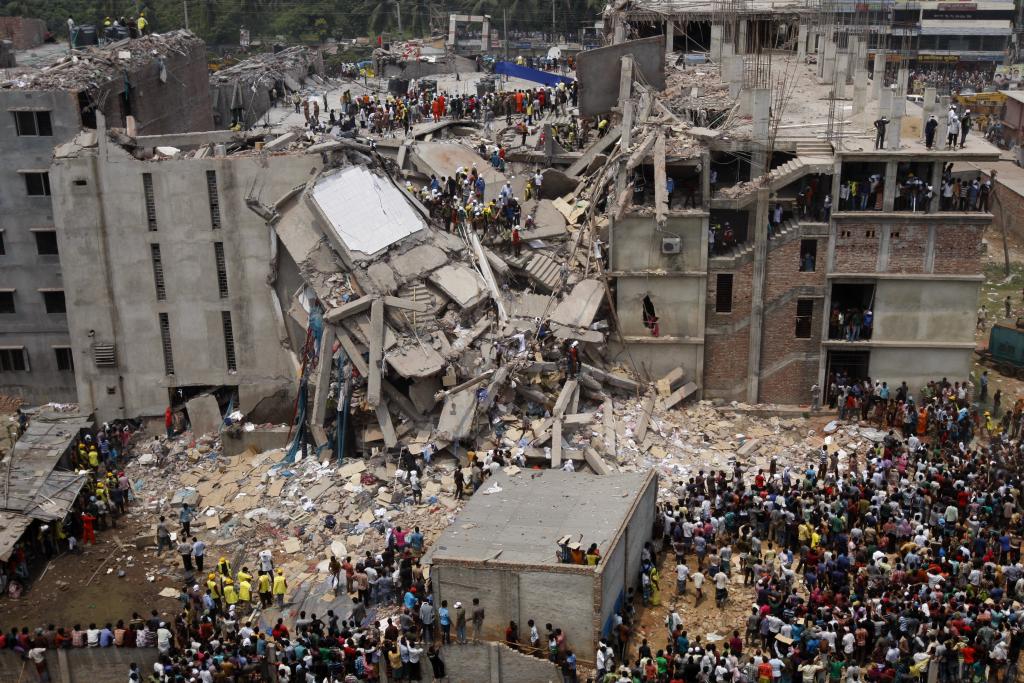
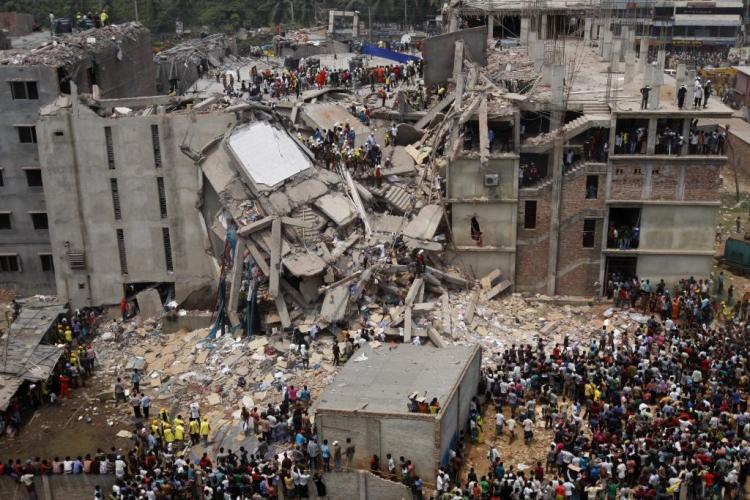
Rana Plaza factory collapse in 2013

Some such states may welcome any foreign investment to protect their own economic interests, possibly to the detriment of the human rights of their citizens. The bigger the corporation, the longer, more complex, and more international the supply chains become, which can lead to human rights abuses of which the parent company may not even be aware. The collapse of the Rana Plaza factory in Bangladesh in 2013 was one such example of supply-chain mismanagement. In the aftermath, global fashion labels like Primark and Zara were amongst retailers who were condemned by the public for not doing enough to ensure proper workplace safety amongst their subcontractors.

These stories of brutality, along with a multitude of interacting socio-economic and legal factors, have brought to the fore the need to regulate corporate responsibility from an international justice perspective. Many countries and supranational bodies, like the United Nations (UN) and the European Union (EU), have thus joined the effort to try to ensure corporate accountability for human rights abuses and environmental destruction.

Businesses have also begun to recognise how important it is to respect human rights in order to mitigate any potential negative consequences. The business case for human rights is grounded in the ideas of minimising legal and financial risks, avoiding unpleasant publicity scandals that could undermine brand reputation, and attracting ethical investors. International pressure has forced many companies to openly address the issue of human rights, with global conglomerates like Johnson & Johnson publishing policy statements claiming “As a corporation, [we have] a responsibility to respect these rights, and especially those of the more than one billion people we touch with our products and services each day, including our employees and the people who support our businesses.”

The paradox arises when actually trying to hold these corporations accountable. Human rights law and corporate law are traditionally seen as very unusual bedfellows. Under the Rome Statute of the International Criminal Court, corporations can only be held accountable for human rights abuses which constitute international crimes, with states having the ultimate obligation to protect human rights. Isolated atrocities conducted by corporations fall outside the Court’s remit. Instead, the corporation’s actions must be part of a wider context of abuse to be subject of the Court’s jurisdiction and to be prosecuted.

Accountability is therefore stifled by the pervasive idea that businesses and human rights operate in parallel worlds, despite cases such as those discussed above showing that this notion is clearly false. This binary interpretation of international law impedes any substantive legal developments and, though the idea of a binding international treaty on business and human rights has been hotly debated both in academia and at the UN, progress has remained at a glacial pace.

Nevertheless, non-binding agreements have gone some way towards promoting corporate accountability at an international level. The UN Guiding Principles on Business and Human Rights advocates for businesses to respect human rights and to offer remedies for harm done, while understanding that the responsibility to protect ultimately still lies with states. It has allowed countries like the United Kingdom, Colombia, and Denmark to implement National Action Plans on business and human rights. However, harsh criticism has been levied at these Guiding Principles by NGOs and civil society for their apparently soft approach towards businesses, as they only give recommendations rather than impose obligations to implement human rights due diligence practices and advocate a weak stance on victims’ reparations.

At a national level, many Western countries have developed accountancy mechanisms to tackle any corporate human rights abuses by introducing into statute the need to conduct proper due diligence in overseas subsidiaries. The most recent of these is the French corporate duty of diligence law, signed into law in February 2017. The law applies to the largest French companies, their subsidiaries, and their subcontractors. It will force companies to publish annual reports on their adverse impact on the people and the planet.

In the UK, there is also cross-party support for an overhaul of the state’s approach to corporate accountability, as outlined in the publication of a report on human rights and business in March 2017. MPs and peers from the House of Lords expressed concern over the effect Brexit may have on human rights and called for the government to remedy the lack of access to justice that many victims of corporate human rights abuses face.

At an industry level, a variety of voluntary codes exist to enable companies across the sectors to show their commitment to human rights. These attempts are not without criticism either, with many arguing that their approach is ineffective in combating atrocities and fails to provide effective restitution for victims.

Indeed, despite this surge of accountancy through legal and voluntary codes, abuses persist. Since 2010, 120 environmental activists in Honduras have died defending their indigenous lands against extractive industries; Apple’s subsidiaries were linked to child labour in the Democratic Republic of Congo in 2016; and in March 2017, it was alleged that Coca-Cola has been profiting from garbage collection by Mexican children. However, the recent interest in business and human rights accountability does at least create a space for victims, civil society, states, and businesses to develop innovative approaches to tackling the business-human rights paradox.

The many examples given in this article illustrate that corporate human rights abuses take place on almost every continent and are indeed a global problem that require a global solution. While recent years have seen some real progress in the complex world of human rights and business, many battles remain to be fought. With the Trump administration announcing its withdrawal from voluntary codes like the Extractive Industries Trade Initiative in March 2017, hopes of a cohesive approach could be undermined, making cooperation and vigilance more important than ever.

Express Yourself: To What Extent Are We Free to Express Ourselves?

We express ourselves in a plethora of ways every day. We express ourselves in the way we dress, the societies we join, the friends we make, and even the supermarkets that we chose to shop in. This ability to express ourselves is fiercely protected within democracies, and is fundamental to our social and political lives.

Article 10 of the European Convention on Human Rights and Article 19 of the United Nations Declaration of Human Rights detail the right to hold your own opinion and to express this opinion through various mediums such as articles, works of art, and the internet and social media. In particular, works of art – both literary and visual – are vital to our society and need this right to freedom of expression in order to thrive. Often, political statements are delivered through this medium, and are frequently used to spark debate. Artistic freedom of expression is therefore a pillar of democracy.

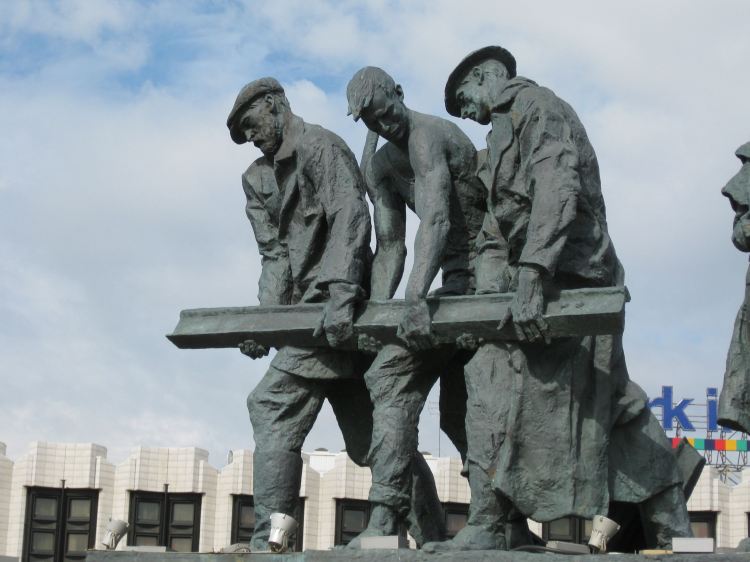
The Monument to the Heroic Defenders, St. Petersburg, by Thomas Alan

However, often artists’ freedom of expression is stifled. A classic example of this is the emergence and dominance of Soviet Realism within the Soviet Union from the 1920s until the 1960s. This style of art was used to display the strength and might of Communism, and to glorify the Soviet leaders. Dissent, and refusal to demonstrate the success of communism in art and literature, was not tolerated under Stalinism. Furthermore, institutions such as the Writer’s Union ensured that literature was censored and in line with the political climate of the time. Hence, freedom of expression was severely hindered.

This stifling of artists’ social and political commentary is not a feature of a bygone age. In March, the Kurdish artist Zehra Doğan was sentenced to 2 years, 9 months, and 22 days in prison. Doğan, a multi-award winning journalist, is one of the few reporters to have followed Turkey’s involvement in Kurdish territories. Furthermore, her paintings have been exhibited across the globe. Her sentence was a result of a particular painting in which Turkish flags were drawn on buildings in the town of Nasaybin. This town had been the latest victim of the Turkish forces and there are clear signs of destruction within the painting. This painting had then been shared throughout social media. The Turkish officials have claimed in a statement that this painting featured the current positions of the military and so was evidence of terrorist involvement. It could be inferred from this sentence that the government feels threatened by works of art such as these. This only serves to highlight the importance of freedom of expression as it enables us to question the people in charge and the actions which are taken. Interestingly, the charge of illegal organisation membership was dropped, however Doğan was still sentenced for sharing her painting on social media. This has led Doğan’s lawyer, Asli Pasinli, to state that her sentence was an “attack on art and artistic expression.”

The sentencing of Zehra Doğan is just one example of artists being imprisoned, or punished through other means, for their works of art. This punishment, representing an infringement on an artist’s freedom of expression, is extremely detrimental to democracy itself. Freedom of expression within art is vital in order for us to be able to call attention to political corruption and social injustices. Our ability to express ourselves and to share our views is vital to a fair and just society. Without this freedom, art is little more than propaganda for the elites in charge. Furthermore, art can be used to motivate change. Surely, this highlights the importance of free speech and the freedom to express oneself. Furthermore, as a journalist, was it not Doğan’s duty to share what was happening in these Kurdish territories with the rest of the world?

However, is there a point at which we transgress our freedom of expression? Whilst Article 10 protects the right to express your opinion, among other things, it is highlighted that you have a duty to behave responsibly and to respect others’ rights. This can be interpreted to include the duty to not preach hate speech, and to respect others’ freedom to expression. For example, whilst you have a right to express your sexuality in a manner of your choosing, it is not generally accepted that you have a right to express hatred for a certain sexuality, and to consistently harass the members of this community under the claim that you are ‘expressing yourself.’

The ways in which we monitor and censor hate speech, however, can have serious implications for freedom of expression and freedom of speech.

Here, we can turn to the example of blogger Amos Yee. Recently granted asylum in the United States, Amos was arrested in his home country of Singapore in 2015 after posting a video to YouTube in which he welcomed the death of Lee Kuan Yew. Adoringly seen as the founding father of Singapore, this video caused public outcry and vilification. Not only was there outrage at the disrespect that was shown to Lee Kwaun Yee, but this video violated Singapore’s strict laws on insulting religion or race. The result was a sentence of 4 weeks, with half of this spent in a psychological unit. Furthermore, the following year Yee pleaded guilty to offending Islam and Christianity, with the judge stating that he had “deliberately elected to do harm by using offensive and insulting words and profane gestures to hurt the feelings of Christians and Muslims.”

Protesters condemning Amos Yee’s sentence, by Ho Yu Hsuan

While Amos Yee may not have gone about expressing his opinion in the most eloquent way, his videos were not extreme enough, according to the United Nations Special Rapporteur on freedom of expression, to warrant arrest and sentencing. The reaction may be seen to be out of proportion to what was actually said. The penalty which Amos faced has been called into question, and there have been concerns over whether the laws which he broke restrict freedom of expression.

So, at what point do we draw the line? When does an opinion become something akin to hate speech and should we ever censor works of art? In an ideal world without hate speech, everyone would have the freedom to express themselves without censorship. Censorship in itself is a very controversial idea, and one which can all too easily be taken too far and result in the loss of freedom of expression. However, we do not live in an ideal world. Unfortunately, people do not always respect their fellow humans, and express themselves in such a way as to infringe upon the rights of others. But at what point is this just an opinion? When does it become something more serious?

Protest and Corruption in Russia

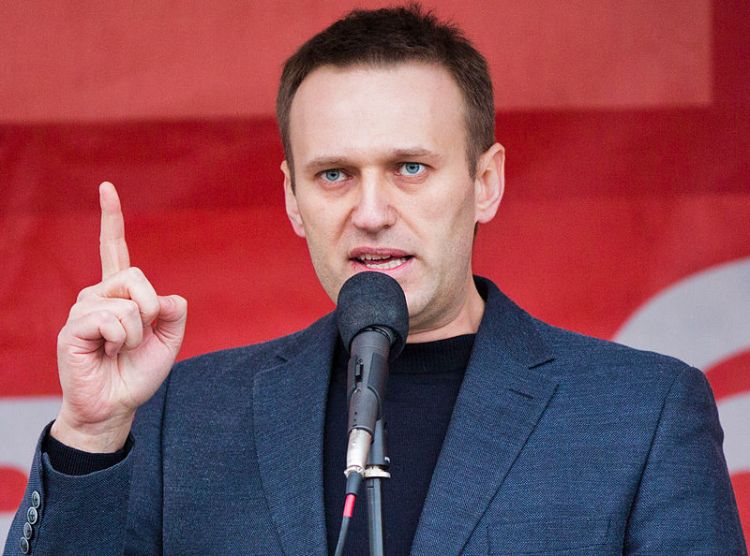
On March 26, 2017, there were mass protests all over Russia in response to the publication of information regarding the estates and property owned by Dmitry Medvedev, the current prime minister of Russia. The details of these properties were published on the blog of Alexei Navalny, the current leader of the opposition in Russia, who suggested that this information implied that Medvedev’s income exceeds his official salary, pointing to corruption within the Russian government. The protests resulted in the arrest of Navalny, and in the detainment of several hundred people involved in the protests.

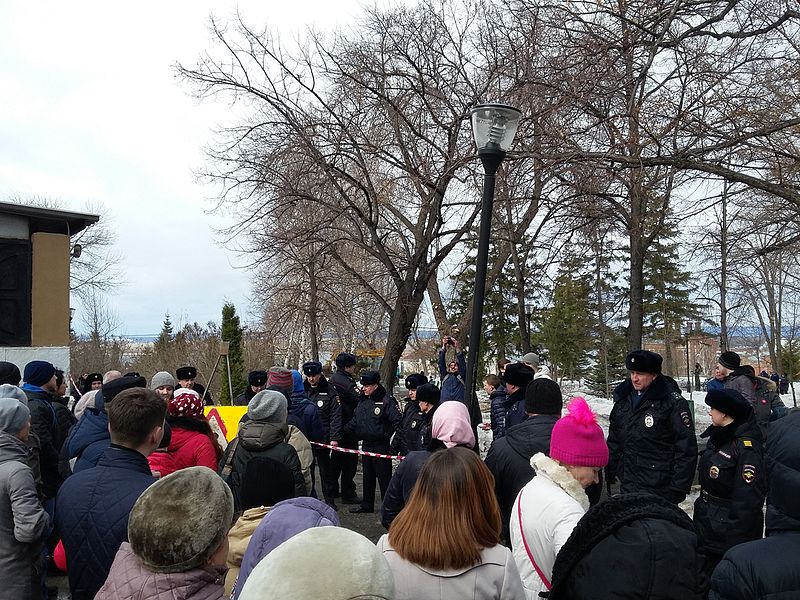
The protests were the largest expression of public discontent since the 2011-2012 protests about potential vote-rigging in the Kremlin – particularly notable was the presence of many young people and even schoolchildren, who, despite being raised in the environment of Putin-worshipping patriotism, displayed discontent with their current leader and the current system. Protesters took to the streets in more than 80 cities, with an estimated 7,000 protestors on the streets of Moscow. This massive display of protest, in spite of strict Russian anti-protest laws and direct orders from the police to stay off the streets, illustrates the strong anti-corruption feeling among the Russian people.

Russian police at anti-corruption rally, 2017

The protests were sparked by a lengthy video posted by Navalny, in which he accused Medvedev of corrupt practices, pointing out that his estates and properties exceed that which he should be able to afford on his official salary. The video has been viewed around 13 million times on Youtube, perhaps pointing to the reason for the presence of so many young people at the protests. Navalny has tapped into social media in order to communicate his opposition to the Russian government, and expose the issues therein, thus garnering him support in the younger generations.

In contrast to Navalny’s widely viewed video, the protests were ignored by all main Russian TV channels. This was evidently a calculated move by the Russian media, and such arguably dishonest and deliberate omissions are only more likely to influence young Russian people to turn to the internet for wider coverage and reporting. As leader of the opposition, Navalny’s main prerogative is exposing the corruption within the current Russian government, and social media gives him a platform to do so, with its appeal likely only broadening as the Russian media attempts to shut down and ignore both Navalny himself and that which he aims to expose.

As a result of the protest, Navalny has been sentenced to 15 days in prison for disobeying police orders and organising the protests. He used the trial as a further platform for his cause, tweeting a picture of himself with the caption “The time will come when we will have them on trial (but honestly).” Even without the media coverage in Russia, the high numbers of protestors will have been noted by the Kremlin, and will surely be a cause for concern. The fact that so many protestors took to the streets despite Russia’s strict anti-protest laws and the anti-corruption platform upon which Navalny is running may cause the Kremlin to re-evaluate their standard response to accusations of high-level corruption, which is denial, and perhaps lead to the introduction of some measures to display a visible stance against corruption.

Alexei Navalny, by Evgeny Feldman

Prior to Navalny’s accusations, Medvedev was viewed as one of the more liberal members of Putin’s inner circle, seeming like a regular guy, if occasionally awkward in the public eye. Yet some of his flippant remarks take on a more unsavoury tone if Navalny’s accusations of his corruption hold any truth. When asked by a teacher about the low teaching salaries, he suggested that if money is what teachers were after, they should have gone into business instead. With the new corruption charges, this seems less like a joking comment and more a reflection on the unscrupulous state of the Russian government. The strong response of the public in engaging in these protests demonstrates a wave of both anti-corruption and, arguably, anti-Putin feeling in Russia – while corruption has always been an issue domestically, it has significantly worsened since Putin began his second term as president in 2004, and has not improved in recent years, with Russia now ranked 131 out of 176 countries in the Corruption Perception Index of Transparency International. It’s easy to see why people came out in force against these corruption charges, even in spite of Russia’s strict anti-protest laws.

These strict protest laws themselves point to a country in which any disagreement with the status quo is stifled. A peaceful gathering without the permission of the authorities is punishable by a fine or up to 15 days’ detention, and repeat offenders are subjected to much harsher sentences, including up to five years in prison (three for single-person protests). This severely limits the freedom of assembly granted in the 1993 Russian Constitution, and provides a stark contrast to freedom of speech and the right to protest which we take for granted in the West. One of the most extreme examples of this is the 100-year ban enacted on Moscow Pride by courts in 2012. Issues with gay rights in Russia are well reported on, but this serves to further emphasise the limit on any kind of protest or dissent against the government in Russia, and highlights the wave of strong feeling against corruption embodied in the protests which took place despite these restrictions. The Russian people are sick of their voices not being heard and their resources being exploited by the government. Perhaps the Kremlin will finally take notice.

Green Authoritarianism? Human Rights and Environmental Reform in China

In February 2017 local officials in Daqing, Heilongjiang Province, struggled to disperse protests against the construction of an aluminium plant in the city. Dismissing promises that it would increase employment in the city, residents were angry at the prospect of another polluting industrial project in their backyards. Similar demonstrations were seen against planned industrial development in June 2016 in Hubei Province, while thousands took to the streets in October 2016 in the city of Xi’an against a new waste incineration plant. Smaller protests over similar facilities were also reported in Xiantao City in Hubei and Zhaoqing City in Guangxi. Such protests are not necessarily the norm – the Chinese Communist Party has become adept at intercepting and dispersing localised demonstrations before they gather steam – but they are increasingly common. Protests against the prospect of ever higher pollution levels are increasingly frequent, and at times succeed in preventing construction plans from going ahead. They are also more likely than ever to take place in cities, where it is harder for the state to control publicity, than ever before.

Exact figures on such ‘mass incidents’, as the state prefers to term them, are hard to verify, but what is clear is that they represent mounting public outrage over the environmental degradation that has been allowed to run rampant in China. Air pollution in China is estimated to cause 1.2 million premature deaths each year. Estimates of the annual cost to national GDP range from 3.5%, according to the Ministry of Environmental Protection, to as high as 10% . In 2014 over 25% of China’s key rivers were rated unfit for human contact, with corruption, poor implementation of existing regulations, and insufficient monitoring capacity making it difficult to assess, let alone improve, the country’s environmental outlook. As the full environmental cost of China’s two decades of rapid economic growth has come into sharp focus, so has the threat it poses to the Party’s legitimacy, both in terms of its direct impact on public opinion and its potential to hinder future growth.

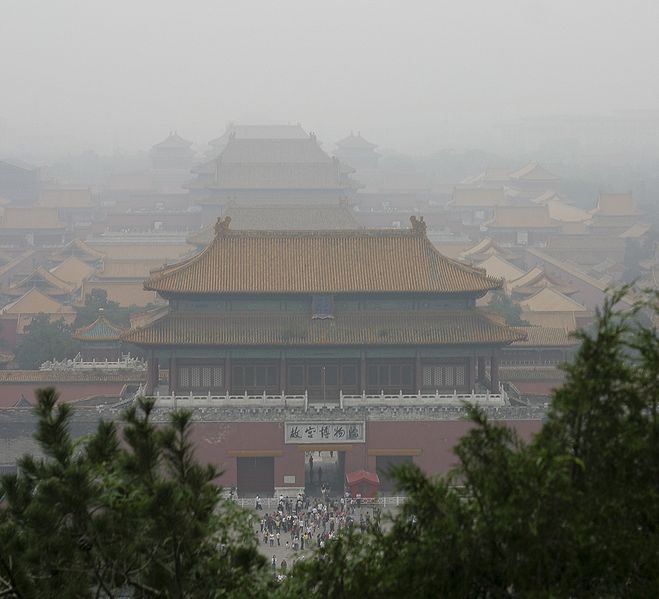
Smog shrouds the historic Forbidden City in Beijing. The cost of environmental degradation in China, both in human and economic terms, is staggering, by Brian Jeffery Beggerly

Against this backdrop of mounting public outrage over environmental degradation, the Chinese Communist Party is changing course. In a matter of years China has gone from environmental pariah to a global leader in action against pollution and climate change. In 2015 the Party declared its commitment to building an ‘Ecological Civilisation’, in which economic development would be achieved in harmony with the natural environment, as opposed to at its expense. New legislation on water management, which will be transformative if implemented effectively, came into effect the previous year, and Chinese commitment to the Paris Agreement has remained strong in the face of disappearing US commitment.

Strong statements of intent have, surprisingly for many, been backed by an impressive level of government action. Central government environmental inspections in 2016 led to disciplinary action against 3,000 local officials and an unprecedented 300 arrests. Some provincial governments have introduced environmental stewardship as a performance indicator for officials, a long overdue step away from what has been excessive focus on GDP growth at any cost. National coal consumption may well have peaked, and Beijing has made dramatic moves to phase out coal in the next few years. The West’s enthusiasm for shale gas stands in stark contrast to Chinese plans to invest £292 billion in renewable energy by 2020. The previously mainstream idea that China would be unwilling to pursue costly environmental action without similar moves from the West is in tatters – such action is now clearly in the domain of the CCP’s self preservation.

On paper, public participation is a part of the Ecological Civilisation, with approved NGOs encouraged to report companies that flout regulations to the Environmental and Resources Tribunal on the Supreme People’s Court. Revisions to environmental protection law in 2015 saw moves towards favouring increased public participation. However, an increase in public protest is unlikely to be part of the plan. Activists may have 700 state-approved environmental NGOs to choose from, but faith in the government to clean up a mess that happened on its own watch will be difficult to achieve. Last December, planned demonstrations against air pollution in Chengdu, Sichuan Province, were faced with roadblocks in the streets and censorship on social media. The municipal government did, however, release a list of polluting sites in the city in an attempt to placate public anger.

Facemasks placed on public artwork by protesters in Chengdu, Sichuan Province, to bring attention to air pollution in the city

China may have been here before – seeing the threat to Party legitimacy posed by growing resentment of corruption, Xi Jinping launched a drastic anti-corruption drive that has managed to salvage a measure of public support, while also removing political opponents. By declaring war on environmental degradation, the central state may be able to pull off a similar feat with pollution, diverting public discontent through state channels and directing it at local government, distracting from central and structural issues, and consolidating state power in the process. Greater efforts to implement environmental legislation should be praised, but a close watch should be kept on which officials actually end up in front of Chinese courts, with their close ties to the Party and 99% conviction rate. Just as Xi Jinping’s anti-corruption drive has reinforced his hold over the Party, the profile of successful environmental prosecutions may be able to show us the extent to which the ‘Ecological Civilisation’ is being appropriated to shore up Party power.

The result is a human rights dilemma – whatever its motivations, the Chinese state has become one of the world’s most active players in protecting our collective right to a world free from the most severe consequences of climate change. Tackling pollution in a country that is home to a fifth of the world’s population would also be an impressive victory for human welfare. However, China’s green credentials should not distract from the increasingly authoritarian Party government. China’s economic clout has already decreased Western governments’ willingness to address its human rights issues, with British foreign policy shifting from meeting with the Dalai Lama to pints with President Xi. Environmentalists will welcome China’s commitment to solving pollution and climate change, but the right to demand clean air cannot be separated from the right to breath it.

UNICEF On Campus St Andrews Third Annual Symposium Panel Discussion

On Friday 7th April, UNICEF On Campus St Andrews held the opening event of their Annual Symposium, their largest fundraising event of the year. The Symposium, which this year carries the theme of Migration and Health, spans two days and features a panel discussion and a day of talks from speakers with a variety of areas of expertise. The event aims to engage students in thoughtful action and to inspire future humanitarian careers.

The discussion between four panellists was moderated by Dr Natasha Saunders from the School of International Relations and guests had the opportunity to submit questions to be put to the panel. The panelists represented a wide range of responses to the current refugee crisis and more long-term migration issues, particularly with a focus on the physical and mental well-being of refugees. The discussion was largely focused on health and migration within Europe.

Mirella Alexou is the Programme Director of Emergency Response Centre International (ERCI), a Greek non-profit organisation at the frontline of refugee aid in Greece. With a core team of just seven people, ERCI has provided assistance to around 46,000 people to date. ERCI provides emergency aid to refugees as they arrive in Greece, as they often arrive by critically dangerous means such as in small rubber boats. With 8,000 people arriving in Greece under these conditions per day, search and rescue operations are vital to saving the lives of refugees who may otherwise die before reaching Greece’s shores.

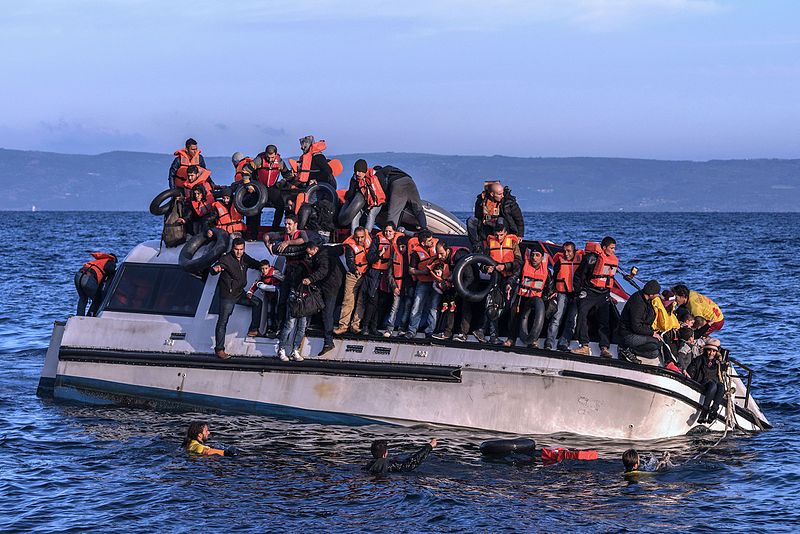
Syrian and Iraqi refugees arrive from Turkey to Lesvos Island, by Georgios Giannopoulos

Rachel Humphris is a lecturer in Social Policy at the University of Birmingham with a background in anthropology. She is a research associate with the Becoming Adult project, which researches the uncertainty of young migrants’ futures in relation to immigration policy, particularly focusing on the experiences of children and young adults entering the UK as asylum seekers.

Bharti Patel is the CEO of ECPAT UK, a children’s charity which fights child trafficking and transnational aspects of child exploitation, overseeing law and policy development in the area of child protection. She emphasised the distinction between smuggling (as a consensual transaction between a migrant and the smuggler, paid to transport the migrant into another country) and trafficking (which is a lucrative business of exploitation of adults and children for labour and sex work).

Tamer Aker, MD manages the Masters Programme in Applied Mental Health in Trauma and Disaster Management at Bilgi University in Turkey. He discussed his role in conducting a recent survey conducted with refugees in Turkey which found that nearly 40% of those surveyed were suffering from major depression and many more from post-traumatic stress disorder (PTSD).

Mental health was a prominent theme throughout the night’s discussion. Mirella Alexou spoke of the crisis in mental healthcare for refugees in Greece, where aid workers are reporting that for the first time in their careers they are receiving requests for psychiatric care from male refugees. However, Tamer Aker’s research has revealed that only 1.5% of the three million refugees in Turkey wanted to receive access to psychiatric care, prompting a very interesting discussion on how the stigmatisation of mental health disorders prevents refugees from seeking support. Furthermore, for the many undocumented urban refugees in Turkey, access to mental healthcare is simply not possible. Much of the conversation centred around the experiences of child refugees and asylum seekers, particularly those who migrate unaccompanied. Rachel Humphris provided an insight into the current strains on the UK child welfare system caused by the refugee crisis and the arrival of unaccompanied children to Britain. At present, England and Wales do not have a guardianship system to facilitate the protection of unaccompanied child migrants (though Scotland does) and responsibility for their care falls to the local council presiding over the area in which children are found. She discussed the difficulties faced by children approaching the age of 18 (an age where they can no longer be protected under the Convention on the Rights of the Child), as social service support is reduced or withdrawn and deportation becomes a real threat. She underlined the important point that achieving asylum seeker status for children does not guarantee that they will be given refugee status, creating great uncertainty about their future.

The panel discussed the impact on young migrants of being denied refugee status, or awaiting a decision on such an application highlighting for example that without legal refugee status, young people cannot apply for student finance. Asylum seekers are considered international students within the university registry system and are thus required to pay overseas tuition fees. Bharti Patel added that good legal aid for children is extremely important, as their future becomes much more secure if and when they are granted refugee status.

However, Mirella Alexou did indicate that ERCI’s education projects have begun to provide some stability in the lives of Syrian children in Greece by offering classes within refugee camps. Many Greek schools now offer the opportunity for Syrian children to attend afternoon classes when the Greek primary school day is over, though these classes are only available to refugees in urban areas and teachers are poorly incentivised and equipped to conduct these classes. In addition, children from the age of 15 are excluded from this educational provision and must attempt to find places within the competitive academic and vocational school systems.

A recurring question from audience members was regarding the engagement of refugee professionals in the process of delivering aid and how this can be improved. Tamer Aker spoke of his work to identify refugee health workers who can help to provide psychiatric care to refugees as part of local-level healthcare provisions. Mirella Alexou added that ERCI also tries to identify refugees who have worked as teachers to participate in their education programmes. However, the refugee aid system in its current form does not promote long-term solutions and most aid workers are employed in short-term contracts. Children are the worst affected by this high turnover in refugee camps as they have to suffer the trauma of separation often only a few months after engaging with aid workers.

The panel discussion provided a valuable insight into the often-unseen complexities of the humanitarian aid system and the unfortunate reality of limitations and constraints in the provision of relief within Europe. There were, however, also indicators of hope and progress, and it is encouraging that members of our St Andrews community are enthusiastic about these diverse and difficult issues.

Keep up to date with future events from UNICEF St Andrews via Facebook.

50 Years of Fear: The Israeli-Palestinian Conflict

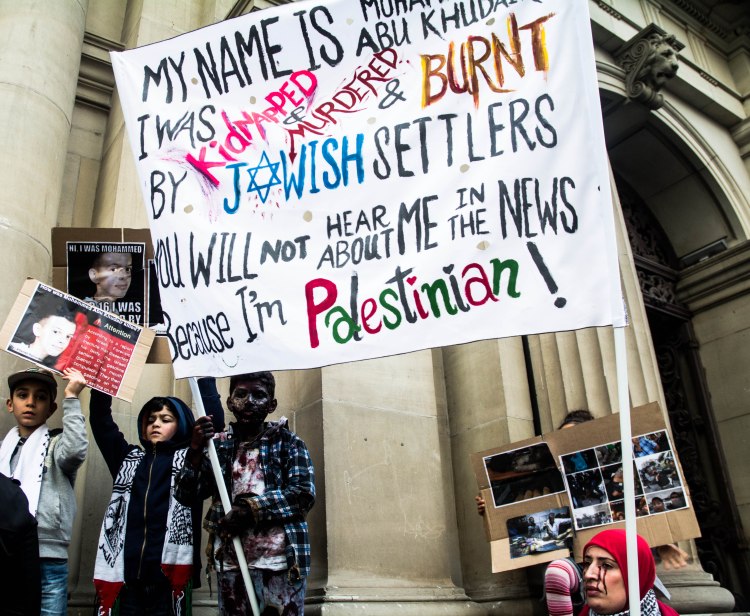
On Wednesday, June 8, 2016, two Palestinian gunmen opened fire at a popular market and restaurant area in central Tel Aviv, killing four people and injuring six. On Sunday, January 8, 2017, a Palestinian driver rammed a truck into a crowd of Israeli soldiers, resulting in the deaths of four people, while 17 others were injured. On Thursday, March 30, 2017, known as Land Day or Yom al Ard in Israel and Palestine, conflicts arose at a “tree planting activity,” in which the Israel Defense Forces, IDF, left 45 Palestinians wounded. On Friday, March 31, 2017, Israeli soldiers shot a 15-year-old Palestinian boy, and then denied access to Palestinian rescue services, blocking off entrances to the area.

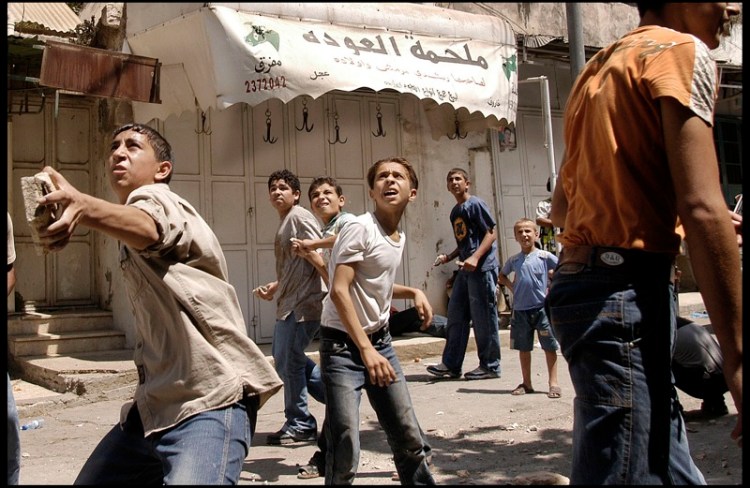
Palestinian children throwing rocks in Nablus, by Rusty Stewart

This June (2017) will mark the fiftieth year of the Israeli occupation of Palestine and its territories. For the past 50 years, Israelis and Palestinians have been attacking and retaliating against each other every week. Aside from big events that make it into Western newspapers, most instances are not featured in Western media sources and can end up undocumented. Although violent activity has been a factor of daily life in Israel and Palestine for nearly 50 years, unjust and illegal action, by both sides of the conflict, has increased rapidly in recent months.

Over 1,000 homes and other buildings in the West Bank and East Jerusalem have been destroyed by Israeli authorities in the past year under the claim that the occupants did not have the nearly impossible to obtain legal permits for the buildings, resulting in the homelessness of 1,593 people. In the first several months of 2017, 24 Bedouin homes have been demolished in the Ma’ale Adumin area, as well as 11 in a village near Kfar Saba, and numerous in Umm al-Hiran.

As of October 31, 2016, the Independent Commission for Human Rights in Palestine had received “150 complaints of torture and ill-treatment by the PA (Palestinian Authority) security forces and 204 such complaints against Hamas [the Gaza authority] security forces.” Meanwhile, the Israeli military advocate general received over 500 complaints regarding 300 incidents that took place during the Israel-Gaza fighting in 2014. These complaints result in virtually no response or investigation into the alleged crimes.

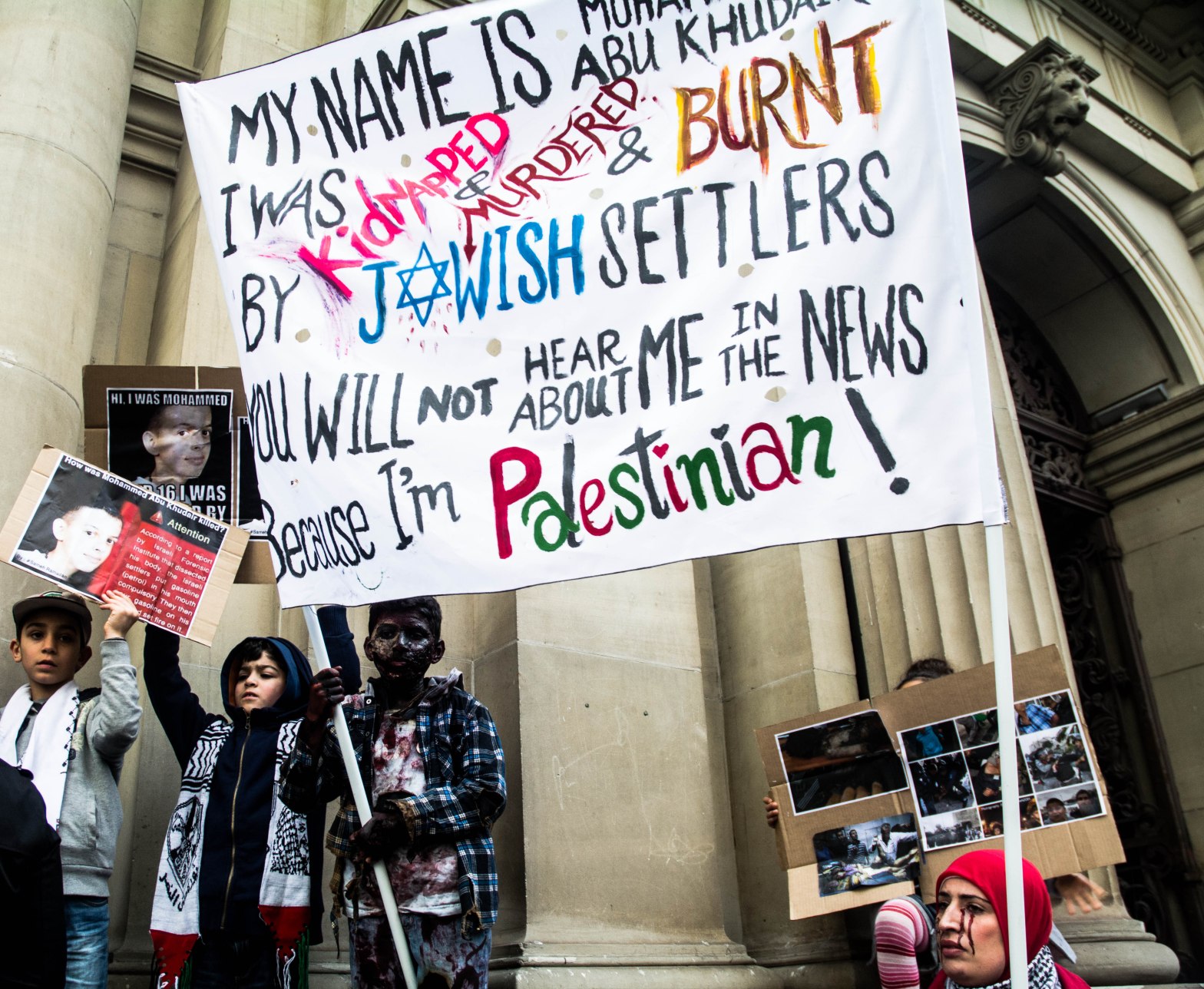
People protesting against Jewish occupation in Melbourne, by Corey Oakley

The violence and the accusations go back and forth. Palestinians launch rockets and mortars toward Israel and Israelis respond with military blockades. Israelis use fire or rubber coated bullets against Palestinians, and the Palestinians hurl rocks. There are violations of human rights on both sides of the dispute. However, with a forced occupation, discrimination and harm is felt more aggressively by many Palestinians. Human Rights Watch reported that 70% of the Gaza Strip’s population of 1.9 million people depend on humanitarian aid. Yet as the conflict is pushed into its fiftieth year, many are no longer concerned on a regular basis, because conflict is almost expected. However, some are still concerned and working to minimize additional deaths on top of the 10,000 plus Israelis and Palestinians who have died since the beginning of the occupation in 1967.

Progress was made in terms of formally finding a resolution to the violence on Wednesday March 29, 2017 at the 28th Arab League Summit. Mahmoud Abbas, President of the Palestinian Authority, described the summit as a “success” with “clear” conclusions. The leaders reached an agreement to “work to relaunch serious Israeli-Palestinian peace negotiations…based on the two-state solution,” which recognizes both the Israeli and Palestinians states as sovereign entities.

There are others who are working toward a more peaceful Israel-Palestine as well, such as the New Israel Fund (NIF). NIF is a non-profit organization that donates money to different organizations in Israel and the Occupied Palestinian Territories, and it is focused on supporting peaceful political and humanitarian solutions and providing aid to those in need. Its mission is the achievement of equality for all persons, regardless of race, gender, sexual orientation, or religion; the acknowledgement and protection of human rights and opposition to discrimination and prejudice; the recognition of the duality of Israeli society; the creation and maintenance of a just and peaceful society within and around the state.

Two donkey’s holding tails, representing the two communities coexisting, by Jordan Sitkin

While some have put the Israel-Palestine conflict on the back burners of their minds, and even though various leaders and organizers are working toward a peaceful end to the occupation, there is still violence everyday. On Wednesday March 29, 2017, a Palestinian was killed by police officers in Jerusalem’s Old City after attempting to stab a group of police officers with a pair of scissors. On Saturday April 1, 2017, a Palestinian was shot and killed after stabbing two civilians and a border policeman in the Old City of Jerusalem. On the same day, to revenge the assassination of Mazen Fuqaha, a former top official in Hamas, accredited to Israeli forces, the group declared it would inflict “intensive action against Israeli agents in the coming hours and days.” Even though events are no longer broadcasted in the news everyday, it does not mean that they are not still occurring, or that people are being harmed, and injustices have occurred. For more information about the conflict, refer to media sources that are directly impacted by the events, such as Haaretz or Al Jazeera. Additionally, for ways to get involved in helping, visit the NIF website, where you can donate or volunteer directly or contact one of the specific organizations.