Forced to Break the Law After Incarceration: Sperm Smuggling in Palestine

Forty days after the birth of his first child, Fahmi abu Salah was arrested by Israeli forces, and sentenced to twenty-two years in prison. Several years later, baby Asaad was born to Fahmi abu Salah and May abu Salah in Palestine’s West Bank. Baby Asaad is one of numerous children born to Palestinian prisoners serving time in Israeli jails. Since the outbreak of the Israel-Palestine crisis, Palestinians have been arrested by Israeli forces regularly, often on weightless charges, and then sentenced to serve up to forty or more years in Israeli prisons, which are all, bereft one, in Israeli borders, a violation of humanitarian law, as reported by Vice News. There are currently more than 6,000 Palestinians incarcerated in Israel and the Occupied Territories, Al Jazeera reports, 1,000 of them serving sentences longer than twenty years. Aside from the numerous abuses these individuals face within the jails, to which Assad abu Salah—father of Fahmi abu Salah and a former prisoner, jailed with his two sons—states, “The Israelis lock us up in detention cages made of metal or concrete. They want us to die”, Palestinian prisoners are refused the right to conjugal visits. This is in contrast to the conditions for Israeli prisoners jailed under similar, or more serious circumstances, which are negotiated on a one-to-one basis, Vice reports. For instance, Israeli citizen Yigal Amir—who is currently serving a life sentence for the assassination of former Israeli Prime Minister Yitzhak Rabin—was allowed to continue his family by way of In Vitro Fertilization (IVF). Haaretz reports that when this subject, regarding access to IVF for prisoners, was brought to the Israeli Supreme Court, the Court failed to make a decision, and granted the prison authorities the right to decide, consequently backtracking the Palestinian prisoners’ progress.

Mothers of Palestinian children born—from smuggled sperm—to Palestinian prisoners. Source: Getty.

In 2004, after sixteen years in prison, seventeen years of marriage, and sixteen years apart, Rawhi Mushtaha had the idea to smuggle his sperm out of prison, so that he and his wife could have children. From 2012, when the first child was born to a Palestinian prisoner from smuggled sperm, to 2015, twenty-seven wives have given birth to thirty-two children using smuggled sperm. Large numbers of Palestinian families face this dangerous and illegal decision, such as Rawhi Mushtaha and Raeda Mushtaha, who were married on 21 August 1987. Six months later, on 13 February 1988, Mushtaha was arrested as a Palestinian ‘security prisoner’, referred to because of their perceived threat to Israel’s security. Raeda Mushtaha’s first visit to her husband in prison was allowed five months after his detainment, and even then the visit was only conversational. Similarly, on 26 September 2002, Ashraf al-Safadi married Fathia al-Safadi. Eighteen days later, Safadi was imprisoned, and sentenced to twenty-one years in jail. Likewise, on 18 August 2006, Tamer al-Zaanin married Hanaa al-Zaanin. Tamer al-Zaanin was detained two months later, and sentenced to twelve years in jail, all documented by Al Jazeera.

Brother (Asaad) and sister holding images of their imprisoned father (Fahmi abu Salah), whom the son has never met, at a protest for imprisoned Palestinians. Source: Getty.

The Razan Fertility Center, in Nablus, which is credited with implementing the first IVF treatments in the West Bank, according to J Post, is the most common site of refuge for the prisoner’s smuggled sperm. The Center also provides the IVF procedure, which typically costs $3,000, for free for prisoners’ families. However, these families, although supported by places such as the Razan Center and the Palestinian Supreme Fatwa Council—which approved the IVF procedure in 2013—not only face considerable challenges to the birth of their children, such as the length of possible prison sentences, and treatment within jail, but they also face challenges after their children’s births.

Baby Asaad holding photo of his father (Fahmi abu Salah), whom he has never met, and his grandmother (Muna abu Salah). Source: Getty.

In order to visit a Palestinian security prisoner, families or individuals, are required to apply for a permit obtained from Israel, by way of the International Committee of the Red Cross (ICRC). These permits are only allowed for first degree relatives, and Israel commonly rejects applications on claims of security threats. When Muna abu Salah and Asaad abu Salah tried to take their granddaughter to meet her father for the first time, after applying for permits and waiting years, the border crossing was closed, and the guard told them there were no visits. Similarly, Asaad abu Salah applied for his grandson, to visit his father Fahmi abu Salah in prison, and was denied. “They [the Red Cross] said that this child was illegitimate and unrecognised by the Israeli occupation and prisons authority.” Because these children are born from smuggled sperm, they are prohibited from obtaining ID cards, and as a result, are considered illegal by the Israeli government. Abu Salah continues explaining, tears streaming down his face, “If the occupation continues, these children will not be registered in Gaza’s civil records and will be banned from traveling. They’ll remain without any documents to prove their identities. They’re unrecognised by the authorities, as if they don’t exist.” Palestinian families risk their lives and freedoms to continue their families, then suffer from not being allowed to see them, and further struggle with children who are considered illegitimate by the state that some Palestinians believe is illegitimate itself. To help this issue, the international community—too few major human rights organizations have produced studies or information on this subject—needs to become aware of the abuses that Palestinian families are suffering from, by first sharing the information.

No Place Like Home: The Plight of Refused Asylum Seekers

As informed individuals, we like to think that we are aware of the trials and tribulations faced by refugees. We have seen the various headlines surrounding the currents events in Syria, Yemen, and other such countries. Back in 2015, over a million refugees arrived in Europe as a result of various crises and these refugees have been headlining in the papers ever since.

However, often overlooked are those that have been refused leave to stay, and yet have no viable way of returning to their country of origin. Refused asylum seekers – i.e. those who are deemed to have no grounds to appeal for asylum – are believed to have no reason for their continued presence in the United Kingdom. The very words ‘asylum seeker’ tend to come with a stigma attached to them and every year hundreds – if not thousands – of refugees are turned away and are forced to the country they fled. However, for some it is not so easy as simply getting on a flight back to their country of origin.

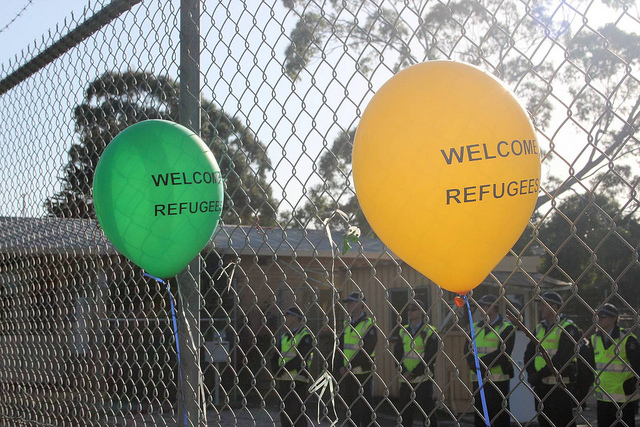
Source: Flickr.

For those individuals, there is simply no travel route open to them; for example, the flight routes to Palestine, Syria, and Yemen have been closed since 2015. With no viable, logistical way for those who have been refused asylum to return to these countries, many are stuck in a state of limbo. Richard Harrington, who was overseeing the government’s promise to accept more Syrian refugees, stated that simply deporting these asylum seekers back to their country of origin is ‘no answer’. Often this culminates in the issue of those who have been refused asylum having no place to go nor any support to be found – be that economically or socially.

For others, they do not have – and often never had – the necessary documents to travel, nor are they recognised as citizens of their country of origin. Without the appropriate documentation, these refugees have little hope of being successfully returned. In addition to these cases, there are thousands of ‘Children of War’ who have never seen their parents’ homeland due to their family’s displacement during times of crisis. This means that neither the country in which they find themselves a refugee, nor their parent’s homeland recognises them as a national.

A study carried out by the British Red Cross serves to highlight this issue of lack of correct documentation. One such case details the struggle of Enaya and her infant daughter who came from Palestine. Upon their arrival in the United Kingdom 5 years ago, Enaya’s husband was immediately returned to Palestine where he was arrested and killed. Refused asylum in Britain, but without the proper documentation or means of obtaining a passport in the United Kingdom due to relations between Britain, Israel, and Palestine, Enaya was stuck. Further to this, her child is unregistered and so is not officially a Palestinian national. With little monetary support, she and her daughter, now 5 years old, are forced to live in a state of limbo while neither country is willing to claim legal responsibility for them. They are currently in the process of applying for statelessness.

Another case study describes Basrat’s struggle to obtain the correct papers in order to return to his land of origin. After living in multiple East African countries as a child, Basrat left Eritrea in 2008. Due to spending much of his life in Ethiopia, Basrat speaks their native language of Amharic. On account of this ability, and his lack of documentation, the Eritrean embassy does not recognize him as Eritrean. Despite multiple attempts to reach out to the Ethiopian embassy to aid him in obtaining a passport, they have ignored his efforts.

These case studies serve to highlight the ease with which one can find themself in the situation of statelessness. After fleeing their situation in their country of origin and searching for a better future, these people are forced to live a half-life whilst they attempt to return to their homeland and loved ones. It has been highlighted that life for refused asylum seekers is incredibly bleak, and a terrifying proportion of refused asylum seekers have contemplated suicide. As a country which claims to value human life and uphold the values of the UN Charter on Human Rights, surely we in the United Kingdom ought to be doing more to help people in such circumstances.

Whilst there is no way of knowing the amount of refugees that are currently residing in such a state in the United Kingdom, we do know that between 2013 and 2016, 1662 complaints of statelessness were lodged with the British government. These stateless refugees have often been separated from their families and any support networks they may have had in their home country. Isolated from their loved ones, denied the right to work and earn a living, and with no government aid, the lives of these refugees are characterised by periods of destitution and homelessness.

Moreover, it can be understood that those who are refused asylum are subjected to degrading conditions. This demeaning treatment can be seen to have roots in their living conditions and the unsure nature of their environment. This existence appears to contravene the UN Charter on Human Rights which declares that no human should be treated in a degrading manner. Not only are we ignoring their right to be protected as refugees, but we are subjecting them to conditions which conflict with the foundational rights which our society claims to hold with such high regard.

Mike Adamson, the chief executive of the British Red Cross, has commented on the situation of refused asylum seekers, stating that ‘having no permission to be in the UK but no way home means being stuck in a permanent state of limbo and often living hand to mouth. Some of the individuals … have been in this situation for years. We believe this is inhumane and this kind of status should only ever be temporary.’ Such treatment only serves to highlight the unpleasant nature of a life lived in the purgatorial state of refused refugees.

So, what does this mean for everyone else? As people with the privilege to call themselves citizens in Britain, we ought to exercise our ability to question the government’s approach. Our state’s protection affords us the defense of our rights and civil liberties, and it is only right that we extend these rights for all people. No level of degradation should be acceptable. Human rights are deeply ingrained in our society, and we ought to ensure that they are applied to one and all. Our country’s immigration laws have always been contentious and the issue of refused asylum seekers indicates that reform is necessary.

The NFL Protests and Freedom of Speech

The National Football League (NFL) was founded in 1920 and took on its current form two years later. The first Super Bowl was held in 1960, at which point the NFL began to mirror the commercialized industry it is today. The Super Bowl annually generates over $620 million in revenue and is the most lucrative sports event in the entire world, CBS charges $5 million per 30 second advertisement. Furthermore, the 32 NFL franchises are worth an astonishing combined $74.8 billion. This wealth is built in a large part by the work of African American players who comprise over 70% of professional football players in the NFL.

Despite the staggering amounts of money generated by black league players, the NFL and its African American members have had a tumultuous history. From 1927 until reintegration following WWII in 1946, NFL teams were barred from drafting black players. The Civil Rights Movement of the 1950s and 1960s only furthered the tension between black players and the NFL. The problems in the NFL mirrored racial tensions across the country. African Americans who were disenfranchised through Jim Crow Voting Laws and a segregated society began to gain social inclusion and equality with Brown v Board of Education (1954), the Civil Rights Act (1964), and the Voting Rights Act (1965). However, in the NFL, as in American society as a whole, the strides made during the Civil Rights Movement did not fully remedy the inequality faced by African Americans.

Source: Flickr.

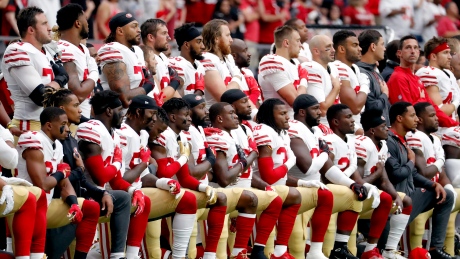
A topic of current debate – the Black Lives Matter movement – aims to shed light on police brutality towards African Americans in the United States. A series of high profile cases involving police officers killing black citizens inspired Colin Kaepernick and the subsequent NFL protests. While there is debate over the justification and use of force in these instances, many Americans believe there is underlying racial causes and action needs to be taken. In 2016 Colin Kaepernick the then quarterback for the San Francisco 49ers took a knee during the National Anthem to protest this police brutality. It sparked a movement that has now gained national and international momentum and attention.

The Black Lives Matter movement is rooted in the tragic deaths of three Americans, Trayvon Martin, Michael Brown, and Eric Garner. Trayvon Martin was an unarmed, 17-year-old African American, who was fatally shot by a neighborhood watch volunteer, George Zimmerman, in his Sanford, Florida neighborhood. The subsequent acquittal of Zimmerman provided one of the first sparks for the Black Lives Matter movement. The movement gained further momentum after the Ferguson Riots, which were ignited following the death of 18-year-old African American Michael Brown by a white police officer. Brown allegedly had his hands up when he was shot, this precipitated the now famous slogan “hands up don’t shoot”. The arguments of the Black Lives Matter movement were further highlighted by the death of Eric Garner. Garner was arrested by a New York City Police (NYPD) Officer and during the course of his arrest he was put in a chokehold. This chokehold killed him and was subsequently ruled a homicide, as it is specifically prohibited by the NYPD as excessive force.

Kaepernick’s actions in support of the Black Lives Matter movement were met with enthusiasm and pride by some. However, he was seen by others as unpatriotic and disrespectful towards the American flag and American soldiers. The debate on Kaepernick’s actions took a partisan line and became part of a wider political debate. Free speech and patriotism were brought out by both sides to defend their positions. The first Amendment of the Bill of Rights states: “Congress shall make no law… abridging the freedom of speech.” To Kaepernick and his supporters, taking a knee during the national anthem was a peaceful protest that used his platform as an NFL quarterback to advocate against police brutality.

However, the NFL Protests are no longer comprised of only one player. In fact, Kaepernick no longer even plays in the NFL, an action that is seen by his supporters as a unified show of force by NFL owners against him. He is currently suing the league. With the advent of the Trump administration, the protests have grown exponentially. This current NFL season, many players – of all races and backgrounds and from different teams in all parts of the country – have taken a knee in protest of police brutality.

President Trump inadvertently escalated the situation while at a rally in Alabama for senatorial candidate Luther Strange. Trump made a wide range of inflammatory statements including, “get that son of a bitch of the field right now, he’s fired, he’s fired” and suggesting that NFL fans should boycott games until the NFL owners felt enough economic consequences to penalize their players for kneeling.

During week three of the NFL season, over 200 players took a knee during the Sunday games, even more linked arms in solidarity, raised their arms in a signal reminiscent of the black power salute, and whole teams remained in their locker rooms during the national anthem. The Seattle Seahawks remained in the locker room during the anthem as a symbol of their solidarity with the movement as did their opposing team the Tennessee Titans; the Pittsburgh Steelers also skipped the National Anthem all together, choosing instead to remain in their locker rooms. It is not just players who have taken a knee: owners, general managers, and coaches have joined in as well. Christopher Johnson, the owner of the New York Jets, locked arms with his players during the anthem in a public sign of solidarity.

The protests even spread abroad. In an exhibition game in London, the Baltimore Ravens and Jacksonville Jaguars both made bold statements. Some players took a knee during the American national anthem and then stood for the British national anthem. The coach of the Ravens, John Harbaugh and the coach and owner of the Jaguars, Doug Marrone and Shahid Khan, linked arms with their players on the field.

Even teams who are closely associated with the Trump administration took strong stands in favor of the NFL protests. For example the New England Patriots, whose owner Robert Kraft and star player Tom Brady were Trump supporters during the election, came out against President Trump’s comments. Brady linked arms and touched shoulders with kneeling players.

The protests have now spread beyond the NFL with high school and collegiate athletes, as well as members of the Women’s National Basketball Association WNBA, joining in.

If you want to support the NFL Protests you can donate to the Black Lives Matter movement here. You can also write letters to your local congressmen and senators or to the White House asking for more comprehensive legislation or executive action on police brutality. Furthermore, you could purchase Kaepernick, Newton, of Reid jerseys, all players who have taken a vocal stance against police brutality towards African Americans and the comments of the Trump administration.

Bordering Celebration and Contrition: 100 Years of the Balfour Declaration

On 2nd November 1917, British foreign secretary Arthur James Balfour scribbled out a signature which would culminate in one of the most divisive geopolitical disputes in modern history. Described as ‘arguably the most contentious 67 words ever written’, this short document has redefined the physical and imagined borders of the Middle East for a century, and will continue to do so into the foreseeable future. In this, its centenary month, age-old debates about the implications of the Declaration for human rights in Palestine and Israel have resurfaced with an enlivened ferocity. British politicians have walked the tightrope between polarised Palestinian and Jewish sentiments towards the Declaration in the present and have looked tentatively on to see what the future may hold for the State of Israel and its inhabitants.

Ever since its conception, the Balfour Declaration has been a point of deep political and religious contention between Zionist Jewish and Palestinian interest groups. For the former, Balfour’s (albeit vague) assertion that the British government looked favourably upon, and would endeavour to achieve, ‘the establishment in Palestine of a national home for the Jewish people’ was the glorious culmination of a long sought after sense of recognition of their proclaimed rights – deeply entrenched in cultural and religious history – to re-establish the community in the Holy Lands documented in the Biblical scriptures. For the Jewish people, the religious symbolism underpinning the decision which, in 1948, resulted in the creation of the State of Israel, represented a ‘national re-birth’. It gave them, for the first time in centuries characterised by persecution, a sense of belonging. As such, the current and 4th Lord Rothschild, great grandson of the original recipient of the crucial document, has declared it to be ‘the greatest event in Jewish life for thousands of years’.

One of millions of Palestinian refugees to have lost their homes as a result of the Balfour Declaration. Source: The Independent.

The document may, on the one hand, have represented a hope of transforming Zionist idealism into a reality. But on the other, for Palestinians, the Balfour Declaration was nothing short of what president Mahmoud Abbas describes as ‘the darkest day in our history’- a history since defined by hostility, oppression, and exile. Following the collapse of the Ottoman Empire at the beginning of the 20th century, Palestinians felt that, through the creation of a Jewish homeland in Palestine, the British government was parcelling up land which was not their own to give away. At no point was there a consultation process and a territory comprising 700,000 people, 90% of whom were non-Jewish, found itself in the hands of a significant minority. Initial tensions were only exacerbated by the dramatic influx in Jewish immigrants to Palestine throughout the following decades.

Simply pitching one historical narrative of Jewish triumph against another of Palestinian submission would, however, be a naïve oversimplification of the realities of the conflict. Drawing the distinction between Judaism, the religion encompassing a way of life, including some Zionist beliefs, and Zionism, a nationalistic movement seeking the return of the Jews to the Holy Lands, is absolutely essential, and yet far too often overlooked through generalisations, stereotypes and prejudices. Some of the most prominent examples of this hark from Nazi Germany, with Heinrich Himmler expressing in 1943 that ‘our party sympathises with the fight of the Arabs, especially the Arabs of Palestine, against the foreign Jew’. The depth of the hypocrisy in such a statement is particularly stark when it is considered that only a decade earlier, in 1933, the Nazi Party signed the Haavara agreement, encouraging the emigration of over 52,000 Jews to Palestine in order to remove them from Germany. Nonetheless, the Nazis used a small minority of overly zealous nationalist forces within Palestine – ‘The foreign Jew’ – as representative of an entire religion and cultural foundation in an attempted ‘justification’ of the atrocious human rights abuses committed towards the Jewish people during the 1930s and ‘40s. The occupation of Palestine was warped into an unfounded example of Jewish ‘greed’ and attempted world domination. No matter how unjustified, though, there is a sense in which Balfour provided Nazi snipes at Jewish stereotypes with fresh ammunition. Therefore, the success of the Zionist Jews, in a sense, dealt a heavy blow to their pan-European image and exacerbated hostilities, the target for which significantly traversed the confines of Palestine. Speaking at the Balfour Centenary lecture on 1st November, however, the Historian Simon Schama asserted that ‘the life of Israel is Hitler’s failure’. He argued that the creation of Israel in 1948 and the 6 million Jews living there in the present day was the ultimate retort to the perpetrators of genocide, demonstrating the ability of the Jews to thrive in their homelands, regardless of the atrocities of their past. Such a transformation is indeed, undoubtedly, a cause for celebration. But the Declaration’s indirect exacerbation of anti-Semitism, both historically and in the present day, cannot be side-lined.

Regardless of the extent to which the Jewish people have been negatively affected by the Balfour Declaration, the repercussions for the Palestinian people have been indubitably severe. For although a mere 67 words in length, it appears that the majority of them have been wilfully ignored. The document goes on to stress that ‘nothing shall be done which may prejudice the civil and religious rights of the existing non-Jewish communities in Palestine’. These rights have been persistently abused. Over the past century, the Balfour Declaration has resulted in the exile of over 6 million Palestinians from their native lands. For those who remain in Israel, Human Rights Watch have reported a regime characterised by ‘repression, institutionalised discrimination, and systematic abuses of the Palestinian population’s rights’, each justified on the basis of being carried out ‘in the name of security’. While missile attacks and other forms of retaliatory violence on the part of a small minority of Palestinian Arabs have been levelled against Israel, blatant human rights abuses, including the unlawful imprisonment of thousands of people, cases of torture, executions carried out without fair trial, and the killing of over 2,000 Palestinian citizens during the Gaza conflicts surely cannot be justified under any circumstances. They certainly cannot claim to even come close to full compliance with the terms of the Balfour Declaration.

Britain’s position – floundering in no man’s land between the two sides – has been reflected by the muted political response to the centenary, with the government itself keen to ‘mark’ the occasion, but without festivities. It is certainly not an event which can or should be ignored, by any means, representing a milestone for many different groups of people. Whether or not ‘pride’ is an emotion which Britain can justifiably associate with the past 100 years of conflict over Palestine is much more contentious. But while it is essential to understand the deeply rooted historical context of the conflict, attempting its resolution is a far more pressing concern. Emily Thornberry has been one of several to call for the centenary to be marked through the recognition of Palestine as its own independent state, despite the voluminous geopolitical complications which this would entail. The least which can be done is to work towards a day when refugees – be they Palestinian or Jewish, or of any other faith or ethnicity – are made to feel welcome in our own country, regardless of the extent to which Britain was or was not involved in their present plight.

The Balfour Declaration, selfishly conceived by a war-torn Britain desperately seeking diplomatic allies in the form of the Zionist Jews, has been slated on all sides. Balfour’s Frankenstein had all the components of an idealistic act restoring an oppressed people to their homeland, which aimed at preserving the rights of everyone, everywhere. But the result of its incompatible parts has made it incongruous and even, in the eyes of some, hideous. The first clause of the declaration has been accepted with open arms, but the conditions rendering it acceptable have been entirely rejected. In the much-omitted final line, Balfour calls for the protection of ‘the rights and political status enjoyed by Jews in any other country’. One hundred years later, and the number of anti-Semitic incidents has been on the rise, particularly since the decision to leave the EU was made in June 2016, and exacerbated by the continued expansion of Israeli occupation of Palestine. The first half of 2017 saw 30% increase in anti-Semitic incidents compared to the same period last year. Here stands a stark demonstration of the intolerance which nationalistic ideologies, and fear of ‘the other’ can breed, calling into question how much we have really learnt over the course of this divisive century.

Impediments to Food Access in Venezuela

Venezuela has struggled with civil unrest in recent years, stemming from frustrations with government mismanagement. Citizens are bearing the brunt of the difficult economic and political situation. Venezuelans are struggling to pay for, and in some cases, even access, basic food and supplies. Inflation on the price of food has skyrocketed, increasing 552% from November 2015 to November 2016. This is not just a problem of past years. Prices continue to rise on a month to month basis, with a 51% increase in prices in the food sector for August. President Nicolas Maduro declared a state of emergency in January 2017. However, despite requests for international assistance from Venezuela’s National Assembly, the opposition-led legislative body, the government has refused international aid and conditions have not improved for the majority of citizens. Though many factors have contributed to the creation of such a disheartening and precarious situation, the government’s management of and reliance on the nation’s oil reserves plays a considerable role.

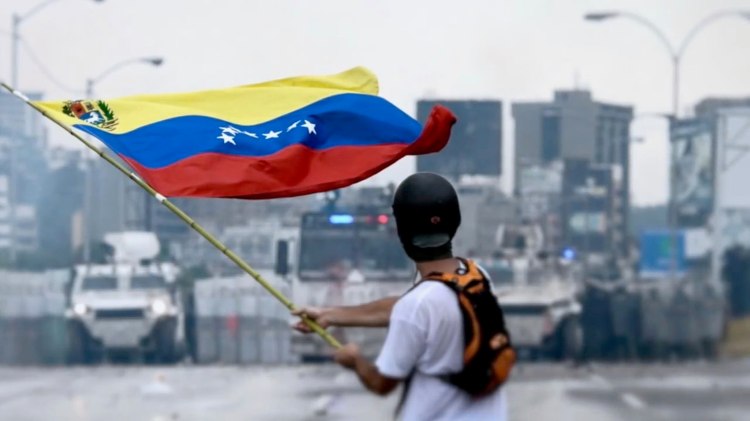
Young man waving the Venezuelan flag during a protest. Source: Wikimedia Commons.

Venezuela is renowned as a leader in world oil reserves, ranked first by the Organization of Petroleum Exporting Countries (OPEC) in 2016. Oil exportation comprises the backbone of the economy. It accounts for 25% of the nation’s GDP and 95% of exports; it is no small piece in Venezuela’s financial puzzle. In the 2000s, when oil prices were high, the Venezuelan government used the revenue from oil exportation to subsidize food and supplies for all citizens, a way for the socialist government to demonstrate that it was successfully providing for all. Venezuela imports nearly all consumer goods, aided by oil exportation, and as a result has very little history of domestic production. There is little incentive to produce goods within Venezuela, due to the government’s subsidies and strict regulations. The government did not take the opportunity to save funds while the price of oil was high, and when prices crashed in 2014, Maduro’s government found themselves caught between a rock and a hard place. The nation’s GDP dropped 10-15% and inflation soared. Venezuela owed billions to external creditors and was in danger of defaulting, which led to the current situation of national financial uncertainty. To decrease subsidies on food and supplies and increase taxes to repay debts would have lost the new president favor amongst his constituency, and beyond that, appeared contrary to the socialist sense of equanimity and provision for all citizens. Instead of allowing the bolivar, the national currency, to drop in value, the government overvalued the exchange rate and printed more, which drove up inflation. Imported goods, like food and supplies, which Venezuelans relied on due to the lack of domestic production, increased in price and stopped flowing at the same volume. Unfortunately, this aided the growth of an unintended market. Black market trade in Venezuela blossomed. There, food and basic supplies are sold at far above the fixed subsidized prices. Venezuelans often have no other option than to purchase these more expensive goods as there is no other source available.

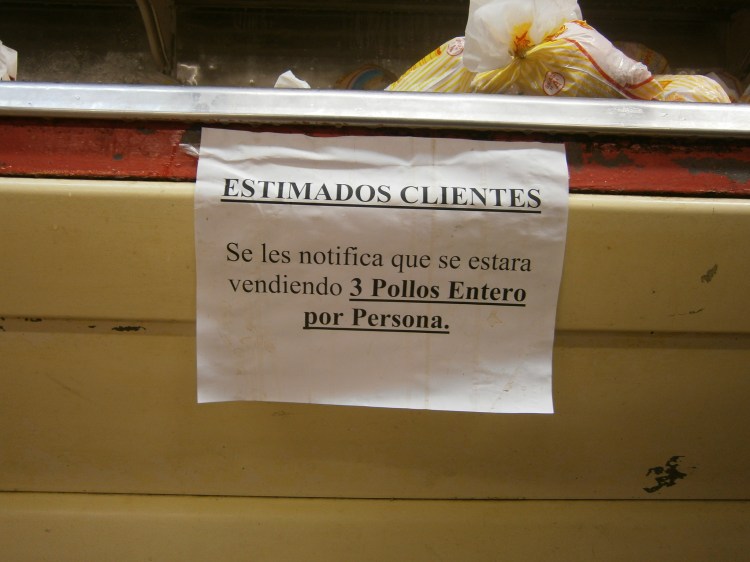
Inflation is part of the problem. In July, the minimum wage was increased by government order for the third time thus far in 2017. This was an attempt to increase purchasing power, but has done little to control inflation, which is predicted to rise by 700-800% in the coming year. The bolivar is currently worth about 10 US cents, although US dollars are sold for much more on the black market. Food is less affordable than oil. A liter of gas cost 6 bolivars in 2016, which was 100 times cheaper than a liter of water at the time. Additionally, it has become common for Venezuelans to stand in line for hours in front of grocery stores to buy goods at the subsidized prices. Even then, each person is only allowed to purchase a certain amount of essentials, like rice and diapers. There are not enough of these essential products available at an affordable price to meet demand. The price of groceries has increased beyond five times the minimum wage and shows no signs of slowing. There is still little incentive or ability within Venezuela to produce food products, despite available and fertile land, which means there is currently no emerging domestic market to fill the void left by the decrease in imports and soaring prices.

Sign in Spanish in a Central Medeirense (supermarket) informing customers that they are only permitted to purchase three chickens. Source: Flickr.

Public protests regarding the struggle for food and survival have fallen on the deaf ears of Maduro’s government. The president remains in power, spurns actions of the National Assembly, and does not permit outside help for the nation. Nongovernmental organizations could very well help those suffering most from food shortages but have been restricted in their ability to work. The shortages of food have lead to a jump in weight loss and ill health, with an estimated 25% of children currently malnourished and the population collectively losing an average of 9 kilograms in weight. Human Rights Watch has published a series of recommendations, among them a request for international pressure on the government to readdress its treatment of the food crisis, and a call for the Venezuelan government to explore further aid from international organizations to connect suffering people with programs for food and supplies. It has yet to be seen that Maduro’s government will heed the offered advice. If the government does not ease its stranglehold, it will further trap itself in poor policies that worsen a poor situation for those most vulnerable. Protests and demonstrations have been ongoing since spring 2017; the people of Venezuela are clearly willing to express their discontent and demand change. There is hope that improvement will come before further escalation, but no clear sign of how such improvement will arise.

The Children of the Islamic States’ Jihadists: The Death of the White Widow and her 12-Year-Old Son

Sally Jones, an infamous British recruiter for the Islamic State known as the ‘White Widow’, is believed to have been killed in an airstrike near Raqqa, Syria, last June. Jones rose to notoriety as the leading female recruiter for the terrorist organisation after leaving her home in Chatham, Kent with her son JoJo to join the Islamic State in 2013. Jones is believed to have been radicalised online, leaving her life as a perfume saleswoman for L’Oréal and a guitarist in an all-female rock band to take her youngest son to Syria with her to wage jihad. The mother-of-two married the infamous Junaid Hussain, a British-Pakistani hacker for the Islamic State who was listed third on the Pentagon’s “kill list”, upon arriving in Syria. Jones and Hussain are believed to have lived together in Raqqa with Hussain’s second wife, where they trained her son JoJo to join the “Cubs of the Caliphate” faction of child soldiers.

The ‘White Widow’ in a propaganda photo uploaded to her Twitter account. Source: Daily Mail.

Jones and her son JoJo were allegedly killed by a US Air Force Predator drone strike in June near the Syria-Iraq border. The Sun reportedly received information from UK associates of the CIA that Jones had been successfully targeted in the strike. However, due to the difficulty of fact checking on the ground, it is impossible to confirm whether she and her son are in fact dead. JoJo, born in December 2014, would have been 12 years old at the time of his death – he is understood to have been brainwashed and trained for combat after a propaganda video posted by IS surfaced in 2016, appearing to show him carrying out the execution of Kurdish prisoners alongside other child soldiers.

Joe Dixon pictured in a still from an IS propaganda video posted in 2016. Source: Birmingham Mail.

The death of JoJo – born Joe Dixon and renamed Hamza upon arriving in Syria – raises difficult questions about the legality of targeting the wives and children of terrorists. At the age of twelve, JoJo is too young to be legally considered a combatant; however, evidence of his committing such gruesome crimes implicate the young Briton in the global war on terror. JoJo’s death therefore places American authorities in a compromising position, whilst the air strike itself indicates the recent intensification of US military action in Syria under the Trump administration.

Major General Chip Chapman, former head of counterterrorism at the Ministry of Defence, spoke to The Guardian on the issue: “It is a difficult one because under the UN Charters he is under the age of what we would classify as a soldier. Even if he got up to really bad things, he shouldn’t have been targeted. We don’t know for sure whether he was with her or not”.

The death of Sally Jones and her son begs a broader question of the fate of the rest of the wives and children of the ever-weakening Islamic State. Human Rights Watch reports that since August 30, Iraqi authorities have detained 1,400 foreign women and children fleeing from Islamic State-controlled areas torn apart by conflict. The report, titled ISIS’s Other Victims, details how the women and children escaped from the areas recently liberated from IS control and turned themselves into the authorities, only to face human rights abuses in detention. The families of these IS fighters are being held in an overcrowded prison in Iraq, the women face torture and the death penalty whilst their children face the risk of being treated as combatants, like JoJo Dixon, rather than rehabilitated by the state. Human Rights Watch argues that it is impossible for the Iraqi authorities to provide the families of IS with a fair trial, as the political consequences of being seen to treat anyone affiliated with the terror organisation ‘well’ are far too great. The women and children are reportedly from at least ten foreign countries, including France and Germany, yet their home countries and the international community have done little to help determine their legal situation. Whilst membership to the Islamic State is a crime under Iraqi terrorism laws, Human Rights Watch points out that it is also illegal under Iraqi and international law to condemn anyone for the crimes of their spouses or parents. As a result, the wives and children of IS are caught in an indefinite limbo; whilst denied due process, it is impossible to determine precisely how many should be charged with crimes or resettled elsewhere as personal victims of the Islamic extremists.

A young girl pictured at a firearms class to defend against IS in Baghdad, Iraq. Source: Flickr.

An estimated 850 Britons alone are believed to have travelled to Syria to join the Islamic State. The membership of foreign nationals to the terrorist organisation is significant to this issue; an estimated 5,000 women have borne children with IS soldiers from foreign countries who, now that their fathers are dead or defeated, are “stigmatised, traumatised, and stateless”. The children of foreign IS members are a pressing matter of international concern – the UNHCR has a mandate to protect stateless peoples, which is precisely what these young children born into conflict are. The issue of radicalisation complicates diplomatic procedure, however, as European countries in particular fear the influx of radicalised individuals amidst the current refugee crisis. The Guardian quotes a British official as stating, “The women who chose to leave the UK and go there need to be responsible for what they did. They will not be coming home. The children, though, deserve compassion”.

The issue of children born into terrorist organisations is both a legal and a human rights one; these are young people held victim to their circumstances, and often left without means to protect themselves and seek peace, citizenship, and stability. The radicalisation of the young family members of extremist groups is a well-publicised tragedy, such as the case of JoJo Dixon. Meanwhile the mistreatment of their innocent relatives falls on deaf ears in the diplomatic circles of their parents’ countries.

The US Withdrawal from UNESCO: Fighting an “anti-Israel” Bias?

UNESCO, a subdivision of the United Nations, aims to to contribute to the building of peace, the eradication of poverty, sustainable development, and intercultural dialogue through education, the sciences, culture, communication, and information.

On October 12th the US State Department announced the US withdrawal from UNESCO, citing an anti-Israel bias, mounting US arrears, and the need for fundamental reform within the organisation. This is not the first time that the US has withdrawn from UNESCO, in 1984 they withdrew claiming bias in favour of the Soviet Union. It wasn’t until 2002, under President Bush, that the US re-joined the organisation. The claims of anti-Israel bias within UNESCO is the most significant, and controversial, factor in the decision to leave.

From the onset Trump has made his support for Israel apparent, and the protection and defense of Israel is a key part of US foreign policy. There are multiple instances that can be looked at in terms of an “anti-Israel bias” within UNESCO. In 2011 the US stopped funding UNESCO in protest of their recognition of Palestine as a full member of the organisation. In recent years UNESCO have created problems with Israel and the US about their treatment of heritage sites in Israel.

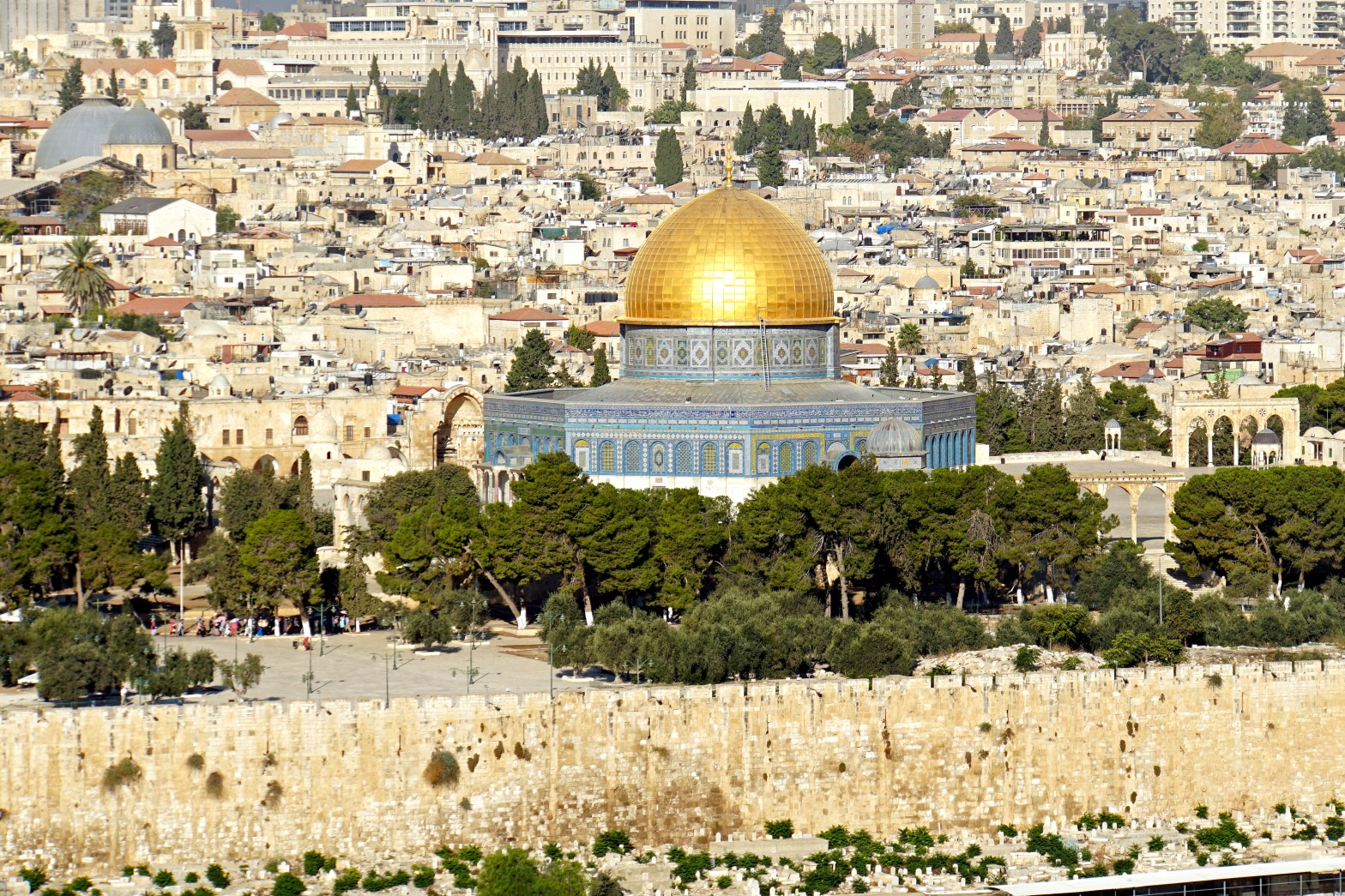
In 2016 UNESCO drafted a resolution titled “Occupied Palestine”, which represents the views and complaints of Jordan and Palestine over the actions of Israel at the Haram-al-Sharif or Temple Mount complex in Jerusalem. There is strong language throughout the resolution that refers to Israel as the “occupying Power” and strongly condemns the country for not adhering to UNESCO protocol regarding sites in East Jerusalem. The resolution refers to the site by its Arabic name, Haram-al-Sharif. Israel claimed that by using the Arabic name UNESCO was ignoring the Jewish connection to the site. Palestine defended the use of the Arabic name by stating that as the text refers to the Muslim places of worship the Arabic name is correct. Israel states that the choice of language is an attempt by UNESCO to deliberately remove the Jewish connection, a strong statement that has been reiterated in recent events.

The Haram-al-Sharif / Temple Mount complex, Jerusalem. Source: Dennis Jarvis.

In July 2017 UNESCO named the old city of Hebron, a revered site for Jews, Christians, and Muslims, a Palestinian world heritage site. This sparked outrage in Israel as the site had not been named a Jewish or Israeli world heritage site. Before the vote there were attempts by both Israel and the US to have the motion blocked. The US ambassador to the United Nations stated that the decision to name Hebron a Palestinian world heritage site was the breaking point in US and UNESCO relations.

The announcement of the US withdrawal from UNESCO was met with praise from Israeli Prime Minister Benjamin Netanyahu who gave a harsh statement about the organisation, stating it had become “a theater of the absurd because, instead of preserving history, it distorts it”. This statement was given as he announced that the Israeli Ministry of Foreign Affairs had been told to prepare for Israel’s withdrawal from UNESCO.

Irina Bokova, the current director general, gave a statement that stressed the importance of US participation in UNESCO’s work and aims. She stressed the importance of universality within the organisation in order to achieve their mission to “strengthen international peace and security in the face of hatred and violence, to defend human rights and dignity”.

The withdrawal has implications for both the US and UNESCO. By continuing their association with UNESCO as a non-member observer state, the US will be able to participate in talks and debates but will be unable to vote on such matters. In removing themselves from the international organisation, the US are lessening their impact as a global power. This decision also has implications for Israel. With Israel announcing their intentions to leave UNESCO alongside the US, this means that the two main supporters of Israel will have no vote on matters regarding Israel and the surrounding countries.

Despite the existing tension between the US and UNESCO, in recent years there has been a conscious effort from the US government to work with the organisation to combat the destruction of cultural heritage. In 2014 then secretary of state John Kerry acknowledged that attacks on cultural and historical sites by Daesh, also known as Islamic State or ISIS, were deliberate attacks on local populations. The change in attitudes towards cultural heritage were reiterated when the International Committee of the Red Cross (ICRC) made an agreement with UNESCO to help rescue objects of cultural value that were at “imminent risk” from conflict. This agreement was made in 2016 and is yet to be used. However, in the future it is sure to be beneficial as ICRC has unique access to cultural heritage sites due to the organisation being present during conflicts. After the governmental withdrawal from UNESCO the protection of cultural heritage falls to non-governmental groups. The most public of these is the US based group in association with the J. Paul Getty Trust and the American Academy of Arts and Sciences who are working to create solutions to combat cultural heritage problems.

The US withdrawal from UNESCO brings to light the issue of an anti-Israel bias within the organisation. The US hopes that their withdrawal will push UNESCO to critique and reform itself. On a wider scale this could create a problem with the work that UNESCO does to protect cultural heritage. In order for the organisation to have power to influence and prosecute it needs to have universal support, with the US pulling away this puts UNESCO in a much weaker position.

#unesco #unitedstates #israel #palestine

The US Withdrawal from UNESCO: Fighting an "anti-Israel" Bias?

UNESCO, a subdivision of the United Nations, aims to to contribute to the building of peace, the eradication of poverty, sustainable development, and intercultural dialogue through education, the sciences, culture, communication, and information.

On October 12th the US State Department announced the US withdrawal from UNESCO, citing an anti-Israel bias, mounting US arrears, and the need for fundamental reform within the organisation. This is not the first time that the US has withdrawn from UNESCO, in 1984 they withdrew claiming bias in favour of the Soviet Union. It wasn’t until 2002, under President Bush, that the US re-joined the organisation. The claims of anti-Israel bias within UNESCO is the most significant, and controversial, factor in the decision to leave.

From the onset Trump has made his support for Israel apparent, and the protection and defense of Israel is a key part of US foreign policy. There are multiple instances that can be looked at in terms of an “anti-Israel bias” within UNESCO. In 2011 the US stopped funding UNESCO in protest of their recognition of Palestine as a full member of the organisation. In recent years UNESCO have created problems with Israel and the US about their treatment of heritage sites in Israel.

In 2016 UNESCO drafted a resolution titled “Occupied Palestine”, which represents the views and complaints of Jordan and Palestine over the actions of Israel at the Haram-al-Sharif or Temple Mount complex in Jerusalem. There is strong language throughout the resolution that refers to Israel as the “occupying Power” and strongly condemns the country for not adhering to UNESCO protocol regarding sites in East Jerusalem. The resolution refers to the site by its Arabic name, Haram-al-Sharif. Israel claimed that by using the Arabic name UNESCO was ignoring the Jewish connection to the site. Palestine defended the use of the Arabic name by stating that as the text refers to the Muslim places of worship the Arabic name is correct. Israel states that the choice of language is an attempt by UNESCO to deliberately remove the Jewish connection, a strong statement that has been reiterated in recent events.

The Haram-al-Sharif / Temple Mount complex, Jerusalem. Source: Dennis Jarvis.

In July 2017 UNESCO named the old city of Hebron, a revered site for Jews, Christians, and Muslims, a Palestinian world heritage site. This sparked outrage in Israel as the site had not been named a Jewish or Israeli world heritage site. Before the vote there were attempts by both Israel and the US to have the motion blocked. The US ambassador to the United Nations stated that the decision to name Hebron a Palestinian world heritage site was the breaking point in US and UNESCO relations.

The announcement of the US withdrawal from UNESCO was met with praise from Israeli Prime Minister Benjamin Netanyahu who gave a harsh statement about the organisation, stating it had become “a theater of the absurd because, instead of preserving history, it distorts it”. This statement was given as he announced that the Israeli Ministry of Foreign Affairs had been told to prepare for Israel’s withdrawal from UNESCO.

Irina Bokova, the current director general, gave a statement that stressed the importance of US participation in UNESCO’s work and aims. She stressed the importance of universality within the organisation in order to achieve their mission to “strengthen international peace and security in the face of hatred and violence, to defend human rights and dignity”.

The withdrawal has implications for both the US and UNESCO. By continuing their association with UNESCO as a non-member observer state, the US will be able to participate in talks and debates but will be unable to vote on such matters. In removing themselves from the international organisation, the US are lessening their impact as a global power. This decision also has implications for Israel. With Israel announcing their intentions to leave UNESCO alongside the US, this means that the two main supporters of Israel will have no vote on matters regarding Israel and the surrounding countries.

Despite the existing tension between the US and UNESCO, in recent years there has been a conscious effort from the US government to work with the organisation to combat the destruction of cultural heritage. In 2014 then secretary of state John Kerry acknowledged that attacks on cultural and historical sites by Daesh, also known as Islamic State or ISIS, were deliberate attacks on local populations. The change in attitudes towards cultural heritage were reiterated when the International Committee of the Red Cross (ICRC) made an agreement with UNESCO to help rescue objects of cultural value that were at “imminent risk” from conflict. This agreement was made in 2016 and is yet to be used. However, in the future it is sure to be beneficial as ICRC has unique access to cultural heritage sites due to the organisation being present during conflicts. After the governmental withdrawal from UNESCO the protection of cultural heritage falls to non-governmental groups. The most public of these is the US based group in association with the J. Paul Getty Trust and the American Academy of Arts and Sciences who are working to create solutions to combat cultural heritage problems.

The US withdrawal from UNESCO brings to light the issue of an anti-Israel bias within the organisation. The US hopes that their withdrawal will push UNESCO to critique and reform itself. On a wider scale this could create a problem with the work that UNESCO does to protect cultural heritage. In order for the organisation to have power to influence and prosecute it needs to have universal support, with the US pulling away this puts UNESCO in a much weaker position.

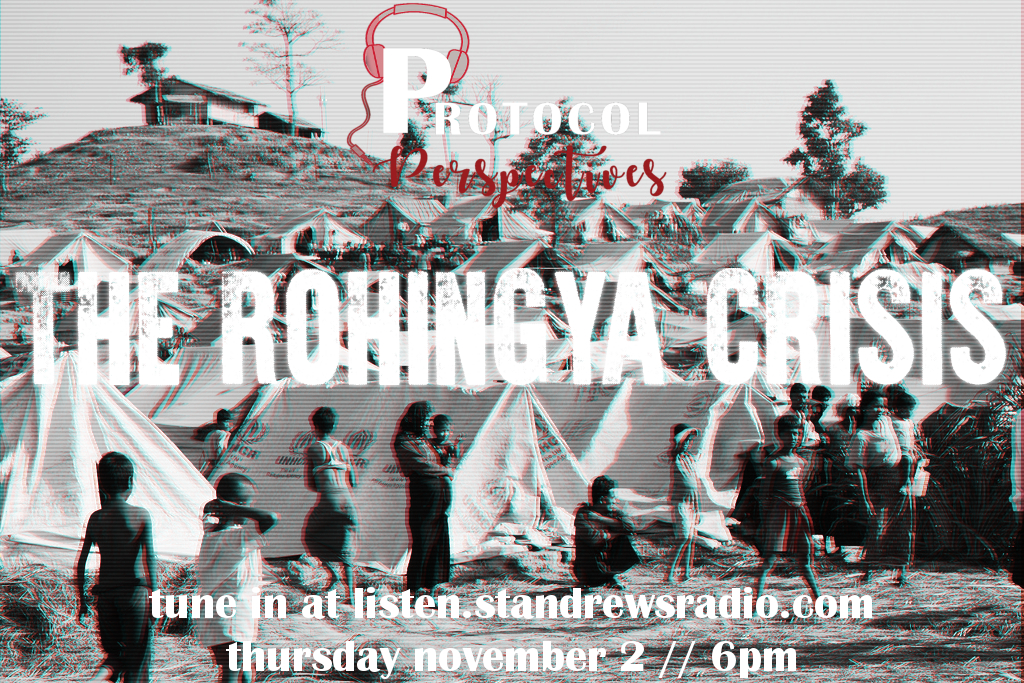
Protocol Perspectives: The Rohingya Crisis

The Rohingya have been described as the ‘world’s most persecuted minority’.

Fuelled by the recent outbreak of violence in August 2017, the humanitarian predicament in Myanmar is deteriorating at an unprecedented rate. This upsurge is not unusual. The reality is that this stateless population has been suffering for decades yet, before this year, their plight was largely underreported by the media.

Who are the Rohingya? What is happening to them and why? Why is so little known about them? In the inaugural episode of Perspectives, we discuss these questions and more.

Original air date: November 2, 2017 at 6pm on St Andrews Radio

Hosts: Kathrina Dabdoub and Elizabeth Barnes

Researchers: Amy Bretherton, Alanna Gow, Kathrina Dabdoub, and Elizabeth Barnes

Special thanks to Dr Matteo Fumagalli, Senior Lecturer at the School of International Relations

Resources

Report of the OHCHR Mission to Bangladesh: Interviews with Rohingyas fleeing from Myanmar since 9 October 2016

Opening Statement by Zeid Ra’ad Al Hussein, United Nations High Commissioner for Human Rights at the Human Rights Council 36th session

Policies of Persecution: Ending Abusive State Policies Against Rohingya Muslims in Myanmar, report by Fortify Rights

Statement by Senior General Min Aung Hlaing via Facebook

The Rohingyas: the most persecuted people on earth?, report by the Economist

Rohingya crisis: Seeing through the official story in Myanmar, report by Jonathan Head for the BBC

Clandestine sex industry booms in Rohingya refugee camps, report by Stefanie Glinski for Reuters

Guilty verdicts for Rohingya trafficking deaths, report by Al Jazeera

The Rohingya, via the Religious Literacy Project at Harvard University

How geopolitics helped create the latest Rohingya crisis, article by Dr Matteo Fumagalli for The Conversation

Myanmar 2016: from enthusiasm to disillusionment, article by Dr Matteo Fumagalli

Breaking the Chains: Disability in Ghana

The stigma against mental health issues and treatment is, unfortunately, one without temporal or geographical boundaries. Though progress has been made through various campaigns and programs, in many regions, treatment practices which are generally considered to be inhumane relics of a time where such illnesses were not fully understood are a commonplace reality.

One such instance which has recently garnered media attention was that of shackling the disabled in Ghana. This method involves chaining individuals to a fixed location, sometimes for years on end. As a result, those being “treated” are allowed little range of motion, forcing them to eat, sleep, and even defecate in the same spot, day in and day out.

These “treatments” take place at the many prayer camps dispersed throughout Ghana, where those with psychosocial and physical disabilities alike are brought to be spiritually healed. Many cultural traditions and religious beliefs shape the local conception of disability, with many expressing the collective idea that disabilities are brought on by some sort of curse or demon, and therefore much of the healing process is grounded in prayer. However, as BBC presenter Sophie Morgan found out on her recent journey to these camps in Ghana, ulterior, more violent methods are also employed. As Morgan wrote in her blog following her two week visit, “It soon dawned on me that for many people, disability was considered not a physical or mental impairment, but in fact a spiritual sickness or curse that could either be healed by prayer or by confinement, and in some cases by physical violence.” It is also noteworthy that the misunderstanding and stigma surrounding mental health issues can result in the shackling of people with no mental disability at all. While some of the psychosocial conditions of the patients are real, some are merely perceived by community members, and have no biological or psychological founding.

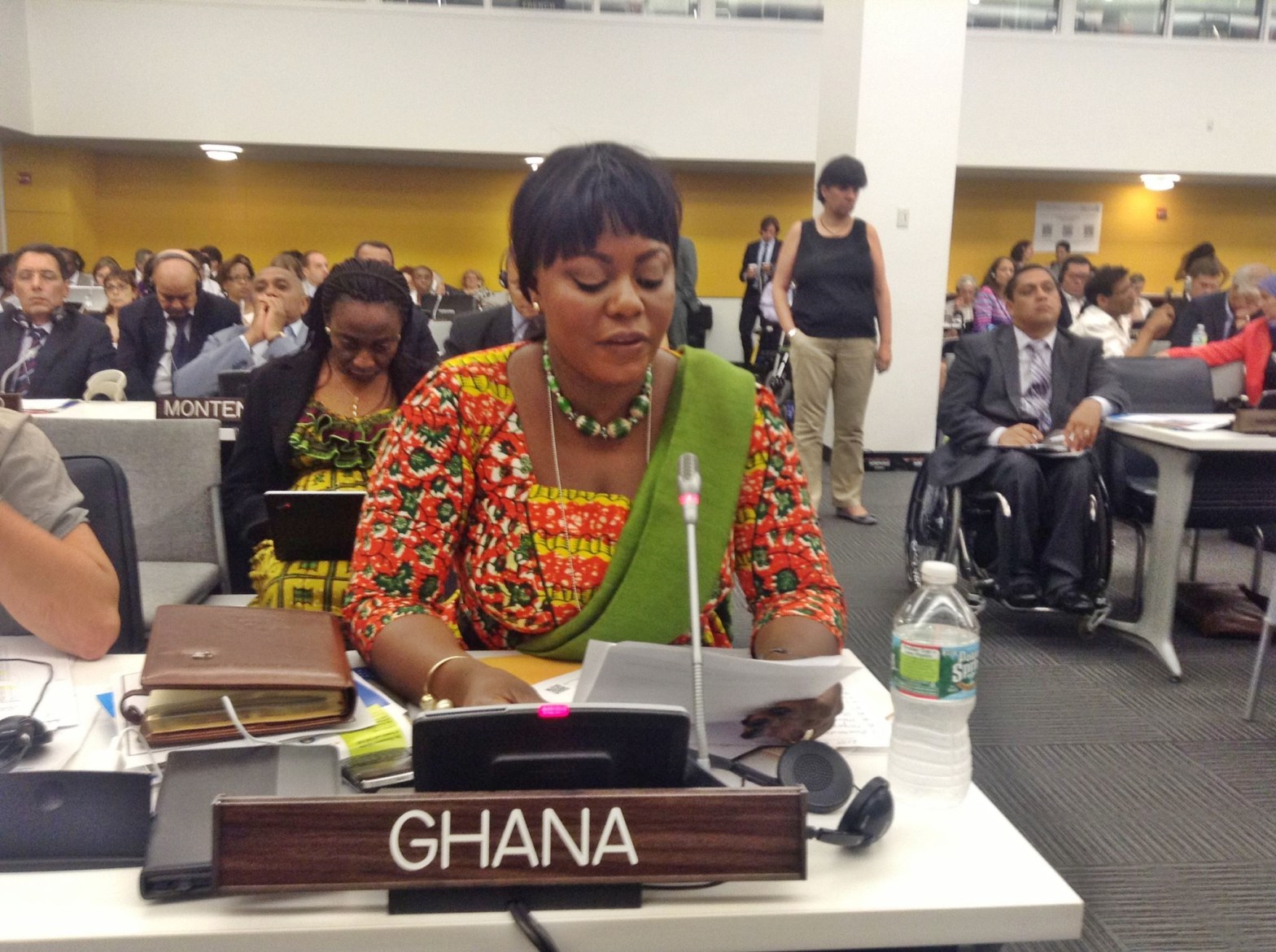
Benita Sena Okity-Duah, the leader of Ghana’s delegation to the United Nations Convention on the Rights of Persons with Disabilities. Source: WikiMedia Commons

Prior to passing the 2012 Mental Health Act, mental health programs and clinics in Ghana operated in accordance to outdated legislation, which had last been revised in 1972. Furthermore, according to a survey conducted by the International Journal of Mental Health Systems, this law “focused mainly on institutional care of the mentally ill and was not in accordance with contemporary international human rights standards regarding mental health care.” The same survey also revealed the lack of actual training in psychiatric care among those who administered treatment in the camps, with only 1 of the 10 surveyed practitioners in faith-based facilities having received formal training.

Though the government outlawed shackling as a treatment method in 2012, this was never formally enforced, allowing the abuse to carry on. Inhumane “treatment” practices are almost a standard in Ghana, in the case of both the mentally and psychically disabled. Due to the lack of sufficient funding for community health services, many families feel they have no alternative option, leaving them to resort to methods which only cause further damage and trauma to patients. This financial inadequacy works in conjunction with the lack of enforcement in health care legislation, thus allowing practices such as shackling and beating the disabled to continue in a widespread fashion. In 2015, following a visit to review the progress of mental health care in Ghana after the 2012 legislation, UN Special Rapporteur on torture Juan E. Méndez issued a press release criticizing the lack of regulation and monitoring of programs in private institutions, like the aforementioned prayer camps. The human rights expert deemed these practices and the conditions of patients within them, “frankly unacceptable” and ones which “constitute torture” that the government can no longer ignore. In response to those who claim the methods as culturally ingrained and voluntary, Méndez retorted decisively, “The reference to culture and tradition cannot be invoked to justify harmful practices to individuals.”

The 2012 Act, as well as the United Nations Convention on the Rights of Persons with Disabilities, requires the government of Ghana to supply community mental health resources through parliament. Though some individuals were released from prayer camps this summer, Ghana still has a long way to go in terms of mental health education and reform. Earlier in October, a coalition of nongovernmental organizations launched the #BreakTheChains social media campaign, urging Ghanaian government officials to fulfill these commitments once and for all. Organizations like Human Rights Watch are continuing to fight for victims of shackling and promote government investment in alternative mental health care methods in order to do away with an inhumane practice which has become a cultural norm.