The crossroads of controversy: Hannah Arendt’s coining of the term ‘the banality of evil’?

Over fifty years ago, the philosopher Hannah Arendt witnessed the end of the trial of the notorious Nazi Adolf Eichmann, who was one of the key figures behind the Final Solution. Hannah Arendt had been chosen by the New Yorker to cover the Eichmann Trial in 1961, which then evolved later into the book ‘Eichmann in Jerusalem: A Report on the Banality of Evil’ (1963). In her book, for the first time, she fully debated and pondered whether evil is really something all-consuming and radical or if it is simply a form of inattention and an inclination to obey orders. From this trial sprung the question of whether one can commit acts of an evil nature without possessing a fundamentally evil character, resulting in the phrase ‘the banality of evil’. The term went on to have a lasting effect on political theory and deals with this grappling question of how utterly ordinary persons commit mass atrocities and appear to have little or no remorse: illuminating the dark capabilities of the modern administrator. What did Hannah Arendt really mean when she coined this term during the trial?

What Hannah Arendt drew from the trial was a collection of characteristics that she labelled as ‘the banality of evil’ whereby individuals could be shallow and oblivious instead of profoundly immoral, allowing them to be capable of crimes against humanity. Since her conclusions, there have been various other investigations to consider whether unimaginable acts can be committed simply to obey orders, such as the experiments by Philip Zimbardo and Stanley Milgram that found that ordinary persons are capable of evil under certain circumstances, where they feel obliged to do whatever is asked of them and to undertake a new role or task. Arendt illustrated her opinions on this subject when in 1961 she expressed her first impressions of Eichmann writing:

‘I was struck by the manifest shallowness in the doer [Eichmann] which made it impossible to trace the incontestable evil of his deeds to any deeper level of roots or motives. The deeds were monstrous, but the doer – at least the very effective one now on trial – was quite ordinary, commonplace, and neither demonic nor monstrous.’

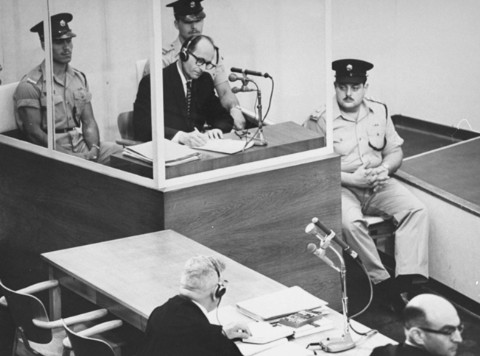
Eichmann taking notes at his trial in 1961

Through this new mode of thought Arendt gained many critics as she attempted to redefine moral responsibility. Her use of the word ‘joiner’ to describe Eichmann by claiming that his whole life he had joined organizations or groups in order to define himself reflects this newfound belief that he was ordinary and that’s what makes what he did so utterly terrifying, is because he was just a normal man who was given a purpose and was so desperate for a role he didn’t pay attention and was zealous to please his leaders. Throughout his life Eichmann had joined organisations in order to define himself, as Arendt wrote that when the Second World War ended ‘it then dawned on him that thenceforward he would have to live without being a member of something or other‘.What she indicates by mentioning these characteristics is that perpetrators have different reasons for committing crimes; they are not always committed because he/she is inherently evil and this must be examined more closely.

Alongside this new analysis of evil was a belief that certain key perpetrators had little thought to the consequences and wider implications of the cause they unswervingly upheld and supported. But is this giving Nazis like Eichmann the benefit of the doubt? After the trial many Jews were appalled by Arendt’s publishings and claimed that she was sympathizing with the Nazis by forming a belief that the Jews brought this fate upon themselves. Her creation of the term ‘the banality of evil’ accompanied this bitterness towards her conclusions in ‘Eichmann on Trial’ as the use of the word ‘banal’ was widely misunderstand. Arendt was referring to her search to uncover how it was possible for crimes to become routinized and recognized with little moral disgust. Her conclusions that Eichmann, who was one of the pivotal members throughout the deportation of Jews during the Holocaust, was no amoral monster deeply affected the Jewish community and continue to be debated fervently today. However, what she certainly did not mean by this was that the acts committed were unexceptional or ordinary in any way; she believed these crimes committed were incomparable to anything the legal court had seen previously and therefore needed to be contended through new legal thought. This was because of the analysis from the trial that led Arendt to believe that this was an exceptional case whereby the violations and crimes were committed without thought and bypassed the normal human function of thinking and acting accordingly. It was this attack on thinking that led her to see that these war crimes should not be viewed solely as an attack on particular groups of society but against humanity as a whole since, without our ability to think and reason, ordinary persons could be capable of taking part in such crimes. As she writes in the New Yorker ‘this case was built on what the Jews had suffered, not on what Eichmann had done’. As a result, Hannah Arendt objected to the trial being conducted by a particular nation-state entirely in the name of its own populace and not in the name of humanity.

Together with these criticisms, other philosophers who believed she was almost defending those Nazis who committed atrocities and genocide tackled her theory; however, this is not what Arendt was saying. She was saying that one might expect a man who is behind the deaths of millions in the cruelest and most brutal of manners to look different, to have eyes that speak of his crimes committed or a look that shows his inhumanity. But when you look at Eichmann you see an ordinary man sitting in a suit, one who followed his bureaucratic role in a political party. Hannah Arendt closely therefore links his passion for National Socialism not inherently with its ideology, but with the joy of having a function that enabled Eichmann to dutifully obey orders whilst going home most nights to his own family having obediently destroyed others. However, Arendt also accounted for the lack of emotion, the lack of any reaction to the images of emaciated bodies put before him, of weeping survivors telling their accounts of loss and unimaginable abuse. In her words she writes he was ‘terrifyingly normal’; unlike the immoral monster she expected to encounter she saw a man who in her eyes was instead incapable of critical thought.

Nonetheless, what shocked, and continues to shock today, is how her search to hold accountable and understand those who committed such evil acts led her to believe that Eichmann should be viewed as an ordinary man searching for a purpose and role in life. Her unflinching analysis of evil takes us to the deepest subconscious of the human mind, where she claims philosophy explains the degradation of individuals’ discernment and contemplation. For Arendt specifically, it demonstrated this: the result of not thinking can absolutely become genocidal.

#antiSemitism #controversy #FinalSolution #opinion #humanrights

The crossroads of controversy: Hannah Arendt’s coining of the term 'the banality of evil'?

Over fifty years ago, the philosopher Hannah Arendt witnessed the end of the trial of the notorious Nazi Adolf Eichmann, who was one of the key figures behind the Final Solution. Hannah Arendt had been chosen by the New Yorker to cover the Eichmann Trial in 1961, which then evolved later into the book ‘Eichmann in Jerusalem: A Report on the Banality of Evil’ (1963). In her book, for the first time, she fully debated and pondered whether evil is really something all-consuming and radical or if it is simply a form of inattention and an inclination to obey orders. From this trial sprung the question of whether one can commit acts of an evil nature without possessing a fundamentally evil character, resulting in the phrase ‘the banality of evil’. The term went on to have a lasting effect on political theory and deals with this grappling question of how utterly ordinary persons commit mass atrocities and appear to have little or no remorse: illuminating the dark capabilities of the modern administrator. What did Hannah Arendt really mean when she coined this term during the trial?

What Hannah Arendt drew from the trial was a collection of characteristics that she labelled as ‘the banality of evil’ whereby individuals could be shallow and oblivious instead of profoundly immoral, allowing them to be capable of crimes against humanity. Since her conclusions, there have been various other investigations to consider whether unimaginable acts can be committed simply to obey orders, such as the experiments by Philip Zimbardo and Stanley Milgram that found that ordinary persons are capable of evil under certain circumstances, where they feel obliged to do whatever is asked of them and to undertake a new role or task. Arendt illustrated her opinions on this subject when in 1961 she expressed her first impressions of Eichmann writing:

‘I was struck by the manifest shallowness in the doer [Eichmann] which made it impossible to trace the incontestable evil of his deeds to any deeper level of roots or motives. The deeds were monstrous, but the doer – at least the very effective one now on trial – was quite ordinary, commonplace, and neither demonic nor monstrous.’

Eichmann taking notes at his trial in 1961

Eichmann taking notes at his trial in 1961

Through this new mode of thought Arendt gained many critics as she attempted to redefine moral responsibility. Her use of the word ‘joiner’ to describe Eichmann by claiming that his whole life he had joined organizations or groups in order to define himself reflects this newfound belief that he was ordinary and that’s what makes what he did so utterly terrifying, is because he was just a normal man who was given a purpose and was so desperate for a role he didn’t pay attention and was zealous to please his leaders. Throughout his life Eichmann had joined organisations in order to define himself, as Arendt wrote that when the Second World War ended ‘it then dawned on him that thenceforward he would have to live without being a member of something or other‘.What she indicates by mentioning these characteristics is that perpetrators have different reasons for committing crimes; they are not always committed because he/she is inherently evil and this must be examined more closely.

Alongside this new analysis of evil was a belief that certain key perpetrators had little thought to the consequences and wider implications of the cause they unswervingly upheld and supported. But is this giving Nazis like Eichmann the benefit of the doubt? After the trial many Jews were appalled by Arendt’s publishings and claimed that she was sympathizing with the Nazis by forming a belief that the Jews brought this fate upon themselves. Her creation of the term ‘the banality of evil’ accompanied this bitterness towards her conclusions in ‘Eichmann on Trial’ as the use of the word ‘banal’ was widely misunderstand. Arendt was referring to her search to uncover how it was possible for crimes to become routinized and recognized with little moral disgust. Her conclusions that Eichmann, who was one of the pivotal members throughout the deportation of Jews during the Holocaust, was no amoral monster deeply affected the Jewish community and continue to be debated fervently today. However, what she certainly did not mean by this was that the acts committed were unexceptional or ordinary in any way; she believed these crimes committed were incomparable to anything the legal court had seen previously and therefore needed to be contended through new legal thought. This was because of the analysis from the trial that led Arendt to believe that this was an exceptional case whereby the violations and crimes were committed without thought and bypassed the normal human function of thinking and acting accordingly. It was this attack on thinking that led her to see that these war crimes should not be viewed solely as an attack on particular groups of society but against humanity as a whole since, without our ability to think and reason, ordinary persons could be capable of taking part in such crimes. As she writes in the New Yorker ‘this case was built on what the Jews had suffered, not on what Eichmann had done’. As a result, Hannah Arendt objected to the trial being conducted by a particular nation-state entirely in the name of its own populace and not in the name of humanity.

Together with these criticisms, other philosophers who believed she was almost defending those Nazis who committed atrocities and genocide tackled her theory; however, this is not what Arendt was saying. She was saying that one might expect a man who is behind the deaths of millions in the cruelest and most brutal of manners to look different, to have eyes that speak of his crimes committed or a look that shows his inhumanity. But when you look at Eichmann you see an ordinary man sitting in a suit, one who followed his bureaucratic role in a political party. Hannah Arendt closely therefore links his passion for National Socialism not inherently with its ideology, but with the joy of having a function that enabled Eichmann to dutifully obey orders whilst going home most nights to his own family having obediently destroyed others. However, Arendt also accounted for the lack of emotion, the lack of any reaction to the images of emaciated bodies put before him, of weeping survivors telling their accounts of loss and unimaginable abuse. In her words she writes he was ‘terrifyingly normal’; unlike the immoral monster she expected to encounter she saw a man who in her eyes was instead incapable of critical thought.

Nonetheless, what shocked, and continues to shock today, is how her search to hold accountable and understand those who committed such evil acts led her to believe that Eichmann should be viewed as an ordinary man searching for a purpose and role in life. Her unflinching analysis of evil takes us to the deepest subconscious of the human mind, where she claims philosophy explains the degradation of individuals’ discernment and contemplation. For Arendt specifically, it demonstrated this: the result of not thinking can absolutely become genocidal.

America First, Human Rights Too

The past few weeks have highlighted an important issue: the United States’ enforcement of border security, in particular its separation of children from their parents. The United States has a responsibility to pursue its citizens’ interests, but traumatizing children, whether they are Americans or not, is not a legitimate means to do so. Putting American interests first does not require putting human rights second.

Immigrant children in a detention centre

Children in the McAllen detention centre, Texas |US Customs and Border Protection

The United States has often drawn back from the world towards isolationism when it felt it was in its best interests. Its refusal to accept Jewish refugees during the Second World War, for example, was established on the basis that Jews could be spies, would be a burden on the nation, and that their rescue would benefit the enemy financially. However, a 1944 Treasury Department report ‘determined that such justifications were unfounded or immaterial’ and speculated that officials had suppressed information about the Holocaust ‘in order to dampen public pressure to assist refugees’.

Today, most would agree that helping refugees flee the horrors of the Holocaust is an imperative that should be carefully balanced with national security, but greatly outweighs the latter concern. President Kennedy stated that the risks and costs of action ‘are far less than the long range risks of comfortable inaction’. Is it not better to err in doing right rather than succeed in failing to do so? If so, what risks are we willing to take so that others can have the same privileges and opportunities we benefit from?

It seems that we are willing to sacrifice little for the common good. The new administration has accepted only eleven Syrian refugees in 2018, a mere trickle compared to the thousands in previous years. Our officials separate children from their parents at the border, striking fear into the hearts of innocent children. Children have been unable to recognize their parents after the separation, blinded by their tears. And we do this because we are afraid they will commit crime or drain the government’s purse, as though their nationality makes them somehow less human than us.

Are these fears rational? Hardly. Fear has some basis in reality, but such fears have been blown out of proportion for political gain by leaders who disdain truth. Native-born Americans are far more likely than legal and illegal immigrants to commit crime, and undocumented immigrants contribute an estimated net $12 billion to the Social Security Administration. Clearly immigrants crossing the border are not primarily ‘rapists’ who are ‘bringing drugs’, as Donald Trump stated in his presidential campaign.

The more we accept such a narrative, the more it will ring true. If we look at alarming incidents in the news through the lense of despair, we will confirm this pessimistic worldview. But this is a poor way to see the world, and the majority of immigrants do not fit such a grim portrait. The majority of immigrants are families fleeing evils greater than most citizens of a prosperous country can imagine, greater than the crisis of ethics and empty consumerism plaguing America. These families want to make a better life for themselves and their children. Who are we, the sons and daughters of immigrants, to deny them their own American Dream?

The United States has every right to secure its borders, but it need not resort to such primitive, merciless tactics to do so. The lives of strangers, especially children, should never be the stage of political theatre. As the self-professed ‘shining city upon a hill’, we as Americans have a moral duty to help those we can. This means taking action, even when it is not simple, even when it has its risks, and it is necessary to shine brightly as a beacon of hope.

Imran Khan claims victory after a violent election period plagues Pakistan

Former cricketer Imran Khan appears set to become Pakistan’s next prime minister, according to the results of Wednesday’s election. The election result marks a transition of leadership from the Pakistan Muslim League-Nawaz party (PML-N) of the ousted former Prime Minister Nawaz Sharif to Khan’s Pakistan Justice Movement (PTI), which promoted an anti-corruption agenda in its campaign.

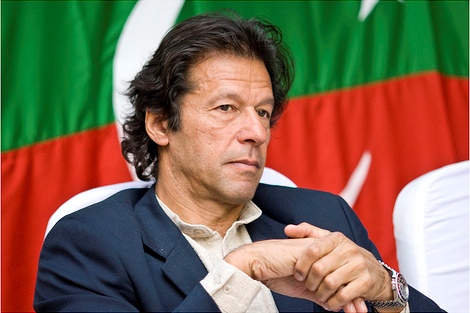
Khan, who captained a World Cup-winning Pakistan cricket team in 1992, has shed his playboy image to become a serious contender in Pakistani politics in recent years. He has promised improvements to the country’s healthcare and education systems, as well as more employment opportunities, making him a popular candidate among Pakistan’s large youth population.

Imran Khan pictured in 2007, by Jawad Zakariya

Imran Khan pictured in 2007, by Jawad Zakariya

However, the legitimacy of this election has already been called into question. PML-N and a handful of smaller parties have rejected the election outcome, accusing the influential Pakistani military of vote-rigging in favour of Khan. Furthermore, Pakistani news outlet Dawn reported on Thursday that the Human Rights Commission of Pakistan has raised concerns regarding the voting process following reports that women were prevented from voting in many areas of the country.

Additionally, this result comes against a backdrop of violence, in what the BBC has called ‘Pakistan’s dirtiest election in years’. Though over 350,000 army personnel were deployed to protect civilians at the polls, Pakistan has seen some of the worst violence in recent years during this election period. On election day, a suicide bombing believed to have targetted a police van killed 32 near a polling station in Quetta, Baluchistan province. Baluchistan is among the areas most affected by violence, as Islamist militants with links to ISIS, al-Qaeda and the Taliban operate in this area and indigenous Baluch insurgents clash with the central government. An earlier attack on a political rally in Mastung in Baluchistan killed 149 people, making it the most deadly attack in Pakistan in over three years. This attack claimed the life of an electoral candidate, Siraj Raisani, the second candidate killed in the space of a week in the run-up to this election. ISIS has claimed responsibility for the attacks in both Quetta and Mastung.

Violence and military control have dominated the democratic process in Pakistan. Benazir Bhutto – who became the first ever female Prime Minister of a Muslim nation in 1988 and the first female leader to have a child whilst in office in 1990 – returned from exile in 2007 with plans to contest the 2008 election, but was assassinated at a Pakistan Peoples Party (PPP) rally. More than ten years on, the 2018 election marks only the second time in the country’s history that one civilian government has handed power to another after serving a full term.

While Khan has the support of Pakistan’s young voters, his is not necessarily a victory for democracy as he has made no indication of a desire to reform Pakistan’s controlled democracy into a full democracy. Pakistan’s military establishment is hugely influential in foreign policy, security and business. Pakistan’s political observers see reducing tensions with India to improve the country’s international reputation as one of Khan’s primary challenges. This will force him to face up against the influence of the military, which has been held largely responsible for ongoing friction across Pakistan’s borders.

However, this election cycle has brought some hope of progress, particularly among Pakistan’s transgender community. Pakistan is now ‘leading in the region’ for transgender rights, according to Uzma Yaqoob of the transgender rights group the Forum for Dignity Initiative, after the passage of the landmark Transgender Persons (Protection of Rights) Bill in 2017. The Bill aims to prevent harassment of and discrimination against transgender people whilst affording the transgender community, known locally as khwaja sira, greater legal recognition. It is thought that five transgender candidates were contesting seats in Wednesday’s election, including Nayyab Ali of the All Pakistan Transgender Election Network, who highlighted the importance of finding a voice for transgender rights in Pakistani politics: ‘The transgender community is progressing slowly in Pakistan — we’re finding positions in various industries like education and journalism. But the real change-making power lies in politics, which is why I’m contesting the elections this year…’ Maria Khan, a transgender woman who survived an attempted assassination orchestrated by her own family, stood as a candidate in Khyber Pakhtunkhwa, where almost 60 transgender women have been killed since 2015. She felt that previous politicians ‘did nothing for the people’ and vowed to tackle issues such as a long water shortage that has affected her community.

It remains to be seen how Pakistan’s major political players – including its influential military – will react to these results and deal with allegations of electoral fraud. However, despite the turbulence of the election period, those celebrating Khan’s victory are hopeful that he can improve Pakistan. One British Pakistani student who cast her vote in Islamabad shared her perspective on the election and Pakistan’s current political climate. She believes that, while voting liberties remain restricted in some areas of the country, measures have been taken to ensure voter security at polling stations: ‘when I went to vote there was police around the polling station, army officers next to where people were voting and rangers… This is at every polling station to ensure a clean, free and fair election and I genuinely believe it was fair’. She added that, in some parts of the country, voters headed to the polls in the face of extreme violence to demand change as they are tired of propaganda, repression and corruption. For many of these voters, Khan represents a transition away from the status quo of Pakistani politics.

She expressed hope that Khan would be the leader to implement development of Pakistan’s economy and social infrastructure, and promote accountability among the country’s political elite. She also suggested that Khan’s primary challenge will be in tackling tensions with India over disputed territory in Kashmir, in which the Pakistani military has been highly involved. The international community will be watching closely to see how Khan approaches this and the many other issues he faces as he assumes office.

From Russia…with Love? Beneath the Surface of the 2018 World Cup

Nothing possesses quite the same ability to simultaneously polarise and unite as the momentous sporting event that is the FIFA World Cup. It is that time again, when football addicts rejoice at spending an unhealthy amount of time shouting at an inanimate screen, while those indifferent suddenly decide that they are fascinated by tennis. Obsessive followers learn several languages just to be able to give their unheard support to a struggling underdog, and shed tears of joy and sorrow as penalties taken by players they have never heard of fly in all directions. Meanwhile, long-suffering partners, spouses and siblings make themselves scarce or else torment their engrossed loved ones with inopportune questions such as, ‘So what exactly is the offside rule?’ during extremely intense VAR investigations.

Russian fans, FIFA 2018

Russian fans at the FIFA World Cup, 2018. Source: Russia Beyond.

Yet, while there is little harm in enjoying the sporting spectacle of the World Cup, it is also vital to delve beneath the surface of the glory and glamour of the coverage to consider the socio-political context not just of this World Cup, but also of the broader host allocation process, and whether anything can be done to make the game more beautiful on both the inside and out.

The UK’s television coverage of the event has been polished until it shines; indeed, both the BBC and ITV studios are extremely conveniently situated in front of Moscow’s St Basil’s Cathedral, undoubtedly one of the most iconic pieces of Russian architecture in the capital, if not the country. Furthermore, it is no coincidence that the seemingly incessant ITV ad breaks are punctuated by Swan Lake-themed music and animations in a celebration of Russia’s rich cultural heritage. From the perspective of the sofa, it would make one eager to hop on a plane out there, were it not for work, school, dissertation research, and the many, far more serious, social, economic and geo-political barriers barring the way.

Beneath this immaculate surface, the issues are voluminous, both within and outside Russia, and in sporting and non-sporting contexts. Human Rights Watch have described this as being the worst period for human rights in Russia since the Soviet Era and, while this may seem alarmist, there are activities taking place in the country which certainly do not belong in the 21st century. Alongside widespread negligence of basic human rights, including freedom of expression and freedom of assembly, minority groups such as the LGBTQ community continue to be subjected to horrific discrimination and abuse. Chechnya, which formed the base of the Egyptian team during the qualifying rounds, is notorious for the abduction, torture and murder of gay men. While the fervent media attention which inevitably accompanies the World Cup could serve as an opportunity to draw attention to these extremely pressing issues, many of the cameras turn a blind eye, and protesters trying to raise the profile of such abuses are silenced by means of force and fear.

One noteworthy aspect of the tournament, often remarked upon by commentators but little explored, is the extent to which fans from regions much farther afield dramatically outnumber those from European nations. This is perhaps an indication that political distance has had a greater bearing upon the turnout than geographical proximity. Twice as many 2018 World Cup tickets were sold in Columbia as in England, and it is hardly surprising. Violent clashes between England and Russia supporters during the Euro 2016 championships marked just one of several incidents which have seen far-right groups establishing for the host nation a reputation for hooliganism. This has been among several reasons why, despite the new ID system placing controls on the Russian fans allowed to attend the matches, many European fans have preferred to enjoy the football fever from within their own countries.

One of the clearest illustrations of the disparity between appearance and reality has been the travel advice given to those who have followed their hearts to Russia. Face paint-covered fans voicing renditions of ‘England’s Going All the Way’ may be the envy of their friends back at home when they get to witness England winning their first ever World Cup penalty shoot-out, but the Football Supporters’ Federation travel advice tells a darker story. In the interests of their safety, LGBTQ fans, for instance, have been advised to conceal their sexuality by refraining from displaying affection in public places. While England’s no. 3 Danny Rose has been kicking up a storm on the pitch, he initially advised his family not to travel to Russia as a result of fears related to racism. Indeed, politicians and members of the British royal family have staged a boycott of the tournament, following on from escalating tensions with Russia since the poisoning of ex-spy Sergei Skripal and his daughter Yulia in Salisbury in March.

When a country that pays so little attention to human rights has been allowed to host a global sporting event of such high prominence and enjoy all the (largely whitewashed) publicity that comes with it, questions have to be asked about the manner in which the FIFA selection process is being carried out. The banning of Sepp Blatter and Michel Platini in 2015 seemed, theoretically, like the start of a new chapter for the Football Association. Yet, as fans are constantly reminded by incessant pitch-side advertising for Qatar Airways, 2022 will see this momentous sporting event jetting off to a host nation where flogging and stoning remain legal forms of punishment. FIFA may show mastery in rhetoric, but when the new rules for the 2026 selection process require a host nation ‘respecting international human rights and labour standards according to the United Nations’ Guiding Principles’, it is difficult to take their words to heart. The irony that the President of the 2026 World Cup host nation has been responsible for entirely disregarding the human rights of Syrian refugees forced from their homes by the diplomatic tactics of this year’s host nation is a blatant illustration of the web of corruption at the heart of the process.

The World Cup unfailingly has unique and invaluable contributions to make to our society. It can bring unity between fans of different nations through a shared love of the beautiful game, and within societies fragmented by internal political disputes. When over 24 million tuned in to watch England fight for their place in the quarter finals, it no longer mattered where people were from, how long they had been in the UK for, or whether they voted Leave or Remain; across the country, strangers embraced like long-lost friends and sang with one voice in the midst of the euphoria. However, whilst caught up in the unexpected rise and fall of teams from across the world, we must not be carried away in the moment, only to let it pass us by.

While all cameras point east, it would be all too easy for the viewer to take comfort that things in Russia do not appear as grisly as predicted. However, the media have a responsibility to not turn our attention away once the players pack up their boots and head home because, alongside disruptive violence, a huge number of voices speaking out for increased justice and equality in Russia are also being suppressed behind the lenses and off the field. By mid-July, the brightly coloured shirts, the flags and the raucous cheering will be gone. But Russia’s human rights abuses will continue unless the same scrutiny under which the country has been held during the build-up to and the duration of the tournament is maintained.

The Belfast Rape Trial and Women’s Rights in Ireland

*TW: Rape, Sexual Assault

Two Irish rugby players walk into a club. It sounds like the start of a joke, but it’s actually the basis of Northern Ireland’s most high-profile rape case that shook the island of Ireland to its core over the past nine weeks. The facts of the case are as follows: on 27th June 2016, the Ulster Rugby players Paddy Jackson and Stuart Olding (both of whom have played on the Irish national rugby team), and their friends Blaine McIlroy and Rory Harrison are on a night out at a club in Belfast. They head back to Paddy Jackson’s house for a house party with a few other people, including the young woman at the centre of the case, at around 2:30 am. At around 5:00 am, the woman leaves — ‘in ‘hysterics’’ and bleeding — in a taxi with Harrison, who drops her home. She texts her friends, telling them she’s been raped. She tells her friend that she doesn’t want to report it because it would mean going up against Ulster Rugby club. Despite this, the next day she attends a sexual assault centre and on 29th June, she contacts the police. The Public Prosecution Service decide there is enough evidence to charge Jackson with rape and sexual assault, Olding with rape, McIlroy with indecent exposure, and Harrison with perverting the course of justice and withholding information. All four strenuously deny the charges, stating that any sexual engagement was consensual. The trial lasts for nine weeks, and on 28th March 2018, all four are unanimously acquitted by jury.

Laganside Courts, Belfast

Laganside Courts in Belfast where the trial took place. Source: Geograph.

From a purely legal perspective, justice was done. Evidence from both sides had been presented, the age-old adversarial system had done its job. Blood was found on the bed where the alleged rape was said to have taken place. It matched the victim’s. Semen matching Olding’s DNA was found on her clothes. The victim had a one centimetre vaginal laceration and bruising on her arms and legs. A doctor at the trial said she could not determine whether the sex was consensual or not. Northern Irish criminal law in relation to sexual offences reflects that of the rest of the UK, with the burden of proof on the prosecution to prove beyond reasonable doubt that a crime was committed. The jury of 12 of the men’s peers, a golden rule in the British criminal system dating back to the Magna Carta, unanimously acquitted them. According to the jury, the prosecution had failed to convince them of any of the charges against the four men. They left the court free men, surrounded by friends and family and a mob of journalists.

From a social perspective, justice is not so straightforward. The trial itself has wreaked havoc on the Irish public. During the trial, local newspapers plastered the story to their front pages, and social media was abuzz. Rugby players are worshipped both sides of the border, and many members of the public came out in support of the four men. The captain of the Irish rugby team even made an appearance at the trial. Much of the case was centred around what happened in the two and half hours during the house party and its aftermath. The woman was in the witness box for eight days while each of the accused took the stand for less than half a day each. The woman’s underwear was paraded around the court and there were sniggers and jeers from the public gallery while she gave evidence. Rape trial “day-trippers” packed the public gallery every single day of the trial. The woman’s conduct throughout the night and after was examined in excruciating detail, from her choice of underwear, whether she wore fake tan, her consumption of alcohol, to the emojis she’d used in texts telling her friend she’d been raped.

Irish Rugby Club Logo. Source: DUFC.

The court was shown evidence of the men’s Whatsapp conversations, which the defence deemed as banter, where Olding told the group “we’re all top shaggers” and that “a bit of spit-roasting went on last night, fellas”, to which others asked “Any sluts get f*****?”. McIlroy wrote “love Belfast sluts.” When they realised the woman had gone to the police, McIlroy sent “Hopefully it will be thrown out. Just a silly little girl […] causing so much trouble for the lads”. The defence barristers labelled the woman as delusional, obsessed with celebrities, demanding to know why she did not scream. They implied that if she had, all the “middle class girls” downstairs at the house party would have have intervened, since there is no way they would tolerate rape. Character evidence for the accused told the court that they were all good guys, modest and helpful. In the aftermath of the trial, there were calls on social media for the woman to be prosecuted for lying, with one star gaelic football player asking for her to be “destroyed in the papers”, stating that “all ye feminists come at me, I’ll throw a kitchen sink at ya”. Another incident saw members of a Belfast football club posting an inappropriate photo depicting two of its players, posing with a trophy in a provocative position between them, pretending to be Paddy Jackson and Stuart Olding. This was presumably also for the purposes of banter.

For these reasons and more, this case has sparked outrage in Ireland and awoken some deep-seated anger at how the victims of sexual assault are treated in the criminal justice system, and by society in general. Protests were held up and down the length of Ireland on the day the judgment was handed down and in the weeks that followed. Placards of “I believe her” were held up outside the courthouse in Belfast, and yellow daffodils were tied to the railings. To be clear, the idea behind “I believe her” was not a statement against the jury’s decision, but that that the system was at fault. Protesters want an overhaul of the justice system, including a blanket ban on reporting of trials until the verdict, closed courts without members of the public, and greater attention to anonymity for victims in Northern Ireland. Donations to rape crisis centres increased in the weeks following the trial, and an advertisement was placed in a local Belfast newspaper urging the Irish Rugby Football Union and Ulster Rugby to bar Jackson and Olding from playing for either team again, with one of the organisers stating that the language the men used, “which was an undisputed fact, shows a deep level of disrespect for women”. When one Irish Senator tweeted his support to the woman at the centre of the trial, Jackson’s lawyers threatened to sue him, and anyone using the hashtag #IBelieveHer. As a PR move, it was a disaster, and in textbook “Streisand Effect” fashion (where the attempt to censor information from the public domain causes it to be publicised more widely), spawned the Twitter hashtag #SueMePaddy, and forced Jackson and Olding to issue further statements of apology to the victim.

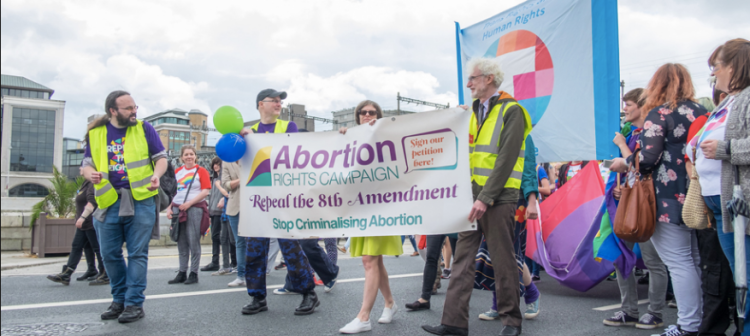
Repeal the 8th Campaign at Dublin Pride 2016. Source: Irish America.

To many, the Belfast rape case has become emblematic of a wider problem in how women and victims of sexual assault on both sides of the Irish border are treated. It has exposed classic misogynistic traits, apparent not only in the sports world but in wider society, where toxic masculinity is seemingly excusable as ‘lad banter’. One only has to think of the Magdalene Laundries and forced symphysiotomies, to see that Ireland historically has an appalling record when it comes to the treatment of women. A report by the UN Committee on the Elimination of Discrimination Against Women (CEDAW) in 2017 found that current laws prohibiting abortion in Northern Ireland constitute violence against women, as well as state neglect when it comes to the lack of sex education. Treatment of victims of sexual assault is little better, with Northern Ireland no longer having a single dedicated rape crisis centre, despite the fact that 823 rapes were reported in 2017, and despite a 40% increase in the number of rapes reported in the past five years. Clare Bailey, a local politician from Belfast, pointed out, “I think this is Ireland’s collective #MeToo movement…the anger is palpable”. This case, coupled with the upcoming referendum in the Republic of Ireland on abortion rights, could mark a turning point for women’s and victims’ rights, both north and south of the border.

Paradise Lost: Leading “A Better Life” with Nestlé’s Peter Brabeck-Letmathe

On the cloudy evening of Monday 9th April, students gathered in the Hotel du Vin to listen intently as the Lafayette Club’s latest guest, the Chairman Emeritus and Former CEO of food giant Nestlé, enlightened us as to the ways in which his company plans to help each one of us to lead “a better life”.

Brabeck takes us on a captivating “journey” of two dimensions: from the beginning to the end of life, and from the earliest history of man to the hustle and bustle of the 21st century. He goes on to highlight four of the most pressing concerns facing the health of humankind today, including an aging population, over-nutrition, under-nutrition, and nutrition-associated disorders. He takes each in turn to propose some of the potential ‘solutions’ which Nestlé have in store. Unable to emphasise strongly enough how far he believes that Nestlé’s role has gone beyond simply producing products, he repeatedly asserts that the company has shifted its focus from the pockets to the wellbeing of its consumers. Improving the health of the general population is a subject which is “close to his heart,” he tells us, with right hand laid sincerely across it, as though one might otherwise fail to believe him.

Source: The Lafayette Club.

His narrative begins in the gardens of “paradise” where humans had to forage and hunt for what he terms “raw” ingredients. He traces this form of existence through to the much more “civilised” society of today and postulates, seemingly without any sense of irony, that humans were driven to develop their food preparation skills through what is described as “climate-induced deforestation”. Whilst intended as a gentle narrative to introduce his new schemes, Brabeck immediately sets the hackles rising. By implying that humans moved to a somehow ‘more civilised’ means of obtaining and preparing food after deforestation and the loss of ‘paradise,’ he seems to frame environmental destruction as beneficial to the quality of human life. His human-centric approach is disturbing, paying little attention to the devastating environmental impacts of the palm-oil induced deforestation for which Nestlé is notorious. Indeed, the dearth of consideration for the environment throughout the talk paints a picture of humanity as living in a bubble of infinite resources without the need to concern ourselves with an inanimate ‘environment,’ rendered irrelevant by its lack of purchasing power.

Perhaps the most admiral example which Brabeck addresses of Nestlé seemingly trying to improve the quality of life of people in the Western world is through their scientific research into finding a drug which could “cure” Alzheimer’s – or, more accurately, potentially mitigate the symptoms of the disease. While it seems Nestlé’s heart may be in the right place with such a development, unfortunately, Brabeck neglected to mention that AC-1204 – the wonder ingredient of these new ‘medical foods’ – has consistently failed to produce significant positive results in recent trials. And while one would think from his rhetoric that Nestlé was leading the way in these developments, Nestlé-funded Accera are in fact nowhere to be found among what have been considered the most promising potential drugs treatments for Alzheimer’s.

But while ‘under-nutrition’ is highlighted as just as serious an issue as an aging population, it is clear that Nestlé is doing very little indeed about it. One area of which it may have been wisest for Brabeck to steer clear was infant formula, and while he was adamant that he was not promoting it as a substitute for breast milk, he made claims that baby formula fortified with DHA “increases cognitive abilities”. Aside from the fact that DHA is already present in breast milk, Brabeck skirted addressing the controversy which, in February, found Nestlé to be guilty of selling infant formula containing harmful sucrose and flavourings in South Africa, despite their own nutritional advice warning of the health risks posed by both. Nestlé do not target these products at the developing world because they are particularly concerned with the welfare of the under-nourished, but because they are fully aware of the negative correlation between poverty and consumer choices. Those steeped in poverty have too few options to be able to run a mile whenever they set eyes on a Nestlé label.

Brabeck also highlighted seemingly noble intentions to tackle gestational diabetes in this section, implying this to be a problem particularly prevalent in the developing world. But it only takes a quick trip to Nestlé’s official website to discover that the studies which have been carried out into this condition took place in Australia, which appears to have the thirteenth highest GDP in the world. Brabeck was right to highlight that under-nutrition remains a dominant issue facing modern societies; all the more curious, then, why Nestlé appears to be doing virtually nothing about it.

It soon emerged that Brabeck’s main mission in coming to talk to us was to flog an exciting new gadget which Nestlé have produced in cooperation with Samsung. The advert – not yet available to the public – depicts a health-conscious, middle-class lifestyle involving every movement and bite being monitored by a shiny phone-like device. The robotic intruder even, at one particularly disturbing point, informed its owner that it was time to sleep, wishing them goodnight and turning out all of the lights. Although it is too early to say, maybe this ‘nourish project’ will facilitate marginal improvements in the eating and exercise habits of a narrow slice of the privileged population with both the financial means and inclination to submit themselves to it. But with so much money being pumped into these schemes, while so few initiatives are in place to improve health and nutrition at a basic human rights level in the developing world, it seems more explicit than ever that, hand over heart or not, Nestlé continues to put profits before anything else. That Brabeck refers to locally sourced produce as a ‘luxury’ item, unable to offer nutritional solutions to those less able to afford it, before going on to promote this expensive new technology without any hint of irony, highlights his limited understanding of the concept. This is brought to the fore when, while attempting to defend his position on water by drawing a distinction between “essential” and “non-essential” resources, he morally points out that despite owning his own swimming pool, he has the decency to pay for that water himself.

Standing up to defend and promote a company so notoriously riddled with controversies and scandal is not a job for the faint-hearted, and I commend his bravery and his unabated self-confidence. Having served as CEO for 11 years, he is used to watching the back of the company that made his name, and all with considerable personal charm and humour. Tales of the sugar in his grandmother’s home-made marmalade would almost be enough to melt the heart, were it not for the knowledge that for every young Peter tucking greedily into his grandmother’s home baking, there’s an impoverished child working day and night, without rights or reward, because of the company he now represents.

The fundamental problem with Nestlé is trust; how can the consumer ever trust anything that they claim? Their past is so steeped in controversy that even if the company suddenly decided that they were genuinely interested in our health, like the boy who cried wolf, no one would believe them. When sucrose-laden baby formula is ‘for baby’s good health’, and Nestlé’s Pure Life water provides ‘healthy hydration’, albeit teeming with microplastics, we have every right to question the nature of this ‘wellbeing’ advice. Despite the benevolent front, we cannot entrust the welfare of humanity to such a self-interested brand, since the whole point of Nestlé is to sell their products – Nestlé products. How can the consumer be sure that these ‘impartial’ technologies will be telling them to eat something because it is in the best interests of their health, rather than in the best interests of boosting sales of Nestlé’s latest ‘healthy’ snacks?

Brabeck valiantly attempts to justify the continuing relevance of Nestlé’s processed foods to a consumer base increasingly conscious of where its food is coming from and what exactly is being put into it. In doing so, he condemns the latest trends favouring ‘raw ingredients’ over processed foods as more healthy options, describing our growing preference for them as ‘basically wrong’. Since he does not elaborate, one can only presume that by this he means to victimise the humble, unprocessed fruit and vegetable, plucked directly from ‘paradise’. It seems that Nestlé have found one element of the food industry which they have as yet been unable to monopolise. And if only the consumer would stop being so stubborn as to keep eating 5-a-day instead of that nourishing KitKat, we could all lead a better life.

I have no doubts whatsoever that Brabeck’s shamelessly plugged book, Nutrition for a Better Life, would make an interesting read. But I for one would much rather invest in a genuinely ethical plate which helps to improve the lives of others than make any contribution to his swimming pool water funds.

Review: “E-Team”

Hidden between the likes of “Narcos” and “Orange is the New Black” is one critically acclaimed Netflix film that needs more attention: “E-Team.” Ross Kauffman and Katy Chevigny’s gripping 2014 documentary shines light on not only the ongoing human rights violations in Syria and Libya, but also on those who risk their lives to investigate and report them. Simultaneously exhilarating, humorous, and moving, “E-Team” delivers a starkly honest story that promises be remembered.

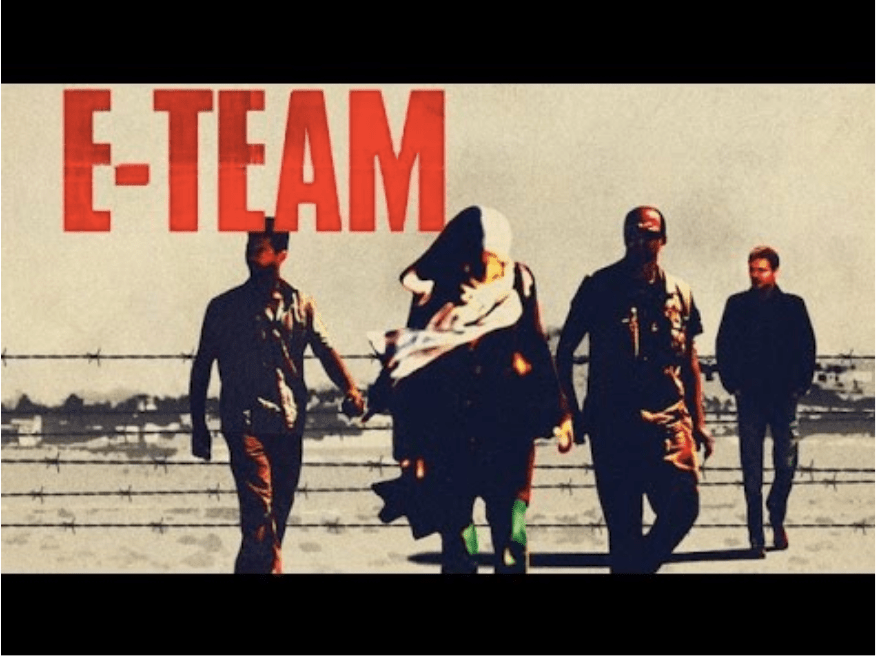
The film opens with a stark scene in a Syrian village where government planes had just dropped cluster bombs, racking up a death toll of some 200 civilians. Human Rights Watch Emergencies Team members Anna Neistat and Ole Solvang are on the ground recording testimonies of distraught and terrified villagers as the sound of explosions continue to erupt in the background – immediately exhibiting the severity of their jobs. A later scene follows the couple as they drive through Turkey in the middle of night only to jump out, hop barbed wire fences, and urgently begin to run to sneak into Syrian territory. Upon success, you here Ole exclaim, “We’re in Syria! We’re Safe!,” demonstrating the E-Team’s enduring charm and humor amidst their high-risk circumstances.

Source: YouTube.

Such juxtapositions remain prominent throughout. One scene the team members are sifting through rubble to collect evidence, and in the next Ole is playing the piano serenading Anna in their sophisticated Paris apartment. Ole and Anna, who are engaged and together raise Anna’s 12 year old son, are evidently the main characters of the film. Of equal merit and interest are the two other E-team members, Fred Abrahams and Peter Bouckaert. Fred, based in Berlin, has been doing field work in crisis situation since Kosovo and went on to play a large role in extraditing Yugoslav president Slobodan Milošević for war crimes in 2001. Fred travels with Peter, a highly-qualified weapons expert, to Libya in hopes of collecting evidence that can be later used against the Gaddafi regime. On their way, Peter pokes fun at Fred for moseying around at the airport and treating himself to a large selection of snacks.

Kauffman and Chevigny have been criticized for perhaps focusing too much on Anna and Ole’s marriage over politically relevant issues. But the intimate details we gleam of the E-Team’s home lives and relationships serve to humanize them. They all live privileged lives, and at times even come off as glamorous world-travelers, yet, we also see their daily battles with the grim realities of their job and the disheartening emotions that come with it. It is obvious that the E-Team carries the stories they encounter in their fieldwork with them home. Despite their frequent frustration and discouragement, all members remain dedicated and realistically hopeful, for Human Rights Watch does have the power to make a difference.

Having faced Slobodan Milošević in the International Criminal Court, Fred speaks of what it felt like to finally utilize his reports and testimonies from Kosovo to help bring justice. He goes on to admit that he knows they’re not going to stop any wars, but that for him it is about “making the war a bit more tolerable for the people stuck in it.” Fred truly believes it is in darkness that abuse takes place, thus it is invaluable to keep investigating, keep reporting to the world, and keep bringing atrocities to light — even if that is all they do.

Anna and Ole find pride and hope in the fact their report confirming that Assad was behind chemical attacks on civilians influenced the action of governments in the UN Security Council. Inciting international response and sanctions on Assad for his use of chemical weapons is something to be proud of, but the couple can’t pretend that it will help the numerous civilians still being killed by conventional weapons. Anna, reflecting on the inevitable heartache that comes with the job, gives the profound reason that inspires her to keep going: “You really go from hope to despair, to hope back to despair, and then you meet somebody on the ground, a witness, a victim, an incredible activist, and you feel that if they haven’t given up, how on Earth do you have the right to give up on them?” With this, we must remember the heart and ultimate reason for this documentary: the victims of human rights violations.

While “E-Team”’s premise is to provide insight into the lives of the emergency team members, it is the scenes of the victims’ crying, retelling the atrocities they suffered or searching through the rubble of their now destroyed home that hit the hardest.

One Syrian man, who lost his brother, sister, and step-brother the same day in a military bombing, defiantly looks into the camera and begs why his own nation’s leader would do this.

Another mother who’s three sons were murdered in her own home asks through tears, “What’s the point of talking?” While she may not have saw reason in that moment, her talking and sharing her experience is important for others around the world to see and hear. Only when we are aware and informed are we able to take or inspire action, and it is this notion that underlies Human Rights Watch ideology and perseverance. “E-Team” is certainly a valuable documentary for showcasing the work of the Emergencies Team, but perhaps more so for expanding the audience that Human Rights Watch can reach and informing a larger public of the brutalities committed at the hands of dictators on innocent people.

“E-Team” is available on Netflix.

#review #libya #syria

Review: "E-Team"

Hidden between the likes of “Narcos” and “Orange is the New Black” is one critically acclaimed Netflix film that needs more attention: “E-Team.” Ross Kauffman and Katy Chevigny’s gripping 2014 documentary shines light on not only the ongoing human rights violations in Syria and Libya, but also on those who risk their lives to investigate and report them. Simultaneously exhilarating, humorous, and moving, “E-Team” delivers a starkly honest story that promises be remembered.

The film opens with a stark scene in a Syrian village where government planes had just dropped cluster bombs, racking up a death toll of some 200 civilians. Human Rights Watch Emergencies Team members Anna Neistat and Ole Solvang are on the ground recording testimonies of distraught and terrified villagers as the sound of explosions continue to erupt in the background – immediately exhibiting the severity of their jobs. A later scene follows the couple as they drive through Turkey in the middle of night only to jump out, hop barbed wire fences, and urgently begin to run to sneak into Syrian territory. Upon success, you here Ole exclaim, “We’re in Syria! We’re Safe!,” demonstrating the E-Team’s enduring charm and humor amidst their high-risk circumstances.

Source: YouTube.

Such juxtapositions remain prominent throughout. One scene the team members are sifting through rubble to collect evidence, and in the next Ole is playing the piano serenading Anna in their sophisticated Paris apartment. Ole and Anna, who are engaged and together raise Anna’s 12 year old son, are evidently the main characters of the film. Of equal merit and interest are the two other E-team members, Fred Abrahams and Peter Bouckaert. Fred, based in Berlin, has been doing field work in crisis situation since Kosovo and went on to play a large role in extraditing Yugoslav president Slobodan Milošević for war crimes in 2001. Fred travels with Peter, a highly-qualified weapons expert, to Libya in hopes of collecting evidence that can be later used against the Gaddafi regime. On their way, Peter pokes fun at Fred for moseying around at the airport and treating himself to a large selection of snacks.

Kauffman and Chevigny have been criticized for perhaps focusing too much on Anna and Ole’s marriage over politically relevant issues. But the intimate details we gleam of the E-Team’s home lives and relationships serve to humanize them. They all live privileged lives, and at times even come off as glamorous world-travelers, yet, we also see their daily battles with the grim realities of their job and the disheartening emotions that come with it. It is obvious that the E-Team carries the stories they encounter in their fieldwork with them home. Despite their frequent frustration and discouragement, all members remain dedicated and realistically hopeful, for Human Rights Watch does have the power to make a difference.

Having faced Slobodan Milošević in the International Criminal Court, Fred speaks of what it felt like to finally utilize his reports and testimonies from Kosovo to help bring justice. He goes on to admit that he knows they’re not going to stop any wars, but that for him it is about “making the war a bit more tolerable for the people stuck in it.” Fred truly believes it is in darkness that abuse takes place, thus it is invaluable to keep investigating, keep reporting to the world, and keep bringing atrocities to light — even if that is all they do.

Anna and Ole find pride and hope in the fact their report confirming that Assad was behind chemical attacks on civilians influenced the action of governments in the UN Security Council. Inciting international response and sanctions on Assad for his use of chemical weapons is something to be proud of, but the couple can’t pretend that it will help the numerous civilians still being killed by conventional weapons. Anna, reflecting on the inevitable heartache that comes with the job, gives the profound reason that inspires her to keep going: “You really go from hope to despair, to hope back to despair, and then you meet somebody on the ground, a witness, a victim, an incredible activist, and you feel that if they haven’t given up, how on Earth do you have the right to give up on them?” With this, we must remember the heart and ultimate reason for this documentary: the victims of human rights violations.

While “E-Team”’s premise is to provide insight into the lives of the emergency team members, it is the scenes of the victims’ crying, retelling the atrocities they suffered or searching through the rubble of their now destroyed home that hit the hardest.

One Syrian man, who lost his brother, sister, and step-brother the same day in a military bombing, defiantly looks into the camera and begs why his own nation’s leader would do this.

Another mother who’s three sons were murdered in her own home asks through tears, “What’s the point of talking?” While she may not have saw reason in that moment, her talking and sharing her experience is important for others around the world to see and hear. Only when we are aware and informed are we able to take or inspire action, and it is this notion that underlies Human Rights Watch ideology and perseverance. “E-Team” is certainly a valuable documentary for showcasing the work of the Emergencies Team, but perhaps more so for expanding the audience that Human Rights Watch can reach and informing a larger public of the brutalities committed at the hands of dictators on innocent people.

“E-Team” is available on Netflix.

Pueblo Sin Fronteras

Contrary to what recent headlines suggest, the caravan of migrants from Latin America traveling north is not a brand new event. Though the 2018 group is the largest yet, estimated to consist of above 1,000 individuals, this organized journey has been occurring since 2010, through the organization Pueblo Sin Fronteras. Pueblo Sin Fronteras facilitates group journeys for migrants looking to escape poor conditions in their home states, who are either seeking asylum or attempting to immigrate to the United States or Mexico. As a humanitarian aid organization, Pueblo Sin Fronteras states that its goal is to advocate for international solidarity and more open and sympathetic borders; to allow entrance for those individuals with nowhere else to turn.

The idea behind an organized group journey is to alleviate some danger on the long trip, through the simple principle of safety in numbers. Pueblo Sin Fronteras has its own organizers to handle logistics, and each individual is responsible for their own provision of food, water, and funding for transportation, should it be necessary. Groups are created by Pueblo Sin Fronteras; each composed of about 15 individuals under one leader. Five groups are then organized into a sector. This is how the caravan is structured and maintains order as the group moves northward.

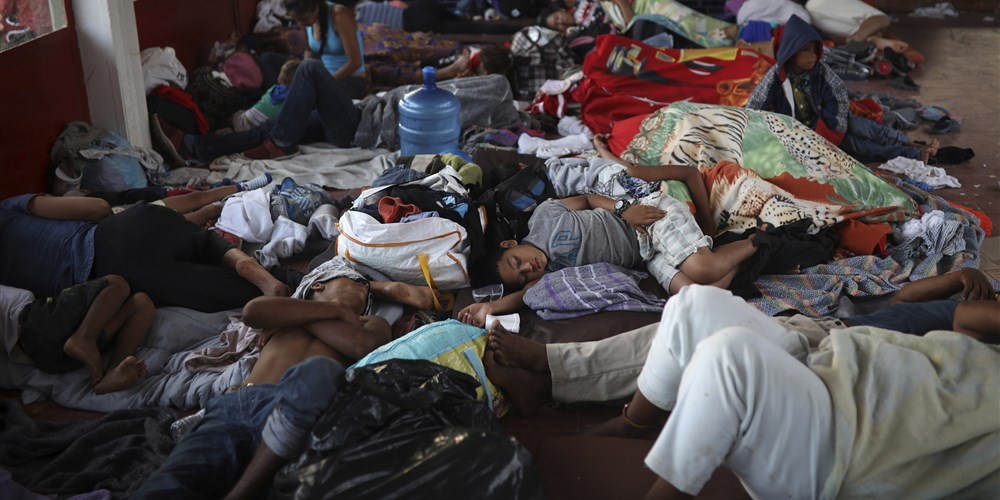
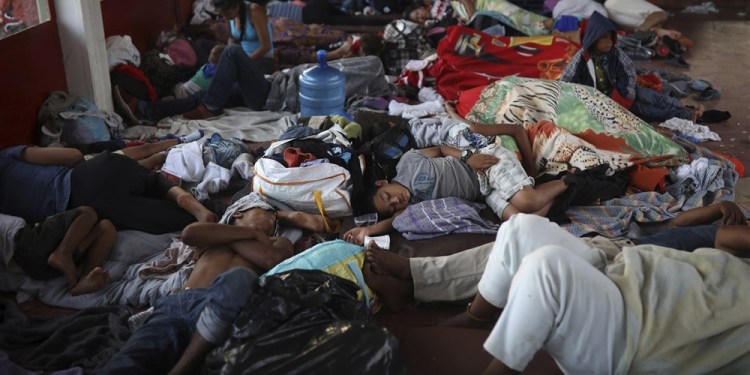
Central American migrants rest. Source: NBC News.

The individuals within the caravan are predominately Honduran or Salvadorian. Both countries are part of what has been dubbed the ‘violent northern triangle’ of Central America. Additionally, both have been ranked among the world’s most violent countries – it is obvious why many would seek to leave, by reputation alone. Individuals from El Salvador and Honduras, as well as others in the caravan cite poverty, violence, lack of opportunity, civil unrest, and corruption as reasons which led them to make the decision to pursue a life elsewhere. At least 300 of the roughly 1,000 people of the caravan are minors. Families, women, and LGBT youth are also among those noted as significant demographics. It is easy for commentators to paint the members of the caravan as either victims fleeing circumstances out of their control or criminals trying to illegally enter a state. It is crucial to keep in mind the tension between the agency these migrants are demonstrating by choosing to seek a better situation, which shows that they are more than passive victims, and the circumstances that pushed them to take such a drastic step and leave their country of origin, which illustrates that their decision to seek a new home was motivated by necessity, not criminal intent. Neither victim nor criminal is the appropriate label to slap on the group, as there are complex factors involved in their current circumstance.

The goal of many traveling with Pueblo Sin Fronteras is to present themselves to migration officials in either Mexico or the United States as asylum seekers. Though under Mexican law, Central Americans who legally enter the state can move freely once within, this does not grant them official status as citizens or immigrants. The immigration process, as well as the process of being declared an asylum seeker, are both complicated. Increasing media attention due to current immigration debates only intensifies the scrutiny on the current Pueblo Sin Fronteras group, worsening the uncertainty of their position in limbo between states.

As of early April, Pueblo Sin Fronteras declared that the caravan would halt in Mexico City, instead of at the United State border as planned. Leaders cited the reason for this as concerns for the high numbers of children within the group, as the next stage would involve dangerous travel by freight train. Some of those who remain in Mexico City will be allowed to stay within Mexico, while, heartbreakingly, some that have traveled so far will be returned to the countries they left. Doubtless some individuals will make the choice to attempt to remain in Mexico illegally, while others may continue on to the US border to seek asylum or illegal crossing. The futures of the travelers and Pueblo Sin Fronteras as an organization are difficult to predict, but the international attention this year’s caravan has received certainly means a change of situation for the organization and its future groups.