The Forgotten Lesson of 'No Place to Hide'

Photo by Daniel von Appen on Unsplash

In the 2014 book No Place to Hide by Glenn Greenwald, the esteemed free-lance journalist recounts his interviews in Hong Kong with the National Security Agency (NSA) whistle-blower Edward Snowden. Based on the data Snowden shared with Greenwald and his colleagues, they exposed the architecture of the post-9/11 US surveillance state. More importantly, they brought attention to the issue of mass surveillance and how the steadfast demolition of individual privacy has quietly become a hallmark of statehood in the digital age. Henry Porter in the Guardian wrote in 2014 that the book was about “…how we let the spies probe our lives with such inadequate controls, and how on earth we fell for the propaganda that this massive apparatus was there to protect, not control, us.”

Greenwald’s first couple of chapters focus on the Stormbrew program in which the U. S. Government has permitted the intelligence agencies to create “corporate partnerships” with large telecom and internet service companies. Although none of the companies are named in Snowden documents, the partnering PRISM program explicitly lists companies such as Apple, Google, Yahoo, Microsoft, and many more, where they have direct access to servers. This not only allows the U. S. and UK Governments to track the data of domestic citizens, but also due to their global customer base they have access to the metadata of a large part of the world’s population. Building on his discussion on NSA programs, Greenwald arrives at the crux of his argument, that “privacy is a core condition of being a free person”. His book is a challenge to every citizen of a democratic state to rid themselves of the norm that “I have nothing to hide”, because it is inherently shunning concerns for individual liberty as a form of deviance.

Five years after the release of Greenwald’s book, it has become clear that the message has fallen on deaf ears. In his 2007 presidential campaign, former President Barack Obama stated that the Bush administration “puts forward a false choice between the liberties we cherish and the security we provide”. Yet Obama failed to address the core issue at hand in the book and in Snowden’s fundamental message. His administration not only aggressively targeted Snowden personally, but it also more importantly expanded many of the programs of the Bush era. When Donald Trump was elected president in 2016, Greenwald wrote in the Washington Post that “by putting a prettier liberal face on these policies, and transforming them from a symbol of GOP radicalism into one of bipartisan security consensus, the president entrenched them as permanent fixtures of the American presidency”.

Greenwald’s work centres on the mass surveillance of the domestic population of American and British citizens, but the most important story within mass surveillance today takes place in China, not the United States. If there was to be any doubt of the power of mass surveillance in the hands of unchecked authority, look no further than China under rule of Xi Jinping. In the past five years, the world’s digital footprint has increased dramatically in both intensity and scope. In the most populous country in the world, Xi Jinping and the Communist Party are using that footprint to govern the lives of their population with a contracting iron fist. In China, dissent and individuality are the enemy of progress and the extent of the Communist Party’s effort to quench it is seemingly boundless. An example of such Orwellian rule can be observed in the city of Kashgar in Xinjiang province where the ethnic minority population of Uighurs are being controlled through facial recognition, cameras, GPS tracking, audio, metadata, and other mechanisms of suppression.

China is changing, and so is the international impact of their domestic surveillance. During the Beijing Olympics in 2008, their awesome surveillance technology was on display for the world to see and it did not go unnoticed. In April, The New York Times showed how the Chinese are selling this equipment as “the future of governance” and have already installed system in Ecuador called ECU-911. This system was largely made by two Chinese companies: the state-controlled C.E.I.E.C. and Huawei.

However, the Ecuadorian system is not the first or the last version of the “exported surveillance state”. According to Freedom House via the New York Times, “18 countries — including Zimbabwe, Uzbekistan, Pakistan, Kenya, the United Arab Emirates and Germany — are using Chinese-made intelligent monitoring systems, and 36 have received training in topics like ‘public opinion guidance’.” What this “new normal” of statehood entails is yet to be known, but Greenwald’s message of mass surveillance as a universal temptation for any unscrupulous power has proven itself alarmingly accurate.


What’s Next? The U.S. Women’s National Team’s Fight for Equal Pay

The U.S. Women’s National Team

The United States Women’s National Team (USWNT) just celebrated a 2-0 victory over the Netherlands, winning their fourth World Cup. This win broke their own previous record of most wins in the tournament’s history; Germany trails them with two total World Cup wins. But despite their record-breaking achievements, one glaring issue remains: the pay gap between the Women’s and Men’s National Teams. This has been a recent point of contention between the two teams, exacerbated by the fact that the USWNT generates more revenue, and has historically been more successful than the men’s team. In fact, the Men’s National Team has not won a single World Cup.

In 2016, members of the USWNT filed a complaint with the Equal Opportunity Employment Commission against the United States Soccer Federation. Despite their higher level of success than the men’s team, the women’s team were being paid less across the board. One of their main frustrations was the disparity in generated profits between the two teams. The 2016 US Soccer Federation Budget Report projected that the USWNT would bring in more than $17 million in revenues, including a $5 million profit for the Federation, while the US Men’s National Team was expected to run a deficit of $1 million.

Three years have passed since this complaint was filed, yet the issue still remains. And it has not been forgotten: at the stadium in France where the USWNT won their fourth World Cup victory with a 2-0 win versus the Netherlands, cheers for their victory quickly turned into chants of “equal pay”. Megan Rapinoe, one of the captains of the USWNT, has used her platform to raise awareness of her team’s ongoing fight. Addressing this, Rapinoe said, “We can’t do anything more to impress, to be better ambassadors, to take on more, to play better, to do anything. It’s time to move that conversation forward to the next step.”

This next step, adjusting the pay structure of the women’s team to match the men’s, seems straightforward. However, according to sports law expert Michael McCann, many elements factor into the pay structure of each team, each a result of separate collective bargaining agreements. But regardless of the technicalities, the issue remains that throughout the United States, women are paid on average 80 cents to a man’s dollar. This is not a new revelation, but the USWNT have now been given a global platform to promote change. In the ongoing fight for equal pay, the US Women’s National Team has set an example for all women across the U. S. to demand what they are owed.

#USWNT #USWomensNationalTeam #UnitedStates #Feminism #activism #FIFA

What's Next? The U.S. Women's National Team's Fight for Equal Pay

The U.S. Women’s National Team

The United States Women’s National Team (USWNT) just celebrated a 2-0 victory over the Netherlands, winning their fourth World Cup. This win broke their own previous record of most wins in the tournament’s history; Germany trails them with two total World Cup wins. But despite their record-breaking achievements, one glaring issue remains: the pay gap between the Women’s and Men’s National Teams. This has been a recent point of contention between the two teams, exacerbated by the fact that the USWNT generates more revenue, and has historically been more successful than the men’s team. In fact, the Men’s National Team has not won a single World Cup.

In 2016, members of the USWNT filed a complaint with the Equal Opportunity Employment Commission against the United States Soccer Federation. Despite their higher level of success than the men’s team, the women’s team were being paid less across the board. One of their main frustrations was the disparity in generated profits between the two teams. The 2016 US Soccer Federation Budget Report projected that the USWNT would bring in more than $17 million in revenues, including a $5 million profit for the Federation, while the US Men’s National Team was expected to run a deficit of $1 million.

Three years have passed since this complaint was filed, yet the issue still remains. And it has not been forgotten: at the stadium in France where the USWNT won their fourth World Cup victory with a 2-0 win versus the Netherlands, cheers for their victory quickly turned into chants of “equal pay”. Megan Rapinoe, one of the captains of the USWNT, has used her platform to raise awareness of her team’s ongoing fight. Addressing this, Rapinoe said, “We can’t do anything more to impress, to be better ambassadors, to take on more, to play better, to do anything. It’s time to move that conversation forward to the next step.”

This next step, adjusting the pay structure of the women’s team to match the men’s, seems straightforward. However, according to sports law expert Michael McCann, many elements factor into the pay structure of each team, each a result of separate collective bargaining agreements. But regardless of the technicalities, the issue remains that throughout the United States, women are paid on average 80 cents to a man’s dollar. This is not a new revelation, but the USWNT have now been given a global platform to promote change. In the ongoing fight for equal pay, the US Women’s National Team has set an example for all women across the U. S. to demand what they are owed.

Opinion: A Street Fight With Authoritarianism

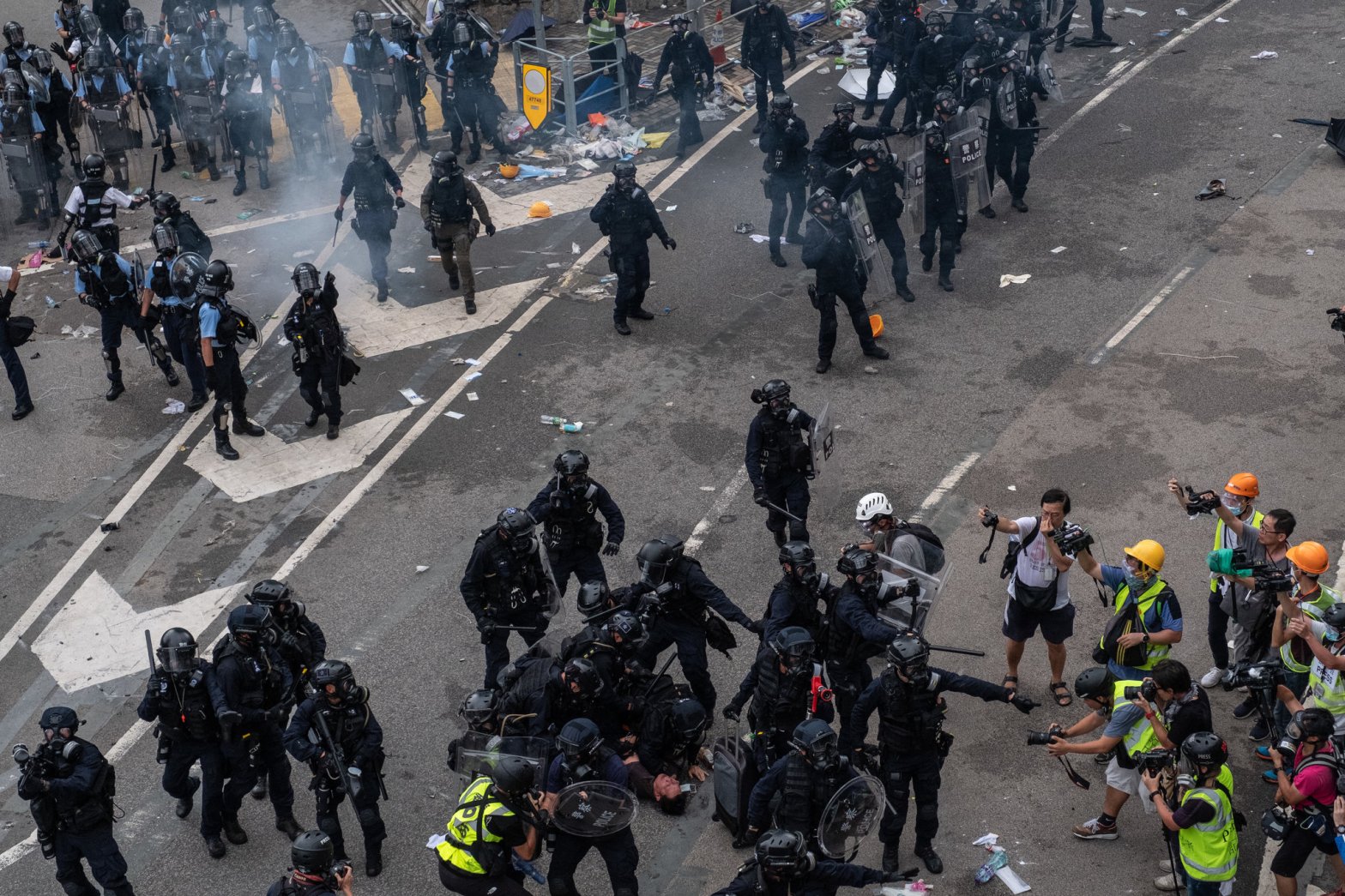
Protestors clash with police, via Lam Yik Fei for The New York Times

22 years ago, Hong Kong was handed back to China. The Chinese promise was that they would allow us to have our own autonomy until 2047, upholding the ‘One Country, Two systems’ until then. The recent proposal of an extradition bill backed by the government of the People’s Republic of China (PRC) challenges this in a fundamental way.

On June 9th, over 1.2 million protestors gathered in the streets of Hong Kong to protest what they see as a threat to the sovereignty of the former British colony that has been governed as a separate democratic entity from the PRC. Since the 9th of June, there has been a steadily increasing number of protesters, reaching around two million at another demonstration on June 15th. As of the 18th of June, the bill has been suspended but protestors will accept nothing less than the complete dismissal of the proposal.

The inciting issue was in April when the Hong Kong Security Bureau submitted a proposal to amend the extradition bill in order prosecute Chan Tong-ka, a Hong Kong teenager who was accused of murdering his girlfriend in Taipei before he fled to Hong Kong. The proposed amendment would extend the case-based surrender arrangements to cover the currently excluded “parts of the People’s Republic of China”. This would imply that the government would be able to handover fugitives to places with which the city has no long-term bilateral extradition agreement, including mainland China and Taiwan. The argument by Chinese officials is that this bill would allow the creation of a criminal safe-haven in Hong Kong. It is also noted that foreigners in Hong Kong will be applicable to the bill. Although the Chief Executive (CE) of Hong Kong will technically hold the final decision over the extradition to mainland China, it remains doubtful that he or she would be able to remain neutral under the pressure of the Beijing authorities due to the fact that the CE is both elected by the Beijing-dominated election committee and is accountable to Beijing according to the Basic Law of Hong Kong.

This has resulted in backlash from the people of Hong Kong because they view the bill as a way for China to increase their influence over Hong Kong by chipping away at their autonomy. The people of Hong Kong believe that actions including banning a pro-independence political party and barring activists from seeking elected office will follow in the immediate footsteps of the bill should it be passed. Moreover, it threatens the basic civil liberties that the people of Hong Kong, myself included, were promised. If this bill is passed, it could threaten activists, especially those who fight for independence, with a greater risk of extradition to the mainland. This is all because of their use of freedom of speech, which they are entitled to under the basic law of Hong Kong, in order to express their own views.

My family and I have been living in Hong Kong for as long as I can remember, and being far from home has made it difficult to comprehend the massive emotional toll and the disruption of people’s lives in Hong Kong. I am so thankful for my friends, family and everyone both in Hong Kong and in the international community who have been supporting us, protesting, or just trying to spread the word about the effects this bill may have. The protests are not for new legislation or drastic changes, but are protests to retain and cling onto the little autonomy we seem to have left. We are our own political entity by law and it saddens me that over two million bodies are not enough prove the people’s will and highlight of the intrusive nature the bill on our entire legislative system. However, the international attention has ensured us that we are not marching alone.

Crisis y política: las repercusiones de la ignorancia de Trump sobre los paquetes de ayuda financier

Inmigrar desde Honduras, El Salvador, o Guatemala a los Estados Unidos no es una decisión fácil o feliz; es una decisión dolorosa y difícil en la que se deja atrás familia, cultura, violencia, peligro, cariño, y miedo en busca del “sueño americano” que promete una vida mejor para la persona tal vez algún día, con suerte, para su familia también. La inmigración centroamericana a los Estados Unidos sube y baja proporcionalmente al nivel de violencia e inseguridad que existe en estos países. De hecho, un estudio encontró que, en esta región, por cada incremento de diez homicidios, seis menores de edad adicionales inmigran a los Estados Unidos. Por esta razón llega como sorpresa que tras una disminución en el nivel de violencia la región el presidente estadounidense, Donald Trump, haya declarado que va a cancelar 500 millones de dólares de ayuda financiera a estos tres países. Declarando que no está ‘jugando‘, Trump afirma que Guatemala, El Salvador y Honduras no han podido parar la inmigración ilegal a los Estados Unidos y por ende no merecen esta ayuda. Lo curioso es que desde el año 2016, el número de salvadoreños cruzando la frontera a los Estados Unidos se ha reducido a la mitad, bajando de 72,000 personas en el 2016 a 32,000 en el 2018.

Fuente: Jose Cabezas, PBS News Hour.

El gobierno estadounidense ha contribuido millones de dólares desde el 2015 bajo la iniciativa ‘Alianza para la prosperidad’ (Alliance for Prosperity) de la administración de Obama. El programa, reporta el Washington Times, ha ayudado a estabilizar la región a través de contribuciones a programas que “entrenan personal de seguridad, proveen trabajos para juventud en riesgo, aumentan recaudación de impuestos, y una variedad de otros proyectos”. La mayoría de estos proyectos tenían como su objetivo ‘prevenir [que continúe la] migración’ a los Estados Unidos. Estos programas le han dado oportunidades a gente que había sido deportada recientemente con el fin de prevenir futuros intentos a inmigrar, y han sido especialmente exitosos en El Salvador, donde el nivel de violencia y crimen han bajado drásticamente en los últimos años (a pesar de haber subido por primera vez durante el mes de Abril del 2019 a causa de violencia entre pandillas). En el 2015 y el 2017 en El Salvador, la Agencia del Desarrollo Internacional de los Estados Unidos (USAID) reporta, hubo una disminución de un 42% de homicidios a través del país, y una disminución de un 61% en municipalidades en las que opera USAID. Dado el éxito de la Alianza para la prosperidad en El Salvador (en Honduras y Guatemala la iniciativa a tenido menos éxito, aunque igual a ayudado a bajar niveles de homicidio y violencia), es difícil entender el razonamiento tras la decisión del presidente Trump de terminar esta ayuda financiera.

El gobierno salvadoreño está tratando de tomar sus propias medidas para mitigar el impacto de la furia de Trump. La Asamblea Legislativa está en medio del proceso de pasar una reforma que protegerá inmigrantes deportados ya que las cifras de deportaciones de los Estados Unidos continúan subiendo— este año han deportado casi 14% mas salvadoreños que durante este mismo periodo el año pasado.

Fuente: Stringer, The Guardian.

Trump parece estar enfadado por las caravanas de inmigrantes centroamericanos que llegan al borde entre México y los Estados Unidos, y ha presionado a Méjico a ‘frenar los crecientes flujos a su país. El presidente ha dicho que si Méjico no controla la situación, cerrará pedazos de la frontera. Es por esto por lo que el gobierno de López Obrador repatrió casi 12.000 personas en las tres primeras semanas de abril— unas 3,000 personas más que las que se repatriaron durante todo el mes de abril del 2018. Desafortunadamente, se reporta que un tercio de estos inmigrantes son menores de edad. Historias de adolescentes que dejan atrás su familia y de pánico ‘después de que cientos fueron detenidos en una redada‘ se vuelven cada vez más comunes. La violencia del gobierno mejicano es táctica y traumática— un campesino hondureño que viajaba con su nieto hace algunas semanas cuenta que las autoridades ‘esperaron hasta que estuvimos durmiendo y cayeron sobre nosotros, agarrando niños y mujeres’. De una caravana de aproximadamente 3.000 inmigrantes, cientos de fueron detenidos esa noche, y cientos más tuvieron que escapar a los peligrosos bosques que rodean el área. Al día siguiente se veían coches de bebés abandonados por las calles.

Fuente: Carlos García Rawlins, The Guardian.

Instancias como esta se volverán más y más comunes si el presidente estadounidense efectivamente consigue reubicar los 500 millones de dólares previamente aprobados por el congreso para Centroamérica. Las presiones creadas por el gobierno actual tendrán el efecto opuesto a lo que pretende hacer, ya que está claro que más violencia resulta en más migración. Tanto los países centroamericanos como los Estados Unidos sufrirán las repercusiones de una política mal informada y odiosa. Con un tercio de los inmigrantes siendo niños, es difícil entender que Trump esté tan convencido de que los Estados Unidos solo importa criminales y drogas de Centroamérica y con los éxitos que el gobierno mismo ha declarado, parece contradictorio que la solución al problema sea fuerza bruta y la ausencia de el paquete de ayuda económica que tanto a beneficiado a la región en los últimos años.

#migrants #immigrantsrights #inmigración

Crisis y política: las repercusiones de la ignorancia de Trump sobre los paquetes de ayuda financiera a estadounidense para Centroamérica

Inmigrar desde Honduras, El Salvador, o Guatemala a los Estados Unidos no es una decisión fácil o feliz; es una decisión dolorosa y difícil en la que se deja atrás familia, cultura, violencia, peligro, cariño, y miedo en busca del “sueño americano” que promete una vida mejor para la persona tal vez algún día, con suerte, para su familia también. La inmigración centroamericana a los Estados Unidos sube y baja proporcionalmente al nivel de violencia e inseguridad que existe en estos países. De hecho, un estudio encontró que, en esta región, por cada incremento de diez homicidios, seis menores de edad adicionales inmigran a los Estados Unidos. Por esta razón llega como sorpresa que tras una disminución en el nivel de violencia la región el presidente estadounidense, Donald Trump, haya declarado que va a cancelar 500 millones de dólares de ayuda financiera a estos tres países. Declarando que no está ‘jugando‘, Trump afirma que Guatemala, El Salvador y Honduras no han podido parar la inmigración ilegal a los Estados Unidos y por ende no merecen esta ayuda. Lo curioso es que desde el año 2016, el número de salvadoreños cruzando la frontera a los Estados Unidos se ha reducido a la mitad, bajando de 72,000 personas en el 2016 a 32,000 en el 2018.

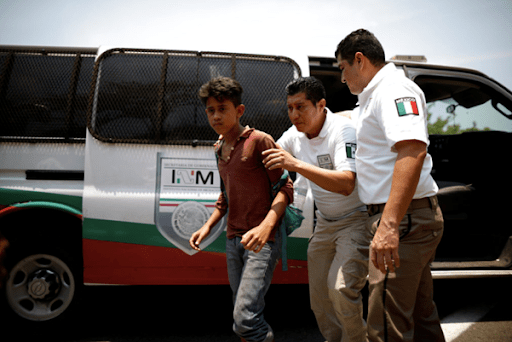
Dos empleados de Migraciones que detienen a un chico de Centroamérica

Fuente: Jose Cabezas, PBS News Hour.

El gobierno estadounidense ha contribuido millones de dólares desde el 2015 bajo la iniciativa ‘Alianza para la prosperidad’ (Alliance for Prosperity) de la administración de Obama. El programa, reporta el Washington Times, ha ayudado a estabilizar la región a través de contribuciones a programas que “entrenan personal de seguridad, proveen trabajos para juventud en riesgo, aumentan recaudación de impuestos, y una variedad de otros proyectos”. La mayoría de estos proyectos tenían como su objetivo ‘prevenir [que continúe la] migración’ a los Estados Unidos. Estos programas le han dado oportunidades a gente que había sido deportada recientemente con el fin de prevenir futuros intentos a inmigrar, y han sido especialmente exitosos en El Salvador, donde el nivel de violencia y crimen han bajado drásticamente en los últimos años (a pesar de haber subido por primera vez durante el mes de Abril del 2019 a causa de violencia entre pandillas). En el 2015 y el 2017 en El Salvador, la Agencia del Desarrollo Internacional de los Estados Unidos (USAID) reporta, hubo una disminución de un 42% de homicidios a través del país, y una disminución de un 61% en municipalidades en las que opera USAID. Dado el éxito de la Alianza para la prosperidad en El Salvador (en Honduras y Guatemala la iniciativa a tenido menos éxito, aunque igual a ayudado a bajar niveles de homicidio y violencia), es difícil entender el razonamiento tras la decisión del presidente Trump de terminar esta ayuda financiera.

El gobierno salvadoreño está tratando de tomar sus propias medidas para mitigar el impacto de la furia de Trump. La Asamblea Legislativa está en medio del proceso de pasar una reforma que protegerá inmigrantes deportados ya que las cifras de deportaciones de los Estados Unidos continúan subiendo— este año han deportado casi 14% mas salvadoreños que durante este mismo periodo el año pasado.

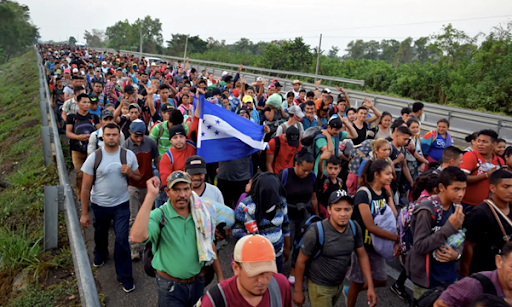
Inmigrantes de Centroamérica y Cuba caminan en una autopista hacia los EE.UU.

Fuente: Stringer, The Guardian.

Trump parece estar enfadado por las caravanas de inmigrantes centroamericanos que llegan al borde entre México y los Estados Unidos, y ha presionado a Méjico a ‘frenar los crecientes flujos a su país. El presidente ha dicho que si Méjico no controla la situación, cerrará pedazos de la frontera. Es por esto por lo que el gobierno de López Obrador repatrió casi 12.000 personas en las tres primeras semanas de abril— unas 3,000 personas más que las que se repatriaron durante todo el mes de abril del 2018. Desafortunadamente, se reporta que un tercio de estos inmigrantes son menores de edad. Historias de adolescentes que dejan atrás su familia y de pánico ‘después de que cientos fueron detenidos en una redada‘ se vuelven cada vez más comunes. La violencia del gobierno mejicano es táctica y traumática— un campesino hondureño que viajaba con su nieto hace algunas semanas cuenta que las autoridades ‘esperaron hasta que estuvimos durmiendo y cayeron sobre nosotros, agarrando niños y mujeres’. De una caravana de aproximadamente 3.000 inmigrantes, cientos de fueron detenidos esa noche, y cientos más tuvieron que escapar a los peligrosos bosques que rodean el área. Al día siguiente se veían coches de bebés abandonados por las calles.

Inmigrantes de camino a los EE.UU. que reciben provisiones.

Fuente: Carlos García Rawlins, The Guardian.

Instancias como esta se volverán más y más comunes si el presidente estadounidense efectivamente consigue reubicar los 500 millones de dólares previamente aprobados por el congreso para Centroamérica. Las presiones creadas por el gobierno actual tendrán el efecto opuesto a lo que pretende hacer, ya que está claro que más violencia resulta en más migración. Tanto los países centroamericanos como los Estados Unidos sufrirán las repercusiones de una política mal informada y odiosa. Con un tercio de los inmigrantes siendo niños, es difícil entender que Trump esté tan convencido de que los Estados Unidos solo importa criminales y drogas de Centroamérica y con los éxitos que el gobierno mismo ha declarado, parece contradictorio que la solución al problema sea fuerza bruta y la ausencia de el paquete de ayuda económica que tanto a beneficiado a la región en los últimos años.

The Biopolitics of Conservation

Millions of India’s indigenous tribal people are threatened by the invalidation of the Forest Rights Act. Source: Survival International

The concept of biopolitics, first discussed in detail by the philosopher Michel Foucault, has been of great use to theorists and critics in understanding many aspects of modern political life. In this article, I want to show that biopolitics can inform environmental activism to the detriment of human rights, especially those of indigenous and tribal people.

Biopolitics refers to a kind of political rationality. It seeks to administer life and populations, to ensure that the ‘right’ kind of life develops within those populations and is properly organised. In his commentary, Foucault contrasts biopolitics with older forms of sovereign power which had the right to decide life and death for their subjects. Relatedly, biopolitics involves the power to foster and encourage life, or to discourage it to the point of death. Unsurprisingly, Foucault explicitly links biopolitics to racism: the goal of biopolitics is the ‘improvement’ of a society, attained by giving aid certain groups and disallowing others. Disallowing does not necessarily involve killing outright but can involve a kind of ‘malignant neglect’ in which certain groups are allowed to fester in poverty, homelessness, and illness without protection from the state. It can also, however, involve the use of violent force.

In a recent opinion piece for The Guardian, the writer Rebecca Solnit argued that there exists an almost unbridgeable gap between racism and violence on one side and the environmentalist movement on the other. The image of the environmentalist movement presented by Solnit is an inspiring one, but it is also, sadly, an overly romantic and ultimately incorrect image. In reality, environmentalists have at times committed gross acts of violence and racism, most often against indigenous people, in the name of their cause.

A recent Indian Supreme Court ruling shows that the environmentalist movement is at times anything but free from dangerous biopolitical tendencies. This ruling ordered a mass eviction of indigenous forest-dwelling people from their lands because of the alleged threat they pose to the environment in protected areas. The Supreme Court made its decision in response to calls by conservationist groups who see these indigenous groups as interfering with their environmental protection work.

According to a 2011 census, these tribal people – referred to as Adivasi – total 104 million, roughly 9% of the total population of India. This makes them the largest indigenous population of any country in the world. The Supreme Court ruling has invalidated the 2006 Forest Rights Act, which granted Adivasi people the right to live on their ancestral land, including areas which were set apart for environmental protection. This Act was one which sought to undo historic injustices inflicted upon India’s tribal communities, giving tribal councils the power to reject foreign companies’ plans to mine in their homeland.

Up to 8 million Adivasi will be evicted from their homelands because of the Supreme Court ruling. These are tribal groups who constitute “among the poorest, most neglected and marginalised of India’s communities”. The ruling threatens to make the Adivasi into what Survival International call “conservation refugees”, a title which is most commonly applicable to indigenous peoples. The dispossession of tribal people from their land entails serious human rights violations. Their displacement throws whole communities into poverty, leading to illness and malnutrition; even if they attempt to join new societies, indigenous communities commonly face racial discrimination, making integration difficult. This can be seen as an example of biopolitics in action: a group seen as inconvenient or inferior is disallowed through dispossession, homelessness, impoverishment, and discrimination. The fact that the Indian government did not send a lawyer to defend the rights of its indigenous citizens in court serves to highlight the complicity of the Indian state in this biopolitically-motivated human rights abuse.

Arguments in favour of the Supreme Court ruling were made by various conservation groups, including Wildlife First, the Wildlife Trust of India, and Conservation Action Trust, among others. According to Debi Goenka, the leader of the latter group, tribal people’s encroachment on protected areas constitutes a threat to both the forests themselves and to the forest-dependent rivers of India. This can be seen as an environmentalist form of biopolitics: Indian society depends on its forests and rivers, and so to defend Indian society this minority group must be dispossessed of its lands. This can be seen all the more clearly when we compare Goenka’s statement with that of Stephen Corry, the director of Survival International, who claimed that the ruling constitutes “a death sentence… It will lead to wholesale misery, impoverishment, disease and death”.

In reality, claims – such as those made by Goenka – that tribal people threaten the environment are not only dangerous but also simply incorrect. Studies have found that indigenous groups know what is best for their local environments and are generally better at protecting it than even well-informed outsiders. Indeed, since protected areas are often turned into parks which are open to tourists, attempts to protect wildlife often serve to damage biodiversity. An example of this can be seen in attempts by African national parks and reserves to cater to tourists by breeding animals which tourists prefer to see, such as lions and elephants, beyond levels that the local environment can sustain. Aside from this, while indigenous people make up just 5% of the world’s population, the lands on which they live contain 80% of global biodiversity. This fact alone should be proof enough that tribal people such as the Adivasi do not constitute a threat to their environments but are beneficial to them. Free from outside influence and land exploitation, indigenous communities live far more harmoniously with nature than the majority of civilisations.

Yet despite this, it is almost always indigenous and tribal people who are dispossessed, often by force, by conservationist activities. The World Wildlife Fund has come under criticism recently for funding guards in protected areas who committed numerous atrocities such as torture, rape, and murder against tribal people they were attempting to force from their homes, only to then cover up these horrific human rights violations. This is evidence of overt violence being used against indigenous groups in the name of environmental protection: violence like that utilised by any other ideology, but here motivated by biopolitics and a claim to protect nature. Cases such as this are far from the exception: Survival International has long noted the pattern of conservationist activity involving acts of violence against tribal people. This does not bode well for the Adivasi people who are due to be forced from their lands by the end of July this year.

To be clear, none of what I am saying here is meant to be an attack on environmentalism – the movement is broad and multifaceted, and in most instances utterly abhors violence and racism. Environmental protection and the prevention of global warming are among the most important tasks of our time. The goal of this article is not to undermine these tasks but is rather to point out that there is no necessary separation between environmental protection and human rights abuses. To deny this fact is dangerously naïve and will only allow such abuses to continue with impunity. Biopolitical threats can seep into many kinds of political activity, and this is why it is so vital that the environmentalist movement always keep the protection of human rights as one of its top priorities.

Ein Profil des Südsudans

This is a translation of Calla Selicious’s article A Profile of South Sudan.

Mit einem immer schnelleren und technologiegetriebenen Nachrichtenzyklus, belegen andauernde weltweite politische Krisen für immer weniger Zeit einen Raum im kollektiven Bewusstsein, mit Ausnahme des gelegentlichen heiß umstrittenen Themas. Themen, die besonders wenig Beachtung finden, neigen auch dazu, diejenigen mit wenig bis gar keiner Beziehung zu westlichen Völker zu sein, was wiederum zu einem Mangel an Bewusstsein und Hilfe von den Westmächte führt.

Die Menschenrechtsverletzungen im Südsudan sind ein laufendes Beispiel dieses Phänomens. Die UN und andere internationale Organisationen versuche, sich an sie zu wenden, aber die breite Öffentlichkeit des Westens weiß sehr wenig über sie, trotz der Tatsache, dass es keine Anzeichen für eine Verbesserung der aktuellen Situation gibt.

Was ist der Südsudan?

Der Südsudan ist sich nur seit 2011 eine rechtlich unabhängig Nationalstaat gewesen und seit 2013, hat es einen anhaltenden Bürgerkrieg durchgemacht. Doch schon vor seinem aktuellen de jure Status, hatte der Staat der Aufruhr erlebt, als der Sudan sich für einen Großteil des zwanzigsten Jahrhunderts mit Bürgerkrieg und seinen erheblichen Folgen geplagt wurde.

Der Staat besteht aus mehreren Nilotischen ethnischen Gruppen (viele von ihnen nomadisch), die ethnische Konflikte lange erlebt haben. Diese haben sowohl innerhalb als auch zwischen bestimmten Gruppen geschehen und in den vergangen Jahren, haben einige Leuten vorgeschlagen, dass sie sich auf Genozid belaufen.

Der südsudanesische Bürgerkrieg

Der aktuelle Bürgerkrieg brach nach einem Zusammenstoß zwischen Präsident Salva Kiir Mayardit (der seit der Unabhängigkeit der Nation im Jahr 2011 Präsident gewesen ist) und seinem ehemaligen Stellvertreter, der zu Eingriffen sowohl von dem ugandischen Streitkräfte als auch von dem UN-Friedenstruppen führte, um die südsudanesische Regierung im Kampf gegen die Rebellen zu helfen, obwohl sie ihre wiederkehrenden eigenen Probleme mit internen Machtkämpfen gehabt haben.

Der Krieg hat im September 2018 zu 383.000 Todesfällen geführt, sowie die Vertreibung der Millionen von Menschen. Friedensabkommen wurden erzielt aber haben in der Praxis wenig gemacht, verbrannte-Erde Kriegsverbrechen und mitte-Februar 2019, veröffentlichte der UN einen Bericht, der sagte, dass sexuelle Gewalt — Massenvergewaltigung — ist auf dem Vormarsch. Diese Missbräuche werden nicht durch Streit um die staatliche Ölindustrie geholfen. Durch den Krieg verschlechterten Hunger und Krankheit sind in der Region auch erhebliche Probleme.

Wenige Auflösung in Sicht

Obwohl der UN seine eigene Mission zu der südsudanesischen Krise gewidmet hat (UNMISS), sind die Friedenssicherungsbemühungen allgemein fehlgeschlagen, jede größere Änderung in der Situation zu machen (ein ziemlich gemeinsames Problem mit UN-Friedenssicherung in afrikanischen Konflikten — Schauen Sie sich nur Ruanda an). Die andauernde Unwirksamkeit des Friedensabkommens hat bereits ein Präzedenzfall für leere Friedensabkommen schaffen und der ursprüngliche Zeitplan für seiner vollständige Implementierung ist fast abgelaufen. Um die Situation zu verbessern, wirksame Außenhilfe mit anhaltenden Problemen des Hungers und der staatlichen Umstrukturierung wird benötigt werden. Wie bei anderen Menschenrechtsfragen, wäre es hilfreich wenn besorgte Personen würden versuchen, das Bewusstsein zu schärfen oder nichtstaatliche Hilfsmaßnahmen zu unterstützen.

The Haitian Rice Industry: Has Haiti Really Been Decolonized?

Slums in Pond-Sonde, Haiti. Source: NBC News

We are living in a world so corrupt that the Global North can exert power, exploit and dominate the Global South. They are able to do this through the means of policies that claim they will ‘develop’ countries, so no one questions what they are doing. In reality, these policies are extremely harmful and need to be challenged. The destruction of the rice industry in Haiti is a compelling example of how the West has been able to influence what goes on in previously colonised countries to this day. In order to understand this destruction more clearly, we must first take a look at Haiti’s history. In an earlier period, Haiti was referred to as the ‘Pearl of the Antilles’ due to its agriculture sector booming and being one of the best of its time. However, in 1804 Haiti won its independence from France. Consequently, Haiti was told that they must pay for their revenue shortfall in order for the international system to recognise their independence. Since Haiti required this recognition in order to receive an economic income, Haiti took out a loan of equivalent to US $21 billion dollars in current times. This loan meant that 80 percent of Haiti’s national budget went towards paying off the loan, which they did not fully pay off until 1947. This resulted in Haiti being unable to invest in education, healthcare, roads etc. This destructive history has led to Haiti being one of the ‘poorest nations in the Western hemisphere’. Over 80 percent of the population live in poverty; 7/10 are unemployed. The per capita gross domestic product of Haiti is approximately US $250 compared to the average of US $3320 for the overall Latin America and Caribbean region. As a result, the people of Haiti are completely impoverished.

In contemporary times, instead of being crippled by colonialism, Haiti suffers from neoliberal policies put in place by the IMF and World Bank with a strong backing from the United States. In 1986, the IMF loaned Haiti $24.6 million. However, this loan was not provided without repercussions. Many conditions were attached to these loans in which Haiti was not subject to negotiation as they were viewed to be inferior. These conditions consisted of neoliberal policies that were implemented with the apparent intention to aid Haiti’s development and align their economy with the rest of the world. However, the idea that Haiti will achieve success in the global economy could not have been further from the truth. Through a series of Structural Adjustment Programmes, Haiti was forced to open up its economy to competition from outside countries and adopt some of the lowest tariffs in the Caribbean. This led to highly subsidized rice from the United States coming into Haiti and the Haitian government removing any subsidies provided to local farmers. By 2008, Haiti was the world’s third largest importer of US rice. From this analysis on where subsidies are allocated, it is clear that inequality is present and Haiti is engaged in a fight that they can never win; accordingly, local producers of rice ceased to be of significance. In 1980, agriculture accounted for over half of GDP and 65% of export earnings. In 2008 it accounts for 25% of GDP and 5.6% of export earnings. Therefore, it is clear that these neoliberal globalization policies have resulted in the re-traumatization of Haitian people after their brutal history of colonization, rather than the prosperity that they were supposed to bring.

The question that comes to everyone’s mind is: where have all these formerly rice producers gone? Since the majority of people in Haiti made a living from the agriculture sector, the destruction of this has led to devastating effects. High poverty and unemployment rates were already present before the crash of the rice industry, so, now situations have only worsened. Farming was a rice producer’s specialty and often this was the only skill they held. Therefore, when trying to find another job, there is often few opportunities available for them outside of the rice industry due to their unskilled nature. It is then likely that many of these previous workers are unable to find a job, so several will have been displaced and potentially have had to move into slums. However, often this is the best-case scenario. There have been many instances where people have tried to emigrate illegally. Usually, they try to escape on boats towards the British administered Turks and Caicos Islands. However, these boats can be very dangerous. For instance, 60 people died halfway into a journey due to the vessel capsizing.

It is therefore clear that policies implemented by the IMF and World Bank that claim to be emancipatory and ‘universal’, are merely tools of colonialism that will impoverish people further, such as those living in Haiti who were involved in the rice producing industry. The IMF and World Bank help to achieve prosperity for a small elite (usually those living in the Global North) and impoverishment for many. Therefore, these policies are implemented in order to achieve people of the West’s best interest. People living in Haiti may technically be ‘independent’, however, they are still being exploited and controlled by the West, so claims of Haitian decolonization should always be subjected to scrutiny.

Illegal, Dangerous, and Discriminatory

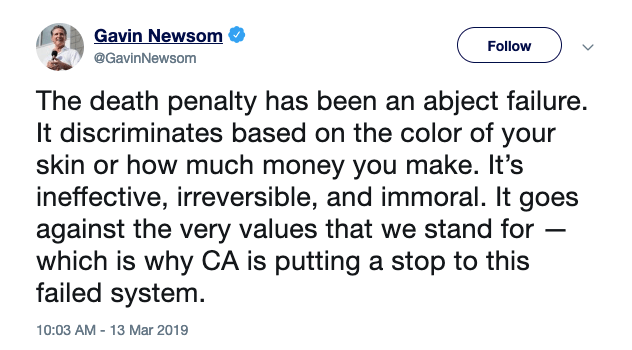
https://twitter.com/GavinNewsom

A tweet by California’s Governor Newsom.

Over the past five years, there has been a growing case against the use of lethal injections under the death penalty. In 2014, Clayton Lockett’s case garnered international attention for his execution that lasted 1 hour and 44 minutes from the time he was strapped onto the gurney to be killed. Using a drug cocktail never before used in American executions and banned by veterinarians due to the amount of pain it potentially causes, the administers also struggled to find a vein, leading to the injection entering his soft tissue. He writhed in pain for 43 minutes before dying.

According to Mother Jones, “Historically, lethal injection has been plagued with problems just like those that occurred in Lockett’s case…Physicians have mostly left the field of capital punishment; the American Medical Association and other professional groups consider it highly unethical for doctors to assist with executions”. This leaves untrained professionals to the task of administering these dangerous drug cocktails, putting the comfort and safety of those being executed at risk.

Oklahoma has been exploring new methods of execution using nitrogen gas, but it does not escape the crux of the human rights violations. In Oklahoma, they are having a discussion about what is the safest, easiest method of execution. However, the conversation should be a refutation of the concept of a death penalty. It is in violation of the Universal Declaration on Human Rights (UDHR), in Articles 3 and 5. The death penalty violates a person’s right to life and the right to freedom from being “subjected to torture or to cruel, inhuman or degrading treatment or punishment”. While the UDHR does not explicitly condemn the death penalty, the death penalty does prohibit a person’s right to life and fair treatment. The death penalty has become an inhumane, degrading method of torture that is used in 30 US states.

In the words of California Governor Gavin Newsom, “people think eye for eye, but if you rape, we don’t rape”. On 13 March, 2019, Governor Newsom announced a moratorium on the death penalty in the state. He called the death penalty an “abject failure” that plays to discrimination and is plainly immoral.

Californian voters have twice attempted to end the death penalty in the state, once in 2014 and once in 2016. Both initiatives failed in close votes. In 2016, though, a separate proposition successfully called for the speeding up of the end of the death penalty. California has the most inmates on death row.

Despite the fact that no inmates will be released due to this moratorium, there has been backlash, particularly from President Donald Trump, who pulled out of the UN Human Rights Council in early 2018. Trump has advocated for increased use of the death penalty, even for drug dealers. In response to Gov. Newsom’s moratorium, President Trump tweeted: “Defying voters, the Governor of California will halt all death penalty executions of 737 stone cold killers. Friends and families of the always forgotten VICTIMS are not thrilled, and neither am I!”.

Studies have also found there there are significant percentages of death row inmates who were wrongly convicted. A study in 2014 found that of 3,000 inmates on death row, there are probably 120 who are not guilty. In addition to the moral failings of the death penalty, both a lack of proper evidence for conviction and the ethical violations the penalty incurs, the ACLU reports that the death penalty also does not deter crime. From their website: “States that have death penalty laws do not have lower crime rates or murder rates than states without such laws. And states that have abolished capital punishment show no significant changes in either crime or murder rates”.

The death penalty is neither fair nor effective. It is biased, unnecessary, and illegal. The American Medical Association has taken the stance that “a physician must not participate in a legally authorized execution”, as physicians are responsible for “preserving life”. The state is responsible, as well, for preserving life in a different form. It is the protector of its citizens, meant to improve their lives and keep citizens safe. The death penalty is a complete contradiction of this principles. The state is not meant to kill; the state is meant to be better than its worst citizens. In the words of Governor Newsom, “We’re better than that”.

Note: Protocol Magazine is now using the font ‘Josefin Slab’.