The Deteriorating Freedom of the Press – Myanmar’s Warning to the World

‘Anti-intellectualism’ is hostility directed at academics and thinkers, which can be poisonous to society due to how it allows academics to be scapegoated, and regimes can subsequently avoid political dissent by silencing and purging academics from society. However, this concept is not one that belongs solely to the past: it has taken on a new form which focuses chiefly on the targeting of journalists who write or think in a way contrary to that of the government or leader, who are often the focus of their articles and research. The challenging of the freedom of press and journalism is currently being echoed in the news, illustrating the dismantling of free media and an array of tools put to use by regimes and leaders against journalists. The role of investigation and research is under immense pressure, as the increasing violence and arrests against journalists in supposedly freer countries, such as Turkey, illustrates the present paradox of journalism: to choose between self-censoring their articles or to hope their work is not popular in order to avoid creating complications. But this raises the question: where is it safe to speak of any interpretation or topic without angst and apprehension? It is not easy to answer, but what is clear is that the gradual attrition of freedom of speech and press should be evocative in all our memories, as this issue is not limited to a few countries, but this erosion of basic discussion and analytical thought is becoming more widespread as time goes on.

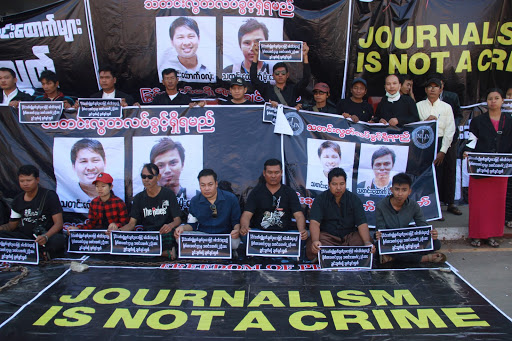
The current situation in Myanmar demonstrates that the targeting of intellectuals and persons who expose the wrongdoings of those in power is still practised. There has been much outrage among human rights lawyers after the sudden arrest of two Reuters journalists in Myanmar, Wa Lone and Kyaw Soe Oo, who were accused of breaking the country’s Official Secrets Legislation in December when reporting on a massacre of ten Rohingya Muslims in the Rakine state. Their findings revealed a wave of ethnic violence that is sweeping across Myanmar, hence why their trial has sparked such interest and has been named as a key moment in the history of Myanmar’s journey towards democracy. The case echoes the warnings of methods used by previous despotic regimes to gain further influence and spread distrust. What is clear is that these journalists were chiefly arrested for telling the truth, something the public has a right to hear but is being concealed, and those who know more than the government deems acceptable are silenced as traitors. But what does this issue illuminate? It says something about the government’s belief that they are above the law, and are untouchable enough to disregard and manipulate basic human rights and not be held accountable. UN High Commissioner for Human Rights Michelle Bachelet claimed that the arrest was meant to send a message to all journalists in Myanmar that they must ‘make a choice to either self-censor or risk prosecution’ without a fair trial or having a chance to prove their innocence. However, what should really ring warning bells across the world is that the press and journalism are being overruled, which is the first step down a path of authoritarian rule whereby basic rights are ignored and innocent people can be turned into national traitors whenever the authorities deem it necessary.

Source: The Guardian

Many journalists and leaders of human rights movements have praised the research and actions of the two accused journalists, calling for their release and for their right to have a free trial. It is clear that their exposure of the military’s genocidal violence, such as the burning of villages, mass murder, and other atrocities, is in the public’s interest and the importance of this information being known is massive. It seems unimaginable that a genocide could be taking place within your own country and you might not even be aware due to the silencing of all those who do know. The value of freedom of expression in the press lies in the ability to circulate information and hold the authorities accountable; without this, one of the fundamental pillars of democracy crumbles. The irony however lies within the amount of effort that was taken to arrest and plant documentation on these two journalists, and yet no movement has taken place to put the military officers on trial for genocide, rape, and gross misconduct. And yet two reporters who have allegedly gone against the Official Secrets Legislation are worth the focus and attention of the police and chief judges, indicating that farcical scapegoating is perhaps being employed by the regime. The importance of whistle-blowers, like Wa Lone and Kyaw Soe Oo, lies in their ability to keep the government in check and uncover information that has been hidden from public view, and without this reminder that authorities are not above the law, conflicts of interests and corruption are inaudible. But this case has not gone unnoticed; in particular, human rights lawyer Amal Clooney has agreed to fight for the release of these two Reuter journalists and has called immediately for a pardon to be issued.
Source: Bangkok Post

But why is it that intellectuals and those to whom the public look for information and guidance are the ones who are targeted by despotic regimes? The obvious answer would be that the power and influence that intellectuals are proclaimed to have endangers despotic regimes, but perhaps it is really the inherent threat they seem to represent of a free world; a prospect which despotic regimes wish to silence. Intellectuals prize discussion, debate, and not taking answers at face value, and these are all factors that authoritarian rulers and governments hope to abolish in order to enhance control and limit free discussion.

Another example of the recent targeting of academics is the dismissal and prosecution of intellectuals in Turkey. Since the coup in 2016, 5,800 academics have been dismissed from public universities. This is perhaps due to the critical thinking and deliberation that academics in schools and universities promote which the government seems to believe does more harm than good for their agenda. The Emergency Decrees used after the coup in 2016 illustrate this as they enabled dubious allegations to be made against academics on the grounds of terrorism and working against the government. On the other hand, the targeting of journalists and academics must be turned into a concrete effort to ensure these actions do not go unchallenged, because this is key to making sure that the perpetrators are held accountable in order to eliminate this culture of repression.
Legalized, Racialized Voter Supression

In the week following the United States midterm elections, there is still great uncertainty regarding some key elections in typically Republican stronghold states. In both Florida and Georgia, results are still hanging in the balance. Additionally, there is a growing concern that there has been voter suppression.

We are often reminded that just because something is legal, it does not make it moral or just. The state of Georgia is currently legally disenfranchising its citizens through voter suppression. In the governor’s race between Stacey Abrams, who is vying to be the first black woman elected to a governor’s seat, and Brian Kemp, who is also the secretary of state and thus the state’s chief elections administrator, voters are still waiting for results, frustrated by obstacles they faced to vote.

To start, ‘in June 2018, by a 5-to-4 ruling, the U.S. Supreme Court upheld Georgia’s right to purge voters‘ ‘because the individual had failed to cast a ballot in the last three years and/or in the past two federal elections‘. That means that voters were, en masse, unregistered. In one precint, a reporter watched 20 potential voters out of 1,000 were denied the right to vote because of these policies. To quote David Brotherton: ‘The most startling reality is that every one of the voters who were turned away was black or brown. Each had gone out of his or her way to get to that polling place. And each of them was essentially told, “Sorry, but you have no voice here. You have no right to vote.”‘ Obviously, this is a small case in one precinct, but it is not hard to see how across hundreds of precincts, across a state, how this can add up.

Moreover, the office of Brian Kemp, as Georgia’s secretary of state, has left more than 53,000 voter applications unapproved and in limbo. With the margins in the race, these votes could make a massive difference. According to the New York Times, ‘Mr Kemp’s office uses a controversial method called “exact match” to verify voter applications, which in some cases means individuals can be purged from voting rolls if their submitted information has even trivial differences from their government identification, such as an entry error or a dropped hyphen.’

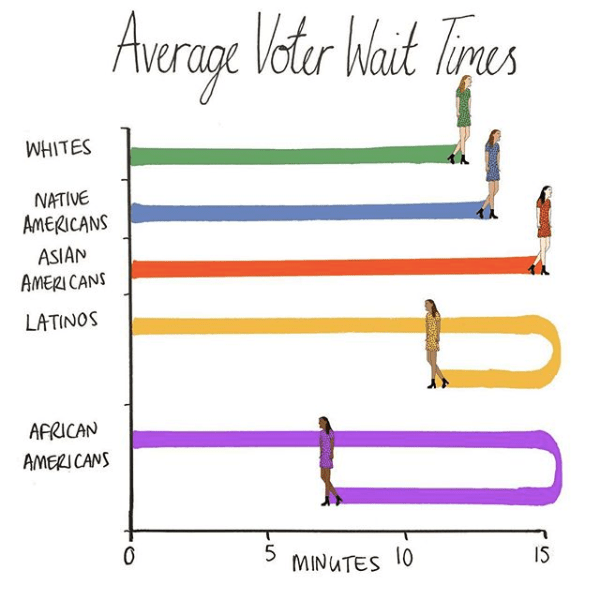
Average Voter Wait Times, Mona Chalabi

Source: Mona Chalabi

In Gwinnett County, Georgia, ‘four precincts – out of 156 – suffered prolonged technical delays‘. In other precincts, voters were turned away or endured long waits after printers that produce ballots tailored to their home precincts malfunctioned. According to a spokeswoman for Ms Abrams’s campaign, Mr Kemp’s office is to blame. A federal judge has ordered the delay of the certification of election results due to concerns about the state’s voter registration system and the handling of provisional ballots.

While there are distinct, legal issues within Georgia, it is a nationwide problem. ‘At least two polling places on the Standing Rock Sioux Reservation in North Dakota ran out of preprinted ballots‘. In El Paso, the federal Border and Customs Protection agency shut down an exercise along the Mexican border ‘after civil-rights groups and Democratic leaders complained of voter intimidation‘. In Phoenix, voters showed up to a polling place that was locked and closed with a sign explaining that the building had failed to pay rent. Voting hotlines saw a jump the number of calls which ‘quickly outpaced those received in the last midterm election of 2014′.

Called the Neo-Jim Crow, these tight races are revealing widespread policies of voter repression that particularly affect communities of color. ‘We are dealing with a very different climate in 2018‘, said Karen Flynn, the president of Common Cause. ‘We do not have a Department of Justice that is working hand in hand with our network to be solving these problems, we don’t have the protections of the Voting Rights Act, and we have a president that is putting out messages that can feel threatening to many voters.

The most basics rights of the most vulnerable communities are being attacked and ignored. Their ability to change the system, to affect change, has been taken away and intimidated.

The Ethical Expense of Contemporary Smartphone Infatuation

Part of acknowledging one’s position of privilege in society is undertaking more ethical approaches to consumption. This is a complicated task under the conditions of late capitalism, but particularly in the 2010’s when considering the ubiquity of smartphone ownership. By 2020, it is projected that smartphone ownership worldwide will rise to 2.87 billion. While there remains a significant divide between the rates of smartphone ownership in developed and developing countries, the rates of ownership in emerging economies are steadily rising. Although this kind of progressive technology can be an extremely useful tool in terms of communication, internet access, and information acquisition, there are certainly ethical drawbacks to the international smartphone takeover.

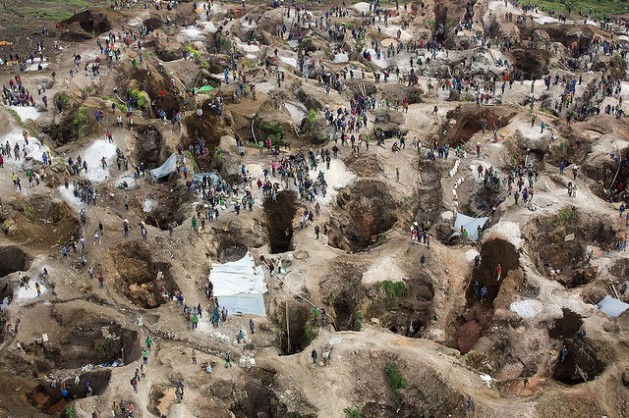
The way phones are powered comes with a history of exploitation regarding both natural resources and human rights. Almost all cell phone batteries contain cobalt and coltan, minerals which help control the flow of electrical currents. Coltan and cobalt are primarily mined in the Democratic Republic of the Congo. The mining industries of the two metals are both extremely lucrative and linked to serious breaches in human rights. According to The Washington Post, ‘An estimated 100,000 cobalt miners in Congo use hand tools to dig hundreds of feet underground with little oversight and few safety measures.’ The miners are not the only ones at risk due to the industry, as the communities surrounding the mines are exposed to ‘levels of toxic metals that appear to be linked to ailments that include breathing problems and birth defects’. It was even discovered by Amnesty International that seven-year-old children were found working under the dangerous conditions of the cobalt mines. Both adults and children earn approximately one dollar a day mining cobalt for twelve hours. The cobalt then goes through the supply chain, eventually used in the batteries of phones manufactured by Apple, Microsoft, and Vodafone. Congoan miners of coltan have been threatened and physically assaulted. As reported by Euronews, the ‘mining, smuggling and illegal taxation [of coltan] has allegedly funded violent armed groups in one of the longest lasting ongoing conflicts on Earth‘. Unfortunately, ethical issues surrounding smartphone batteries also pertain to other electronic products that rely on rechargeable batteries, the most notable of which are electric cars.

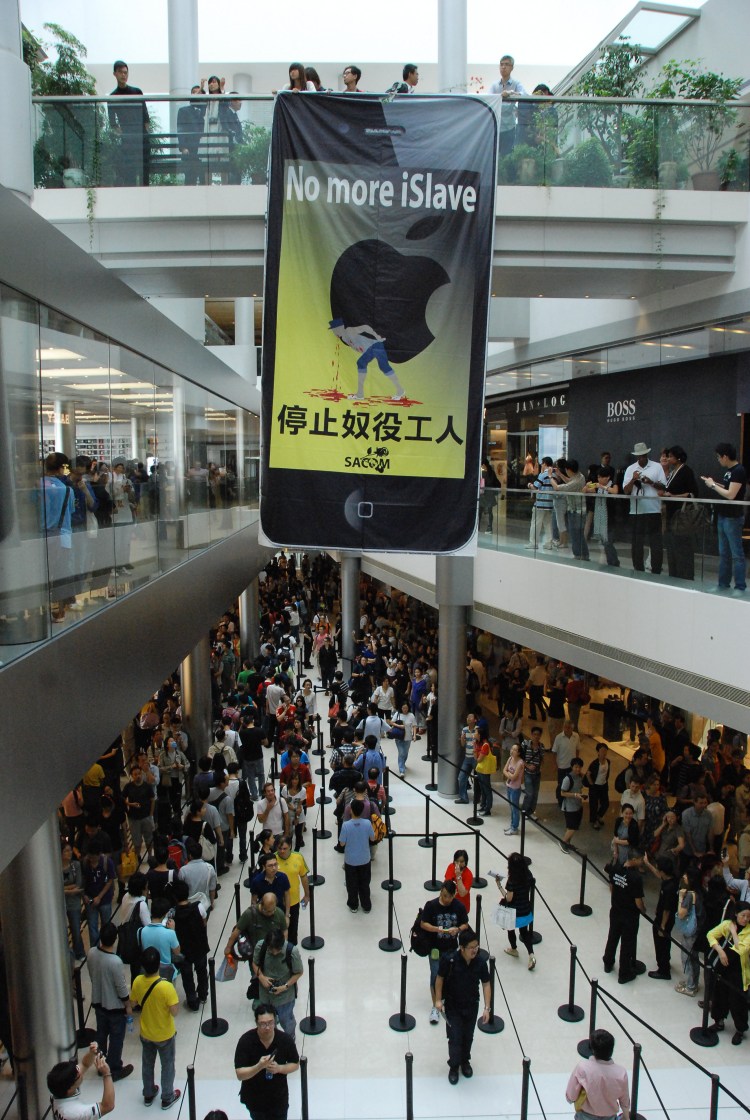
Another issue arises when considering the assembly process of smartphones themselves. Apple’s Chinese iPhone supplier has been receiving allegations of inhumane labor practices since as early as 2010, continuing through the production of iPhones 8, 8 Plus, and X. The allegations primarily concern unfair wages, job cuts, and working conditions poor enough to result in multiple suicide attempts by employees. When interviewed by Newsweek, a former temporary Apple supplier worker, Dejian Zeng, claimed that most supplier-employed people do not even own iPhones due to how expensive they are in comparison to workers’ wages.

Apple’s largest competitor, Samsung, has been accused of human rights violations concerning the assembly of their smartphones, too. Business Insider UK reported in January of 2018 that the company was sued by two French human rights groups for ‘misleading advertising because of alleged labor abuses at factories in China and South Korea’. These allegations include the exploitation of child labor as well as the use of ‘dangerous equipment and gases‘. The advertising which is accused of misleading consumers in a statement on Samsung’s official website pledges, ‘a world-class environment, safety and health infrastructure and rigorous standards to safeguard our employees’ well-being’.

Given that the average turnover rate of the smartphone is approximately 21 months, and the previously mentioned growing market for such technology, global demand will most likely not be shaken by accusations of these human rights abuses. Many consumers even form loyal relationships with their smartphone producer of choice. Nonetheless, there is certainly room within this growing market for “fair trade” phones. Currently, there is the relatively ethical consumption option of purchasing a Fairphone, whose creators source the minerals for their batteries responsibly, create sensible working conditions, and pride themselves on producing minimal environmental waste. Unfortunately, the newest installment of the Fairphone is somewhat expensive at €529.00, and its manufacturer has yet to phase out the usage certain hazardous materials like PVC, BFCs, and phthalates. Still, the apparent success of this product proves that there is a certain marketability for products that are as good for users as those who make them.

Luwowo coltan mine (Source: MONUSCO, Wikipedia Commons)

The Luwowo coltan mine in the Democratic Republic of the Congo.

Source: MONUSCO, Wikimedia Commons

Protest outside Apple Store, Hong Kong (Source: SACOM, Wikipedia Commons)

Protest outside the Apple Store in Hong Kong

Source: SACOM, Wikimedia Commons

If you would like to find out more about ways people are helping or would like to donate to this cause, click on the link below.

http://cobaltchildren.org/

The Resurgence of Prison Privatization in Trump’s America

In a Huffington Post article, Bernie Sanders points to mass incarceration and the use of for-profit prisons as America’s deepest flaw, saying, ‘We have more people in jail than any other country on earth, including Communist China, an authoritarian country four times our size. The United States has less than five percent of the world’s population, yet we incarcerate about a quarter of its prisoners — some 2.2 million people.’ The sheer scale of the U.S. prison population in relation to that of other countries should be enough of a warning sign that something must be done about our current criminal justice system.

In practice, for-profit prisons incentivize locking people up for low-level or non-violent offenses, as the higher the number of prisoners, the higher the profit for corporations that own and run these private facilities. According to the Sentencing Project, a nonprofit organisation committed to creating ‘a fair and effective criminal justice system by promoting reforms in sentencing policy, addressing unjust racial disparities and practices, and advocating for alternatives to incarceration’, approximately 8.5% of the total state and federal prison population is currently incarcerated in private prisons. At the moment, there are no existing consistent regulatory practices in place at private prison facilities from state to state. While 23 states do not use private prisons at all, New Mexico houses 40% of its prison population in private facilities run by large corporations.

The privatisation of prison facilities affects not only those who commit criminal offenses, but also the immigrant population. A 2016 report from the United States Immigration and Customs Enforcement revealed that private prisons held more than 75% of immigrant detainees that year. The conditions at these detention facilities are often deplorable to the point of detainees protesting the harsh circumstances they have been subjected to becoming a norm amongst the population. Al Jazeera America provides further evidence to this claim: ‘The U.S. Constitution prohibits cruel or unusual punishment of inmates. Increasingly, private prisons fail to meet even that minimal standard. One egregious example is the Bureau of Prisons’ contracts that require 10 percent of private prison beds to be set aside for solitary confinement.’ Since private prison facilities can maximize their profit by keeping all beds full, this results in an incentivised overuse and abuse of solitary confinement. Notable records of these tactics include instances in which immigrant mothers were punished by being placed in solitary confinement for protesting the unsanitary, unsafe, and inhumane conditions at their detention centers.

Over the past two years, the Trump administration has begun to undo what progress was made under Obama, by renewing contracts with several private prison corporations nationwide. This was done within the first month of the Trump administration, with Attorney General Jeff Sessions reversing the prior administration’s decision to phase out the use of private prisons.

Two distinct corporations dominate the private prison landscape; the Corrections Corporation of America and The Geo Group, Inc. In 2017, the President hosted the GEO Group at one of his Miami-area golf resorts for their annual leadership conference. The Washington Post notes, ‘Even as the president has targeted lobbyists and Washington special interests with his vow to “drain the swamp”, GEO Group has regained its footing while escalating its spending on traditional tactics such as lobbying and campaign donations.’ Meanwhile, the CCA has also made clear their connection to financial gain and proceeding with the current harsh standards the United States’ criminal justice system, admitting in a 2010 Annual Report filed with the Securities and Exchange Commission: ‘The demand for our facilities and services could be adversely affected by . . . leniency in conviction or parole standards and sentencing practices.’

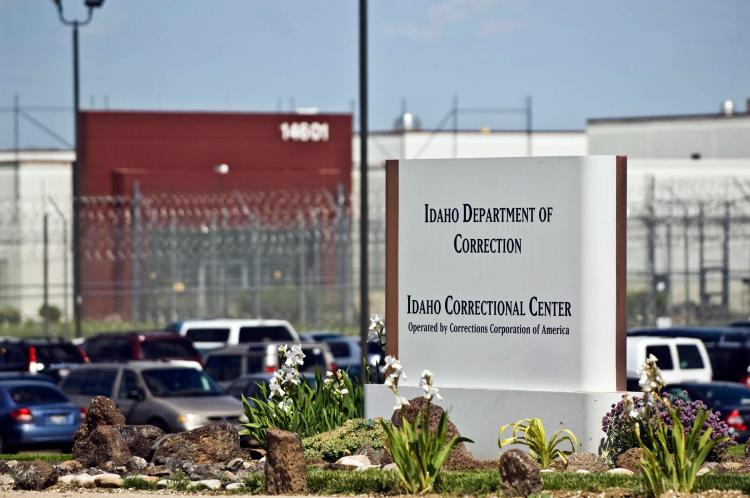
Records of inmate-on-inmate assaults and wrongful death lawsuits from CCA and GEO Group-run facilities show private prisons to be ineffective in ensuring inmate safety when compared with state-run ones. This is noted in a study contrasting two Idaho correctional facilities, which states that there are ‘132: recorded number of inmate-on-inmate assaults at CCA-run Idaho Correctional Center between Sept. 2007 and Sept. 2008. 42: recorded number of inmate-on-inmate assaults at the state-run Idaho State Correctional Institution in the same time frame (both prisons at the time held about 1,500 inmates)’. These instances and statistics are by no means exclusive to private correctional facilities in Idaho.

The CCA-run Idaho Correctional Center (Source: Charlie Litchfield)

The CCA-run Idaho Correctional Center. Source: Charlie Litchfield

Though in some aspects a partisan issue, the use of mass incarceration and continued employment of private correctional facilities should be seen for what it is at its core: An infringement of basic human rights at the cost of government, taxpayer, and community resources and for the gain of few profiteers in the private prison industry. This is an industry which disproportionately hinders the freedom of minorities, immigrants, and other vulnerable populations in order to allow groups like the CCA and GEO Group (as well as politicians) to continue to reap benefits. The continuation of the United States prison system as it is being run under the Trump administration is one which is long overdue for change.

If you would like to find out more about ways people are helping or would like to donate to this cause, click on the link below.

https://weownit.org.uk/public-ownership/prisons

Human Rights in the Face of Artificial Intelligence: Opportunity or Threat?

Source: Maxpixel

Source: Maxpixel

Have you ever given an order to a virtual assistant? Avoided a traffic jam thanks to a smart navigation system? What about those targeted offers appearing on various websites, continually reminding you of items that you looked up online? All of the above are made possible as a result of big data analysis from Artificial Intelligence (AI) systems, the use of which is increasing. However, as AI starts affecting every dimension of our society, it also poses several opportunities and challenges for social issues, such as human rights.

The above examples of AI-powered technologies were designed to make specific tasks easier. Therefore, with all these promising innovations, why should we care about human rights in the field of AI? The most straightforward answer to this question is that it affects us all and will continue to do so in the future. Although the benefits of basing certain decisions on mathematical calculations can be significant in many sectors, relying too heavily on AI can also backfire on its users, increase injustices and impede on people’s rights.

In the past, the threats of AI have been represented in films through sci-fi supervillains, such as HAL 9000 in Stanley Kubrick’s 2001: A Space Odyssey or T-800 in James Cameron’s Terminator. In January 2015, several tech innovators, including Stephen Hawking and Elon Musk, stepped forward to warn us about the potential dangers of a takeover of intelligent machines. Does AI genuinely have the potential to take over the world? What threats does AI pose to human rights? Moreover, can these threats be avoided?

Most people still think of killer robots solely as fictive characters, but due to current advances in technology, they may soon become a reality. Formally known as lethal autonomous weapons systems (LAWS), such weapons destined to target people do not exist yet, but experts predict that it is only a matter of a few years. Some argue that giving machines such power on the battlefield is an immoral application of technology, as maintaining human control of any combat robot is crucial to safeguard humanitarian protection and efficient legal control. Therefore, scientists are urging a ban on LAWS, with the help of international coalitions, such as the Campaign to Stop Killer Robots.

Furthermore, as AI is data-driven, where does it leave privacy concerns? Lilian Edwards, a law professor at the University of Strathclyde in Glasgow, declared that ‘Big data is completely opposed to the basis of data protection (…) I think people have been very glib about saying we can make the two reconcilable, because it’s very difficult.’

In the digital world, privacy concerns rest on our capacity to control the way our data is being stored and exchanged between different parties. AI-driven systems usually collect vast amounts of data, often without the knowledge or consent of its users. As a result, AI can be used to identify people who wish to remain anonymous, generate sensitive information —such as one’s political views— from non-sensitive data, unfairly profile people, or make far-reaching decisions using this data which can negatively affect people’s lives.

Last but not least, there are increasing concerns that some AI systems are not always fair in their decision-making. The data used to train deep-learning systems can easily reflect the biases of the people who assemble them or be prejudiced by history, encoding patterns that reproduce certain discriminations. If algorithmic bias is not corrected, it could have severe consequences and reinforce existing discriminations, especially for marginalised and more impoverished communities.

In June 2017, Amnesty International’s Secretary General Salil Shetty addressed the AI for Global Good Summit in Geneva by stating that states should be committed to making the best of AI while coordinating it with the preservation of the protection of human rights. The benefits of AI in the technologies people use on a daily basis are widely known, but as AI systems increase in complexity, big data can also be used for good causes and even help to address inequalities and correct existing biases in AI.

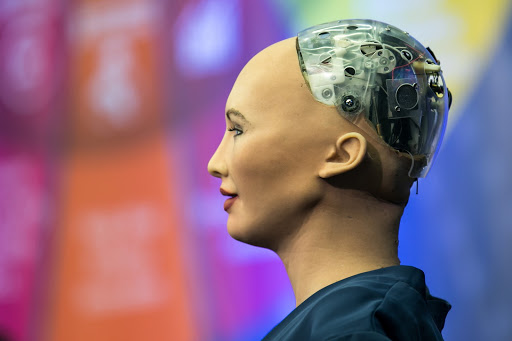
Sophia, Hanson Robotics Ltd. speaking at the AI for Global Good Summit in 2017 (Source: Flickr)

Sophia, Hanson Robotics Ltd. speaking at the AI for Global Good Summit in 2017. Source: Flickr

The Microsoft Research team FATE (Fairness, Accountability, Transparency, and Ethics in AI) was created to develop and improve AI systems that are both innovative and ethical. By uncovering existing biases in AI data, the program can assist users by offering enhanced insights and avoiding exposure to discrimination.

When precise data is unavailable, it can be difficult for policymakers to back racial justice initiatives. In 2015, Yeshimabeit Milner founded Data 4 Black Lives (D4BL), a group of activists, organisers, and mathematicians seeking to mobilise scientists around racial justice issues. D4BL is based on the idea of using data science like AI and machine-learning to establish a concrete and assessable change in the lives of black people and empower them.

In the medical field, the use of AI is already widespread, as its revolutionising capacities have the potential to develop preventive and curative strategies. For example, the capabilities of AI have already been proved useful in cancer detection and diagnosis, as researchers suggest that AI can now detect some types of cancer better than clinicians. In the future, we will be able to defeat diseases that are difficult to cure thanks to advances in AI.

AI can also be used for medical predictions in patients. In a study published in May 2018 in Nature Digital Medicine, an algorithm calculated de-identified electronic health records of over 216,000 adult patient hospitalisations to predict unplanned re-admissions, length of hospital stays, and in-hospital mortality more precisely than with traditional predictive approaches.

AI is bound to affect our social, political, and economic rights. Consequently, we need to guarantee that these systems are developed and used in ways that maintain principles of fairness, accountability, and transparency. Banning LAWS would require the establishment of treaties and an institutional framework with the help of state and non-state actors. To address threats to privacy, laws must be created, reviewed or amended. Action has already been taken in the EU where the General Data Protection Regulation (GDPR) was implemented to give Internet users more control over what is collected and shared about them. Finally, to combat discrimination due to AI bias, more diverse teams should be behind the development of AI systems and build comprehensive machine-learning and deep-learning models that are inclusive, assessable, and adjustable.

Like any technology, AI can be both beneficial and harmful. In conclusion, we must acknowledge that algorithms are not neutral, but reflect the data they were provided with. If biased data is fed into an algorithm, discriminatory results will follow. Therefore, it is ultimately human decisions and the provided data that determine whether AI systems will have malicious intentions or not. The only way to ensure that the AI revolution remains a non-destructive milestone for humanity is to strictly control it and ensure that it safeguards human rights above all.

Remembering Peterloo: A Silenced Voice with a Resounding Echo

Source: The Guardian

For the beating heart of the industrial north, the morning of 16 August, 1819, was no ordinary one. In what stands today as Manchester’s St Peter’s Square, an estimated 60,000 men, women and children gathered in peaceful solidarity to speak out in hope of a time when their rights to emancipation and freedom of expression would be acknowledged by the upper echelons of society. Among them, a diverse mismatch constituting humble Oldham spinners and outspoken professional journalists alike. Between them , a shared goal: to raise each individual voice into one, striving towards the ‘reform’, ‘universal suffrage’, ‘equal representation’ and ‘love’ which adorned the banners created and carried with pride. They cleaved to the prospect of democratic rights as an escape route from the desperate poverty which they were forced to endure.

Within hours, eighteen of those voices had been permanently silenced. A further 700 peaceful protesters sustained serious injuries, and the rest had been left shaken by grief, anger and utter disbelief. Suspicion, fear and panic drove local magistrates, tormented by Europe’s revolutionary climate, to order hussars and yeomen to charge into the crowds, brandishing sabres and clubs. Where the innocent protesters linked arms in solidarity to prevent the arrest of Hunt, the peaceful, charismatic speaker in anticipation of whom they have gathered, the cavalry broke through without mercy. Among the dead were a mother and her two-year-old son, slaughtered for nothing more than daring to share in the hope for a different world where the governed could speak out and the government would hear them.

Though the Peterloo Massacre has repeatedly been described along similar lines as ‘one of the nation’s most defining historic events’, it has nonetheless been airbrushed from the local and national history to which it has contributed so vastly. A Mancunian history student, taught by Mancunian History teachers, who merely stumbles across such an event by lucky accident surely has a duty to question why an episode which catalysed the implementation of so many fundamental democratic rights and freedoms has remained condemned to the shadows of the forgotten past for so long.

It is difficult enough to make out the psychological and socio-political causes behind what has often been referred to as ‘one of the bloodiest clashes in British political history’ as it is, but without an appreciation of the contemporary national and international context, the task becomes an impossibility. Taking place four years after the battle from which, with bleak irony, the clashes derived their name, Peterloo marked a culmination point of the rising social, economic and political tensions of early-19th century Europe. At home, the despised Corn Laws of 1815 placed tariffs on imported corn, leading to economic depression, unemployment, widespread hunger and dire poverty, the symptoms of which were particularly notable in the industrial north. It is telling that, as early as 1809, William Rowbottom, a local man from Oldham, Greater Manchester, wrote in his diary that, ‘there are hundreds in Oldham parish who are entirely without work… weaving is at the lowest ebb ever remembered’. Internationally, a period of climatic instability during ‘The Little Ice Age’, punctuated by the spectacular eruption of Mount Tambora in 1815, led to an agricultural crisis which was intricately linked to the spate of revolutionary movements occurring across the continent and beyond.

Amidst such difficult conditions, the interests of an increasingly literate, politically conscious and demographically expanding population were drawn to radical theorists such as Thomas Paine, whose seminal Rights of Man presented the notion that freedoms such as of speech, press, expression, association and assembly, were human rights which could legitimately be demanded. For Paine, the French Republic served as a living demonstration of this. But as well as rallying popular support, the ruling elites were imbued with a paranoid sense of inevitability, expecting every match to set off a blaze, even in the absence of a spark.

From the immediate consequences of the massacre, it would be easy to presume that the clashes had not only slammed the breaks on democratic reform in Britain, but had sent the movement into reverse. In the interests of “national safety”, former-Prime Minister Viscount Sidmouth issued the notoriously reactionary ‘Six Acts’, which focused in particular on suppressing freedoms of speech, press, and assembly. Most strikingly, journalists were coerced into silence, threatened with prison sentences and accusations of treason. The government’s determination to restrict the creation of primary evidence relating to the massacre may therefore have served as a barrier to the event’s becoming more widely known, at least initially. Through efficient, unsentimental ruthlessness, the authorities attempted to wash their hands of the whole unfortunate affair, with all the appearances of having gained the upper hand.

However, this was a façade. The powers of press censorship were overstated, the bravery of journalists to subvert them under-estimated, and enough reports slipped under the radar to trigger national outrage. Once word had spread that the authorities had launched a brutal, uncalled-for attack on a group of innocent, defenceless people, the maintenance of the status quo was no longer an option. The polarisation between the dignity of the people and the barbarism of many of their persecutors was symbolically illustrated in the fact that the crowds wore their Sunday best for the occasion. The events that people read and spoke about breathed new life into calls for democratic reform on a far broader geographical and social scale. As such, the Peterloo Massacre has been directly linked to the establishment of the Chartist reform movement and the creation of Trade Unions, culminating in the implementation of the Great Reform Act of 1832. Though criticised for its limitations, the Act marked a milestone in political representation, securing Manchester its first two MPs. The events of Peterloo also triggered a journalistic legacy spanning almost two centuries, when businessman and publisher John Edward Taylor deployed the horrors of what he had witnessed to create The Manchester Guardian.

As we approach the 200th anniversary of the Peterloo Massacre, The People’s History Museum’s Head of Collections, Jenny Mabbott, is more than justified in pointing out that ‘there couldn’t be a more appropriate time to reflect upon the themes of protest and democracy which this historical event brings to the fore’. In recent years, there has been a plethora of attempts to bring the forgotten clashes of 1819 to the forefront of popular public attention, involving high-profile actors, politicians and historians, among other significant public figures. In August 2017, for instance, Salford-born Christopher Eccleston (who recently starred as the tragic protagonist in the RSC’s Macbeth) read the Riot Act aloud from a top window of Manchester’s Town Hall during an evocative commemorative event. A few months earlier, Jeremy Corbyn had called for solidarity by reminding a transfixed, if not entirely sober, Glastonbury crowd that ‘ye are many – they are few!’. This the final line of Shelley’s ‘Mask of Anarchy’, a poem written amidst the outrage of the immediate aftermath of the massacre. And the historian and broadcaster David Olusoga listed St Peter’s Square as one of England’s most historically pertinent sites in his contribution to the History of England in 100 Places project, claiming that, ‘the nation is about to reconnect with this critically important event… the site needs to better known’.

This steady trickle of popular consciousness-raising activity is set to reach new heights on 2nd November 2018, with the general UK-wide release of Mike Leigh’s Peterloo, a film solely dedicated to retelling the events which shaped British political history to an oft-ignorant British public. Fittingly to be premiered in HOME, Manchester, on the previous day, one of the most striking elements of the production is that it was not filmed in the city in which the events took shape. Locations such as Guildford were deemed more appropriate, due to the relative lack of 19th-century Mancunian architecture threatening to spoil the authenticity of the scenery. Such necessary practical considerations could also be viewed as symbolic; Manchester may inevitably be losing the essence of its industrial past in a physical, structural sense. But historically, it has a duty to remain a palimpsest, retaining and remembering the vital foundational layers beneath what is immediately apparent, the relevance of which stretches far beyond the geographical confines of the proud northern city.

‘You left me behind’: How a Five-Year-Old Signed Her Rights Away

Over 130 immigrant children are still being held in the United States’ government custody, despite widespread backlash and claims from the White House that the practice has ended. However, the practice has not ended; rather continued under secrecy and loopholes. An unknown amount of children are still in shelters and foster care, awaiting reunification with their families.

One of those children is Helen, a five-year old from Honduras who fled gang violence with her grandmother, Noehmi, and other relatives. The family traveled thousands of miles, sometimes on foot, sometimes over water. Once they reached southern Texas, they were taken into custody by U.S. Border Control. One day, an official arrived to take Helen from her grandmother. As Noehmi protested, the official told her, ‘Don’t make things too difficult and they took Helen.

Helen, the five-year-old from Honduras. Source: The New Yorker

While the adults in Helen’s family were released to live with Helen’s mother, who had immigrated years earlier, Helen was still in the custody of the U.S. government, under the authority of the Office of Refugee Resettlement (O.R.R.). Eventually, Noehmi received information about Helen’s whereabouts; she was being held in a shelter in Houston. Noehmi and Helen’s mother, Jeny, panicked. Noehmi was so distressed she had to be checked into a local hospital, reporting inability to breathe.

At the shelter, Helen colored patriotic images of Abraham Lincoln, George Washington and the Statue of Liberty while receiving an hour a day of ‘Large Muscle Activity and Leisure Time’. She had lessons on the human respiratory system and ‘the risk and danger of social media‘. Throughout it all, Helen was praised for her excellent behavior and her caseworker reported that she had no major sources of stress, aside from ‘being separated from her family’. When asked about making goals, Helen simply stressed that she wanted to be reunited with her family.

In the U.S., there are guidelines for keeping children in immigration detention, known as the Flores settlement. Helen had the right to a bond hearing that would likely result in her reunification with family. However, when Helen was taken into custody, she was given a form and checked a box on it stating ‘I do request an immigration judge’, which should have given her the right to having her custody reviewed. For reasons still unclear, in August, Helen was given another legal document regarding a Flores Bond Hearing. Obviously, the language used in the legal document would have been challenging for a five-year-old to comprehend. With assistance from officials, Helen completed the form, checking a box saying ‘I withdraw my previous request for a Flores bond hearing‘ and signing it with block letters: Helen.

Helen had effectively signed over her rights, as a five-year-old. The Centers for Disease Control and Prevention, a branch of the U.S. Department of Health and Human Services, lists milestones of a five-year-old’s development. Most children by the age of five should: speak very clearly, use future tense, say their name and address, count ten or more things, print some letters or numbers, and know about things used every day, like money and food. Officials were expecting above and beyond cognitive abilities from Helen; she was expected to go to court, sign legal documents, and set ‘SMART goals‘ — ambitions that are ‘Specific, Measurable, Achievable, Relevant, and Time-bound’. Officials ignored Helen’s status as an child, with distinct human rights. The United Nations Convention on the Rights of the Child (UNCRC) defends children’s right to treatment in ‘best interest of the child’, the ‘right to life survival and development’ and the ‘right to be heard’. The best interests of the child were ignored, her right to be heard was disregarded, and her development has been permanently been affected. The well-behaved child that her caseworker met now is ‘attention seeking‘, hiding under tables and refusing to sleep in fear her family will leave her behind again.

The cruel, inhumane actions of the Trump Administration have received widespread backlash within the United States and around the globe. While the President effectively ended the separation of children and families at the border on 20 June, 2018, many children are still in custody, alone. Some cases, like Helen’s, fell outside the A.C.L.U.’s lawsuit against the Department of Justice, as she arrived with a grandmother, rather than her parent. Many children like Helen have been miscategorized as ‘unaccompanied minors’.

The treatment of these children is criminal and an absolute violation of their human rights. Helen’s case is particularly shocking – a five-year-old with the ability to sign over her rights is not a five-year-old at all. For unclear reasons, she was deemed able to comprehend and make nuanced legal decisions. Luckily for Helen, her family was able to find legal counsel and find her, go to court and bring her home. Nonetheless, she still lives with the trauma of those eight weeks of separation, constantly afraid of being abandoned again. She told her grandmother, You left me behind‘.

If you would like to find out more about ways people are helping or would like to donate to this cause, click on the links below.

https://actionnetwork.org/groups/raices-refugee-and-immigrant-center-for-education-and-legal-services

https://donate.supportkind.org/give/188892/#!/donation/checkout

https://www.theyoungcenter.org/donate-to-the-young-center/

#childrensrights #immigrantsrights #immigration #EditorJonathanLienert

'You left me behind': How a Five-Year-Old Signed Her Rights Away

Over 130 immigrant children are still being held in the United States’ government custody, despite widespread backlash and claims from the White House that the practice has ended. However, the practice has not ended; rather continued under secrecy and loopholes. An unknown amount of children are still in shelters and foster care, awaiting reunification with their families.

One of those children is Helen, a five-year old from Honduras who fled gang violence with her grandmother, Noehmi, and other relatives. The family traveled thousands of miles, sometimes on foot, sometimes over water. Once they reached southern Texas, they were taken into custody by U.S. Border Control. One day, an official arrived to take Helen from her grandmother. As Noehmi protested, the official told her, ‘Don’t make things too difficult and they took Helen.

Helen, a five-year-old from Honduras

Helen, the five-year-old from Honduras. Source: The New Yorker

While the adults in Helen’s family were released to live with Helen’s mother, who had immigrated years earlier, Helen was still in the custody of the U.S. government, under the authority of the Office of Refugee Resettlement (O.R.R.). Eventually, Noehmi received information about Helen’s whereabouts; she was being held in a shelter in Houston. Noehmi and Helen’s mother, Jeny, panicked. Noehmi was so distressed she had to be checked into a local hospital, reporting inability to breathe.

At the shelter, Helen colored patriotic images of Abraham Lincoln, George Washington and the Statue of Liberty while receiving an hour a day of ‘Large Muscle Activity and Leisure Time’. She had lessons on the human respiratory system and ‘the risk and danger of social media‘. Throughout it all, Helen was praised for her excellent behavior and her caseworker reported that she had no major sources of stress, aside from ‘being separated from her family’. When asked about making goals, Helen simply stressed that she wanted to be reunited with her family.

In the U.S., there are guidelines for keeping children in immigration detention, known as the Flores settlement. Helen had the right to a bond hearing that would likely result in her reunification with family. However, when Helen was taken into custody, she was given a form and checked a box on it stating ‘I do request an immigration judge’, which should have given her the right to having her custody reviewed. For reasons still unclear, in August, Helen was given another legal document regarding a Flores Bond Hearing. Obviously, the language used in the legal document would have been challenging for a five-year-old to comprehend. With assistance from officials, Helen completed the form, checking a box saying ‘I withdraw my previous request for a Flores bond hearing‘ and signing it with block letters: Helen.

Helen had effectively signed over her rights, as a five-year-old. The Centers for Disease Control and Prevention, a branch of the U.S. Department of Health and Human Services, lists milestones of a five-year-old’s development. Most children by the age of five should: speak very clearly, use future tense, say their name and address, count ten or more things, print some letters or numbers, and know about things used every day, like money and food. Officials were expecting above and beyond cognitive abilities from Helen; she was expected to go to court, sign legal documents, and set ‘SMART goals‘ — ambitions that are ‘Specific, Measurable, Achievable, Relevant, and Time-bound’. Officials ignored Helen’s status as an child, with distinct human rights. The United Nations Convention on the Rights of the Child (UNCRC) defends children’s right to treatment in ‘best interest of the child’, the ‘right to life survival and development’ and the ‘right to be heard’. The best interests of the child were ignored, her right to be heard was disregarded, and her development has been permanently been affected. The well-behaved child that her caseworker met now is ‘attention seeking‘, hiding under tables and refusing to sleep in fear her family will leave her behind again.

The cruel, inhumane actions of the Trump Administration have received widespread backlash within the United States and around the globe. While the President effectively ended the separation of children and families at the border on 20 June, 2018, many children are still in custody, alone. Some cases, like Helen’s, fell outside the A.C.L.U.’s lawsuit against the Department of Justice, as she arrived with a grandmother, rather than her parent. Many children like Helen have been miscategorized as ‘unaccompanied minors’.

The treatment of these children is criminal and an absolute violation of their human rights. Helen’s case is particularly shocking – a five-year-old with the ability to sign over her rights is not a five-year-old at all. For unclear reasons, she was deemed able to comprehend and make nuanced legal decisions. Luckily for Helen, her family was able to find legal counsel and find her, go to court and bring her home. Nonetheless, she still lives with the trauma of those eight weeks of separation, constantly afraid of being abandoned again. She told her grandmother, You left me behind‘.

If you would like to find out more about ways people are helping or would like to donate to this cause, click on the links below.

https://actionnetwork.org/groups/raices-refugee-and-immigrant-center-for-education-and-legal-services

https://donate.supportkind.org/give/188892/#!/donation/checkout

https://www.theyoungcenter.org/donate-to-the-young-center/

Conflict Prevention in the 21st Century: an evening with Noel Lateef and The Lafayette Club

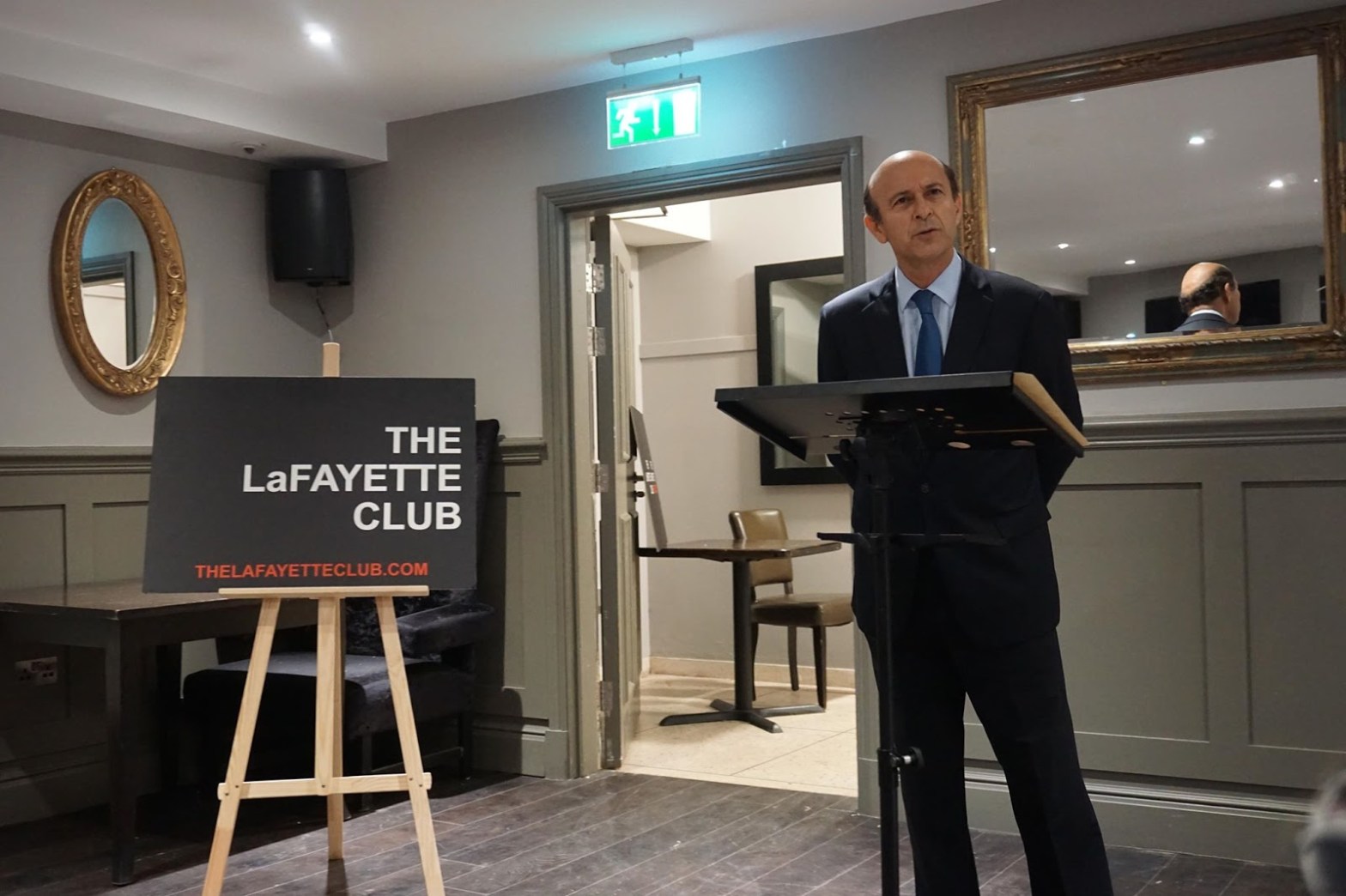
While heavy rain poured outside on Thursday, 11 October, students and members of the Lafayette Club committee gathered in the society room of St Andrews’ Hotel du Vin Thursday evening to hear Noel Lateef speak on the importance of conflict prevention in the 21st century. Mr Lateef, longstanding president of the Foreign Policy Association based in New York, came to St Andrews as part of the Lafayette Club’s speaker series that seeks to bring world leaders and industry experts together with university students.

Noel Lateef at The Lafayette Club's evening

Noel Lateef speaking on the importance of conflict prevention. Source: The Lafayette Club

The Foreign Policy Association is a New York based private, nonprofit, non-partisan educational organization which is devoted to the education of American citizens in international affairs. At its founding in 1918, the association was known as the ‘League of Free Nations Association’ and was established to support US President Woodrow Wilson’s vision of world peace as described in his famous Fourteen Points speech. Additionally, its American founders hoped to increase support for United States’ membership in the international organization described at the time in the Versailles Treaty and Paris Peace Conference of 1919.

Today, the organization has built upon its roots as an arena for supporting policy to becoming an educational body more generally. Not only does the organization seek to develop a deep awareness and understanding of how global issues affect the United States, but also to teach citizens media literacy in order to craft informed decisions on foreign policy. Beyond education, the Foreign Policy Association is often the principal venue for foreign policy addresses by presidents and foreign ministers from around the world.

With 24 years of experience as president of the Foreign Policy Association and as author to a number of publications, Noel Lateef was able to share both personal and professional insights into how to navigate the increasingly multi-polar international political system from a lens of conflict and conflict prevention. While Mr Lateef’s speech largely focused on the role of the United Nations as a body that promotes conflict prevention, he also offered personal anecdotes on his journey to becoming president of the Foreign Policy Association.

As the son of an American foreign service officer, international politics have always been heavily imbued in Mr Lateef’s life. For his bachelor’s degree, Mr Lateef attended the Woodrow Wilson School of Public and International Affairs at Princeton University where he graduated magna cum laude. During this time, he pursued an internship at the US State Department, which he said changed his mind about pursuing a career in foreign service. Instead, he then went on to study public policy at Yale Law School before working for a judge on the U.S. Court of Appeals for the 9th Circuit and later as chairman of the Bowery Savings Bank.

Mr Lateef’s 45-minute speech opened with an anecdote about the Japanese Prime Minister that both highlighted the Foreign Policy Association as an esteemed arena for foreign politicians and showcased the organization’s direct effects on policy matters. In this specific example, the prime minister was misquoted in his speech, sponsored by the Foreign Policy Association, by the media which then led to front page headlines and a hefty drop in stocks that very day.

While a large part of Mr Lateef’s introductory remarks consisted of his past experiences and narratives about various visitors and speakers to the Foreign Policy Association, his speech quickly narrowed in on his ideas surrounding conflict and conflict prevention in the 21st century. He stressed that conflict prevention is crucial for determining whether human civilization will still exist in the next hundred years. While conflict has been a pressing issue for civilization for thousands of years, in this age of globalization and rapid modernization, conflict has become all the more detrimental, not to mention the growing implications of global warming on why and how modern conflicts will be fought.

Staying true to the origins of the Foreign Policy Association, Mr Lateef discussed at length the history of the United Nations in peace building and its important role as a preventer of conflict. Mr Lateef strongly believes that conflict prevention rests heavily in the prioritization of education, which he pointed out is an ideal upheld in the preamble to the United Nation’s Education, Scientific, and Cultural Organization’s (UNESCO)constitution: ‘since war begins in the minds of men, it is in the minds of men that the defences of peace must be constructed’.

Although conflict still persists, Mr Lateef did highlight the ways in which society has improved its abilities to prevent conflict ranging from the early detection of danger, accurate and fast information collection, cooperation between across countries and agencies, fast action, and early mediation. Mr Lateef’s speech ended on a somewhat positive train of thought, which stressed both the progress made and the importance of imagination. The talk concluded with Mr Lateef arguing that the end of the Cold War should be the most esteemed example of the art of the possible.

Overall, Mr Lateef’s speech was extremely informative and equally eye-opening. It should be said, however, that the potency of Mr Lateef’s message may have been lost at times in the overuse of anecdotes and in-text quotes that occasionally seemed to not have a clear connection. Nonetheless, Mr Lateef is an extremely intelligent and insightful speaker who joins the esteemed ranks of the Lafayette Club’s speakers.

Sex Workers Face Insecurity in a World Without Backpage

On 6 April, 2018, the classified advertising website Backpage was seized by US federal authorities. A notice from the agencies involved in a joint action against Backpage replaced the site’s homepage, linking visitors to the indictment against seven of Backpage’s staffers. They were charged with money laundering and violating the Travel Act by facilitating prostitution. Backpage is one of several websites advertising sex work that have been shut down since the passing of a new package of bills aimed at cracking down on online sex trafficking. While the new legislation is aimed at protecting vulnerable persons and facilitating justice for victims of sex trafficking, its impact has been enormous for the many consenting sex workers who used Backpage and similar sites to make their work safer.

Offering advertisements costing around $7 and an opportunity for sex workers to screen potential new clients, Backpage rose to become one of the premier sites for advertising sex work in the US and Canada, with the website’s profits soaring from $11.7 million in 2009 to $135 million in 2014.

The notice posted on Backpage after the site’s seizure by federal authorities on 6th April 2018

The notice posted on Backpage after the site’s seizure by federal authorities on 6th April 2018

The seizure of Backpage follows the enactment of the Stop Enabling Sex Traffickers Act (SESTA) and the Fight Online Sex Trafficking Act (FOSTA), which passed through Congress on 21st March. SESTA and FOSTA were introduced to combat the online sex trafficking trade by making websites that knowingly host illegal activity on their site liable for this content and therefore open to civil lawsuits.

The investigation into Backpage alleged that its administrators employed software to remove terms from its advertisements used by child sex traffickers to signal that the advertised person is a minor (such as ‘Lolita’ and ‘amber alert’). This allowed for the advertisement of child sex trafficking victims on the website and prevented the suspicious activity from being flagged and passed on to law enforcement officials. SESTA and FOSTA’s supporters believe that the new legislation will help protect children and vulnerable adults from being sold into sexual slavery online. The bills were signed into law by President Trump on 11 April in the presence of sex trafficking victims and their families. One witness was Yvonne Ambrose, whose 16-year-old daughter Desiree was killed in 2016 after being sold on Backpage.

However, the new legislation has generated controversy for weakening Section 230 of the Communications Decency Act, which protects website administrators, for the most part, from liability for the content posted by their users. Without the Communications Decency Act, sites like YouTube and Reddit would likely cease to exist as they would be responsible for unlawful content posted by a small minority of users (such as the spreading of hate speech). Proponents of the Communications Decency Act argue that it is untenable for such heavily-utilised platforms to moderate all their content. Because of the implications for online freedom, the Internet Association (which represents giants like Facebook and Google) would only back SESTA and FOSTA once the acts clearly stated that websites would only be liable if they knowingly hosted sex trafficking and did not report it.

Beyond the implications for user-hosting platforms like Youtube and Reddit, SESTA and FOSTA have had major ramifications for the consenting adult sex workers who used sites like Backpage to find work. The loss of Backpage has led to the loss of business and job insecurity for its users, as well as the loss of the ability to screen clients and share blacklists.

After the passage of SESTA and FOSTA, Craigslist voluntarily shut down its Personals section. Some sex workers shut down their websites, or switched to more encrypted forms of communication to avoid facing legal action. The site VerifyHim, used by sex workers to share information about potential clients, has since closed its forums and ceased operation of its mailing list.

Many sex workers now face the prospect of engaging in street-based sex work – some for the first time. Without the abilities to protect personal safety afforded by online advertising sites, many more sex workers will face violence in their work. An Urban Justice Center study found that 80% of sex workers who work on the street have experienced violence.

Beyond facilitating safer sex work, the sites affected by the new legislation may have contributed to greater community safety overall. Researchers at Baylor and West Virginia Universities observed a 17.4% decrease in female-victim homicide rates between 2002 and 2010, correlated to the roll-out of the Craigslist ‘erotic services’ section across America.

Critics of SESTA and FOSTA argue that the acts will fail to reduce online sex trafficking by making more sex workers vulnerable to trafficking in the absence of platforms for safer sex work. Mary Anne Franks, Policy Director of the Cyber Civil Rights Initiative, argues that the legal requirement for websites to know about illegal activity to be liable to charges could encourage platform operators to stop looking for illegal activity on their sites to avoid responsibility. She suggests that, instead, the Communications Decency Act should have been updated to incentivise major platforms to police their sites for illegal activity. Furthermore, SESTA and FOSTA’s opponents suggest that the advertisement of sex-trafficking victims for sale online will only move deeper underground, making it more difficult for police to track pimps and recover victims of sex trafficking.

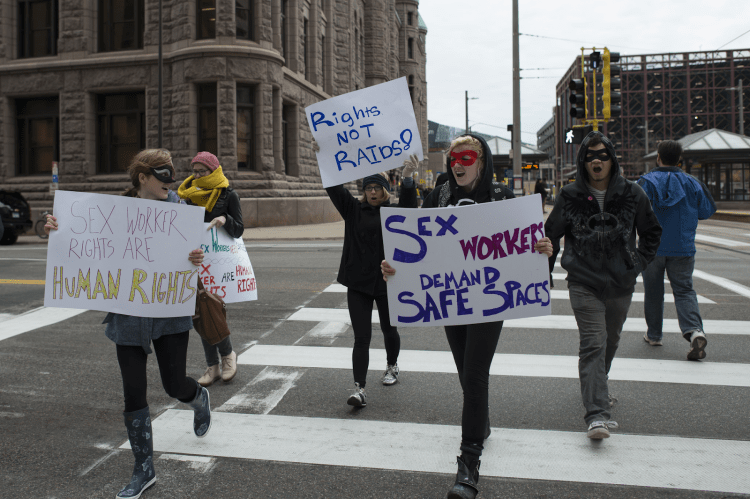
The conversation surrounding the seizure of Backpage plays into a larger conversation about sex workers’ rights. While some forms of sex work are legal, prostitution remains illegal in 49 US states (it is legalised in some counties of Nevada) and the rights of sex workers have been neglected in public conversations about making the internet safer. In the wake of the Backpage shutdown, many sex workers took to social media or demonstrated publicly to raise their concerns. On 2 June, sex workers gathered in New York to commemorate International Whores’ Day, a day to demand respect for sex work and the promotion of sex workers’ rights and safety. Given public attitudes to sex work and the illegality of prostitution, sex workers are often afraid to publicly represent their profession. However, this year, sex workers and their supporters flocked to the demonstration to share their grievances over the new regulations.

Protesters gathered in Minneapolis to advocate for sex workers’ rights after a raid of Backpage’s headquarters in October 2016, by Fibonacci Blue

Protesters gathered in Minneapolis to advocate for sex workers’ rights after a raid of Backpage’s headquarters in October 2016. Source: Fibonacci Blue

While the fight against sex trafficking may be a worthy cause, for many, SESTA and FOSTA simply are not the answer. Users of Backpage have argued for the need to acknowledge the important safety mechanisms that the site afforded consenting adult sex workers, which have now been lost. A sex worker named Sarah told The Cut: ‘Backpage didn’t turn me into a sex worker, any more than YouTube can turn people into musicians or comedians. It was just the medium. An accessible and free medium.’

Sex workers have responded to the closure of Backpage by establishing new spaces to engage in a sex worker community online, in order to combat the heightened threat to their safety. Current outlets include Switter, a ‘sex work-friendly social space’ founded by sex worker and advocate Lola Hunt, and Red Umbrella Hosting, an offshore web-hosting site for sex workers founded by Melissa Mariposa in response to SESTA and FOSTA. While the effectiveness of SESTA and FOSTA in reducing online sex trafficking will have to be evaluated over time, the impact of the acts on legitimate sex workers has been immediate and highly detrimental. It is clear than in making policy to regulate such a complex online environment, more needs to be done to recognise sex workers’ rights and to defend their safety.

If you would like to find out more about ways people are helping or would like to donate to this cause, click on the links below.

UK: http://beyondthestreets.org.uk/

USA: http://sexworkersproject.org/info/

EU: http://www.sexworkeurope.org/about-us/membership