How to Ask for Your Human Rights: Lessons from Elizabeth Cady Stanton

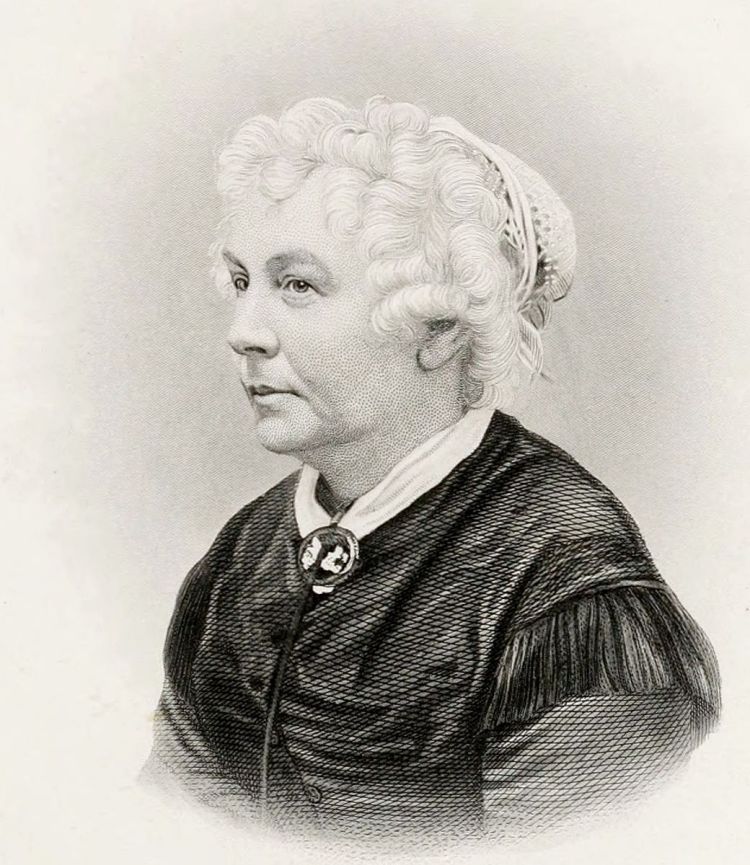
Engraving of Elizabeth Cady Stanton by Henry Bryan Hall

via Wikimedia

I have never had to ask for my human rights. They were assigned to me, along with my name and my gender, around the moment I took my first breath. But how exactly does one go about asking for their rights? How can one human be given the authority to determine how human someone else is? The task seems hopeless, as the very act of asking appears to negate your argument.

Elizabeth Cady Stanton brought this challenge before the Washington Senate Committee in December 1892. At this point, women were 28 years from attaining the right to vote. Impassioned and mournful, Stanton reflected on the essential and inevitable isolation of each individual, in what she labeled the ‘solitude of self’.

‘When death sunders our nearest ties, alone we sit in the shadows of our affliction. […] On the divine heights of human attainments, eulogized and worshipped as a hero or a saint, we stand alone. […] In hours like these we realize the awful solitude of individual life, its pains, its penalties, its responsibilities […].’

Because of our solitude, Stanton went on, every human must be ‘fitted’ for ‘independent action,’ much like a soldier receiving ‘his cup, knife, fork and spoon’ before marching off to battle. She believed that while women did not possess the same rights as men, they must face the same immense solitude and are expected to come away unscathed. The idea of the lone hero is common, but most formulations have the implicit assumption that the individual was male. Here, Stanton presented the individual as a woman, and argued that women lack the resources (i.e. the rights), but are called upon to do the same things.

Stanton’s thinking on resources was key. Instead of attempting to prove herself a complete human to obtain her rights, she approached the issue inversely. She argued that women must have rights in order to fully develop those resources innate to humanity, like courage, strength of mind, and compassion.

‘We see reason sufficient in the outer conditions of human beings for individual liberty and development, but when we consider the self-dependence of every human soul we see the need of courage, judgement, and the exercise of every faculty of mind and body, strengthened and developed by use, in woman as well as man.’

The Universal Declaration of Human Rights, a document published 56 years after Stanton’s speech,was introduced as ‘a recognition of the inherent dignity and of the equal and inalienable rights of all members of the human family.’The UN defined rights as a recognition of something that already existed, but Stanton argued that without rights, certain traits have far more difficulty coming into existence compared to those endowed with rights. Beyond recognition, she believed that rights were also a rite of passage into your full human potential, emphasizing proper access to higher education and eligibility to elect individuals to political office.

Not only were rights an opportunity, but they were also a burden. The chilling last lines of Stanton’s address runs as follows: ‘Such is individual life. Who, I ask you, can take, dare take, on himself the rights, the duties, the responsibilities of another human soul?’ Disenfranchising half the population was, according to Stanton, not just an injustice to women but also a burden to the men who must shoulder those rights. In this way, her plea became a helping hand to people beyond women, offering men the chance to alleviate their burden and foreshadowing ideas that would take hold later on: women’s rights are human rights.

Stanton was asked to speak about women’s rights, and in doing so, painted a picture of the universal woman, handicapped at every turn and with no resources to fall back on. By drawing on tones of philosophy and humanistic individualism, Stanton presented not only a new definition of, but also a new approach to human rights that we can still look to today. She touched on a feeling we could all relate to, the feeling that as humans, we need all the help we can get.

Read more about Elisabeth Cady Stanton here:

Waggenspack, Beth M. The Search for Self-Sovereignty: The Oratory of Elizabeth Cady Stanton. New York: Greenwood Press, 1989.

The Decriminalisation of Rape: How American Institutions are Failing Victims of Assault

#MeToo via Pexels

Chanel Miller was 22 years old when she was raped at a Stanford fraternity party. In her newly released memoir, she describes the various ways in which American institutions failed her, following her assault. Media outlets painted her as promiscuous; lawyers in court portrayed her as a liar. After being found guilty, her rapist was sentenced to six months in prison, of which he ended up serving ninety days. The extent of his crimes made him eligible to be imprisoned for up to fourteen years. Miller’s account was supported by both eyewitness testimony and extensive evidence, yet she was still not taken seriously as a victim in the justice system or in the public eye. As deeply unjust as her story is, it is one that is not uncommon.

The American justice system is systematically failing survivors of sexual assault, beginning with its collection of evidence. Reports estimate that up to 200,000 rape kits have been left untested, while hundreds have been destroyed prior to the expiration of the statutes of limitations on them, effectively eliminating any chance those victims had of ever receiving justice. Widespread neglect to test rape kits can be attributed primarily to several factors, including lack of resources and lack of motivation within the law enforcement community. Such a culture leads to questions on the primacy of rape crimes. The dichotomy of treatment by the judicial system, between those who are nonviolent drug users and those who are rapists, reflects that rape is considered to be less of a threat to society than those who suffer from addiction. Furthermore, when the inherent bias present within the law enforcement community results in rape kits not being tested for evidence, it shows that the system is broken and in dire need of repair.

Victims of assault are also degraded in the courtroom. Survivors are frequently summoned to testify, a process that can be both psychologically traumatising and humiliating. While testifying at her rapist’s trial, Miller recounts being asked questions about what she was wearing, her drinking history in college, and whether or not she was sexually active with her boyfriend. Her responses, she describes, were used by the defense to craft a narrative in which her rape was consensual. This is a strategy frequently adopted by defense attorneys in these types of cases. Even in cases where there is a successful prosecution, very few victims will receive justice. For every 1000 rape cases, only 4.6 will ever lead to incarceration. Provided that a defendant is found guilty, it is not uncommon for judges to reduce their sentence time if they knew their victim (the BBC reports that in over 90% of assault cases, the victim knew their attacker).

When compounded, these factors, among others, have come to be known as the ‘decriminalisation of rape’. The severity of rape as a crime is undermined when it is not being fully prosecuted, nor properly investigated. Victims are too often portrayed as being at fault for their assaults. Perhaps the greatest failure of the American system, then, is that it permits rape to occur in the first place. Every time a survivor is put on trial by the public, assault becomes rationalised and excused. Conceivably, if rape is systematically treated as a simple misunderstanding rather than a fundamental violation of autonomy and personhood, it will come to be perceived as just that. The system will become one that enables abusers to continue abusing.

In her statement, read at the 2016 trial, Chanel Miller suggests a solution for this problem: “The seriousness of rape has to be communicated clearly, we should not create a culture that suggests we learn rape is wrong through trial and error. The consequences of sexual assault needs [sic] to be severe enough … to be preventative.” Thus, it is time to speak candidly about sexual assault and critically of institutions that are not doing enough to protect survivors of assault.

Note from the editor:

Victims of sexual assault can seek support by calling Rape Crisis helplines at 0808 802 9999 in the UK or 800-656-HOPE (4673) in the US.

Relevant links:

https://www.safeline.org.uk/

https://www.nhs.uk/live-well/sexual-health/help-after-rape-and-sexual-assault/

Climate Change Denial is a Corporate Project

People’s Climate March 2017 in Washington D.C. (source: Wikimedia Commons)

Thanks to the work of environmental activists, people from all over the world now view climate crisis as the ‘most important issue’ of our time. This public recognition, however, is barely reflected in politics. The EU goal of achieving carbon neutrality by 2050 – which, according to the IPCC, is too late anyway – had to be abandoned due to four member states vetoing it. Under the far-right leadership of Jair Bolsonaro, the Brazilian government views climate change as nothing but a ‘Marxist plot’. As politicians of the world fail to acknowledge the imminent threat of a climate catastrophe, it becomes necessary to look into the origins of their climate denialism. Blaming governments’ inaction on mistrust of science distracts from the fact that climate change denial has been a deliberate corporate project for more than forty years.

It all started in 1977 with Exxon, now ExxonMobil, the world’s largest oil and gas company. Jack Black, the company’s senior scientist, delivered a report stating that humanity is negatively influencing the climate through ‘carbon dioxide release from the burning of fossil fuels’. By 1983, other American oil companies such as Shell and Texaco became aware of climate change as well. Rather than making this newfound knowledge of an unprecedented existential threat a public issue, the oil industry started constructing what is now known as the ‘climate denial machine’ – a multifaceted effort to deny the reality and scale of climate change.

This machine is an intricate global network that permeates all levels of society. One of its goals is to shape public discourse on climate, for example by appointing a climate denying platform Check Your Fact as a Facebook fact checker. Check Your Fact is directly connected to Fox News, a media outlet that has led the way in spreading fake news about climate change. It comes as no surprise that Fox News has been sponsored by ExxonMobil. Disinformation is a tactic employed not only by undemocratic regimes and hate groups, but also by corporations that put profit before the environment.

In order to appear more respectable and gain in political influence, the climate denial machine has set up and funded right-wing anti-environmentalist groups. Think-tanks such as the Cato Institute or the Heritage Foundation have received massive donations from the oil industry to produce the kind of fake science that justifies the burning of fossil fuels. Another example is the Cooler Heads Coalition, a group of climate change denying organisations which has received millions of dollars from ExxonMobil and is now a powerful pressure group in the White House. For every scientist warning before climate catastrophe, the machine has aimed to produce a counter narrative that clouds the truth.

Still, the most powerful tool at the corporate disposal is lobbying. The largest oil and gas companies spend nearly $200m/year in lobbying to block, overturn, or weaken environmental policy. Few years ago, the Republican senator James Inhofe threw a snowball across the US Senate floor to ‘prove’ climate change is not real. This publicity stunt may have appeared comical, but the truth is that Inhofe, like so many other US politicians, is on the oil companies’ payroll. Climate change denying public figures are not acting out of ignorance but out of greed. Their denialism is being generously rewarded by the oil industry. Therefore, any effort to keep the climate denial machine out of politics is as much about fighting climate change as it is about fighting corruption.

For years, the mainstream media have tried to shift the blame for the climate crisis from the systemic to the individual. Although it is true that individual consumption in the Global North contributes to climate change enormously, it is powerful corporations that have kept us in shadows while burning the planet. In striving for climate justice, we have to find ways of breaking up corporate power and making sure it never influences environmental policy again.

Protests against the LGBTQI Pride procession in Sarajevo cast a long shadow over Balkan integration

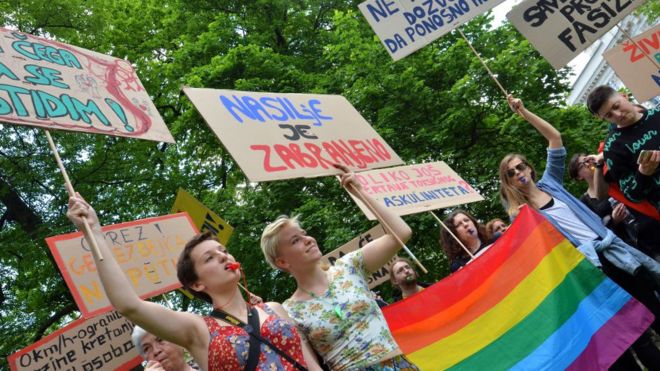
People protesting in Sarajevo after initial proposal for parade was rejected in 2017. Photo accssed via BBC .

Before crowds could march through Sarajevo in Bosnia’s first ever LGBTQI Pride procession on 8 September 2019, they would be outnumbered by series of pre-protests across the city.

One such protest, calling itself the “Day of the Traditional Family”, featured people walking hand in hand with children and waving flags printed with traditional male and female sex symbols. Keynote speakers at the gathering called the Pride procession scheduled for the following day “a violation of civil rights”.

In a louder protest the morning of the Pride procession, a separate group chanting the Takbir held signs bearing such slogans as “What fools take pride in, the wise are ashamed of” and various homophobic slurs. “We’re defending the right of our children to be normal,” said Sanin Musa, a Quranic scholar and one of the event’s organizers, “[We’re here because] we disagree with the lifestyle of the LGBT population”.

When the Pride procession did occur, security measures pointed to an awareness of these threats. Heavily armed police officers accompanied the procession along a cordoned-off path. On various social media platforms, which had been buzzing since the announcement of the procession in April 2019, there were calls for violence. Earlier that week, Bosnian police forces had labelled the pre-protests “high risk”.

Nevertheless, the tone of the procession was jovial. A noticeably young crowd smiled as it moved along Maršala Tita, the historic city center’s main street, stopping symbolically in front of the National Government Building. The hashtag #imaizać, a pun on the concept of coming out, captured Bosnians embracing and performing songs.

Ancient hatreds?

Bosnia is the last of the former Yugoslav Republics to have held a Pride procession. This is not without cause. The 2008 Queer Sarajevo Festival, which intended to capture the Bosnian queer experience through art, was shut prematurely after organizers received death threats and several participants were physically assaulted by hooligans. Despite laws prohibiting discrimination based on sexual orientation, same-sex marriage is not recognized in Bosnia and Herzegovina. In 2017, two separate applications to hold pride parades were rejected by authorities, and this year, organizers of the Pride procession cited discrimination and exclusion from society as reasons for the march.

Some suggest that a resurgence of religious, and particularly Islamic, conservatism in the wake of the more recent war is to blame for intolerant mentalities. Protestors on 7 September contested this idea, framing their objection to the Pride procession as a question of civil rights concerning the “will of the majority”. In reality, the debate reflects the identity politics that still divide Bosnians over two decades on from the war.

Before the Communist Yugoslavia disintegrated in 1992, Bosnia was among the most ethnically diverse of its republics, and its citizens the least likely to vote along ethnic and religious lines. Today, Bosnia is made up of two federal entities, the Republika Srpska and the Federation of Bosnia and Herzegovina, which reflect ethnic dispersions (altered largely by ethnic cleansing) after the war. Studies suggest the majority of Bosnians vote according to their ethnicity and religion.

Some claim that politicians use opposition to members of the LGBTQI community as a means of consolidating their positions in the electorate. Ethnicity has to do with one’s perceived belonging to a group of inherent racial and religious characteristics, which set one apart from other ethnic groups. Identifying non-heterosexual and non-cisgender individuals as “other” might therefore be used to strengthen such feelings of political belonging.

Clashes over the Pride procession identify yet another source of division, this time between a traditional, practicing faith and a young, Europeanized generation. Several members of this younger generation of Bosnians appear eager to leave inherited divisions behind them. In a video about young queer Bosnians, Ada Sokolović explains that when she meets someone new, “I say please just don’t ask me about my faith, nation or sexual orientation. Ask me about what I like, what music I listen to, what my hobbies are.”

One step forward, two steps back

This comes in the wake of various attempts to incorporate Bosnia into the European Union. Despite applying for EU membership in 2016, integration has been slow going. For Bosnia, EU membership would mean being part of a market of 500 million people, with freedom of movement for people, goods, and capital services. The benefits to a country struggling with poverty would be immense.

Open homophobia might be slowing the process down. Bosnia, like many of the formerly-Yugoslavian republics, already has to contend with an image associated with violent conflict. Many media outlets called the Pride procession a “tolerance test”for the country.

“I’m marching today with my colleagues from the EU and Switzerland, all countries that stand for equal rights for everyone,” said Eric Nelson, the United States Ambassador to Bosnia and Herzegovina, at the Pride procession. Nelson, who is openly gay, continued: “That’s what Bosnians and Herzegovinians want in their future, so let’s think about how to create that.”

Yet Bosnians themselves are not necessarily ready to face this challenge. The same day of the Pride procession, Mujo Aganović, a speaker at the Day of the Traditional Family, proclaimed to a cheering crowd that “not even the American Ambassador, with his [rainbow flag] on the American Embassy” had the right to “terrorize” Bosnian citizens with the procession. Earlier in 2019, the Bosnian presidency responded late to a follow-up questionnaire from the European Commission and left several questions blank.

There are still certain glimpses of progress. The mayor of Sarajevo did not outright call to ban the procession, and its organizers have already announced plans for a second parade.

If Bosnia wants to reap the benefits of the EU, it should reconsider the role played by intolerance in its identity politics. Whether its citizens are willing to overcome their divisions has yet to be determined.

Is the UN Human Rights Council Broken?

Some are worried the UN human rights council is headed down the same track as the now defunct Human Rights Commission. Photo courtesy of UN Photo.

Venezuela was voted onto the United Nations Human Rights Council on 17 October 2019 by the 74th UN General Assembly. Venezuela and Brazil were both voted on to the council as members of the group of representatives from Latin American and Caribbean states. The vote was won by a narrow margin, with Brazil gaining 153 votes, Venezuela gaining 105 votes, and Costa Rica gaining 96. Venezuela won the seat despite protests from over 50 organizations and countries. Costa Rica announced candidacy shortly before the vote to prevent Venezuela from getting the seat.

The result follows a visit by the UN High Commissioner for Human Rights, Michelle Bachelet, to Venezuela in June. Bachelet was invited by Maduro to the country as a sign of his commitment to addressing human rights issues in the country. Following the visit, Bachelet released in July a scathing report of the human rights abuses witnessed in Venezuela. Maduro subsequently dismissed the report from the UN High Commissioner for Human Rights as biased. In September, the UN announced a fact-finding mission would be conducted in Venezuela to investigate human rights concerns.

Does membership on the council signal a trend toward addressing human rights abuses in the country? Membership on the council often serves as a hallmark of legitimacy for governments. Some countries join the council to increase respect for human rights in their home countries. Logic follows that countries would try to address human rights abuses in order to gain a spot on the council to gain legitimacy for the regime. What happens when a state fails to address human rights abuses after gaining membership on the council? Several critics see the council as a way for corrupt regimes to find legitimacy on the international stage.

The 14 new council members were elected by the UN body to serve for a period of three years beginning in January 2020. Membership on the council requires a responsibility to uphold human rights standards. The Human Rights Council consists of 47 member states. 13 are from the group of African states, 13 from the group of Asia-Pacific States, 6 from Eastern European states, 8 from the group of Latin American and Caribbean States, and 7 from the group of Western European and other States. Members are not eligible for immediate re-election after serving two consecutive terms. The Council aims to represent each region of the world in order to fairly address concerns.

Venezuela’s membership raises concerns over the legitimacy of the human rights council. The Maduro government is accused of jailing, torturing and arbitrarily arresting members of the opposition. Venezuela is experiencing economic and social collapse as the Maduro government uses the military to fight dissent. Over 4.5 million Venezuelans have fled the nation. Maduro has also accused the US of leading a coup and waging “economic war.”

The United States and several states in the EU and Latin America back the regime led by opposition leader Juan Guaidó. Furthermore, the Maduro government is no longer recognized by more than 50 countries after the main opposition party in the National Assembly declared the Maduro government illegitimate. The 2018 elections won by Maduro are largely seen as illegitimate by both the National Assembly and the international community. As a result, Guaidó cited article 233 of the Constitution and declared himself interim president until elections could be held. Article 233 allows for the head of the Nation Assembly to take office as interim leader if the presidency is empty. Guaidó interpreted the fraudulent elections to mean the presidency is still open. Yet it is the government led by Maduro that has won the seat at the UN. Critics are worried that giving the seat to Venezuela will legitimize the Maduro government.

However, this is not the first-time countries with questionable track records on human rights have been allowed on the council. In 2018, five countries with histories of human rights abuses were voted on the council. In this case, the countries were from the same region where there were six open seats. There were no other states running, despite US and EU efforts to make it more competitive, so all states were elected to the council despite serious concerns over their human rights records.

As a result, the validity of the Human Rights Council has been called into question. Some have compared the current council to that of the failed human rights commission. The commission was disbanded in favor of the council as a result of several members of the commission also committing human rights abuses within their own countries. Not only does it call into question the legitimacy of the council but having members who also commit human rights abuses can hinder any council decisions. Burundi voted against a resolution on its own situation while serving on the council. However, the council has expressed its desire to continue investigating human rights abuses in Venezuela as it has done for other members of the council.

Women’s Protests in Iran and the Relationship between Social Media and Activism

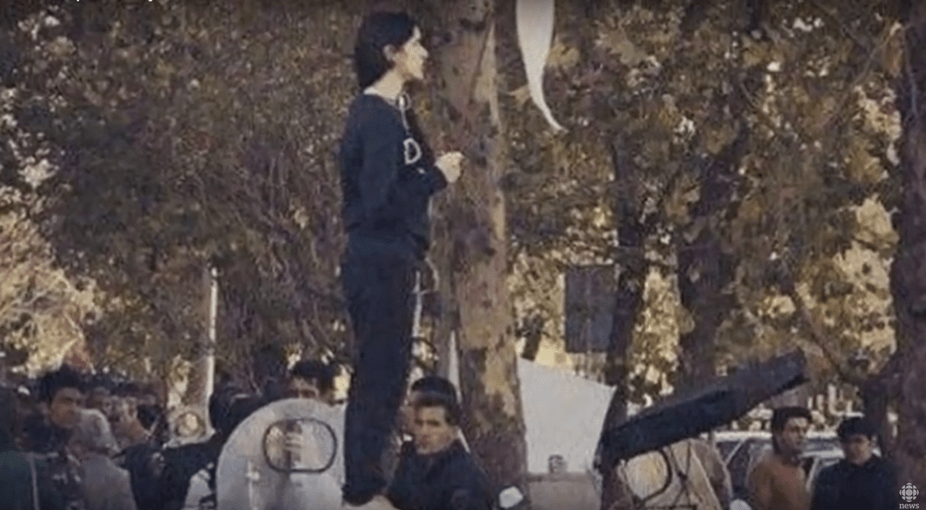
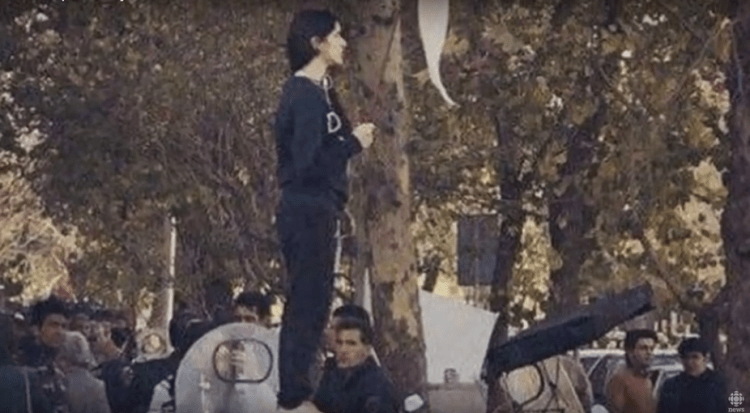
Women recorded holding her hijab aloft in protest in December 2017, via video on BBC.

On International Women’s Day this year, three women were arrested in Iran. They were protesting the laws that make it compulsory to wear a hijab at all times by taking theirs off in a Tehran subway. The women were subsequently arrested by local authorities and taken into custody. They were sentenced with a combined 55 years in prison, 16 years each to a mother, Monireh, and her daughter, Yasaman, and 23 years to their associate Mojgan. They were charged with inciting prostitution. This case joins an upward trend of women’s rights protestors in the country, that does not seem to be slowing down.

The laws date back to 1979 when a revolution overturned the monarchy and installed an Islamic Republican government. Since then, all women, including non-citizens, have been subject to the law. The attorneys assigned to these women report that they were not allowed to represent their clients during the indictment or trial. This event is happening at the same time as reports of sham-trials and violent judges are being heard. The question arises of whether the individual human rights of these women are being respected. If we are to follow the reports from Amnesty International it becomes clear that they are not.

2017 saw social media erupt in support for 31-year-old, Vida Movahed, or the ‘Girl of Enghelab Street’, who was arrested for ‘un-veiling’ on a central Tehran street. It was discovered that she did so in support of a wider campaign named ‘white-Wednesdays’, her case went on to inspire a slew of similar protests.

The Iranian government has been undoubtedly clear on its position, citing their laws as keeping women in their ‘traditional roles’ and repeatedly blaming western culture for leading their women ‘astray’. According to Radiofarda, controversial judge, Mohammed Moqisseh, reportedly said‘I will make you suffer’ during the trial of the three convicted women.

International human rights organisations face a unique dilemma. Do they support the cause itself or the individual’s right to protest? The context in which these laws exist is not clear cut when similar laws were scrapped during ‘westernisation’ efforts by Shah Reza Pahlavi, rampant discrimination took hold and the headdress grew to become a symbol of the lower classes.

The hijab has been described by many as an oppressive headdress, but it does not have to be that way. Instead, it has been argued by Masih Alinejad, In an interview with the Independent, Alinejad commented on the rise of these protests, and their relationship with social media. She said, “the women in these videos are braver and angrier than before”, noting an escalation in the level of tensions between the state and the protesters. She brings up an interesting issue, and arguably one that will play an important role in future dialogues. Unlike ever before, these protesters and human-rights movements have access to social media and can therefore access vast swathes of the global population. The plight of people fighting against oppression worldwide can be broadcasted in real-time into the pockets of individuals across the world.

Movements like ‘White Wednesdays’, started by an activist based in Britain and the U.S., can take hold in nations like Iran and cause real disruption. How this plays into global human-rights movements is up for debate. The increased pool of supporters may dilute an already crowded stage and have the untoward effect of hindering nuanced and sensitive work that is already taking place. Social media raises awareness and allows for the spread of ideas and messages to a wider audience. As time moves forward, we may see it have a marked impact on human-rights struggles. However, when facing deeply entrenched legal corruption and real-world forces, is the utilisation of social media as a tool more of a superficial gesture and less of a meaningful push back?

In the case of Iran, if the words and actions of the political class are anything to go by, change may be far beyond the horizon. The question is, what is the nature of the change that is needed and what methods will be used to achieve it?

Police brutality, expulsion and music – containing protest in Russia

Rally for the right to vote in Moscow on August 10th 2019.

Source: Sergey Leschina, via Wikimedia Commons.

The summer of 2019 in Russia stood in stark contrast with last year’s flourish and excitement surrounding the 2018 FIFA World Cup. It was a summer marked by marked by violence and widespread political discontent.

In the lead-up to the 2019 Moscow City Duma election, news emerged that over half of the registration applications submitted by independent candidates were rejected by the Moscow City Election Committee. Over 10% of the signatures they collected were found to be fraudulent and inadmissible. This quickly sparked outrage amongst the Russian public, as prominent activists, some of whose candidacies got rejected, claimed that the MCEC fabricated these results, thus actively seeking to prevent them from running for the Duma.

Over the next 2 months, a series of authorised and unauthorised protests took place in many Russian cities. They were accompanied by hundreds of arrests and incidents of violence where the protesters clashed with the police and the Rosgvardiya (also known as The National Guard) – Russia’s internal military force reporting directly to the President.

While Article 31 of the Russian Constitution guarantees right of assembly to all Russian citizens, a 2004 amendment to the Federal Law requires that any public gathering including more than one person has to be detailed to the authorities for approval at least 10 days in advance. In the event that the gathering does not get the green light, under the Code of the Russian Federation on Administrative Offences Article 20.2, those found guilty of gathering for an unsanctioned protest or demonstration can be subject to a monetary fine of up to 20,000 roubles (~£240) or up to 40 hours of community service. This penalty increases to 50,000 roubles (~£600), 100 hours of community service or administrative arrest if a person is found guilty of interfering with any infrastructure including pedestrian routes and entrances to any residential or administrative buildings.

In some cases, even being in the vicinity of an unauthorised protest can have grave repercussions. The case of actor Pavel Ustinov in particular has garnered a lot of attention from various prominent Russian journalists, actors, Orthodox priests and politicians on social media. Currently only sentenced to a two-year probation period, he was initially confined to three years in prison, having been accused of resisting arrest and dislocating a shoulder of a National Guard officer during a protest in Moscow on August 10th. The court originally refused to take into consideration a video of his arrest showing Ustinov neither participating in the protest, nor attacking his arresting officers. This attracted widespread backlash from members of the Russian public and eventually led to his sentence being reversed. After his release he gave an interview to RBC, stating that while he was in the prisoner transport vehicle he overheard two members of OMON (a separate unit within the Russian Guard responsible for regulating public unrest) whispering about ‘choosing someone more impressive’ and pointing in his direction. Shortly after, he was led out of the car and accused of dislocating an officer’s shoulder.

The extent of police brutality during the protests also amassed much criticism from the Russian public. After the August 10th protest in Moscow, a viral video surfaced of a policeman hitting an unarmed woman while forcibly dragging her to a prisoner transfer vehicle along with two other officers. The woman was later identified as Daria Sosnovskaya. After being released with a warning on the same day, Sosnovskaya submitted a statement to the Investigative Committee of Russia, asserting that the incident took place after she made a critical comment to one of the police officers about twisting the arms of a man with a disability during arrest. According to her claim, the officers then proceeded to grab and arrest her without any warning or introduction, leading to her receiving head trauma and multiple contusions which were recorded during her visit to the hospital the following day.

Although the Kremlin condemned excessive use of violence by the police during the protests, it maintained its support for law enforcement’s efforts to suppress public unrest. This is despite claims of those present during the protests that most arrests that took place were unwarranted. Natalya Zvyagina, the director of Amnesty International’s Russia division, claimed that representatives of the group were witnesses to ‘indiscriminate use of force by police, who beat protesters with batons and knocked them to the ground’. Likewise, Alexander Verhovsky, a member of the Presidential Council for Civil Society and Human Rights, affirmed that people should have a right to assembly and scorned gratuitous arrests, saying that ‘the fact that some people seemed to interfere with the passage of others is not an offence. And the arrests, in their essence, took place because of this’.

Special effort was put in to deter young people from participating in the protests. Multiple Rectors of universities in Moscow, including the Russian State University for the Humanities and the Moscow State Pedagogical University, threatened those students who would participate in unauthorised protests with expulsion. The students protested this claim in an open letter to Alexander Bezborodov, Rector of RSUH, citing Article 14 (7) in the International Covenant on Civil and Political Rights, guaranteeing an individual’s protection against double jeopardy. Elsewhere, the protests on August 3rd and 10th were both accompanied by last-minute announcements by the Government of Moscow, advertising the “Meat&Beat” and “Шашлык.Live” festivals. Both were advertised only a few days before their starting dates, with stars of Russia’s hip-hop and pop music scene set to give a concert on the same day as the scheduled protests. These were widely seen to act as a deterrent for young people and secure smaller numbers for the rallies.

While police crackdown and threats of wider repercussions are sure to have deterred some from taking part in the rallies, they also became a stimulant for many Russians to express their disapproval of the government’s actions and drew even more people to protests in their opposition. An authorised rally held on September 29th in support of political prisoners following the summer protests attracted over 25,000 people according to data collected by White Counter, an independent protest monitor agency.

A Call for Justice: Los Desaparecidos de México

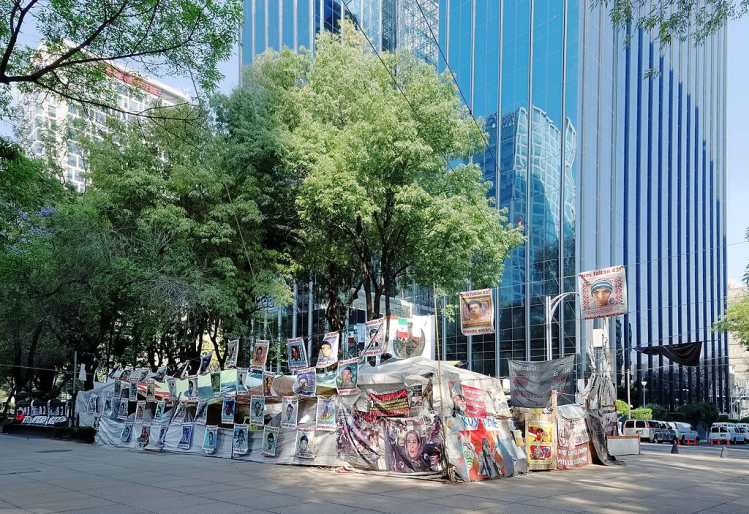
Protest Camp for 43 missing students in Reforma, Mexico City

Photo by Carlos Valenzuela, Wikimedia Commons

On September 26th 2019, people from all over Mexico took to the streets of Mexico City, marching to commemorate the loved ones they had lost five years earlier. In 2014, in the southern state of Guerrero, 43 students went missing from the Ayotzinapa Rural Teachers’ College. Their whereabouts are still unknown. Families and loved ones continue to mourn and remember those who were lost. The few that survived the 2014 incident claimed the students were ambushed by local police forces before being handed over to Guerreros Unidos, a criminal group known for extortion, kidnapping, and drug trafficking.

The investigation led by Enrique Peña Nieto, President of Mexico at the time, has been condemned by not only the families of those lost but also by the general public for the disappearances and their negligence in carrying out due process. Alejandro Encinas, Deputy of Interior Security, claims the investigation was inadequate due to the use of torture and the forging of evidence by officials. Because the case was mishandled, the possibility of successfully prosecuting those suspected of involvement in the crime was reduced. According to Encinas, “the poorly named ‘historic truth’ was built with a foundation of cover-up, fabrication of evidence and torture to the benefit of the perpetrators and against victims’ rights. The historic truth collides with reality.”

In September, following the release of Gildardo López Astudillo, the purported leader of the Guerreros Unidos, President Adrés Manuel López Obrador announced the continuation of an investigation into the disappearances as well as the discrepancies in the investigation under Nieto’s government. Astudillo was the 54th suspect behind the disappearances to be released during the investigation. His release represents the corruption in the judicial system as well as the lack of justice given to the victims and their families. “It’s a very serious justice issue and because of that we’re going to formally file a complaint with the Attorney General’s Office and the Judiciary in this case” promised Obrador.

However, a thorough investigation of the missing 43 students will not fix the greater, larger crisis in Mexico today. 37,000 people are currently missing throughout the country. In addition to this, 26,000 unidentified corpses have been found. The failure of authorities to investigate the missing and identify the bodies of those found has left people across Mexico enraged and heartbroken by the lack of justice for their loved ones. Thousands in search of those who have disappeared have joined forces across Mexico, forming 70 collectives under the umbrella group Movement for Our Disappeared in Mexico. This movement differs from past ones as it is motivated by love, anger, and justice. These families, with their relentless search for their missing loved ones, could be the force that changes Mexico’s broken justice system. This is evident in the 2017 implementation of the General Law on Disappearances, a law that seeks to strengthen the quality of the investigation. It calls for the creation of national databases for authorities to share information about missing persons and discovered bodies as well as assigning certain government bodies responsibility for investigation. It defines “enforced disappearance” in line with human rights law, and allows families to participate in investigations as well as implementing an advisory council at federal and state levels to check and validate the work of search commissions.

Obrador continues to make efforts towards reform in regards to the 43 disappeared. He introduced the Commission for Truth and Justice and created the new National Prosecutor’s Office, which carry out thorough and sincere investigations into human rights. It is also more promising as it is separate from the executive branch and is therefore less influenced by politics.

The loss and lack of justice for these families calls into question the corruption and violence that has become the norm in Mexico. For these individuals to really change the system they must continue the fight for their loved ones and continue urging Obrador to continue the investigations until their friends and families are found and put to rest. The persistence of those searching for their loved ones is what could be the force behind true reform to Mexico’s fractured system of corruption. It may also take international recognition in addition to internal calls for reform to catalyse the deep structural change that is necessary to serve justice to all those lost.

A Husband’s Prerogative or a Human Rights Violation?: Navigating the Waters of Spousal Rape

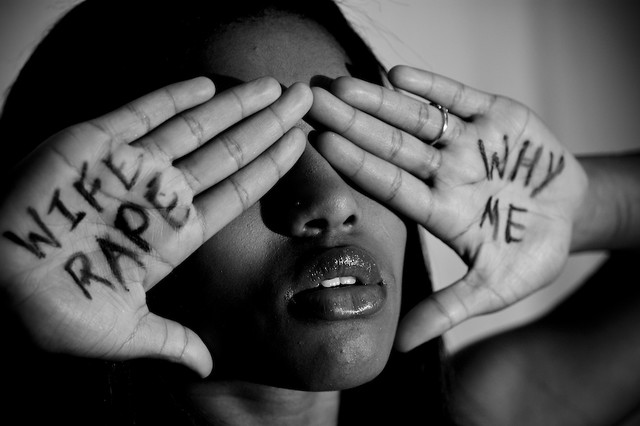
Photo by Emmy Vessa on Flickr

The definition of spousal rape is tricky, in part due to the traditional perception of marriage which awarded sexual favours to husbands, and also due to the religious and cultural beliefs of different communities. Classified as a form of domestic abuse, marital rape is not discussed enough but remains a serious and widespread issue across the globe. In the following article, I want to narrate the criminalisation of marital rape in certain countries, cases and incident rates of marital rape in contemporary society, and the issues that campaigners and activists face in combatting this abuse.

Previously considered a husband’s right, sex between spouses has been a focal point since early feminist movements of the 19th century. As human rights were explored, discussed and defined, marital rape seemed inconsistent with the developing sensibilities and was slowly viewed as a violation of basic human rights. Poland, for example, was amongst one of the earliest countries to adopt laws against marital rape and criminalised marital rape almost 20 years before other countries in 1932. Marital rape was established as a human rights violation in 1993 by the United Nations High Commissioner for Human Rights, although this is still not fully recognised by all of the member states. Currently, perpetrators can face prosecution for spousal rape in 104 countries.

Despite the leaps and strides made by various communities to establish women’s autonomy and authority over their own bodies, in many societies women continue to be seen as sexual property. For example, marital rape is not considered a criminal offence in India and victims do not have the backing of the legal system when reporting their abuse. The Indian Penal Code very clearly states that “sexual intercourse by a man with his own wife is not rape.” Sex is seen as a right awarded to husbands after marriage and there is no concept of consent to sexual relations between spouses. Indeed, government officials believe that “marriage presumes consent.” Much of this stems from the concept of dowries which are often considered a way of purchasing sexual rights from women upon marriage whereby women become the property of their husbands.

For example, the Society for Nutrition, Education and Health Action (SNEHA), a non-governmental organisation with crisis counselling centres, notes that out of 664 cases of domestic violence reported to their centre in Dharavi, 159 women reported marital rape. According to the United Nations Population Fund, 75% of married women in India are victims of marital rape.

However, statistics on marital rape are difficult to compile because many women do not report incidents, preventing useful, significant data from being gathered. Maneka Ghandi, Indian Union Cabinet Minister for Women & Child Development, noted that even if there was a law in India criminalising marital rape, “women won’t report it.” This is corroborated by Dr Rekha Davar, Head of Obstetrics & Gynaecology at a hospital in Mumbai. Dr Davar notes that reports of marital rape are “very rare” and patients “are not aware this is wrong.” Financial dependence on their husbands and low female participation in the work force also prevent women from reporting incidents of rape. Women are also discouraged by victim-blaming, criticisms for ‘airing their dirty laundry’ and intimate details, and embarrassment over not performing their ‘wifely duties.’

Moreover, even when cases of marital rape are reported by hospitals or victims, these cases are not registered by the police as they do not have any standing in the legal system. In an article for The Hindu, Roli Srivastava outlines shocking cases of domestic abuse and marital rape that were not registered by police authorities. For example, a woman was admitted into hospital for injuries in her private areas that were classified by doctors as “inflicted in a sexual assault.” However, this was disregarded by police as a “matter between a husband and wife” and they turned a blind eye.

A complex and multi-faceted issue, this has no clear solution. Attempts to criminalise marital rape have been heavily resisted and are struggling to foster a decisive change. A statement by Indian politician Haribhai Parthibhai Chaudhary conceptualises the issue activists are facing. Chaudhary claims that the criminalisation of marital rape defies “very ‘sanctity’ of marriage.” Indeed, this is corroborated by his colleagues that argue such a move would “weakens traditional family values in India.” These quotes highlight that activists are not only battling legal systems but fighting to change culture, long-held traditions and mind-sets that have been nurtured and encouraged generation to generation. In these societies, sexual rights come part and parcel with marriage; this is why the rape of an unmarried woman is seen as crime but the rape of a married woman does not exist. There are also other factors such as lack of education and illiteracy, poverty and deep-rooted religious beliefs that hinder progress. Many rural communities also have their own courts and legal systems which govern the areas. It would be ineffective to have an outside body enforcing rules or legal changes. Instead, we must foster change from within via campaigns and courses, educating both men and women and raising awareness for healthy relationships by joining and participating directly within communities.

A message from the editor:

If you or anyone you know is a victim of sexual abuse please do not be afraid to seek help.

Relevant links:

https://www.safeline.org.uk/

https://www.nhs.uk/live-well/sexual-health/help-after-rape-and-sexual-assault/

Further resources for both men and women can be found here.

A Husband's Prerogative or a Human Rights Violation?: Navigating the Waters of Spousal Rape

Photo by Emmy Vessa on Flickr

The definition of spousal rape is tricky, in part due to the traditional perception of marriage which awarded sexual favours to husbands, and also due to the religious and cultural beliefs of different communities. Classified as a form of domestic abuse, marital rape is not discussed enough but remains a serious and widespread issue across the globe. In the following article, I want to narrate the criminalisation of marital rape in certain countries, cases and incident rates of marital rape in contemporary society, and the issues that campaigners and activists face in combatting this abuse.

Previously considered a husband’s right, sex between spouses has been a focal point since early feminist movements of the 19th century. As human rights were explored, discussed and defined, marital rape seemed inconsistent with the developing sensibilities and was slowly viewed as a violation of basic human rights. Poland, for example, was amongst one of the earliest countries to adopt laws against marital rape and criminalised marital rape almost 20 years before other countries in 1932. Marital rape was established as a human rights violation in 1993 by the United Nations High Commissioner for Human Rights, although this is still not fully recognised by all of the member states. Currently, perpetrators can face prosecution for spousal rape in 104 countries.

Despite the leaps and strides made by various communities to establish women’s autonomy and authority over their own bodies, in many societies women continue to be seen as sexual property. For example, marital rape is not considered a criminal offence in India and victims do not have the backing of the legal system when reporting their abuse. The Indian Penal Code very clearly states that “sexual intercourse by a man with his own wife is not rape.” Sex is seen as a right awarded to husbands after marriage and there is no concept of consent to sexual relations between spouses. Indeed, government officials believe that “marriage presumes consent.” Much of this stems from the concept of dowries which are often considered a way of purchasing sexual rights from women upon marriage whereby women become the property of their husbands.

For example, the Society for Nutrition, Education and Health Action (SNEHA), a non-governmental organisation with crisis counselling centres, notes that out of 664 cases of domestic violence reported to their centre in Dharavi, 159 women reported marital rape. According to the United Nations Population Fund, 75% of married women in India are victims of marital rape.

However, statistics on marital rape are difficult to compile because many women do not report incidents, preventing useful, significant data from being gathered. Maneka Ghandi, Indian Union Cabinet Minister for Women & Child Development, noted that even if there was a law in India criminalising marital rape, “women won’t report it.” This is corroborated by Dr Rekha Davar, Head of Obstetrics & Gynaecology at a hospital in Mumbai. Dr Davar notes that reports of marital rape are “very rare” and patients “are not aware this is wrong.” Financial dependence on their husbands and low female participation in the work force also prevent women from reporting incidents of rape. Women are also discouraged by victim-blaming, criticisms for ‘airing their dirty laundry’ and intimate details, and embarrassment over not performing their ‘wifely duties.’

Moreover, even when cases of marital rape are reported by hospitals or victims, these cases are not registered by the police as they do not have any standing in the legal system. In an article for The Hindu, Roli Srivastava outlines shocking cases of domestic abuse and marital rape that were not registered by police authorities. For example, a woman was admitted into hospital for injuries in her private areas that were classified by doctors as “inflicted in a sexual assault.” However, this was disregarded by police as a “matter between a husband and wife” and they turned a blind eye.

A complex and multi-faceted issue, this has no clear solution. Attempts to criminalise marital rape have been heavily resisted and are struggling to foster a decisive change. A statement by Indian politician Haribhai Parthibhai Chaudhary conceptualises the issue activists are facing. Chaudhary claims that the criminalisation of marital rape defies “very ‘sanctity’ of marriage.” Indeed, this is corroborated by his colleagues that argue such a move would “weakens traditional family values in India.” These quotes highlight that activists are not only battling legal systems but fighting to change culture, long-held traditions and mind-sets that have been nurtured and encouraged generation to generation. In these societies, sexual rights come part and parcel with marriage; this is why the rape of an unmarried woman is seen as crime but the rape of a married woman does not exist. There are also other factors such as lack of education and illiteracy, poverty and deep-rooted religious beliefs that hinder progress. Many rural communities also have their own courts and legal systems which govern the areas. It would be ineffective to have an outside body enforcing rules or legal changes. Instead, we must foster change from within via campaigns and courses, educating both men and women and raising awareness for healthy relationships by joining and participating directly within communities.

A message from the editor:

If you or anyone you know is a victim of sexual abuse please do not be afraid to seek help.

Relevant links:

https://www.safeline.org.uk/

https://www.nhs.uk/live-well/sexual-health/help-after-rape-and-sexual-assault/

Further resources for both men and women can be found here.