‘Comfort Women’: The Uncomfortable Truth

During the Second World War, Japan committed countless of war crimes; of this, there is not much room for doubt. However, recent comments made by Japanese Prime Minister Shinzo Abe, along with other prominent political figures such as Osaka Mayor Toru Hashimoto make us question whether Japan actually has acknowledged past wrongdoings.

Mayor Hashimoto was quoted saying that given the stress and dangers soldiers faced in battle: “anyone can understand that the comfort women system was necessary”. Mr. Hashimoto went on further to degrade his credibility by speaking of how the US soldiers on Okinawa Island should use the island’s “adult entertainment industry” in order to reduce incidences of sexual assault on local women.

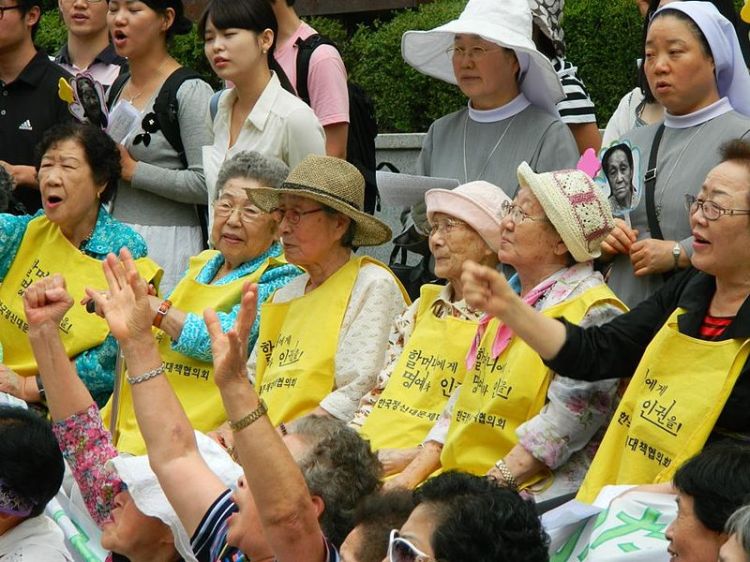
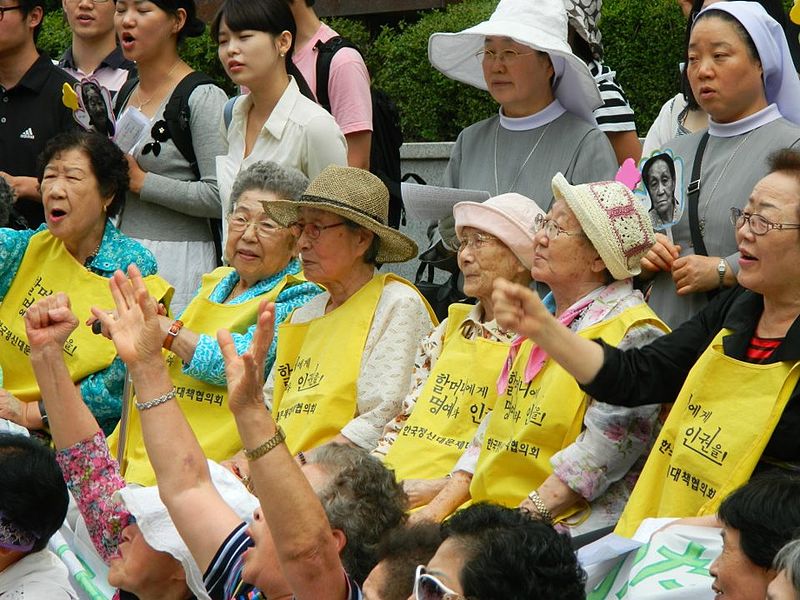
Mayor Hashimoto’s statement was met by outcries from the victims and the wider global community who are still fighting for proper compensation and apologies from the Japanese government. This leads one to question what exactly happened with ‘comfort women’ that has caused this much controversy some 60 years on.

‘Comfort women’ is a term used to describe women and girls forced into prostitution and work as sex slaves for Japanese soldiers within the Japanese Empire during World War II. It is estimated that the Japanese Imperial Army enslaved between 80,000 and 200,000 women and girls from 1932 to 1945. Most came from Korea, with many also from Japan and the Dutch East Indies. Women and girls were obtained through abduction or deception and, in some cases, purchased from destitute parents. They were brutally abused by Japanese soldiers. For these women, the war never ended.

Some of the advocates of Japanese military and its use of ‘comfort women’ make the argument that these women were voluntarily following Japanese troops to make money, and thus Japan has no reason to apologise for the treatment of ‘comfort women’ throughout the war. Proponents of this way of thinking misleadingly use the term ‘comfort women’ to say that they were voluntary prostitutes. Translation of the original Japanese term would prove this. The problem is that such rhetoric is now being utilised by Japanese ultranationalist critics to avoid any criticism of their wartime crimes and wrongdoing. The Japanese government did compensate for all of their wartime damage to Koreans, and included the issue of ‘comfort women’ as part of the compensation scheme. However, Japan refuses to assume any legal liability for what they have done to Japanese ‘comfort women’.

This problem has been getting worse since Abe’s government took control. Abe has adopted an ultranationalist approach, in which he argues for a reformulation of their peace constitution which has acted as a mechanism to enforce a demilitarised Japan. Abe has denied the war crimes which were committed and has advocated teaching a ‘false’ history to Japanese students for future change. As part of this effort, Japan has asked the US for removal of the statue of a girl who represents the ‘comfort women’ in an attempt to disparage the issue.

In order for Abe to gain legitimacy in the global political arena, he needs to realise that this ultranationalist rhetoric will put him in an isolated position. The Japanese government needs to move ahead with apologies and compensation for those victims who are still alive. As there are few living victims, they need to take proper responsibility and give these women the comfort they deserve.

#comfortwomen #prostitution #womensrights #Japan

'Comfort Women': The Uncomfortable Truth

During the Second World War, Japan committed countless of war crimes; of this, there is not much room for doubt. However, recent comments made by Japanese Prime Minister Shinzo Abe, along with other prominent political figures such as Osaka Mayor Toru Hashimoto make us question whether Japan actually has acknowledged past wrongdoings.

Mayor Hashimoto was quoted saying that given the stress and dangers soldiers faced in battle: “anyone can understand that the comfort women system was necessary”. Mr. Hashimoto went on further to degrade his credibility by speaking of how the US soldiers on Okinawa Island should use the island’s “adult entertainment industry” in order to reduce incidences of sexual assault on local women.

Mayor Hashimoto’s statement was met by outcries from the victims and the wider global community who are still fighting for proper compensation and apologies from the Japanese government. This leads one to question what exactly happened with ‘comfort women’ that has caused this much controversy some 60 years on.

‘Comfort women’ is a term used to describe women and girls forced into prostitution and work as sex slaves for Japanese soldiers within the Japanese Empire during World War II. It is estimated that the Japanese Imperial Army enslaved between 80,000 and 200,000 women and girls from 1932 to 1945. Most came from Korea, with many also from Japan and the Dutch East Indies. Women and girls were obtained through abduction or deception and, in some cases, purchased from destitute parents. They were brutally abused by Japanese soldiers. For these women, the war never ended.

Some of the advocates of Japanese military and its use of ‘comfort women’ make the argument that these women were voluntarily following Japanese troops to make money, and thus Japan has no reason to apologise for the treatment of ‘comfort women’ throughout the war. Proponents of this way of thinking misleadingly use the term ‘comfort women’ to say that they were voluntary prostitutes. Translation of the original Japanese term would prove this. The problem is that such rhetoric is now being utilised by Japanese ultranationalist critics to avoid any criticism of their wartime crimes and wrongdoing. The Japanese government did compensate for all of their wartime damage to Koreans, and included the issue of ‘comfort women’ as part of the compensation scheme. However, Japan refuses to assume any legal liability for what they have done to Japanese ‘comfort women’.

This problem has been getting worse since Abe’s government took control. Abe has adopted an ultranationalist approach, in which he argues for a reformulation of their peace constitution which has acted as a mechanism to enforce a demilitarised Japan. Abe has denied the war crimes which were committed and has advocated teaching a ‘false’ history to Japanese students for future change. As part of this effort, Japan has asked the US for removal of the statue of a girl who represents the ‘comfort women’ in an attempt to disparage the issue.

In order for Abe to gain legitimacy in the global political arena, he needs to realise that this ultranationalist rhetoric will put him in an isolated position. The Japanese government needs to move ahead with apologies and compensation for those victims who are still alive. As there are few living victims, they need to take proper responsibility and give these women the comfort they deserve.

Are the Tory’s Toying with Human Rights?

The Conservative Party conference in Manchester took place over four days and drew to a close this Wednesday. Perhaps most notable to readers of this magazine will be what was said (and implied), on Monday regarding Britain’s involvement in the European Convention of Human Rights. Some voices within the party, including Home Secretary Theresa May, have expressed interest in withdrawing from the ECHR altogether.

“What we need to do is look and think what is the outcome we want. I’m less interested in which convention we are signed up to.” – David Cameron, BBC 1 Andrew Marr Show.

With the above statement and more made during the course of the Conservative Party conference, it was made clear to those present that national security is of the utmost importance and perhaps worth reconsidering involvement in the European Convention of Human Rights. However, is this necessarily a movement away from a consideration of human rights altogether? Perhaps not –there has been talk of a ‘British Bill of Rights’.

Whilst purely speculative, a British Bill of Rights would allow the British government participation in the ECHR, but the British Bill in itself would seemingly not be subjected to European state involvement. There are implications that this would replace the Human Rights Act of 1998. Would a system this one-sided work, with no other states allowed input on ‘British matters’? This brings into question the implications of withdrawing from regional conventions.

However, perhaps media reports have sensationalised the impacts of Cameron’s comments. In effect, it appears that the Conservatives have called for a re-thinking of legislation in order to accommodate immediate needs of the British people. Most important of which they deem to be the safety of the British public, for which Cameron is willing to do ‘whatever it takes’ –even the consideration of removing Britain from involvement with the ECHR altogether. Such involvement has, in the past, led to difficulties deporting those deemed to be dangerous criminals. Other criticisms from the Conservative government have included the example of convicted rapist Spencer Mellors grant of £4,000 compensation when his second appeal was delayed. Replacing the Human Rights Act with a British Bill of Rights is said to enable less manipulation of the system as well as increased journalistic freedom.

“I’m less interested in which convention we are signed up to. As Prime Minister, I want to know can I keep our country safe. So, for instance, are we able to chuck out of our country people who have no right to be here, who threaten our country? I say we should be able to do that.” – David Cameron, Conservative Party Conference, Manchester 2013.

Cameron has made clear to his fellow party member that such an approach may only be adopted following the election of an independent Conservative government, and not with the Liberal Democrat coalition government of today. What is of vital importance is that the principles of universally acknowledged human rights are upheld by all member states of the United Nations. However, it remains to be seen whether human rights can, in reality, be truly universal.

The Fragile Net

One of the centrepieces of the University of St Andrew’s 600th anniversary celebrations was the Graduation Ceremony. Hundreds attended the ceremony itself and many more streamed the ceremony live. The star of the show, in many ways, was Hillary Clinton, ex-Secretary of State and potentially the future President of the United States. She wasn’t the only famous brain on stage, however, as the University honoured such illustrious minds as Jane Goodall and Tim Berners-Lee, among others, who were also on hand at the ceremony. Tim Berners-Lee is one of the great minds credited with helping to invent the internet as we know it. He is also the founder of the World Wide Web Foundation, an organization which seeks to keep the Web ‘available, usable, and valuable for everyone’. The Web Foundation’s page accurately describes the limited availability of the web, and seeks to furthermore establish the Web as a ‘global public good and a basic right’. Many people would consider the internet to be a superfluous innovation which, while it has made countless lives easier and access to information hugely more convenient, is not so fundamental that it should be considered a ‘right’. What the internet represents is access to information, and through that the ability to make independently informed decisions about political, social, and cultural issues.

Access to independent information is what allows us to be responsible and fully involved domestic and global citizens. Without it, we are forced to be dependent on the ‘official’ sources which are charged with keeping the public opinion swaying in a certain direction. The internet, however, has made it difficult for governments to be able to fully control the flow of information; yet, many still try to do so with varying degrees of success. China is a central example of this phenomenon. The Chinese government manages to restrict the flow of information to its constituents quite well through what is widely known as ‘the great Chinese firewall’, which filters out information which the Beijing government determines to be too controversial for the general public. This filtration system is much more sophisticated than a standard block-all method of censorship however, and allows bits of potentially inflammatory information through to the general public, following a ‘first censor, then publish’ course of action as reported by Perry Link in this July NY Times blogpost. This means publishing information in the back pages and ‘under small headlines’ to mitigate exposure rather than just denying it.

It appears that China may be taking new, harsher steps towards complete censorship of the internet. According to an article in The Daily Dot, there are new rules in place which make it illegal to publish and spread anything considered an ‘online rumor’, a purposefully vague term which is open to wide interpretation by the authorities. This makes it much riskier for social media users in China to share and re-post stories which they may find interesting, but which the government finds potentially threatening. Such a stranglehold on available information takes away the possibility for Chinese internet users to vet and judge information for themselves. While the new law does protect responsible companies from malicious, viral lies that may hurt business, the wide scope of the law makes it difficult for bloggers to share any stories that might be at all critical of large firms or government agencies.

Governments are not the only entities interested in restricting internet access for the general public. The American telecommunications giant Verizon has filed a case with a federal appeals court against the FCC to appeal the 2010 Open Internet Order. The Open Internet Order ‘aims to prevent Internet service providers…from interfering with Internet traffic or favouring their own services’ and as such, preserve a network of free access and content for all internet users to enjoy. Verizon wants to change that by picking and choosing which bits of content it wants to speed up and which bits it wants to slow down, giving premium speed and access to its own content. This could even mean blocking any content it deems unsavoury for itself or its business partners. Another possibility is that ISP’s would start charging website publishers tolls for access to Verizon’s customers.

This type of information exclusivity is very different from the authoritarian Chinese censorship machine this article explored earlier, but it is still an alarming step towards discrimination in favour of large institutions and their interests. Charging fees for publishing content on top of the time, effort and domain name costs that small bloggers or website owners face will severely mitigate the amount of creative and unique content on the web. This means that there is an element of discrimination based on economic viability as far as content creation goes. If large firms are willing to pay top dollar to have their content readily available and even exclusive to Verizon customers, they will shut out smaller firms or publishers looking to make themselves heard by the largest audience on earth. A key aspect of operating within a representative society is being able to access alternative sources of information. Should Verizon’s appeal succeed, we could very well find ourselves in a situation where the only information that Americans can access on the internet is that which is bought and sold between huge companies and their interests, which is a violation of the right to free speech and the right to information.

The web should remain a free, open and honest source of information and place of conversation for users the world over. Whether it is an authoritative government looking to limit domestic exposure to international news or large telecommunications firms trying to add to their balance sheets by having content providers pay for premium exposure, the web as we know it is under the threat of real, disruptive change. The internet gives us a unique and necessary platform from which to exchange and judge information from a huge range of individuals. In order to preserve this platform, there must be action taken to protect it from authoritarian regimes and large corporations who seek to alter its content and accessibility for their own gain.

Interview with the Author: Alan Shadrake

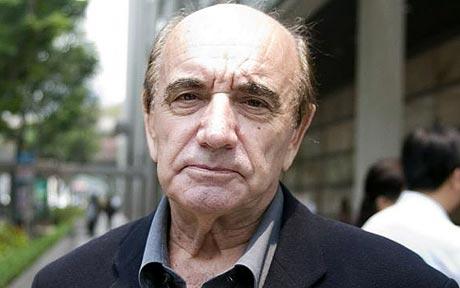
Alan Shadrake is a British journalist, and author of ‘Once a Jolly Hangman’ -an investigative book on Singapore’s judicial system and enforcement of the death penalty. We had the opportunity to speak with Mr. Shadrake and have heard in-depth of his experiences in a Singaporean jail, and raises key questions about the future of Singapore’s judicial system.

My interest in the death penalty began in the UK in the late 1950s when investigative journalists discovered several innocent men and a woman had been executed in error or through social prejudice. Their investigations helped bring about absolute abolition in 1965. In 1962, as a staff reporter with the Daily Express newspaper, I tried to interview Britain’s last hangman Harry Allen. He refused to talk for fear of breaking the Official Secrets Act. During my career I travelled the world and arrived in Singapore in 2003 with plans to cover South East Asia for several newspapers and magazines in Australia and the UK.

I soon found myself covering two interesting death penalty cases – the first a double murder committed by an English businessman who fled to Australia. Because of their laws, the Australian authorities refused to extradite him until Singapore promised not to execute him if found guilty. He was eventually tried and jailed for 24 years for involuntary manslaughter. The second case concerned an Australian citizen of Vietnamese ancestry who was sentenced to death in Singapore for attempting to smuggle 4kg of heroin from Cambodia to Australia. He was arrested at Changi Airport as he tried to board a connecting flight to Melbourne. Despite worldwide protests, the Australian conservative government were weak in their attempts to save this young man from the gallows. I thought this grossly unfair and considered another strong argument to abolish the death penalty anywhere it is practised. I followed both cases and got to know Singapore’s small band of human rights activists, notably lawyer M. Ravi and Alex Au who writes a very critical blog Yawning Bread.

The imminent execution of the Vietnamese trafficker prompted me to try to interview Singapore Chief Executioner who reportedly hanged around 1,000 men and women in his 48 year career. This time I was successful. Darshan Singh was enthusiastic as he considered his role pivotal in keeping Singapore relatively crime-free. My interview was published in The Australian – that country’s largest daily – and it went around the world. The Singapore government was angry with Singh but did nothing more than give him a ticking off. They said nothing to me and I continued meeting Singh for further interviews. After gaining his confidence he agreed to my writing his memoirs.

However, when I began delving into old and new cases which revealed instances of bad justice where vulnerable young men and women were lured into trafficking by sophisticated people often working with the police as informants, I realised this could not be his book. I also unearthed cases where several top-level foreign drug barons in Singapore were treated leniently or allowed to escape to their own countries. I found this extremely shocking which provided more evidence that the death penalty is inherently unjust.

By then I had obtained research material from Margaret John of Amnesty International which supported my investigations. I could not devote all my time to researching and writing my book because I had to make a living working with publications in Australia and the UK. So this was an on-off enterprise with no end in sight. I tried to interest some publishers in Australia and the UK without success. Some of the hurdles I came across concerned potential informants who changed their minds about talking to me. Some would reveal some interesting facts or make interesting comments but later denied saying such things when I returned to deal with loose ends. Most refused to be named anyway.

The first shocking case that spurred me to continue with this quest was the case of Florence Contemplacion, a Filipina maid, who was hanged for the murder of her best friend and a small boy in her. Florence was forced to work 18 hours a day without a proper break or holiday for three years. She finally went out of her mind and even the police said she had ‘cracked’ under the strain. This case is fully explained in the chapter Dead Woman Walking. The sad thing was that her own embassy ignored her plight as she languished on death row for three years. When the media in Manila finally woke up there was a huge worldwide outcry against Singapore – described by one journalist as a ‘nation with ice in its veins.’ Even pleas by The Pope were ignored. But the backlash resulted in a major downturn in trade between the two countries which last three years and cost Singapore billions of dollars. This prompted several observers to predict that Singapore would never hang another maid again. This prediction has turned out to be true so far despite having at least seven opportunities since 1995. Five of these are dealt with in two chapters that follow Dead Woman Walking. This also proved my thesis that finance and trade is more important to Singapore than a little local difficulty like hanging someone! Further proof of this is explained in the chapters The Odd Couple and the High Society Cocaine Circle.

Shortly before my book was completed I moved from Singapore to Penang in August 2009, I needed a change of environment. By coincidence, a publisher in Kuala Lumpur, heard about my book through Margaret John. It was published in April 2010 and the Malaysia edition was launched in June. Naturally news of my very serious allegations putting Singapore Justice in the Dock (the sub-title) soon reached the authorities in the Lion City. However, Once a Jolly Hangman was already in bookstores in Singapore and was slowly making an impact – although a quiet one. But it wasn’t until newspaper reports in Malaysia rang an alarm bells in the corridors of power.

My publisher and others were unaware of this and as the book was in Singapore bookstores we decided there would be no danger in having a long planned Singapore launch. This was also sponsored by Amnesty International. Quite a large crowd turned up. They included a few opposing politicians and human rights activists, several embassy officials – British, Australian and Canadian. It was regarded as a great success but we were unaware that among the guests were plain clothes police officers holding tape recorders and taking photographs. Afterward we went to a nearby restaurant for a late night supper. I went with a lady friend to a karaoke bar and stayed until 2.30am. Unknown to us again, two plain clothes officers followed us there and even invited me to play pool with them. I discovered who they really were later. My friend went directly home in a taxi and I returned to my hotel. I was asleep by 3am. At 6.30am I was awakened by loud banging on the door and shouts to open up. Then I was hustled down a side entrance to a waiting car in an alley. Minutes later, I was being ‘processed’ somewhere inside the police cantonment in Chinatown. All my possessions were removed and photographed. I was told I was being charged with ‘illegal communication’, ‘scandalising the judiciary’ and criminal defamation’. Together I was told I could receive jail sentences totalling 3.5 years. I was then put in a police cell for a few hours, given chicken rice late breakfast and taken to an interrogation room.

A senior investigation named Kelvin Kwek sat opposite me holding a copy of my book. Turning to several pages he would ask why I wrote certain statements. I told him to read the book because the reasons I wrote the one or two paragraph statements were explained in the following paragraphs. ‘I want you to explain it,’ he would say. ‘I just want to get to know you.’ This kind of nonsense went on for hours – up to ten hours a day for five days until I was completely exhausted. It seems they wanted to know the names of the various lawyers and retired police officers from the Central Narcotics Bureau who had provided me with confidential information. Of course, I refused and made up false names to stop the incessant questioning. It was becoming very boring.

After a long trial and appeal which began on July 30 2010 and ended in May 2011, I was found me guilty of 9 of the 14 charges. I do not feel I received a fair trial. The Singapore Judiciary is very much under the thumb of the People’s Action Party’s 50 year dictatorship in all political matters. When the International Bar Association published a report on Singapore in 2008 the government denied all their allegations – but did not sue for defamation or scandalising the judiciary. They would be able to do this but because they do not ‘own’ the judges in any other country this would be a foolish move to make.

Why am I continuing to investigate their system? I don’t believe there is serious risk to me now. And I certainly would not consider curling up into a ball, hide and stop doing what I think I should do. I am not trying to be a hero and when I think of all those people who have been unnecessarily hanged in Singapore because of its flawed justice I get very angry.

It seems that my book and the resulting uproar from around the world it caused – plus the Singapore’s growing band of activists – has resulted in a minor change in the MANDATORY death penalty. The change now gives judges in certain cases more discretion in murder and drug trafficking cases. But there are still serious weaknesses here. Once of the conditions in a drug case, for example, is if the accused has assisted the police in their investigations. This now shifts the power to a police officer. It will be up to him to reveal where he obtains certain information. There is room for corruption here. I came across several cases where the defence has appealed for leniency claiming their client provided useful information. The police response was always that ‘we knew all that anyway.’

There is still far too much room for improvement than simply giving the judges more discretion. This is like playing with putty. Total abolition is the answer. Then there would be no need for international wheeling and dealing and rich and poor would be treated equally. It is far too easy to execute an innocent person or someone who does not deserve to be hanged. I’ve always been keen to expose unfair or illegal practices by people in power. So when I have got a ‘bee in my bonnet’ I never give up until I have proved or disproved whatever it is that’s bothering me. I have been told that once I get my teeth into a story I’m like ‘a fierce dog with a bone.’

The two people I would particularly like to thank are Margaret John, of Amnesty International, and my Malaysia publisher Mr. Tong Chong Sin. After the worldwide outcry over my arrest, trial and imprisonment the other charges ‘illegal communication’ (I believe for inducing Darshan Singh to break the Official Secrets Act) and ‘criminal defamation’ were dropped. I was notified of this in writing while I was serving the two months’ sentence. The reason, according to the letter, was that it was considered unnecessary, that the charges were already dealt with under the ‘scandalising the judiciary’ trial. But the real, of course, was because Singapore took a big hit in prosecuting me and made to look rather ridiculous. The British government protested my arrest and a Foreign Office minister in London told his counterpart in Singapore that he was ‘dismayed’ at my being sent to jail. My case was also mentioned in the House of Lords during a debate on the death penalty in the British Commonwealth of which Singapore, as a former colony, is a member. By then, Singapore was thoroughly sick of me and wanted to get rid of me as soon as possible. While I was in prison protests continued everywhere. Many activists held candlelight vigils outside Changi Prison and had to be constantly moved on. This drew even more attention to the issues we were all campaigning for.

Almost every chapter in my book contains shocking cases and one in particular concerns the Nigerian soccer hopeful who was tricked into taking heroin into the transit lounge at Changi Airport to pass on to another man. The chapter Don’t Let Them Kill Me deals with this in full. What I found most shocking was that there was no evidence this 18-year-old kid knew what he was doing. Even the judge said so – then sentenced him to death. At the same time, a German woman, Julia Bohl, who had been running a big time drug party circle for years received a 5 year sentence, served three for good behaviour and is now enjoying her life back in Europe. One of the many charges against her carried the death penalty. All the charges except one were dropped. This lenient treatment – a slap on the wrist compared to what happens to the less fortunate – was arranged by the German Government and Singapore authorities. For saying all this constituted my ‘scandalising the judiciary’.

Sterility for Sale

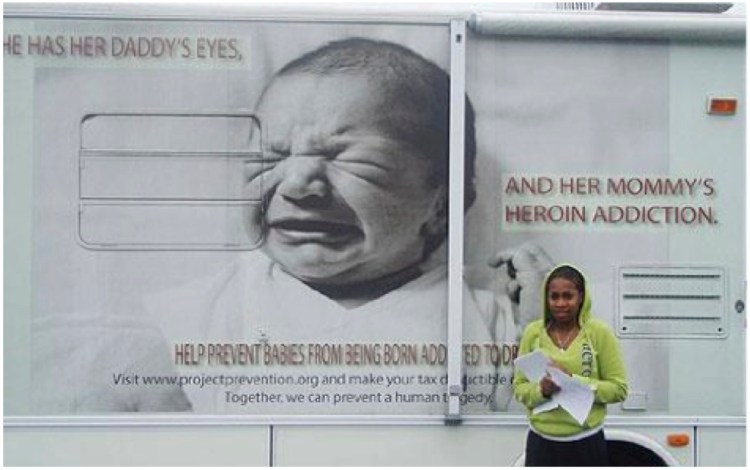
Cash-for-sterilisation. It’s an idea that took me a while to get my head around, despite the fact that it really is as simple as it sounds. Established in 1997 by Barbara Harris, Project Prevention tours States and cities across America (recently expanding overseas), touting one simple message: “Don’t let a pregnancy ruin your drug habit”.

So far, the organisation has sterilised or given long-term contraception to over 4,000 individuals, the vast majority of which are women, in exchange for $300 US dollars. Their advertising campaign is far from glamorous; volunteers hand out flyers to unsuspecting individuals in areas notorious for poverty and drug use, stick notices in AA/NA groups and travel the country in a large bus bearing their unapologetic posters with the number 1-888-30-CRACK, urging any fertile individual suffering from alcoholism or drug addiction to get in touch.

Conceiving Project Prevention


Over twenty years ago, mother of 6 boys Barbara Harris and her husband adopted a baby girl- Destiny. They discovered that their new daughter was suffering from withdrawal symptoms as a result of her birth mother’s drug addiction and, over the course of the following years, adopted 3 further children born to the same drug addicted mother. At the time they were told that their daughter might suffer developmental problems, however she has since gone on to prove a success academically, obtaining a place on the Dean’s list of the college she attends.

This experienced enlightened Barbara to the difficulties associated with raising children born to drug addicted parents, and she quickly set about finding a solution to this problem. After failing to pass a Bill (the Prenatal Neglect Act) in her then State of California, she founded Project Prevention to tackle this problem at a grass roots level1. The aim of the program is clear; to stop individuals suffering from drug addictions having children, as put by Harris: “If I had enough money there wouldn’t be any pregnancies for drug addicts”.

However, where her bus travels, controversy is never far from its tracks- with many human and civil rights organisations citing the program as irresponsible, exploitative and far too close to eugenics than we should be willing to tolerate. Before making your standpoint on this issue however, let’s have a look at what it is exactly that the project is aiming to prevent.

Preventing In Vitro Child Abuse?

Let’s be under no illusion here. Alcohol and drug use during pregnancy is not recommended and has the potential to lead to a number of damaging effects on the foetus or newborn. These include miscarriage, premature labour and developmental delay. However, as exemplified by the academic success of Barbara Harris’s own adopted daughter, these effects are variable and may be altered by many factors both prenatal (the extent of drug use, stage of pregnancy and type of drug taken) and postnatal (nutrition, attention and stability of the child’s environment.).

Those who support the program on the basis that it is not fair to cause preventable damage to an unborn child face a number of problems. Firstly, the argument is weakened by the fact that it is not possible to predict the extent to which these substances will act as teratogens. With a minimum chance of 4-5% that the baby will develop a major birth defect, it is indeed possible that a baby might be born completely healthy.

Furthermore, to normalise sterilisation with the desire to protect against disability is to say that these traits are undesirable to the extent that they render a life not worth living. This implies that those living with disabilities are in some way inferior to their “healthy” able-bodied counterparts, risking the marginalisation of these individuals in society. Similar problems have been found in implementing the criteria for abortion- where having a child with a disability has been cited as a reason to abort.

Preventing Cruelty to Children?

Children who are raised in families with parents as drug addicts are more likely to suffer from malnutrition and are2-3x more likely to suffer abuse or neglect, if they have been exposed to drugs prenatally. Far too often stories of children suffering unimaginable abuse at the hands of their own parents appear in the news. A particularly tragic story is from 2010 and is that of the death of Maggie-May, a 10-day-old girl who died after being placed in the washing machine by her mother, an established drug addict.

Preventable incidents like this are almost impossible to comprehend, and in light of this many people may rush to support sterilisations in an attempt to prevent any future tragedies. This reaction is understandable; however what these stories should highlight is failings in the safeguarding of children and there are many alternatives to the sterilisations proposed by Project Prevention that are developed and currently in use. Instead this highlights failings in society to intervene and help struggling families and suffering children as necessary. As has been commented by an opponent of the program in the discussions section of an article about Project Prevention, “Some people may not deserve to have children, but those children deserve to be born”, and it is our job to protect these children.

Harris has argued that to have a child born into a drug addicted environment is to deny them a normal life. Yet to suggest that a “normal” life is required for an optimal childhood (and hence a better person) is to believe that one can dictate what a normal childhood should be. This goes beyond the use of drugs by parents, and challenges all circumstances that might possibly influence the raising of a child. If this idea is supported, does it follow that we must sterilise individuals who are less wealthy, or homeless, disabled, unattractive, overweight or those who have a low IQ, purely to maximise the chances of having a “normal child”?

What does it cost us?

Aside from the ethical issues, such as those discussed above, the economic cost to society should not be forgotten. The social and health costs required to care for a baby born with drug addictions are high, with it costing approximately $500,000 alone to wean a methadone-addicted baby off the drug. Project Prevention has raised (using very modest estimates) at least 1 million dollars in their US program alone. This amount would only have been sufficient to care for 2 babies- $300 looks a small price to pay compared to the princes ransom required should a birth go ahead.

There is an undeniable cost, economic and emotional, associated with caring for babies born to drug addicted parents, and this cannot be ignored. We must therefore act with responsibility, recognising that the burden on society is substantial. However this cost is surely what we must be willing to pay if we are to live in a world where the life of a baby born into the most disadvantaged of circumstances is given the same inherent value as that of a baby born into the most privileged of environments.

Preventing making mistakes?

Finally, there are those who will say that paying individuals to halt- either permanently or temporarily- their reproductive capacity is beneficial to the person themselves. It enables individuals, women especially who would have to take on the responsibility of a pregnancy, the opportunity to evaluate whether they are ready to have a baby before they fall pregnant. They can decide for themselves how their circumstances will be affected by the responsibility of raising a child and may come to the conclusion that they need to address their own addiction before having a baby.

This would have the advantage of avoiding situations where a mother is separated from her children- an experience that is unbearably painful to witness, let alone experience. In addition, costs to society for raising a child placed into care are eliminated. It would seem therefore that having the opportunity to choose long-term contraception (as Project Prevention provides) is a wonderful solution. So how can we find a fault in it? If someone has decided that they do not wish to have children, what gives anyone the right to say they cannot make this decision-surely we must support Project Prevention?

Coming to this conclusion however is to succumb to the most tantalising of all the reasons given in defence of Project Preventions existence- that it is voluntary.

Consent: Can it ever be informed?

This claim to be voluntary may have been true if there was no financial incentive to undergo the procedures, however as soon as money is brought into the arrangement we must question how free the choice really can be. After all, would a wealthy drug addict, not in need of the money, take up the offer? And what might someone in desperate need of money be willing to do for $300? You may find yourself reaching the same conclusion that I did- that this transaction acts as nothing more than a thinly veiled exploitation of individuals who are at their lowest ebb.

In the UK, informed consent is a prerequisite for any adult about to undergo a medical procedure. In order to give informed consent, an individual must be able to give a decision that is informed, voluntary and with capacity.Harris’s program would rarely fulfil all three criteria, and ensuring that it does is impossible.

In order to establish whether the decision is informed, we must come to an agreement on how much information a patient would need to make a fair decision. Is it only the technical details that they require, or must we also inform them of the array of possible emotional and social consequences that they may face as a result of electing to postpone or halt their reproductive potential? If we are to include the latter then we must accept that the decision could never be fully informed, as it is impossible to predict with accuracy the long-term impact of this process on a person. Finally, it is an individual’s eligibility for the program (that of being a drug addict) that calls their capacity to make a decision into question. Can we really say that someone who is under the influence of drugs has the capacity to make a life-changing decision?

In response to this last point, Harris argues that if we say a woman is not in her right frame of mind to elect for sterilisation (i.e. cannot give informed consent), she cannot be in the right frame of mind to have a baby and therefore this decision should be made for her. Indeed, making decisions for individuals lacking in capacity is necessary in some cases and is legalised in the Mental Capacity Act 2005. This act aims to protect vulnerable individuals and stipulates that any decision made on behalf of a patient must be made in the best interest of the individuals themselves. Project Prevention on the other hand is held to no such restrictions and acts with the interests of the potential foetus and society at the forefront of its decisions – with the rights of the drug user themselves a disposable consideration.

The true cost of $300

The low value of the monetary incentive means that the system disproportionately affects the poor- further calling into question whether those entering the program really do have freedom of choice. For some, the decision to enter the program may occur as a result of evaluating sterilisation as the better of two evils. It is difficult to argue that a health decision has been made freely if an individual is in desperate need of the money-even if it is ultimately to supplement their addiction. As we shall see shortly, in Kenya (a country where 46% of people live below the poverty line) Harris is developing a similar program targeting women who are HIV-positive- it is clear that for these women a financial incentive may hold even more of a bearing on their decision.

For some, perhaps the payment is nothing more than what it claims to be- an incentive to get individuals seriously thinking about their suitability as parents and deciding whether this is something that they want to become. For most however, the monetary reward carries much more weight than the paper it is written on. It is the means by which a drug addict may get their hit, an opportunity for unscrupulous individuals to manipulate or exploit vulnerable addicts and, most dangerously, the money acts as the tool for which a person (usually a woman) transforms their reproductive potential into a commodity.

By condoning these practices (purely by enabling their existence) we are treating individuals as though they are tainted, and have no desirable traits to pass on to the future. This robs individuals of their vitality; those who may have been wonderful parents are not only prevented from becoming so but also brain washed into believing that they should not aspire to be so either. Instead of offering these individuals the help they need, we are reinforcing stereotypes that they are not welcome in society, and simply giving up on them.

Project Prevention overseas

UK: In 2010 Barbara started her expansion overseas, setting up camp here in the UK. Unlike in America however, the project garnered very little support. So much so that pressure from the BMA has meant that the UK branch is unable to offer money in exchange for sterilisation (with only long term contraception being offered for money) andonly 31 individuals have entered the UK program to date. In a country such as the UK with an NHS that offers free contraception to all the money offered to drug abusing individuals looks far less like an incentive, and a lot more like a bribe.

Kenya: One of the latest moves of Project Prevention has been to target poverty-stricken families in Kenya- offering sterilisation to HIV positive women in exchange for 40 US$. In this scheme, Project Prevention have taken the rose-tinted spectacles away and revealed its true eugenic aims. For some reason they haven’t got the message that HIV is no longer a death sentence, and that there is effective prophylactic treatment (WHO guidelinesrecommend the antiretroviral drug Zidovudine (AZT)) available that women can take during pregnancy.

The project is targeting women exclusively and could be perpetuating local stereotypes that HIV positive women (and oftentimes women in general) are inferior, “unclean” members of society who are responsible for the prevalence of the disease. In a culture where a woman’s vitality is an important part of social standing, to take this away for $40 US dollars is an unbelievable shame.

Conclusion

Previously, I have described Project Prevention as being ‘simply wrong’, as it turns out however, there is nothing simple about it. It is an ethically reprehensible and morally bankrupt scheme. And yet still, it exists. Why? Perhaps because rather then address the underlying problems in society-failings in the provision and appropriate delivery of social care, failure in preventing drug distribution and unsuccessful or overworked drug rehabilitation schemes to name a few, it is much easier to stick plaster over the issue and hope it disappears.

Of course, accepting the coercion of vulnerable people to make life-changing decisions comes at a cost; and in our apathy to its existence we are actively sacrificing our morality for our money. Electing for a eugenic approach to solving complicated social issues could lead us to a future that echoes the horror associated with Nazi era eugenics- and we could find ourselves getting there much more easily then we would dare to imagine.
Elephant in the Room: LGBT Rights Under Fire in Zambia

On the 7th of April, Zambian gay activist Paul Kasonkomona was arrested after taking part in a live television appearance where he called for the decriminalisation of homosexual acts in his native state. Officers attempted to arrest Mr Kasonkomonaduring his live appearance, but were stopped by the managers of the television station and were forced to arrest him later that night. He was charged with ‘inciting the public to take part in indecent activities’ and jailed until the 11th of April, when he was released on bail. This event marks not only the denial of an individual’s right to free speech, but also highlights serious and pervasive human rights violations against the homosexual community in Zambia.

Male-to-Male homosexual activity in Zambia is considered an ‘indecent activity’ and banned nation-wide. The 1995 edition of the Zambian Penal Code Act states that ‘Any person who; permits a male person to have carnal knowledge of him…against the order of natures; is guilty of a felony and is liable to imprisonment for fourteen years. Individuals are encouraged to report homosexual behaviour to the police, and according to a 2010 survey,98% of Zambians disapprove of homosexual behaviour. This incredibly entrenched homophobia within Zambian society allows and encourages government officials to intrude on the private, intimate lives of its citizens. Countries the world over have discriminatory laws against homosexuals. France only just recently allowed gays to marry and adopt children (both of which are considered human rights under the International Covenant on Economic, Social and Cultural Rights) and many US states still ban same-sex marriages. Zambia’s case is not only an extreme example of state-encouraged homophobia, but also contributes to the out-of-control AIDS problem in the country.

According to the CIA World Factbook, 13.5% of adults in Zambia have HIV/AIDS, and there are an estimated 200 new cases of HIV every day. This epidemic has progressed out of the hands of the Zambian government, and threatens the lives and livelihood of citizens in all parts of society. HIV/AIDS is well-known for its high presence in the gay community, and the criminalisation of homosexual acts only serves to worsen the problem. It is difficult for gay men to get proper treatment for their illness, and equally difficult for AIDS groups and researchers to get accurate infection rates for the gay population. The 13.5% infection rate quoted above is probably much lower than the actual infection rate due to this issue. The high infection rate within the gay community is not isolated, as shown by a survey carried out by the International AIDS Society which found that 50% of men between the ages of 15 and 35 have had sex with men and women within the last 12 months. This relatively high percentage lies in stark contrast to the survey quoted above showing that 98% of Zambians disapprove of homosexual behaviour, and indicates a sharp contrast between the public face of Zambians and their private actions. The gay population is left untreated by the country’s state efforts to address the epidemic. Bishop J.H.K. Banda, the Chairman of the National AIDS Council of Zambia declared that anti-gay attitudes are ‘traditional values’, and supports the existing legislation banning sodomy and other ‘unnatural’ sexual acts.

In order for Zambia to fully address its AIDS issue, it must embrace the gay community and openly offer to it the resources it offers to the rest of its citizens. It can do this easily, by simply removing the homophobic language within the penal code and establishing programs to lift the homosexual community out of second-class citizenship and onto equal footing with the rest of the population. The issue is not only one of bad governance, but also of intolerant society. Zambian society must undergo a shift in its understanding of the gay community and its attitudes towards its members. Calling certain values and ways of thinking ‘traditional’ does not legitimize them, it only serves to further entrench those values in society, no matter how irrelevant they may be in the modern day. Zambia is a country with a wealth of potential, but in order to meet that potential, it must uphold the rights of every one of its citizens.

Pope Francis and Women’s Rights

The Catholic Church has far from a clean record when it comes to the issue of human rights in general, and women’s rights in particular. Whilst much of the world has evolved on the issue of women’s rights, the Catholic Church seems to have adopted a slower approach tackling issues such as women’s leadership –which is still a point of much contention within the Church today.

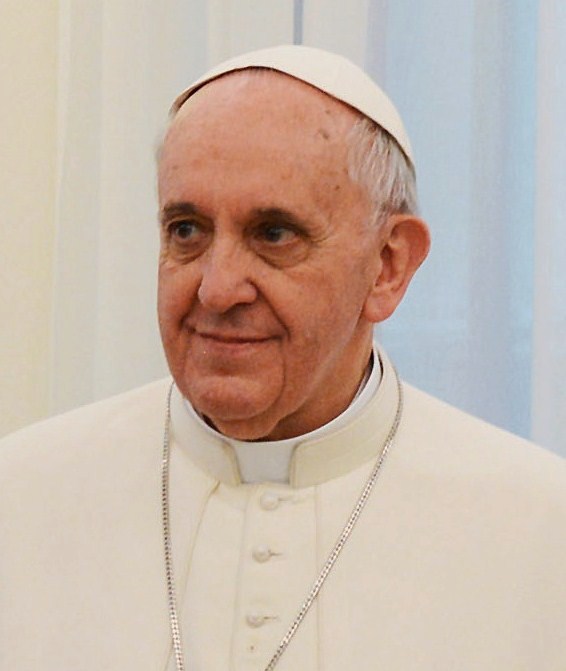
Elected in March as the first Jesuit Pope, Pope Francis has been hailed by many as a potential source of reform for the Catholic Church. He has declared a strong opposition to wealth inequality, choosing to live a simple life and rejecting the Papal apartment as his official residence. This has suggested to many that Pope Francis could be a new kind of Pope– one that may usher in a period of reform, and move away from the seemingly archaic rules of the Catholic Church.

Unfortunately for the 600 million Catholic women in the world, there does not seem to be any indication that Pope Francis will enact any reform on women’s issues. In fact, his previous record does not seem to stray from mainstream Catholic beliefs. Pope Francis’ views fall on a conservative right-wing line, with a strong opposition to homosexuality and same-sex adoption. This provides little hope when it comes to the tackling of social issues within the Church.

As far as women’s rights are concerned, Pope Francis has come out as a vocal opponent of contraceptives and has likened the pro-abortion movement to a “culture of death”. These being key women’s rights issues, it does not seem as if the new leadership will spark a sea of change from the Catholic church any time soon. Until the Catholic Church can provide a more sympathetic pro-life view to those who are in favour of abortion rights, the Church will continue to be at odds with feminist views and isolate a large number of its members.

In a speech on the 3rd of April, Pope Francis stated that women were a “fundamental” part of the Church, as witnesses of the Catholic faith to their children. However, he stopped short of demonstrating support for equal leadership roles for women. It may be considered significant that Pope Francis is making mention of women, and emphasising their importance. What’s more, Pope Francis has stated, “there is a move towards putting more women in key roles where they are qualified”. However, until the new Pope and the Catholic Church recognise that human rights are inclusive of women’s rights, and that equality is a fundamental right, the Church will not progress. Simply recognising that women have a role in the Church is not enough –the Church must recognise that women’s roles in the Church are equal to those held by men.

Repatriation in North Korea: The Babies on Death Row

A Pregnant Pause

Ask someone for his or her opinion on abortion and you are likely to find they have one. It is a topic that most of us are likely to brush against, if not personally then through TV, films and the media. A recent YouGov poll revealed that only 7% of the UK population would like to see abortion banned all together. The reasons for this high tolerance to abortion within our population is varied but may be influenced by the typical demographic of the women seeking abortions. Abortion statistics published by the Department of Health in 2012, show that of the almost 200,000 abortions carried out in 2011, the rate was highest for single women, aged 20 and with 90% of abortions being carried out at less than 10 weeks of gestation- enabling the use of much less invasive procedures.

Imagine however, that the abortion was not of the woman’s choice, but forced upon her, with any suggestion of autonomy completely shattered beyond recognition. Imagine the baby not as an unwanted and unrecognisable foetus that can barely be distinguished from a potato on an ultrasound, but a heart-beating, tummy-kicking and living being that has been nurtured by their mother for months. Finally, consider that following an induced pregnancy, even if born alive, the baby is not allowed to live. This is no longer a clean-cut matter of abortion (or at least as clean-cut as it could ever be) but undeniably foeticide, infanticide and therefore murder on a grave scale. The saddest part of this is that one not need to imagine this scenario – in fact, it only takes a look at one or two testimonies from victims of these violations of human rights to begin to gain a tenuous grasp on the scale of this very frightening reality.

Isolated cases of forced abortion are likely to be ubiquitous world wide, for example if a woman is being forced by a partner to undergo an abortion. However a continued systematic and governmentally implemented use of forced abortion; as a method to protect against a mixed ethnicity population as in North Korea, or control the population size in alignment with the one child rule in China is a highly prevalent and unusual form of torture. In this article I am going to focus upon the treatment of North Koreans repatriated to the DPNK (Democratic People’s Republic of Korea), with a focus on the additional challenges faced by pregnant detainees, however it is important to note that this is just one of a catalogue of examples of violations of human rights that face North Koreans following deportation from China and re-entry to the DPNK.

The Pathway to Persecution

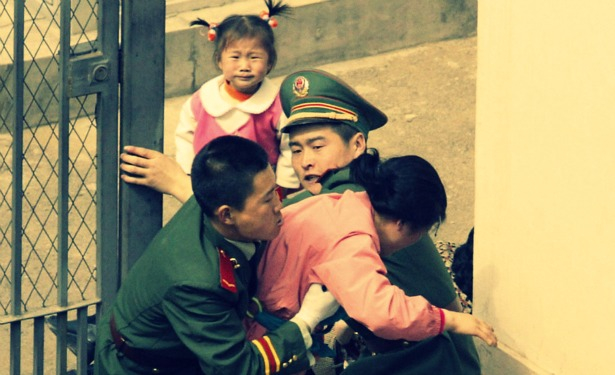
The repatriation corridor is not a place one would freely wish to enter; as such North Korean escapees in China find themselves in a very vulnerable position as they attempt to live life evading the Chinese police. This risk of exploitation may be attenuated in women who due in part to the gender imbalance within China, are at risk human trafficking- which could involve forced marriages and rape.

Testimonies from escapee prisoners and satellite footage have enabled the outside world to gain some understanding of the detention facilities, prisons and labour training centres that house an estimated 200,000 prisoners. In a country where leaving dust on the portrait of the leader, exercising certain religious beliefs or attempting to leave the country without permission are all against the law- it is difficult to imagine that the crime fits the time. Indeed, the latter ‘crime’ of leaving North Korea without permission, flies in the face of article 13 (2) in the Universal Declaration of Human rights that states that everyone has a right to ‘leave any country, including his own, and to return to his own country.’ Individuals however do not have the right to enter any country of their choice, with this right being granted by the discretion of the state.

That fact that individuals forcibly repatriated to North Korea will face persecution is undisputable, and so after making the difficult decision to cross the Tuman river, most of the escapees are refugees in situ. To knowingly send these individuals to torture therefore is to break the principle of Non-Refouelment- an element of international law to which China should abide by. Failure to uphold this principle shows the harsh and unavoidable reality that thousands of North Koreans will one day face persecution on discovery

Terminating the Innocent

The evidence of forced abortion in female prisoners is overwhelming, and in this article I will be drawing on experiences published by The Committee for Human Rights in North Korea (HRNK). The descriptions of what happens to these women are graphic, emotive and retold with a repetition that is utterly heart breaking. Female escapes that have become pregnant by Chinese men face forced abortions on their return to the DPNK. This may be carried out by the induction of pregnancy in women- who may be at full term- with the aim of inducing a premature stillbirth. A baby born alive will be killed in front of their mother, who is then sent straight to work.

This act of forced abortion brings to light a number of horrific and frankly terrifying ethical problems- outwith the debate surrounding abortion as a valid medical practice to begin with. The rights of a woman to autonomy are completely voided and the psychological impact of having to lose a baby in such a brutal manner is impossible to imagine. This pain is augmented by the fact that these are ‘messy’ abortions. In the best possible circumstances the process of a termination carries with it significant risks to the health of the mother and these risks, which tend to increase with the length of gestational period at the time of the procedure. These include the risk of infection, possibly leading to sepsis, infertility and even death. The gradualists approach to the assignment of personhood would argue that the psychological risks of depression and suicide are also increased with a rise in foetal age. In the unhygienic, cruel and isolated surrounding of a prison it is clear to see that any risks to the mother will be much amplified.

The reasons behind forced abortion are complex and may be intrinsically linked to the principle of the Juche ideal. This is the political maxim that promotes the idea of North Korea being ‘self-reliant’ and its own master. Earlier this week, former North Korean spy Kim Hyun-hee said ‘North Korea is not a state, it’s a cult’. Keeping this description in mind, it is possible to gain a glimpse into the reasoning used by the regime to carry out ethnic cleansing. Its practice therefore has roots that go beyond punishment of citizens who have fled, and reveals the racial motivation that dictates no half-Chinese babies should be born in North Korea.

In a situation where even the most unembellished of testimonies have the risk of sounding dramatized; accusations of hyperbole may often follow evidence given for forced abortion. Sadly these testimonies are not exaggerations but rather evidence that adds to the fact that human-on-human suffering is by no means a problem confined to the days of the Holocaust, but rather an ever present reality threaded throughout the fabric of our world.

For anyone wishing to read more about the plight of North Koreans who have been forcibly repatriated, the HRNK report, ‘The Hidden Gulag: The Lives and Voices of ‘Those Who are Sent to the Mountains’ (2nd edition) is an excellent place to start and try to understand the facts, reasons and methods of preventing this undeniable evil.

Closing the Immigration Gate

‘The Hong Kong of today was created by immigrants. Surely someone must notice the irony.’ South China Morning Post, 30th March 2013

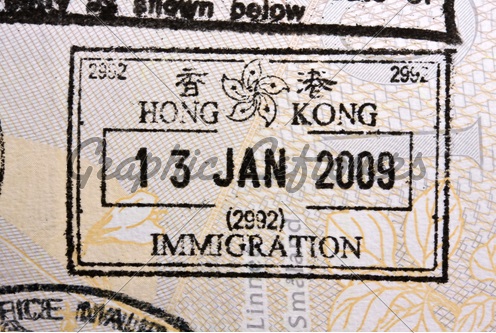
With the majority of new immigrants coming from Mainland China and the Philippines, the Hong Kong government has expressed its fears of over-stretched resources through differential treatment of these two populations. The Court of Final Appeal has ruled to deny foreign domestic helpers the right to apply for permanent residency; a right open to all other foreigners in Hong Kong following 7 years of consecutive residency in the territory. Gaining status as a permanent resident enables access to social services including education. With over 300,000 domestic helpers in Hong Kong, predominantly of Filipino and Indonesian origin, the government has expressed concerns that dependents of this large faction of society would place extreme pressure upon Hong Kong’s resources.

How can one justify the implementation of constraints upon the applicability of the right of abode? The BBC has outlined the government’s rationale –speculating that “125,000 helpers would be eligible to apply for abode, and if each had a spouse and two children, that number of potential new residents could reach 500,000 ”. With a population of approximately 7 million people, the potential population increase evidently would result in a significant re-structuring of the territory’s demographics. Whilst it is easy to understand the difficulties that may arise as a consequence, one must not forget –Hong Kong has one of the highest GDP per capita rates in the world. With a HK$64.9 billion fiscal surplus (approximately £5.5 billion) for the year 2012/13, fears of economic resources being overly stretched remain unsubstantiated. Be that as it may, the population’s size has been and currently remains to be the most vulnerable of resources –small, and declining.

Controversy centred around the Vallejos v. Commissioner of Registration case –in which a Filipina foreign domestic helper challenged the restrictions in place that prohibited her from seeking permanent residency, despite having lived in Hong Kong for over 17 years. The court initially ruled in her favour, deeming the restrictions to be in violation of Hong Kong Basic Law. The decision has however been subsequently overturned. Local newspaper, the South China Morning Post, has deemed the decision of the Court of Final Appeal to be ‘sheer idiocy and prejudice’. Jennifer Pak of the BBC presented the argument that if permanent residency was granted to foreign domestic helpers in Hong Kong, there were widespread fears they would ‘swarm the territory’. However, consider now that this is not the only immigration controversy surrounding Hong Kong today.

Women from Mainland China are arriving in Hong Kong in their thousands to give birth in the territory. This grants their children the right to claim residency and access to already seemingly overstretched social services and resources. In 2010, one in three children born in Hong Kong were born to mothers from the Mainland without Hong Kong resident spouses. Chief Executive Leung Chin-Ying has clearly stated government’s position on the matter –that ‘such offspring are not the solution to the problem of our ageing population’. With an infant mortality rate 13 times lower than the Mainland, the appeal is evident.

However, local residents protest that the influx of visitors is creating a significant strain on hospitals that can no longer accommodate local residents, with beds already filled by women from across the border.

Attempts to alter the situation have been drastic. One hospital in Hong Kong has tripled its fee for Mainland mothers without Hong Kong spouses using its emergency services to deter ‘gate-crashing births’. They report a staggering 40% decrease in bookings since announcing the policy. The government has also implemented policies to restrict the use of public services. This is most evident with the introduction of the ‘zero quota’ policy, which declares, ‘all public hospitals will not accept any bookings by non-local pregnant women for delivery in Hong Kong from January 1, 2013 onwards’. By giving birth in Hong Kong, Mainland mothers’ babies are granted the right of abode. What’s more, parents are given the opportunity to circumvent the one child policy, claiming rights not available to them in their country of origin. Coupled with better-equipped hospitals and high standards of health care, the benefits are seemingly clear. Perhaps similarly, foreign domestic helpers also seek the benefits of a system that more than provides for its citizens. Is the treatment of residency battles in both contexts equal? Should it be? In both situations, the state has clearly embarked upon protectionist policies in order to safeguard its national sovereignty and the interest of its residents. However, is it justifiable for a state to implement these measures of self-protection if these regulations are not applied in equal measure to all potential candidates? Trapped in an ethical dilemma, this position poses a significant problem for ‘Asia’s World City’, a nation that prides itself on multiculturalism.