Forced Ultrasounds for Abortion: Is it Simply Too Much Information?

In a world where informed consent is a cornerstone of medical practice; we examine if there is such a thing as too much information when consenting to a procedure, and if so, does forcing women to have ultrasounds prior to obtaining an abortion cross this line?

Informed consent is a key principle that lies at the heart of modern clinical practice. The seminal Nuremberg Code established in the aftermath of the Second World War brought global attention to the importance of obtaining informed consent from subjects participating in medical research. As we have moved from a paternalistic ‘doctor-knows-best’ approach to patient care and towards a patient centred approach, this notion of informed consent has become ubiquitous across all ethical medical procedures in much of the world.

The definition of consent given by the NHS, and shared by many healthcare services worldwide, is that ‘For consent to be valid, it must be voluntary and informed, and the person consenting must have the capacity to make the decision.’ Crucially we must recognise that a decision can still be valid if it is not the one that a medical professional would recommend. This point is reinforced by the mental health act, which stipulates that ‘If patients are competent, they are entitled to refuse consent, no matter how illogical this seems’.

Upholding these values is a fundamental part of enabling patients to retain their autonomy, and on a wider scale, is vital in respecting an individual’s right to exert freedom of choice when it comes to their own wellbeing.

Forced ultrasounds- taking the notion of informed consent too far?

In light of the above, it seems somewhat ironic that this same notion of informed consent is currently used in ten states across the United States to enforce laws that opponents argue are used to manipulate patient choice. The law in question is that which makes it mandatory for women considering an abortion to undergo an ultrasound prior to the procedure – regardless of whether it is against the patients’ wishes or serves no medical purpose.

Opponents of these regulations suggest that these laws toy with the emotions of women facing the life changing decisions associated with an unexpected pregnancy, and were established with the aim of coercing such women to adopt the ‘anti-abortion’ sentiments of those who designed them.

Recent data from the Guttmacher Institute shows that the law in 3 of these states – Louisiana, Texas and Wisconsin – require that the medical provider give a detailed description of the foetus throughout the ultrasound procedure. This audio commentary is supplemented by hearing the sound of the foetal heartbeat and although women are given the choice to look away from the screen, the description of the foetus, from the chambers of the heart to fingers and toes, is a mandatory requirement for any abortion provider.

In order for these detailed descriptions to be made, it is in some cases necessary for a trans-vaginal examination to be carried out, instead of the less invasive abdominal ultrasound procedure with which we are more familiar. In some exceptions, including sexual assault and incest, these regulations may not apply.

Whilst it is common for an ultrasound to be carried out prior to a termination, including here in the United Kingdom where they are used to date the pregnancy, it is clear from the invasive and excessive requirements made in these laws that such medical motives were not the priority when these regulations were enacted.

However the apparent rise in the popularity of abortion restrictions is not going unchallenged. In North Carolina earlier this year judge Catherine Eagles ruled that forced ultrasounds are illegal. In her ruling she criticises the use of health care providers to deliver anti-abortion messages on behalf of the state, saying that ‘…it compels a health care provider to act as the state’s courier and to disseminate the state’s message discouraging abortion”.

Evidence suggests that viewing an ultrasound prior to an abortion rarely changes a woman’s decision to terminate her pregnancy

Justifications given for the regulations i.e. the need to have as much information as possible to make an informed decision do not appear to be supported by a strong scientific basis. A study recently published in the Journal of Obstetrics & Gynaecology using data from nearly 16,000 women showed that nearly all pregnancies were terminated regardless of whether women had elected to view an ultrasound scan or not (98.4% of women who viewed the scan and 99.0% of women who did not choose to view proceeded to terminate their pregnancy). The study concludes by saying that ‘…viewing does not alter decisions of the large majority of women who are certain that abortion is the right decision’.

These results should come as no surprise when one considers that the many barriers to abortion already in place mean that it is a choice that few people are likely to take lightly.

Whilst the advantages of adopting such strict and invasive regulations are clouded in doubt, the disadvantages are much easier to see. Many argue that these regulations are just the latest step in a ‘pro-life’ led attempt to restrict a woman’s access to abortion; the ‘Ask your boss bill’ and laws demanding admitting privileges are also thought to be aimed at limiting availability. The resulting decrease in access to abortion clinics with 4 states in the US having only one abortion provider each, gives rise to concerns of a loss in the degree of autonomy that a woman has in controlling her own fertility, and deciding if and when she would like to start a family.

Furthermore it is likely the additional cost, perceived stigma and invasion of privacy that these regulations cause will lead to a rise in the number of women who either turn to the black market for pills for an early medical abortion, or seek out unlicensed abortion practitioners to have their termination. This results in effectively criminalising abortion for these women, in addition to the health risks associated with undergoing any medical procedure carried out under unregulated conditions.

The need to respect patient autonomy should never be overlooked.

Of course, some women may welcome the opportunity to have an ultrasound, and if they feel that it helps them to make the best decision for themselves then offering the procedure is not something any reasonable individual can find fault with.

However, for the overwhelming majority of women who for reasons only they can understand have already made their decision to have an abortion, forcing them to endure ultrasounds against their will is to disregard respect for patient autonomy completely.

Ultimately, it seems not only insensitive, but also unethical and profoundly wrong to force women in this situation to endure further invasive procedures and distress, simply because they have chosen to exert their freedom of choice.

Review: Friends of MSF’s ‘Access to the Danger Zone’ Film Screening

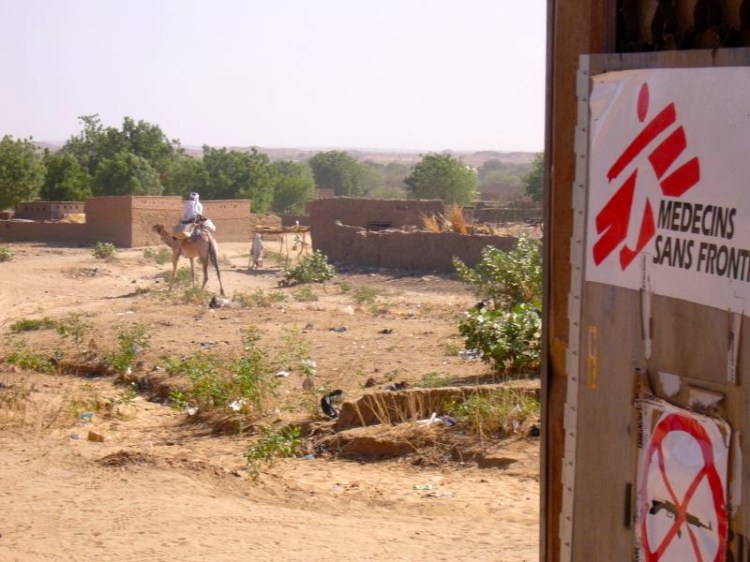
On Monday the 28th of October, Friends of Médecins Sans Frontières (FoMSF) hosted a film screening for ‘Access to the Danger Zone’, a documentary about the trials and dangers which MSF workers, both medical and administrative go through on a daily basis to achieve their humanitarian goals. The film was very well produced and featured interviews with head officials at MSF and the United Nations, as well as medics on the ground in the conflict areas where MSF operates.

The film started in Dadaab, a large refugee camp in Kenya near the Somalian border. It got to the point quickly, mentioning the two MSF staff who were kidnapped there in October 2011 but have since been released after 644 days in captivity. The MSF agents working in the Dadaab refugee camp were forced to reduce operations to a ‘skeleton team’ of medics and ship the vast majority of the workers out of the region. This highlights the real risks that MSF and other humanitarian organizations take when working in conflict and high-risk areas and how much those security issues affect the day-to-day operation of humanitarian activities, meaning that hundreds or thousands of people will have gone without the aid of a full MSF staff due to the aforementioned kidnappings. The film says that ‘more than 230 humanitarian aid workers [have been] killed in the last century’ which, while alarming, has not stopped MSF and organizations like MSF from sustaining and increasing their work in ever-more complex and dangerous situations.

Access to the Danger Zone then focused on specific conflict regions, starting with Afghanistan. Here, the film highlighted the issues which MSF workers face when dealing with a multi-sided conflict. Their philosophy is one of total neutrality. They believe that if they are seen as being affiliated with coalition forces in the area, then people will be less likely to trust them unconditionally. The film cites cases where humanitarian contractors working for the US military or other Western powers will only provide necessary services if promised political cooperation in return, and the dangers civlians face using these affiliated organizations. This strategy is a core part of US counter-insurgency doctrine in the War in Afghanistan and, for MSF, represents a distortion of the pure humanitarian goals which organizations with such capabilities should be trying to achieving with no eye to politics or strategy. For MSF, civilians are just civilians, trapped in a situation most of the people reading this article won’t even be able to imagine, where cooperation with the US military means threats from insurgent forces and non-cooperation leads to necessary services being withheld. MSF is highly critical of what they describe as ‘paramilitary’ actions on the parts of these private contractors. They consider health care a human right, one which cannot be used or exploited for political gains, but are still forced to use some Coalition resources for their security in certain situations. They try to reduce the gross amount of security present by instituting a strong ‘no weapons’ rule in their medical compounds, making the internal areas of their workspace de-securitized in the traditional sense, but all the safer for it.

MSF’s doctrine of neutrality is constantly put to the test in their operations in the Democratic Republic of Congo as well. One of the more powerful anecdotes in the film came from a MSF worker who stated that there are times when you have to ‘negotiate with the devil to access the depths of hell’ and engage with dialogue on all fronts. Where politics overrides humanitarian needs, as it does when the UN is involved in conflict situations, humanitarian goals are put on the back burner of policy initiatives, even when there is rampant sexual violence and a high demand for urgent medical attention in the region. This is perhaps why neutral organizations like MSF are so important. They can address immediate humanitarian issues while actors like the UN take on the long-term political and security goals. MSF still has to ultimately rely on the UN and Coalition forces in the DRC and Afghanistan respectively in order to maintain an at least semi-stable environment for MSF to work in. The security issue is equally important in MSF’s work in Somalia, where they rely on an amalgamation of groups, including tribal leaders, to ensure their security.

The film’s focus on the safety and logistics contexts of how MSF operates, rather than what they actually do within those contexts was an interesting variation of what the film could have easily been about. Most everyone knows about the great work MSF does providing healthcare in conflict zones and impoverished areas all around the globe, but fewer actually appreciate what MSF goes through to be able to work in these areas. While it did put me off thoughts of a career with MSF, it was informative, engaging and at times, riveting. It drove home the point that human security issues, which are important in their own right as well as in the post-conflict reconstruction process, are far too often pushed aside in favor of narrow political goals. This is an unsustainable balance which organizations like MSF seek to re-align in favor of civilian interests, a central part of upholding human rights and liveable conditions in even the worst places at the worst times.

#Kenya #Somalia #MSF #DRC #film

Review: Friends of MSF’s 'Access to the Danger Zone' Film Screening

On Monday the 28th of October, Friends of Médecins Sans Frontières (FoMSF) hosted a film screening for ‘Access to the Danger Zone’, a documentary about the trials and dangers which MSF workers, both medical and administrative go through on a daily basis to achieve their humanitarian goals. The film was very well produced and featured interviews with head officials at MSF and the United Nations, as well as medics on the ground in the conflict areas where MSF operates.

The film started in Dadaab, a large refugee camp in Kenya near the Somalian border. It got to the point quickly, mentioning the two MSF staff who were kidnapped there in October 2011 but have since been released after 644 days in captivity. The MSF agents working in the Dadaab refugee camp were forced to reduce operations to a ‘skeleton team’ of medics and ship the vast majority of the workers out of the region. This highlights the real risks that MSF and other humanitarian organizations take when working in conflict and high-risk areas and how much those security issues affect the day-to-day operation of humanitarian activities, meaning that hundreds or thousands of people will have gone without the aid of a full MSF staff due to the aforementioned kidnappings. The film says that ‘more than 230 humanitarian aid workers [have been] killed in the last century’ which, while alarming, has not stopped MSF and organizations like MSF from sustaining and increasing their work in ever-more complex and dangerous situations.

Access to the Danger Zone then focused on specific conflict regions, starting with Afghanistan. Here, the film highlighted the issues which MSF workers face when dealing with a multi-sided conflict. Their philosophy is one of total neutrality. They believe that if they are seen as being affiliated with coalition forces in the area, then people will be less likely to trust them unconditionally. The film cites cases where humanitarian contractors working for the US military or other Western powers will only provide necessary services if promised political cooperation in return, and the dangers civlians face using these affiliated organizations. This strategy is a core part of US counter-insurgency doctrine in the War in Afghanistan and, for MSF, represents a distortion of the pure humanitarian goals which organizations with such capabilities should be trying to achieving with no eye to politics or strategy. For MSF, civilians are just civilians, trapped in a situation most of the people reading this article won’t even be able to imagine, where cooperation with the US military means threats from insurgent forces and non-cooperation leads to necessary services being withheld. MSF is highly critical of what they describe as ‘paramilitary’ actions on the parts of these private contractors. They consider health care a human right, one which cannot be used or exploited for political gains, but are still forced to use some Coalition resources for their security in certain situations. They try to reduce the gross amount of security present by instituting a strong ‘no weapons’ rule in their medical compounds, making the internal areas of their workspace de-securitized in the traditional sense, but all the safer for it.

MSF’s doctrine of neutrality is constantly put to the test in their operations in the Democratic Republic of Congo as well. One of the more powerful anecdotes in the film came from a MSF worker who stated that there are times when you have to ‘negotiate with the devil to access the depths of hell’ and engage with dialogue on all fronts. Where politics overrides humanitarian needs, as it does when the UN is involved in conflict situations, humanitarian goals are put on the back burner of policy initiatives, even when there is rampant sexual violence and a high demand for urgent medical attention in the region. This is perhaps why neutral organizations like MSF are so important. They can address immediate humanitarian issues while actors like the UN take on the long-term political and security goals. MSF still has to ultimately rely on the UN and Coalition forces in the DRC and Afghanistan respectively in order to maintain an at least semi-stable environment for MSF to work in. The security issue is equally important in MSF’s work in Somalia, where they rely on an amalgamation of groups, including tribal leaders, to ensure their security.

The film’s focus on the safety and logistics contexts of how MSF operates, rather than what they actually do within those contexts was an interesting variation of what the film could have easily been about. Most everyone knows about the great work MSF does providing healthcare in conflict zones and impoverished areas all around the globe, but fewer actually appreciate what MSF goes through to be able to work in these areas. While it did put me off thoughts of a career with MSF, it was informative, engaging and at times, riveting. It drove home the point that human security issues, which are important in their own right as well as in the post-conflict reconstruction process, are far too often pushed aside in favor of narrow political goals. This is an unsustainable balance which organizations like MSF seek to re-align in favor of civilian interests, a central part of upholding human rights and liveable conditions in even the worst places at the worst times.

Justice Triumphant: Guatemala’s Attorney General in St. Andrews

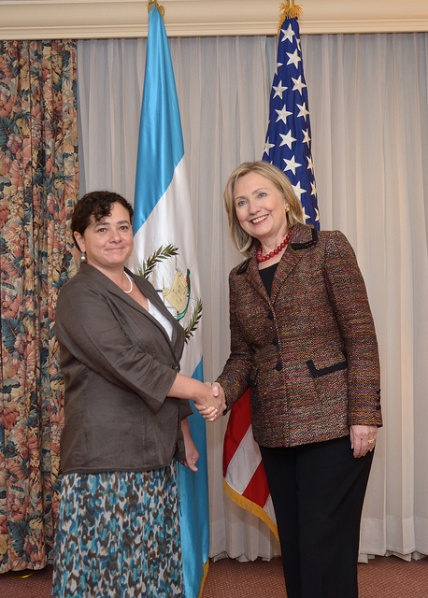
On October 22nd, the University of St. Andrews had the distinct pleasure of hearing Dr. Claudia Paz y Paz give the first of a series of lectures on Latin America. As the current and first female Attorney General of Guatemala, this lecture series could not have begun with a more impressive individual; as Paz y Paz’s work to strengthen the justice system within Guatemala and, perhaps most impressively, to successfully indict former President Rios Montt for acts of genocide has won her a place on Forbes’ list of the 5 most important women changing the world today, as well as a nomination for the Nobel Peace Prize.

Taking office as Attorney General in 2010, Paz y Paz assumed a powerful position in a country whose justice system was in desperate need of revision. Having only emerged in 1996 from a 36-year long civil war that pitted Marxist rebels against the Guatemalan state, and saw many innocent civilians caught in the crossfire, Guatemala was and is in many ways still recovering from a gruesome war whose death toll exceeded 200,000 people. The Guatemalan justice system, when Paz y Paz took office, also suffered from high levels of immunity granted to political leaders that protected them from ever having to face the consequences of their actions, and served overall to make the justice system ineffective and catered to those in power. Rios Montt, for instance, head of state between 1982-1983 as a result of a military coup d’état, ran for and won Congressional Office in 2006, which granted him immunity under Guatemalan law until his position ran out in 2012.

However, despite these challenges, Paz y Paz and her colleagues in the Office of the Attorney General made drastic improvements when coming into office in 2010; ultimately helping to strengthen the public executioners office by improving internal controls and consolidating a new group of worthy employees throughout the Guatemalan justice system. In her lecture, Paz y Paz made specific mention that, were it not for the fact that the justice system had already been strengthened prior to 2012, the office would never have been able to indict Rios Montt for genocide when his immunity ran out.

Indeed, having lost his immunity on January 14th, 2012, Rios Montt was indicted by Paz y Paz and appeared in court only 12 days later, apparently appearing in court because he believed the judge would close his case. As it happened, however, the judge overturned his plea for a dismissal of a case, marking an historic moment, as Rios Montt became the first head of state to ever be indicted for genocide by his own country.

Specifically indicted for genocide because of his involvement with the death of over 1,700 indigenous Mayan Ixil through ‘scorched earth’ campaigns, as well as for turning a blind eye to the brutal measures his soldiers employed against the supposed ‘internal enemies’ of the state, the case also marked a historic moment in that it forced Rios Montt, for the first time, to listen to the testimonies of victims of his abusive regime as they stood before him. The case, revealing evidence that had been covered up for years, also helped to shed some light onto what actually went on during Rios Montt’s reign. It was discovered, for instance, that racism was a massive issue during the trial, and that measures such as the systematic rape of indigenous women, including pregnant women, was used as a tool for political subordination. Investigation into the case also revealed that there had been mass-graves hidden in certain indigenous regions, where skeletal remains were discovered to have been shot in the head of the head or to have had their hands tied, ultimately helping to disprove those who claimed that genocide had not taken place.

After months of testimony, Rios Montt was officially charged on May 11th, 2012 and sentenced to 80 years imprisonment for genocide and crimes against humanity. However, only 10 days later, due to pressure from economic and business groups in conjunction with the fact that the current President, Otto Perez Molina, had been implicated in some of the evidence, the Guatemalan Constitutional Court ruled in a 3-2 decision to turn back the clock to April 19th. Essentially, this decision meant that all that had been achieved since then, including hundreds of testimonies and, most importantly, Montt’s 80 year sentence, were ruled invalid. However, when asked by an audience member if Paz y Paz thought, due to the fact that the verdict was defeated, Guatemala was better of worse after the trial, Paz y Paz poignantly answered:

“[that] while it was a tactical defect, it marked a strategic victory as justice was strengthened and … [it was shown] that we can uphold the law by using the rule of law rather than breaking it”.

Additionally, as Paz y Paz went on to exclaim that much more work and progress needs to be made in Guatemala –citing the high levels of abuse against women as an especially problematic facet of the situation in the country –Paz y Paz seemed determined, rather than frightened, by the obstacles facing her. Indeed, as the lecture was wrapping up, Paz y Paz made one final comment that resonates with what the case against Rios Montt, and her work to strengthen the Guatemalan justice system perhaps most effusively proved, “that it is possible to act beyond what is allegedly possible”.

#justice #impunity #genocide #Guatemala #StAndrews

Justice Triumphant: Guatemala's Attorney General in St. Andrews

On October 22nd, the University of St. Andrews had the distinct pleasure of hearing Dr. Claudia Paz y Paz give the first of a series of lectures on Latin America. As the current and first female Attorney General of Guatemala, this lecture series could not have begun with a more impressive individual; as Paz y Paz’s work to strengthen the justice system within Guatemala and, perhaps most impressively, to successfully indict former President Rios Montt for acts of genocide has won her a place on Forbes’ list of the 5 most important women changing the world today, as well as a nomination for the Nobel Peace Prize.

Taking office as Attorney General in 2010, Paz y Paz assumed a powerful position in a country whose justice system was in desperate need of revision. Having only emerged in 1996 from a 36-year long civil war that pitted Marxist rebels against the Guatemalan state, and saw many innocent civilians caught in the crossfire, Guatemala was and is in many ways still recovering from a gruesome war whose death toll exceeded 200,000 people. The Guatemalan justice system, when Paz y Paz took office, also suffered from high levels of immunity granted to political leaders that protected them from ever having to face the consequences of their actions, and served overall to make the justice system ineffective and catered to those in power. Rios Montt, for instance, head of state between 1982-1983 as a result of a military coup d’état, ran for and won Congressional Office in 2006, which granted him immunity under Guatemalan law until his position ran out in 2012.

However, despite these challenges, Paz y Paz and her colleagues in the Office of the Attorney General made drastic improvements when coming into office in 2010; ultimately helping to strengthen the public executioners office by improving internal controls and consolidating a new group of worthy employees throughout the Guatemalan justice system. In her lecture, Paz y Paz made specific mention that, were it not for the fact that the justice system had already been strengthened prior to 2012, the office would never have been able to indict Rios Montt for genocide when his immunity ran out.

Indeed, having lost his immunity on January 14th, 2012, Rios Montt was indicted by Paz y Paz and appeared in court only 12 days later, apparently appearing in court because he believed the judge would close his case. As it happened, however, the judge overturned his plea for a dismissal of a case, marking an historic moment, as Rios Montt became the first head of state to ever be indicted for genocide by his own country.

Specifically indicted for genocide because of his involvement with the death of over 1,700 indigenous Mayan Ixil through ‘scorched earth’ campaigns, as well as for turning a blind eye to the brutal measures his soldiers employed against the supposed ‘internal enemies’ of the state, the case also marked a historic moment in that it forced Rios Montt, for the first time, to listen to the testimonies of victims of his abusive regime as they stood before him. The case, revealing evidence that had been covered up for years, also helped to shed some light onto what actually went on during Rios Montt’s reign. It was discovered, for instance, that racism was a massive issue during the trial, and that measures such as the systematic rape of indigenous women, including pregnant women, was used as a tool for political subordination. Investigation into the case also revealed that there had been mass-graves hidden in certain indigenous regions, where skeletal remains were discovered to have been shot in the head of the head or to have had their hands tied, ultimately helping to disprove those who claimed that genocide had not taken place.

After months of testimony, Rios Montt was officially charged on May 11th, 2012 and sentenced to 80 years imprisonment for genocide and crimes against humanity. However, only 10 days later, due to pressure from economic and business groups in conjunction with the fact that the current President, Otto Perez Molina, had been implicated in some of the evidence, the Guatemalan Constitutional Court ruled in a 3-2 decision to turn back the clock to April 19th. Essentially, this decision meant that all that had been achieved since then, including hundreds of testimonies and, most importantly, Montt’s 80 year sentence, were ruled invalid. However, when asked by an audience member if Paz y Paz thought, due to the fact that the verdict was defeated, Guatemala was better of worse after the trial, Paz y Paz poignantly answered:

“[that] while it was a tactical defect, it marked a strategic victory as justice was strengthened and … [it was shown] that we can uphold the law by using the rule of law rather than breaking it”.

Additionally, as Paz y Paz went on to exclaim that much more work and progress needs to be made in Guatemala –citing the high levels of abuse against women as an especially problematic facet of the situation in the country –Paz y Paz seemed determined, rather than frightened, by the obstacles facing her. Indeed, as the lecture was wrapping up, Paz y Paz made one final comment that resonates with what the case against Rios Montt, and her work to strengthen the Guatemalan justice system perhaps most effusively proved, “that it is possible to act beyond what is allegedly possible”.

Escape from Camp 14: North Korea’s Prison Camps Under Scrutiny

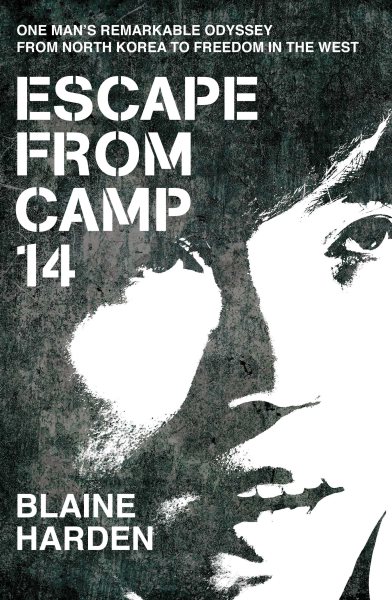
Published in 2012, Escape from Camp 14 tells the story of Shin Dong-Hyuk, the first known person born in a North Korean political prison camp to have escaped. Journalist Blaine Harden chronicles Shin’s journey leading up to his escape and his subsequent adjustment to life in both South Korea and the United States. A New York Times bestseller, Shin and Blaine have worked together to shed light on the abhorrent conditions in these camps and the countless human rights violations that occur on a daily basis. From starvation to forced labour and torture, the list of violations is seemingly endless. However, what makes Escape from Camp 14 a truly compelling read is the way in which the book does not glorify its subject. Rather, Shin is presented as a product of the camp –he tells of his struggles adapting to life outside and the impact the camp has had on his upbringing and character. For instance, from an early age Shin knew to look upon his mother without love, as the camp was not a place for emotion. Within the confines of Camp 14, family was nothing more than competition for food.

Drawing upon interviews conducted with Shin over an extended period of time, Harden contextualises Shin’s testimony with those of other defectors as well as widely accepted claims made by non-governmental organisations and the media. This allows for what is arguably the most holistic understanding of life in North Korean prison camps to date. Those born within the confines of a prison camp are de-humanised from birth—Shin had no qualms snitching on fellow children or adults in order to receive increased food rations and the promise of less beatings. Stealing food resulted in harsh beatings and punishments, which were often distributed to people for reasons unknown to them. Shin informed on his mother and brother’s plans to escape in the hopes of preferential treatment, but this resulted in him being detained in an underground prison for three months and being beaten and tortured within an inch of his life. The book contains diagrams of the brutality inflicted upon Shin in his time of imprisonment, including the way in which Shin was held above an open fire during his interrogation.

Escape from Camp 14 sheds light on the daily workings of political prison camps, and surprises the reader with more than the day-to-day brutality and violence inflicted upon human beings. Readers would not be surprised to learn that those born within the confines of the camp know nothing of the outside world. Perhaps more surprising however, is the fact that those within the camp remained unaware of the chronic famine that plagued North Korea during the mid to late 1990s. For prisoners within the camp, chronic food shortages were neither new, nor did they show signs of rectification in the distant future. What’s more, the fact that those born in Camp 14 knew very little (if anything at all) about the Kim family struck me as very surprising. What has been presented to the wider world as one of the most controlling dictatorships in existence does not play a role in the lives of many detained within political prison camps. Those in Camp 14 who do know about North Korean politics, many of whom are ex-government officials, are bound by the same rules as the other prisoners, and so conversation is limited to such an extent that their knowledge is seldom passed on to fellow prisoners.

Amongst many other crucial revelations, the book highlights the perceived apathy of the global community and of South Korean society in particular –with regard to the removal of North Korean political prison camps. The South Korean government has implemented several schemes in order to facilitate the integration of North Korean defectors including subsidised accommodation, job training, and education. Defectors are taken to a transition centre where they are slowly introduced to daily life in South Korea, and this involves an introduction to things which many take for granted –hot water, electricity, television sets, and more. With a perhaps overly simplistic portrayal of South Korean society, Harden paints the state to be a success-driven capitalist machine where failure is simply unacceptable. While the picture painted is perhaps an overly negative one; it serves to highlight issues of transition faced by many defectors.

Shin, like many other defectors, has battled depression following his escape from Camp 14. He is now able to come to terms with what occurred within the confines of Camp 14. Stating that he is only now truly aware of emotions, Shin must deal with the guilt caused by his actions during times when survival was the only thing on his mind. Shin has undergone extensive dental reconstruction following years of decay, and his growth has been stunted- both consequences of a lifetime of chronic malnutrition.

Escape from Camp 14 has brought to the fore issues many of us have been aware of, though perhaps the extent of which has escaped us. Whilst impossible to know the true inner-workings of life in North Korean political prison camps, the experiences described by Shin and dictated to Harden parallel those of other defectors. Shin has not portrayed himself as a hero; he has told a story that he obviously finds so shameful, the reader has no choice but to believe it is true.

#NorthKorea #prisoncamp

Escape from Camp 14: North Korea's Prison Camps Under Scrutiny

Published in 2012, Escape from Camp 14 tells the story of Shin Dong-Hyuk, the first known person born in a North Korean political prison camp to have escaped. Journalist Blaine Harden chronicles Shin’s journey leading up to his escape and his subsequent adjustment to life in both South Korea and the United States. A New York Times bestseller, Shin and Blaine have worked together to shed light on the abhorrent conditions in these camps and the countless human rights violations that occur on a daily basis. From starvation to forced labour and torture, the list of violations is seemingly endless. However, what makes Escape from Camp 14 a truly compelling read is the way in which the book does not glorify its subject. Rather, Shin is presented as a product of the camp –he tells of his struggles adapting to life outside and the impact the camp has had on his upbringing and character. For instance, from an early age Shin knew to look upon his mother without love, as the camp was not a place for emotion. Within the confines of Camp 14, family was nothing more than competition for food.

Drawing upon interviews conducted with Shin over an extended period of time, Harden contextualises Shin’s testimony with those of other defectors as well as widely accepted claims made by non-governmental organisations and the media. This allows for what is arguably the most holistic understanding of life in North Korean prison camps to date. Those born within the confines of a prison camp are de-humanised from birth—Shin had no qualms snitching on fellow children or adults in order to receive increased food rations and the promise of less beatings. Stealing food resulted in harsh beatings and punishments, which were often distributed to people for reasons unknown to them. Shin informed on his mother and brother’s plans to escape in the hopes of preferential treatment, but this resulted in him being detained in an underground prison for three months and being beaten and tortured within an inch of his life. The book contains diagrams of the brutality inflicted upon Shin in his time of imprisonment, including the way in which Shin was held above an open fire during his interrogation.

Escape from Camp 14 sheds light on the daily workings of political prison camps, and surprises the reader with more than the day-to-day brutality and violence inflicted upon human beings. Readers would not be surprised to learn that those born within the confines of the camp know nothing of the outside world. Perhaps more surprising however, is the fact that those within the camp remained unaware of the chronic famine that plagued North Korea during the mid to late 1990s. For prisoners within the camp, chronic food shortages were neither new, nor did they show signs of rectification in the distant future. What’s more, the fact that those born in Camp 14 knew very little (if anything at all) about the Kim family struck me as very surprising. What has been presented to the wider world as one of the most controlling dictatorships in existence does not play a role in the lives of many detained within political prison camps. Those in Camp 14 who do know about North Korean politics, many of whom are ex-government officials, are bound by the same rules as the other prisoners, and so conversation is limited to such an extent that their knowledge is seldom passed on to fellow prisoners.

Amongst many other crucial revelations, the book highlights the perceived apathy of the global community and of South Korean society in particular –with regard to the removal of North Korean political prison camps. The South Korean government has implemented several schemes in order to facilitate the integration of North Korean defectors including subsidised accommodation, job training, and education. Defectors are taken to a transition centre where they are slowly introduced to daily life in South Korea, and this involves an introduction to things which many take for granted –hot water, electricity, television sets, and more. With a perhaps overly simplistic portrayal of South Korean society, Harden paints the state to be a success-driven capitalist machine where failure is simply unacceptable. While the picture painted is perhaps an overly negative one; it serves to highlight issues of transition faced by many defectors.

Shin, like many other defectors, has battled depression following his escape from Camp 14. He is now able to come to terms with what occurred within the confines of Camp 14. Stating that he is only now truly aware of emotions, Shin must deal with the guilt caused by his actions during times when survival was the only thing on his mind. Shin has undergone extensive dental reconstruction following years of decay, and his growth has been stunted- both consequences of a lifetime of chronic malnutrition.

Escape from Camp 14 has brought to the fore issues many of us have been aware of, though perhaps the extent of which has escaped us. Whilst impossible to know the true inner-workings of life in North Korean political prison camps, the experiences described by Shin and dictated to Harden parallel those of other defectors. Shin has not portrayed himself as a hero; he has told a story that he obviously finds so shameful, the reader has no choice but to believe it is true.

Pensioners in Prison: Why are Japan’s geriatrics facing their twilight years behind bars?

As someone whose experience of prisons is limited to a yearlong obsession with “Prison Break”, my knowledge of real prison life is admittedly a little lacking. That said, I think you would forgive me for stereotyping prisoners as individuals who on the whole, have their own set of teeth and still have to pay full fees on public transport. However, this image of the youthful prisoner was shattered when I discovered that in Japan, a country where crime rates are falling, 12-16% of prisoners are over the age of 60 (compared to just 2.8% in the UK). This figure represents a dramatic and on-going rise in elderly crime and conviction, which cannot be explained simply by the fact that there has been a growth in the elderly population.

The majority of the crimes committed are not exactly of white-collar standards. In fact most convictions are for shoplifting or petty theft such as pickpocketing, with a recent BBC documentary featuring an elderly man who was serving a 2 year prison sentence for going out for drinks without the money to pay- not exactly the sort of crime that would make for a James Bond plot.

Indeed, as an outsider the apparent triviality of the offences doesn’t seem to correlate with the duration of the sentences. Many of us hold to the belief that prison should be a last resort and a place to keep individuals who are a danger to society; an elderly man stealing groceries from his local supermarket hardly fits well with this description. However, in Japan the sentences handed down are heavily influenced by the likelihood to re-offend, and it stands to reason that if an individual has committed a crime out of desperation to buy food or other household essentials, then it is likely that they will do so again.

When it comes to convictions, is age really just a number?

It is indisputable that a no-tolerance response to crime is necessary for any functioning society. However, there must surely be a better solution than locking up the elderly and forcing individuals who should be experiencing their finest twilight years into neon jumpsuits and strict regimens.

We must begin by addressing an important question- should the age of an individual bear an influence on their sentencing? The short answer is yes- with juvenile courts being the living testament to this decision- however when it comes to age differences amongst legal adults, the matter becomes a little more complicated. To answer this question we have to decide what we want our justice system to represent. Should our justice system act to rehabilitate individuals and prepare them for re-entering civil life, or is it a place purely for punishment to be delivered?

If it is the former that we are hoping for, then it follows that a lengthy prison sentence to someone at a younger age is likely to be a much better deterrent to crime than an elderly man or woman who has committed the crime out of desperation. At a younger age, convicts will be better placed to gain the most out of the rehabilitative aspects of their prison experience. They may, for example, gain valuable skills which they could use to re-build their civilian lives and are less likely to reoffend as they have more (or, at the very least, far longer) to live for.

These rehabilitative benefits of the justice system are less likely to be shared by older inmates, many of which will be retirees (although there are some rehabilitation systems designed with older inmates in mind). Yet, the punishment aspects of prison life may have a greater impact on this age group.

The isolation prison life brings is often magnified by the fact that older inmates are likely to have fewer, if any, visitors during their period of incarceration. This is due to relatives or friends having either died or living far away and thus less willing to visit an aging relative in prison. The resulting loneliness could be largely responsible for the high levels of depression amongst older inmates, especially when considering that unlike their younger counterparts, they are less likely to have somewhere they will look forward to returning to following their release. Furthermore, older prisoners are more likely to have chronic health conditions and so will require increasing amounts of more specialised care that existing prison medical systems may struggle to provide.

From a financial standpoint, an elderly prison population also puts a strain on prison spending and has forced adaption of current prison practices and architecture. Handrails running down the middle of the corridors are necessary to prevent falls and prison work becomes suddenly too strenuous for the older labour cohort, leading to a necessary modification of work carried out (lighter tasks are assigned) and a reduction in the required number of working hours. These changes, in addition to changes in the numbers and education of nurses and other medical staff, come at a cost. Additionally, in-house deaths requiring cremation are a much more frequent occurrence.

Is it all in the money?

It is likely that Japan’s stagnating economy and lowered welfare spending is partly to blame for this rise in elderly crime. With 43% of welfare going to elderly households (compared to 1/10 in the US) any fall in welfare spending will have significant consequences. In some cases, it appears that the turn to crime is not simply a means to supplement a dwindling pension, but stems from a desire to be placed in a centre where good medical care and 3 meals a day are assured.

Of course, money is not the only cause. There are cultural changes unique to Japan that have contributed to this acute change in the provision of elderly care. Whereas before the elderly could confidently rely on family members taking care of them in their old age, the increasing trend of children moving out of the family home (along with increasing numbers of women in the work place) has meant that the elderly are often left to care for themselves.

A grim (and grey) warning

Japan is often referred to as a greying nation, with over 30% of its population aged 65 years or older. However, with 1 in 5 predicted to be over the age of 60 in 2050, the rest of us are not far behind. At Onomichi prison, the effects of an aging prison population are clear to see- with a floor dedicated to older inmates, the implementation of ramps instead of steps and prison employees trained in elderly care being just a few of the many examples that make this prison stand out from any other.

I cannot help but think that in making these changes, the government is glossing over a problem that is only going to get worse. Perhaps rather than forcing the prison system to adapt to a change in age and so succumbing to the belief that crime rates must rise, they should view the crimes as a product of failings in adequate care provision for a growing elderly population. From here, efforts can be made to expand existing care homes and welfare systems so that the elderly are not forced into a criminal life and bundled behind bars when they call for help; and instead given the care and respect that should be afforded to any older person whilst they enjoy their twilight years.

Roma in Europe – Caught Between Social Crises and Viable Options

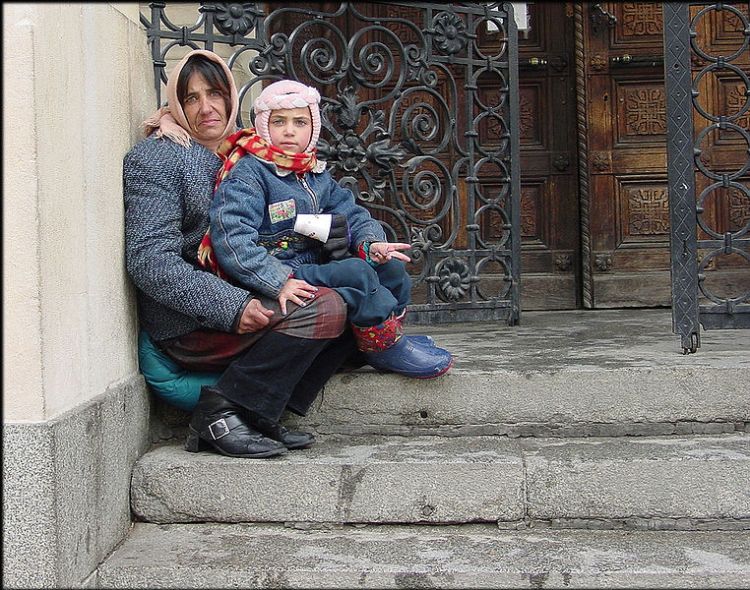
It is difficult for local communities to absorb large numbers of itinerant Roma as higher crime-rates seem to follow them wherever they go. Two weeks ago, The Guardian informed readers about a trial in France where the defendants were charged with forcing their children to carry out a series of burglaries. Though making up less than 0.05% of the population, officials in France claim they are responsible for up to 10% of the reported crime in France. Children are often kept from enrolling into schools resulting in high illiteracy levels, with 60% not finishing primary school. Some also portray the notion that the Roma are unwilling to integrate or contribute towards the societies they settle in. However, the picture is seemingly more nuanced.

Petty criminal activity is often a symptom of severe and deeply rooted social problems and usually not just an act motivated by envy. Most people will only commit a felony if they are pushed into a tight corner, as Vince Gilligan demonstrates with the Walter White character in the popular TV show Breaking Bad. E. H. Carr provides a more scholarly framework to this notion. He claims that the harmony of interest glosses over the real conflict between the ‘haves’ and ‘have-nots’. The world can only give a limited amount of actors ‘goods’. They who already ‘have’ promote laws in order to outlaw the use of force in ways where others can take their ‘goods’. Furthermore, Carr says that there is no reason for the ‘have-nots’ to follow the law because it is law that keeps them where they are.

There is no doubt that the Roma today are a marginalised group pushed into the same corner. Life expectancy among the Roma in Eastern Europe is on average 10 years lower than the remainder of the population. In some regions up to 60% live under the absolute poverty level and infant mortality rates are double those of non-Roma residents (UN Development Program).

It is also a popular belief, supported by some of the sources provided above, that many Roma are involved in criminal networks and that extend beyond petty criminal activity. This argument can be countered by looking at Roma persecution in a historical perspective. Historically, the Roma have been marginalised in the same fashion as Europe’s Jews. In the 1490s, the Roma were denied entrance to the Holy Roman Empire, and in 1530 Gypsies were banned from England. In 1554 the Gypsies Act was amended to impose the death penalty on those who refused to move. In 1835, the High Way Act was tailored to make it difficult for Roma to camp on the roadside. The Jewish Holocaust is well known in Europe, but the Nazis also viewed Roma as a racial problem and as many as 500,000 were killed in extermination camps or by the hand of Nazi collaborators. Because of this long term marginalisation, Roma culture may have responded by developing what some might call a ‘criminal culture’. Philip Gounev and Tihomir Bezlov, two Bulgarian Scholars, wrote an academic article in 2006 where they argued that with a crime-fighting strategy largely based on ethnic prejudice, a disproportionate number of Roma end up in long-term detention. This causes a so-called ‘revolving-cycle’ of crime as former inmates in turn influence their communities when they return.

More severe single-event instances have also been reported in the near past. European citizens who are part of the Roma minority experience eviction, persecution and racially motivated violence. The latest scandal was staged in Sweden, where the police compiled an ethnic based registry in order to monitor ‘itinerants’. The fact that many on the list were Swedish citizens without a criminal record and with permanent residency only shows how stigmatised the Roma-people are. All over Europe, itinerant Roma are forcefully evicted from their settlements. Three weeks ago, the BBC reported on one instance in Roubaix, France where 200 people were woken by the Police and told to find themselves a new place to live. Gilles Bourdouleix, a member of the French National Assembly, was recorded earlier this year saying ‘maybe Hitler didn’t kill enough of them’. One of the worst occurrences of ethnic motivated violence towards the Roma was, however, reported by Amnesty International in Hungary back in 2010. In the village of Tatárszentgyörgy, a petrol bomb was thrown into a house and the occupants liquidated as they made their way out the front door. Hungarian authorities are criticised because they seemingly choose not to persecute those responsible. With such instances reported frequently, it is hard for the Roma to trust the various juridical systems in Europe and/or build a future for themselves. Before the symptoms can disappear, criminal activity, we need to get rid of the cause, racial violence and forced evictions.

On Wednesday 9th of October the Plenary of the European Parliament once more addressed the situation of the Roma in Europe. In the Plenary, words such as ‘human crisis’ and ‘the poorest of the poor’ were used to describe their conditions here in Europe. It was also mentioned that ‘immigration and integration will only happen when these minorities fell free and safe.’ There is broad political will within the European Union to improve the situation, but politicians fail to translate intention into action. We should strive to provide the minimum standard of living for the Roma, according to what most states in the world have recognised as universal human rights.

A Different Take on Climate Change: Socio-economic Impacts

A lot of discussions on climate change that we receive in the media focus on its effect on the natural environment—the melting of glaziers, coral bleaching, more extreme weather patterns, just to name a few. Not enough attention is given to the extremely important point that climate change is more detrimental to the poor than it is to the rich. The tendency to talk about the science of climate change neutralises a topic that is fundamentally socio-economic as well.

And is it not obvious that this should be the case? Climate change due to human activities is caused by the burning of fossil fuels, but the lifestyle one leads determines one’s need for energy. Only those who can afford it can lead a lifestyle that has a high carbon footprint, and those living in extreme poverty simply do not emit as much greenhouse gas as an average person in a developed country. Yet, it is more saddening than ironic to note that it is the impoverished who bear most of the brunt. Someone living in urban quarters may be annoyed by continuous days of torrential rain, but the farmer who lives off the produce on his farm pays a dearer price. In fact, 75% of the world’s poor live in rural areas and depend on the land to make a living. Impoverished areas are also nowhere near as well-equipped as developed areas when it comes to dealing with natural disasters and their aftermath.

In Sub-Saharan Africa, the increasing warmth will provide congenial breeding grounds for mosquitoes and engender the spread of malaria, a disease which is considered to be a major hindrance to economic development. Meanwhile, the low-lying areas in Bangladesh susceptible to flooding will be devastated by the rise in water levels, leading to environmental refugees being displaced from their homes. In effect, all that climate change does is aggravate the geographical disadvantage that is in the first place a major cause of underdevelopment. It can, and certainly will undo the efforts by aid agencies and self-determined individuals to lift themselves out of poverty. We need to outrun the negative effects of climate change to win the race to end poverty.

For a while now, when a finger is to be pointed at the culprit of climate change, it points to countries. Developing countries argue that the developed countries had their fair share in emissions to earn them the prosperity they enjoy today, and so they should not be deprived of the right to emit for growth. The question about whether it is the developed or developing country that should make a greater contribution in mitigating climate change is one that has no solution, and the search for it will exhaust the precious time we have to combat climate change and curb the increasing woes it brings.

Rather, it is time we adopt a different mindset to assign the responsibility to where it should lie—the producer and the consumer. The producer should pay the environmental costs incurred by their business, for instance the textile factories that pour a toxic deluge into a river system nearby, or the occasional oil spills that happen during extractions by an oil company. As for the consumer, the person who leads a lifestyle higher in carbon footprint should not be let off without paying the full price that is their due. Such a conception of ‘where the burden lies’ drives at solving the environmental problems at hand through the price mechanism. This is the inconvenient truth we have to confront, that the price mechanism we have currently does not accurately reflect the reality of consumption as a zero-sum game.

Land and livelihood are inextricably linked. When we think of the causes fought by the environmentalists, we tend to associate them with desiring to maintain the status quo in nature—to prevent fracking from opening scars in the ground, stop deforestation and further extractions of fossil fuels because Earth cannot afford to burn it all. This is a delusion. The cause that the environmentalists are fighting for is the survival of humanity. The Gaia Theory suggests that the earth will survive, whatever fate befalls, because it is a self-regulating and complex system that works to ensure the conditions for life on Earth. But humans will only survive Earth’s self-regulation up to a point. Therefore, consider environmental activism as a quintessentially humanitarian cause, one which aims to reduce the suffering of the world’s most poor who are most affected by climate change, one that tries to right the balance between consumption and cost.