Fractured Land: Ethnic Conflict and Food as Weaponry in South Sudan

South Sudan is a nation in its infancy. Born in 2011 after decades of internal conflict whilst part of the Republic of Sudan, the country is mired in a civil war that has claimed the lives of hundreds of thousands. It is now faced by a further threat, resultant of the ethnic conflict it is embroiled in: a famine that risks the integrity of the state less than a decade into its existence.

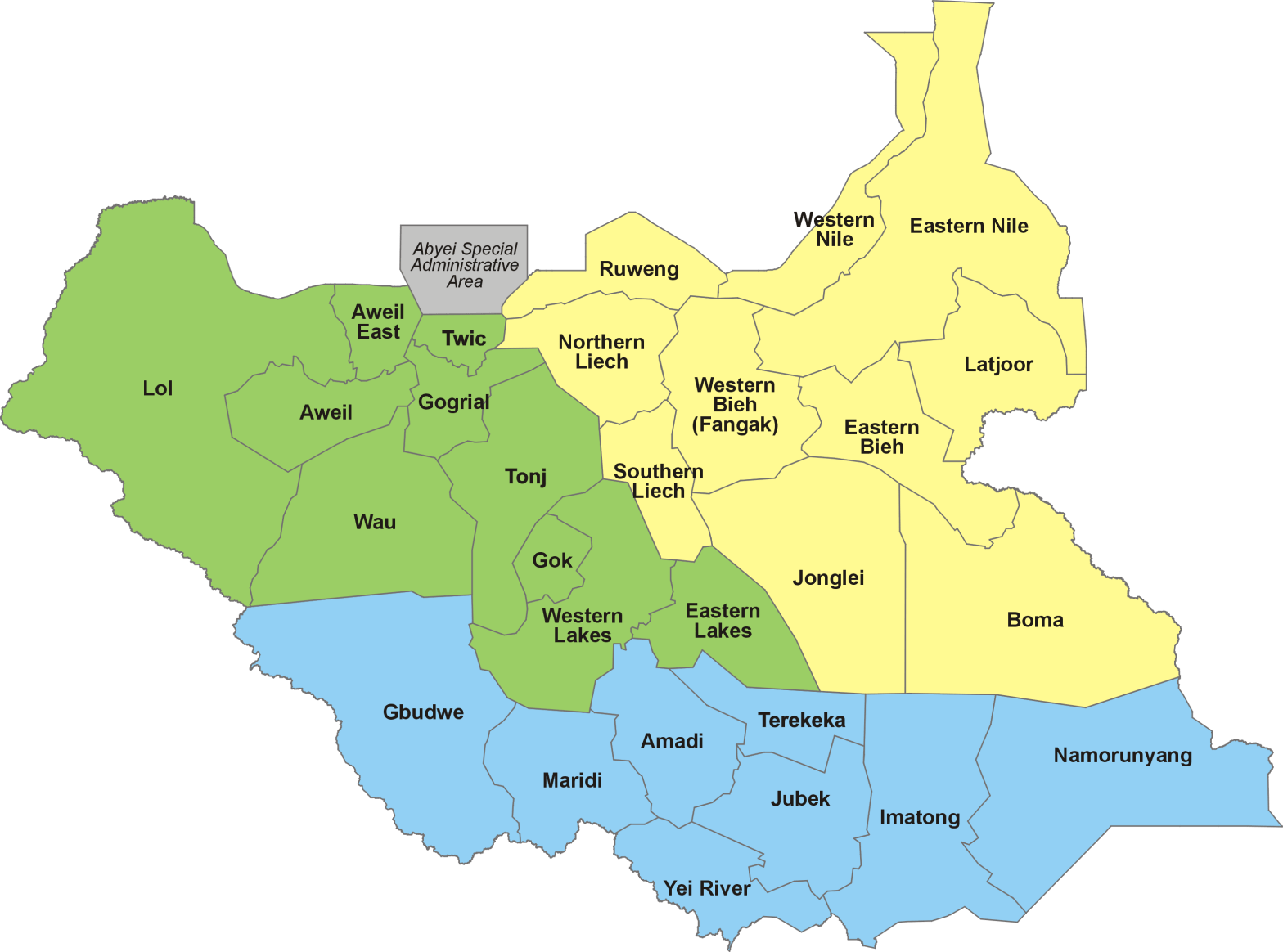
Landlocked by Sudan, Ethiopia, Kenya, Uganda, the Democratic Republic of Congo and the Central African Republic, South Sudan achieved independence following a referendum that was 99% in favour of secession. Sudan – as it then was – was a British colony until 1956, overseen by a governor-general (appointed by the Egyptians under an 1899 agreement) and effectively governed as two territories, north and south. Upon gaining independence from the British, Sudan moved swiftly towards Sharia law and both an Arabisation and Islamisation of the country. This caused significant tensions with the south, which maintained the Christian identity it had developed under the British colonial system and rejected Muslim governance from Khartoum. After seceding, South Sudan adopted English as its official language and was split into 10 states, which were then re-orchestrated into the following 28 in 2015:
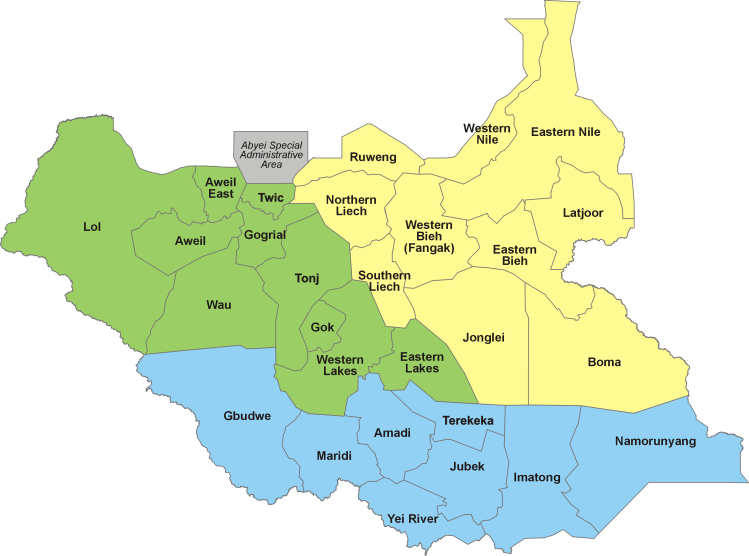
Source: Wiki Media Commons

Civil war erupted in the new state in 2013 between factions loyal to the president, Salva Kiir, and the former vice-president, Riek Machar. Kiir and Machar come from differing tribes – the Dinka and the Nuer respectively – and when tensions arose out of accusations made by the president that Machar had attempted a coup d’état, the conflict took on ethnic divisions, despite support for both men across ethnic lines at the time of independence. Around 300,000 people have been killed in the civil war, with particularly notable atrocities such as the Bentiu massacre in 2014, where the Nuer-led Sudan People’s Liberation Movement in Opposition Army killed over 400 non-Nuer civilians in churches, hospitals, and mosques. The civil war has seen South Sudan adopt the highest military budget as a percentage of GDP in the world, and has disrupted the development of infrastructure, government, public services, and industry. As of 2016, South Sudan places second on the Fragile States Index (formerly the Failed States Index), a report published annually by American think tank, Fund For Peace.

As the civil war continues, the tension between ethnic groups only increases, and the UN Special Advisor on the Prevention of Genocide, Adama Dieng, has warned of the “strong risk of violence escalating along ethnic lines, with the potential for genocide.” Those facing the strongest criticism are President Kiir and his government forces, accused of offensives against Nuer regions, where they “killed hundreds of civilians, raped woman and girls and stole thousands of heads of cattle.” The government’s actions in these regions have resulted in famine being declared; conflict and hunger have produced a mass of people on the move, both as internally displaced persons, and 1.2 million refugees outside the nation. Farmers do not want to return to their lands for fear of attack. This crisis has the potential to destroy South Sudan before it reaches its tenth year of independence and is a result of the underdevelopment and instability that is fuelled by the civil war and the Juba government. At present, the famine has already put 100,000 on the brink of immediate starvation, and threatens many more. Donations of food and aid money from the international community, both on the African continent and further abroad, will do little to help the situation if the root of the problem is not addressed.

Ethnicity and tribe matter in South Sudan, but the assumption that is often made in the West is that because there are strong community identities, there must be communal violence or ethnic conflict.is simply not the case. This was an avoidable crisis. The human rights of civilians, communities, and non-combatants in South Sudan are put at risk, and contravened, by the failure of both the Juba government, and the international community. Government forces, which systematically use ethnicity to target civilians and produce circumstances in which famine flourishes, should be held accountable. Thus far, the international community has failed to do so; no sanctions or punitive measures have been brought against either the government or opposition forces, the United Nations failed in 2016 to bring about an arms embargo over South Sudan, and the UN Security Council has sanctioned a grand total of two commanders.
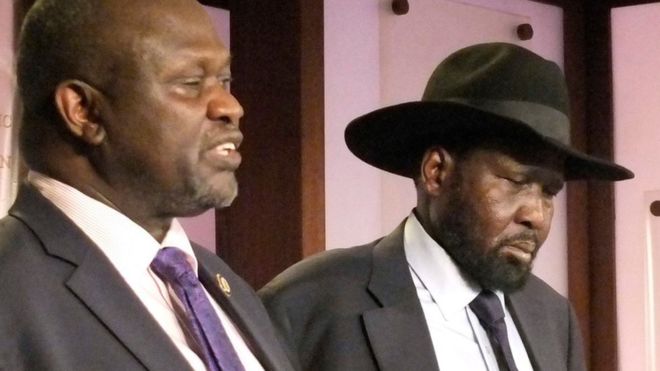
Source: BBC News

Both the government in South Sudan, and the global community represented at the United Nations owe to the people of South Sudan a long-lasting solution to a rapidly worsening situation. Whilst aid money may offer a temporary sticking plaster, the fracture in South Sudan runs much deeper, and is much more serious than that. It is not enough for the international community only to be moved by images on television screens of starving babies: the human rights of the civilian population must be protected and situations like these must be prevented. Conflict resolution, peace building, and cooperative governance are not glamorous and don’t make for good news reports, but they are what will help save lives.

Through the Lens: The Fight for Al-Aqsa

Citing the need for stricter security practices following the murder of two Israeli Security Force (ISF) officers in occupied East Jerusalem in mid-July, the Israeli government ordered the installation of metal detectors and security cameras at the entrance of the Al-Aqsa Mosque compound – the third holiest site in Islam – and barred the entrance of worshipers under the age of 50. What unfolded in the weeks following the Israeli-imposed restrictions on the place of worship, as well as its worshippers, was a tense environment that left many wondering if a third Intifada was looming. For two weeks, Palestinians boycotted the compound and organized peaceful demonstrations on Fridays, to coincide with the weekly Jumu’ah prayer.

While the protesters peacefully recited āyāt (qur’anic verses) and kneeled in the direction of Mecca, they were met with excessive force at the hands of the ISF, embodied by rubber bullets, sound grenades, and tear gas. The photos that follow are a collection of shots displaying how the Palestinians of East Jerusalem, Bethlehem, and Nablus protested collective punishment, restrictions to their right to worship freely, and the occupation.

“The Mother of the Revolution” Visits St Andrews

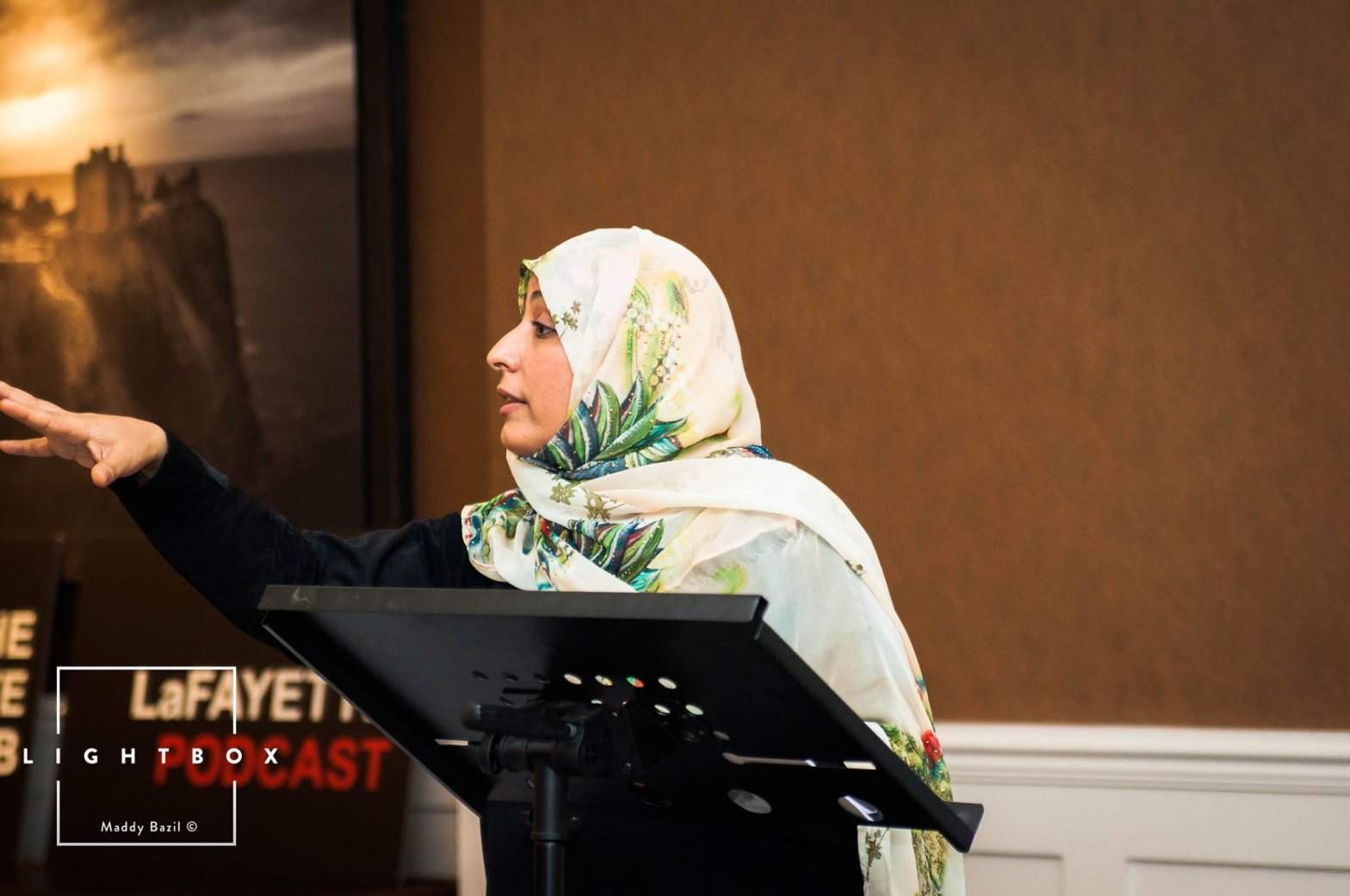
Tawakkol Karman is a Yemeni journalist, human rights activist, and Nobel Peace Prize Laureate. On Monday 25 September, the Lafayette Club hosted Karman at Hotel du Vin, where she addressed the origins of the ongoing crisis in Yemen. Some quotations have been edited for clarity.

Photography by Maddy Bazil for Lightbox, provided courtesy of the Lafayette Club.

Yemen has a well-documented record of substandard women’s rights. The widespread lack of female autonomy is determined by social, cultural, religious, and political traditions that vary by region. Poverty-stricken and rural women are the most susceptible to discrimination.

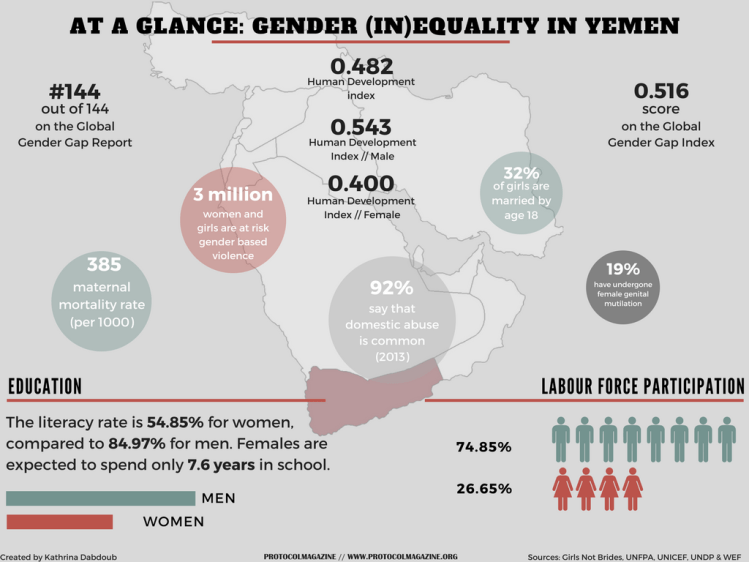
The war-torn Arab state has consistently been the lowest-ranking country in the World Economic Forum’s Global Gender Gap Report for at least the last decade. According to the latest report, published in November 2016, the greatest disparities exist in economic participation and opportunities, as well as in education and literacy. There is no legal age of marriage and child marriage is overwhelmingly common. Gender-based violence, in the form of honour killings, domestic abuse, and female genital mutilation, is pervasive. The intensity of patriarchal control has contributed to high maternal mortality rates, in large part because women are not eligible to receive health care without the approval of their husbands or other male relative. Such discrimination is legally codified; women do not have rights to divorce, inheritance, or even child custody. Yemen has consequently been labelled the “worst place to live as a woman”.

Yet, when anti-government riots erupted nationwide in February 2011, women were at the forefront of the movement. An unprecedented number took to the streets, participating in sit-ins, strikes, and demonstrations. Others gathered at local schools to write anonymous letters to their corrupt leaders. In Sana’a, they defiantly burned their veils, a symbolic and brazen act of protest. Their message of gender equality was embedded within a larger discourse of democracy, justice, and freedom. It is thus fitting, though somewhat ironic, that a woman should represent the revolution on the global stage.

However, this is not just any woman. Tawakkol Karman began participating in grassroots activism as a university student and has been persistently protesting Yemen’s oppressive government since. In 2005, frustrated with censorship, she founded Women Journalists Without Chains, which advocates freedom of press and freedom of expression, including the right to protest. Two years later, she began organizing weekly demonstrations in front of the Presidential Palace in Sana’a, in an area now known as ‘Freedom Square’. It was not until 2011, during the uprising, that she rose to national prominence for her leadership of the student movement and her dedication to the protest encampment at ‘Change Square’. Her activism made her a household name and earned her the sobriquet ‘Mother of the Revolution’. Just months after the riots began, she was awarded the Nobel Peace Prize for her unyielding moral vision of nonviolence.

It is not difficult to see how Karman assumed this role. Undeterred by her imperfect English, she orates in a raised, forceful tone. She exudes an infectious confidence (though sometimes bordering on egotism) and is unwavering in her declarations and beliefs. From the moment she stepped up to the podium in the ballroom of Hotel du Vin, it was clear that she had captivated her audience. They smiled with her and laughed with her. They clapped in unison with her as she enthusiastically sang in celebration of Yemen’s Revolution of 26 September 1962 – the incident that toppled the Mutawakkilite monarchy and resulted in the establishment of a republic.

Karman began her overview of the uprising by sorrowfully denouncing the “regime of dictatorship, the regime of corruption, the regime of failure, and the regime of war” that has plagued her country since Ali Abdullah Saleh’s rise to power in 1978. “Unfortunately, now Yemen suffers from a bad ruler.”

As she proceeded to recount the circumstances surrounding the revolution, her intonation vacillated between frustration and passion. She fervently described the multifaceted issues of Saleh’s regime: his Machiavellian mode of leadership (as she described it), the conflicts he instigated, his attempts to install his eldest son as his successor, and his government’s infringement of human rights. She asserted that any freedoms that the Yemenis appeared to enjoy were “just a decoy, just to tell the West that we are a democratic country.”

Saleh’s refusal to listen to the Yemeni people and to create legislative reforms for economic, political, and social improvement, combined with the outbreak of revolt in Tunisia, served as a catalyst for outright insurgence. Despite the people’s vexation, they never resorted to brutality, an achievement that Karman is exceedingly proud of – “we decided… to put the weapons away and to go to the streets with flowers, just flowers, in front of all the violence of the regime.” She furthermore reaffirmed her commitment to pacifism. When an audience-member questioned her view on the international community’s role in Yemen’s struggle, she even objected to the presence of armed United Nations peacekeepers, explaining that sustainable peace requires a ceasefire and disarmament procedures.

Her account of the transitional period from 2012 to 2014 was laudatory, notwithstanding the fact that it has been called “poorly designed” and “contentious” by Western scholars and media. She professed that the National Dialogue Conference was all-encompassing, including everyone from the civilians, to civil society, to the Houthis, to Saleh’s government (though not Saleh or his family). The draft of the constitution incorporated every value that the Yemeni people protested and sacrificed for, such as human rights, women’s rights, and democracy.

From Karman’s perspective, the fatal flaw that lead to today’s conflict and the resultant humanitarian crisis was the decision to grant Saleh with indemnity. She opined that this paved the way for his vengeful coup in 2014, an easy undertaking for Saleh given his wealth, influence, and alliance with the Houthis.

“There is no peace without justice. If you sacrifice justice for peace you will lose them both.”

Karman ended her speech with a reflection on revolutions and democratization. She noted that the relative stability that those of us who live in the developed world enjoy today did not come easily or immediately, but resulted from the struggles of our ancestors. “Why do you ask the revolutionaries in Arab countries to create a democracy at the same time a dictatorial regime is overthrown?” she questioned. In doing so, she shamelessly challenged the Orientalist discourse that democracy is incompatible with Middle Eastern cultures and values – a discourse that has only intensified since the Arab Spring – and the West’s hypocritical insistence on progress.

Regardless of the bleakness of the subject at hand, the theme of Karman’s speech was incontrovertibly hope and faith. She has no doubts that the 2011 uprising was a monumental and important step in the journey towards the establishment of a civil state dedicated to the rule of law, despite the chaos that was since engulfed Yemen (though many people would disagree with her on this point, given the severity of the humanitarian crisis). She remains unshaken in her belief that justice and peace will ultimately prevail.

“With all this darkness, there is still a great people, the Yemeni people, believing in a dream… and there is one winner, the people, the dreamers.”

#Yemen #StAndrews #LafayetteClub #ArabSpring #revolution

"The Mother of the Revolution" Visits St Andrews

Tawakkol Karman is a Yemeni journalist, human rights activist, and Nobel Peace Prize Laureate. On Monday 25 September, the Lafayette Club hosted Karman at Hotel du Vin, where she addressed the origins of the ongoing crisis in Yemen. Some quotations have been edited for clarity.

Photography by Maddy Bazil for Lightbox, provided courtesy of the Lafayette Club.


Yemen has a well-documented record of substandard women’s rights. The widespread lack of female autonomy is determined by social, cultural, religious, and political traditions that vary by region. Poverty-stricken and rural women are the most susceptible to discrimination.

The war-torn Arab state has consistently been the lowest-ranking country in the World Economic Forum’s Global Gender Gap Report for at least the last decade. According to the latest report, published in November 2016, the greatest disparities exist in economic participation and opportunities, as well as in education and literacy. There is no legal age of marriage and child marriage is overwhelmingly common. Gender-based violence, in the form of honour killings, domestic abuse, and female genital mutilation, is pervasive. The intensity of patriarchal control has contributed to high maternal mortality rates, in large part because women are not eligible to receive health care without the approval of their husbands or other male relative. Such discrimination is legally codified; women do not have rights to divorce, inheritance, or even child custody. Yemen has consequently been labelled the “worst place to live as a woman”.

Yet, when anti-government riots erupted nationwide in February 2011, women were at the forefront of the movement. An unprecedented number took to the streets, participating in sit-ins, strikes, and demonstrations. Others gathered at local schools to write anonymous letters to their corrupt leaders. In Sana’a, they defiantly burned their veils, a symbolic and brazen act of protest. Their message of gender equality was embedded within a larger discourse of democracy, justice, and freedom. It is thus fitting, though somewhat ironic, that a woman should represent the revolution on the global stage.

However, this is not just any woman. Tawakkol Karman began participating in grassroots activism as a university student and has been persistently protesting Yemen’s oppressive government since. In 2005, frustrated with censorship, she founded Women Journalists Without Chains, which advocates freedom of press and freedom of expression, including the right to protest. Two years later, she began organizing weekly demonstrations in front of the Presidential Palace in Sana’a, in an area now known as ‘Freedom Square’. It was not until 2011, during the uprising, that she rose to national prominence for her leadership of the student movement and her dedication to the protest encampment at ‘Change Square’. Her activism made her a household name and earned her the sobriquet ‘Mother of the Revolution’. Just months after the riots began, she was awarded the Nobel Peace Prize for her unyielding moral vision of nonviolence.

It is not difficult to see how Karman assumed this role. Undeterred by her imperfect English, she orates in a raised, forceful tone. She exudes an infectious confidence (though sometimes bordering on egotism) and is unwavering in her declarations and beliefs. From the moment she stepped up to the podium in the ballroom of Hotel du Vin, it was clear that she had captivated her audience. They smiled with her and laughed with her. They clapped in unison with her as she enthusiastically sang in celebration of Yemen’s Revolution of 26 September 1962 – the incident that toppled the Mutawakkilite monarchy and resulted in the establishment of a republic.

This slideshow requires JavaScript.

Karman began her overview of the uprising by sorrowfully denouncing the “regime of dictatorship, the regime of corruption, the regime of failure, and the regime of war” that has plagued her country since Ali Abdullah Saleh’s rise to power in 1978. “Unfortunately, now Yemen suffers from a bad ruler.”

As she proceeded to recount the circumstances surrounding the revolution, her intonation vacillated between frustration and passion. She fervently described the multifaceted issues of Saleh’s regime: his Machiavellian mode of leadership (as she described it), the conflicts he instigated, his attempts to install his eldest son as his successor, and his government’s infringement of human rights. She asserted that any freedoms that the Yemenis appeared to enjoy were “just a decoy, just to tell the West that we are a democratic country.”

Saleh’s refusal to listen to the Yemeni people and to create legislative reforms for economic, political, and social improvement, combined with the outbreak of revolt in Tunisia, served as a catalyst for outright insurgence. Despite the people’s vexation, they never resorted to brutality, an achievement that Karman is exceedingly proud of – “we decided… to put the weapons away and to go to the streets with flowers, just flowers, in front of all the violence of the regime.” She furthermore reaffirmed her commitment to pacifism. When an audience-member questioned her view on the international community’s role in Yemen’s struggle, she even objected to the presence of armed United Nations peacekeepers, explaining that sustainable peace requires a ceasefire and disarmament procedures.

Her account of the transitional period from 2012 to 2014 was laudatory, notwithstanding the fact that it has been called “poorly designed” and “contentious” by Western scholars and media. She professed that the National Dialogue Conference was all-encompassing, including everyone from the civilians, to civil society, to the Houthis, to Saleh’s government (though not Saleh or his family). The draft of the constitution incorporated every value that the Yemeni people protested and sacrificed for, such as human rights, women’s rights, and democracy.

From Karman’s perspective, the fatal flaw that lead to today’s conflict and the resultant humanitarian crisis was the decision to grant Saleh with indemnity. She opined that this paved the way for his vengeful coup in 2014, an easy undertaking for Saleh given his wealth, influence, and alliance with the Houthis.

“There is no peace without justice. If you sacrifice justice for peace you will lose them both.”

Karman ended her speech with a reflection on revolutions and democratization. She noted that the relative stability that those of us who live in the developed world enjoy today did not come easily or immediately, but resulted from the struggles of our ancestors. “Why do you ask the revolutionaries in Arab countries to create a democracy at the same time a dictatorial regime is overthrown?” she questioned. In doing so, she shamelessly challenged the Orientalist discourse that democracy is incompatible with Middle Eastern cultures and values – a discourse that has only intensified since the Arab Spring – and the West’s hypocritical insistence on progress.

Regardless of the bleakness of the subject at hand, the theme of Karman’s speech was incontrovertibly hope and faith. She has no doubts that the 2011 uprising was a monumental and important step in the journey towards the establishment of a civil state dedicated to the rule of law, despite the chaos that was since engulfed Yemen (though many people would disagree with her on this point, given the severity of the humanitarian crisis). She remains unshaken in her belief that justice and peace will ultimately prevail.

“With all this darkness, there is still a great people, the Yemeni people, believing in a dream… and there is one winner, the people, the dreamers.”

The Right to Food: Climate Change

While some politicians continue to deny either the existence or the importance and urgency of global climate change, as seen recently in the US, it is evident that climate change is having a tangible, present-day impact on food production, and may in the future lead to greater food insecurity. It is therefore vital that contemporary leaders and policy makers recognise the importance of addressing that human activities, namely the burning of fossil fuels, contribute to climate change.

Climate change is defined by the 1992 United Nations Framework Convention on Climate Change as a “change of climate which is attributed directly or indirectly to human activity that alters the composition of the global atmosphere and which is in addition to natural climate variability observed over comparable time periods.” Human activity, such as burning coal, oil, and gas, contributes to global warming by releasing abundant amounts of the heat-trapping greenhouse gas carbon dioxide. The resultant global temperature increase has diverse implications for the planet’s ecosystems and climate – so much so that some scientists now argue that we have entered a new geological age, the Anthropocene, whereby human activity is the principal influence on climate and the environment. Certainly, the effects of climate change are diverse: melting ice, rising seas, extreme weather, shifting rainfall, flooding, drought, and the increasing challenge of survival for many species.

However, it is probably easy to disregard climate change when the only image that ‘climate change’ conjures is a picture of a polar bear standing atop a piece of ice. It is reasonable that many might ask, “What has this got to do with me?” Others might ask, “How does this really impact my world, or the world of my grandchildren?” Moreover, some may argue that they are not responsible for the effects of climate change owing to the lack of tangible effects or relevance to themselves and on their local area (and, in the case of politicians, their voters). Yet, there exist numerous real-world, present-day effects, manifested in places seemingly unconnected, from Karamoja in Uganda to Miami Beach in Florida. Global climate change affects us all the world over, but especially so in poorer nations, where climate change poses a huge issue in that it can impact food security and thus the right to adequate sustenance.

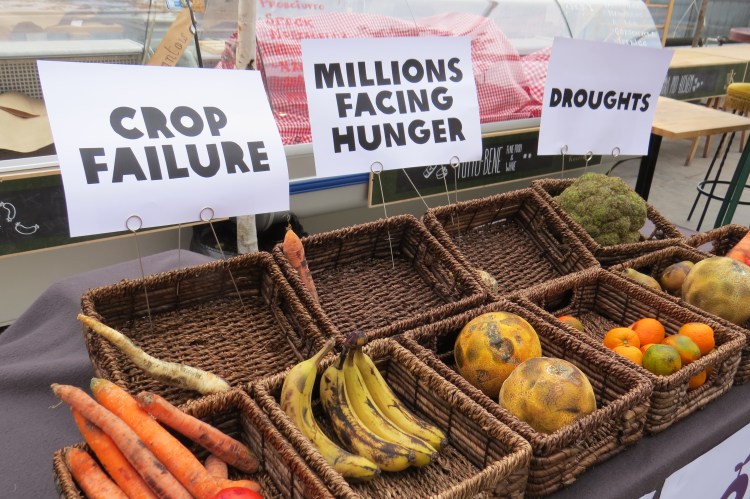
‘Food hit by climate change: Oxfam campaigners highlight the effects of climate change on food’ Photo credit: Oxfam International

One of the most basic and essential human rights is the right to food, outlined by the United Nation’s Special Rapporteur as “the right to have regular, permanent and unrestricted access, either directly or by means of financial purchases, to quantitatively and qualitatively adequate and sufficient food corresponding to the cultural traditions of the people to which the consumer belongs, and which ensure a physical and mental, individual and collective, fulfilling and dignified life free of fear.”

Climate change is already threatening this right to food for many people, especially those in the poorest parts of the world. In 2015, the UN Special Rapporteur on the right to food, Hilal Elver, warned that “increased frequency and intensity of extreme weather, rising temperatures and sea levels, as well as floods and droughts have a significant impact on the right to food.” She added that “those who have contributed the least to global warming are the ones set to suffer the most from its harmful effects.” This alludes to how those in the poorest regions, typically in regions which rely on agriculture as the centre of their economy, will suffer far more than those in wealthy nations. Certainly, the production of a harvest for a farming family who already live with scarce food supplies means the difference between sustenance and starvation, and so the climate directly affects the food supply of the poorest people. While it may be easy to consider how human-influenced climate change does not affect one’s own life or society, modern-day warnings of what climate change can do to human food security weighs forebodingly on the future. Indeed, climate change can gravely impact food production, as a study from Stanford University, reported in the Guardian suggests; the study found that ‘”increases in global production of maize and wheat since 1980 would have been about 5% higher were it not for climate change.”

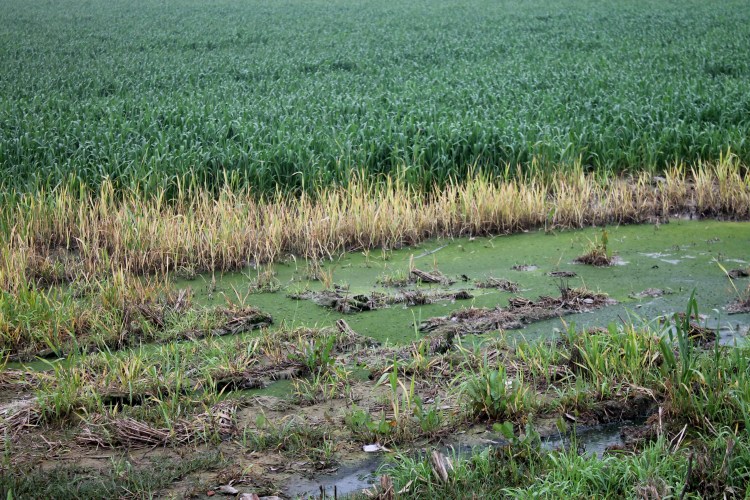
Extreme weather, whether severe heat or cold, can harm crops and livestock, while drought and flooding also impacts food production. For example, the unpredictability of rainfall, as well as its increasing volumes, has meant that in the Karamoja region of Uganda food security is being put under increasing strain. A recent study found that “the rainy season is now longer by two months” there, and rising temperatures threaten water supplies for crops and animals. Similarly, in parts of the African continent climate change has added to the existing food insecurity caused by military conflict. This is occurring right now, with Horn of Africa countries such as South Sudan and Somalia facing a “third consecutive year of drought.” Such sudden climate changes are therefore frightening reminders that the right to food is dependent upon the weather, and so if human carbon emissions are partially responsible in driving these sudden weather patterns, action ought to be taken to decrease carbon emissions.

‘A section of crops destroyed because of water stagnation after rainfall, in Karnal, Haryana, February 2013’. Photo credit: Nirmal Sigtia

Furthermore, changes in weather patterns also mean that harvest times are changing, sometimes put forward or backward by a month. This uncertainty also affects the amount of food available, whether for consumers or for the farmer and his family to eat or store. Having less choices and access to diverse food sources means that many of the poorest people in the world are directly impacted by sudden changes of climate. Especially for those who are unable to afford higher price items, the impact of climate change on food production harms both consumers and farmers who have less produce to sell, impacting their livelihood and families. This lack of food production, impacted by a changing climate, is compounded by the way in which a farmer is tied to the land; they cannot move their land to a location where there is more clement weather, and so the fate of many farmers and their families is bound up with the climate.

This does not only affect farmers but also the rest of the population. We ought not to have the view that if someone else’s plight does not seem to affect our own lives, then therefore it is not of any interest. What hurts farmers hurts consumers and especially hurts the sustenance of the very poorest. This is everyone’s issue – we are all involved in the interplay between the climate, weather, agriculture, and consumption.

It ought to be highlighted how climate change, and especially its impact on food production, is a global problem. As the world is so interconnected (especially with the recent technological developments of cheap travel and the Internet), the often negative effects of climate change upon populations other than our own is not to be dismissed; in a connected world, where space has arguably shrunk, what is another nation’s problem will often have effects upon your own country. Indeed, climate change is a global issue, not a national one, and so requires international cooperation and solutions. We saw an attempt at such multinational cooperation in 2015 at the United Nations Climate Change Conference in Paris, and so it is hoped that the agreements delivered from this are borne to fruition.

It therefore seems evident that global climate change is everyone’s issue. Climate change has huge impacts on people’s lives in that it can affect the very essence that sustains our lives: food. We all eat, and so the climate directly impacts on all our lives. It is all our issue, especially so if one values human rights and aims to protect them. While in wealthier nations food security may not be noticeably impacted as of yet by climate change, this is not a reasonable argument for dismissing the plight of those affected by climate change, nor ignoring the possibility that we humans can actively prevent further drastic climate change (for instance, via investing in renewable energy).

If you would like to find out more about the ratification of the Paris COP 21 agreement, the science on the relationship between climate change and food production or ways to help people experiencing famine, please click on their respective links.

What’s in a Name? Afghanistan and the #WhereIsMyName Campaign

It is widely acknowledged that names are important. Identities are built around them, and they are instrumental in creating a sense of dignity and autonomy. They often embody the independence of that person, their status, and encourage them to stand up for their rights. Names may therefore be seen to have a massive psychological impact on a person’s life.

When a name is removed, it can have devastating effects. Fans of the popular TV show “Game of Thrones” will have seen this devastation in action when one of the characters, Theon Greyjoy, has his name replaced with an insult by his captor. This action removes a part of his humanity and firmly asserts him as less than human – an assertion that he then begins to believe to be true. Whilst this example is taken from a fantasy series, Afghan women are facing a similar struggle.

In Afghan culture, it is regarded as an insult to refer to a female by using her name. Instead, women are referred to by their features, such as ‘black haired’, or by the common honorific ‘aunt’. In most cases, they are identified through their familial relations to men. This custom is not simply reserved for everyday interactions, but permeates both the cultural and legal aspects of Afghanistan. A mother’s name is not mentioned on documents such as birth certificates, and a woman’s name will not appear on her own gravestone. Women therefore remain unidentified throughout their life and in death.

Young Afghani girls from the Ghazni province.

In the past few weeks, many have taken to social media in order protest this state of affairs. The social media campaign ‘Where Is My Name’ has garnered support and attention internationally and seeks to combat the systematised erasure of women’s identity that takes place within Afghan society. Moreover, it aims to challenge the societal norms this practice has encouraged.

One such well-documented societal norm is men assuming the role of decision maker. It is not an uncommon occurrence for an Afghan woman’s male relations to dictate her life and this is related to the issue and erasure of women’s names. Due to society’s refusal to use the women’s names, women lose their autonomy and men are asserted as the authority figure on all matters. This has obvious ramifications for society as a whole, and the position of women in that society.

This practice has been made permissible by the cultural norm of referring to females through their relations to men. The use of familial relations to males promotes a subtext of ownership. This subtext has huge psychological and cultural ramifications. If you are constantly referred to as the daughter, sister, or mother of a man, it is easy to begin to be seen as the belonging of this man. You are no longer an independent unit, but rather reliant on him. It goes without saying that this concept of ownership is harmful and reinforces the idea of women as second-class citizens.

Laley Osmany has stated that the campaign is ‘fighting to win back [Afghan women’s] name and […]identity. We want women to be recognised as independent human beings with an identity.’ Furthermore, it is suggested that through regaining such a basic thing, women will feel more capable of asserting themselves in a society which is renowned for not supporting and protecting them. It is believed that if women were to use their names with no fear of repercussions then they would be encouraged to advocate for their rights. This is particularly important as Afghanistan has a troubled history with problems such as violence against women.

By being made nameless, women become both invisible and powerless to protect their own rights. To be referred to as someone else’s relation would indicate that they are not of any importance, and it is their relation rather than them that matters. This highlights the idea that women are powerless second-class citizens.

This emphasises yet another ramification of the refusal to mention women’s names: the erasure of women from Afghan society and a disregard for women’s rights. Women are subconsciously told that they do not have a place in society as an independent being. Their achievements, struggles, and lives are not recorded as their own, and they are rendered invisible. Not even their gravestone will record their name, erasing their very existence.

Opposition to the ‘Where Is My Name?’ campaign has claimed that the campaign is an attack on the Afghan way of life. Many have claimed that the names of women are sacred, and that the campaign is contradicting the values of Afghan culture and society. Here, it is important to consider the westernised view of human rights that is sometimes asserted. In many cases there is a clash between the western view of rights and diverse cultures which do not necessarily have the same values. It has often been suggested that through asserting rights which have been created by Western powers we are supporting a colonial view of human rights. Whilst this may be a valid complaint, and is important to keep in mind, surely there are some rights that are universal? For example, the right to have a name.

Moreover, surely a woman’s dignity, identity, and independence is something that ought to be fiercely defended. It is generally acknowledged that a name, and everything that it symbolises, is a basic and fundamental right. A name may even be seen as a building block upon which all else rests. It is therefore essential in creating a sense of autonomy and the campaign may be seen as the first of many steps to bettering the situation of many women.

Yet another complaint that has been brought against the campaign is that it does not tackle any of the real issues which women face in Afghanistan. The hashtag and online campaign may easily be seen to focus on an arbitrary complaint rather than focusing on a worthier issue. After all, it could easily be confused for a petty and insignificant complaint that is not creating any real change. However, it has been highlighted that the campaign is merely the first step towards a more equal society. Ultimately, this campaign will not solve all the problems that women in Afghanistan face. Despite this it provides a foundation upon which women can begin to assert their rights. It is challenging the attitudes of society in order to try and enact change for the better, and this must be supported. Through bringing this issue to light it is creating the society in which women will be afforded the most basic right – their own identity. It is therefore impossible to dismiss this as not tackling genuine issues.

Review: The True Cost of Fast Fashion and the Globalized Economy

Most of us do not think twice when shopping at places like Forever 21, H&M, or Zara. In fact, the affordability of these stores has contributed to their consistent popularity, so much so that these so-called “fast fashion” retailers have become the primary destination for shoppers on a budget.

Cheap, stylish clothing has become so easily accessible to consumers due to a globalized economy that hide the processes which make these industries possible. The fashion industry, which is now the most labor-dependent industry on earth, generates roughly 3 trillion dollars annually, with about 80 billion new pieces of clothing purchased each year. The rise of consumerism, buoyed by the ready availability of inexpensive, fashionable products, creates a dynamic in which the fashion industry is driven by a never-ending demand for new products without regard to the human cost of producing the goods.

The documentary The True Cost, released in 2015, explores how we got to a point where consumption in the developed world is prioritized while human rights in the developing world go ignored.

In the United States, much of Europe, and other wealthy countries, high labor standards tend to be regarded as the norm, the expectation being that workers are paid fairly and treated with respect. In many parts of the world, however, the rights of laborers are disregarded in favor of maximizing profit and production. The violations of these rights range from unsafe working conditions to substandard wages. The workforce of the fashion industry in poorer countries is largely made up of women. For example, out of 40 million garment workers worldwide and 4 million in Bangladesh alone, 85% are female. These women often have extremely limited alternatives to factory work, due to lack of access to education and minimal economic mobility.

The long working hours in garment factories create further problems for female laborers. Many young women have small children and childcare is expensive and scarce. They are thus forced to send their children to live with relatives, to receive care and education, while they remain in the cities, often the only place they can find work. Garment workers sometimes make as little as $10 per month, placing them among the lowest paid workers in the world. Moreover, workers in countries like Bangladesh lack the ability to form unions, preventing them from seeking improved conditions. Therefore, the system in which workers’ rights are violated and the fast fashion industry continues to flourish is self-perpetuating.

A notorious example of the dangers of fast-fashion is the 2013 collapse of the textile factory at Rana Plaza in Bangladesh. More than one thousand workers were killed and about 2,500 were injured. The astonishing part of this horrific tragedy was that managers of the factory had been aware of faulty construction and potential dangers, yet the factories remained in disrepair. Rana Plaza made global headlines, but it did not stand alone. That same year, three of the four worst tragedies in the history of the fashion industry occurred. Despite widespread knowledge of the event, consumers in the developed world continue to shop at fast fashion retailers at high rates.

The global human rights crisis caused by the fast fashion industry, however, is not limited to factory workers in Bangladesh. In Cambodia, workers protesting for a living wage faced extreme police violence. In Haiti, traditional local clothing industries all but disappeared in favor of large scale factories producing cheap clothing for export to the United States. In the Kanpur region of India, chemicals from garment production contaminate the sacred Ganges river and even the drinking water of local communities. Many people then have to spend their limited wages on treating illnesses contracted from the contaminated water, furthering the cycle of poverty.

Even in the United States, organic cotton farmers have suffered at the hands of Monsanto, with fertilizer chemicals linked to cancer and physical and mental disabilities, which disproportionately impact poor farming communities. As with factories, the rapid industrialization of agriculture contributes to the “consumptionism” that now drives fast fashion and the subsequent disregard for human rights. Finally, the waste from the fashion industry contributes to the global environmental crisis, with the average American throwing away 82 pounds of textile waste annually. The environmental concerns related to the fashion industry go hand in hand with the related human rights violations.

The True Cost makes a plea for a change of approach to fast fashion by interviewing everyone from Rana Plaza survivors to reporters to fair trade designers. The interviews and reporting draws attention to the shocking ease with which consumers disregard the human cost behind cheap clothing. As one interviewee remarks, “we just ignore other people’s lives, how come?” It is impactful because it puts a human face on a large-scale tragedy, hopefully to the end of generating empathy and perhaps a newfound awareness.

The convenience of fast fashion simplifies what once was an exclusive commodity for those who could afford it: high fashion clothing, at least in the minds of consumers. What we truly cannot afford, however, is the human sacrifice behind each $8 t-shirt or $15 pair of jeans. The filmmakers showcase alternatives, mostly in the realm of pricey fair trade brands, which treat their workers with dignity but are, at this point, largely inaccessible to regular consumers of fast fashion. Yet, those that can afford more expensive, more ethically produced clothing are not necessarily likely to forego the easy choice of cheap, stylish clothes. Even so, the other alternative, thrift shopping and buying used clothing, is more affordable and less glamorous. A solid solution to the problem of fast fashion has yet to emerge, but in the meantime, we can work to raise awareness about the far-reaching human rights violations and environmental concerns, while countering the fast fashion industry in our own lives.

If you can afford to buy from ethical producers, do so. If not, try to start at your local charity shop. These are relatively easy changes we can make in our everyday lives, while the changes they could influence in the lives of global factory workers and farmers would be profound.

The True Cost is currently available on Netflix. More information about the film and the relevant research can be found at truecostmovie.com

Add Blog Writers

Adding writers is a great way to bring more fresh and diverse content to your blog.

Whether you’re running a small business or a large magazine publication, add multiple writers to grow your content and keep it fresh and diversified.

You know what they say, content is king so bringing more contributing voices to the topic at hand is an effective way of turning your blog into a thriving online community.

You can turn any existing member into a writer for your blog and manage them. Writers can create new posts and manage their comments.

Here’s how to do it:

  1. Head to your Member’s Page
  2. Search the member you want to make a writer
  3. Click on the member’s profile
  4. Click the 3 dot icon on the Follow button
  5. Select Set as Writer

Hashtag Your Posts

Love to #hashtag? Good news!

You can add tags (#vacation #dream #summer) throughout your posts to reach more people. Why hashtag? Hashtags are like labels for content that people can search with to find relevant posts.

Using hashtags can expand your post reach and help people find the content that matters to them. So go ahead and #hashtag away!

Tip:

Use hashtags to describe what your post is about.

Add Images, Videos & Style Your Text

Adding images and videos to your posts is a great way to grab readers’ attention. Writing a text post? You can style it too with bold, italics, quotes & more!

Looking for fresh design options? Then we’ve got you covered. Make each post look exactly the way you want by styling your text.

Images & Videos

You can also customize the look of your videos and images. Make them widescreen or small – whatever you prefer. You have complete control of how your post will look on desktop and mobile.

Paragraph Alignment

You can align your paragraphs left, right or center and place them to the right or left of your images.

Subtitles & Quotes

Add subtitles to let readers easily skim longer posts or quotes to make your main messages stand out

#dream