Repression of International Journalism and the Venezuelan Crisis

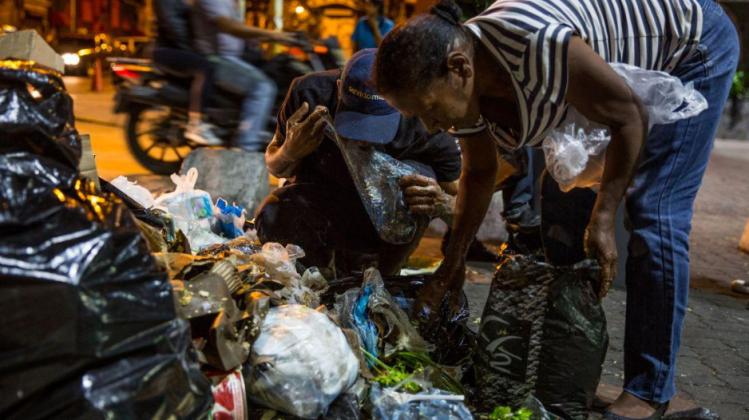
Man looking for food on the streets of Caracas by EFE/Miguel Gutiérrez. Source:

Man looking for food on the streets of Caracas courtesy of EFE/Miguel Gutiérrez via Al Día News

The deterioration of democracy in Venezuela has recently peaked the international community’s interest for a new reason: the impediment of American free press in Venezuelan territory. On the 25th of February and then, again, on the 6th of March, journalists reporting for American news outlets (of both American and non-American nationalities) were detained, had their equipment confiscated, and were then held in custody for several hours by the Nicolas Maduro’s administration.

In a video uploaded on the day , seven journalists working for Univision, an American news outlet that reports predominantly on American and Latin American affairs, were detained, stripped of their equipment, and held in a dark room several hours on the 25th of February. Interviewer Jorge Ramos claims the crew was detained after they upset the Venezuelan leader by showing him video footage, taken by Ramos the day before the interview, of Venezuelans eating out of a garbage truck on the streets of Caracas. Ramos reports that Maduro “just couldn’t stand [the video]” and immediately called off the interview, at which point “their Minister of Communications, Jorge Rodriguez, told us that they didn’t authorise the interview and they confiscated all our cameras… all of our video, all of our cell phones, and we were thrown out of the Presidential Palace”, (emphasis made by speaker).

According to Maria Martinez-Guzman, an executive producer who was also detained, Maduro “denied” the state of crisis and starvation that Venezuelan people face daily “up to the moment that Jorge showed him that video”. After Ramos was “thrown out of the room”, Martinez-Guzman “got into an argument” with Maduro’s security staff, telling them they “can’t treat [them] like that, [they] are the free press, this is not how you treat the free press. This is Journalism”. They were then taken to a dark room where they “couldn’t see who approached [them] from behind” and where a woman “stuck her hand inside [Martinez-Guzman’s] bra [and] inside [her] pants to see if [she] had taken anything out [of the Presidential Palace]”. Ramos recounts that they “didn’t know what was going to happen to [them]” until they were released hours later without being given any of their equipment, footage, or cell phones back.

Presumably, the journalists’ quick release can be attributed, at least in part, to the United States’ State Department’s tweet. This tweet highlighted mounting international pressure on the regime whose repressive tactics have resulted in a human rights crisis and whose legitimacy has recently been challenged by self-declared president, Juan Guaidó, who is now widely recognised by the United States and many other countries as Venezuela’s interim president until democratic elections can be held. However, this did not stop the regime from using clandestine tactics to temporarily abduct a local reporter covering the Univision crew’s detainment.

Maduro has staunchly defended his legitimacy as the leader of Venezuela and discredited Guaidó. However, his government goes further than that and has recently taken more extreme measures, such as expelling the German ambassador for “interference in internal affairs” and detaining freelance journalist, Cody Weddle, who was covering Guaidó’s controversial re-entry to Venezuela earlier this week.

Weddle and his assistant, Carlos Camacho, were detained “after Venezuela’s Military Counterintelligence, DGCIM, raided [Weddle’s] home in Caracas’ and ‘their equipment [was] seized”. Having the DGCIM get involved, as opposed to using clandestine tactics (such as those aforementioned ), suggests a level of seriousness to the threat to the American journalist which may be a response to weekly sanctions delivered by the United States. Weddle says they “put a ski mask on [him]” and transferred him to several rooms before telling him “he was being investigated for espionage and treason because of a story he filed on the current mood of the Venezuelan military who seem to be turning against the Maduro regime”. However, he does affirm that they did not harm him “physically or psychologically”. Weddle and his assistant were released twelve hours later and Weddle was deported to the United States the same day.

Weddle and the Univision reporters are two of the “36 cases of journalists held” in Venezuela so far in 2019. However, because of their ties to the United States and the parallel deterioration of relations between the two countries, it has been their stories which have caught the attention of major news outlets and international bodies.

Scenes such as the one filmed by Jorge Ramos, with the people eating food out of the garbage truck claiming that “we have to change presidents, man— we can’t live like this”, are widespread in Venezuela. The current food and medicine crisis in the country has resulted in a daily exodus of around 5,000 people, with a total of 3.4 million refugees fleeing the country since 2014. However, Maduro’s government has insisted on blocking aid into the country and continues to blame “American Imperialism” for power shortages and the country’s economic crisis in general. Though there is no clear resolution to the crisis so far, the detainment of international journalists reflects an increase in paranoia and tension within Maduro’s regime, which, alongside the blocking of humanitarian aid, represent a serious deterioration in the regime’s power as it resorts to increasingly drastic measures to keep its control of the country.
The USA’s new “domestic gag rule” and the impending damage to citizens’ lives

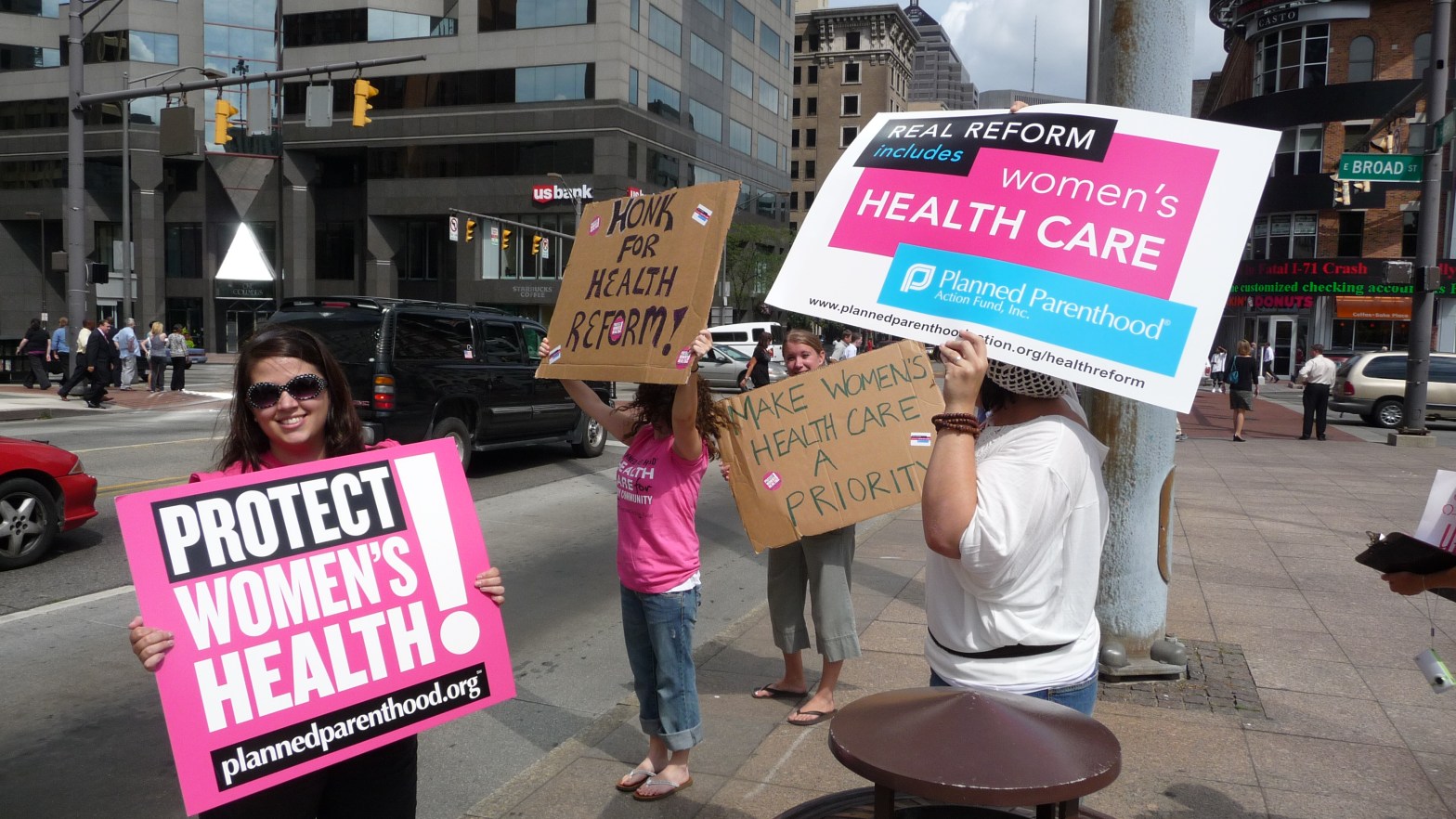
Citizens campaigning for protection of Planned Parenthood in Ohio. Source: Wikimedia Commons.

On 22 February, the Trump administration announced the final version of their new Title X regulations. The changes to the public law are being labeled as the United States’ ‘domestic gag rule’ by sexual health advocates, due to the restrictions now set on what doctors can tell their patients about abortion. Outrage from American citizens has been reported since the draft changes were released, and now that the changes are final, those who currently benefit from Title X have feelings of fear and uncertainty for the future of their health.

According to Planned Parenthood, Title X was established in 1970, and since then has provided “…affordable birth control and reproductive health care to people with low incomes, who couldn’t otherwise afford health care services on their own”. The law allocates funds to public health facilities that provide low-income Americans with comprehensive family planning and reproductive health care, as well as affordable birth control. The federal program is the only one of its kind in the United States, and over 4 million people rely on services supported by Title X funds annually.

The new revisions to the law bar any health care clinic that performs abortions or refers patients to abortion clinics from receiving federal funding. This includes taking direct control over what doctors can say to their patients about abortion; they are no longer allowed to provide any counselling on the matter – counselling that previously was unbiased, comprehensive, and beneficial to patients’ understanding of their medical care. This directly violates both the American constitution and basic medical ethics. The American Medical Association’s Code of Medical Ethics states that “…withholding information without the patient’s knowledge or consent is ethically unacceptable”. As for the constitution, it is widely known that the first amendment prevents the United States government from making laws which restrict American citizens’ right to free speech. Given that the Title X laws will create boundaries for what doctors can and cannot tell their patients, their right to free speech (in their work place) will be effectively restricted by the government and therefore in violation of the first amendment.

The concept of a gag rule has already caused disaster on the global scale. In 2017, President Trump banned federal aid to any international organization that provided and/or discussed abortions. This was catastrophic for Family Health Options Kenya, an organization that went from regularly providing safe and effective reproductive health care for thousands of citizens to closing a devastating number of facilities and leaving many more understaffed. This downsizing ultimately left thousands of Kenyan women, including and especially those from low-income backgrounds, with severely limited access to HIV testing, screening for cervical cancer, contraceptives, and abortion counselling. Before Kenya, the Bush administration’s global gag rule led to an increase in abortions in both Latin America and sub-Saharan Africa from 2001 to 2008.

By restricting patients’ access to information, the Trump administration is putting the health of many vulnerable American citizens in danger. The large majority of American women who benefit from facilities funded by Title X come from demographics that experience obstacles regarding access to health care. According to the Guttmacher Institute, most Title X patients are disproportionately low-income, one-third are people of color, and one in ten have limited English proficiency.

Now, thousands of facilities that provide abortions are forced to choose between no longer discussing or performing the procedure or continuing to provide those services, with the latter resulting in losing significant funds, thereby compromising the quality and amount of reproductive and comprehensive health care they can provide. This means that services such as prenatal care, contraception, STI testing, and life-saving cancer screenings may be more difficult to afford for low-income Americans. What the Trump administration seemingly fails to recognize is that these services make up the vast majority of services that facilities like Planned Parenthood actually provide to patients. Restricting the amount and quality of care that sexual health facilities can provide reduces American women’s overall access to reproductive health care.

Planned Parenthood provides medical care and reproductive health services to 41 percent of patients who receive care from Title X funded services, and is the only provider of publicly funded contraceptives in 103 United States counties. The new Title X restrictions bar these recipients from any access to Planned Parenthood facilities. This attack on American women’s access to health care has been labeled un-American, unethical, and unconscionable. To deny American women access to comprehensive family planning and reproductive health services is to deny them their basic right to proper medical care. When these rules go into effect, it is speculated that the number of unplanned pregnancies, maternal deaths, and unsafe abortions in the United States will significantly increase. For the Trump administration to enact laws that will soon prove to only damage and endanger the lives of thousands of American women is truly baffling and terrifying to many.

The Trump administration will soon be facing Planned Parenthood and the American Medical Association in court. The two groups are suing to challenge the legality of the rule, along with 22 US states. Several other groups, such as the National Family Planning and Reproductive Health Association, are strongly considering joining the legal battle. Many reproductive health advocates and medical professionals are rooting a successful overturning of Title X rules for the sake of protecting the health and lives of millions of American women, and to prove that the federal government’s power does not extend past the laws set by its own constitution.

UPDATE:

On 25 February, a federal judge issued a nationwide injunction which has temporarily blocked the Trump administration’s push for Title X restrictions which would remove federal funding for over 4 million low-income women. US District Judge Bastian states that the Title X restrictions “likely violates the central purpose of Title X, which is to equalize access to comprehensive, evidence-based, and voluntary family planning.” The injunction does not resolve the legal case entirely, but the injunction has been received as a victory for supporters of Title X.

#EditorGemmaForrester #USA #health #womensrights #sexualhealth

The USA’s new "domestic gag rule" and the impending damage to citizens’ lives

People standing on the side of a road holding up posters campaigning for health care.

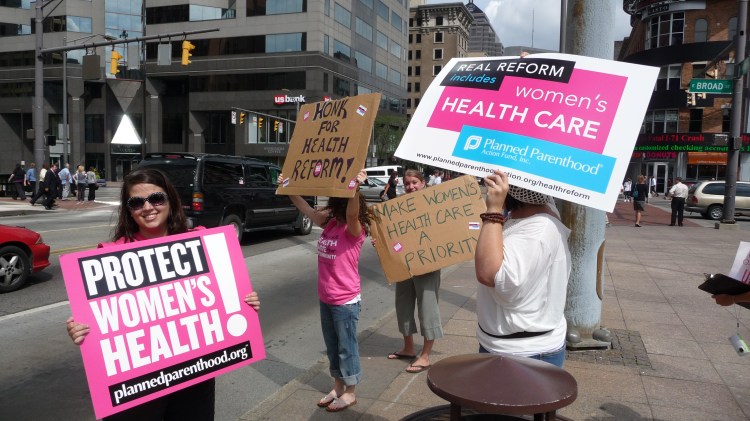
Citizens campaigning for protection of Planned Parenthood in Ohio. Source: Wikimedia Commons.

On 22 February, the Trump administration announced the final version of their new Title X regulations. The changes to the public law are being labeled as the United States’ ‘domestic gag rule’ by sexual health advocates, due to the restrictions now set on what doctors can tell their patients about abortion. Outrage from American citizens has been reported since the draft changes were released, and now that the changes are final, those who currently benefit from Title X have feelings of fear and uncertainty for the future of their health.

According to Planned Parenthood, Title X was established in 1970, and since then has provided “…affordable birth control and reproductive health care to people with low incomes, who couldn’t otherwise afford health care services on their own”. The law allocates funds to public health facilities that provide low-income Americans with comprehensive family planning and reproductive health care, as well as affordable birth control. The federal program is the only one of its kind in the United States, and over 4 million people rely on services supported by Title X funds annually.

The new revisions to the law bar any health care clinic that performs abortions or refers patients to abortion clinics from receiving federal funding. This includes taking direct control over what doctors can say to their patients about abortion; they are no longer allowed to provide any counselling on the matter – counselling that previously was unbiased, comprehensive, and beneficial to patients’ understanding of their medical care. This directly violates both the American constitution and basic medical ethics. The American Medical Association’s Code of Medical Ethics states that “…withholding information without the patient’s knowledge or consent is ethically unacceptable”. As for the constitution, it is widely known that the first amendment prevents the United States government from making laws which restrict American citizens’ right to free speech. Given that the Title X laws will create boundaries for what doctors can and cannot tell their patients, their right to free speech (in their work place) will be effectively restricted by the government and therefore in violation of the first amendment.

The concept of a gag rule has already caused disaster on the global scale. In 2017, President Trump banned federal aid to any international organization that provided and/or discussed abortions. This was catastrophic for Family Health Options Kenya, an organization that went from regularly providing safe and effective reproductive health care for thousands of citizens to closing a devastating number of facilities and leaving many more understaffed. This downsizing ultimately left thousands of Kenyan women, including and especially those from low-income backgrounds, with severely limited access to HIV testing, screening for cervical cancer, contraceptives, and abortion counselling. Before Kenya, the Bush administration’s global gag rule led to an increase in abortions in both Latin America and sub-Saharan Africa from 2001 to 2008.

By restricting patients’ access to information, the Trump administration is putting the health of many vulnerable American citizens in danger. The large majority of American women who benefit from facilities funded by Title X come from demographics that experience obstacles regarding access to health care. According to the Guttmacher Institute, most Title X patients are disproportionately low-income, one-third are people of color, and one in ten have limited English proficiency.

Now, thousands of facilities that provide abortions are forced to choose between no longer discussing or performing the procedure or continuing to provide those services, with the latter resulting in losing significant funds, thereby compromising the quality and amount of reproductive and comprehensive health care they can provide. This means that services such as prenatal care, contraception, STI testing, and life-saving cancer screenings may be more difficult to afford for low-income Americans. What the Trump administration seemingly fails to recognize is that these services make up the vast majority of services that facilities like Planned Parenthood actually provide to patients. Restricting the amount and quality of care that sexual health facilities can provide reduces American women’s overall access to reproductive health care.

Planned Parenthood provides medical care and reproductive health services to 41 percent of patients who receive care from Title X funded services, and is the only provider of publicly funded contraceptives in 103 United States counties. The new Title X restrictions bar these recipients from any access to Planned Parenthood facilities. This attack on American women’s access to health care has been labeled un-American, unethical, and unconscionable. To deny American women access to comprehensive family planning and reproductive health services is to deny them their basic right to proper medical care. When these rules go into effect, it is speculated that the number of unplanned pregnancies, maternal deaths, and unsafe abortions in the United States will significantly increase. For the Trump administration to enact laws that will soon prove to only damage and endanger the lives of thousands of American women is truly baffling and terrifying to many.

The Trump administration will soon be facing Planned Parenthood and the American Medical Association in court. The two groups are suing to challenge the legality of the rule, along with 22 US states. Several other groups, such as the National Family Planning and Reproductive Health Association, are strongly considering joining the legal battle. Many reproductive health advocates and medical professionals are rooting a successful overturning of Title X rules for the sake of protecting the health and lives of millions of American women, and to prove that the federal government’s power does not extend past the laws set by its own constitution.

UPDATE:

On 25 February, a federal judge issued a nationwide injunction which has temporarily blocked the Trump administration’s push for Title X restrictions which would remove federal funding for over 4 million low-income women. US District Judge Bastian states that the Title X restrictions “likely violates the central purpose of Title X, which is to equalize access to comprehensive, evidence-based, and voluntary family planning.” The injunction does not resolve the legal case entirely, but the injunction has been received as a victory for supporters of Title X.

Netanyahu’s Re-election and its Damage to Israeli-Palestinian Relations

United States President Donald Trump and Israeli Prime Minister Benjamin Netanyahu at a press conference in February 2017.

United States President Donald Trump and Israeli Prime Minister Benjamin Netanyahu at a press conference in February 2017.

On the 9th of April 2019, Israeli Prime Minister Benjamin Netanyahu was re-elected, winning his fourth consecutive term and putting him on track to soon be the longest serving Prime Minister in the country’s history. However, Netanyahu’s political standing could be considered very fragile, as he hardly has a coalition formed and faces corruption charges for which he will be put on trial in the coming weeks.

Further, the controversy around Netanyahu’s re-election also extends to the topic of Israeli-Palestinian relations. During his election campaign the Prime Minister promised the Israeli people that he would soon begin annexing the Jewish settlements in the West Bank, a majority-Palestinian territory in the east of Israel that has been a key component of Israeli-Palestinian tensions since Israel gained control of the area in 1967. If Netanyahu follows through on this promise, the future of Israeli-Palestinian relations and any hope for Palestinian self governance and the betterment of Palestinian lives will both be severely harmed and compromised.

When Israel gained control of the West Bank in 1967, it allowed Jewish Israeli citizens to enter and build settlements in the territory, which was already occupied by thousands of Palestinians. This area was, and still is, considered by Palestinians and many members of the international community to be illegally occupied Palestinian land. The official annexation of the Jewish settlements would solidify Israeli power in the majority of the West Bank, therefore demonstrating that the Israeli government does not see the possibility of a two-state solution and Palestinian national identity as even remotely valid.

Many in the Palestinian community are not surprised by Netanyahu’s proposal, having lost hope for a two-state solution long ago. The community has felt that the Israeli government truly gave up on the possibility of a two-state solution years ago, and have already been slowly moving in the direction of annexation for years now. Netanyahu voicing this possibility solidifies this view for them. The Palestinian people are deeply frustrated and outraged because they deserve to belong to a state, especially one that represents their national identity. They know they cannot get this anywhere other than the territories they currently occupy. However small the West Bank territory is, it represents hope for a state existence and the Palestinians must continuously and vehemently fight for it.The Palestinians are not alone in believing they have a right to autonomy. The annexation is in violation of the Oslo Accords, a peace agreement between the Israeli government and the Palestinian Liberation Organization formed in the late 1990s, which was meant to be a stepping stone towards a lasting resolution for their decades-old conflict. The accords allowed the Palestinians some form of self-governance. Though this technically exists today, the annexation of Jewish settlements and potential future annexation of the rest of the West Bank would fully violate this condition. Additionally, what marginal power the Palestinians do have cannot even be truly considered self-governance. Around 60% of the West Bank is fully controlled by the Israeli Army. With an Israeli army presence everywhere in the West Bank, even in areas that on paper are under the rule of Palestinian civil laws and institutions, the West Bank is essentially under majority-Israeli control. And, Palestinians in the West Bank do not have Israeli or any other form of official citizenship, further aggravating their stateless status.

Perhaps most troubling is that Netanyahu’s controversial promise to annex the Jewish settlements in the West Bank immediately puts the lives of Palestinians at risk by igniting an outbreak of violence in the territory. On the night of the 13th of April, Israeli settlers “…stormed a Palestinian village in northern West Bank…vandalizing property and throwing stones at residents…”. This unfortunate act demonstrates what can happen when anti-peace rhetoric is voiced and seemingly accepted at the highest levels of government.

In a letter to the United States President Donald Trump, nine Jewish groups, including the Anti-Defamation League and the National Council of Jewish women, urged the president to stop Netanyahu from following through with the annexation and to keep the possibility of a two-state solution fully on the table. If he follows through, Trump would need to encourage the Palestinians to revisit negotiations facilitated by the United States. However, Palestinian trust in Trump and the United States has recently been significantly compromised. The Palestinian Authority has refused to communicate with Trump’s negotiation team since his decision to recognize Israel’s claim to Jerusalem, and to move the United States embassy from Tel Aviv to Jerusalem.

The Palestinian people have a right to national identity and self-governance, and this obviously cannot be achieved under the near-one-state solution proposed by Netanyahu. The West Bank is already under majority-Israeli control, and thereby violating the Palestinian right to self-governance. A predominance of settlers over Palestinians, with less than half of the territory actually run by Palestinian institutions, is hardly a national identity.

Additionally, Palestinians in the West Bank are not granted Israeli or any other form of official citizenship, making them stateless, which is a direct infringement of their right to belong to a state.

By continuing to make a two-state solution increasingly unachievable, Netanyahu has proven that he has little regard for the wellbeing of the Palestinian people and their right to self-governance,leaving very little hope that his fourth term will bring any renewed progress towards peaceful relations in the region.

Exile in the Modern Age: The Case of Shamima Begum

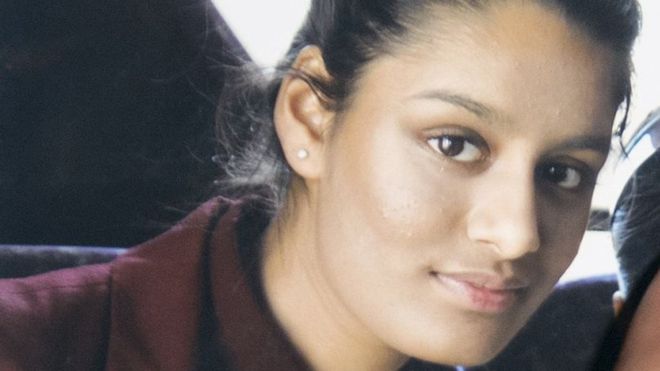
Shamina Begum, PA

Shamina Begum in 2015, courtesy of PA via BBC News

In 2015, at the age of 15, the second-generation Bethnal Green local was radicalised and coaxed into abandoning her home to travel to Syria and join the Islamic State. Within two weeks she was married to 23-year-old Dutch convert, Yago Riedijk. Over the coming years she would lose two children before giving birth on the 17th of February 2019 to her third. She spent her time in the IS controlled city of Raqqa until it fell in 2017, witnessing the her husband’s surrender; she now sits in a refugee camp with her newborn son. Her hopes of being able to return to the UK have been met with clear dismissal by the Home Secretary, Sajid Javid, who has gone so far as to revoke her citizenship. The case of Shamima Begum is a polarising situation, making it hard to avoid getting emotional and losing objectivity. There is a clear conflict between those who empathise with the age of Ms Begum and those are afraid of the possible threat she could be to national security. However, let’s analyse the legality and consequences of the removal of her citizenship, as well as the connotations this has on all British citizens.

Javid’s act functioned in accordance with the British Nationality Act of 1981, whereby the Secretary of State may deprive a person of citizenship if it is conducive to the public good. This is clearly a vague requisite for the removal of one’s citizenship. One can see Javid’s reasoning clearly: disregarding their specific role within that organisation, he condemned all those who were part of the terrorist organisation that conducted or influenced horrendous acts of violence in the United Kingdom in 2017. Yet, as stated by British barrister Lord Anderson, this power is “normally used on people who are serious terrorists or serious criminals, but we don’t know how serious this woman’s criminality was in Syria.”

The crux of the matter is that Javid’s decision will leave Ms Begum stateless, she will now be one of approximately 10 million other people. She neither is, nor will be, a citizen of Bangladesh, like her parents, and as advocated for by Javid. Nor will she be made a citizen of Holland, as desired by her husband. Being stateless will inevitably render Ms Begum vulnerable to gross human rights violations, for in many states nationality is a practical prerequisite for accessing political and judicial processes and for obtaining economic, social, and cultural rights. As a result, she will not be tried by the British judicial system for the acts she is accused of. What makes the matter more questionable is how UK courts are specifically equipped to deal with returning fighters and sympathisers. Therefore, Ms Begum has been stripped of her right to trial due to her ideological positioning, as well as Javid’s belief that there is insufficient evidence to bring to a prosecution.

Article 15 of the Universal Declaration of Human Rights states that “everyone has the right to a nationality” and that “no one shall be arbitrarily deprived of his nationality.” In accordance with this, the British government updated UK citizenship laws in 2014, permitting removal only if the person could become a citizen of another country. As previously stated, alternative citizenship is not possible for Ms Begum, so her parents have valid reasoning for challenging the Home Secretary’s decision. Javid has also faced criticism that he was seeking to exploit populist feeling without proper attention to the law, undermining his reasoning around making her stateless as well as his desire for Bangladesh to resolve the issue rather than the UK.

The Covenant on Civil and Political Rights requires states “to respect and to ensure to all individuals within its territory… without distinction of any kind, such as race, sex, language, religion, political or other opinion, national or social origin, property, birth or other status.” Though Ms Begum’s case is extreme, her time with IS was undoubtedly driven partially by her ideology show by her statements in her interview with the times, “When I saw my first severed head in a bin it didn’t faze me at all. It was from a captured fighter seized on the battlefield, an enemy of Islam.” Yet, a radical ideology is not reason enough to remove a citizenship. A further reason for her departure must be noted: she stated that “My family wouldn’t help me get married in the UK and the way they showed family life in IS was pretty nice.” So one cannot merely condone her behaviour as ideological, as stated by former Met Police Chief Superintendent Dal Babu; in fact, the impact of her interaction with IS could be deemed as “sexual exploitation as well as ideological grooming.” If this is the case, it should be the duty of the British state to take responsibility for its inability to prevent such an act from happening, not to pin the entire affair on the actions of a teenager.

It has been argued that the practice of depriving citizenship from naturalised citizens is discriminatory because it creates a lesser class of citizens. The classification of those ‘lesser citizens’ who hold radical thoughts propagates the feelings of isolation and separation that encourage young individuals to fall victim to radical agendas. Thus, rather than acting as a deterrent, it can be argued that Ms Begum’s exile will encourage the radicalisation it seeks to stem, and provide ideological ammunition for radical agendas. This is particularly relevant to those who are second-generation citizens, as even though they were born in the United Kingdom, it would appear that their position in the state is more tentative than others.

In summary, in accordance with the rights of a British citizen Ms Begum should be brought back to the UK and tried for her actions by the judicial system. Yet there is still another layer to this matter – the Home Secretary ultimately stripped a UK citizen of her rights in an appeal to populism due to radical ideological differences. Does this imply that all of our citizenships are conditional? Regardless of Ms Begum’s innocence or guilt, and regardless of her ideology or religion, she should not be denied the trial that she is entitled to –nor should she be cast into the treacherous world of statelessness.

Können wir den Wohltätigkeitsorganisationen noch vertrauen?

This is a translation of Nitya Agarwal’s article Can we still trust charities? To read a Chinese translation of her article,followthis link.

Als menschliche Wesen legen wir großen Wert auf Eigenschaften, die uns qualifizieren gute Menschen zu sein. Einige der wichtigsten Kriterien sind, die Großzügigkeit und das Mitgefühl. Um diese Eigenschaften zu erreichen, sind Leute in insbesondere privilegierten Regionen der Welt oft bemüht, sich mit Wohltätigkeitsorganisationen beschäftigen. Aber werden die Organisationen, die wir unterstützen, auch wirklich diese Ziele erreichen? Mit dem Aufstieg der sozialen Medien und des digitalen Marketings, haben Wohltätigkeitsorganisationen eine zugängliche Plattform gewonnen, um ein größeres Publikum zu erreichen, ihre Botschaft zu verbreiten, und dort um Spenden zu bitten, egal ob durch Werbung oder durch Pop-Ups auf Online-Plattformen. Obwohl das theoretisch zu einer Erhöhung, der Spenden und Unterstützung für diese Organisationen geführt haben sollte, haben Studien gezeigt, dass das Vertrauen in diese Organisationen seit 2017 in der breiten Öffentlichkeit um 6 Prozent gesunken ist, 33 Prozent der Befragten sahen den Grund dieser Abnahme in der Änderung der Medienberichterstattung.

Die Sichtbarkeit der entmutigenden und unmoralischen Skandale, in der Arbeit der bekannten Wohltätigkeitsorganisationen hat zugenommen, weil die Medien als Plattform fungieren und hier die Transparenz gewährleisten. Wie im Bericht der Charity Kommissionen von England und Wales vom Juli 2018 angegeben, erlangen Wohltätigkeitsorganisationen im Punkt „Vertrauen“ nur den Platz 5 in der Öffentlichkeit und liegen somit 0.2 Punkte unter dem Vertrauen, dass die Öffentlichkeit einen durchschnittlichen Fremden auf der Straße geben würden. Der Bericht zeigt, dass die negativen Nachrichten über die Arbeit dieser Organisationen und ihre übermäßigen Werbekampagne eine Welle von Zweifel geschaffen haben, ob ein Großteil des gespendeten Geldes, tatsächlich die den Spendern versprochenen Begünstigten erreicht. Das Vertrauen in die Auslandshilfe hat sich auch von 40% auf 36% reduziert, hauptsächlich aufgrund der expliziten ethischen Verstöße von Wohltätigkeitsarbeitern, die in weniger wirtschaftlich entwickelten Ländern bekannt wurden. Das aktuellste und schockierendste Beispiel dieser Offenbarung wurde durch eine Untersuchung von „The Times“ im Januar 2018 aufgedeckt, nämlich das Fehlverhalten einiger Mitarbeiter bei Oxfam nach dem Erdbeben von 2010 in Haiti, diese Personen haben Frauen und Kinder sexuell ausgebeutet im Austausch für Lebensmittel und anderen Ressourcen. Oxfam GB wurde nach der erzwungenen Entlassung von neun Personen, von der Bereitstellung der Entwicklungshilfe für Haiti abgehalten und tausende regelmäßiger Abonnementsspenden wurden ebenfalls gestoppt.

Das Misstrauen gegenüber gemeinnützigen Organisationen stammt nicht nur aus dem groben Fehlverhalten welches aufgedeckt wurde, sondern auch aus der Tatsache, dass sie sich diese Missstände so lange verbergen konnten. Die vorgenannten Missbrauchsvorwürfe der Oxfam-Arbeiter war seit 2010 andauernd,

aber erst acht Jahre später und nach intensiver Medienuntersuchung kamen sie ans Licht. Die Leiterin der Überwachung bei Oxfam, Helen Davies, behauptet, dass trotz ihrer im Jahr 2015 geäußerten Sorge über die Behandlung von den Frauen in Ressourcenlagern in Haiti, niemand auf ihre Worte reagierte, was weiter die interne Misswirtschaft der Verstöße aufzeigt. Erst jetzt sind die Vorwürfe veröffentlicht worden und Oxfam GB ist mit den Konsequenzen konfrontiert worden, wie sich auch durch den Rücktritt von Penny Lawrence (die ehemalige Geschäftsführerin von Oxfam GB) zeigte, denn sie hat jetzt „die volle Verantwortung“ für die verursachten ‘Schäden und Leiden’ übernommen. Das ist nicht der einzige Fall für große organisatorische Vertuschungen, wie eine ähnliche Situation während des Skandals von Barnardos 2017 zeigt. Viele Gruppen haben Bedenken über die Missachtung vieler Missbrauchsfälle von Patienten in Barnardos Pflegeheimen von den 1960er bis 1980er Jahren geäußert, denn der Anwalt der Organisation in der obersten Gerichtsverhandlung gab zu, dass Barnardo’s sich der Vorwürfe bewusst waren aber sie hielten es nicht notwendig, die Aufzeichnungen aufbewahren, die als Beweismittel in Strafsachen verwendet werden hätten können . Diese systematische Vernachlässigung durch Wohltätigkeitsorganisationen, ihre Arbeiter zu beaufsichtigen und die mangelnde Verantwortlichkeit die sie haben, wurden in dem schlechten öffentlichen Bild der großen Organisationen reflektiert, denn 74% der Menschen fühlen sich jetzt unwohl, öffentliches Geld für diese Wohltätigkeitsorganisationen zu spenden.

Nach dem Rückgang der öffentlichen Unterstützung, erklärte der Vorsitzende der UK Charity Commission, William Shawcross, „es ist ein Weckruf für alle, die die Wohltätigkeit in diesem Land unterstützen” und er kritisierte vor allem „schlechte Mittelbeschaffung, unangemessene Datenfreigaben und Handelsbeziehungen“. Obwohl es lange überfällig ist, haben Abgeordnete und Beamte sich gegen unehrlich und unethische Wohltätigkeitsarbeit gewappnet und sie warnen Organisationschefs und bieten ihnen eine letzte Chance, „ihr Haus in Ordnung zu bringen“. Nicht nur müssen Missbrauchsvorwürfe ernster behandelt werden, sondern es soll auch die Verantwortlichkeit für die Datenkontrolle und Vertraulichkeit öfter geprüft werden. Eine von der Regierung in Auftrag gegebene Überprüfung von Sir Stuart Etherington präsentierte neue Vorschläge, dass eine oder ein neue Supervisor für die Industrie ernannt werden könnte. Verbesserte Überprüfungen des Managements und der Führung wird zukünftig bei Nichteinhaltung bedeuten, dass große und teilweise staatlich subventionierte Unternehmen mit gesetzlichen Regelungen konfrontiert werden, was ihre weltweite Reichweite und Methoden der Mittelbeschaffung beschränkt wird.

Obwohl es immer umstritten sein wird, dass solche Regelungen und Richtlinien ausreichend sind, um diese Skandale zu verhindern, ist es realistisch die Aufgabe der einzelnen Wohltätigkeitsorganisation sicherzustellen und auch sicherzustellen, dass der ethische Kodex, der versprochen wurde, eingehalten wird. Dass die Transparenz zu den Gebern regelmäßig gewahrt wird. Wie Bond, dass internationale Entwicklungsnetzwerk zusammenfasst: „NGOs müssen die Menschen vor Missbrauch schützen, die Misshandler zur Rechenschaft ziehen und die Betroffenen ermutigen, vorwärts zu kommen, um Vorfälle zu melden.”

Wir können nur hoffen, dass sich in der Zukunft alle Wohltätigkeitsorganisationen an diese Prinzipien halten werden und unser Vertrauen in sie langsam aber stetig wiederhergestellt wird.

我们能相信慈善机构吗?

This is a translation of Nitya Agarwal’s article Can we still trust charities?

作为人类,我们将高社会价值放在使我们成为好人的条件上,一些最重要的标准是慷慨和 善良。在世界上特别优越的地区,人们渴望与慈善机构合作以实现这些特征,但我们支持 的组织是否真正实现了这些目标?随着社交媒体和数字营销的兴起,慈善机构已经获得了 一个更容易接入的平台,可以通过广告或互联网平台上的弹出窗口来吸引更多的受众传播 他们的信息并要求捐赠。虽然这在理论上应该增加捐赠和支持这些慈善机构的基础,但研 究表明,自2017年以来,公众对这些组织的信任度下降了6%,其中33%的受访者将这一 原因与此媒体报道联系起来。

由于媒体作为一个平台,使这些组织的工作具有透明度,因此在知名慈善机构的工作中发 现的令人沮丧和不道德的丑闻的可见度有所增加。正如英格兰和威尔士慈善委员会2018 年7月的报告所述,慈善机构是第五大最值得信赖的公众人物,比公众对街头普通陌生人 的信任要低0.2分。该报告指出,关于慈善机构工作及其过度广告活动的负面新闻故事引 发了一股怀疑,即捐赠的金额中是否有相当大一部分确实达到了承诺给予捐赠者的受益 人。对海外援助的信任度也从40%下降到36%,这主要是由于在经济欠发达国家发现了 关于慈善工作者的明显道德违规行为。 2018年1月,“泰晤士报”对2010年地震后海地乐施 会的工作人员助手的不当行为进行了调查,揭露了这一启示的最新和令人震惊的例子。此 后,英国乐施会被禁止向海地提供发展援助,在发现他们有性剥削儿童和妇女以换取食物 和资源后强行解雇了9人之后,数千名定期订阅捐款已经停止。

慈善组织的不信任不仅源于发现的严重不当行为,而且还能够长期隐藏这些问题。自 2010年以来,乐施会工人的上述虐待指控一直在进行,但经过媒体密集调查后,八年后 才曝光。乐施会的保护负责人海伦戴维斯称,尽管2015年对海地资源营地的妇女待遇表 示担忧,但没有人对她的言论采取行动,暗指对这些违法行为的内部管理不善。直到现在 才公开这种影响,Penny Lawrence(英国乐施会前副首席执行官)在丑闻发生后辞职, 因为她现在对“伤害和痛苦”造成了“全部责任”。这并不是大型组织掩盖的唯一案例,因为 巴纳多在2017年的丑闻中也出现了类似的情况。许多团体已经提出关于巴纳多的护理院 中许多虐待病例的无视,可追溯到20世纪60年代 – 20世纪80年代,慈善机构的律师在最 高法院听证会上承认Barnardo意识到这些指控,但并不认为有必要保留可能被用作刑事 案件证据的记录。慈善机构对管理他们的工人及其所承担的问责制的这种系统性忽视反映 在对大型组织的不良宣传中,因为74%的人现在对这些慈善机构的公开募捐感到不安。

在公众支持率下降之后,英国慈善委员会主席威廉·肖克罗斯表示,“这对于支持这个国家 的慈善事业的所有人来说是一个警钟”,将错误归咎于’不良筹款,不恰当的数据共享和商 业关系”。国会议员和公职人员虽然已经过期,却打击了不诚实和不道德的慈善工作,并 警告慈善事业老板,他们正在最后一次“让他们的房子井井有条”。不仅会更严肃地对待滥 用指控,而且会更频繁地检查对数据控制和保密的责任,因为政府委托Stuart Etherington爵士进行审查,提出了为行业召集新主管的建议。未能遵守强化管理检查意 味着大部分政府资助的公司将面临法定监管,限制其全球拓展和筹款方法。

虽然总是存在争议,即法规和政策还没有达到足以减少这些丑闻的程度,但慈善机构本身 仍然可以确保其功能得到其承诺的道德准则的支持,并且其捐助者的透明度是定期维护。 正如国际发展网络邦德所总结的那样:“非政府组织必须保护人们免受虐待,让滥用者承 担责任,并鼓励受影响的人前来报道事件。”我们只能希望将来慈善机构能够与这些原则 保持一致,而且我们对这些原则的信任将会缓慢但肯定地得到恢复。

How to Make a Humanitarian Crisis Worse

President Nicolas Maduro of Venezuela was quoted recently saying that he is refusing international aid for his country, because he doesn’t want Venezuelans to be ‘beggars’. The need for aid was sparked by the current disastrous financial situation of the country. One study concluded that the annual inflation rate reached 1,300,000% in the 12 months leading up to November 2018. With the GDP falling, lack of medical supplies and limited food supplies causing increased prices, Venezuelans are leaving the country in droves. 63% of Venezuelans lost an average of 11.4kgs in 2017 due to lack of food. The need for humanitarian aid is dire.

Venezuela has seen great turmoil in recent months, adding extra stress to an already vulnerable situation. On 23 January, the leader of the Venezuelan legislature, Juan Guaidó declared himself acting president, refuting Maduro’s authority. Maduro had just been sworn in for his second six-year term amongst claims of corruption under his administration and within the election. Additionally, while Maduro took on a failing economy in his first term,little was done in alleviating the issues; popular discontent grew. So much so that the legislative assembly that Guaidó headed did not recognize Maduro’s election. Because they believed that Maduro was not freely elected to office, the National Assembly argued he was a ‘usurper’. Under the Venezuelan Constitution, that makes the Office of the President vacant and places power with the leader of the National Assembly. The United States and other countries have recognized Guaidó as the president. Obviously, Maduro does not accept this logic, and has maintained that he is the constitutional president. He also claims that the United States is behind Guaidó’s claims of the presidency.

This conflict has only heightened the issues Venezuela is facing. The need for medical supplies and food is extreme, and the international community has recognized such these issues. Cases of malaria, measles, and diphtheria are spiking across the country. Venezuelans are starving. The United States and Canada have airlifted supplies to Colombia, with hopes to drive it across to Venezuela, but Maduro has blocked the Tienditas International Bridge that runs between Colombia and Venezuela, making the aid undelivered.

The blockade, made up of a fuel tanker, cargo trailers and makeshift fencing, across the Tienditas International Bridge

Courtesy of the Associated Press via Washington Post

Colombia’s President Juan Manuel Santos has called for the blockade to stop, as it could help stem the tide of Venezuelans fleeing to Colombia. Colombia has struggled with the extreme influx of refugees, and Santos’ frustration was clear in his statement. He said: ‘This is the result of your policies; it’s not the fault of us Colombians’. Maduro continues to stand by the decision, despite the horrific conditions within the country. Delegates from Mexico, Brazil, Colombia, Peru and the United States have also called for Maduro to open the bridge and allow the assistance into Venezuela.

Guaidó has pledged to bring $60 million of aid across the border and into Venezuela, despite Maduro’s support from the military in the blockade. Maduro has also been distributing propaganda to convince Venezuelans of the threat the aid posts. One video argued that the aid would bring ‘lust-filled foreign “peacekeepers”… on their way to rape their way through Venezuela’.

Politics are at the heart of this human rights crisis. Maduro is transfixed with the political elements of the international assistance, and takes no note of the humanitarian crisis at hand. The blocking of aid to enter the country is a violation of Venezuelans’ human rights. While living through a corrupt administration, Venezuelans have had their human rights ignored. This decision by Maduro is a continuation of such. His political maneuverings are prioritized over basic necessities for his people. His citizens are literally dying from starvation and lack of proper medical care; two things that could be easily remedied by allowing the humanitarian assistance to reach Venezuela.

Venezuelans have taken to the street to protest Maduro and his government. There has a violent crackdown on these protests. There have been 26 reported deaths and 364 people detained. Tear gas has been used and journalists have allegedly been attacked and detained. This is not new behavior from security forces in Venezuela, who regularly suppress groups (particularly political groups) through force. Human Rights Watch commented that, ‘Venezuelan officials should be held accountable if security forces resort to the same repressive tactics they have used in previous crackdowns against anti-government protests’.

A humanitarian crisis in Venezuela is worsening by a culture of human rights abuses in Venezuela. Lives are being lost because political gains are being valued over the security of human life. The international community should move quickly to condemn Maduro’s behavior and to save lives.

A Profile of South Sudan

With an increasingly rapid technology-driven news cycle, ongoing worldwide political crises occupy space in the collective consciousness for less and less time, with the exception of a few intermittently covered hot-button issues. Issues receiving particularly minimal attention also tend to be those with little to no relation to Western peoples, which in turn leads to a lack of awareness and aid from Western powers.

The human rights abuses in South Sudan are an ongoing example of this phenomenon; the UN and other international organizations may address them, but the general public of the West has little knowledge of them, despite the fact that there is no indication of the current situation de-escalating.

What is South Sudan?

South Sudan has only legally been an independent state since 2011 and has been undergoing a civil war since 2013, but the state experienced tumult well before its recent de jure status as Sudan was wracked by civil war and its considerable consequences for much of the twentieth century.

The state comprises several Nilotic ethnic groups (many nomadic in lifestyle) which have long experienced ethnically based conflicts, both with each other and within themselves, which some have argued in recent years constitute genocide.

The South Sudanese Civil War

The current civil war broke out after a clash between President Salva Kiir Mayardit (who has been president since the nation gaining independence in 2011) and his former deputy, with both Ugandan forces and UN peacekeepers stepping in to aid the official South Sudanese government in fighting against rebels, which have had their own recurring issues of infighting.

The war has resulted in 383,000 deaths as of September 2018 and the displacement of millions of people. Peace deals have been reached but have done little in practice to halt scorched-earth war crimes, and the UN put out a report in mid-February of 2019 that ‘sexual violence’–mass rape–is on the rise. These abuses are helped in no part by contention over the state’s oil industry. War-worsened hunger and disease have also been major issues in the region.

Little Resolution in Sight

Despite the UN devoting its own mission to the South Sudanese crisis (UNMISS), peacekeeping efforts have generally failed to affect any major change in the situation (a somewhat recurring theme with UN peacekeeping in African conflicts–see Rwanda). The ineffectiveness of the peace deal thus far has already set a precedent for empty peace agreements and the original timeframe for its full implementation has almost elapsed. In order for the situation to improve, effective outside aid with ongoing issues of hunger and restructuring the South Sudanese government will be needed. As for what concerned individuals can do, helping to increase public awareness and non-governmental aid efforts as with other human rights issues would be beneficial.

States, NGOs and the UN Get Ready for CSW63

As the Commission on the Status of Women prepares to open in New York, Jessica Craig looks at the upcoming event, the Commission’s history and its historical successes as a forum for advocacy for gender equality.

Between 11th and 22nd March, representatives of the United Nations member states, UN entities and non-governmental organisations will gather at the UN Headquarters in New York City for the Commission on the Status of Women (CSW) 63.

The CSW is the primary intergovernmental body for the promotion of women’s rights, empowerment and gender equality. Through annual assessment of the status of women across the world, the CSW considers how the existing codification of women’s legal rights is being enforced and what barriers remain for women. The annual conference also provides an opportunity for the UN, with input from civil society organisations, to formulate priorities to further the promotion of gender equality internationally.

The priority theme for this year is ‘Social protection systems, access to public services and sustainable infrastructure for gender equality and the empowerment of women and girls’. A secondary review theme, relating to the conclusions of the 60th session on the theme of ‘Women’s empowerment and the link to sustainable development’, will also be discussed at this year’s event to address progress on this issue so far.

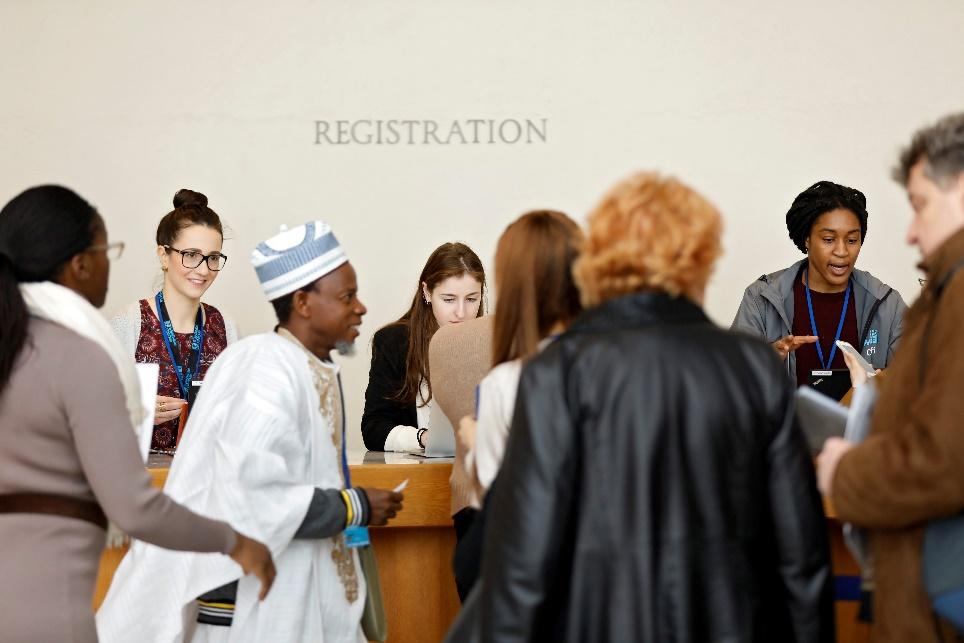
Five delegates registering at the CSW62

Delegates arrive and register on the first day of CSW62, 12th March 2018. Source:Ryan Brown/UN Women, via Flicr.

The main outcome from each year’s meetings are the agreed conclusions relative to the priority theme. They involve recommendations to governments, civil society organisations and other stakeholders about how to implement solutions on the priority theme at local, regional, national and international level. Negotiations on the agreed conclusions begin before the Commission is held in March and a ‘zero draft’ of this year’s priorities is available to read now. The draft agreed conclusions are distributed to all stakeholders to review ahead of the session so that Member States (informed by the work of NGOs and other stakeholders) can make their own contributions to a collaborative outcome.

The Commission on the Status of Women was established in 1946 as a sub-commission to the Commission on Human Rights, but many advocates believed that the issue of gender equality and women’s empowerment should be made a priority, and the CSW was subsequently established as a fully-fledged commission on 21st June 1946. The first meeting of the Commission was held in February 1947 at Lake Success, New York and all 15 representatives at the Commission’s first meeting were women.

The Commission has been a key actor within the UN in the promotion of frameworks to prevent discrimination against women. Among the Commission’s successes are its role in the drafting of the Declaration on the Elimination of Discrimination against Women (adopted by the UN General Assembly in 1967) and the later Convention on the Elimination of All Forms of Discrimination against Women (1979).

To celebrate its 25th anniversary in 1972, the Commission recommended that 1975 be made an International Women’s Year. The year 1975 saw the First World Conference on Women held in Mexico City and kicked off the United Nations Decade for Women: Equality, Development and Peace. The first World Conference on Women was followed by additional World Conferences in: Copenhagen (1980); Nairobi (1985); and Beijing (1995), which produced the Beijing Declaration and Platform for Action, at the time ‘the most progressive blueprint ever for advancing women’s rights’.

The 2018 meeting of the Commission, its sixty-second session, focussed on achieving gender equality and empowerment for rural women and girls. The agreed conclusions for this session included: strengthening normative, legal and policy frameworks; pursuing economic and social policies to empower all rural women and girls; and strengthening the collective voice, leadership and decision-making capacity of rural women and girls.

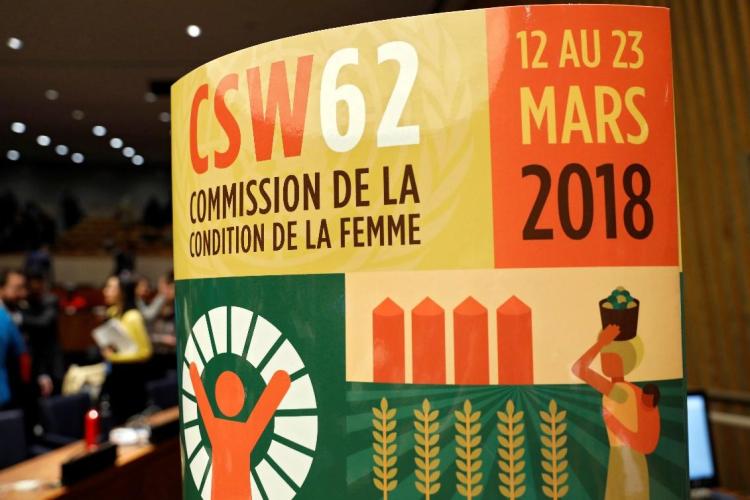
An image of the poster for CSW62, 2018.

Last year’s Commission focussed on the status of rural women and girls. Source: Ryan Brown/UN Women, via Flickr.

The Commission on the Status of Women is important as it is the chief policy-making body for women’s rights and gender equality within the UN system and provides a platform for review of the successes and limitations of efforts to promote gender justice. Additionally, the CSW is not just about states: it allows advocates to take local and regional issues to an international platform and helps to strengthen the international feminist network by providing space for activists to build networks.

However, the space for civil society participation may now be shrinking. Around 3900 civil society representatives attended the CSW61, however this number was down from previous years as a result of the US visa ban. There is limited space within the actual negotiations of CSW for civil society participation, though non-state actors can influence the outcomes of the conference through advocacy and participation in side events.

Some states, such as Australia, include civil society representatives in their official delegation to ensure that their valuable insights are utilised, which demonstrates the critical role that civil society actors play in the promotion of women’s rights and gender equality.