The Double Threat of Covid-19 and Wildfires on California’s Migrant Workers

Image taken from Unspalsh, by Marcus Kauffman; graphic by Rachael Millar

By Sarah Booher

That glass of wine, those strawberries in the morning, those grapes you eat as a snack; California’s central valley has been dubbed the ‘Salad Bowl of the World’ for the mass amount of produce that it provides not only to the US, but across the globe. The majority of agricultural work in California is done by migrant workers, primarily from Mexico and elsewhere in Latin America, half of whom are undocumented citizens. Already an incredibly vulnerable population, the double whammy of Covid-19 and wildfires have forced California’s migrant workers into unbearable conditions.

The spread of Covid across the United States prompted California to designate over 381,000 people in the state’s agriculture industry ‘essential workers,’ according to the University of California, Merced. The paradox is that despite being deemed ‘essential’ to the country’s workforce, those workers who are undocumented were ineligable for federal financial support. In communities that are already reliant on seasonal and output based work to make a living, the consequences proved dire. Forced to work while the pandemic surged, the agricultural community in Monterey County reported three times as many Covid cases compared to the rest of the county’s population. Often faced with the additional hindrance of language barriers, labourers were placed in a position in which they were not made unaware of their rights. ‘We felt like they would tell us. They would take precautions. But they didn’t,”  Marielos Cisneros said of the nut harvesting plant in which she worked. Following an outbreak in that same plant that resulted in over 151 covid cases, Roxana Alverado remarked, ‘they took away my right to choose whether to expose my family and myself to Covid when they didn’t inform us what was going on.’ Despite workers reporting taking precautions themselves at home, the subcontracted nature of the agriculture industry has created a system in which there is very little holding employers accountable. Workers need the money, and those who are undocumented fear speaking up for risk of deportation.

This was at the beginning of the summer. In August, wildfires began to spread rapidly across the state. Smoke blanketed the skies and people woke up to a layer of ash on their cars. In some areas, the air-quality index (the official designator of how much pollution is in the air) was determined to be the most unhealthy in the world, surpassing Delhi and Beijing. The state has mandated that employers provide workers with masks when the air quality reaches unhealthy levels. However, the reality is far more concerning. According to Movimiento Cultural de la Unión Indígena, workers say they are more likely to ‘receive a mask from a nonprofit than their supervisor.’ Employers have also exploited loopholes that allow workers to stay in areas that have been evacuated due to fire risk. In Sonoma County, where much of California’s wine is produced, workers have been allowed to stay behind because they are deemed crucial to harvesting food for the rest of the country. 

Dependent on seasonal labour, workers typically rely on their earnings from the summer harvest to see them through the winter, thus the incentive to continue working in such conditions was high. Rosa Villegas who picks lettuce in California’s central valley said of working in the smoke, ‘our eyes were red and stinging, but we worked full days.’ The smoke has triggered asthma attacks, with some labourers even having ended up in the hospital as the result of working under prolonged smoke exposure. ‘There is often a culture where if you speak up or say you don’t want to work, you may be seen as someone who is lazy or doesn’t want to work and you may not be called back for the next harvest,’ according to Lucas Zucker of the Central Coast Alliance United for a Sustainable Economy. Forced into the impossible position of trying to provide for their families amidst the pandemic, migrant workers have been left with little choice but to keep working under such conditions. 

Responsible for providing the produce that makes up California’s forty-seven billion dollar agriculture industry, migrant workers are an integral part of the state’s workforce. Already struggling to survive under the pandemic economy, the wildfires that cut short the summer harvest forced workers to make unbearable choices. Faced with the added obstacles of language barriers and the fear of deportation, the plight of California’s migrant workers has been ignored for far too long. The next time you reach for a handful of almonds or a bottle of wine, take a moment to consider the people who have continued to work throughout the pandemic, under smoke filled skies, to provide your food. 
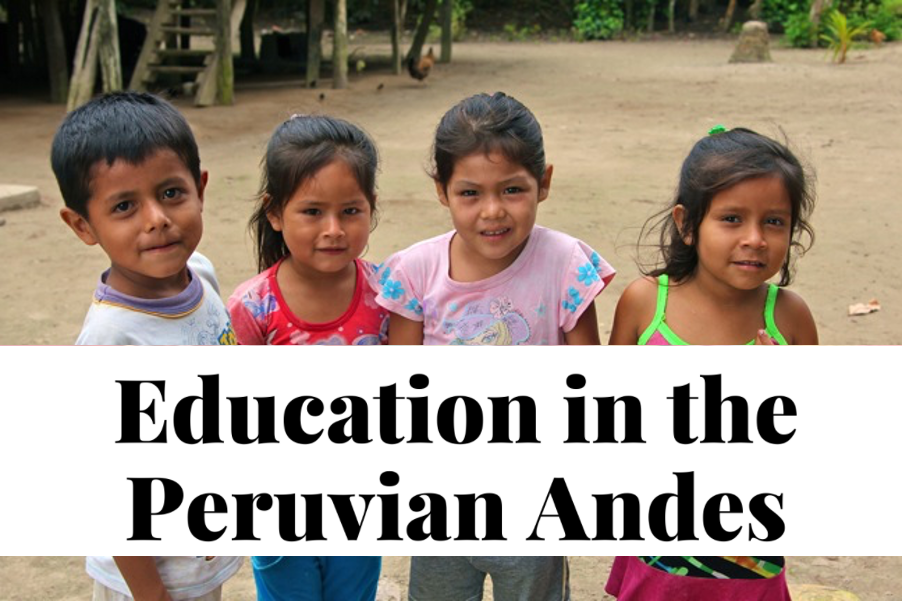
Education in the Peruvian Andes

Taken from Green Global Travel ; by Brett Love.

Written by Olivia Bastin

As Nelson Mandela said, “Education is the most powerful weapon which you can use to change the world”. As Victor Hugo said, “He who opens a school door closes a prison”. And as Anthony J D’Angelo said, “Develop a passion for learning. If you do you will never cease to grow”. Education is an integral tool which enables us to understand the world we live in, fathom who we are, and create a brighter future for all of us. It is easy to take education for granted despite it being a luxury in some parts of the world. It is easy enough to think I’ll skip a lecture or a class if deadlines are getting to be too much however, we are lucky to be receiving education in the first place. When strolling along Market street to a class in the Quad remember that some children have to walk miles to school, cross dangerous parts of a city everyday just to receive an education, or are not even seen as worth educating due to cultural concepts regarding the importance of their gender. This is the harsh reality of education, race, gender, socio-economic background, culture, politics and geography which play a major role in the imbalance of access to education all over the world. 

Peru is located in Western South America. Their main export is gold and copper, yet it is important to bear in mind that 54 per cent of the population live below the poverty line. However, due to socio- economic growth poverty has declined over recent years. Education in Peru is mandatory for children aged 7 to 16 and secondary education is free, yet only 3 out of 10 children continue onto higher education. However, there is a big disparity between education in urban and rural areas. For example, the population is around 30 million and 22 per cent live in rural areas.  

In Pampa Coris, rural inhabitants do not have the same access to education that their city dwelling counterparts do. To take classes, children have to gather around the one WiFi router they have. Given the current global pandemic their classes have been put on hold. Normally they would walk miles to get to school through challenging terrain. These schools are not well equipped, and children of all ages are put into one class. The teachers are paid very little and are expected to know Quechan – an indigenous language linking back to pre-colonial Peru and to the Incan Empire. Nealy 56 per cent of students in rural areas are not provided education in their mother tongue. Teachers get very little notice, are not able to extensively plan classes in advance, and are constantly worried about being fired. Education is much harder to access than it would be in Lima. 

I am part of a project with the Hispanic Society where I teach English to students from one of these communities. They are the sweetest children and their curiosity to learn is astounding. They crowd around my laptop and all want to speak at once. They are adorable and I am so grateful to be learning more about their culture and lives. The good news is the government is taking steps to reduce poverty and increase access to education. Peru’s Ministry of Education has put forward the Alternate Education for Rural Development. This project has helped nearly 3000 children in 40 rural schools in 11 regions. Other charities also help promote education like Peruvian Hearts. They help Peruvian girls attend high school and university by offering them large financial scholarships. But is this enough? There is still a large disparity where rural communities suffer more than urban communities.  

In conclusion, Peru has a large gap in providing access to education in rural and urban places. Many children in rural locations trudge through treacherous landscapes to turn up to classes which are not even in their native language, where they are then bundled together with other kids of all ages. How is this fair? All children should have equal access to education; it is integral in terms of improving one’s situation and personal development. Education enables us to see the world through another perspective- we can see their world, but can they see other worlds? Education is a human right and no child should be denied access to it because of where they live.  

The US Supreme Court and a Third Trump Nominee, Explained

By Louise Palmer

On 12th October 2020, mere weeks away from the US Presidential Election, the Senate confirmation hearing for President Trump’s third US Supreme Court nominee began. It is undoubtedly poor political form to make a nomination so close to an election. However, due to the fact that we are in the fourth year of the Trump administration and months into a global pandemic, the decision didn’t come as much of a surprise.  Nonetheless, the current nomination is highly significant. Should Amy Coney Barrett be confirmed as a US Supreme Court Justice, there will be a 6-3 conservative majority. Although an upset is possible, the nomination will probably be successful given the Republican majority in the Senate. The current administration is skilled at pushing through Supreme Court nominations.

If Barrett is confirmed, the conservative majority on the Supreme Court will last for the foreseeable future, possibly even a generation. This will undeniably lead the US in a conservative direction. Previous decisions which protect liberty and human rights are in danger of being overturned. The most obvious ruling in question is Roe vs Wade (1973), which legalised abortion in all US states under the fourteenth amendment of the Constitution. Under mounting religious pressure it is extremely likely a challenge will arise, endangering a woman’s control to make her decisions about her own body. This is only one example of the impact a conservative Supreme Court will have on everyday life in the US. To understand the implications of a conservative majority on the Supreme Court, you must understand the basic workings and structure. 

Most of us know that the US Supreme Court is the highest judicial body in the USA. In fact the court is given its power from the US Constitution. Most cases will go through a system of lower local and state courts and proceed to the Supreme Court only if they are concerning key legal interpretations or the lower courts have ruled differently on the same matter. Cases will also go to the Supreme Court if they are concerning disputes between states or regarding certain individuals such as diplomats. To this end, I offer a brief guide to understanding the US Supreme Court to all those confused by the seemingly convoluted system.

How the Supreme Court works

Since 1869 there have been nine Supreme Court justices (called Associate Justices), led by a Chief Justice, although the number is set by Congress, so it has the possibility to change. The justices hear each case and individually give their verdicts. The number of justices means that there is not a tied vote, with the Chief Justice often giving the deciding verdict. These rulings are legally binding and must be followed by lower courts. Supreme Court justices are nominated by the President and then face televised hearings from the Senate Judiciary Committee. The nomination will then go to a full vote in the Senate. If successful, the President will formally appoint the Justice to the Supreme Court.

This appointment is for life and justices often serve until retirement or death. The lifelong nature of the role has a significant impact, as a successful nomination will continue well past a single presidency. Given this fact, previous administrations have valued strongly apolitical candidates. However President Trump has disregarded an apolitical approach in favour of nominating those who support him. That brings us back to the current hearings regarding nominee Amy Coney Barrett. She was nominated to replace the late liberal justice Ruth Bader Ginsburg, a progressive justice who is remembered for her strong commitment to gender equality. Barrett comes from the opposite end of the political spectrum. Leaving aside Barrett’s alleged links to the highly secretive and paternalistic Catholic group, the People of Praise, she has a record of favouring both pro-life organisations and pro-gun rights. Interpretations of law, beliefs and political leanings influence a justice’s perspective, and it is clear Barrett will favour a conservative reading. This becomes particularly significant when viewed alongside her potential future colleagues. They include the current Chief Justice John G. Roberts, who is conservative but occasionally takes a liberal stance in certain cases. The other four conservative justices are Clarence Thomas, Samuel Alito, and the two Trump nominees Neil Gorsuch and Brett Kavanaugh. The three liberal justices are Stephen Breyer, Sonia Sotomayor and Elena Kagan. Therefore, another conservative justice such as Barrett would create a 6-3 majority. What would the implications of this be for key issues and human rights?

What does another Conservative on the bench mean?

To put it bluntly, the implications would be far-reaching. There are key votes coming up this year in the Supreme Court. Most notably, an upcoming hearing concerning Obamacare, which has the ability to dramatically affect medical coverage for millions of Americans. Previous cases also illustrate the areas which could prove contentious. The Supreme Court has played a key role in areas such as LGBT+ rights. For example, in 2015 Obergefell v Hodges granted the right to same-sex marriage and recognition of this in all states. Issues regarding LGBT+ rights in areas such as adoption are still very much relevant and it is possible these could come before the Supreme Court in the coming years. On a different note, many commentators have raised concerns about the impact of a conservative court on voting rights. In the past, rulings in the Supreme Court have protected ethnic minorities from discrimination in registering to vote, such as in the 2013 Shelby County v. Holder case. It is likely a conservative court will not follow this previous pattern. Above all the issue which has received the most attention is reproductive rights.

At risk is the benchmark ruling in Roe vs Wade. This ruling has proved to be an extremely divisive issue. In some liberal states there has been a growing commitment to the freedom to access safe abortion. However, in many conservative states (often found in the South) restrictive state laws have been passed to limit access to services. These restrictive laws have been challenged through the US Supreme Court. For example, a restrictive Louisiana abortion law was ruled to breach women’s right to abortion as enshrined in Roe vs Wade. This victory, which ensured reproductive rights for over one million women, was only won on a margin of 5-4. This spells significant danger for human rights in America. The right to safe abortion is not only a women’s right to choose, it prevents many needless deaths and injuries form unsafe abortions. Regardless there is significant pressure from anti-abortion religious campaigners. If Roe vs Wade is overturned, decades of progress for women’s rights in America will be lost.

I haven’t the words to cover all of the far-reaching impacts of a strong conservative supreme court Instead, to end, I would like to illustrate one final point. That is that the impacts of this will not be purely insular. The Supreme Court also rules on the legality of U.S foreign policy, such as the decision to uphold Trump’s so-called Muslim ban. It is not yet certain who will be selected to fill the big shoes of Justice Ginsburg but for those concerned about equal rights, it’s a worrying time.

Storytelling and Beyond: Contextualization of the News

Written By Olivia Rose Phillips

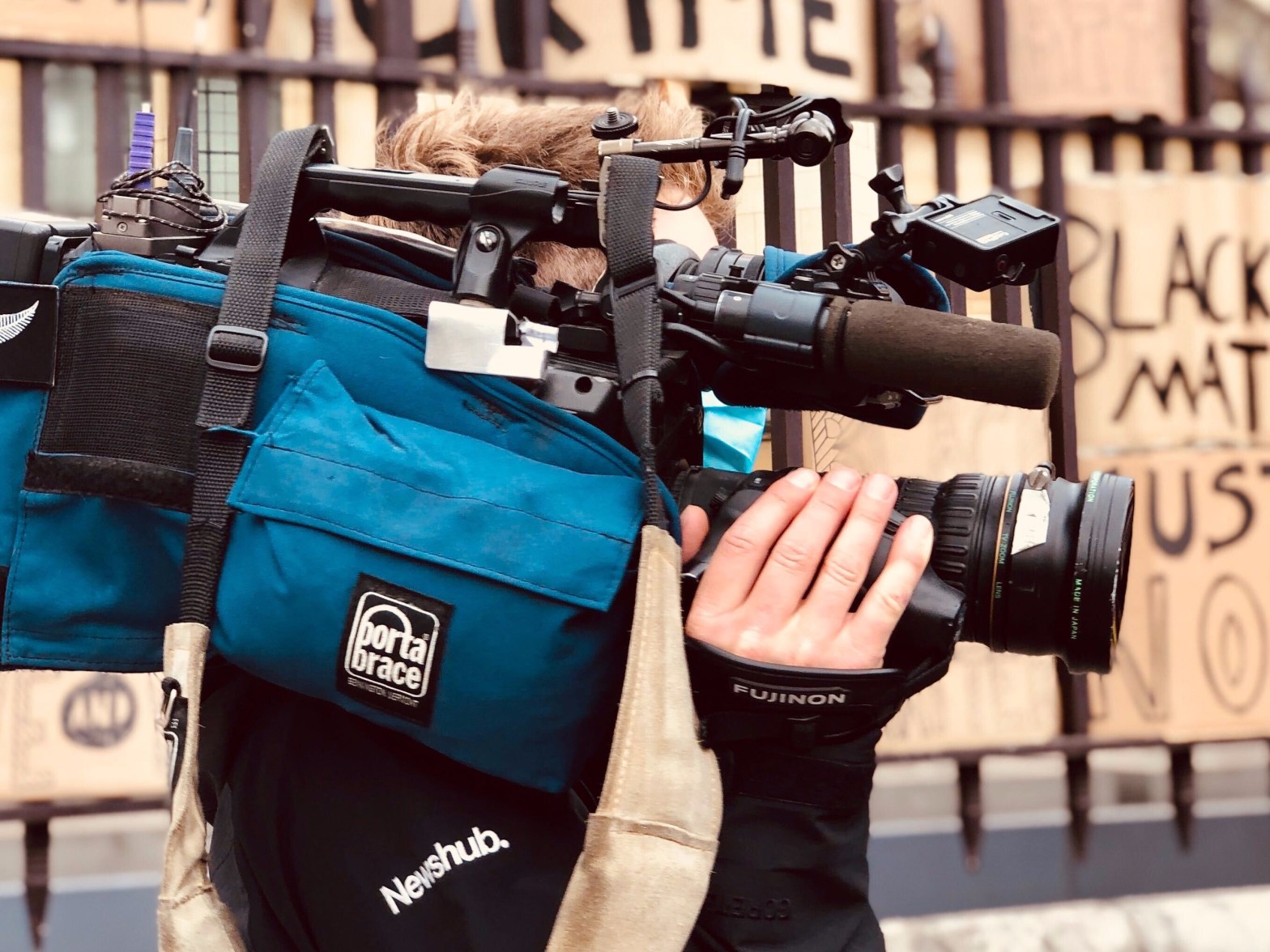
Few, if any, events in 2020 have garnered more media coverage than the death of George Floyd. Mr. Floyd, a forty-six-year-old black man detained for allegedly passing a counterfeit twenty-dollar bill, was killed when a police officer held a knee on Mr. Floyd’s neck for eight minutes and six seconds during the detention. A passerby filmed the incident and the video was dispersed on social media. Mainstream news then commenced twenty-four coverage of the death and its aftermath.

Unquestionably, Mr. Floyd’s death propelled the Black Lives Matter movement in the United States and around the world. The movement has perpetuated significant conversation regarding the nature and degree of the systemic racism permeating current social structures. This conversation has prompted real change. To cite a few examples, police forces are being restructured, racially insensitive statues are being dismantled, and school districts are being more aggressively desegregated.

The full extent to which media coverage of his death will contribute to combating systemic racism can only be discerned with time. However, what we can know now, based upon lessons from previous media coverage of significant human rights issues, is that the most impactful and positive change will occur only if the media reports beyond the superficial and contextualizes Mr. Floyd’s death. This article will discuss three previous instances in which the media covered stories superficially rather than delving deeper and exposing root causes of the reported events. Media failed to transcend simple story telling, missing an opportunity to effectuate lasting, positive change. 

The Death of Jamal Khashoggi

In 2018, Saudi journalist Jamal Khashoggi was murdered in Saudi Arabia’s Istanbul consulate. Both Turkish and UN investigators found the Saudi government responsible for the murder of the journalist, who was known for criticizing a Saudi government intent on reversing progress made for women and minorities. Coverage of the murder did expose important issues and effect some positive change. It informed the public that despite Saudi Arabia’s advancement in human rights, serious and extensive violations still existed. Coverage also highlighted injustices taking place within the Saudi government, inspiring CNN and two Washington lawyers to petition the International Criminal Court to investigate Prince Mohammed bin Salman’s role in the murder.

While five government officials were sentenced to death for Khashoggi’s murder, those with intimate knowledge of the crime do not believe the actual perpetrators were punished. A murder was covered by the media, but the coverage did little more than scratch the surface of a much bigger story. What threat did Khashoggi pose which was so great as to compel his murder? What were, and are, the root causes of the human rights violations Khashoggi sought to expose at the expense of his life? Notably, little coverage examined whether the Saudis met the ‘international standards’ for investigations. For example, UN allegations that the Prince was involved were only superficially investigated. Yes, journalists covered the murder, but the media did not report its context.

Skateboarding in a Warzone and Female Empowerment

In 2019, the documentary Learning to Skateboard in a Warzone (If You’re a Girl) was released. The film shared the story of young Muslim women partaking in a ‘masculine’ and ‘western’ sport, thereby behaving contrary to gender and societal norms. The media largely reported the work as an ‘empowerment’ piece. The film was interpreted as an effort to translate the skateboarding into female, Muslim ‘empowerment’. Perhaps the interpretation was a response to the propagated portrayal of Muslim women as helpless and in need of saving.

The media’s superficial reporting of the documentary merely as an ‘empowerment’ piece perpetuates colonial legacies and forfeits the opportunity to address the patriarchal structures responsible for the oppression of Muslim women. Sahar Ghumkhor explains this forfeiture as placing hope “in individual acts of bravery over the possibility of society-wide transformative movements for economic and political justice”. 

Are Muslim women actually ‘empowered’ by partaking in a ‘western’ activity? How could skateboarding be an act of empowerment? These were questions left unaddressed by coverage of the film. Few could argue that Muslim women skateboarding is not unique. But what is the context which makes the skateboarding so unique? This story remained untold by the media and an opportunity to report on female and societal oppression was lost. 

“The Struggling Girl” and the Death of Kevin Carter

“The Struggling Girl” is a photograph taken by South African photojournalist, Kevin Carter. The photograph actually depicts a starving boy stalked by a vulture while on his way to a UN relief location in Sudan. He was one of many victims of the 1993 famine caused by political unrest and civil war. This image, appearing in The New York Times, sparked much controversy. Heartbroken subscribers wanted to know the story behind the photo and the boy’s fate. It was confirmed that he eventually made it to the nearby relief station after Carter took the photograph. Carter was shamed for not aiding the boy who survived the famine but ultimately died of malarial fever fourteen years later. The photograph won a Pulitzer prize in 1993. Shortly thereafter, Carter committed suicide.

While Carter was subject to much criticism for allegedly failing to assist the boy, no criticism was directed towards the media for failing to report on the photo’s context. The media completely failed to contextualize the image and educate the viewer as to the human rights abuses, war, drought, and structural conditions in Sudan. The photograph touched the hearts of thousands, but the media failed to take the opportunity to use emotion to effect greater, positive change. Indeed, it would seem that publishing an image without reporting on the conditions which make the image so startling misses an opportunity to contribute towards long lasting solutions. Arguably it is not Carter who should be faulted, but rather the media for not using a striking photograph as a catalyst for investigative and enlightening reporting.

Contextualizing Mr. Floyd’s Death

In recent years there have been media outlets which more aggressively provide context with reported stories, which can effectuate positive change. Perhaps contextualizing covered news events is a step towards what Johan Galtung calls “peace journalism”. Going beyond simple documentation of violence, peace journalism proposes ways to explain the causes of a given conflict, ways to resolve it, and seeks to collaborate with such organizations as Amnesty International and the International Criminal Court in order to effectuate structural change. 

Of course, there is debate as to the degree to which the media should move from objective reporting to problem solver. To what extent should journalists seek to report the story behind the story in order to resolve root causes of injustice? Would this make them humanitarian practitioners? The media may inform the public and serve truth, but is it their obligation to contextualize a story, and perhaps report on actionable solutions, when doing so serves a greater good?  The answers to these questions go beyond the scope of this article, but if one is to discuss a reporter’s role in contextualizing news, it is important to contemplate this relevant discussion.

Returning to coverage of Mr. Floyd’s death, has the media gone beyond just eight minutes and forty-six seconds and placed into context the structural, social conditions which perpetuated the tragedy? Will the Floyd story transcend a YouTube video or exceed the twenty-four-hour news cycle? This will only take place if the media transcends simple storytelling and provides context to Mr. Floyd’s death, revealing the power structures and social disparities which made his death possible.

The Women of Belarus taking a stand against “Europe’s Last Dictator”

Written by Pippa Davis

With the Western News cycle dominated by fears of postal vote rigging in the upcoming US presidential election, the electoral fraud transpiring across the Atlantic is being largely overlooked by the global community. Belarus, a land locked country of 9.5 million, is caught geographically and politically between Russia and the rest of the European community. President Alexander Lukashenko, “Europe’s last dictator”, has been in power for the past 26 years with his administration coloured by Soviet-style censorship and police brutality. He came to power in 1994 after, ironically, running on an anti-corruption platform, and retained his despotic rule by removing the two-term limit on presidents in 2004. Every election since has been deemed neither free nor fair by the Organization for Security and Co-operation in Europe, an independent election monitoring body. The 64-year old’s previous success in running sham-elections can be credited to his considerable public support achieved through widespread propaganda that endorses him as the maintainer of stability and the defender against Western influences. However, growing unease at the lack of economic reform and the demand for a democratic administration have been mounting, and Coronavirus was the unexpected final straw that broke this government’s back.

Lukashenko’s response to the global pandemic was at best reckless and at worst fatal. The dictator recommended combating the virus with “vodka, saunas and hard work”. While the rest of the world went into lockdown, Belarus’s sports fixtures continued to draw large crowds to stadiums. The growing dissent between Belarusians and their out-of-touch President becomes apparent when walking down the street where many wear facemasks and maintain social distancing, rising above their leader’s ignorance. Private businesses and volunteers took it upon themselves to raise money for purchasing protective gear for doctors and hospitals, as the government refused to supply funding. This self-reliance style of activism was an endeavour of independence for the people of Belarus and it ignited the confidence within them to demand change.  

The 2020 elections operated in the same manner as all of those prior; all political opponents were either forbidden from running, exiled, or arrested. The latter approach resulted in the formation of a female power trinity. When Sergey Tikhanovsky was arrested for running against Lukashenko, his 37-year-old English teacher wife decided to run in his place. By allowing Svetlana Tikhanovskaya to register for the same election her husband was detained for, the President revealed his misogynistic views on the capabilities of women; he referred to Tikhanovskaya as a “poor little thing” and declared that Belarus would never be ready for a female president. In response, she formed a coalition with Maria Kolesnikova and Veronika Tsepkalo, wife of the former ambassador to the US, who fled after receiving multiple threats to his life. They toured the country drawing crowds of astonishing size, running on a platform promising only two things: they would release all political prisoners and would hold fair and open elections within 6 months. “There has never been a plan other than reminding people of their own dignity”, Kolesnikova stated, as they merged their campaigns to create one of “female solidarity”.

Taken from Euronews.com “Maria Kolesnikova, Svetlana Tikhanovskaya, and Veronika Tsepkalo

Voting day arrived and with no independent observers allowed during vote counting, fears of electoral fraud spread across Belarus. On Sunday 9th August, President Alexander Lukashenko was reported to have won his sixth term in office with 80.10% of the vote. Tikhanovskaya reportedly won only 10.12% of the vote. In polling stations where the public actively prevented vote rigging by observing the counting process, she won 70% of the votes, suggesting the official figures were fabricated. The response to this result was the largest protests in Belarus’ history, with more than 100,000 taking to the streets of Minsk to demonstrate their rage against the authoritarian administration’s blatant election fixing. In response Lukashenko greeted them with tear-gas, rubber bullets and stun grenades. Police and thugs alike attacked protestors, broke into houses, and demolished personal property. Thousands were injured, 6,000 were detained, and a handful died. Such extreme police brutality led to a new wave of protests. Belarusian women marched through Minsk dressed in white and carrying flowers, unintimidated by the police and masked thugs. Previously overlooked and underestimated, the women of Belarus have become the faces of the revolution.

More concerning than the atrocious brutalities occurring in public, are the appalling violation’s occurring in private. Tikhanovskaya was detained inside the Central Election Commission, forced to renounce her claim to power or face arrest, and intimidated into exile after threats towards her children. Kolesnikova was kidnapped and the attempt to force her out of the country was only unsuccessful because she tore up her passport before reaching the border. She was told she could leave willingly “or in pieces”. She is now being held in a KGB prison. If Lukashenko thinks terrorizing these women will repress the revolution, he is gravely mistaken; they may have started the resistance, but the momentum is with the people of Belarus now.

The response from the rest of the world has been disappointing to say the least. Post-elections, Tikhanovskaya formed a Co-ordination Council to negotiate an end to Lukashenko’s rule and a peaceful transfer of power. Her appeals to the United Nations to force Lukashenko to resign and help establish a democracy were largely ignored. The international community failed these women. Words instead of actions are all that have been issued, and words of condemnation fall off Lukashenko like water off a duck’s back. The President of the European Commission urged Lukashenko to “count votes accurately”, and Angela Merkel expressed “doubts” about the conduct of the election. Such feeble proclamations are just another example of international politics getting in the way of supporting a better future for the citizens of Belarus. Only the Baltic states and Poland, who have previously been under Soviet occupation and can truly sympathize with the Belarusians, have imposed sanctions on Lukashenko and offered support.

Confident in his unwavering backing from President Putin, Lukashenko knows that Russia, as a member of the UN Security Council, can block any action the UN attempt to take against him. The two leaders are comparable in more than just ideology, with Putin allegedly going to the extreme extent of poisoning his own political opposer, Alexei Navalny. When will these men be held accountable for the ruthless brutality they govern with? When will countries put the protection of innocent citizens first, and international diplomacy second? Lukashenko committed electoral fraud, intimidated and harassed women who dared to call for change, and arrested and attacked his own people for expressing their opinions against his oppressive rule. Such misogynistic autocracies should be a thing of the very distant past. So why are the most powerful countries in the world, who promote democratic ideals of equality and freedom of speech, fighting this repressive regime with nothing but weak reprimands and unconvincing admonishments? The people of Belarus deserve more.

The United States wildfires are our climate change reality check

Written by MacKenZie Rumage

Looking at photos of the sky in San Francisco, I almost thought the photographers were using filters on their photos. There was no way that the sky looked that orange and hazy. How could there be no sun, or even a cloud? But these apocalyptic-looking photos show the reality in western United States as people face devastating wildfires, which have burned over 900,000 acres in Oregon and has left Portland, Oregon with the worst air quality in the world.  Oregon governor Kate Brown said on September 9th, “This could be the greatest loss of human lives and property due to wildfire in our state’s history.” However, it’s not just Oregon; the fires have destroyed over 4.5 million acres in California, and five of the ten largest wildfires in California’s history are currently burning. The state still has four months to go in its annual fire season.

The human cost is great and is still growing. In Oregon, 500,000 people have been forced to evacuate. In California, twenty-five people have died while over 14,000 firefighters (including some prisoners recruited as firefighters) have been working to suppress the fires. 14,000 firefighters sound like a lot, but it has been difficult to recruit fire crews because of the current pandemic, and first responders have had to take additional precautions to limit the spread of COVID-19. Firefighters face a particularly dangerous situation because it is difficult for them to social distance while working, but they also face a higher risk of contracting COVID-19 because of the smoke. These problems together create a highly volatile situation in which people across western states cannot focus on protecting themselves from the virus because of the fires, but cannot forget that it exists.

Climate change is a major factor behind how devastating these fires have been. California, Washington and Oregon in particular have faced both record-breaking heat waves and severe drought this summer. These conditions made the vegetation dry out and become more flammable, resulting in the western states having optimal conditions for a wildfire to spread. These fires are typically started by human causes, which can be anything from a downed power line to a cigarette butt to even pyrotechnics from a gender reveal party. The extreme heat in the west has only made these fires more destructive, creating conditions hot and dry enough for areas that usually burn at different times during fire seasons to burn at the same time, which is part of why these outbreaks of wildfires are so uniquely devastating. Scientists at Stanford University published research last month that found the number of days with extreme wildfire weather in California has more than doubled since the 1980s, mainly because of higher temperatures drying out vegetation. Noah Diffenbaugh, one of the scientists behind that article, told the Los Angeles Times that “even with no change in the frequency of strong wind events, even with no change in the frequency of lightning, the risk of wildfire and risk of large, rapidly growing wildfires goes up as a result of the effect of that warming.”

California governor Gavin Newsom recognizes the connection between climate change and his state’s fires and has taken aim at climate change deniers, saying, “If you do not believe in science, I hope you believe in observed evidence. […] We’re in the midst of a climate crisis. We are experiencing weather conditions the likes of which we’ve never experienced in our lifetime.” Newsom is right, extreme weather conditions and natural disasters like these fires or the multiple hurricanes in the southern United States cannot be written off as random phenomena. We cannot even say that our current pandemic has nothing to do with climate change, because scientists warned for years that a deadly pandemic such as this one could come along because of humans’ exploitation of the environment. We no longer have to look toward far-away lands for evidence of climate change — we can look at our own homes and experience the effects for ourselves. It is not enough to acknowledge that climate change exists, or the connection between it and these natural disasters we have experienced. It is time to fully address and prioritize climate change. It has to play a part in how we vote, travel, spend our money, treat the environment around us and more generally how we each live our lives. There is no aspect of life that climate change will not touch, so we have to prepare for it and combat it while we can.

Clicktivism or activism: can social media drive change?

Written by Eleanor Fraser

“London Black Lives Matter Peaceful Protest from Vauxhall to Westminster.” by Ehimetalor Akhere Unuabona / Unsplash

Since George Floyd’s murder on the 25th of May, my social media feeds have been dominated by the Black Lives Matter (BLM) movement in an unprecedented way. I cannot look at Instagram without seeing suggestions of how to educate myself on racism, or Facebook without seeing articles on the toppling of racist statues. The BLM movement went from something I knew little about to becoming the biggest social movement in my lifetime, sparking protests in over sixty countries and every continent except Antarctica – all in the midst of a global pandemic.

This made me wonder how effective social media is as a tool for activism. The BLM hashtag’s rise sparked a broader discussion about social media’s viability and effectiveness in creating political engagement and activism. Amidst trending hashtags and sharing bail funds, the movement has generated conversations surrounding passive engagement, known as ‘performative activism’, and it can feel as though, given the nature of social media, one is shouting their opinion into a void. This article will unpack social media activism and take a look at what does and doesn’t work when furthering causes online.

Positives:

· Getting the message out

Social media hashtags have made it possible for social movements to emerge from nowhere, gain traction and become famous quickly, which was impossible pre-social media. Platforms including Twitter and Facebook lend themselves to raising awareness of various movements. The BLM movement began as a hashtag in 2013 after George Zimmerman was acquitted for the fatal shooting of seventeen-year old African-American Trayvon Martin. It was not used much for its first nine years, apart from spikes linked to incidents of racially-triggered police brutality in America. Three days after Floyd’s death in police custody, the #BlackLivesMatter hashtag climbed to an all-time high, when it was used 8.8 million times on Twitter in twenty-four hours. For the following two weeks, the hashtag was tweeted nearly 3.7 million times per day.

(Image: Pew Research Center)

High awareness led to tangible results for some movements. For example, the #MeToo movement’s online activism led to the arrest of Harvey Weinstein, former American film producer and convicted sex offender. However, awareness does not always necessarily equal success. Occupy Wall Street and Kony 2012 – featuring a video about a Ugandan Warlord and quickly went viral – did not achieve their original goals. Occupy never toppled neoliberalism, and Kony is still at large.

· Magnifying voices of underrepresented groups

The mainstream media tends to ignore campaigns focused on reducing inequality. In the case of these movements – which tackle issues such as institutional racism, sexism, and the fossil fuel economy – digital media have proven to be effective against mainstream media’s negligence. They permit a range of voices to be heard, individual stories to be told and go viral. The ‘Share The Mic’ trend has seen high-profile non-black women — from Julia Roberts to Kourtney Kardashian — handing over their platforms to Black women to magnify their voices.

· Organising offline action

Digital activism enjoys its greatest success when used with offline action, including signing petitions and donating money. Without BLM’s online success after Floyd’s death, it is unlikely the protests would have reached over sixty countries. The outcry over the trip of the British Prime Minister’s chief adviser Dominic Cummings to Durham in breach of lockdown regulations is another example. Thousands of social media users were persuaded to write to their MPs to express their dismay. Similarly, public pressure led to four policemen being charged for murder, or aiding and abetting in Floyd’s murder.

· Creating sustained movements for social change

A key determinant of social media’s effectiveness is whether it can create sustainable movements for change. Unfortunately, the downside of the breakneck speed at which news circulates and is moved on from often means that campaigns can run hot across the internet one day and then vanish. Some conversations, however, seem to be here for the long haul. This is largely thanks to the ease with which individual stories can be shared (like furthering the #MeToo conversation with survivors’ voices), and documenting of injustices, such as #SayHerName, which lists Black female victims of police brutality. Likewise the social media campaign, on behalf of the Windrush generation in tandem with investigations by the Guardian, spurred the Home Office into setting up a compensation scheme for people it abused. This is an example of how action on social media can spur mainstream media coverage — or the other way around. Social media does not operate in isolation.

Negatives:

· Performative activism

Performative activism refers to activism done to increase ‘social capital’ by jumping on trends, rather than because of one’s devotion to a cause, or without engagement with ‘real’ action such as donating. Sharing a Facebook post requires much less effort than joining a demonstration or donating and can be more of an act to prove one’s goodness than true solidarity. This becomes an issue when individuals believe including a French layover flag on existing profile pictures (#JeSuisCharlie), or posting a black square on #blackouttuesday compensates for action. When big brands like Nike and Netflix express their support for BLM, their actions are less about dismantling systemic racism and more ploys to appease a quick-to-forget public.

· People believe they’re making a difference when they aren’t

A 2018 survey by the Pew Research Centre found that 77% of the American public feel that ‘social networking sites distract people from issues that are truly important’, and 71% agreed with the statement that ‘social media makes people believe they’re making a difference when they really aren’t’. While it’s important to maintain the distinction between opinion and results, this reveals disillusionment with online activism. To an extent, there is a danger that overemphasizing social media means overlooking real pressure, like protests and ballot boxes.

· Passivity

For many, social media remains virtual and doesn’t extend into how they live their lives. The co-creator of the 2011-12 Occupy Wall Street protests, Micah White, believes social media-induced passivity is undermining traditional activism. In a 2010 piece for the Guardian he wrote: “Even leading Bay Area clicktivist organisations are finding it increasingly difficult to motivate their members to any action whatsoever.… between 80% to 90%, of so-called members rarely even open campaign emails. Clicktivists are to blame for alienating a generation of would-be activists with their ineffectual campaigns that resemble marketing”.

· Disinformation

Some successful social media campaigns (like the Vote Leave and LeaveEU campaigns leading up to the 2016 Brexit referendum) succeed because they relied on disinformation. In the case of these campaigns, they lied about Turkey joining the EU and Brexit’s economic impact, claiming it would bring £350m-a-week extra for the NHS. They played on latent xenophobia of large sections of the British electorate to secure a Leave vote.

Conclusion:

To assess if social media campaign has been successful you must be sure of its goals. If online activism is only for spreading awareness and mobilizing people, then social media is the perfect medium. But if a campaign’s goal is to achieve long-lasting change (such as dismantling white supremacy, as with #BLM; or taking urgent action with climate change, as with #ClimateStrikes) the jury is still out as to whether social media can make that lasting change. If one thing is certain, online activism must be accompanied by offline action to create real, sustained change.

Opinion: “Hollow words and empty promises” from our university.

Written by Keith Minami

To put it bluntly, the University of St Andrews’s response to the recent global reckoning regarding systemic racism has been pathetic. The fact that we have heard little from those who hold positions of power within the university is not only shocking, but shows a blatant disregard for the well-being of BIPOC students and staff and a dereliction of duty on the part of the university’s leadership. Therefore, I challenge the university to take the input and criticisms of BIPOC seriously and to enact real and concrete changes that will fundamentally challenge the basal prejudices upon which this university was founded.

The University of St Andrews has been noticeably silent. Why have we only heard from students? Where is the leadership? Where are the strong condemnations against the racism that runs so deeply in this institution which has long existed and profited off of the power structures that discredit the work and labour of BIPOC?

The university community recently received a tone-deaf email from Professor Sally Mapstone telling us all that we, unlike the multitude of Black lives murdered at the hands of systemic police violence, can for the ‘most part…. breathe’. Not only is this erasure of the socioeconomically disadvantaged students of the university, but also shows a blithe and complicit acceptance of the privileged position of many students. This is hardly the tip of the iceberg in terms of the racist actions that the university has either ignored and/or actively supported; from ‘Bongo Ball’, to the Eurocentric curriculum (with a tendency to glorify the colonial exploits of the British Empire), to the everyday racist transgressions that BIPOC students face, the university has actively shied away from or completely dismissed calls for change. As a leading institution of learning in the UK, the University of St Andrews has an obligation to address and ameliorate the inequalities of BIPOC students and staff.

This past week has merely been the latest in what has been centuries of this university’s refusal toward introspection. For too long I have read lengthy emails talking about how people will ‘learn’ and how times like these highlight our ‘need for discourse’. How many more emails will we read that peddle out the same hollow words and empty promises? The time for action is abhorrently overdue.

Postscript

It appears that after extensive criticism, Professor Sally Mapstone has decided to send the university community a lengthy email this morning detailing various actions the university has taken in order to address the issue of racism. While the university is undoubtedly taking steps to address this issue, the email still turns a blind eye to accountability. It isn’t enough to do better while ignoring the past. Arguably, to progress one needs serious introspection and that begins with holding people accountable. This latest email proves that Professor Sally Mapstone has no intention of doing so.

Systemic racism is systemic because it is intrinsically rooted in the system. It is a omnipresent, malicious, and palpable threat to those who experience it on a day to day basis. This is most certainly not the first time that the issue of racism has been brought up to the administration. At a certain point, real change cannot be enacted without structural change. The structure of the university is, to a large extent, the administration. As long as these round tables or forums are presided over by the very same people who have always previously ignored the concerns of BIPOC students, what other course of action is there?That is what I wish to ‘debate’.

Human Rights in the Crosshairs: Georgia’s Immigrant Detention Centers Must Free Them All

Written by Mallika Balakrishnan

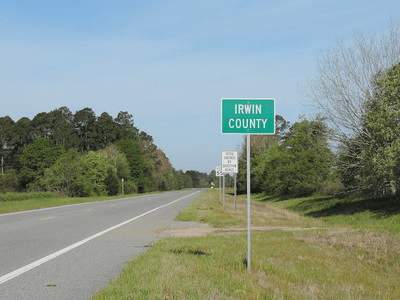
“Irwin County Line” by J. Stephen Conn / Flickr

One woman looks into the camera, hands crossed on her chest. “I was the first one to get sick,” she says. “I went to the medic…they simply laughed at me.”

“We don’t have any protection,” says another. “The officers come in and out, come without protection. We are scared, my God, we are scared.”

Both women are currently detained at Irwin County Detention Center in rural Georgia, United States. Cramped in unsanitary conditions, they’re at high risk for COVID-19. Protection is so scarce that they’ve risked retaliation to record a video (shared via GLAHR, the Georgia Latino Alliance for Human Rights) documenting the situation.

At the intersection of carceral logic and xenophobic border policy, immigrant detention centers have always posed a grave threat to human rights. Now, as COVID-19 lends new urgency to criticisms of the detention system, an increasing number of human rights organizations are calling for the immediate release of all detainees.

“The ‘Black Hole’ of America’s Immigration System”

Georgia harbors two of the largest for-profit immigrant detention centers in the US: Irwin County Detention Center and Stewart Detention Center, ICE’s second largest facility. Since 2017, four detainees have died at Stewart, nicknamed “the ‘black hole’ of America’s immigration system.” Access to clean water, soap, and edible meals is scarce at Stewart and Irwin. In addition to lack of hygiene and basic amenities, detainees report regular abuse and neglect.

Citing ICE’s consistent record of disregard for public health and the imminent threat of overwhelming the capacity of Georgia’s health system, a coalition of nonprofit organizations like GLAHR and Project South have called on Georgia’s Congressional delegation to release all ICE detainees.

With at least 14 confirmed cases of COVID-19 at Stewart and Irwin, immediate action could save thousands of lives. Policymakers must understand that the scale of the current crisis has been made possible by a detention system created with disregard for the marginalized. In other words: minimizing the damage of COVID-19 will demand a recognition that places like Stewart and Irwin are, by design, a recipe for disaster.

Human Rights in the Crosshairs

ICE detention combines inhumane border policy with the dangers of mass incarceration. At this nexus, immigrants stuck in the US detention system face inordinate challenges to access justice.

Some detainees are asylum-seekers who did not expect to be locked up for seeking safety. The US has a historically poor record of compliance with international standards for the treatment of asylum-seekers, and the current administration’s functional termination of the right to asylum at the southern border has only heightened an already unlawful, hostile reality. The anti-immigrant violence being perpetrated at Stewart and Irwin, with COVID-19 as a vehicle, is just one piece of a larger narrative of xenophobia and fear that’s been in motion for years.

Many of those in ICE detention have committed no crime beyond trying to exercise their right to asylum, but nobody deserves to suffer the violence of prison. Critical analysis of immigrant detention should take into account the mutually reinforcing logics of immigrant detention and mass incarceration in the US. The detention of asylum-seekers enables and is enabled by the unquestioned dominance of carceral (so-called) solutions. In her pioneering work Are Prisons Obsolete?, Angela Davis articulates the dangers of such a dominance: “The prison […] functions ideologically as an abstract site into which undesirables are deposited, relieving us of the responsibility of thinking about the real issues afflicting those communities from which prisoners are drawn in such disproportionate numbers.”

How many times in the past four years (and beyond) have we listened to the vilification of migrant communities as undesirable and worse? How many times have we seen a refusal to grapple with the material legacies of racism and imperialism in our border policies?

The work of prison abolitionists like Davis, in conjunction with a commitment to migrant justice, is important for understanding why immigrant detention is a doubly dangerous paradigm that allows for the current conditions at places like Stewart and Irwin. We cannot afford to understand the pandemic as creating an era of exceptional, brand new crises of rights and justice. Rather: the experience of this moment as a gruesome stress test of our system demonstrates the presence of fault lines built into the status quo.

#FreeThemAll: The Call for Immediate Release

As one of the first to “reopen” the economy, Georgia’s government has caught international attention. The state should instead be taking measures to protect its most vulnerable. Each second that immigrants remain locked up at Stewart and Irwin creates unnecessary risk, defies public health recommendations, and perpetuates inhumane treatment. In that distant tomorrow when we once again invite neighbors in and embrace our loved ones, let us be keenly aware that immigrant detention must not be allowed to reoccupy its role in our politics. In a different world, we might try cobbling together some semblance of “normal” on the other side of COVID-19. But in our world, where the cracks in safety nets throw people to their deaths as a matter of routine, nothing, to echo Arundhati Roy, “could be worse than a return to normality.” As such, the call to free all prisoners should be heard now—but such action should be understood as long overdue.

Note: the ideas in this piece echo the labor of many organizers and movements of impacted communities. Some suggested starting points for those interested in learning more: Detention Watch Network; Critical Resistance; Project South; Free Them All For Public Health; your local anti-detention network.

Ecocide: the fifth crime against peace?

Written by Eleanor Fraser

When the Nazis systematically killed six million Jews (1941-45), and the Turks exterminated one and a half million Armenians (1914-23), no law existed to challenge such abuses of state power. After the establishment of the International Criminal Court (ICC) the state can no longer treat its citizens as it wishes, because people have fundamental human rights guaranteed by international law. The notion of ecocide attempts to extend this principle to the environment by prosecuting environmental destruction on an international level.

Today, the International Criminal Court exists to investigate and prosecute individuals accused of genocide, crimes against humanity, crimes of aggression and war crimes – the four crimes against peace. Established by the Rome Statute of 1998, the Hague-based court means that heinous crimes of world leaders no longer go unpunished. What is less well-known is that when the ICC was set up in the late 1990s, another law was intended to sit alongside those of genocide, crimes against humanity, and war crimes: the crime of ecocide. Unlike the crimes covered by the ICC, ecocide is a crime against the Earth itself, not only against humanity.

Described as the (deliberate) destruction of the environment, ecocide is any activity that violates the principles of environmental justice, through extensive damage to ecosystems or harm to species. Ecocide – defined as ‘the extensive loss or damage or destruction of ecosystem(s) of a given territory, whether by human agency or by other causes to such an extent that peaceful enjoyment by the inhabitants of that territory has been or will be severely diminished’ – was first mentioned in 1972 by former Swedish PM Olof Palme, when speaking of the Vietnam war as ‘Ecocide’ in reference to the environmental degradation Vietnam suffered due to Agent Orange and Napalm.

The law of ecocide was removed from final drafts of the Rome Statute of the International Criminal Court in 1998. As a result, there is currently no internationally enforceable law to protect the earth. This means that companies can destroy environments and communities in the pursuit of profit without fear of prosecution and without repercussions. Fossil fuel companies that increase their production face no consequences, nor do fishing firms that needlessly catch and kill hundreds of thousands of dolphins in their fishnets every year. Coca-Cola continues to be named the worst company for plastic pollution, and the equivalent of one truckload of plastic enters the ocean every minute, not only killing millions of fish, seabirds and marine mammals but also polluting the human food chain. Nobody is held accountable.

Polly Higgins, a British lawyer, dedicated her life to change that. “Until (ecocide) is legally a crime it’s not going to be thought of as wrong – Banks are willing to put our money – public money – into some of the most destructive practices on the planet because they see nothing wrong with it,” she told ‘The Ecologist’ in 2010. Higgins sold her house and gave up her highly paid job as a barrister to fight for a law that would make those who are fuelling the climate and ecological crisis criminally liable for the damage that they do. Aged 50, Higgins died of an aggressive form of cancer on 21 April 2019 and, although she did not live to see ecocide accepted as international law, she did live to see her call being taken up by the growing climate activist movements, thanks largely to her tireless work giving talks, making documentaries, and advising governments. Those who have taken on the mantle of her campaign to have ecocide recognised as an ‘international crime against peace’, led by the Gloucestershire-based NGO she founded – “Stop Ecocide” – intend to “continue undeterred”.

If an international and legally binding duty of care towards the Earth, holding individuals and corporations accountable, is to be established, the Rome Statute is going to need to be amended in line with the original intentions. This would be a very simple process. There are currently 122 signatories of the Rome Statute. Any member state to the ICC can propose the amendment. With a two-thirds majority (or 82 votes) the amendment could be adopted and added to the statute. Once taken up, it cannot be vetoed.

Given the current absence of effective measures to uphold climate justice, the impact of making ecocide an international crime would be significant, bringing about a dramatic change in individual and corporate behaviour. The proposed law would target those with “superior responsibility” for our planet’s environment – including heads of state, as well as executives of banks and industrial companies. Brazil’s president, Bolsonaro’s destructive attitude to the Amazon rainforest and its peoples, for example, would be considered an international crime. Since taking power, Bolsonaro has ‘layer by layer stripped the rainforest of protections’, alongside encouraging mining, logging and farming industries to take advantage of economic opportunities. The results have been brutal and a legal framework to punish such brutality is therefore not only the logical choice but the necessary choice.

The fires in the Amazon, and more recently the fires ravaging Australia remind us that not only is ecocide a crime against nature, but a crime against humanity. There is huge potential for this one simple law to protect life on Earth. It could do for all life on Earth what the criminalisation of genocide has done for vulnerable minorities: provide protection where none existed before.